Josse-posten

Hackers sent fake nuclear alerts to Ukrainian phones, Kyiv keeps hitting Russian refineries against Washington’s wishes, and America goes into midterms eve with its institutions under strain.

Ukraine’s air raid alert system hacked: false nuclear and chemical warnings sent to millions

False radiation and chemical attack alerts on a Ukrainian lock screen, November 1. Photo: Kyiv Independent

Overnight on November 1, hackers breached Ukraine’s national air-raid alert application and pushed false warnings of nuclear missile strikes, radiation hazards and chemical attacks to phones across the country. The Air Force confirmed there was no real threat. The app was partly restored with drone and missile alerts, but aerial-asset tracking stayed offline. Russia’s own emergency alert app was hit with “false information” at the same time. The attacks came as the Oleshky truce ended and Russia renewed its strike campaign. Separately, on October 31, Russian drones entered Moldovan and Romanian airspace during strikes on western Ukraine, and Romania scrambled four F-16s. ISW calls this Russia’s ongoing normalization of European airspace violations.

Ukraine hits ~10% of Russia’s refining capacity in 72 hours, defying Trump

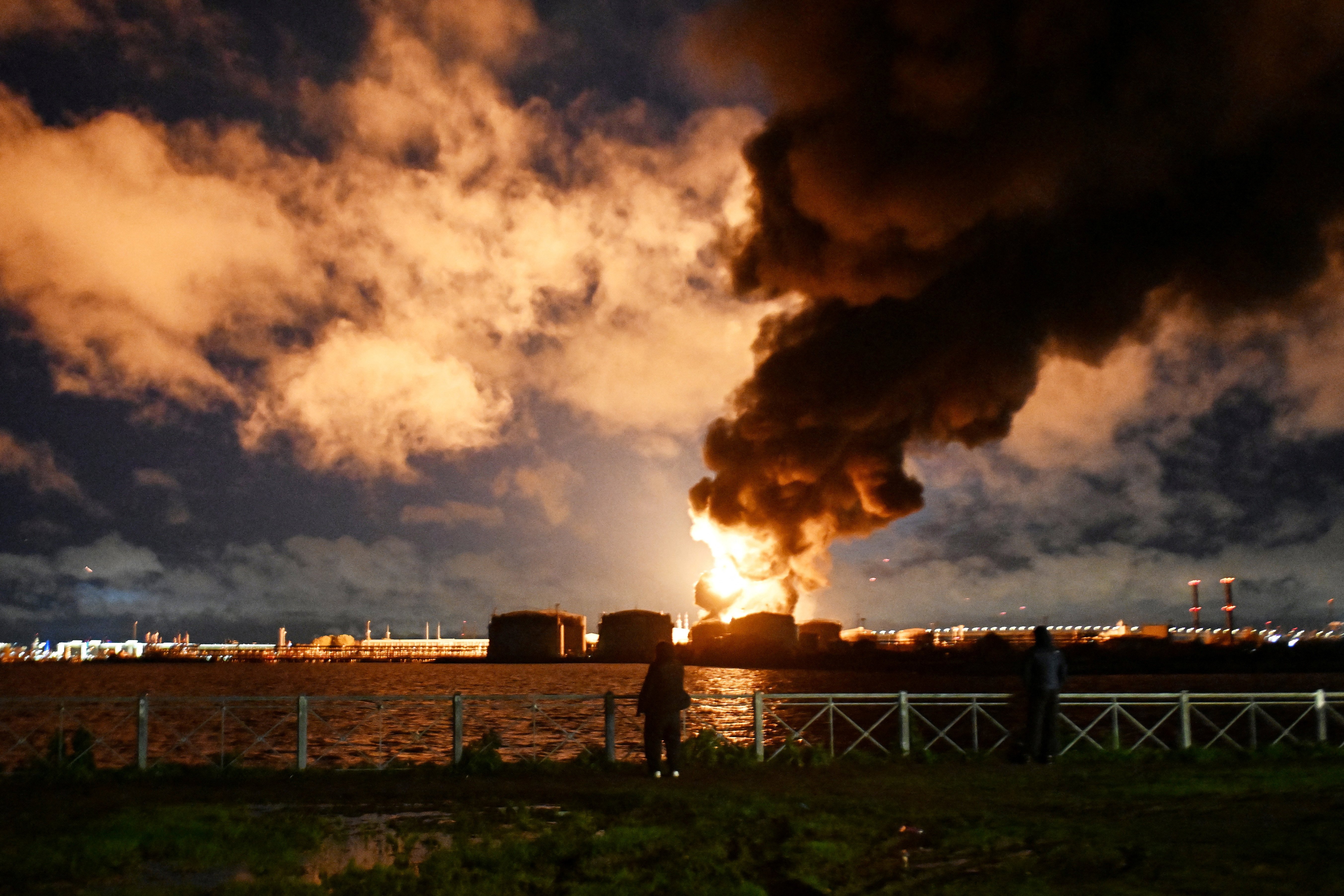
Fire at an oil terminal after a Ukrainian drone attack in Saint Petersburg, October 18. Photo: Getty Images

The overnight strike on the Lukoil refinery in Kstovo, its tenth hit on the 17-million-tonne-a-year plant, completed a three-day campaign that has hit roughly 10% of Russia’s oil refining capacity. Samara was hit on October 30. Kyiv is pressing on despite US pressure to halt energy strikes before Tuesday’s midterms. US officials say Trump’s public criticism is aimed at a domestic audience and does not reflect actual policy. The Kremlin says Kyiv is “simply ignoring” Trump’s wishes, and Russia has opened a terrorism case over the attacks.

Energy is now the bargaining ground. Washington is again pressing Kyiv to let Russian gas flow through Ukrainian pipelines to Europe, which Kyiv firmly resists. Moscow has extended its diesel export ban to 2027, with a carve-out that benefits Trump-aligned trade.

Israel in deadlock: the Arab coalition holds the balance of power

Israel’s snap election produced a hung Knesset. The Palestinian Arab coalition won a record number of seats and now holds the decisive balance. Its leader, Yousef Jabareen, calls this a “historic” crossroads and says he is ready to join an opposition bloc to remove Netanyahu. Netanyahu says the election was “stolen”. Election authorities say the result stands, even if the foreign-interference claims prove true.

(Also covered in World)

US midterms eve: a dismissed lawsuit, a senator’s stroke, and an Islamophobic close

A federal judge threw out the Trump administration’s lawsuit to block certification of Alaska’s Senate race if Republican Dan Sullivan lost, calling it an “unprecedented intervention” by the Justice Department. Sullivan then said he would accept the result. In Connecticut, Democratic Senator Chris Murphy was hospitalized with a stroke. His staff expect a full recovery. At his final rallies, Trump repeatedly called Michigan Democratic Senate candidate Abdul El-Sayed a “jihadist”.

Bulgaria elects its first female president, and she is pro-Russian

Iliana Iotova, Bulgaria’s newly elected president. Photo: Ukrainska Pravda

Acting president Iliana Iotova (also spelled Yotova) defeated pro-Western challenger Andrey Gurov in the runoff. She is Bulgaria’s first elected female head of state. Her alignment with the pro-Russian camp shifts an EU and NATO member toward Moscow at a sensitive moment for European support for Ukraine.

Indicator Value Change
S&P 500 (f) 7,641 +0.35%
Dow 30 (f) 52,013 +0.18%
Nasdaq (f) 28,737 +0.71%
Russell 2000 (f) 2,834 +0.44%
VIX 19.1 −1.65%
Gold 3,904 +0.13%
BTC $78,056 −0.07%
EUR/USD 1.1206 +0.45%
USD/NOK 9.22 +0.05%
  • Futures firm and the VIX eases on the eve of the US midterms
  • Binance resumes withdrawals and covers ~90% of hack losses (see World)

World

Tankers hit mines in Hormuz as Iran rejects peace talks and Qatar mediation stalls

Two oil tankers exploded after striking mines in the Strait of Hormuz, Iran’s IRGC confirmed. Qatar-led indirect talks on unlocking $6bn in frozen Iranian assets, a possible path to reopening the strait, are stalling. Gulf officials are “braced for the worst” while they wait for Washington’s reply to an Iranian proposal. Tehran says it has “no intention” of joining broader peace talks with the US. Trump again said the conflict would end soon and told Iran to make a deal. Shipping risk remains high despite US claims that the strait is open. Further south, Somali pirates hijacked an Iranian fishing vessel. Analysts warn that cargo ships could be next if the pirate networks sense that naval attention has moved elsewhere.

Israel: deadlock at home, deeper into Syria, out of Hebron

Palestinians argue with Israeli soldiers during a protest against forced displacement in Hebron, October 27. Photo: Mussa Qawasma/Reuters

Beyond the hung Knesset (see the leader), a poll found that most Israelis think settlement policy should change to avoid further international sanctions. Israeli forces pulled out of Hebron after a 10-day siege, the city’s governor said. Displaced families can return and schools can reopen. In southern Syria, SOHR reports that Israeli tanks pushed deep into Wadi Al-Raqqad, with a simultaneous incursion into western Daraa. It describes this as the first time Israeli armor has gone this far, well beyond the buffer zone set up after Assad’s fall.

Michigan’s Senate race: a Democrat crosses the aisle, and Indian consultants arrive

Rep. Haley Stevens, who lost the Democratic primary to Abdul El-Sayed, endorsed Republican Mike Rogers. The move caused a party furore, and Trump invited her to join the GOP. Muhammad Ali’s daughter and grandson endorsed El-Sayed in response. Separately, Al Jazeera reports that Indian political consultants with a history of covert election manipulation are now running undisclosed influence campaigns in the US midterms.

France: attempted murder probe after petrol bomb, as the economy is “headed for a wall”

Prosecutors opened an attempted murder investigation after a protester threw a petrol bomb at riot police on the third straight weekend of cost-of-living demonstrations. Hundreds were arrested across several cities. The finance minister warned that the economy is “headed for a wall” after GDP contracted, under pressure from energy prices tied to the Iran conflict.

Hungary to unmask tens of thousands of communist-era informants

Hungary’s new government will publish the names of tens of thousands of state security informants from 1945–1989, when the secret police relied on a sprawling network of civilian spies to suppress dissent. The Guardian calls them “traitors in every family”. The aim is to confront a surveillance history that Hungarian society has never fully faced.

Also today

Diplomacy
Zelensky says he is ready to meet Trump and Putin in Turkey. He and Erdogan agreed to advance a limited Black Sea ceasefire for grain exports — Ukrainska Pravda: Turkey · Ukrainska Pravda: G20 signals · ISW
Kremlin says Putin is “open to dialogue” with Zelensky by phone. Kyiv calls it a trap to avoid a real summit — Kyiv Independent · r/geopolitics
Antigua’s PM calls for King Charles to be removed as head of state at the Chogm summit. The UK was “vehement” that reparations stay off the agenda — Guardian · LBC · r/worldnews
UN’s MINURSO mission in Western Sahara ends after 35 years, with no resolution — NPR
Disasters
Spain train crash: four US citizens and one each from Japan, Canada, Argentina, Mexico, Tunisia and the Czech Republic among the 69 dead, including Cambridge biologist Marta Shahbazi — Guardian: victims · Guardian: Shahbazi · BBC
Indonesia: wildfire smoke killed 3,560 people in September, and 57.8 million breathed unhealthy to hazardous air — Japan Times · r/worldnews
Finance
Binance resumes withdrawals and will cover ~90% of the $6.3bn hack. The FBI attributes it to North Korea’s TraderTraitor — Guardian · BBC: 90% covered · BBC: withdrawals

Ukraine

Russia loses ground for a second straight month as its encirclement strategy collapses

ISW’s October assessment finds that Russian forces had a net territorial loss of 27 km² for the second month in a row, while taking a record 54,400 casualties. Ukraine’s Operation Vivaldi has defeated Russia’s planned northern Fortress Belt pincer. This makes Dobropillya, Russia’s most intense axis at about 30 attacks a day, operationally irrelevant to the original plan. Ukraine now holds the initiative in the Kupyansk, Lyman and Oleksandrivka directions. ISW concludes that Putin has moved to a new theory of victory: forcing Ukraine to surrender through winter infrastructure strikes, not battlefield advances.

Zelensky confirms strikes on a rocket-fuel plant, Su-34s and an Iskander launcher

President Zelensky in his Kyiv office, October 18. Photo: Olga Ivashchenko/Bloomberg via Getty Images

Beyond the refineries (see the leader), Zelensky confirmed the destruction of two Su-34s at Marinovka airfield, the Kamensky rocket-fuel plant, an Iskander launcher and air defense systems, about $170M in damage across recent strikes.

Investigations

ICIJ: Bolsonaro’s spy chief sheltered in Florida through a fugitive mining boss’s network

Jair Bolsonaro with former intelligence chief Alexandre Ramagem. Photo: Getty Images via ICIJ

Rodrigo “Cataratas” de Mello is a convicted illegal gold miner on Yanomami land and a Bolsonaro loyalist. He is now a fugitive after Brazil’s Supreme Court ordered his arrest for helping former intelligence director Alexandre Ramagem flee to Florida in December 2025. De Mello has run Florida businesses since the 1990s. In July 2023 he founded a Miami yacht charter company at the same address where Ramagem later stayed. He also faces charges of laundering about $37 million in gold and tin from Indigenous territories.

The Atlantic: Trump’s team is meddling in European politics at an unprecedented scale

Through figures such as Kimberly Guilfoyle in Portugal and ties to Germany’s AfD, the administration is practicing a new kind of US interference in Europe, the Atlantic argues. It aligns ideologically with parties that weaken transatlantic cohesion, and it is less about US strategic interest than about exporting MAGA politics. The question it raises is where alliance solidarity ends and active subversion begins.

China at sea: a navy 35% larger than America’s, cable surveys, and an Arctic pact

A WSJ investigation traces how China’s 1998 purchase of a rusting Soviet carrier hull, supposedly for a floating casino, started one of the largest peacetime naval buildups in modern history. China now has more than 400 battle-force ships and submarines, about 35% more than the US by hull count, with a fourth, probably nuclear-powered carrier under construction. Its shipyards build more than half the world’s merchant ships. Off Japan and the Philippines, Chinese vessels have been seen in suspicious survey patterns near undersea cables, similar to incidents that came before sabotage in Europe. In the north, an October communiqué deepens Sino-Russian Arctic cooperation on shipping routes and polar vessel construction. China has invested about $90bn in Arctic projects since 2003.

Russia: the revolt of the letter-writers

Russian activists commemorate victims of political repression in Novi Sad, Serbia, October 29. Photo: Reuters via CEPA
A CEPA report counts 4,579 letter-writing events for political prisoners between January 2022 and September 2026, in 48 regions. Nearly three-quarters were outside Moscow and St. Petersburg. Memorial and OVD-Info were declared extremist, which carries 10-year penalties, and organizers adapted. The share of events that require advance registration rose from 12% to 39%. The share run by grassroots groups grew from 14% to 27%. The report calls this “one of the most widespread forms of regular in-person civic activity” for Russians who oppose the war. On the same day, Russia’s exit from the Council of Europe’s Anti-Torture Convention took effect. This ends the last formal mechanism for independent monitors to enter Russian detention facilities, including those holding Ukrainian POWs.

Also today

  • Foreign Affairs: the Nordic model of total societal defense as a template for European NATO deterrence — Foreign Affairs · r/geopolitics
  • FSB detains a minor over a planned Moscow park attack after a US tip-off, and publicly credits Washington — Moscow Times · r/worldnews

Tech

Postgres 19 is late because AI made bug discovery too fast for humans to review

Robert Haas explains the delay. LLM-assisted bug hunting caused a 60%+ surge in backport commits between April and September 2026, which used up developer time normally kept for release review. Three major features were reverted late in beta after AI-assisted testing exposed underlying defects. AI can surface bugs from decades of accumulated code faster than developers can validate and fix them, and the gap is not closing. This is an early look at what happens to mature open-source projects when finding bugs becomes cheap and fixing them does not.

Anthropic replaced Git with a custom VCS, and didn’t mention the prior art

Anthropic moved its monorepo from Git to Scion, a VCS built by seven engineers in five months, with changeset-based commits, client-server asymmetry and per-directory access controls. A source-control engineer at Databricks points out that Meta’s open-source Mononoke shares these features without adequate credit. He also disputes Anthropic’s claim to be “the first to see” monorepo scaling pressure, since Google and Meta hit the same problems years earlier.

Beating the compiler at signed 32-bit division with a 33-bit multiplier

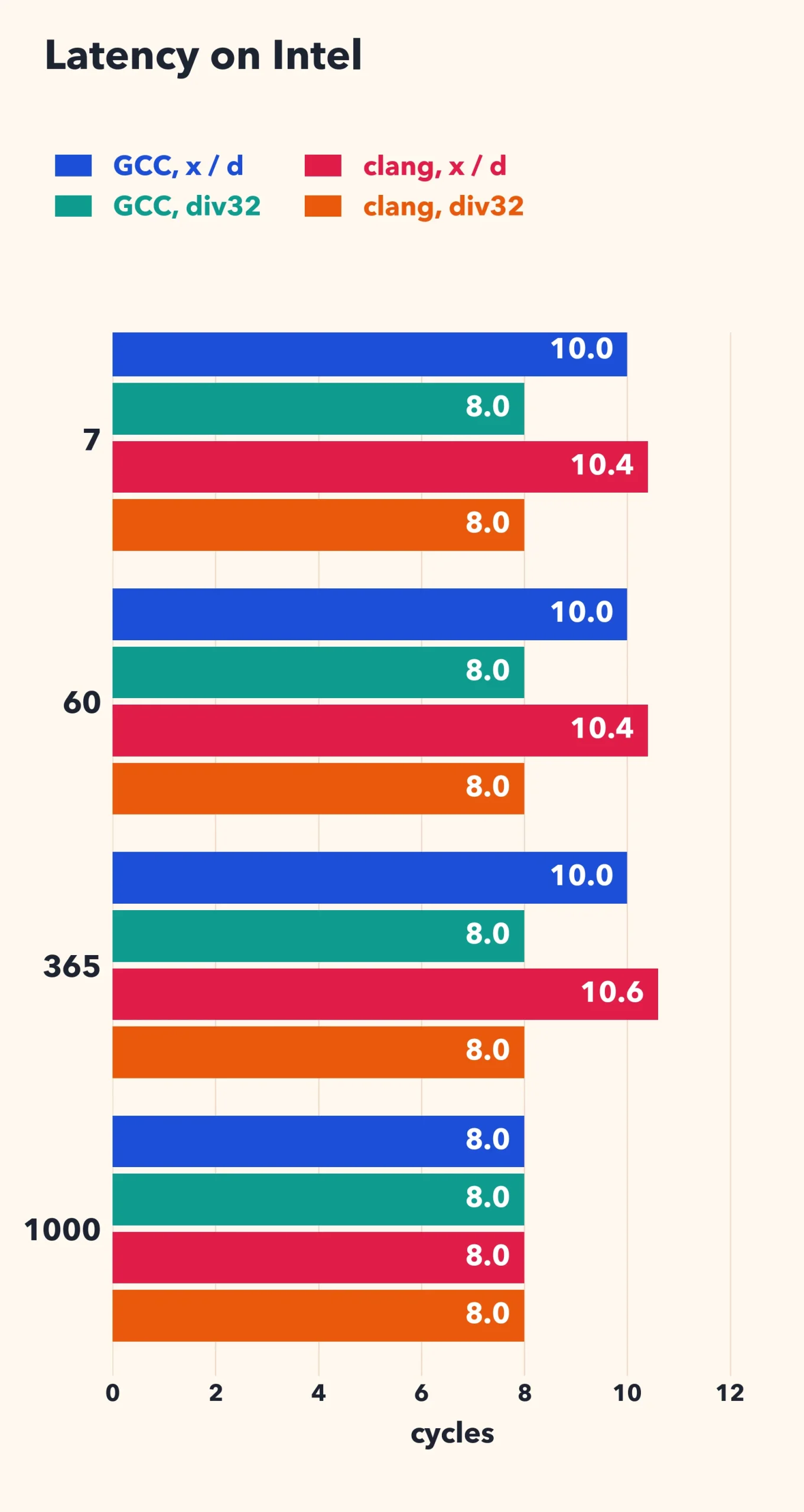
Latency on Intel: compiler approach vs. the 33-bit multiplier. Chart: Daniel Lemire
Compilers use a 32-bit magic multiplier for signed division, which sometimes needs a correction step of two extra dependent instructions. A 33-bit multiplier fits in a signed 64-bit register without correction, which cuts the critical path from 6 to 4 instructions. On Intel, latency drops from ~10.6 to 8 cycles for common divisors such as 7, 60 and 365, and clang throughput improves by more than 20%. For runtime division libraries, the gains reach up to 4×.

Godot’s CPU rendering optimizations: two root causes, two order-of-magnitude fixes

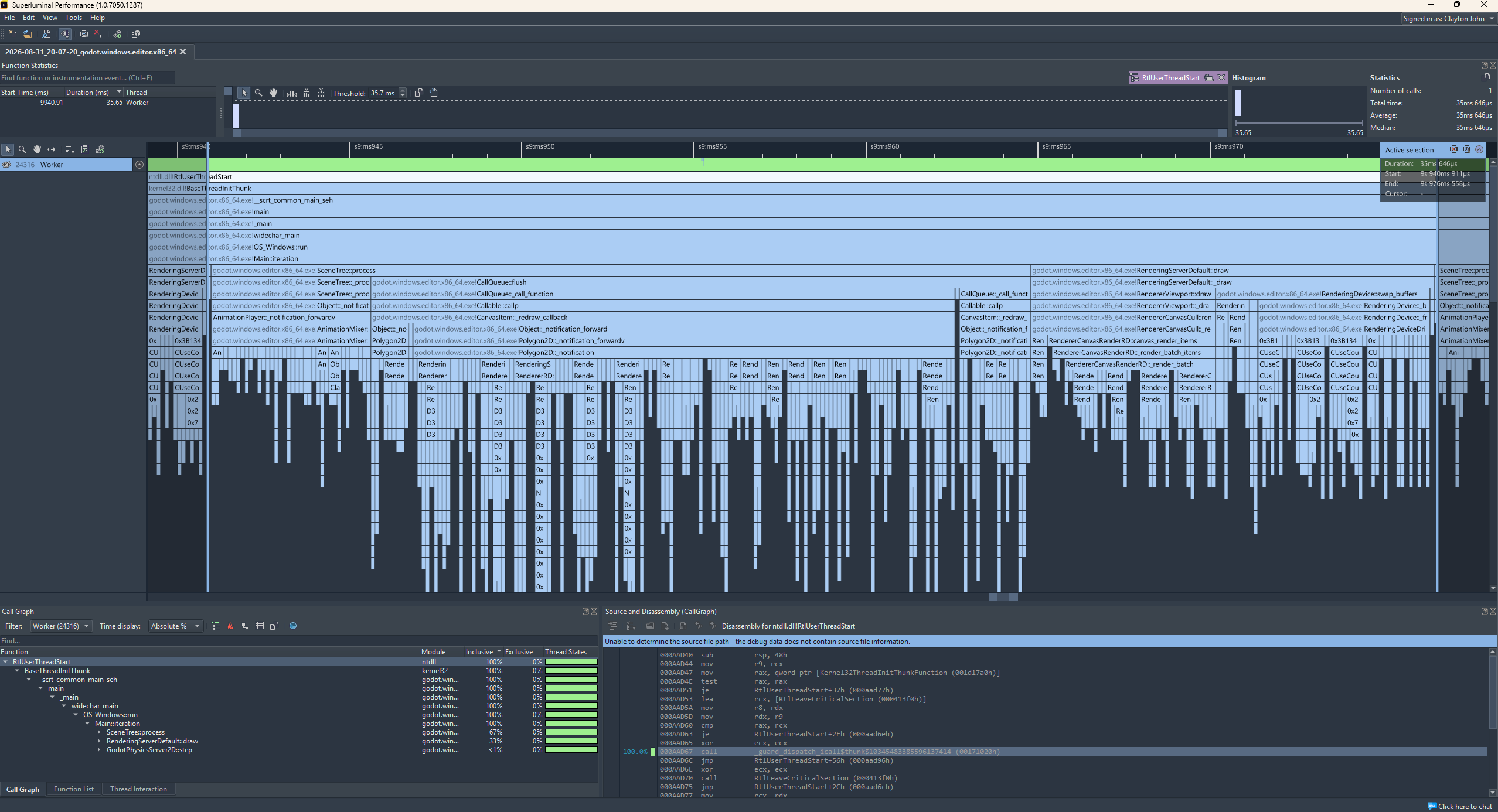
Superluminal trace of a 35 ms frame before the Polygon2D fix. Image: Godot Engine
A clean profiling case study. Animated Polygon2D nodes destroyed and reallocated their mesh every frame. Updating vertex data in place cut frame time from 35 ms to 13 ms (28 → 83 FPS). Separately, SPIR-V to DXIL shader transpilation had every thread competing for one OS heap, which caused 11 seconds of stalls. A per-thread arena removed the stalls.

Ouros: a Haskell processor running natively on FPGA via graph reduction

Ouros runs Haskell programs natively through combinator graph reduction, with no software runtime. Independent subexpressions run in parallel in hardware automatically. Garbage collection runs concurrently with the program, and I/O goes over AXI4-Lite bus transactions. All of these are circuit features. The demo runs Haskell programs of up to ~2,000 lines with interactive UART I/O, using ~27% of the logic on an AMD ZU3 at 100 MHz. It is early-stage, but it shows that hardware-native lazy evaluation can work.

OmniDiff: a content-aware Rust difftool for code, images, PDFs and fonts

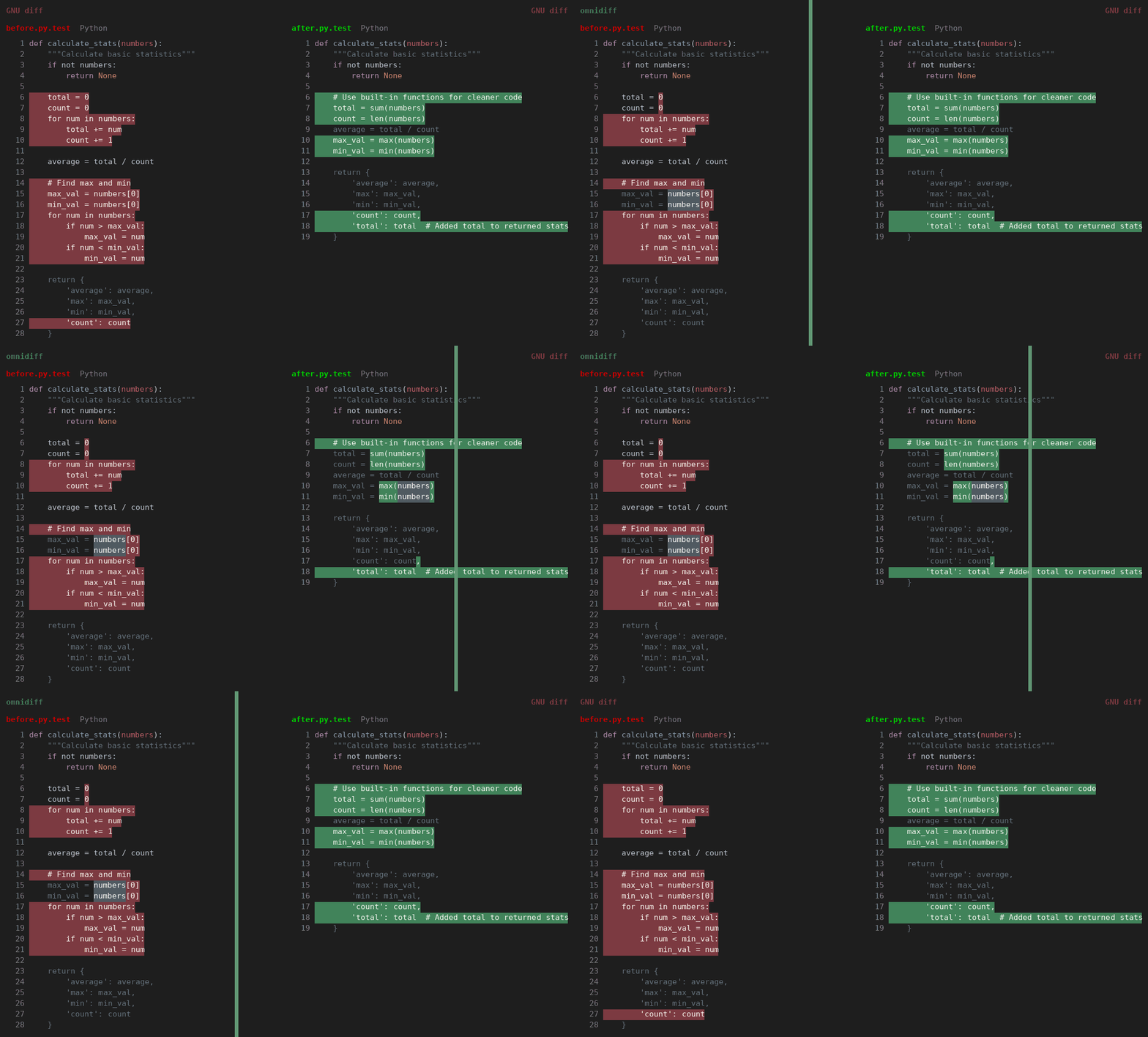
GNU diff’s whole-line highlights vs. OmniDiff’s subexpression highlights on a Python refactor. Image: OmniDiff
A new git difftool that diffs by content type. It does semantic token-level diffs for 25 languages, and also handles images, PDFs, archives, fonts and cursor files. It highlights only the changed subexpressions instead of whole lines, and diffs large C++ files in under 100 ms.

GitHub · HN

Trigger.dev exposes customer environment variables in a security breach

The background-job platform disclosed that an attacker accessed environment variables for a subset of customer organizations. The exploit is blocked and affected accounts have been notified. The disclosure gives no breach date, customer count or exposure window. If you use Trigger.dev, rotate your secrets.

Also today

  • Pratt parsing is a black box: learn the nud/led model (“what do we expect to the left of this token?”) before you dissect the nine-line algorithm — vinipsmaker · Lobsters
  • Lenovo’s “encrypted” fingerprint USB drive is an unencrypted SD card in a case — Reddit · HN
  • Bones may continuously release anti-aging proteins such as osteocalcin into the blood, acting as an endocrine organ — Science · HN

AI & Automation

Mathematics has changed, let’s act like it: a manifesto on Tao’s blog

In a guest post on Terence Tao’s blog, Frank Calegari argues that AI has crossed a threshold. He points to OpenAI’s release of 700+ papers that show AI making “groundbreaking contributions” across mathematics. His proposals are concrete: evaluate all work as if it were AI-assisted, move hiring toward in-person assessment, raise journal standards, reorient graduate education from narrow specialization toward mathematical vision, and build seminars around open questions. The tone looks forward: research directions that were out of reach before are now accessible.

China’s first frontier AI export controls: models, agents, and a moving compliance target

MOFCOM Announcement No. 48 requires an export license for the weights, architecture, source code and optimization know-how of any model with ≥10²⁶ training FLOPs, ≥2 trillion parameters, or a current global top-10 ranking. Agentic systems that handle 20+ subtask chains at ≥80% accuracy, or coordinate 60+ concurrent agents, are also restricted. Systems that target critical infrastructure or defense are banned outright. API and SaaS access remain uncontrolled. A model’s status can change after deployment as benchmark rankings move.

The Numbat “leak” is seeded noise, but the codename is real

A Hugging Face repo that claimed to hold a 14T-parameter Anthropic Mythos-class checkpoint is a hoax. At least 43 of its tensors regenerate bit-for-bit from their own names, so they are deterministic RNG output, not trained weights. HF’s own counter shows 6.8T parameters. The setup was elaborate: 772 shards, working architecture code and fabricated eval logs. One detail is real: “numbat” is a genuine Anthropic codename, seen in the March 2026 Claude Code source leak. Meanwhile, “Mythos 5.5” has appeared in the HTML of Anthropic’s product page, and the community expects a Fable 5.5 dual launch. Anthropic has not announced anything.

No free lunch in RLVR: every pass@1 gain provably costs some prompt

A UC Santa Cruz paper proves that every RLVR update that raises pass@1 strictly lowers success on some prompts. The number of pass@k crossovers is tightly bounded by the sign variations in per-prompt success shifts. The mechanism is an exponential re-weighting of the base policy, through Stiemke duality, so the trade-off cannot be avoided. The authors ship a diagnostic that practitioners can run on their eval logs to measure the price. A script checks every number in the paper.

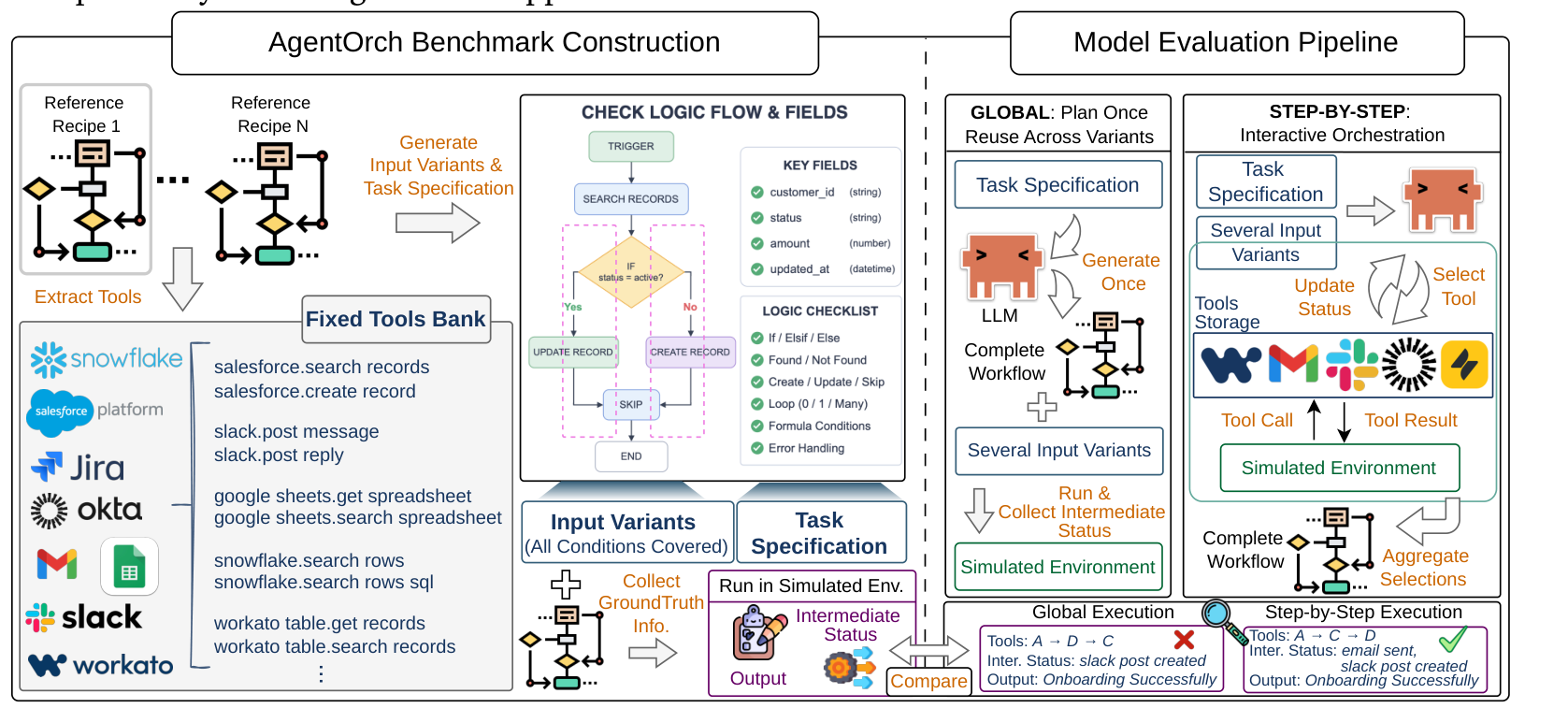
AgentOrch: step-by-step still beats upfront workflows, but the gap has nearly closed

The AgentOrch benchmark pipeline. Diagram: AgentOrch

A UNC Chapel Hill and Workato benchmark covered 650 enterprise SOPs and 3,220 runtime variants. It compared writing a complete workflow up front with choosing tools step by step. Step-by-step wins on every model, but the gap has shrunk 79%, from 40.67 points on GPT-3.5 to 8.53 on Claude Opus 5 Thinking. Step-by-step costs 23.2× more LLM calls and 3.64× more tokens. Incremental construction, execution-feedback revision and targeted fine-tuning each close another 6–12 points.

OpenAI sued after ChatGPT gave fatal tapering advice for seizure medication

The parents of Bowen Wan are suing OpenAI after their daughter died of an epileptic seizure. She had asked ChatGPT how to taper her anti-seizure medication, and her doctors say the schedule it gave was dangerous. The suit is among the first to directly allege a causal chain from AI medical guidance to a death.

Also today

  • Soft-MTP: a straight-through gradient trick recovers the KL self-distillation signal buried in multi-token prediction, and improves speculative decoding from 167M to 1.2B parameters — GitHub · arXiv · r/MachineLearning
  • Kapitsa: 346 tok/s on Qwen3 35B-A3B on an M5 Max, and the 180B model fits on 48 GB Macs via expert streaming — GitHub · r/MachineLearning
  • Memory benchmark: EverOS (70.1%) and Hindsight (67.8%) match full-context recall (69.5%) on BEAM while reading 24–35× less text — r/ClaudeAI
cd ~/repos/josse-posten && claude --resume 7d9da347-e8b8-4b10-b09f-d538053d99a2