Institutions under siege: Russia’s last free newspaper closes,
Poland’s president forces his way into the constitutional court, and
Washington sells Ukraine Patriots it cannot deliver this
decade.
Poland’s
constitutional court seized: riot police, and a president who forced
entry at 1am
Poland’s constitutional crisis peaked on Friday night. A group of
government-appointed judges suspended the court’s PiS-aligned president,
Bogdan Święczkowski, and declared a new acting chief. Riot police faced
protesters and opposition MPs outside the Warsaw building. President
Karol Nawrocki, a close Trump ally, turned his plane around mid-flight
from Senegal, arrived after midnight, and pushed through security to
enter the court. He stayed until at least 4am and called the operation
“a constitutional coup.”
The clash is the latest chapter in a decade-long dispute over
judicial independence that began when PiS stacked the bench in 2015.
Experts are divided on whether Friday’s suspension was legally valid.
The confrontation sets the stage for a showdown ahead of the 2027
parliamentary election.
“We
were killed”: Novaya Gazeta, Russia’s last independent national
newspaper, closes
Novaya Gazeta, whose former editor Dmitry Muratov won the 2021 Nobel
Peace Prize, will cease operations on 9 November. Staff describe a
sustained campaign to “systematically crush” independent journalism:
donation bans, seizure of its printing press, foreign-agent
designations, office raids, and eviction from its Moscow premises. The
paper survived the murders of several of its journalists, including Anna
Politkovskaya. Its closure removes Russia’s last nationally known
independent outlet.
On the same home front, Russia’s Defence Ministry has proposed
delaying December military pay until January — a small indicator of
fiscal strain.
US
approves $2.1bn Patriot sale to Ukraine — but delivery is years
away
The State Department approved the sale of 500 PAC-3 MSE interceptors
to Ukraine, reversing the previous US freeze. Canada, Germany and Norway
pay for it through the JUMPSTART programme, with EU supplemental loans.
Patriots are currently Ukraine’s only effective weapon against Russia’s
fast ballistic missiles.
Zelensky welcomed the decision but warned that deliveries are not
expected until the early 2030s. Lockheed Martin has yet to begin
production and plans to triple output to 2,000 units a year by 2030.
Ukraine faces this winter without them.
The signals from Washington remain mixed. In the same period, the
administration halted funding for other Ukraine security programmes, and
Pentagon policy chief Elbridge Colby told European officials to “cool”
their rhetoric on Russia. Estonia’s prime minister answered publicly:
“appeasing dictators brings only humiliation.”
Ukraine
hits Ufa refinery as the deep-strike campaign resumes at scale
A day after reports that Kyiv had paused refinery strikes under US
pressure, Ukrainian drones hit the Bashneft-Novoil refinery in Ufa,
Bashkortostan, overnight 30–31 October — about 1,300 km from the border.
They struck the L-35 catalytic reforming unit, a key component for
high-octane petrol. Together with the Novokuibyshevsk strikes and
reported hits on two more refineries and a gas chemical complex, it
looks like the largest coordinated deep-strike wave of the war. The
Kremlin is already using the strikes to claim Ukraine is defying Trump.
(More in Ukraine)
Four
tankers on fire after striking mines in Hormuz — as the IISS calls the
US a “strategic liability” for the Gulf
Iran’s Revolutionary Guard says four tankers caught fire in the
Strait of Hormuz after striking naval mines while travelling on what
Tehran called “unauthorised routes.” Nationalities and cargo were not
disclosed. Roughly a fifth of global oil trade passes through the
strait.
The same week, a major IISS study found that before the 8 April
ceasefire, 12 regional states absorbed nearly 4,700 Iranian attack
drones and more than 1,400 ballistic missiles, causing an estimated $58
billion in energy damage. It faults the Gulf states for “overdependence
on expensive, high-end systems” against cheap drones, missing regional
integration, and gaps in minesweeping. US bases may have given Iran
extra pretext to strike, and public opinion now increasingly sees the US
as a “strategic liability.”
Backdoored
Claude Code extension shipped to ~5,000 Cursor users
Someone published tampered versions (2.1.312 and 2.1.313) of the
Claude Code extension only to Cursor’s marketplace on 30 October. The
backdoor opens a reverse SSH tunnel, adds an attacker key to
~/.ssh/authorized_keys, and exfiltrates hostname, username,
OS, git config and the names of credential-like environment
variables. Uninstalling is not enough: remove the persistence and rotate
credentials. (Details in Tech)
| Indicator |
Value |
Change |
| S&P 500 |
7,580 |
-1.82% |
| Dow 30 |
51,770 |
-1.09% |
| Nasdaq |
25,437 |
-2.86% |
| Russell 2000 |
2,812 |
-1.66% |
| VIX |
19.4 |
+12.9% |
| Gold |
3,899 |
-3.29% |
| BTC |
$77,189 |
-0.88% |
| EUR/USD |
1.1200 |
-0.04% |
| USD/NOK |
9.21 |
0.00% |
- Nasdaq -2.86%, the steepest drop of the major indices: Intel
keeps falling and the index opened at a two-month low as investors
question AI spending nearing $1 trillion (BBC)
World
Canada
and EU launch “Alliance for the Future”, open to other democracies
Canada and the EU formally launched the “Alliance for the Future” at
the Montreal summit — a grouping open to like-minded nations, framed as
both mutual protection and a hedge against American unpredictability.
Carney said “unequivocally” that Canada seeks to become the EU’s first
associate member; von der Leyen spoke of a world “shaken by new storms.”
Xi Jinping responded at once, urging the EU to deepen cooperation with
Beijing instead.
G20
in Atlanta: family photo scrapped, and a joint demand on North
Korea
The traditional opening photo at the G20 foreign ministers’ meeting
was cancelled after about a third of countries — including the US, UK
and Australia — refused to stand beside Russia’s foreign minister. Rubio
pulled the plug. UK Foreign Secretary Miliband confronted Lavrov
directly, accusing his government of killing civilians in Ukraine.
On the sidelines, the US, South Korea and Japan demanded the
“complete denuclearisation” of North Korea and pledged to enforce UN
sanctions — even as Trump signals interest in a new summit with Kim,
possibly at APEC, and Pyongyang has written its nuclear status into law
as permanent.
US
midterms, three days out: ICE surge, a pope’s ballot, and “send him
back”
More than 43 million Americans have voted early, with Democrats
leading in polls. Pope Leo XIV mailed a ballot to his native Chicago —
the first pope to vote in a US general election. At a rally, Trump told
crowds to send Michigan candidate Abdul El-Sayed “back to where he came
from.”
ICE enforcement is surging: video shows masked agents pointing a gun
at a dog walker during an arrest in North Hollywood. Democrats are
demanding ICE data on miscarriages among detained women, after a
Guardian investigation found the agency did not track them between
October 2025 and June 2026. Fake polls are also circulating.
Bolsonaro’s
flight to the US becomes a three-country incident
Brazil summoned Argentina’s diplomat over reports that Buenos Aires
helped Flávio Bolsonaro fly to the US after his election loss. Brazilian
media mocked his short-lived “president-elect” claim — made in a letter
bearing the wrong national coat of arms.
Youth protests sweep
Germany and France
About 150,000 people registered to protest across 30 German cities,
led by the “GenZ regelt!” movement. France deployed 70,000 police and
banned face coverings amid warnings of a “very high risk” of disorder.
The grievances: unaffordable living, failing public services, and a
generation locked out of economic stability. Berlin shops boarded up
after looting in earlier weeks.
Global
port strike: dockworkers at 113 ports halt arms shipments
More than 25 unions across 113 ports in 22 countries struck on Friday
against the use of ports for weapons exports. Organisers say it
disrupted over 40% of Mediterranean cargo and $2 billion in freight.
Italian, French, Greek, Spanish, Turkish and Moroccan dockworkers led,
backed by ver.di, SIPTU, 3F, CGT and India’s WTWFI, which noted about 15
Indian seafarers died in the US-Israel-Iran conflict. The action builds
on May’s Istanbul Declaration.
DR
Congo: Ebola deaths pass 5,000 — and Kabila returns as a rebel
leader
The outbreak declared in May has killed more than 5,000 of over
10,000 infected, now the second-largest on record after West Africa
2014–16. It is the rare Bundibugyo strain, with no approved vaccine or
treatment. It has reached eight of 26 provinces and spread to Kenya,
Uganda and Nigeria; Saudi Arabia has suspended travel to Kenya.
In the same troubled east, former president Joseph Kabila (2001–2019)
has launched an armed rebel movement, adding a new actor to a conflict
already involving M23, Rwandan-backed forces and the army.
Sudan:
senior RSF commander defects — “a purely family-based project”
In footage obtained by Al Jazeera, Siddiq Ander says the RSF is
“controlled by Hemedti’s relatives in every aspect” — weapons, finances,
promotions, troop movements — and that dissenters face “expulsion,
imprisonment or a hidden death.” He joins a wave of senior defections
this year, some taking hundreds of fighters with them.
Yemen: Houthis
sending Taiz “back to the stone age”
As the siege enters its third month, Taiz’s governor says oxygen,
food and water are critically low and “massacres” are underway. Analysts
are examining whether the Houthis use Russian satellite communications
to coordinate strikes on Saudi Arabia — echoing this week’s reporting on
Russian satellites guiding Iran’s proxies.
Also today
- Europe
-
Spain: transport minister Óscar Puente refuses to resign after the
second high-speed rail disaster this year (at least 69 dead); Sánchez’s
snap-election prospects darken — BBC:
minister · BBC:
Sánchez
- Russia & China
-
Retired Michigan teacher Stephen Hubbard freed from Russian prison — Guardian
-
US jails two Chinese nationals, Liren Lai and Yuance Chen, for “dead
drop” payments to recruited sources — Al
Jazeera
-
Beijing Queer Film Festival cancelled after sustained police harassment
— Guardian
- Asia
-
Thailand: 34 years in prison for mocking the monarchy dressed as Harry
Potter; 294 prosecuted under lèse majesté since 2020 — BBC
-
India: extreme poverty fell from 27.1% in 2012 to 2.6% in 2024, says the
World Bank — NDTV
· Reddit
- Science
-
US, Russia and China race to put nuclear reactors on the moon — Al
Jazeera
Ukraine
Ufa
refinery burns; Fire Point claims a way around Starlink
Ukraine’s strike on the L-35 reformer at Bashneft-Novoil in Ufa came
alongside hits on Novokuibyshevsk, two further refineries and a gas
chemical complex. Manufacturer Fire Point says it has solved Starlink
dependency for long-range navigation. ISW notes Peskov and Ushakov are
publicly using the strikes to argue Kyiv is defying Trump’s requests — a
wedge between Kyiv and Washington.
Oleshky:
first civilian evacuation in four years — on a stage set by Russia
Hundreds of civilians left occupied Oleshky under the Melania
Trump-brokered ceasefire, the first joint humanitarian operation of its
kind in over four years. A Ukrainian delegation arrived on 30 October
via Gomel and Anapa, with both sides’ human rights commissioners
overseeing. Demining of the routes finished the same day and convoys set
off that afternoon; the ceasefire had held for over 80 hours. A convoy
also brought food and medicine. Some residents chose to stay.
Ukrainian accounts and residents report that Russian forces cleaned
streets and removed bodies from visible areas before the cameras
arrived.
Frontline:
Russian encirclement push at Orikhiv deepens; Hulyaipole railway
crossed
Russian forces effectively seized Charivne east of Orikhiv on 30
October, with infiltration groups pushing toward Omelnyk, nearly 19 km
behind the line, as 76th VDV Division and Varyag drone brigade elements
try to encircle Orikhiv from the northeast. Russian units also crossed
the railway northwest of Hulyaipole and reached the Verkhnya Tersa River
from Zaliznychne. Orikhiv–Hulyaipole is now the most active axis.
Elsewhere Ukraine pushed back: clearing infiltrators from Nove
Zaporizhzhia and Ternuvate south of Oleksandrivka, intensifying
counterattacks west of Kostyantynivka toward Mykolaipillya and
Rozkishne, and stalling the Russian offensive at Dobropillya.
Tech
Supply
chain attack backdoors Claude Code extension on Cursor marketplace
A malicious actor published tampered versions 2.1.312 and 2.1.313 of
the Claude Code VS Code extension exclusively to Cursor’s marketplace on
30 October. The backdoor installs a reverse SSH tunnel, appends an
attacker key to ~/.ssh/authorized_keys, and exfiltrates
hostname, username, OS, git config, and the names (not values)
of environment variables matching credential patterns. About 5,000
Cursor users were exposed. The VS Code marketplace, OpenVSX and
Anthropic’s own channels were not affected, and Anthropic confirmed no
compromise of its systems.
Cursor has pulled the versions, but remediation means removing the
persistence artifacts by hand and rotating credentials. The incident
also exposes that VS Code-compatible marketplaces have no code signing
at all — a problem Linux package management solved decades ago.
Azure’s
weakest link: five full cross-tenant compromises from one root
cause
Oslo-based Binary Security published five chained
privilege-escalation bugs in Azure Logic Apps API Connections. All stem
from one flaw: when ARM calls into an API Management instance, it has
rights to all connections, not only the one in use. The
exploits: path traversal via ../, three undocumented
DynamicList endpoints with the same flaw, implicit access
to all V1 connections from Consumption Logic Apps, and
RuntimeUrl manipulation that bypassed ownership checks —
then the same traversal again after URL normalisation. A chain gives
full cross-tenant access to Key Vaults, SQL databases, Jira, Salesforce
and whatever else is connected.
The bounty totalled $200,000. All five are patched, but Microsoft’s
fixes repeatedly created new bypasses.
CVE-2026-98432:
Linux MPTCP use-after-free, exposed by Go’s defaults
A use-after-free in the kernel’s Multipath TCP code allows remote
code execution on listening sockets. Go 1.24+ enables MPTCP by default
for all listen sockets on Linux, so Go servers on unpatched kernels are
exposed without any configuration. The Go team calls kernel patching the
only proper fix; SetMultipathTCP(false) or the
GODEBUG switch are fragile workarounds. Update your
kernel.
The $6.3 billion
Binance hack took 20 minutes
New detail on Thursday’s record heist: hackers drained hot wallets
across at least ten chains in about 20 minutes, after 36+ hours of
preparation — test withdrawals, a rehearsal four hours before, then the
same code against live wallets. TRM Labs, Chainalysis and Elliptic
attribute it to TraderTraitor, the North Korean group behind the $1.5B
Bybit heist. Binance says the entry point was a compromised engineer’s
laptop. About $2.8B, mostly stablecoins, is frozen; the remaining $3.3B
in BTC, ETH and XRP largely cannot be.
Nesformer computes Qwen3.5 weight values that implement a complete
6502 NES CPU, with no training involved. It uses Gated DeltaNet
attention: each head’s 128×128 state matrix acts as addressable memory
through one-hot key-value lookups. All 151 opcodes, 2KB of RAM and 32KB
of ROM live in the weights; a Python host handles PPU, audio and input.
Super Mario Bros. runs pixel-perfect against a reference emulator. The
compiler is adapted from Qwenputer, the RISC-V-in-weights project
covered on Thursday.
Shrinking
NixOS idle RAM from 288MB to 96MB on a 512MB host
The biggest wins: mem_profiling=never and disabling
transparent hugepages free about 52MB; trimming the kernel module tree
from 162MB to 45MB on disk; dropping systemd-resolved (8.3MB) and
systemd-timesyncd (4.6MB); socket-activating sshd.
vm.swappiness=180 plus zstd zram capped at 512MB keeps
channel updates feasible at a 371MB rebuild peak.
Tangled:
a self-hostable, federated code forge on AT Protocol
Tangled keeps issues, PRs and comments as collaborative objects
inside the git repos themselves, so projects stay portable. On AT
Protocol you can self-host just the git layer, just CI runners, or the
whole stack and still collaborate across instances. Recent work: a
Svelte redesign, “bobbins” indexers in 11+ regions, and org accounts;
private repos, a CLI and SDKs are next.
Sanstun: a
sans-IO WireGuard state machine in Rust
Firezone’s sanstun separates IO, time and randomness from protocol
logic. begin_encapsulate() returns a Send-able
PendingEncapsulate, so crypto work moves to worker threads
while the core state machine stays single-threaded and lock-free. Born
from frustration maintaining a boringtun fork, it uses the type system
to enforce protocol invariants at compile time.
No, npm, “estee” is not a
typo of “testem”
npm’s typosquat filter (Levenshtein distance ≤ 2) blocked the package
name estee as too close to testem. For short
names the rule eliminates about 99.88% of the namespace — and npm
support confirmed there is no human override.
The
oldest ice is disappearing, and the Stone Age is emerging
Glacial archaeologists recovered 48 prehistoric arrows this season
from melting ice patches in Jotunheimen, including complete specimens
with slate, bone and freshwater mussel-shell arrowheads. The ice
preserves wood shafts and leather that normally vanish within centuries;
a single patch has yielded more than 100 arrowheads. Researchers expect
most artifact-bearing ice patches to be gone within 20 years.
Also today
- Scribd breach hits Scribd, Slideshare, Everand and Fable: emails,
last four card digits and payment history; notifications came nearly a
month after the first blog notice — HN
- Jules Verne’s Paris in the Twentieth Century: rejected in
1863 as too bleak, found in a family safe and published in 1994 — Blue Continuum · HN
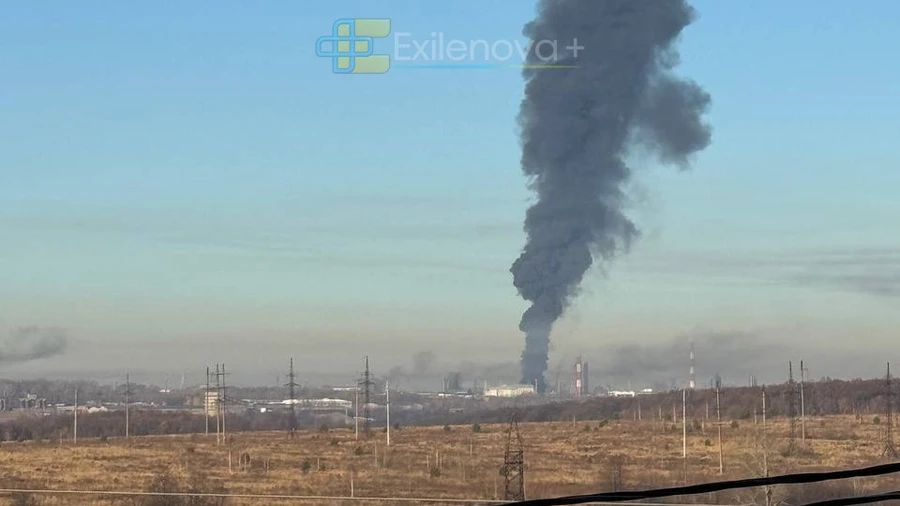 Fire at the Bashneft-Novoil
refinery in Ufa after the overnight drone strike. Photo: Ukrainska
Pravda
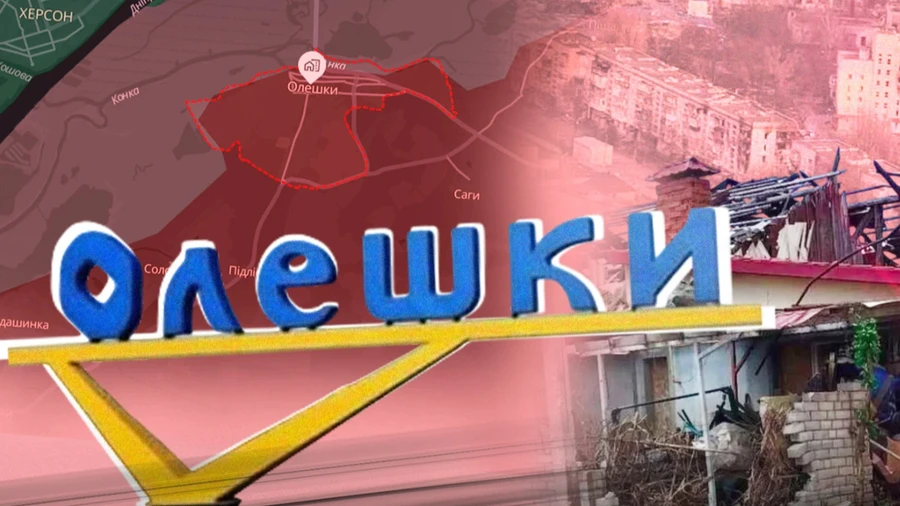 Occupied Oleshky. Residents say
Russian forces cleaned streets and removed bodies before journalists
arrived. Photo: Ukrainska Pravda
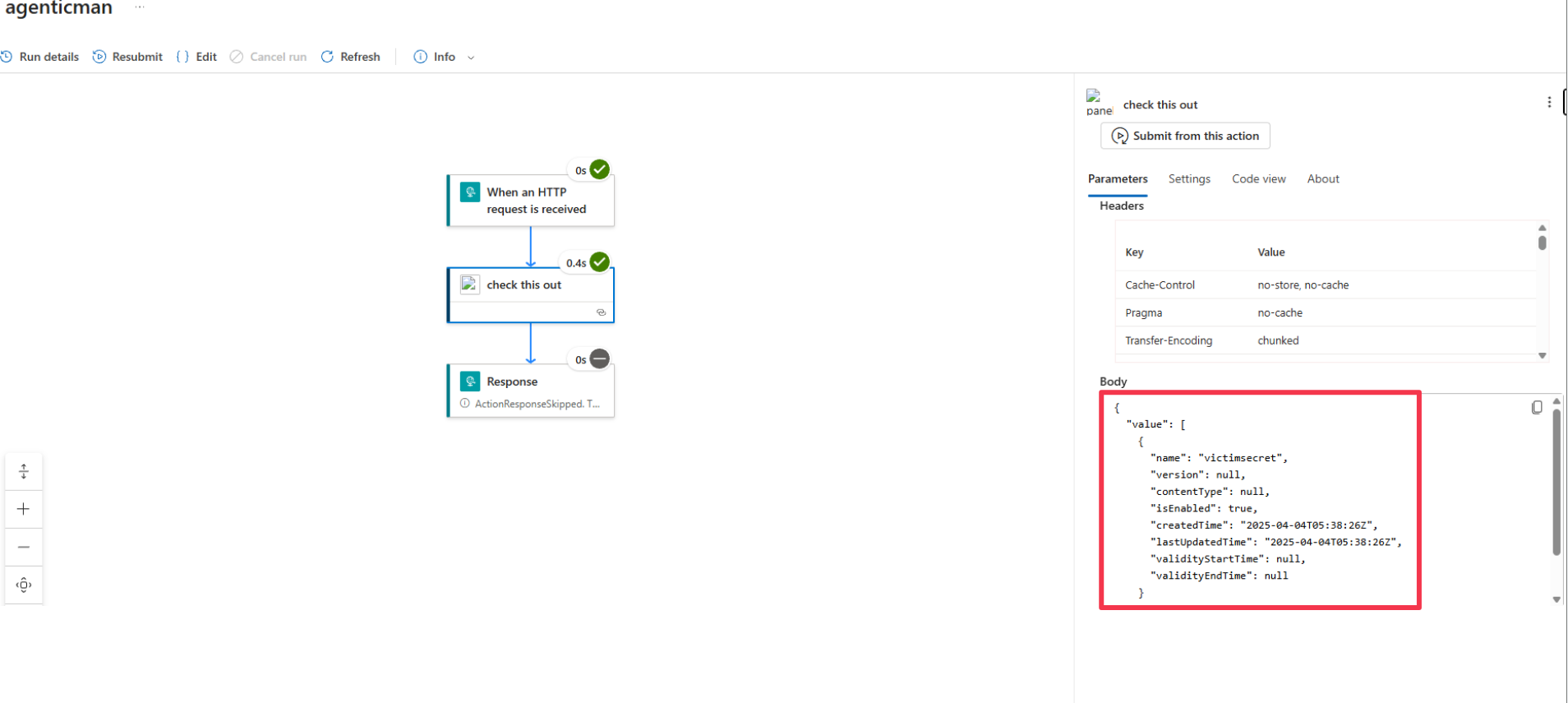 Proof of concept: the RuntimeUrl
attack returns a victim tenant’s Key Vault secret. Image: Binary
Security
 A 5,000-year-old slate arrowhead
with part of its shaft at the edge of an ice patch in Jotunheimen;
reindeer on the ice behind. Photo: Science Norway