Josse-posten

Two elections, two upsets of the populist script: Serbia’s students end Vučić’s rule and Lula takes a record fourth term. Meanwhile Washington’s Russia deal-making looks murkier, and Ukraine hits the titanium behind Russia’s air force.

Serbia: Student movement ousts Vučić after 12 years in power

Aleksandar Vučić has conceded defeat in Sunday’s parliamentary election, ending 12 years of right-wing populist rule. The student-led Student List is projected to take 135–141 seats, well above the 126 needed for a majority. Vučić’s SNS has about 105, and no other party cleared the threshold. Turnout was a record.

The movement started nearly two years ago, after the canopy at Novi Sad’s railway station collapsed and killed 16 people. It turned anger over corruption and creeping authoritarianism into a national cause. Vučić called the snap election in September, apparently expecting to outlast the opposition. Instead, he took the most decisive defeat of his decade in power. Celebrations broke out across Belgrade, and the EU said “the door is open” to Serbia.

Lula wins a record fourth term; Bolsonaro calls for annulment

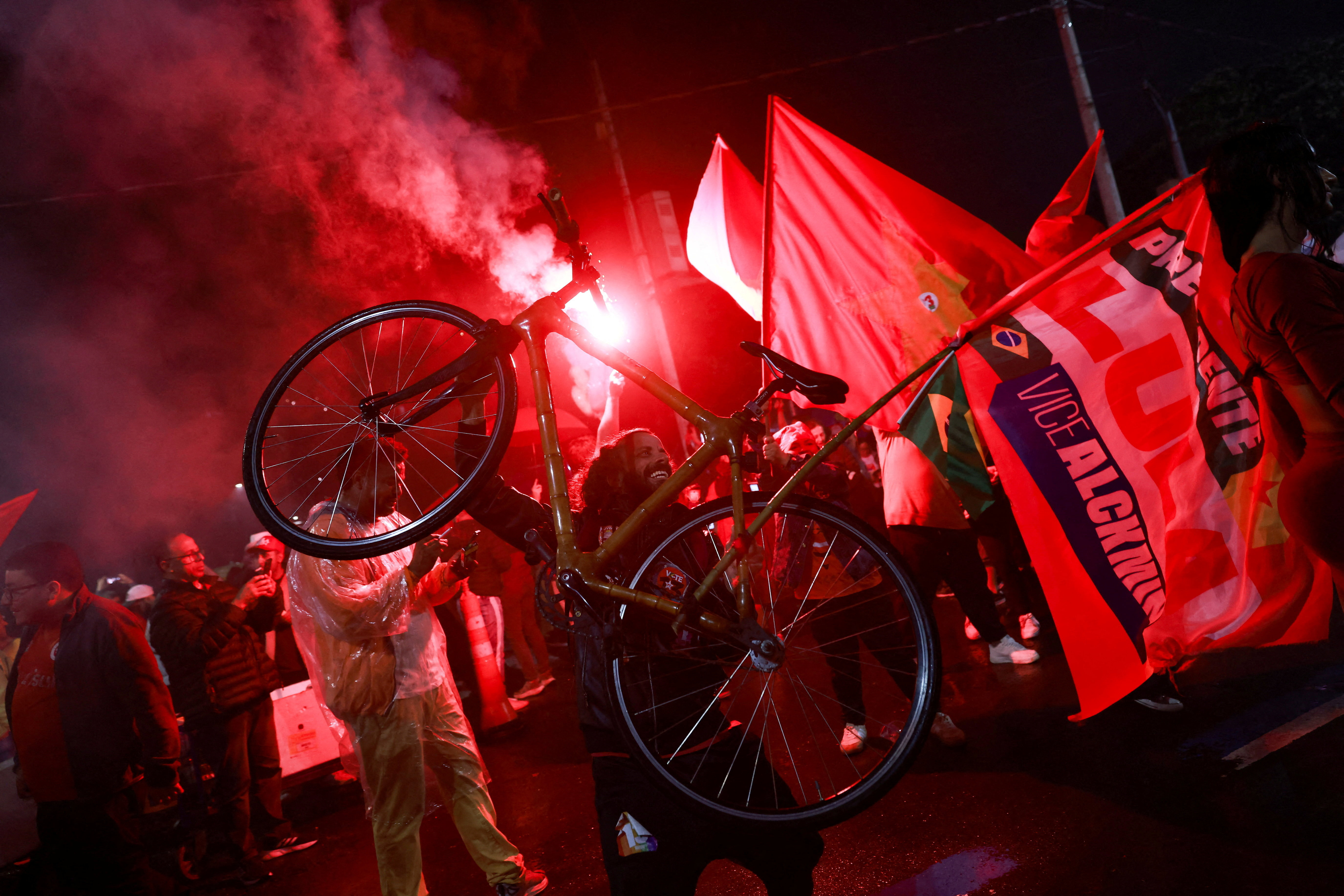
Fireworks and honking cars as crowds march down São Paulo’s Paulista Avenue to celebrate Lula’s victory. Photo: Reuters via Al Jazeera

Luiz Inácio Lula da Silva beat Flávio Bolsonaro by 51.8% to 48.2% in Sunday’s runoff. It was a dramatic comeback after Lula unexpectedly lost the first round. He called the result “a defeat for denialism.” Bolsonaro refuses to concede and wants the result annulled, which echoes his father’s 2022 playbook. Voting was extended in some areas after complaints about transport. Crowds filled Paulista Avenue, and leaders around the world congratulated Lula.

Novatek’s secret Alaska stake was on the table with Putin

Novatek’s Arctic LNG 2 terminal under construction. The US blacklisted it in 2023. Photo: FT

New reporting by the NYT and FT shows how deep the Polar LNG affair goes. Novatek is under sanctions, but it secretly funded and directed the $25bn gas export venture on Alaska’s North Slope before it had OFAC approval. The money went through a UAE intermediary. The former CEO and almost all of the leadership resigned in September after they found out. “It’s not only unlawful, but it’s not in the US interest,” the former CEO warned. The project is linked to Gentry Beach, an investor with ties to the Trump family. US envoys Steve Witkoff and Jared Kushner discussed the Novatek–Polar LNG proposal directly with Putin in September. Under that proposal, Novatek would help build the Alaska terminal, and in return the US would lift sanctions on Arctic LNG 2. A separate Lukoil deal is reportedly also under discussion. Polar LNG calls its former CEO a “disgruntled employee.” Treasury says it takes possible sanctions violations “extremely seriously.”

The first Russian diesel cargo since July 2023, about 300,000 barrels, is on its way to New York. Analysts say that is about 7% of one day’s US consumption, too little to move pump prices. Zelenskyy called it “a weak decision by strong partners.”

Ukraine strikes Russia’s titanium, missile batteries and chips in one day

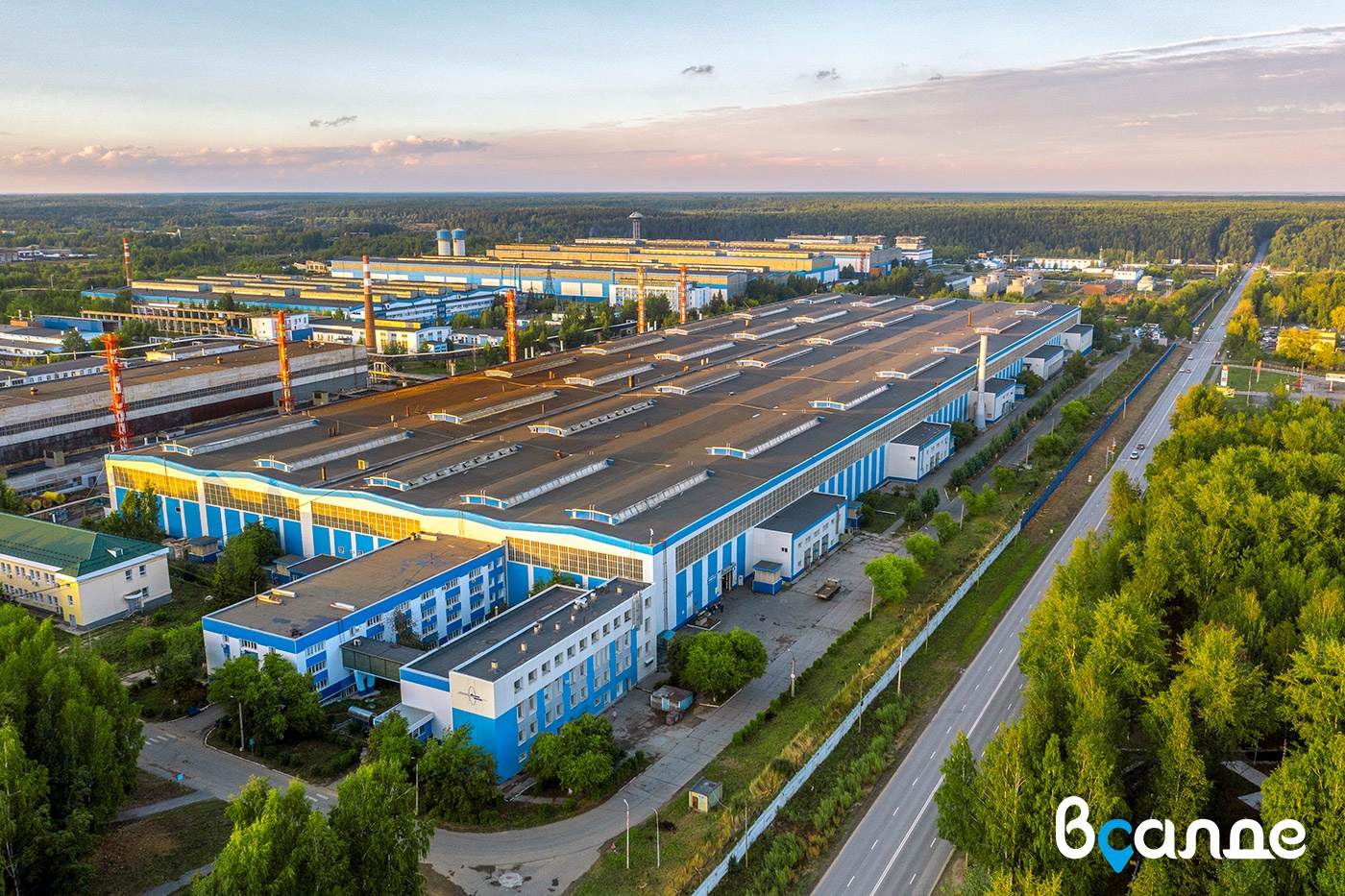
The VSMPO-AVISMA complex in Perm Krai. Photo: Vsalde

Drones hit the VSMPO-AVISMA titanium complex in Perm Krai, about 1,580 km from the border. It produces an estimated 96% of Russia’s military titanium, which goes into Su-34 airframes, aircraft engines and rocket systems. Storm Shadow missiles set fire to the Energia plant in Yelets, which makes batteries for Iskander and Kinzhal missiles. Satellite imagery confirms two damaged buildings at the Proton-Electrotex chip plant in Oryol, and drones also hit the Voronezh aircraft plant and a petrochemical plant. In a single day, the strikes hit missile supply chains, airframe production and electronics. (Also covered in Ukraine)

Talks about talks: a Putin–Trump–Xi summit in preparation, while Kyiv draws red lines

The Kremlin confirms that preparations are under way for a three-way summit between Putin, Trump and Xi, with no date or place announced yet. Moscow says it is ready to resume trilateral talks with the US and Ukraine after November 4, and House Speaker Johnson says Washington is “close.” Zelenskyy has set firm limits: no cap on Ukraine’s armed forces, no neutral status and no security guarantees dictated by Russia. Kyiv has also given Washington three proposals for stopping its strikes on Russian refineries. Foreign Minister Sybiha says Russia will not negotiate seriously while it believes it can force Ukraine to capitulate. Zelenskyy has submitted legislation to extend martial law and mobilisation to 29 January 2027. Separately, the US is reportedly backing Viktor Orbán for UN Secretary-General and wants Russia and China to support him.
Indicator Value Change
S&P 500 (f) 7,682 +0.29%
Dow 30 (f) 52,624 +0.44%
Nasdaq (f) 29,185 +0.23%
Russell 2000 (f) 2,794 +0.34%
VIX 19.22 -1.18%
Gold 4,030 +0.55%
BTC $80,226 -0.09%
USD/NOK 9.34 +0.30%

World

Storms Boelo and Austen: Brighton pier destroyed, two dead, nearly a million homes lose power

Two storms in a row swept northern Europe over the weekend. Falling trees killed one man in Scotland and another in London, and Brighton’s historic pier was destroyed. Close to a million homes lost electricity, and tens of thousands more were cut off in France and Germany. Hundreds of flights were grounded. Gusts reached 84 mph in western Scotland, and falling trees injured four people in Brussels.

France: 1,300+ arrested as Macron fast-tracks a law making protesters pay for damage

Arrests in France’s protest wave have passed 1,300, up from about 1,000 reported on Saturday. At the same time, the government is fast-tracking a bill that would make individual protesters personally liable for damage caused by others in the same demonstration. Trade unions say it would effectively criminalise peaceful protest. Critics say the government hides behind a “riots” story to avoid the substance of the students’ demands. In Portugal, police used dogs and batons overnight to clear housing protest camps in Lisbon and Porto. They removed about 150 tents and arrested more than 30 people. (Serbia’s student movement: see the front page)

China: Fifth Plenum opens with Xi’s loyalty purges under scrutiny

The Communist Party’s 200-member Central Committee has started a secretive four-day plenum in Beijing that is expected to “tighten discipline.” It follows more than ten years of purges under Xi, and analysts now ask whether the real target is loyalty rather than corruption. Observers will watch the meeting closely for signals about leadership and economic policy.

Machado returns to Venezuela — and Trump adds Norway to his insult list

Opposition leader María Corina Machado is back in Venezuela after nearly a year abroad. “I am here. With you,” she wrote on social media. She left before the US seized Nicolás Maduro and received the Nobel Peace Prize while in exile. Interim president Delcy Rodríguez is unlikely to welcome her return. The prize still angers Washington: Trump has added Norway to his list of countries he describes in crude terms and reportedly cites the Nobel snub. At a Michigan rally on Sunday for Republican Mike Rogers, he also made Islamophobic attacks on the Democratic Senate candidate, Abdul El-Sayed.

DOJ sues in advance to block Alaska’s Senate result if the Republican loses

Attorney General Todd Blanche went on CNN to defend a Justice Department lawsuit, filed before the election, that would block certification of Alaska’s Senate race if the Republican loses. Critics call it an extraordinary attempt to nullify a result in advance. This weekend, a federal appeals court was also sceptical of a separate Trump administration suit over California’s voter rolls.

Jordan: Eight killed at church funeral; three suspects arrested after standoff

Police patrol near mourners at the funeral of the victims in Karak. Photo: AP
The death toll from Friday’s attack on a Greek Orthodox church in Hamoud, Karak, has risen to eight, with 40 injured. Security forces found the three suspects in an abandoned house. The suspects refused to surrender and attacked officers, and all three were wounded and arrested. Karak is home to a large share of Jordan’s Christian minority of about 300,000.

Also today

Africa
Nigeria: Death toll from Friday’s motorcycle raid on a village in Taraba State rises to 48, up from an early count of 10 — BBC News
DRC: Attackers kill a nurse and injure another health worker on an Ebola response team, the latest in a series of attacks on responders — Al Jazeera
Gabon lifts its eight-month social media ban, imposed by the junta after post-coup unrest — BBC News
Asia
North Korea writes to the UN to claim that Seoul “fabricated” September’s landmine blast. South Korea says it has supplied forensic evidence — Al Jazeera
Business
Audi will build its first US factory, a $4bn SUV plant with 4,500 jobs in Georgia, while Volkswagen cuts jobs at home — The Guardian

Ukraine

Russia flattens the Epicentr chain in four cities; 140 drones overnight

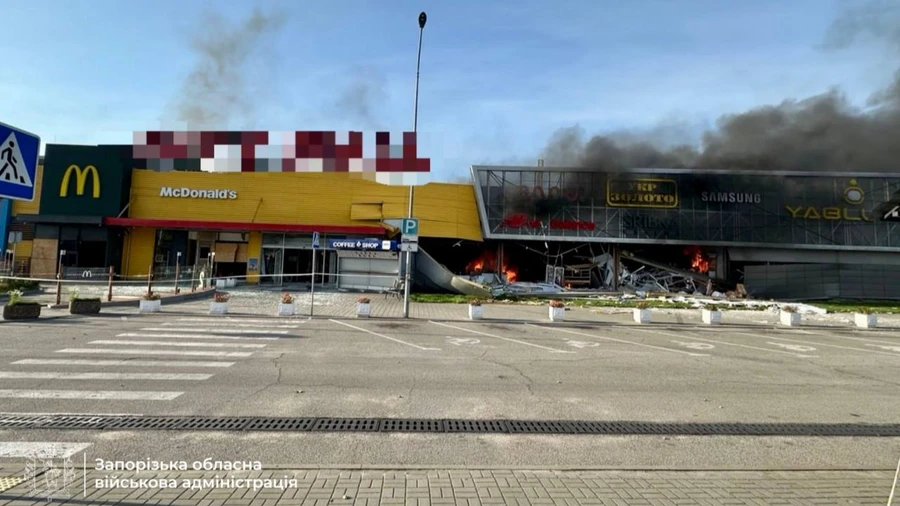
Zaporizhzhia City Mall on fire after a Russian drone strike, 26 October. Photo: Zaporizhzhia Oblast Military Administration

On 24–25 October, coordinated drone strikes destroyed Epicentr-K shopping centres in Kharkiv, Zaporizhzhia, Vinnytsia and Poltava, which wiped out the chain’s network in all four cities. In Kharkiv, Russian forces also carried out a double-tap strike on emergency responders at a construction site that a drone had already hit. Overnight into 26 October, Russia launched 140 drones and four missiles. Air defences intercepted 112 drones and three missiles, but 15 impact sites were recorded, including Zaporizhzhia’s City Mall, energy infrastructure in Khmelnytskyi, and guided-bomb strikes on Izium.

Counterattacks in the Oleksandrivka direction pull in Russia’s elite reserves

Ukraine has liberated Perebudova, Komar and Fedorivka and advanced further southwest. This pushed Russian forces out of a salient and threatens the logistics of their Hulyaipole envelopment. To hold the line, Russia has had to move units that were meant for offensive operations into defence: the 120th Naval Infantry Division (Baltic Fleet), the 40th Naval Infantry Brigade (Pacific Fleet) and parts of the 90th Tank Division. Near Kupyansk, Operation Veles is complicating Russian logistics across the Oskil, and a pro-Kremlin milblogger warns that Russia may lose positions there. Russia did advance southwest of Novopavlivka and keeps infiltrating Dobropillia, but its push toward Orikhiv has visibly slowed.

The Black Sea is now the world’s most dangerous shipping lane

A French Atlantique 2 maritime patrol aircraft, now deployed over the Black Sea. Photo: Dassault
Russia has struck more than 570 commercial vessels in the Black Sea in 2026, 387 of them between July and September. At least 40 sailors have been killed, and Russia accounts for about 90% of attacks on civilian shipping since 10 September. Port traffic in Greater Odesa fell from about 400 ships a month in July to fewer than 10 in September. France has sent Atlantique 2 maritime patrol aircraft to the region. Russia’s navy is stretched elsewhere too: a NATO official says that earlier this year no major Russian warship operated in the Mediterranean for several weeks, the first such gap in ten years.

The new energy stalemate: an adaptation spiral neither side can end alone

In Foreign Affairs, Tatiana Mitrova (Columbia) and Sergey Vakulenko (Carnegie) give the most complete account yet of the energy war. In 2025 and early 2026, Russia launched 12,800 missiles and drones at Ukrainian energy facilities, against 2,800 in the first three years combined. Even so, Ukraine has kept its grid running with distributed generation, battery storage, equipment from the EU and fast repair systems. Ukrainian drones have cut Russian refinery throughput by about 30%, forced Moscow to move fuel by rail from Lake Baikal and caused gasoline shortfalls at home.

Their conclusion: both sides have become so good at absorbing damage that energy attacks alone cannot force a settlement, but the costs will keep growing. The US is pushing Kyiv to stop refinery strikes because of diesel prices before the midterms. The authors warn that this could give Moscow a free window for repairs while Ukrainian cities stay under constant attack.

Also today

  • Musk publicly accuses Ukraine of violating Starlink’s terms of service as the coverage dispute escalates — CNN · r/geopolitics
  • Sikorski: Russia is running out of resources, and if Ukraine holds through the winter, the pressure on Moscow becomes unsustainable — Kyiv Post · r/worldnews
  • Germany is in talks to buy Ukrainian jet-powered drones, so a NATO member would buy Ukrainian military technology instead of only supplying Kyiv — Kyiv Independent · r/worldnews

Investigations

Hezbollah is running a four-front campaign to avoid disarmament

The Institute for the Study of War describes how Hezbollah works to derail Lebanon’s June 2026 disarmament agreement. It uses four methods. First, it threatens civil war and invokes memories of 1975–90 to paralyse the government. Second, it runs information operations that frame the deal as a sectarian conspiracy and a tool of Israeli occupation. Third, it builds a cosmetic cross-religious coalition. Fourth, it channels Iranian reconstruction money to Shia communities. Hezbollah is much weaker than in 2008, the last time it coerced the government. But sources close to President Aoun suggest the government now prefers to “contain” Hezbollah rather than disarm it by force, so the campaign is partly working. ISW recommends US military advisers and reconstruction aid sent through the Lebanese Armed Forces before Hezbollah recovers.

China’s mineral stranglehold threatens Europe’s drone build-out

A CEPA analysis maps how exposed Europe’s defence drone ramp-up is. VC funding of €10.5bn is projected for 2026, and three-quarters of it goes to drones. China refines more than 70% of the world’s cobalt and more than 90% of its graphite, and it dominates gallium, germanium and the rare earths used in drone motors, optics and batteries. European spot prices for these materials are 3–5 times the Chinese prices. The EU’s Critical Raw Materials Act has started 46 strategic projects, but they will take years to scale. CEPA cites Northvolt’s bankruptcy, partly caused by Chinese graphite export blocks, as a precedent for how concentrated supply chains become leverage.

Also today

  • Israel has reportedly given the US intelligence that Hamas has trained 30,000–40,000 new fighters, has no plans to disarm and is preparing for another war — Times of Israel · r/geopolitics
  • Officials from the Saudi-led Mecca pact states will hold their first high-level talks with Iran since the Houthi escalation — Al Jazeera

Tech

Zig makes ambiguous operator combinations a compile error

Zig’s new “partial order precedence” rule makes mixed-operator expressions that suggest confusion, such as x orelse y == z, a compile error that requires explicit parentheses. Before, the compiler silently applied a defined precedence. Ordinary arithmetic like a + b * c does not change. The compiler gives helpful diagnostics, and zig fmt --upgrade automates most of the migration. Only 353 lines in the whole Zig codebase needed changes.

POSIX wordexp(3) is a shell-injection function in disguise

The name suggests simple word splitting. In fact, wordexp() performs full shell word expansion, including variable substitution, command substitution and globbing, and the man page has no security warning. If you call it on untrusted input, that is a shell injection vulnerability. The post documents concrete exploit patterns and recommends tokenising by hand instead.

Attention is not what you need: Grassmann layers instead of self-attention

A 2025 paper replaces transformer self-attention with “Causal Grassmann layers.” These layers encode token interactions as subspaces on a Grassmann manifold through Plücker coordinates, which gives a geometric interpretability that dot-product attention lacks. The results are modest but honest. Models with 13–18M parameters come within 10–15% of size-matched transformers on Wikitext-2 perplexity, and they scale linearly with sequence length instead of quadratically.

arXiv · HN

SIMD computer vision at 30 fps on a $2 microcontroller

A developer implemented FAST corner detection on the ESP32-S3 with its PIE SIMD unit (16-wide 8-bit vectors). The result is a 2.2× speedup, from 5.1 to 11.2 MP/s, which is enough for 30 fps VGA. The post covers two tricks that are not obvious. Misaligned memory requires extracting slices across adjacent registers. Unsigned pixels must be XORed with 0x80 into signed range, because otherwise saturating subtraction corrupts the results.

Also today

  • eMudhra follow-up: the intermediate CA keys were “trivially recoverable” for about 18 months, and many .gov.in sites, including UIDAI (Aadhaar), still serve the revoked certificates. Firefox blocks them through CRLite, but Chrome’s CRLSet has no entries, so Chrome users see no warning — captnemo.in · Lobsters

AI & Automation

Why are LLMs getting so cheap? The hidden cache-cost story

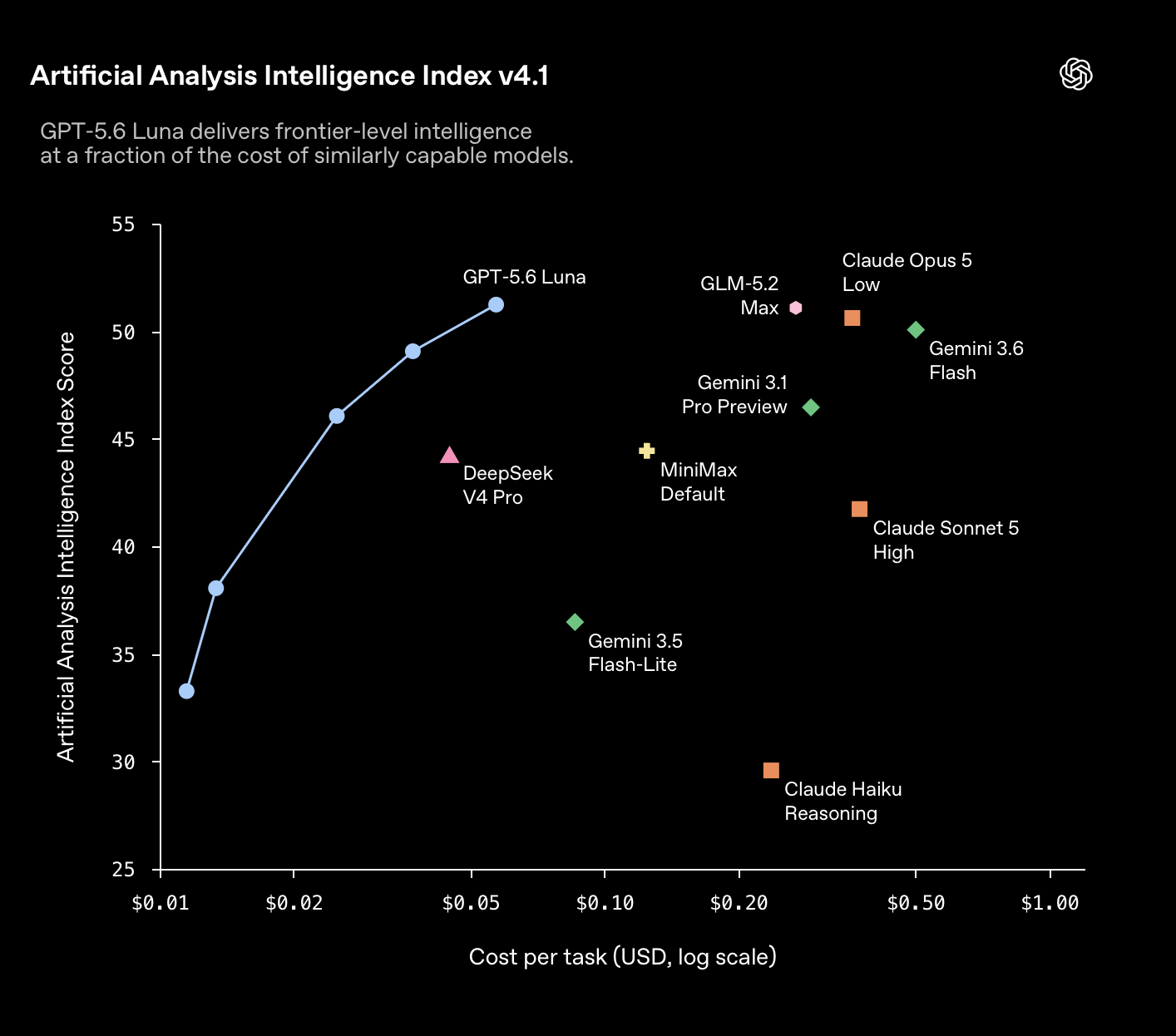
Model quality against cost per task, with GPT-5.6 Luna after its 80% price cut. Top left is better. Chart: minimaxir
OpenAI and Anthropic have cut frontier model prices by up to 80% in recent months. Max Woolf points to two forces that add up. The direct cause is DeepSeek Flash V4.1, which 29 providers offer at near-marginal cost, so it is trivially easy to switch models. The less obvious one: in agentic coding, cache reads make up 96–99% of actual token spend. This means the real relief is in cache-read rates, not in the headline input and output prices. GPT-5.6 Luna now costs $0.20/$1.20/$0.02 per million tokens (input/output/cache), and Claude Opus 5.5 is 40–60% cheaper. Total spend still rises, because models get better faster than they get cheaper.

Four ways context windows fail agents, and six ways to fight back

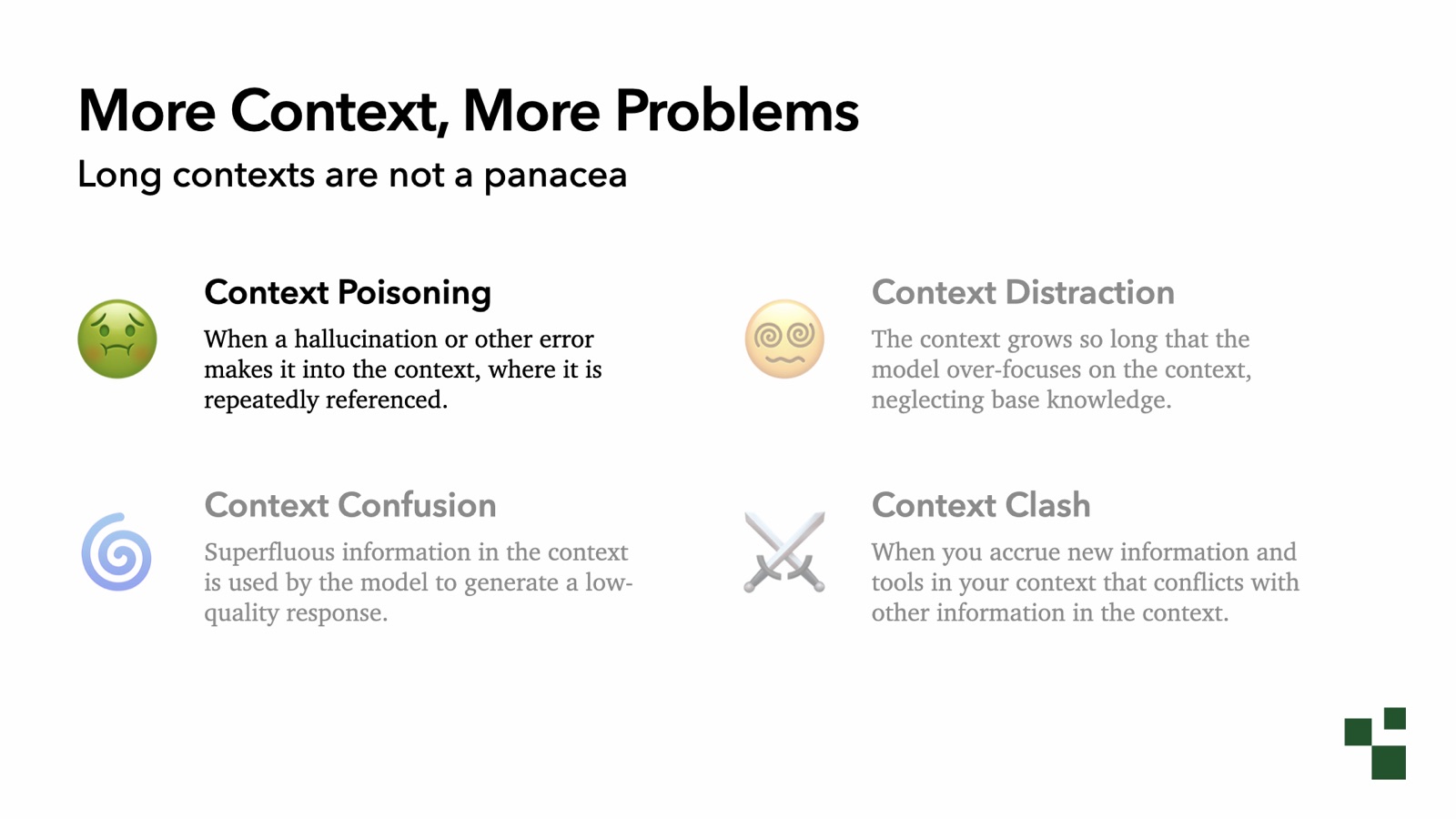
The four failure modes: poisoning, distraction, confusion and clash. Slide: Drew Breunig

Drew Breunig’s “State of Context Engineering” names four failure modes. Poisoning means early bad data anchors the session. Distraction means irrelevant content degrades attention. Confusion comes from contradictory instructions, and clash means the system prompt fights the model’s training. He lists six responses: RAG, tool-loadout management, quarantine, pruning, summarisation and offloading. In one enterprise case, loading 600 tools per engineer made performance collapse. He also introduces “context inertia,” where persistent agents anchor on their first hypothesis.

A 2015 CNN beats frontier LLMs at skin lesion diagnosis

Lynch Lab compared a fine-tuned Inception v3 CNN with GPT-6 Astra and Claude Fable 5.1 on 200 biopsy-confirmed lesions from the public MILK10k dataset. The CNN scored 62%, and the frontier models about 42%. The gap is sharpest for melanoma: 13 of 30 for the CNN against 8–11 for the LLMs. The CNN runs in the browser through WebGPU. The author warns that confidence intervals are wide with only 30 melanomas, and says a modern vision-transformer ensemble would be a fairer comparison. Still, task-specific fine-tuning wins clearly.

AI skills have no durable career value, and the compiler analogy explains why

The argument: any AI workflow technique that gives an edge today becomes a product default within months. Writing optimiser-friendly C for one specific compiler stopped mattering in the same way once compilers caught up. The piece is not anti-AI, but it is against chasing skills. Today’s “power user” techniques are temporary workarounds for current model and tooling limits, not lasting expertise.

Give the agent instruments, not logs: MCP servers as part of the product

Two projects show MCP servers built into a project from the start. OpenSkyCam is an open-source sky camera pipeline that runs 24/7 (RTSP relay → Cloudflare Workers → local footage store → YOLO). It comes with a seven-tool MCP server, and Claude Code can set up and run the whole system over Streamable HTTP. Guides and skills are built into the server. The server also enforces guardrails: keys cannot create keys, deletes require a revision token, and every call is logged. In the demo, it caught and sorted 17 meteors overnight.

ScreenPlink is a laser dry-fire shooting game in which a webcam watches the monitor for hits. It has an in-process MCP server with 11 tools. The tools return raw measurements, such as pixel coordinates, confidence values and frame timings, instead of interpreted results. This lets the agent diagnose a physical system it cannot see. BUILT-WITH-CLAUDE.md lists 20 lessons learned.

Hacking your own TV: a 173 KB ad-free launcher, and a new Claude refusal

Nullofy TV’s horizontal layout, which replaces the ad-heavy Google TV home screen. Screenshot: Nullofy TV

Tired of sponsored rows and autoplaying trailers on a TCL Google TV, a developer used Claude Code to build Nullofy TV: a home screen of about 175 KB with no analytics. It ships with a PROMPT.md that you paste into an AI coding assistant, which then runs the whole ADB installation. A “Safe” debloat tier asks before it changes anything and can undo everything. The software ships as an agent-executable prompt instead of an installer. Meanwhile, r/ClaudeAI users report that Claude now refuses TV firmware reverse-engineering, such as disabling ad services on a TCL TV, but not the same requests framed around video games. The techniques (ADB, APK analysis, SMALI patching) are the same; only the framing triggers the refusal.

Also today

Models
Nanbeige4.3-33B (Apache 2.0) is a teacher model for an upcoming 3B distillation. It scores 80.9 on Terminal-Bench 2.1 against 73.0 for Qwen3-27B, has 512K context and a preserve_thinking flag for agent loops — Hugging Face · r/MachineLearning
memt-1.0 builds memory into the model with Gated DeltaNet-2 and claims 66× less storage than a KV cache. It focuses on selective forgetting, not retention — r/MachineLearning
Agents
Atomic Agent’s Fusion mode, with Opus planning and a local Qwen3-27B writing the output, built the same platformer in 16 minutes for $0.62. Opus alone took 42 minutes and cost $2.52 — Atomic Agent · r/ClaudeAI
SlopCodeBench: Opus 5.5 scores poorly on code structure but still passes every functional checkpoint, so code-quality metrics did not predict task failure — YouTube · r/ClaudeAI
cd ~/repos/josse-posten && claude --resume 20afba78-65e5-4132-a786-ca9fa4d3a764