Musk says he throttled Ukraine’s Starlink himself; Ukraine’s
drones reach Omsk and black out Crimea; Washington and Tehran face a
Sunday deadline for a strike or a deal; and Brazil, Serbia and Bulgaria
all go to the polls.
Starlink
fully restored — and Musk admits he personally ordered the
throttling
Ukraine’s military confirmed that Starlink and Starshield are back at
full operational speeds, working again at over 400 km/h, after more than
ten days of severe throttling that disrupted frontline drone operations.
Elon Musk then publicly admitted he was behind the restriction. He
claimed Ukraine’s military had used Starlink for offensive drone strikes
in violation of SpaceX’s terms of use. Kyiv denies this. The admission
follows Saturday’s reporting that the US government had itself pressured
Musk over Starlink access for years.
The episode has pushed Ukraine to look at alternatives. Finnish tech
companies, among them ICEYE, announced plans to help Ukraine build a
sovereign satellite system, and the drone maker Wild Hornets says it is
rethinking its reliance on Starlink. European alternatives are still
years away from matching Starlink’s capabilities.
Ukraine
strikes Omsk at 2,500 km; “Operation Crimea Switch Off” blacks out the
peninsula
Ukraine’s deepest strikes yet hit Omsk Oblast, about 2,500 km from
the border, setting the Omsky Kauchuk chemical plant and an Ozon
logistics hub ablaze. Drones also hit the Tolyattikauchuk petrochemical
plant in Samara Oblast and an aircraft at Yeysk airfield.
The strike with the most immediate battlefield effect was closer to
home. Operation Crimea Switch Off knocked out the Taman substation in
Krasnodar Krai, the sole power node of the energy bridge that feeds
occupied Crimea, and caused blackouts across the peninsula. Sevastopol
is running on two hours of power followed by six hours without;
NetBlocks recorded internet traffic near zero. The General Staff also
confirmed that Friday’s Storm Shadow/SCALP strike on Oryol’s
Proton-Electrotex plant damaged its main production building. The plant
makes components for Iskander-M missiles, Kh-101 cruise missiles and
Pantsir-S1 air defence systems. (More in Ukraine)
Iran
talks collapse; Trump hints at a Sunday strike — or a deal
Iran’s foreign ministry blamed the United States for the failure of
the nuclear and de-escalation talks, and urged a new attempt. It warned
that any US strike, even a limited one, would bring a response “several
times greater”. Trump is hinting at either an attack or a deal on
Sunday. Saudi Arabia intercepted a Houthi ballistic missile aimed at
Riyadh, and Egypt, which is weighing whether to enter the conflict on
Saudi Arabia’s side, remembers its disastrous Yemen war of the 1960s.
(Iran’s Chinese-supplied drone rebuild: see World)
Election
Sunday: Brazil’s dead heat, Serbia’s student challenge, Bulgaria’s
Ukraine divide
Brazil votes in a runoff between Luiz Inácio Lula da
Silva, 80, seeking an unprecedented fourth term, and far-right senator
Flávio Bolsonaro, son of the imprisoned ex-president. The final Futura
poll has it at 50.1% Flávio to 49.9% Lula, within the margin of error.
Over a million Lula supporters rallied on Copacabana on Saturday; Flávio
drew large crowds in Barra da Tijuca.
Serbia holds parliamentary elections in the tightest
race Aleksandar Vučić has faced: the Student List, an anti-corruption
movement born from months of street protests, is running neck and neck
with his Serbian Progressive Party.
Bulgaria elects a president with Russia’s war as the
dividing line. Both leading candidates condemn the recent deadly drone
strikes in the Black Sea, but they diverge sharply on wider support for
Ukraine.
C++26
rejected by national bodies in an unprecedented ISO vote
The C++26 Draft International Standard failed its ISO ballot,
apparently the first time a C++ standard has been rejected at this
stage. The dispute is about contracts (precondition and postcondition
assertions). WG21 approved them by strong consensus, but a campaign led
by Bjarne Stroustrup persuaded national bodies to vote the draft down,
citing one-definition-rule interactions, selective enabling of
contracts, and UB semantics. There is no clean process to strip
contracts and re-vote; the working draft remains the basis for C++29.
(More in Tech)
| Indicator |
Value |
Change |
| S&P 500 |
7,624 |
−0.52% |
| Dow 30 |
52,215 |
−1.23% |
| Nasdaq |
25,955 |
−0.21% |
| Russell 2000 |
2,776 |
−0.29% |
| VIX |
19.45 |
+2.21% |
| Gold |
4,008 |
−1.29% |
| BTC |
$80,397 |
−0.26% |
| USD/NOK |
9.32 |
−0.36% |
- A broad decline led by the Dow (−1.2%), with gold down 1.3% and
the VIX up 2.2%
- Iran talks have collapsed, with a possible strike or deal on
Sunday (see the front page)
World
Israel
votes Tuesday: West Bank sealed, a Hebron neighbourhood razed, Tel Aviv
demands an Oct 7 inquiry
Israel will close all West Bank land crossings on election day,
cutting off tens of thousands of Palestinian workers. In Hebron, troops
levelled an entire neighbourhood and drove hundreds of families from
their homes, as collective punishment for a militant attack on an army
checkpoint. In Tel Aviv, thousands rallied for an official commission of
inquiry into the failures of October 7. The race between Netanyahu and
Gadi Eisenkot is tight, and both camps are fighting a parallel online
war with bots, deepfakes and voter surveillance. The ultra-Orthodox
draft exemption could break any coalition, whoever wins.
Separately, Netanyahu has authorised Israeli diplomatic support for
Argentina’s claim to the Falkland Islands. The move aligns Israel with
the Milei government and complicates relations with the UK at a
sensitive moment.
Iran
rebuilt its drone production through 1,300 Chinese air shipments
Iran has reconstituted its drone manufacturing with dual-use
components delivered in about 1,300 Chinese air shipments, according to
Iran News Wire. The components get around sanctions and feed both
domestic military production and supply chains to Russia and regional
proxies.
France:
nearly 1,000 arrested as protests turn violent — Italy sends the army
into Milan
Hundreds of thousands marched across France on Saturday in largely
peaceful daytime protests over school underfunding, teacher shortages
and policing. After nightfall, clashes broke out in Paris and other
cities, with fireworks and tear gas. Nearly 1,000 people were arrested;
more than 70,000 officers had been deployed. Demonstrations over living
costs and public-service cuts spread to Italy, Spain, Albania and
Portugal.
Italy responded by deploying soldiers to guard central Milan, raiding
homes in the city, and moving to approve tougher anti-riot laws.
Finland
is teaching Britain how to counter Russian hybrid warfare
Finland, which shares a 1,340 km border with Russia, is directly
advising the UK on how to detect and respond to hybrid tactics:
cyberattacks, disinformation, infrastructure sabotage and political
interference. It is part of a wider NATO push to share Finland’s
hard-won knowledge with less-prepared allies.
Also today
- Europe
-
Burnham wants an “honest discussion” about restoring EU freedom of
movement, ahead of a UK–EU summit in November — The
Guardian
-
Thousands rally across Turkey against journalist arrests and media
shutdowns — Al
Jazeera
- Africa
-
Islamic State-linked militants kill at least 48 civilians in eastern
Mali — r/worldnews
-
Gunmen kill at least 10 and loot shops in Binnari village, Taraba State,
Nigeria — BBC · Al
Jazeera
-
Ebola: a second death in Kenya, a close relative of the first victim,
confirms household transmission — BBC
- Americas
-
British Columbia’s Conservatives win a majority after nearly a century
out of power, defeating David Eby’s NDP — Globe
and Mail · r/worldnews
-
Archdiocese of New York agrees to pay $800m to 1,300 abuse survivors,
the second-largest Catholic settlement in US history — Al
Jazeera · NPR
-
US measles cases reach 4,588 across 43 states, more than double the
full-year 2025 total — The
Guardian
Ukraine
Zelenskyy:
2,000 missiles to the Middle East in 48 hours — Ukraine got 24 in 90
days
Western partners delivered roughly 2,000 missiles to Middle East
partners within 48 hours of the Iran escalation, Zelenskyy said, while
Ukraine received 24 over the preceding 90 days. He also enacted
sanctions against Russian missile manufacturers, ballistic weapons
makers and military drone suppliers.
He said separately that China has enough influence over Putin to
force an end to the war — as Kim Jong Un crossed the newly opened Yalu
River bridge into China, a visible symbol of the ties between Russia’s
two key partners.
153-drone
barrage kills five civilians; Russia fields a faster Geran-5
Russia launched 153 drones overnight; Ukraine downed 119. At least
five civilians were killed: four in Dnipropetrovsk Oblast, three of them
in Synelnykove, and one in Kharkiv. A drone hit a five-storey apartment
building in Vinnytsia, and Russia kept targeting the Zaporizhzhia
cable-stayed bridge as part of its campaign against Dnipro logistics.
ISW notes two new Geran-5 variants with redesigned fuselages reaching up
to 900 km/h — on par with the Kh-101 — intended to drive down Ukrainian
intercept rates.
Frontline:
largest Pokrovsk motorized assault of 2026 repelled
Russia’s only confirmed gain of the day was southeast of Dobropillya.
Near Pokrovsk, Russia launched its largest motorized assault in the area
this year, with motorcycles and vehicles in pre-dawn low visibility on
21 October; Ukrainian forces repelled it and killed 43. Pressure
continued on the Kharkiv, Kupyansk, Lyman and Kostyantynivka axes
without Russian gains. Russian FPV drones hit a civilian evacuation
vehicle in Slovyansk.
270
POWs come home — including five Olenivka survivors listed as dead
Ukraine brought 270 soldiers home from Russian captivity, most of
them held since 2022. Among them were five survivors of the Olenivka
prison attack who had been listed as dead. Separately, the NYT reports
that North Korea is rapidly advancing its ballistic missiles and
mass-producing attack drones with direct Russian technical support.
Tech
Goose:
a heap-free systems language, designed by a human and implemented by
Claude
Wouter van Oortmerssen (Lobster, WebAssembly) has published Goose, a
memory-safe systems language with no heap at all. N compiler-managed
data stacks take its place. Values grow inline without moving, so
references stay valid as arrays expand — something C++ vectors and
Rust’s safe collections can’t guarantee. Nested structs stay contiguous
with no pointers: a sample order record is 29 bytes against 160 in C++.
The compiler emits a single C file. Claude Fable implemented the
compiler and documentation from van Oortmerssen’s design. Carmack
approved, saying the multiple-stack, relative-reference approach
addresses a real bottleneck in data parsing.
Dan
Luu: developers still think with pre-agentic cost models
AI has dramatically lowered the cost of ambitious projects, Dan Luu
argues, but most developers haven’t updated their priors. His examples —
a custom regex engine, an accelerated ripgrep fork, a Rust interpreter —
each took a few hours, not months; a competitive Azul board-game AI took
about five. The piece includes a substantive counterpoint from Yossi
Kreinin: most developers should be less ambitious with AI,
because agentic loops lack clear success criteria and maintaining
generated code you don’t fully understand is a real risk without deep
domain expertise.
Most
software is slow because of bad design, not slow languages
Sean Goedecke makes the Amdahl’s-law case against rewrites for speed:
a CRUD app that spends half its request time in the database can at most
double throughput by moving to C, even if C were 50× faster. The real
speedups he has seen in production come from caching, async I/O,
parallelism, killing N+1 queries and skipping unneeded work. The notable
exception is Bryan Cantrill’s C program that got 30% faster in a naive
Rust rewrite, because the idiomatic Rust data structures had better
cache locality.
A. Jesse Jiryu Davis describes the Unified Test Format: spec
behaviour encoded as YAML test cases that every MongoDB driver runs
through its own test runner. Adoption deleted 22,000 lines of runner
code across seven drivers (6,000 in Java alone), and C++ CRUD-spec
violations dropped from 4.7 to 0.6 a year. The corpus grew from about
1,000 to 124,000 lines of YAML between 2021 and 2026. The research is
accepted at IEEE ISSRE.
Twelve years of distributed
SQLite
Philip O’Toole looks back on rqlite. The CP design decision made at
the start was never changed, and it shaped every choice that followed.
The core idea — a Raft log in front of SQLite — has since been
reinvented by “at least eight teams”, each arriving at the same shape
from different requirements. His view: distributed relational storage
has only a few natural corners — consensus for strong consistency,
streaming replication for disaster recovery, and merge-based eventual
consistency.
Astral brings uv and ty
together
uv and ty now share project understanding. The headline is
uv check: one command that prepares the environment,
installs dependencies and runs ty across the project. ty also
understands PEP 723 inline script metadata, so scripts with declared
dependencies get completions, hover and go-to-definition based on their
actual requirements. Experimental; needs uv 0.12.3+ and ty 0.0.76+.
How
Cerebras deploys 3-trillion-parameter models across 59 wafers
Pipeline parallelism puts whole layers on individual wafers, with
only activations moving between chips over RDMA. Kimi K3 (3T parameters)
needs 59 wafers: linear-attention layers have fixed-size state and fit
two per wafer, while dense layers need KV cache and get one each.
Keeping the pipeline saturated with many concurrent requests is how they
reach 1,000–2,000+ tokens per second.
In the same vein for local inference, gpu-unlock is
a Linux kernel module that rewrites speed-selector registers before the
Nvidia driver loads, lifting the artificial FP16/BF16 cap on RTX 3000
cards (GA102–GA106). An RTX 3090 Ti goes from 87.5 to 157 BF16 TFLOPS;
LLM prefill and diffusion benchmarks show 14–36% gains.
How to run a city builder
on 12.5 MHz
SimCity didn’t run every subsystem every frame. A counter cycles
0–15, and traffic, fire, power and crime each update on their assigned
frame, giving an average eight-frame lag to player input — which, the
author argues, feels better than instant updates for a city. Assetto
Corsa uses the same pattern to update reflection cubemaps incrementally.
“Do I need to run this every frame?” remains an underused question.
200,000 creative
jobs gone — how much is actually AI?
US employment in media, film and the arts is down about 200,000 from
its peak. Ernie Tedeschi separates the threads: part of the decline
predates generative AI (streaming, newsroom consolidation), part follows
the post-2022 inflection. The hardest-hit groups — visual artists,
writers, translators — match what current models can do, while live
performance has held up.
Also today
- Go gets first-class SIMD: low-level
simd/archsimd types
plus a portable simd package; a dot product runs ~9× faster
than scalar — Internals for
Interns · Lobsters
- Wild linker 0.11.0 can now link Linux kernel modules; Wasm on by
default, ppc64le/loongarch64/RISC-V added, macOS port usable — GitHub
· Lobsters
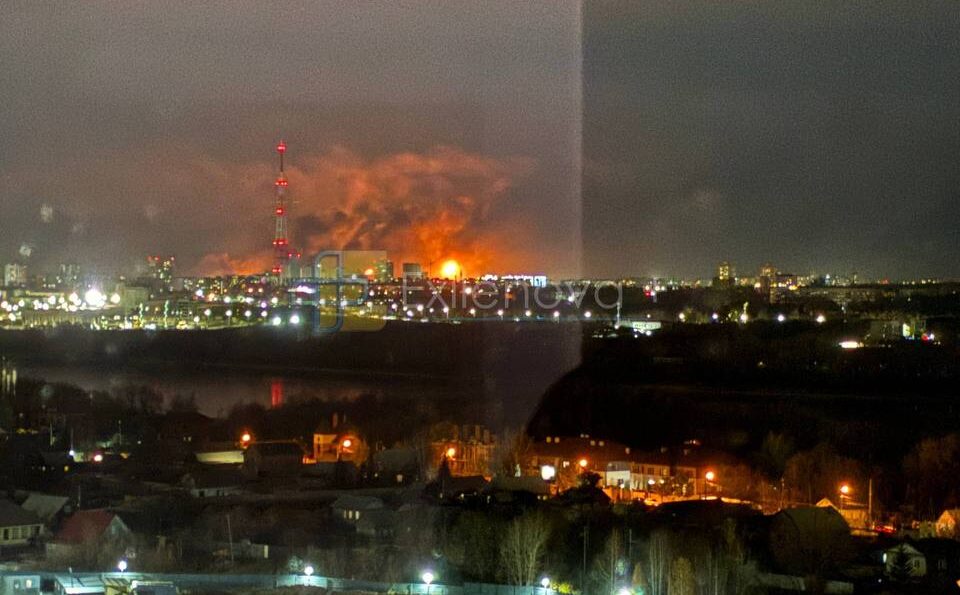 Fire at the Omsky Kauchuk plant
after the Ukrainian drone attack, 24 October 2026. Photo: Exilenova+
 Lula da Silva addresses a massive
crowd on Copacabana Beach on election eve. Photo: Al Jazeera
 A protester in a Spider-Man mask
holds a red smoke flare in Paris. Photo: Al Jazeera
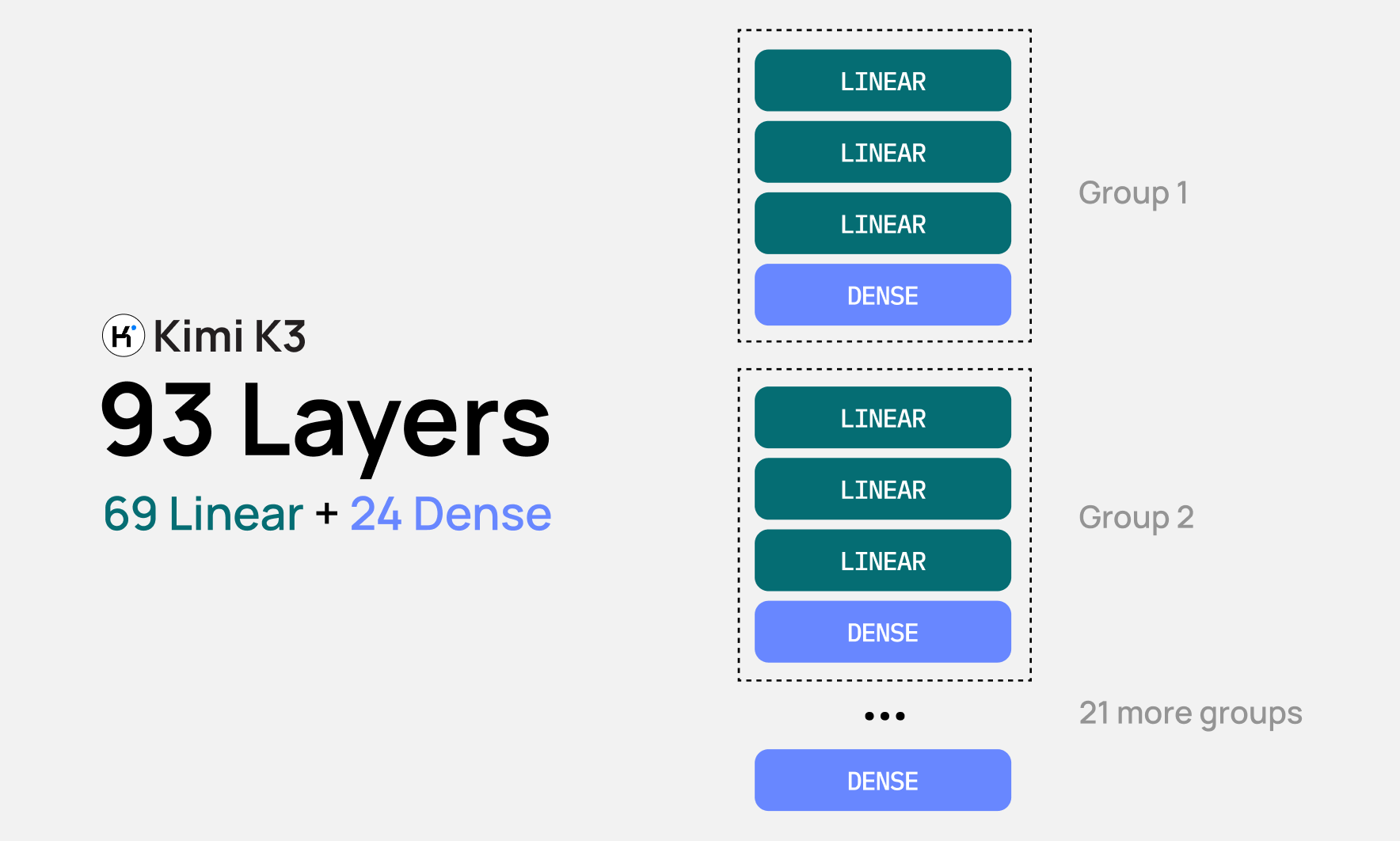 Kimi K3’s 69 linear-attention and 24
dense layers spread across 59 WSE-3T wafers. Image: Cerebras
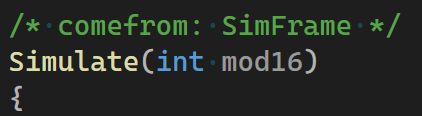 SimCity’s original