Reuters:
the US government itself pressured Musk to restrict Starlink in Ukraine
for years
A Reuters investigation reveals that the US government has for years
asked SpaceX to modify Starlink service in Ukraine and the Middle East.
This reframes the restrictions as US policy rather than Musk’s
unilateral decisions. On the ground, little has changed: Trump and Musk
say the limits are lifted, but Ukraine’s General Staff, Defence Ministry
and Zelensky confirmed on 23–24 October that the 161 km/h speed limits
remain active across “some” units. Some terminals now work above that
speed, which makes the service inconsistent and operationally
unreliable.
In Washington, bipartisan senators say they will hold up Trump
administration confirmation votes until satellite access is fully
restored, and a bipartisan House group urged Defence Secretary Hegseth
to expand the Starshield Pentagon contract. Canada’s PM Carney called
the manipulation a security concern. Meanwhile, Ukraine is learning to
fight without Starlink — switching drone frequencies and battlefield
communications to reduce its dependence.
Ukrainian
drones and balloons shut all four Moscow airports; Storm Shadows hit an
Iskander supplier
Overnight 22–23 October, Ukraine launched its most geographically
dispersed strike campaign in recent memory. 155 drones and balloons
aimed at Moscow Oblast forced all four major Moscow airports —
Sheremetyevo, Domodedovo, Vnukovo and Zhukovsky — to close, and the
IQ-Quarter tower, which houses several Russian ministries, was
evacuated. Storm Shadow cruise missiles struck the Proton
optoelectronics plant in Oryol, which makes components for Iskander-M
missiles, Pantsir-S1 air defence and Kh-71 cruise missiles. An FP-1
drone hit the Azot UralKhim chemical plant in Berezniki, Perm Krai —
about 1,585 km from the border, one of the deepest confirmed strikes of
the war.
The following night, a drone hit the Tolyattikauchuk synthetic rubber
plant in Tolyatti, and an attack on energy infrastructure near
Sevastopol caused widespread power cuts across occupied Crimea.
Iran
bans the US Navy from the Gulf as oil hits $117 — and Washington warns
of “advanced” assassination plots
Brent crude rose to $117 a barrel, its highest in over six months,
after Iran’s top general announced that US military vessels are banned
from entering the Gulf “under any circumstances.” A US intelligence memo
warns of sophisticated Iranian plots to kill American officials abroad,
and embassies are on elevated alert. The US has also notified Iraq of a
potential strike on Iran; Iraq’s prime minister warned armed groups in
the country not to act. The warnings indicate that strike planning is at
an advanced stage. Iran’s own target list is growing too (see World).
Melania
Trump brokers a local ceasefire for starving Oleshky — but the start
dates differ
The White House says the First Lady secured a limited ceasefire in
Russian-occupied Oleshky, Kherson Oblast — the first time Russia has
agreed to humanitarian access to the city, where residents have been
reduced to eating garden weeds. Ukraine’s Ombudsman confirmed the deal
covers a ceasefire, humanitarian cargo and free civilian movement.
Russia’s chief of general staff Gerasimov put the start at 04:00 Moscow
time on 27 October; the White House said 29 October. The discrepancy is
unexplained. Russian occupation authorities cut off food and medicine to
Oleshky in late 2025 and rejected three Ukrainian humanitarian ceasefire
proposals this year. Ukrainian media has identified the Russian officers
responsible for the blockade.
Secret
Kremlin financing sinks a $25bn Alaska gas venture, as the first Russian
diesel heads for New York
Executives have quit a $25 billion natural gas project in Alaska’s
Beaufort Sea after hidden Russian government financing was found inside
the venture’s structure, the New York Times reports — a discovery that
surfaced during US gas talks with the Kremlin. In parallel, a tanker
carrying 40,000 tonnes of Russian diesel is on its way to New York, the
first cargo under the new Putin–Trump commercial deal. The buyer and
seller are unknown, which raises questions about how the shipment fits
the existing sanctions architecture.
Railway
CI breach: the attackers wanted AI provider keys
Between 20 and 22 October, attackers used a privilege escalation in
Railway’s build infrastructure to reach encrypted environment variables
for about 1.85% of customer workspaces (~100K). Their goal was AI
provider credentials — Anthropic, OpenAI, OpenRouter — for model
distillation, not payment or user data. Railway rotated keys with those
providers, Stripe, GitHub and others; user accounts were untouched and
running apps stayed online. It is the second attack aimed at AI keys
this week, after the LiteLLM supply-chain compromise.
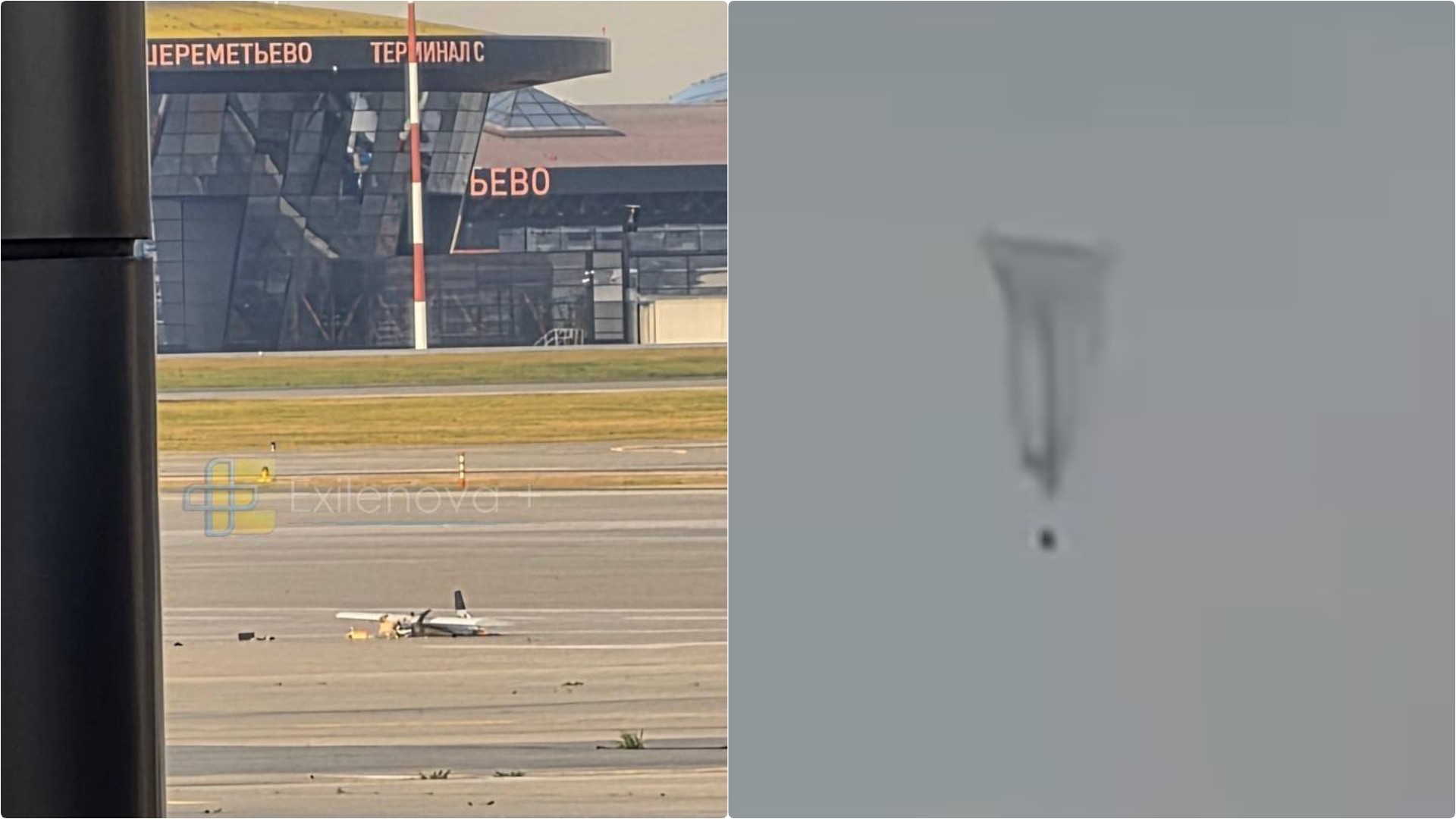 A Ukrainian drone on the tarmac at
Sheremetyevo and a balloon over Moscow City, 23 October. Photo:
Militarnyi
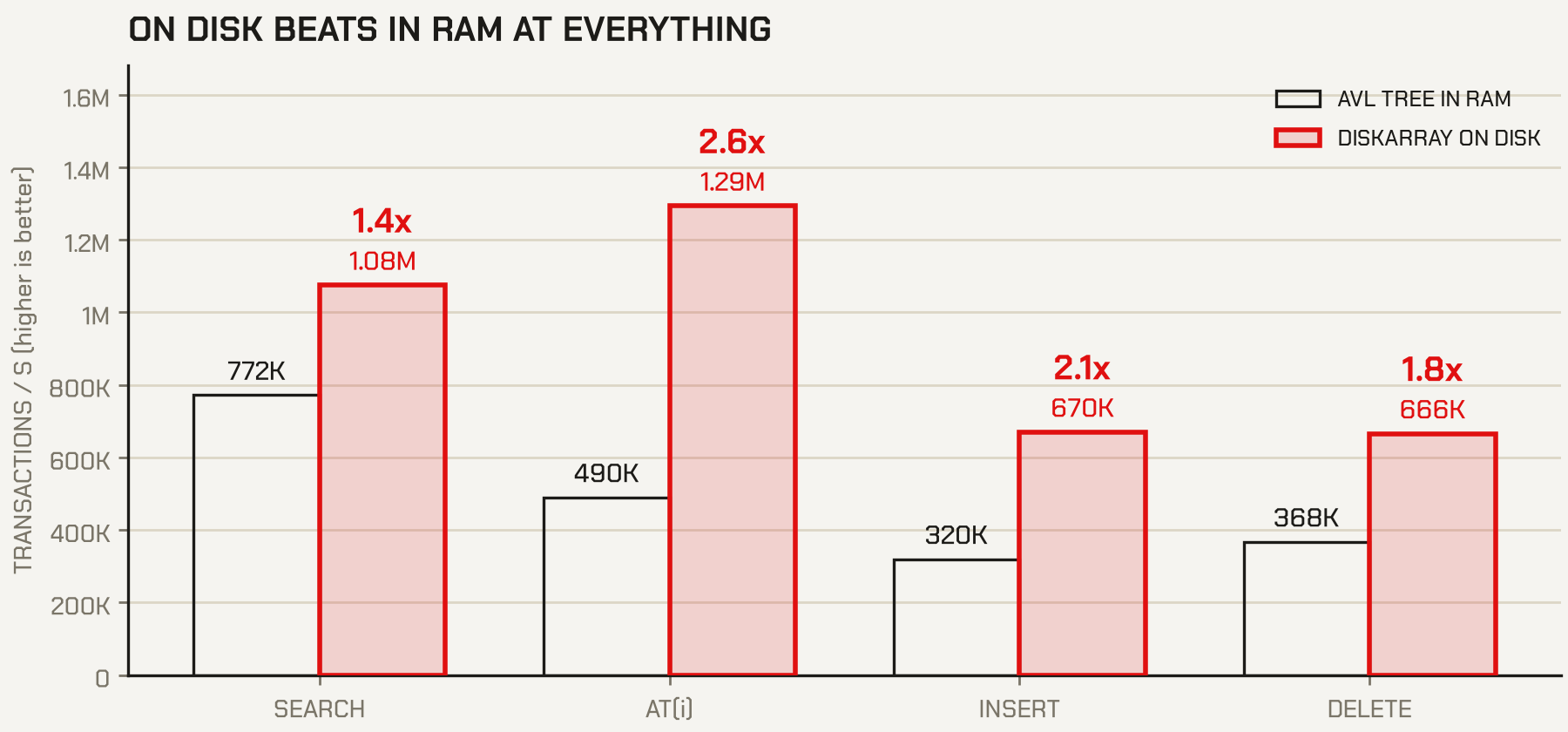 AVL tree in RAM vs DiskArray on
NVMe. Chart: bitflux.ai
 Overactive immune cells, not
plaques, suppress deep sleep. Illustration: ScienceDaily