Federal
judge suppresses 91 pounds of meth after ruling a warrantless Flock
search unconstitutional
US District Judge Sara Hill ruled that a Tulsa County deputy’s
warrantless search of Flock and Motorola license plate reader databases
violated the Fourth Amendment, and suppressed the methamphetamine found
as fruit of the poisonous tree. The deputy pulled over a rental car
solely for its California plates, then combed ALPR records while
driving, surfacing 50+ hits tracing the driver’s cross-state travel over
several days. The judge found that aggregated travel history creates a
reasonable expectation of privacy. 404 Media published the body cam
footage. It is the first known case where a court has ruled such a Flock
search unconstitutional.
If
you don’t run your own LLM proxy, how do you know what’s going on?
A practical argument: third-party LLM interfaces leave you blind to
your own usage. A self-hosted proxy gives you engineering-grade logs
(model, key, client, timestamp, status), fast diagnosis of cache misses
and anomalies, virtual API keys that isolate your primary credentials
across tools, and the ability to pivot between providers without
reconfiguring every client. The author frames it as professional
responsibility: you wouldn’t run production infrastructure without
observability.
Proof
Before Reuse: one poisoned session can corrupt an agent’s procedural
memory across clean runs
A case study on agentic memory poisoning shows that a coding agent
learning skills from test-passing sessions can carry a poisoned skill
persistently, even when the poison is just an extra unrelated file, a
stray line, or a fix fused with unrelated code. The proposed defence is
conservative: only surface a learned skill if later independent sessions
reproduced the same solution, filtering contamination without discarding
legitimate skills. The threat is practical for long-running autonomous
coding agents that accumulate procedural knowledge; the dataset is
released.
Reverse
borrow checking: a single backwards pass for memory safety
Valen, a new memory-safe language, implements borrow checking by
scanning backwards through functions rather than forward. Walking
backwards, the final use of a variable is encountered immediately,
eliminating look-ahead or multi-pass fixpoint iteration. Loops fall out
cleanly: when a variable is invalidated inside a loop, the backwards
pass naturally detects whether it is “revived” by reassignment before
the invalidation matters. The result is a single-pass-per-phase checker
that is conceptually cleaner and potentially faster to compile than
traditional forward approaches.
ASMC lifts compiled ELF binaries into CBMC’s GOTO intermediate
representation using Ghidra’s P-Code semantics, enabling formal model
checking of assembly. Use cases include standalone assembly
verification, translation validation of compiled output against C
source, and ABI compliance checking such as verifying that a function
preserves required registers. It works across x86-64, RISC-V and other
Ghidra-supported architectures, in about 1,000 lines of C++, made
tractable by the structural similarity between P-Code and GOTO IR.
Intel
8087: the microcode and circuits behind floating-point add and
subtract
Ken Shirriff continues his 8087 reverse engineering, mapping the
arithmetic units for addition and subtraction: a 69-bit integer adder, a
68-bit shifter for exponent alignment, and hierarchical leading-zero
detection that counts in stages, byte first then bit. The microcode’s
extensive special-case handling for infinities, NaNs, denormals and
signed zeros is William Kahan’s IEEE-754 design philosophy expressed in
silicon. The 8087 delivered roughly 100× the speed of software FP
emulation on the 8086.
A companion read: purplesyringa needed a branch-free formula for
extracting the lowest set bit of a float in an FPU emulator and, instead
of reasoning by hand, enumerated all combinations of up to five integer
bitwise and FP operations. The four-minute exhaustive search found a
form that reuses an intermediate value to merge mantissa extraction and
negation into a single FP subtraction, something manual analysis had
missed.
Servo
0.6.0: CSS Grid on by default, text selection, and a ~50% Speedometer
gain in sight
Servo 0.6.0 ships with CSS Grid enabled by default across 417
commits, a significant compatibility milestone. The release adds
interactive text selection, requestAnimationFrame for workers, expanded
CSS property support (touch-action, animation-composition,
color-scheme), and an experimental threadboost mode showing around 50%
Speedometer improvement. The Android port was converted to Kotlin;
SpiderMonkey updated to v153.
 Collapsed floor slabs at the Cosmo
Multimall in Kyiv after overnight Russian strikes. Photo: Ukrainska
Pravda
 Supertanker fire in the Strait of
Hormuz as Brent approaches $110. Photo: IranNewsWire
 Flames engulf offices of the Supreme
Court in Tirana on the fifth day of anti-government protests. Photo: Al
Jazeera
 Lula and Flávio Bolsonaro face off
in São Paulo, October 18. Photo: Nelson Almeida/AFP
 Pope Leo XIV leads the Angelus
prayer from a window of the Apostolic Palace. Photo: Yara
Nardi/Reuters
 A ship engulfed in flames after
striking mines in the Strait of Hormuz. Photo: CCTV/Reuters
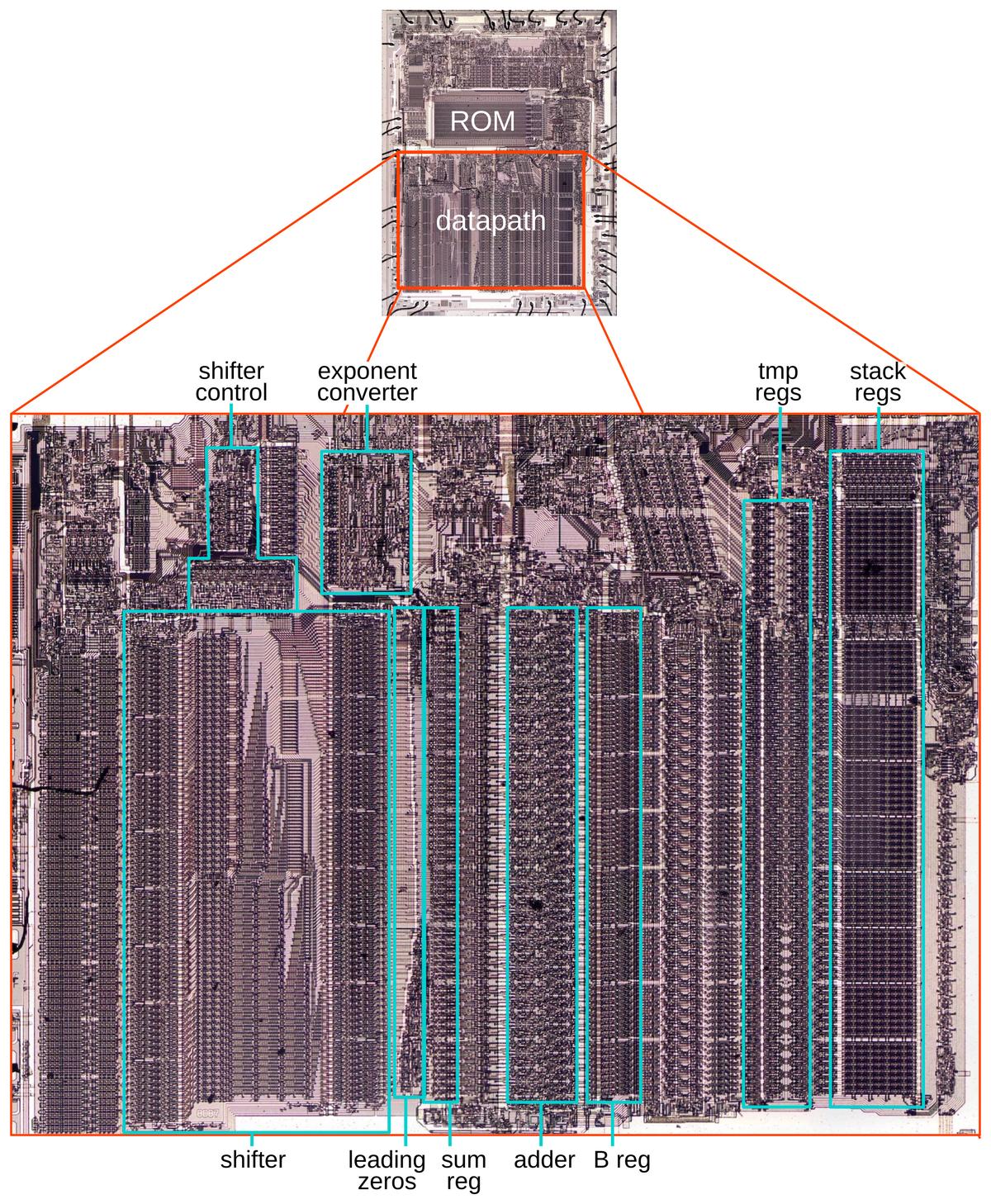 The 8087’s datapath for addition and
subtraction: adder, shifter, leading-zero detector and sign latch.
Image: Ken Shirriff
 Servo rendering a CSS Grid layout
after the 0.6.0 update. Image: Servo
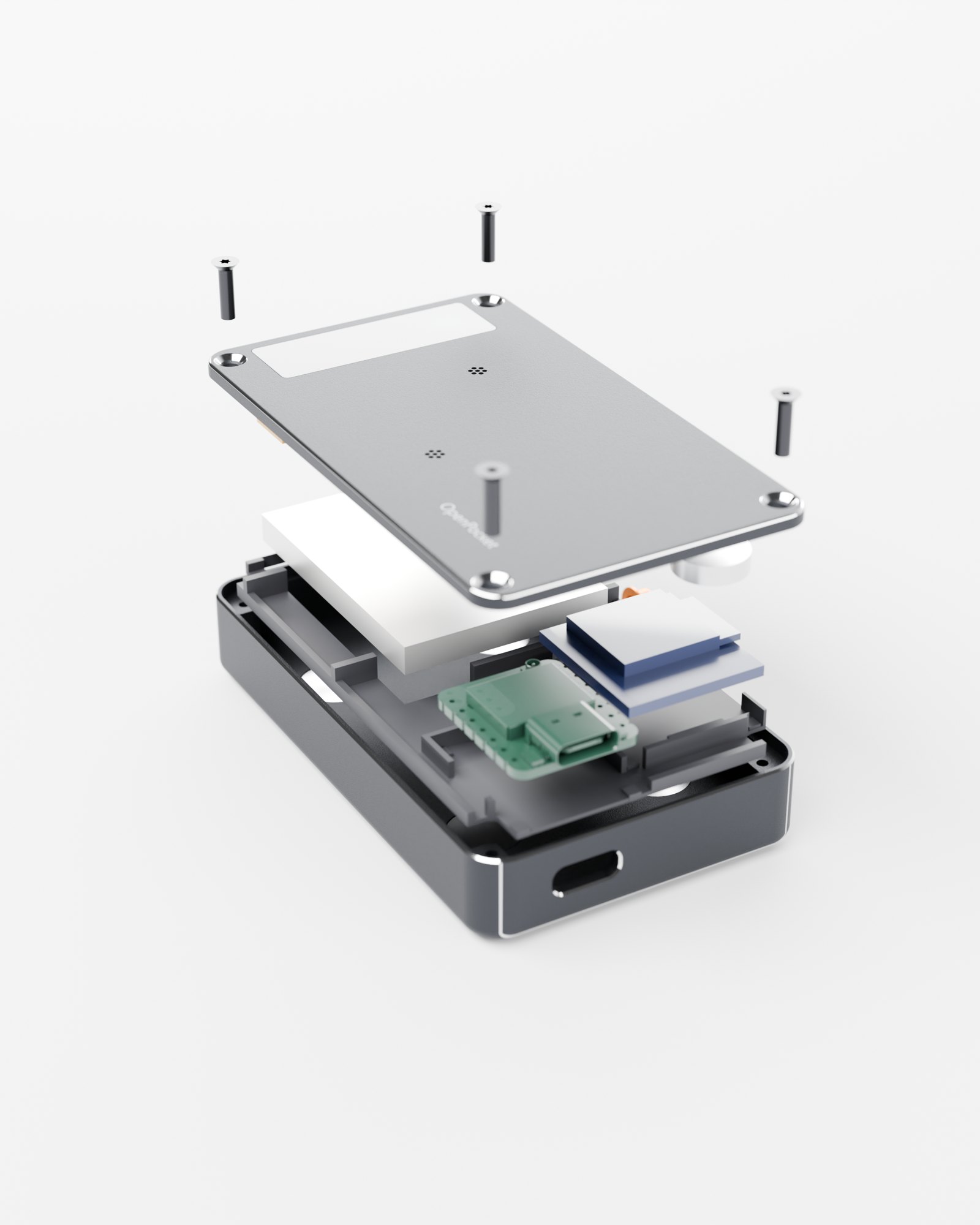 Exploded view of the Open Pocket:
ESP32S3, MEMS microphones, LiPo battery and MagSafe magnets. Image:
TanskiSzymon
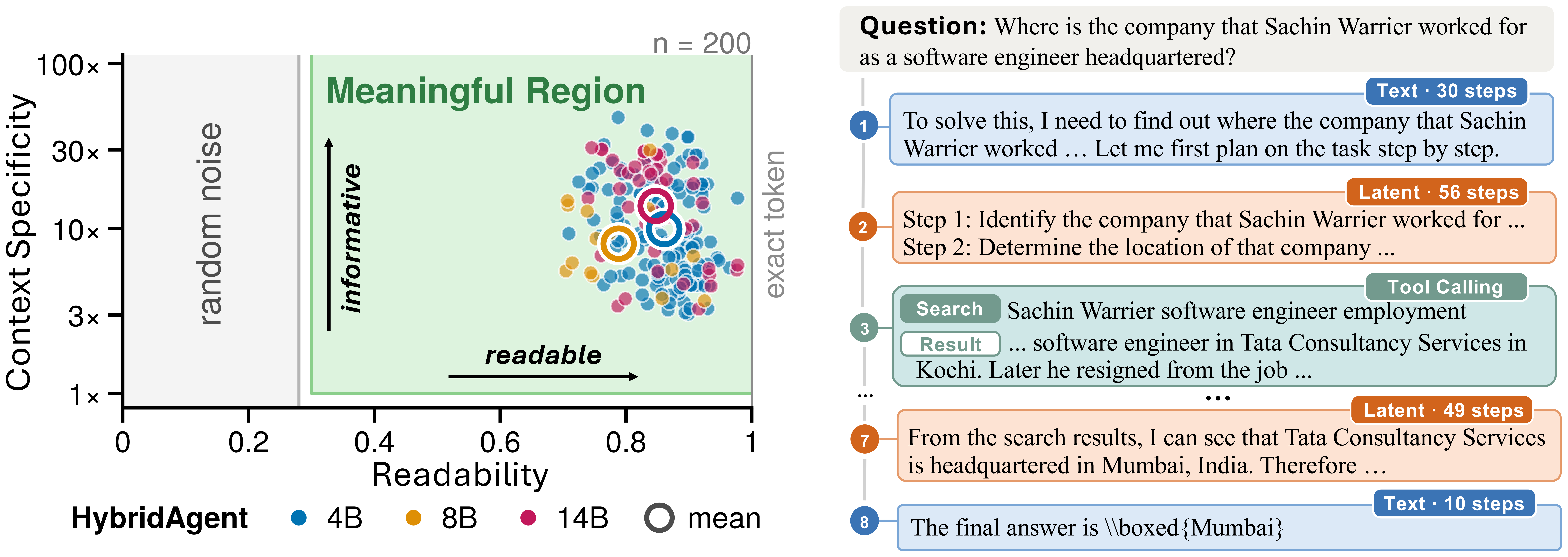 Probe analysis showing HybridAgent’s
latent thoughts remain readable and context-specific. Image: Together
Computer