Opus
5.5 decompiles and ports classic games — but compilable output isn’t
correct output
Following yesterday’s FPS decompilation story, a developer used Opus
5.5 — with no reverse-engineering tools — to analyse game ROMs,
reconstruct hardware emulation layers, and produce native Windows, Mac
and Linux ports. The verifiable output is Little Planet: a full Sonic CD
decompilation that disassembles to byte-identical reassembly, statically
recompiles to C, and rebuilds the Mega-CD hardware (dual 68000s, VDP,
YM2612, CD drive) from scratch. The Reddit post claims StarFox and
StarFox 2 received the same treatment, and a separate user ported Crash
Team Racing to the New 3DS in stereoscopic 3D from an existing PC decomp
base.
A new arXiv paper supplies the caveat. LLM decompilers produce code
that compiles and runs but silently alters behaviour — wrong variable
types, dropped bounds checks, semantically different logic behind
syntactically valid code. The gap between “recompilable output” and
“semantically correct decompilation” is larger than previously measured.
Byte-exactness at the binary level, as in the Sonic CD and FPS cases, is
a stronger bar than the paper’s models cleared — but it is the bar to
insist on.
World
Action Models consolidate as the dominant robotics architecture
A cluster of 2026 papers has crystallised WAMs as the leading
approach for robot control, displacing Vision-Language-Action
architectures. The robustness study puts LingBot-VA at 74.2% and
Cosmos-Policy at 82.2% success on benchmark suites, with the advantage
attributed to spatiotemporal priors from web-scale video pretraining
rather than specialised robot datasets. DreamWAM, StageWAM and PatchWAM
each push the architecture further, and Nvidia now maintains a WAM
glossary entry. A community deep-dive frames this as “robotics’ GPT-2
moment” — the point where the paradigm is clear even if frontier
performance is still ahead.
A precise definitional argument from the creator of Clojure: tools
give sensory feedback and build skill through use; automation takes
requests and acts autonomously, forfeiting skill development in the
process. Calling LLMs “tools” is a rhetorical move that helps
rationalise delegating cognitive work you should be doing yourself —
reading, formulating arguments, noticing things. No novel technical
claims, but the framing is unusually clean and the stakes are clearly
drawn.
Two
MCP shortcuts: Integrum wraps any Python library, Pensieve gives agents
on-device memory
Integrum (MIT, on PyPI) uses Python’s
inspect module to introspect functions and classes in any
module and wrap them as FastMCP tools —
integrum expose sklearn.linear_model is all it takes to
make scikit-learn callable from an LLM. It handles multi-turn state by
assigning memorable two-word IDs (“playful_llama”) to objects instead of
UUIDs, and regex --include/--exclude filters
surface only the relevant API surface. A useful escape hatch for giving
an agent existing Python tooling without hand-writing wrappers.
Pensieve is a macOS MCP server that indexes repos,
uncommitted changes, worktrees and agent conversation history using
on-device embeddings — no network, fully private. Instead of multiple
grep calls, an agent issues one semantic query and gets back relevant
passages: 2.0 tool calls per lookup versus 3.4 with grep, 18% lower cost
per lookup. The standout feature is indexing past agent sessions, giving
agents episodic memory over prior work without prompt stuffing. It also
does git blame and bus-factor analysis to surface high-risk code.
Pipedream
Workflows shuts down March 31, 2027
Pipedream, after its Workday acquisition, is retiring its core
Workflows product. No new signups are accepted; existing workflows run
until March 31, 2027, with all data deleted by April 30. Pipedream
Connect, the embedded integration product, is unaffected. A JSON export
tool exists, but the recommendation is to rebuild rather than import.
n8n is the most cited migration target for its visual run history, error
handling and code-step escape hatches; Trigger.dev and Inngest for
durable background tasks; Activepieces and Windmill for self-hosted open
source.
 Black smoke over Gazprom Neft’s
Moscow refinery, June 2026 — the kind of target Washington now wants off
the list. Photo: Getty Images via Kyiv Independent
 Trump and Putin at Joint Base
Elmendorf-Richardson, Anchorage, August 2025. Photo: AP via Kyiv
Independent
 Andy Burnham near the Reichstag in
Berlin during his meeting with Chancellor Friedrich Merz, 8 October.
Photo: Sean Gallup/Getty Images
 Smoke and flames rise from King
Khalid International Airport after a Houthi missile strike. Photo:
Reuters via Al Jazeera
 The capsizing near Obock killed at
least 139 people, including 15 children. Photo: Al Jazeera
 A Shahed destroyed floors 6–8 of a
Kharkiv residential building overnight. Photo: Ukrainska Pravda
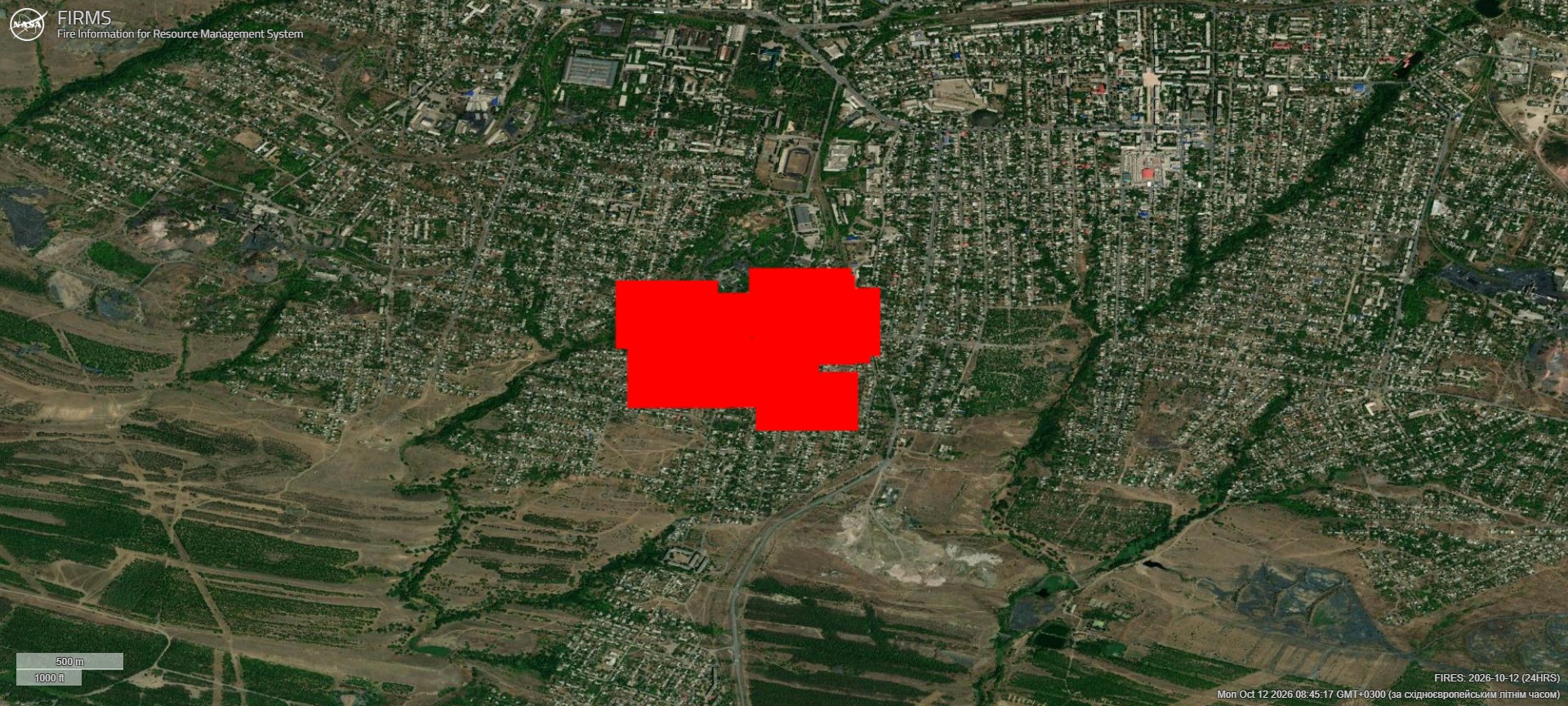 NASA FIRMS satellite data shows
fires near the former motor transport depot in Khrustalnyi in the early
hours of 12 October. Image: Militarnyi
 Navi Pillay, 2026 Nobel Peace Prize
laureate and former UN High Commissioner for Human Rights. Photo: Il
Sole 24 Ore
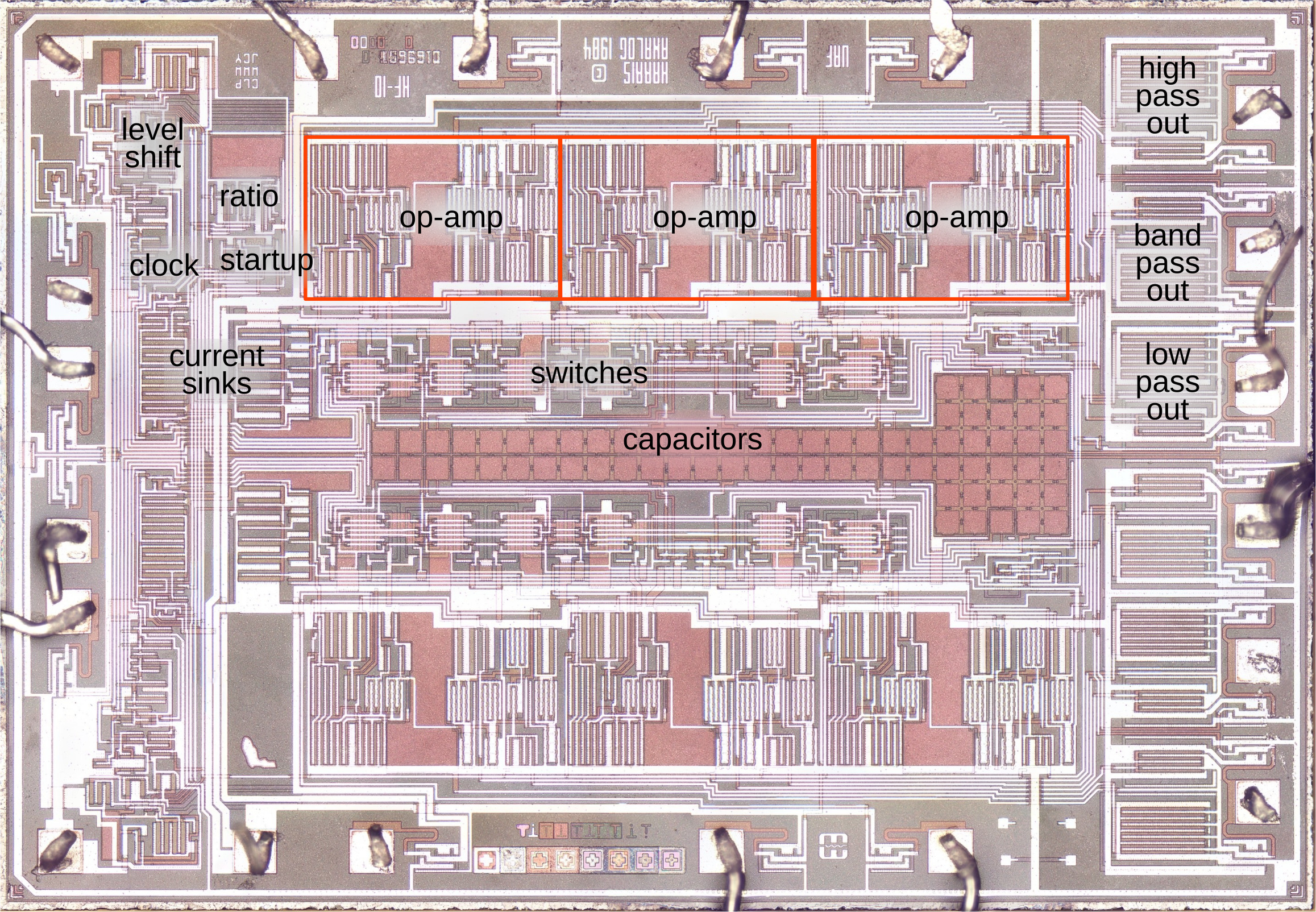 Annotated die photograph of the
National Semiconductor MF10 with labelled functional regions. Photo: Ken
Shirriff
 Stardust Speedway in Little Planet,
the Sonic CD decompilation and native PC port. Image:
carlosrmz009/littleplanet