Josse-posten

The day after the diesel deal: Trump tells Ukraine to find a new president and threatens its intelligence lifeline, Russia answers with glide bombs on Zaporizhzhia, Ukraine answers with drones over Moscow, and Houthi missiles kill twelve at Riyadh airport.

Trump demands Zelensky step down, threatens intel cutoff as Miami talks collapse
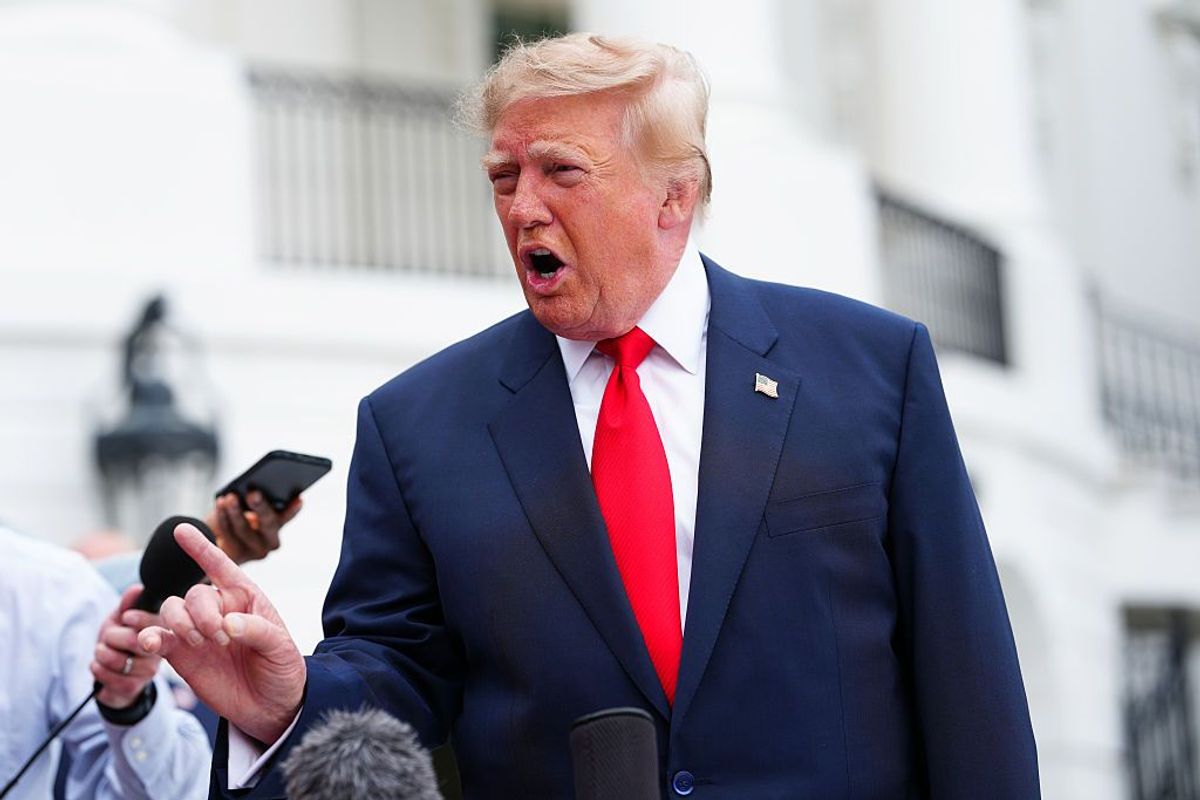
Donald Trump speaks to reporters as he departs the White House, Oct. 10, 2026. Photo: Aaron Schwartz/Getty Images via Kyiv Independent

The Miami summit ended abruptly after Trump’s diesel deal announcement blindsided Ukraine’s negotiating team mid-session; the delegation is now heading home. Trump followed by publicly calling for Zelensky to be replaced — “it’s time for Ukraine to get a new president who could make a deal” — accused him of wanting to “make problems for the world”, blamed Ukraine for US diesel prices, and warned that continued Ukrainian strikes on Russian oil infrastructure would jeopardize US intelligence sharing. Zelensky called the comments a betrayal and said he would not resign. Ukraine publicly pledged to keep attacking Russian refineries, calling them legitimate military targets regardless of US commercial interests.

The NYT separately reports US envoys offered Moscow frozen asset releases, a Lukoil stake sale and Belarus potash exports in exchange for a limited ceasefire — terms Russia has not accepted. Putin meanwhile falsely claimed Ukrainian strikes on Russian election infrastructure “thwarted” peace talks; ISW notes there is no evidence Ukraine targeted election infrastructure. The escalation from criticising the deal to calling for regime change in Kyiv is a significant shift in US posture, and the backlash in Congress is bipartisan. (European response in World; the strikes in question in Ukraine)

Russia bombs Zaporizhzhia, killing 20 — a day after the diesel deal

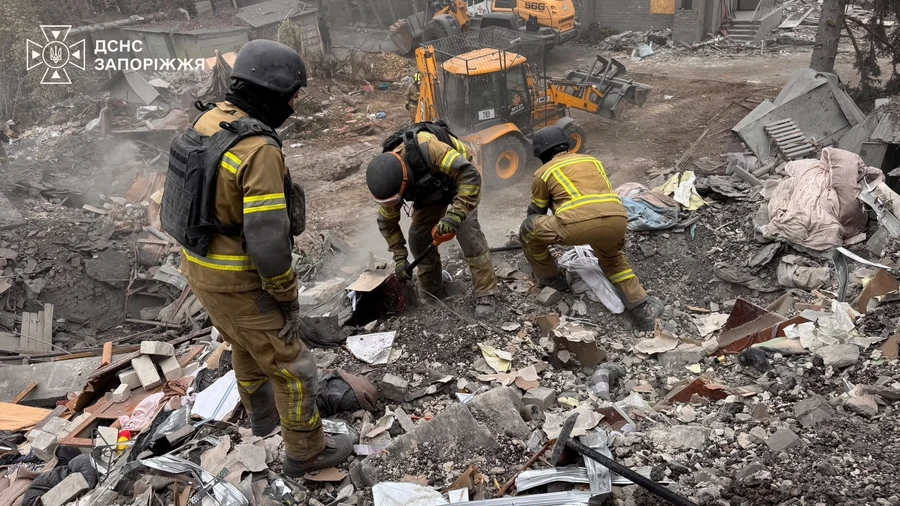
Aftermath of the glide-bomb strike on residential buildings in Zaporizhzhia, October 10. Photo: Ukraine State Emergency Service via Ukrainska Pravda

Russian glide bombs struck residential buildings in Zaporizhzhia on Saturday. The death toll rose through the day from five in initial reports to 20, including three children, with 18 others injured. Zelensky described it as Russia’s “thanks” for the US diesel arrangement. The attack came within 24 hours of Trump’s sanctions announcement and reinforces Ukraine’s argument that the deal emboldens rather than restrains Moscow. It is part of Russia’s documented campaign to destroy civilian infrastructure in major cities ahead of winter.

Houthis kill 12 at Riyadh airport — third attack this week; Trump weighs joining Saudi strikes

Damage at King Khalid International Airport, Riyadh, after the Houthi missile strike. Photo: Al Jazeera
A Houthi missile strike on King Khalid International Airport in Riyadh killed at least 12 people — including a US citizen — and injured more than 300, the deadliest attack on Saudi Arabia in years. It was the third assault on Saudi airports and infrastructure this week, coming as the Saudi-led coalition launched a major ground and air offensive against Houthi positions; Saudi-backed forces claimed 1,150 Houthis killed in 24 hours. Trump called the attack “terrible” and said the US is “evaluating” whether to join Saudi strikes — a potential major escalation in US involvement in Yemen.

In Taiz, Yemen’s third-largest city, medical services are at imminent risk of shutdown as a Houthi blockade has cut off fuel, medicines and supplies. The Yemen government says the health system could stop functioning entirely.

Ukrainian drones paralyze Moscow airspace; Putin reportedly unable to land

A large Ukrainian drone attack on the Moscow area closed the capital’s major airports intermittently as Russian air defenses engaged the swarm. Vladimir Putin was reportedly diverted and unable to land at Vnukovo. The strike is among the most disruptive to hit Moscow since the invasion began, demonstrating Ukraine’s continued capacity to reach deep into Russian territory despite US pressure to stand down. The same weekend saw a Yandex data centre in Vladimir, a Rostov rail bridge and the Samara oil pumping station hit. (Details in Ukraine)

Indicator Value Change
S&P 500 7,812 +0.59%
Dow 30 51,655 +0.83%
Nasdaq 27,366 +0.64%
Russell 2000 2,807 +0.46%
VIX 14.84 -3.7%
Gold 4,216 +1.43%
BTC $83,033 +0.36%
USD/NOK 9.56 -0.05%
  • Gold +1.43% while equities rose and VIX fell. The move came amid the Hormuz mine strike, the Houthi attacks on Saudi Arabia and the US–Ukraine rupture (see World).

World

Iran maritime crisis intensifies: tanker hits mine in Hormuz, US jet disables ship running the blockade

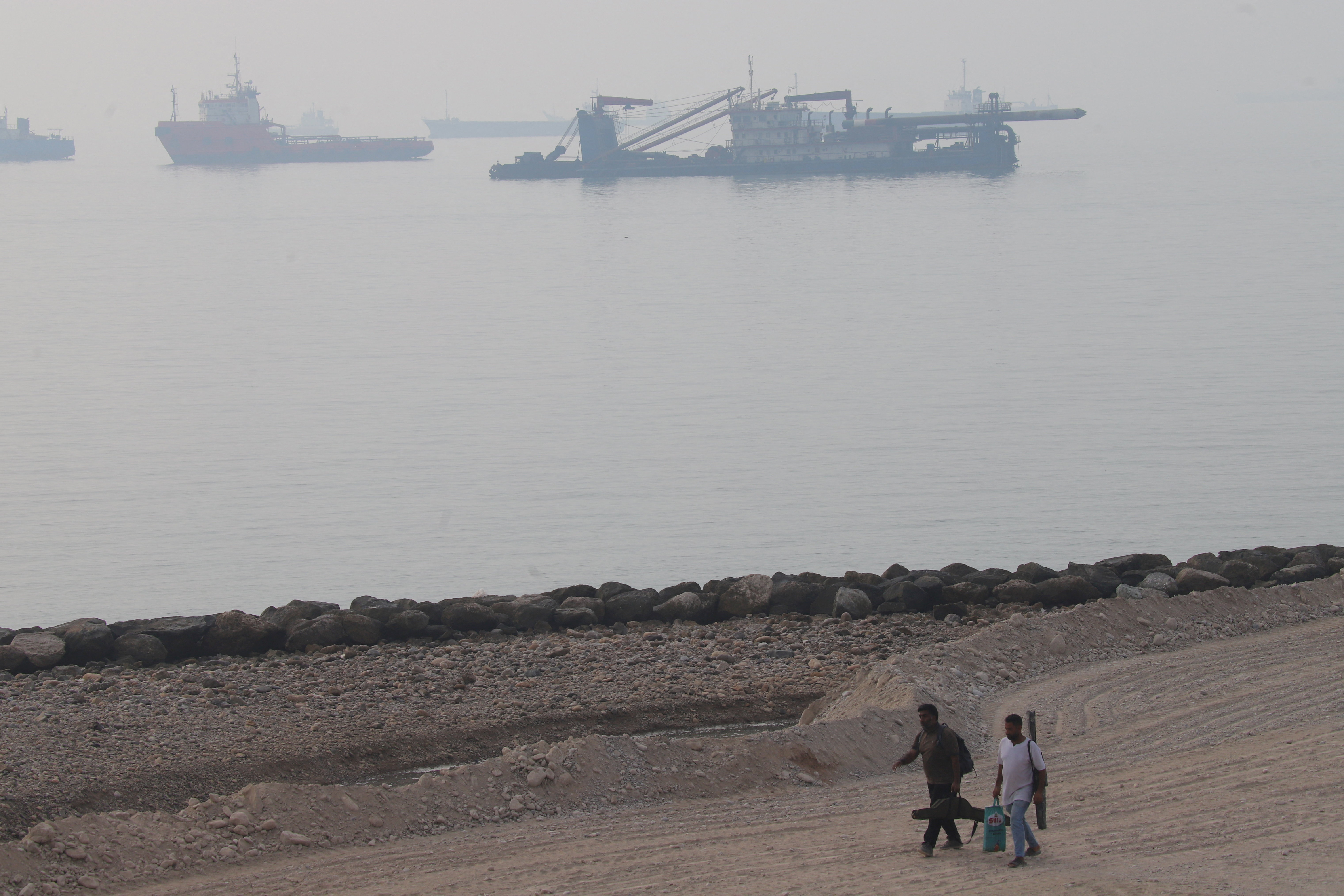
Vessels in the Strait of Hormuz near Bandar Abbas, Iran, October 6. Photo: Amirhosein Khorgooi/ISNA via WANA/Reuters
An oil tanker struck a naval mine in the Strait of Hormuz, causing an explosion — the IRGC claimed responsibility for the mining. Separately, US Central Command reported a military jet disabled a commercial cargo vessel attempting to “run” an Iranian blockade in the Gulf of Oman, striking its stern without harming the crew. The incidents signal a volatile maritime environment as US-Iran tensions escalate alongside the broader regional conflict.

Europe holds the sanctions line as the transatlantic rift widens

Germany announced it will maintain existing Russia sanctions despite Trump’s temporary lifting of US fuel sanctions, signalling that Europe will not follow Washington’s pivot. EU foreign policy chief Kaja Kallas said Europe “won’t ease pressure on Russia”. Finnish Prime Minister Petteri Orpo went further, calling on the EU to halt tourist visa issuance to Russian citizens, citing the war and the broader security threat — a proposal likely to divide member states, with Baltic and Nordic governments in favour and others opposed, but one that gains new weight amid the fractures caused by the diesel deal.

Chancellor Merz meanwhile expressed outrage after former Chancellor Gerhard Schroeder attended Vladimir Putin’s birthday celebrations in Moscow — a visit that underlines the persistence of pro-Russia networks in European political circles.

ICC under siege from all sides: US sanctions condemned, Russia demands its judges back

Nobel Peace Prize laureate Navi Pillay called US sanctions against the International Criminal Court “unacceptable” and “unheard of”, escalating the diplomatic row that followed her prize and the immediate US response. Meanwhile Russia — itself under ICC indictment — asked the Netherlands to hand over nine ICC officials convicted in absentia, a demand The Hague will certainly refuse but which signals a coordinated effort to delegitimise the court. Trump continued his attacks on Norway, calling it an “indelible stain” for the Nobel committee’s failure to award him the prize.

Sudan: RSF drone kills 41 near Ethiopian border, including eight children

A drone strike by Sudan’s Rapid Support Forces (RSF) paramilitary killed 41 people, including eight children, near the Ethiopian border. The strike hit a gathering of displaced people. The attack underlines the continuing brutality of Sudan’s civil war, which has produced one of the world’s worst displacement crises, with millions still beyond the reach of international aid.

BBC

Ebola spreads in eastern DRC; Kenya confirms first fatal imported case

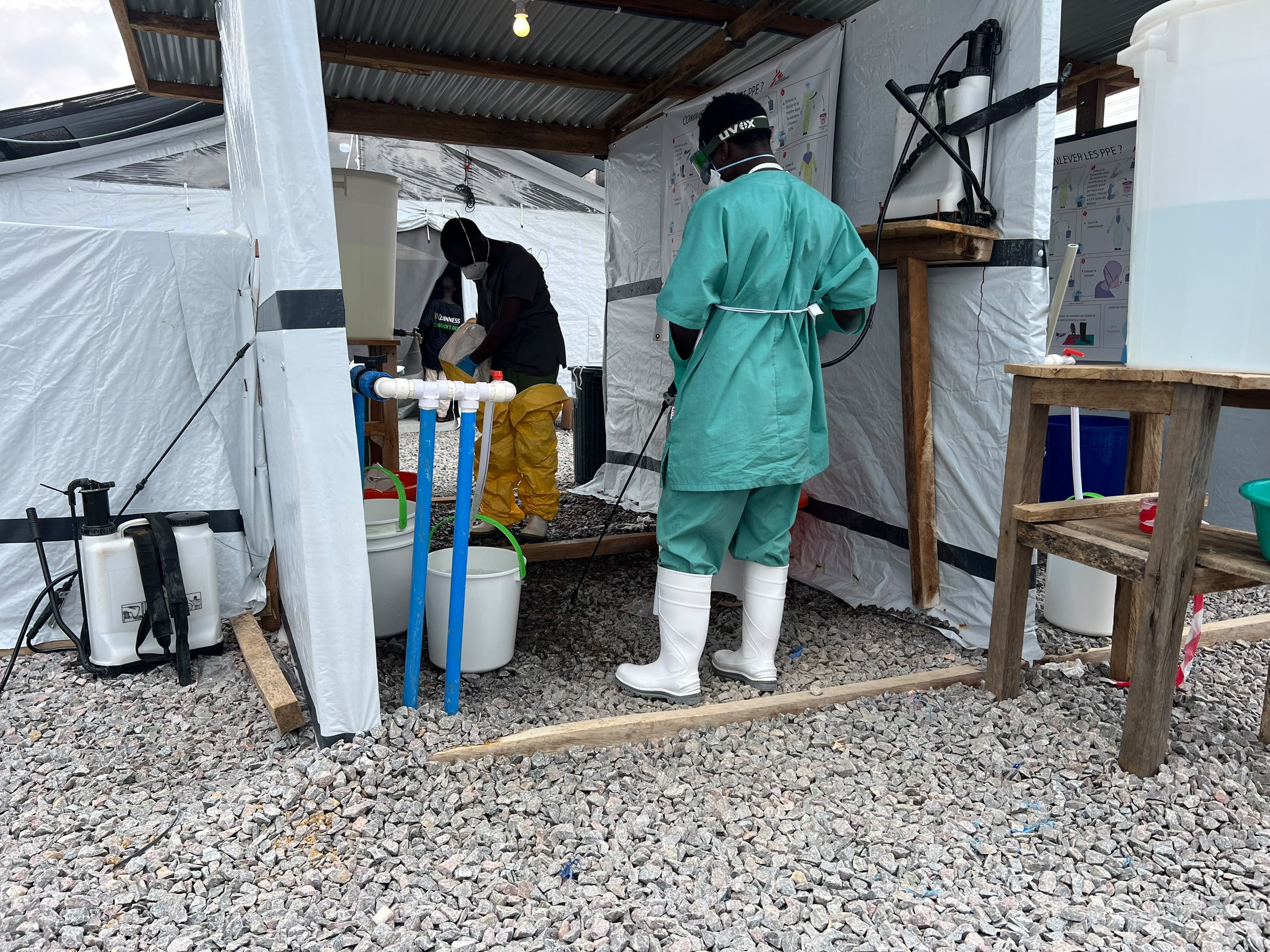
A hygienist at an Ebola treatment centre in Bunia, DRC. Photo: Prosper Heri/Al Jazeera

The Ebola outbreak in eastern Democratic Republic of Congo is expanding, with new cases in the region straining an already overwhelmed health system. Kenya has separately confirmed a fatal imported Ebola case — its first — demonstrating cross-border spread into East Africa and raising concern about transmission chains in urban settings. The WHO notes the lack of a confirmed diagnostic link to the DRC outbreak adds uncertainty.

Pope Leo declares death penalty inadmissible as US plans first livestreamed execution

Pope Leo has formally declared the death penalty “inadmissible” in Catholic moral teaching, directly clashing with the US government’s accelerating execution agenda. The Pentagon announced it will livestream the execution of Fort Hood gunman Nidal Hasan — the first public execution of this kind in nearly a century. The collision of a papal declaration, last month’s botched execution of Christa Pike (who survived two lethal injections), and the prospect of televised executions has put the US death penalty under intense global scrutiny.

US DOJ opens antitrust investigation into TV networks over Trump pool boycott

The Department of Justice has launched an antitrust probe into television networks — including CNN, MSNBC and Politico — after they coordinated a restriction on White House pool coverage in response to the administration blocking their access. The DOJ claims the coordinated response may have violated antitrust laws. Critics call it a retaliatory abuse of prosecutorial power to punish press freedom; the investigation is being watched as an indicator of how far the administration will push against independent media.

Delhi crackdown: tens of thousands detained; protest leaders released as India rejects UN criticism

Indian authorities detained tens of thousands — including the leader of the “Cockroach” youth movement — in a sweeping crackdown on protests demanding electoral reform, following the removal of 130 million names from the electoral roll. Several leaders were released Sunday as police partially eased restrictions, though organisers warned further demonstrations are coming. India pushed back sharply against the UN Human Rights Office, calling its concerns “misplaced” and alleging improper interference in internal affairs.

Gaza anniversary: global protests as doctors move to suspend Israel from world medical body

Pro-Palestinian demonstrators in London mark one year since the Gaza ceasefire. Photo: Al Jazeera

Thousands rallied worldwide — including in London, where 20 were arrested — to mark one year since the ceasefire declared in Gaza. Simultaneously, hundreds of physicians signed an open letter to the World Medical Association demanding it suspend the Israeli Medical Association, accusing it of silence while Palestinian healthcare was “systematically destroyed”. In Israel, analysis finds the war has deepened nationalist entrenchment rather than producing any electoral push for change.

Living Planet Index 2026: average wildlife population sizes down 73% since 1970

Global Living Planet Index, 1970–2026. Chart: Our World in Data
The 2026 edition of the WWF/ZSL Living Planet Index records an average 73% decline in monitored vertebrate wildlife population sizes since 1970 — up from the 69% reported in 2022. The index covers thousands of species across mammals, birds, fish, amphibians and reptiles worldwide. The figure reflects population sizes, not extinction counts: the average monitored animal population is less than a third of its 1970 level.

Also today

  • Mount Kanlaon erupts in the Philippines with a 6km ash cloud; two tornadoes injure dozens in Marsala, Sicily; flash floods sweep away buildings in Nepal’s Budhi Gandaki valley — Al Jazeera: Kanlaon · The Guardian: Sicily · Al Jazeera: Nepal
  • Hurricane Simon strengthens to Category 4 off Mexico’s Pacific coast; Puerto Vallarta boards up while the Gulf Coast is still recovering from Isaias — Al Jazeera
  • Poland on alert after third school knife attack in one week; extra police deployed to schools nationwide — BBC
  • Peruvian businessman named Hitler Mussolini Simeon Flores wins mayoral election in the Andes, defeating a far-right rival — The Guardian

Ukraine

Ukraine widens deep-strike campaign — Yandex in Vladimir, Rostov rail bridge, Samara oil station

Fire at the Yandex data centre in Vladimir after the Ukrainian drone strike, October 11. Photo: Exilenova+ via Ukrainska Pravda
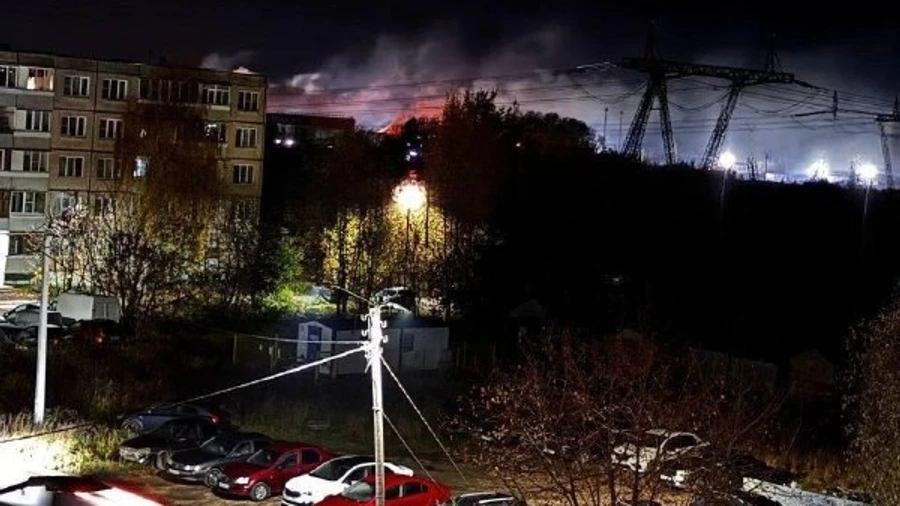
Ukraine extended its infrastructure offensive inside Russia on October 10–11. A drone struck the Yandex data centre in Vladimir — the third hit on Yandex infrastructure — causing a confirmed major cloud outage. A strike on a railway bridge in Rostov-on-Don has suspended rail traffic and is now delaying all trains between occupied Crimea and southern Russia. The Samara oil pumping station, one of Europe’s largest oil tank farms, was hit for the third time, while the Rostov oil terminal struck on October 10 continued burning. These are the strikes behind Trump’s warning that Ukraine stop targeting refineries or risk losing US intelligence support. (Moscow airspace closure and the Trump ultimatum on the front page)

160-drone attack halts Kyiv transport; ArcelorMittal enters cold idle

Russia launched 160 drones against Ukraine overnight October 9–10 — including 110 jet-powered — disrupting Kyiv’s entire metro system, trams, trolleybuses and water supply; residents were urged to stock up. A Russian jet-powered drone reached Lviv’s airspace for the first time. Ukraine shot down 94–117 drones; hits were recorded at seven locations. Separately, ArcelorMittal Kryvyi Rih is entering cold idle mode after four devastating missile strikes on the plant — a concrete marker of Russia’s winter economic campaign succeeding in shutting down heavy industry.

Frontline: minor Ukrainian advance at Borova; Kharkiv encirclement claims still false

Ukrainian forces made a small advance northwest of Borova Andriivka in the Oskil River direction. Russian infiltration missions continue near Velykyi Burluk and Kupyansk, with the Russian MoD claiming seizures of Lobanivka and Lukashove — claims requiring confirmation even from Russian milbloggers. ISW continues to assess the widely promoted Russian “encirclement” in northern Kharkiv Oblast as baseless. Near Lyman, fighting around Zarichne and Yampil continues; ISW notes Russian control of these river crossings is critical to any future Lyman offensive.

ISW

Also today

  • Armed, masked saboteurs cross from Belarus into Latvia and carry out sabotage on NATO territory; scale of damage still unclear — Yahoo News · r/worldnews
  • Japan signs a deal with Ukrainian firm SkyFall for drone-intercept systems refined through three years of combat — United24Media · r/worldnews

Tech

AI agents decompile a classic FPS game — 83% byte-exact at 600B tokens

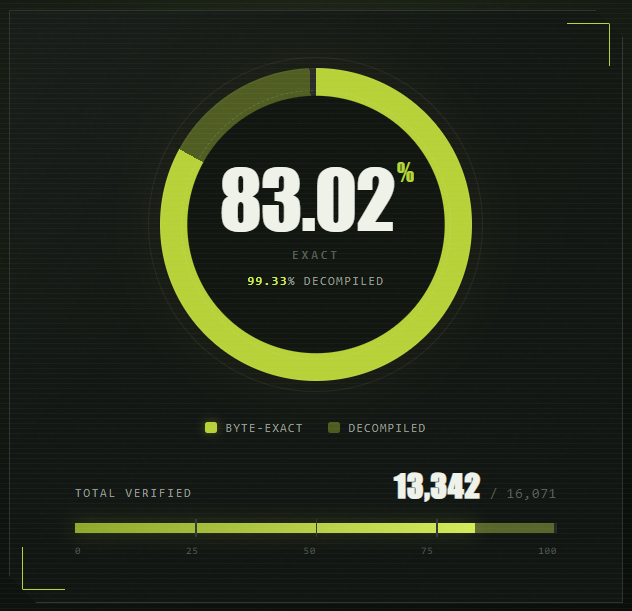
Final completion statistics: 99% of functions reconstructed, 83% byte-exact. Image: momo5502.com
Maurice Heumann’s team used AI agents to reconstruct a full FPS game in C++ from its compiled binary, consuming an estimated 600–700 billion tokens over three months. The project scaled to 14 Luna agents and 2 Opus 5.5 agents coordinating through GitHub issues and Discord. The key insight was objective feedback via byte-matching: a script compared reconstructed functions against the original binary — pass/fail with no human review — which let cheap models produce reliable results. Final tally: 99% of functions reconstructed, 83% byte-exact. The game title was redacted under corporate pressure, but the orchestration lessons stand on their own.

Byte language models: tokenizer-free transformers outperform subword at scale

A new arXiv paper challenges the assumption that LLMs need explicit tokenizers to be efficient. Using token-superposition training and hash embeddings, flat Transformers on raw byte sequences consistently beat subword models as parameter count scales. Key results: byte models get 1.5–3× more training data per parameter under the same compute budget; up to 25% of intermediate layers can operate on locally compressed representations without degrading downstream performance; and byte models achieve 3.4× more accepted tokens in speculative decoding than subword equivalents. The models spontaneously develop segmentation-like abstractions without being taught them.

Python 3.15 released: JIT +7%, lazy imports, sentinel and frozendict builtins

Python 3.15 ships with a meaningful JIT improvement (7–8% geometric mean on x86-64 Linux), explicit lazy imports for faster startup, and two new built-in types: sentinel and frozendict. The standard library gains a dedicated profiling package and tachyon, a high-frequency statistical sampling profiler. Type system additions include TypedDict with typed extra items, TypeForm, and disjoint bases. UTF-8 becomes the default encoding. Free-threaded builds now have a stable ABI, and frame pointers are on by default. 5,643 commits from 1,012 contributors.

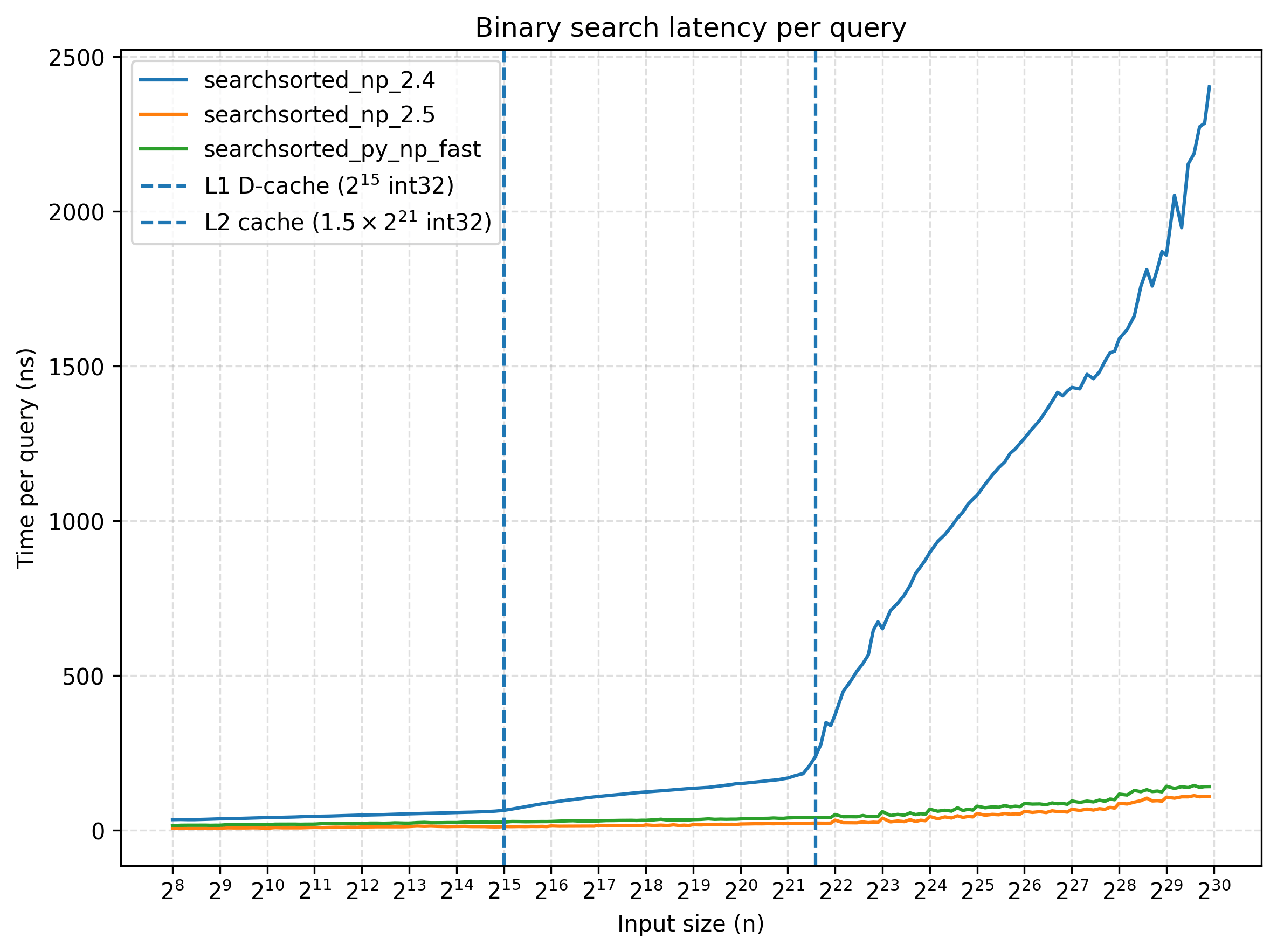
NumPy 2.5: searchsorted up to 25× faster via vectorized batching

NumPy 2.4 vs 2.5 searchsorted performance across input sizes. Chart: scientific-python.org

The key insight behind NumPy 2.5’s searchsorted speedup is batching independent binary searches so intervals stay the same length at each iteration — letting the CPU issue multiple in-flight memory accesses simultaneously rather than stalling on sequential dependency chains. Tracking each query with a single base value plus a shared length drops overhead to O(1) auxiliary space. The optimization lands in NumPy’s C++ layer with a first-iteration midpoint pre-computation to avoid redundant reads. A performance comparison with JAX, TensorFlow and PyTorch is included.

1-tap Android attack: CALL_PHONE silently enables carrier-side call forwarding

A link on a webpage can trigger a Man-Machine Interface (MMI) code — a carrier command like **21*<number># — with a single user tap on Android, using nothing more than an app holding CALL_PHONE permission. The permission disclosure doesn’t mention MMI capabilities, there’s no pre-execution confirmation, and the action leaves no call log entry. The attack registers call forwarding at the carrier level (it persists after a device reset), intercepting voice OTPs and bank callbacks. The write-up demonstrates this through a vulnerable dialer with a web-accessible link.

Niko Matsakis: why externalized proofs of cyclic Rust trait impls are unsound

Niko Matsakis works through why the “externalized proof” approach to Rust’s cyclic trait impl problem breaks down. The core: if an impl Magic for String doesn’t itself prove its supertrait obligations (e.g. String: Copy), and instead shifts that burden to callers, you get a contradiction — the impl is simultaneously untrusted for supertrait proofs but trusted for unsafe correctness guarantees. You can’t selectively distrust impls for one obligation without unraveling the soundness argument for others. Modular proofs, where each impl proves its own supertrait chain, remain the only coherent design.

Unikernels were hard — AI and Nix changed that

A post arguing that the two historic blockers to unikernels — missing libraries and infrastructure complexity — are now largely solved. AI agents handle library porting (“run a loop” to port a Go library to OCaml instead of writing one from scratch), and Nix overlays let teams patch upstream dependencies without waiting for maintainers. S3-backed storage with local NVMe caching replaces the filesystem problem. The result: smaller attack surface than containers (no shell, no interpreter), with the friction cost that used to make unikernels impractical now absorbed by AI delegation.

How JSON shredding gives Logfire 1000× query speedups

Logfire/Pydantic’s approach to semi-structured log data: automatically identify the top-128 attributes (by frequency or total data size) at ingestion and extract them into typed columns, leaving the rest in a JSON blob. The speedup comes from four stacked wins — zone maps can now skip non-matching files, column I/O replaces full blob downloads, typed columns compress far better, and JSON parsing is eliminated at query time. The system runs discovery automatically with no schema design required. Related academic background in the 2021 JSON Tiles paper.

Also today

  • Deterministic simulation testing in Celld: FoundationDB-style simulator controls event order, timing and fault injection over real production handlers; a seed makes any failure exactly reproducible — celld.dev · HN
  • Rampart: 14MB browser-native PII redaction with zero server involvement — regex for structured data plus a local MiniLM model for names and addresses, 3.9ms latency — ndstudio.gov · HN
  • Nvidia in talks to acquire Reflection AI, an open-model lab; details thin behind the paywall, but the implication for the open-weights ecosystem is significant — Financial Times · HN
cd ~/repos/josse-posten && claude --resume 58cc8d97-a97f-462e-a120-f2907bbd6d21