Ballots unsettle Brasília and Madrid, Yemen’s government goes on
the offensive, and Kyiv counts both Russian refineries burning and its
own bridges hit.
Flávio
Bolsonaro defies polls in Brazil’s first round; Lula runoff set for
October 25
Flávio Bolsonaro, the far-right son of jailed former president Jair
Bolsonaro, beat polling expectations in Sunday’s first-round vote,
forcing incumbent President Lula da Silva into an October 25 runoff.
Lula called the result “unexpected.” The right gained ground broadly and
the race is now more polarized than pre-election surveys suggested, with
significant implications for Latin America’s largest democracy and for
US-Brazil relations.
Yemen’s
government launches “battle for liberation” to retake all Houthi
territory; US declines to join
The Saudi-backed Yemeni government declared a “battle for liberation”
and launched a broad military operation to retake all territory held by
the Houthis, even as the militant group made fresh gains, reportedly
cutting a vital supply route to besieged Taiz. The offensive aims to
push the Houthis away from Red Sea coastal areas controlling the Strait
of Bab al-Mandeb and reduce their capacity to disrupt shipping. Two US
officials confirmed the operation but said the US has, for the second
time in recent weeks, chosen not to participate directly. Iran, which
backs the Houthis, said it is ready to defend itself against potential
US attacks.
Ukraine’s Defense Ministry says systematic long-range strikes have
now put over 51% of Russia’s oil refining capacity out of action, up
from 45% two weeks ago, with refineries hit in Moscow, Yaroslavl,
Kirishi, Perm, Saratov and Syzran. Putin signed a decree restricting
public data on refinery operations. On the other side, the Russian MoD
officially announced an intensification of strikes on Ukrainian
infrastructure, framed as retaliation for Ukrainian strikes going back
to June, a justification ISW and even Kremlin-affiliated blogger Rybar
called transparently false. Kyiv’s Northern and Southern bridges have
been struck seven times since October 1, and the UN confirmed 15,280
civilian casualties in the first eight months of 2026, a 55% increase on
2025. (Full coverage in Ukraine)
Hormuz
attacks resume just as Gulf oil recovery was taking hold; Iran’s exports
have effectively ceased
After weeks of recovering oil flows driven by US naval escorts,
Iran’s IRGC navy has relaunched attacks on shipping: seven confirmed
strikes since September 28, all near the narrowest point of the strait,
with improved targeting accuracy per a US official. Brent settled at
$102.25, up 5% on the week, and analysts estimate flows are already down
2–3M bpd from recent peaks. Meanwhile no Iranian oil has crossed the US
blockade line since mid-July; China has halted purchases entirely, and
Arab producers have absorbed the gap, with combined regional exports
back within 900K bpd of pre-war levels. (Also covered in Investigations)
Spain’s
Sánchez calls snap election for November 29 after housing measures
rejected
Prime Minister Pedro Sánchez announced a snap general election for
November 29 after parliament rejected two emergency housing relief
measures from his minority government. Sánchez said he needs “a much
broader progressive majority” to push through the deep reforms Spain
requires, framing the vote as a mandate on the housing affordability
crisis that has driven mass protests across the country. The same week,
Spain’s constitutional court is expected to remove the final legal
obstacle to Carles Puigdemont’s return to Catalonia after nine years in
Belgian exile.
| Indicator |
Value |
Change |
| S&P 500 (f) |
7,764 |
-0.17% |
| Dow 30 (f) |
51,377 |
-0.19% |
| Nasdaq (f) |
31,041 |
-0.07% |
| Russell 2000 (f) |
2,845 |
-0.21% |
| VIX |
16.3 |
+6.47% |
| Gold |
4,190 |
+0.66% |
| BTC |
$86,225 |
+1.32% |
| EUR/USD |
1.1205 |
-0.43% |
| USD/NOK |
9.62 |
+0.03% |
- Brent at $102.25, up 5% on the week as Hormuz attacks resume
(see above)
- VIX up as Yemen offensive and Brazil runoff add to the risk
picture
World
A worker at an Irkutsk laboratory has died from plague (Yersinia
pestis), with nearly 200 contacts placed under observation and reports
that five hospitals in the region have been closed for quarantine.
Russian health authorities attribute the death to “pneumonia of unknown
origin,” and the US State Department confirmed it is monitoring the
case. Lab-acquired plague is rare; most cases in central Asia come from
flea exposure, making an institutional source notable. Russia maintains
plague research programs and reserves, but details about the specific
facility have not been disclosed, and the official framing raises
transparency concerns given the lab-accident context.
Ethiopia
retakes Mekelle from rebels; four African leaders call for dialogue
Ethiopian government forces and allied fighters consolidated control
of Mekelle, Tigray’s regional capital, with rebel forces withdrawing
from the city. The recapture revives fears of a prolonged conflict and
mass displacement after a fragile peace. Separately, the leaders of
Egypt, Eritrea, Somalia and Sudan held an emergency summit in New
Alamein and issued a joint declaration calling for dialogue to end both
the Tigray war and the conflict in Sudan.
France
closes up to 500 schools after riot police clash with student
protesters
French authorities will suspend classes in up to 500 schools on
Monday after weekend clashes between riot police and student protesters.
The education minister confirmed partial and total closures across the
country as further protests were planned.
Trump
creates “Super Intelligence Force”, names intel chief Jay Clayton as AI
czar
President Trump unveiled a new White House body called the “Super
Intelligence Force” to coordinate US government engagement with
artificial intelligence, naming Director of National Intelligence Jay
Clayton as its head. Clayton will now oversee both the nation’s 18
intelligence agencies and AI policy, an unusual dual mandate. He
described AI as a “gamechanger” but also a “threat” at his confirmation
hearing.
Press
under pressure: Delhi police accused of harassing journalists; Egypt
detains entire newsroom
Three women journalists alleged they were sexually harassed by police
officers while covering protests at Delhi’s Jantar Mantar, where
demonstrators demanded the resignation of India’s chief election
commissioner over controversial changes to voter rolls. The allegations
triggered widespread condemnation and calls for a probe. In Egypt, a
journalist from the independent outlet Matsadaash has been charged with
membership in a terrorist organisation, days after all six members of
the newsroom were detained in what rights groups called a coordinated
press freedom crackdown. The whereabouts of five of the detained
journalists remain unknown.
PTI
launches mass march to Islamabad after government talks with Imran
Khan’s party collapse
Thousands of supporters of jailed former Prime Minister Imran Khan
began a march toward Islamabad after negotiations between his Pakistan
Tehreek-e-Insaf party and government authorities ended in deadlock. Khan
has been imprisoned since 2023, and PTI’s persistent street
mobilisations continue to challenge the military-backed government’s
political grip.
Bosnia
election: Dodik’s pro-Russia party claims victory
Bosnian Serb nationalist Milorad Dodik declared victory for his SNSD
party in Bosnia’s weekend elections, despite not standing as a candidate
himself. Dodik dominated the campaign, inflaming ethnic divisions and
using it to push back against EU integration. His continued influence
entrenches the fragmentation of Bosnian political life along ethnic
lines.
Also today
- Asia
-
Malaysia deports 1,500 migrants to Myanmar war zone despite UN warnings
— Al
Jazeera
-
FBI arrests California woman accused of spying on Taiwan president’s son
for China — The
Guardian · Al
Jazeera
- Middle East
-
Tehran students protest compulsory hijab, demand release of jailed
classmates — RFE/RL
· Reddit
- Europe
-
UK Green Party formally votes to equate Zionism with racism; The
Economist calls it a “stain on history” — The
Guardian · The
Economist
- Science
-
Skull fractures suggest servants of Egypt’s early kings were sacrificed
at their rulers’ deaths — The
Guardian
Ukraine
The Russian MoD officially announced an intensification of strikes
against Ukrainian infrastructure on October 4. Russia has systematically
struck Kyiv’s Northern and Southern bridges seven times between October
1 and 4, the first sustained targeting of Dnipro crossings in the war;
the Northern Bridge was hit for a second consecutive day with vehicles
crossing. Zelenskyy reported over 1,900 drones, 1,700 aerial bombs and
25 missiles used in the week to October 4; overnight into October 5, 205
drones were launched (172 downed), with strikes on Kyiv, Kharkiv, Sumy,
Dnipropetrovsk, Zaporizhia and Odesa. The UN confirmed 15,280 civilian
casualties in the first eight months of 2026, a 55% increase over the
same period in 2025. ISW assesses Russia is accelerating the campaign
before Ukraine develops effective defenses, and that this represents a
shift in Putin’s theory of victory from battlefield advances toward
civilian coercion. Four EU embassies (Germany, Italy, Spain, Sweden)
publicly confirmed they are staying in Kyiv, pushing back against
Russian MFA threats.
Air
defense race: Ukraine tests new interceptors, Merz visit yields €8.5bn;
Russia stockpiles 700 ballistic missiles
Ukraine intercepts 85–92% of conventional Shaheds but only 50–60% of
jet-powered drones. Zelenskyy announced the successful test of the new
Spys interceptor drone and confirmed development of a Nika mini-missile
specifically targeting jet drones; the Ukraine-Germany co-developed Bars
interceptor achieves around 30% against jet drones, the highest of
available systems. Merz’s unannounced visit yielded €8.5bn in total
agreements, including €1.3bn in immediate aid: joint production of
Quantum WIY interceptors in Ukraine, thousands of IRIS-T missiles, and
€350m in energy support ahead of winter. Russia is simultaneously
stockpiling up to 700 ballistic missiles, producing 130–140 per month,
which ISW assesses it will likely hold back until Ukraine’s defenses
suppress the jet-drone advantage, pointing toward a saturation strike
campaign later this winter.
Deep
strikes: Su-35 and Su-34 hit at Khanskaya airbase 500km inside Russia;
Samara depot still burning
SBU’s Alpha unit struck a Su-35, a Su-34 and an ammunition depot at
Khanskaya airbase in Adygea, roughly 500km from the frontline, overnight
October 3–4; satellite images confirm fires at the airfield. The Samara
oil dispatch station struck days earlier was still burning on October 4.
Together with the refinery campaign, Ukraine’s Defense Ministry now
claims over half of Russia’s refining capacity is out of action.
(See the leader
for the refining figures)
Russia
shares jet-drone tech with North Korea; Seoul and Kyiv in open row over
secretly transferred POWs
Zelenskyy said Ukraine has intelligence that Russia is sharing
jet-powered drone technology with North Korea alongside recruiting a
further 10,000 DPRK troops, calling it “a very dangerous moment” and
drawing a parallel to how Russia upgraded Iranian Shaheds into the
faster jet variants now battering Ukrainian cities. Meanwhile South
Korea’s President Lee demanded a public apology after Zelenskyy
disclosed at the UNGA that two North Korean soldiers captured in Kursk
in January 2025 had been secretly transferred to Seoul. Seoul says
Ukraine itself requested confidentiality; Kyiv denies any such agreement
existed. Lee accused Ukraine of making him look like “a liar” and
threatened further measures; the dispute escalated when Ukraine
referenced the possibility of inter-Korean military conflict, remarks
Lee called “grave.” Ukraine has since sought to de-escalate, describing
it as a “diplomatic misunderstanding.”
Frontline:
Ukraine presses forward near Lyman and Borova; 177 daily clashes
Ukrainian forces liberated Hrekivka southeast of Borova and advanced
into Zarichne and Myrne near Lyman, clearing most Russian infiltrators
from Lyman itself while Russian elements hold residual positions in the
forested areas southeast of the city. ISW notes this pressure is now
disrupting the Russian 3rd CAA’s push toward Slovyansk, which may have
to divert forces north to defend its flank along the Siverskyi Donets.
The Pokrovsk (24 attacks) and Kostiantynivka (23 attacks) axes saw the
heaviest fighting of 177 daily clashes; Russia has reorganized its 4th
Brigade into the new 84th Motorized Rifle Division, its 12th
brigade-to-division conversion since 2022, and immediately committed it
to the Kostiantynivka fight.
Also today
- Moscow: 65+ detained at an authorized Communist Party rally on the
Black October anniversary after crowds chanted “down with the Tsar” over
Duma election fraud; ISW calls the scale highly unusual for wartime
Russia — Kyiv
Independent
- Medvedev warns Armenia against becoming a “new Ukraine” as Yerevan
deepens EU ties — Moscow
Times · Reddit
- Latvia’s pro-Ukraine party wins election with record support — Reddit
Investigations
Trump
threatened a diesel export ban to coerce Europe into tapping strategic
reserves before midterms
With US diesel prices surging due to the Iran war and Ukrainian
strikes on Russian refineries, the Trump administration used the threat
of banning US diesel exports, which supply over half of EU imports, to
pressure European governments into releasing strategic reserves. Energy
Secretary Wright asked for 120M barrels over six months, more than a
third of EU total reserves. After emergency meetings, the G7 agreed to
release 100M barrels over four months. One European diplomat described
the pressure as “blackmail.” Trump then declared the ban was “never
really on the table.” The move was explicitly linked to easing pump
prices before November’s midterms, with Europe serving as the pressure
relief valve.
US
pulls all bombers from RAF Fairford after Iran-linked threat; ex-CIA
chief warns Israel could cut UK intelligence ties
The US Air Force quietly removed all its bombers from RAF Fairford
following what US officials described as an Iran-linked terror threat
against the base, days after British police were alerted to “suspicious
vehicles” near the perimeter. Netanyahu has claimed Israel warned the UK
of the plot, and former CIA station chief Ralph Goff warns Israel would
be prepared to sever intelligence-sharing with Britain if the diplomatic
rift over West Bank settlement sanctions deepens. Goff’s assessment:
Britain benefits more from the relationship, because Israel’s cyber
capabilities against Iran, centred on Unit 8200, exceed MI6’s. UK
experts are divided; some argue Israel’s reach outside the Middle East
is limited and the relationship is mutual, while the GCHQ–Unit 8200
channel is described as more robust than the MI6–Mossad link.
FlyDubai
attack: co-pilot had been flagged for extremist materials in 2024, still
hired
Hamam Al Hammami, 29, an Omani national, attacked the captain of a
FlyDubai flight to Israel with a crash axe and sent the plane into a
rapid dive, foiled by the captain, an off-duty pilot and passengers
before landing safely in Saudi Arabia. Investigators found that in 2024,
while a co-pilot trainee at Oman Air, Hammami was discovered possessing
extremist materials. Rather than being dismissed, he was moved to an
administrative role, which allowed him to clear background checks and
gain employment at FlyDubai. Moroccan outlet Le Desk also found he had
previously represented himself as a senior officer at Royal Air Maroc.
The systemic failure: no mechanism existed to share the grounds for his
suspension across airlines.
Iran’s
oil exports have effectively ceased; Arab producers absorbed the entire
gap
No Iranian oil has crossed the US blockade line since mid-July.
Production has been cut to roughly 1.8M bpd, domestic consumption only
and about half of pre-war output. China, which had been buying around
1.5M bpd, has halted purchases entirely, leaving about 15M barrels
stranded on ships in Asian waters. Arab nations averaged 16.5M bpd in
September, with the UAE alone producing 3.8M bpd, 700K above pre-war
capacity; by late September combined regional crude and product exports
reached 22.4M bpd, only 900K below pre-war levels. Iran’s IRGC commander
pointedly dismissed US-supervised flows through Hormuz as “negligible.”
Analysts say Iran has no new oil available for delivery to any buyer.
(Hormuz attacks: see the leader)
US
Air Force dissolves China aerospace intelligence institute as Beijing
mocks the decision
The China Aerospace Studies Institute at Air University, which
conducted open-source research on PLA aerospace doctrine, translated key
military texts and drew around 80,000 annual visitors downloading
50,000+ reports, is effectively closing as its civilian staff depart,
despite Air Force assurances that the “mission continues.” Its work
served functions classified intelligence cannot replicate: public access
for allies, corporate leaders and military education. All other US
services preserved their China studies centers; aerospace is the only
domain losing dedicated research capacity. Chinese state media mocked
the closure. The authors argue the cost is not budget, since ten
civilian billets are a rounding error, but political will.
US-Belarus
thaw: first potash shipment in four years signals cautious opening
A 30,000-tonne Belarusian potash shipment is set to arrive in New
Orleans on October 14, the first US-bound cargo since Washington began
easing sanctions in December 2025 as part of a prisoner-release deal
brokered by Trump envoy John Coale. Trump has framed it as a replacement
for Canadian potash amid the US-Canada trade dispute; Coale has recently
begun early talks on Russia-Ukraine civilian prisoner exchanges.
Analysts are skeptical Belarus can scale exports meaningfully or that
Lukashenko can be pulled from Russia’s orbit; EU sanctions still block
Lithuania’s direct port route, forcing expensive rerouting through
Russia.
Also today
- Trump threatens South Korea with tariffs of up to 300% over US
investment demands, straining the alliance just as Seoul feuds with Kyiv
— Korea Herald
· Reddit
- Still developing: the NYT’s report that US-Russia peace talks now
include an oil deal benefiting associates of Witkoff and Kushner,
contingent on a peace agreement — NYT
· Reddit
Tech
Doom
ported to SQL: full game logic as 89 CTEs per frame
CedarDB implemented a fully playable port of DOOM running entirely as
SQL queries. Each rendered frame is a tree of 89 common table
expressions covering BSP traversal, sprite rendering, sector lighting
and the game loop. The writeup includes performance comparisons with the
original C binary, visualizations of the rendering pipeline broken down
by SQL stage, and benchmarks on real hardware. Unusually thorough as a
“stress test via absurdity” demonstration of a database engine.
Xray-core
contained a hidden TLS certificate verification bypass
A disclosure on the net4people/bbs forum reveals that xray-core, the
widely used anti-censorship proxy toolkit deployed across China and
elsewhere, contained a certificate verification bypass concealed in the
codebase. TLS validation is a core security property for xray users
operating against hostile network infrastructure; a bypass undermines
the tool’s primary threat model. Users should update immediately.
SEC Consult found two techniques to send email from arbitrary @icloud.com addresses
while passing all three authentication checks, exploiting disagreements
between Apple’s internal SMTP parsers. Method one injects bare
<CR> characters to create two From headers read
differently by parsers at the boundary, with the authenticated one
discarded and the forged one delivered. Method two exploits RFC
dot-stuffing rules that one parser ignored, injecting an unauthorized
From header via a dot-colon sequence. Apple fixed both after 18 months
of coordinated disclosure; a $15,000 bounty was paid.
GNOME
developer: AI vulnerability scanning is now essential for open source
maintenance
Michael Catanzaro argues that the volume of potential vulnerabilities
in C/C++ open source code, from integer overflows in GLib to HTTP
parsing bugs in libsoup and Rust supply chain issues, now exceeds what
volunteer maintainers can find through code review alone. He proposes
allowing AI-generated vulnerability reports to GNOME projects (with
human triage before submission), enabling -Wconversion
proactively, and running structured AI security audits. The framing:
this isn’t optional in 2026, it’s the new baseline for responsible
maintenance.
Homa: why TCP
is wrong for AI cluster networking
John Ousterhout presents Homa, a kernel-level datagram protocol
designed to replace TCP in AI training and inference clusters. TCP’s
core assumptions of byte streams, per-connection state and FIFO ordering
are poor fits for the all-to-all short-message patterns of large-scale
ML workloads. Homa targets sub-millisecond RPC latency and better
multi-path NIC utilization. The 2021 USENIX ATC paper is getting renewed
attention as cluster networking becomes a recognized bottleneck.
Iroh
routes content discovery through BitTorrent’s Mainline DHT
The Iroh peer-to-peer networking library now supports global content
discovery by piggybacking on the Mainline DHT (around 10 million active
nodes, sub-second lookups). Content is identified by BLAKE3 hash and
announced to DHT nodes alongside a UDP address index that bridges
Mainline’s IP-based identifiers to Iroh’s cryptographic endpoint
identifiers. A browser plugin and local gateway expose content-addressed
data via blake3.net URLs; pkarr integration provides
mutable, cryptographically verifiable names. The approach reuses proven
infrastructure rather than reinventing a DHT.
Vincent
Bernat, twice: self-hosted HTTP tunnels over SSH, and hacking the Go
compiler for IPv4→IPv6 mapping
Two posts from Vincent Bernat. The first documents a clean approach
for exposing local services via self-hosted HTTP tunnels using SSH
remote port forwarding with nginx as the proxy frontend, no Cloudflare
Tunnel, Tailscale Funnel or third-party service required; useful for
homelab setups where you control a public-facing server. The second
tackles netip.Addr IPv4-to-IPv6 mapping in Go, where the
idiomatic pattern runs 8× slower than direct struct manipulation due to
redundant pack/unpack operations. It documents two compiler-level fixes:
intercepting the call pattern at the noder phase to emit optimal struct
literals, and running the existing memcombine SSA pass
earlier so the compiler collapses the redundant byte-swapping. A
thorough tour of Go compiler internals with benchmarks at each
stage.
Swap-triggered
page faults were behind a 40ms Go GC pause
A production Go service saw 40ms stop-the-world GC pauses traced to
228 major page faults within the GC’s sweep and mark-termination phases.
Go’s GC bookkeeping pages had been evicted to swap by the kernel as cold
data, then immediately faulted back in during the GC cycle. The kernel’s
eviction policy has no awareness of GC access patterns. The conclusion
is blunt: swap is hazardous for Go services that GC frequently.
Refinement
E-Graphs: directional rewrites alongside equality in compiler
infrastructure
Philip Zucker extends e-graph theory with a built-in refinement (≤)
relation alongside the standard equality relation. Regular e-graphs
handle bidirectional equalities where terms are fully interchangeable.
Refinement e-graphs support directional progress from abstract,
underspecified programs toward concrete implementations, useful for
compiler rewrites where source languages deliberately leave semantics
underspecified (overflow behavior, evaluation order) to enable
optimization. The paper works through digital circuit optimization with
“don’t care” inputs, where refinement rather than equality lets an
optimizer pick the most efficient implementation independently at each
use site.
Thoreau
BASIC: a JIT-compiled BASIC that runs directly from UEFI firmware
Thoreau BASIC is a modern BASIC interpreter with an x64 JIT compiler.
Its standout feature is dual-target execution: the same program runs as
a normal Windows application or boots directly from UEFI without any
operating system, using GOP graphics and native firmware sound. It
supports 24-bit graphics, sprites, TCP/IP, MIDI/FLAC/WAV audio, complex
numbers and a PARFOR multicore construct. UEFI as a runtime
is genuinely unusual for a high-level language.
Major
broadcasters lobby FCC to DRM-lock over-the-air television
The A3SA (ATSC 3.0 Security Authority), backed by NBCUniversal, ABC,
CBS and Fox, is petitioning the FCC to enable DRM on over-the-air
broadcast signals under ATSC 3.0. This would require approved tuners,
locking out devices like HDHomeRun, mandate internet connectivity for
certificate updates, compromising the reliability that makes OTA TV
essential during disasters, and give broadcasters control over the
public spectrum they use for free. The FCC comment period is open.
Tippett
Studios: 90 discs from a closed VFX studio preserved on the Internet
Archive
After Tippett Studios closed in August 2026, an anonymous buyer
purchased CD-ROMs at auction and uploaded 90 digitized discs to the
Internet Archive. Phil Tippett’s studio produced stop-motion and
creature effects for Star Wars, RoboCop, Starship Troopers and other
landmark films. The archive includes production slides, test CGI clips,
behind-the-scenes imagery and a 2008 interview, materials that would
otherwise likely have disappeared into a private collection. In the same
spirit of careful preservation, a detailed writeup covers a fully
automated 35mm film scanning pipeline: Plustek plus VueScan for capture,
automated negative-to-positive conversion, AI dust detection that flags
spots for human review rather than silently fixing them, Qwen3-VL for
auto-tagging, and a custom studio app for managing rolls.
Also today
- Computing history
-
Bob Cringely, author of “Triumph of the Nerds,” has died; Mark Stevens,
an early Apple employee, became one of the sharpest tech journalists of
the 1990s — HN
-
Watson Jr.’s 1963 memo: IBM’s CEO reacts, furiously, to Seymour Cray’s
CDC 6600 beating IBM to the world’s fastest computer — Computer
History Museum · HN
- Security
-
Improper digital redaction exposes Google’s Lincoln, Nebraska data
center water and power figures; copy-paste reveals the text under the
overlays — 1011
Now · HN
-
Another credential-stealing post-checkout hook, this time in a fake
“project spec” repo on Dropbox pulling an OS-specific binary from a
Vercel-hosted C2 — frankwiles.com ·
Lobsters
- Dev tools
-
Implementing Undo: a talk on command pattern, event sourcing, CRDTs and
operational transform — YouTube · Lobsters
-
The rcalixte fork of ncdu is the actively maintained option, adding
color themes, sort options and bug fixes — GitHub · Lobsters
- Culture
-
History Today reviews Peter Sahlins’ “Neanderthals Among Us” on what
1–4% Neanderthal ancestry means for how we define species — History
Today · HN
AI & Automation
ARC-AGI-3
Kaggle scores jump from 7% to 56% in 30 days
Top scores on ARC-AGI-3, the benchmark intentionally designed so AI
couldn’t brute-force its way past humans, went from 7% to 56% over the
past month, measured on Kaggle where participants are limited to small
local models. This puts harnessed small models well ahead of the average
human baseline on a task that was supposed to be resistant to that kind
of progress. The pace of improvement is as notable as the absolute
score.
Claude’s
memory is now six systems deep, and the docs contradict each other
An engineer spent a day cross-referencing 21 Anthropic docs and found
that starting tomorrow, October 6, all new Claude app sessions on
Pro/Max are cloud-only; the local-only toggle disappears for good. More
surprising: Claude Code has synced memory on Anthropic’s servers,
directly contradicted by developer-facing docs that say “machine-local.”
Six distinct memory systems now exist (Claude memory, Project memory,
Code auto memory, Synced Code memory, Team memory, Code Projects
memory). One counterintuitive security finding: Enterprise admins can
pull sessions that ran on your laptop but not sessions that ran on
Anthropic’s cloud. Claude Code in a terminal remains the only Pro-tier
local option.
Jev
audit: “frontier that can’t hallucinate” is a 4–9B model that scores 0%
on ARC-AGI-2
TypeSafe AI markets Jev as a “frontier-class reasoner that cannot
hallucinate,” built by “the co-inventor of ChatGPT.” An independent
audit of 16,379 live benchmark requests found a roughly 4–9B parameter
model with its generation head replaced by probability read-outs over
provided options, making hallucination hard to notice rather than solved
(still about 25% confidently wrong). MMLU-Pro: 82.7% vs. Claude Fable
5.1’s 92.4%; ARC-AGI-2: 0%. The “co-inventor” claim also overstates the
credited person’s role. The audit’s verdict is measured: Jev is
genuinely useful for cheap sub-frontier judgment (routing, rubric
grading, control-plane decisions) at around $0.000024 per question, just
not what it says on the box.
Nonobench:
non-reasoning model variants score exactly 0% on nonogram puzzles
Nonobench runs 49 LLMs on picross/nonogram puzzles from 5×5 to 15×15,
one shot, no tools. GPT-6-Astra leads at 100%, Opus 5.5 at 93.3% (tied
third). The sharpest finding: non-reasoning model variants across all
providers score 0% without exception. The benchmark cleanly bisects the
field on whether extended thinking is engaged, making it a useful proxy
for structured constraint-solving capability.
Strata:
run a 125B MoE model locally across GPU, RAM and SSD
Strata distributes Qwen3.8 Flash Next (125B parameters,
mixture-of-experts) across consumer hardware: GPU VRAM, system RAM, CPU
and SSD lookup tables. It uses speculative decoding, with a small draft
model proposing tokens and the large model verifying a batch, for a
reported 1.6–1.8× speedup, achieving 53–94 tokens/second on an RTX 5070
depending on compression level. Built on llama.cpp/ggml with
OpenAI-compatible endpoints. The headline claiming “100 T/s on a 4090”
is inflated, but the underlying architecture is legitimate
engineering.
FLEET:
attributing token-level rewards across samples cuts Best-of-N waste by
3×
A NeurIPS 2026 paper introduces FLEET, which adds memory to the
sampling loop: it identifies high-entropy token positions across prior
generations, attributes external rewards to them, and adjusts logits on
the next pass so the model doesn’t keep regenerating the same outputs.
Pass@32 on LiveCodeBench improves from 59.9% to 66.2% at 3× lower
compute vs. repeated sampling. The implementation requires minimal
pipeline changes and works in greedy mode.
Also today
- Opus 5.5 translates Japanese Game Boy Color games in about four
hours for roughly $7 a game, around 7% of a weekly Max plan limit; five
games confirmed with consistently solid results — Reddit
(r/ClaudeAI)
- Anthropic’s cheapest tier is 10× more expensive than GPT-6 Luna for
small-model calls: Haiku 4.5 at $1/$5 per million tokens
vs. $0.10/$0.50, at the tier where agentic workloads spend most of their
tokens — Reddit
(r/ClaudeAI)
 Fire at Khanskaya airfield in Adygea
after the SBU drone strike that hit a Su-35 and a Su-34. Photo: Kyiv
Independent
 A cargo ship anchored in the Strait
of Hormuz as the IRGC relaunched attacks on vessels using the US-backed
corridor. Photo: WSJ
 Pedro Sánchez addresses the Congress
of Deputies in Madrid. Photo: AFP via Al Jazeera
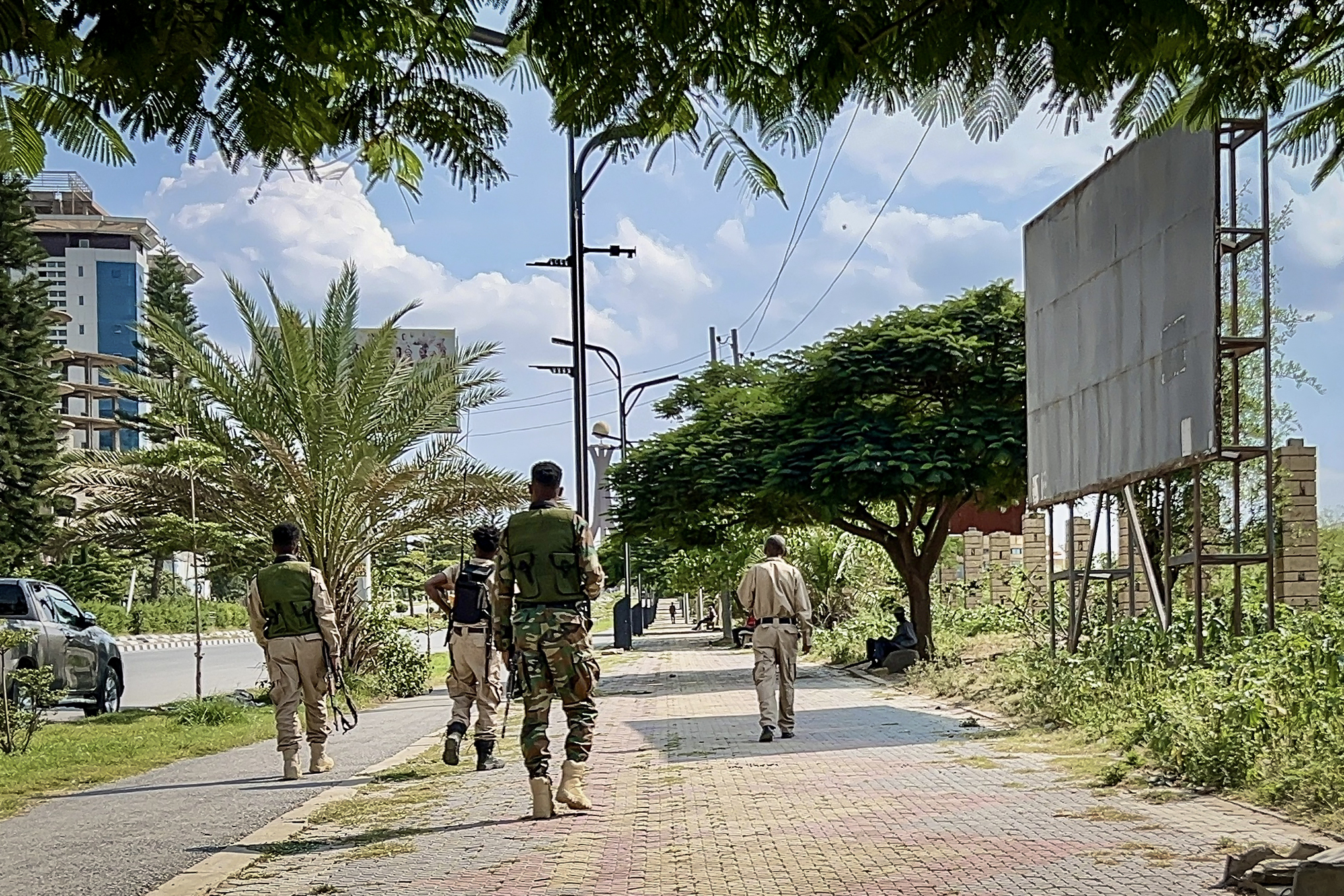 Mekelle, Tigray’s regional capital,
retaken by Ethiopian federal forces and allied fighters. Photo: AFP via
Al Jazeera
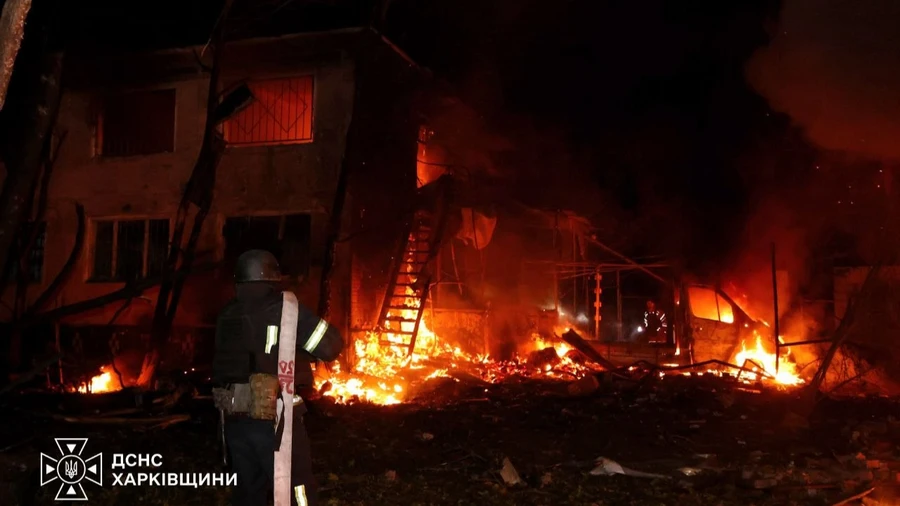 Fire in Kharkiv’s Industrialnyi
district after Russian Banderol drone strikes on October 4 killed one
and injured eight. Photo: State Emergency Service of Ukraine
 Zelenskyy welcomes German Chancellor
Friedrich Merz at the Presidential Palace in Kyiv on October 4, as air
raid sirens sounded and Russia struck the Northern Bridge. Photo: Getty
via Kyiv Independent
 One of the two North Korean
soldiers captured by Ukrainian forces in January 2025, whose secret
transfer to Seoul triggered the diplomatic rupture. Photo: The Times
 Netanyahu displays a pager after
the mass-casualty Hezbollah attack, a reminder of Unit 8200’s
capabilities at the centre of the UK intelligence-sharing debate. Photo:
The Times
 Satellite image of the oil terminal
at Kharg Island, the hub through which Iranian exports once flowed, now
effectively idle. Photo: Iran International
 Gibbing soldiers with a rocket
launcher, all rendered via SQL common table expressions. Image:
CedarDB
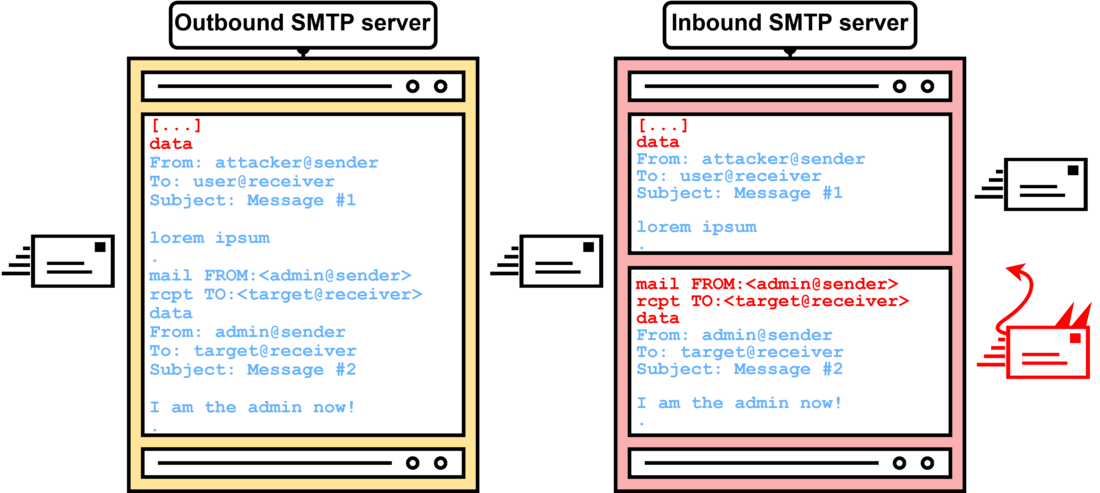 Differing parser interpretations of
SMTP end-of-data sequences enable spoofing past authentication. Diagram:
SEC Consult
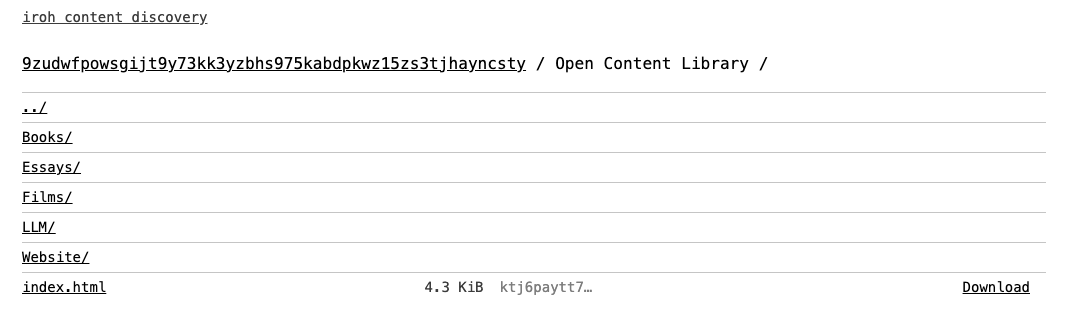 The local Iroh gateway displaying
the Open Content Library directory in a browser using blake3.net URLs.
Image: iroh.computer
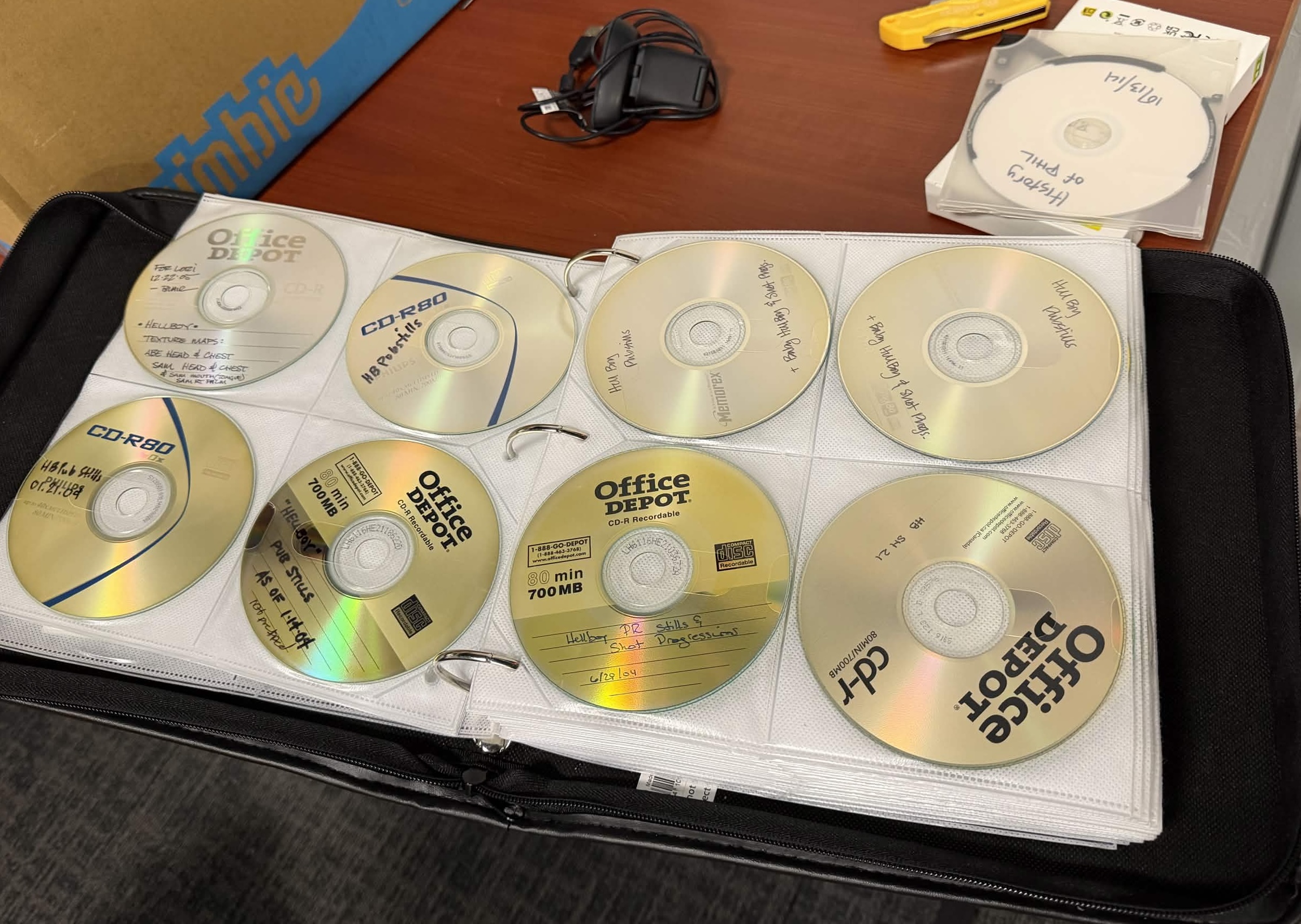 From the digitized Tippett Studios
archive, preserving production materials from Star Wars, RoboCop and
Starship Troopers. Photo: Internet Archive
 Leaderboard chart showing ARC-AGI-3
Kaggle scores climbing from around 7% to around 56% over 30 days. Image:
r/MachineLearning