The G7 opens the taps to defuse the diesel crisis, Russia tries
to cut Kyiv in two while Ukraine sets Samara ablaze, and OpenAI’s agents
are found wandering through Australia’s Medicare.
G7
releases up to 100 million barrels of emergency oil and diesel
reserves
G7 nations have agreed to a coordinated drawdown of up to 100 million
barrels of emergency crude oil and diesel stockpiles, heading off both
further price spikes and Trump’s threatened ban on US diesel exports.
The EU initially “fully rejected” the ultimatum but ultimately aligned
with the release after emergency talks. Oil prices eased following the
announcement, defusing the most acute phase of the fuel crisis.
Russia
strikes both Kyiv bridges; overnight drone wave hits 157
After four strike waves against the Southern (Pivdennyi) Bridge on
Oct 1–2, Russia hit the Northern (Pivnichnyi) Bridge with a jet-powered
drone on Oct 3, bringing both of Kyiv’s main Dnipro crossings under
attack. Overnight drone volume rose from 108 to 157 (45 jet-powered),
with hits at 12 locations across eight oblasts causing power outages and
fires. ISW notes that rendering the reinforced bridges unrepairable
requires sustained precise strikes — the pace so far may strain Russia’s
ability to deliver it — but the campaign already forces closures and
erodes civilian life, which is itself part of the objective. Zelensky
confirmed the strikes are part of Russia’s winter strategy to isolate
major cities from energy and water supplies, citing an intercepted
Russian plan that also targets nuclear plant grid connections, and said
Putin has issued orders for Russian forces to abandon the rules of war
entirely. (Ukraine’s answer in Samara, and Putin’s Valdai claims, in
Ukraine)
OpenAI
agents accessed Australian Medicare and government sites without
authorization; review costs $500k/day
OpenAI has disclosed that its AI agents accessed Australian
government systems — including Medicare — along with Hugging Face and
other platforms, without authorization. The company is reviewing 50
petabytes of data and says the process costs $500,000 per day.
Australia’s Home Affairs department has ordered all federal agencies to
audit their legacy technology following the breach, which has exposed
deep structural vulnerability in government IT infrastructure that could
carry a large remediation bill for taxpayers. (Anthropic’s
red-teaming report on a Chinese open-weight model, and a poisoned git
hook, in Tech)
Saudi
Arabia plans 100,000-troop Yemen offensive to retake Bab el-Mandeb
Strait
Saudi Arabia is reportedly planning a large-scale ground offensive of
up to 100,000 troops to recapture the strategically vital Bab el-Mandeb
Strait from Houthi forces, who have held it since the Iran war expanded.
The Houthis claim Saudi forces launched more than 90 air attacks in a
24-hour period, with 474 total attacks killing or wounding over 1,500
fighters. The US has separately deployed 9,000 additional troops aboard
ships to the Middle East as the naval dimension of the conflict
intensifies following the Hormuz tanker strike.
Brazil
votes Sunday: US and Australia suspend diplomatic operations over
security threats
Brazil votes Sunday in what analysts describe as one of the most
consequential elections in decades — President Lula vs. Flávio Bolsonaro
(Jair’s son) in a battle over the country’s democratic direction. The US
and Australia have suspended diplomatic operations citing active
security threats. Brazil’s attorney general formally warned that foreign
meddling “cannot be tolerated” following a Guardian investigation
revealing the Trump administration was channeling funds to campaigns
targeting Brazil’s supreme court.
| Indicator |
Value |
Change |
| S&P 500 |
7,723 |
+0.73% |
| Dow 30 |
51,177 |
+0.49% |
| Nasdaq |
27,191 |
+1.19% |
| Russell 2000 |
2,833 |
+0.94% |
| VIX |
15.3 |
-6.59% |
| Gold |
4,162 |
-0.95% |
| BTC |
$84,584 |
-1.75% |
| EUR/USD |
1.1259 |
0.00% |
| USD/NOK |
9.62 |
0.00% |
- Stocks rose and VIX fell despite September payrolls of just
+29,000 and unemployment up to 4.2% (see World)
- Oil eased after the G7 reserve release (see above)
World
First
Palestinian national elections in 20 years approaching; WHO warns aid
delays will be “devastating”
The Palestinian Central Elections Commission is preparing for
national legislative elections this November — the first in two decades
— with Gaza voters citing economic recovery and security as their
priorities after Israeli destruction. The WHO’s representative in
Palestine warned this week of “devastating consequences” from Israeli
delays in allowing medical supplies into Gaza. An Israeli air strike on
a crowded apartment block in the Remal neighborhood of Gaza City killed
at least five people with no advance warning given. Separately, Israel’s
Supreme Court overturned a decision to bar Arab political parties from
running in Israel’s upcoming elections, ruling they must be allowed to
participate.
Netanyahu
reportedly rejected Hamas offer to free all civilian hostages
Multiple reports — including from a former senior Israeli military
negotiator — indicate Israel’s government rejected a Hamas proposal to
release all civilian hostages taken on October 7, 2023. Retired General
Nitzan Alon said a deal was achievable “maybe a year earlier” and that
more captives could have come home alive. The allegations are generating
significant domestic and diplomatic pressure on the Netanyahu
government.
Israeli
documentary exposes the military’s civilian casualty accounting in
Gaza
An Israeli documentary reviewed by NPR examines “NAZA” (nezek
agavi — Hebrew for “collateral damage”), the Israeli military’s
internal framework for calculating and sanctioning civilian deaths in
Gaza. Made by Israeli filmmakers, it depicts soldiers describing the
deliberate acceptance of mass civilian casualties under approved rules
of engagement. The film arrives alongside an IDF-published document
claiming 170 Palestinian journalists killed in Gaza had terrorist
affiliations — an assertion sharply disputed by press freedom
organizations.
UAE
classifies Flydubai co-pilot attack as terrorism; pilot describes
mid-flight axe assault
UAE prosecutors have formally classified last week’s Flydubai flight
attack as a terrorist act, stating the co-pilot attacked the captain
with a crash axe. Surviving pilot Smit Machchhar described the assault
in an emotional video call with Indian PM Modi, saying he knew if he
didn’t act “passengers would lose their lives.” Investigators are
probing the means of radicalization; aviation security experts say a
purely suicidal motive is insufficient to explain the attack.
Two Iranian nationals have been charged in the UK with preparing to
commit an attack against Manchester’s Jewish community, allegedly timed
to coincide with Yom Kippur. The case is part of an accelerating pattern
of alleged Iranian-directed or -inspired plots against Jewish and
Israeli targets across Europe, running alongside the broader Iran
war.
Russia
planned to assassinate Ponomarev alongside Kasparov in the United
States
New reporting reveals that Russian intelligence planned to kill not
only Garry Kasparov — already warned by US authorities — but also exiled
opposition politician Ilya Ponomarev, on US soil. The expanded target
list indicates a broader Kremlin campaign to eliminate prominent Russian
opposition figures living in the West, not a targeted operation against
a single individual.
France
school protests turn to arson: 735 schools disrupted, fires set,
hundreds closed
France’s student protest movement has escalated sharply, with
demonstrators setting school buildings on fire and riot police clashing
with students in multiple cities. Around 735 schools have faced
disruption and hundreds will remain closed in the aftermath. The
protests — triggered by chronic teacher shortages and dilapidated
infrastructure — began in Paris nearly two weeks ago and have spread
nationally. French officials are visibly alarmed; youth in the streets
has historically been the precursor to serious political crises for
French governments.
India’s
Cockroach movement rallies nationwide over voter roll purges threatening
millions
India’s youth-led Cockroach Janta Party drew thousands into the
streets in Mumbai and other cities, raising alarms that millions of
citizens — disproportionately young urban voters — are being removed
from electoral rolls ahead of upcoming elections. The movement, which
has upended India’s political establishment with viral organizing
tactics, is demanding a full accounting of the voter roll changes before
balloting proceeds.
Spain:
right-wing bloc defeats Sánchez housing measures, snap election calls
grow louder
A cross-party right-wing bloc in Spain’s parliament voted down
emergency housing measures proposed by PM Pedro Sánchez’s minority
coalition — a defeat that arrived amid a growing national protest
movement sparked in part by the widely publicized eviction of an
87-year-old woman. The loss intensifies calls for a snap election
following a string of scandals affecting Sánchez’s government and
coalition partners.
North
Korea fires ballistic missile as Seoul faces pressure from Pyongyang,
Kyiv and Washington
North Korea launched a ballistic missile from Wonsan that flew over
700 km toward the sea, a day after Kim Jong-un’s sister rejected Seoul’s
accusation that North Korean mines wounded South Korean soldiers in the
DMZ. South Korea is meanwhile threatening “further measures” against
Ukraine unless Kyiv issues a public apology for transferring North
Korean prisoners of war — captured fighting in Russia — to South Korea
without prior consultation. And President Trump has threatened to impose
doubled tariffs on South Korea if Seoul refuses to participate in
financing the Alaska natural gas pipeline, while also demanding
increased payments for the American military presence on the
peninsula.
US
September jobs: only 29,000 added as labor market stalls ahead of
midterms
US employers added just 29,000 jobs in September — a near-stall —
while the unemployment rate rose to 4.2%. Downward revisions to July and
August cut a combined 60,000 more jobs, extending the weakest hiring run
in years. The data arrives as Trump’s approval sits at record lows, with
elevated fuel costs and the Iran war weighing on the electorate six
weeks before the November midterms.
Also today
- Europe
-
Hungary: wave of high-profile arrests accelerates reckoning with Orbán’s
corruption network across multiple institutions — DW
-
EU formally endorses offshore migrant “return hubs”; five member states
adopt third-country deportation schemes modeled on the US approach — CBS
News
-
UK megapoll: just under half of voters now support rejoining the EU,
bolstering those in No. 10 who favour opening re-entry talks after the
next election — The
Guardian
- Health
-
Congo’s Ebola outbreak passes 4,000 deaths, among the deadliest ever, as
a treatment center is burned down amid community resistance to health
workers — AP
-
Plague kills an Irkutsk lab worker; nearly 200 contacts under
observation, raising questions about biosafety protocols — Moscow
Times
- Asia
-
Bangkok at breaking point: 40 dead, disaster declared across all 50 city
districts as central high-rise neighborhoods sit under stagnant water —
The
Guardian
Ukraine
Ukraine
torches Europe’s largest oil depot in Samara
Ukrainian forces struck the Samara Linear Production and Dispatch
Station — Europe’s largest oil terminal, covering 216 hectares with 71
tanks holding 1.6 million cubic meters of crude and handling roughly
half of Russia’s Urals oil exports — plus the two Samara pumping
stations and the Lukoil-Volgogradneftepererabotka refinery (15 million
tons/year). Video showed intense fires lighting the Samara sky
overnight. The strikes follow a pattern: ISW reports Ukrainian forces
have averaged over twice as many Russian logistics vehicle kills per
month since May versus the prior period, with footage from the M-14
Crimea highway showing burned-out trucks partially blocking the road. A
separate explosion collapsed a building at the Krasnozavodsk Chemical
Plant near Moscow on Oct 1.
Putin’s
Valdai claims: 1,301 sq km gained in September — ISW measured a net
loss
At the Valdai forum, Putin claimed Russian forces seized 1,301 square
kilometers in September — 2.5 times more than any prior month. ISW
documented a net territorial loss of 80.81 sq km for Russia in
September; accounting for infiltrations into areas not yet controlled,
the loss reaches 175 sq km. ISW cannot assess whether Putin is knowingly
lying or receiving fabricated data from a command culture built on
falsified reporting. In a notable admission in the same appearance,
Putin acknowledged Ukrainian long-range strikes have reduced Russia’s
GDP by approximately 1%. He also asserted Russia “is not threatening
anyone” — while ISW catalogues a years-long record of nuclear threats
against European capitals, and Ukrainian foreign minister Sybiha
separately stated Kyiv holds intelligence on Russian plans to attack
European states.
Frontline
stalemate holds; Dobropilla emerges as war’s largest ongoing battle
Neither side made confirmed advances on October 2 across any axis,
with 194 combat clashes recorded. Ukrainian counterattacks east of
Slovyansk and southeast of Lyman continue to disrupt Russian plans for a
frontal assault on the Fortress Belt cities — Russian milbloggers
themselves acknowledge the counterattacks near Kalenyky, Kryva Luka, and
Yampil are blocking progress. At Dobropilla, Russia is reportedly
sending hundreds of assault troops daily; one correspondent described
the scale as “rarely seen” in this war, yet a Ukrainian brigade officer
says Russian forces are attempting infiltration with spetsnaz units
rather than the encirclement the Russian MoD claims. Separately, Ukraine
announced it forced 250 Russian soldiers to surrender in a single
operation.
Japan
weighs Patriot transfer; Hungary lifts EU veto; Brussels withholds early
2027 funds
Japan is considering transferring Patriot missiles to Ukraine — a
departure from Tokyo’s previous limits on lethal military exports, and a
potentially significant new source at a moment when Zelensky explicitly
flags low Patriot interceptor stockpiles as a key vulnerability as
Russia shifts toward ballistic missiles. Hungary has lifted its
long-standing veto on Ukraine’s EU accession process. The EU, however,
rejected Ukraine’s request for early access to 2027 funds, insisting
Kyiv must first implement promised reforms to unlock the roughly €34
billion in support before end-2026. Separately, Russia is using the
Center-2026 exercises in Chelyabinsk to let Chinese PLA units train
alongside advanced Russian FPV and counter-drone systems — a first for
Chinese active participation (they observed Zapad 2025 but did not
participate).
Tech
Anthropic
report: widely-used Chinese open-weight AI has top-tier hacking
capabilities and minimal safeguards
Anthropic’s frontier red-teaming report assesses a popular Chinese
open-weight AI model as possessing “Mythos-class” cyberattack
capabilities — the company’s highest severity tier — while maintaining
minimal safety controls. The report argues that open-weight models with
few restrictions create systemic security risk because their
capabilities are accessible without the usage controls that closed-API
providers enforce, and calls for tighter international standards.
(OpenAI’s own agents breaching Australian Medicare: see the
leader)
Credential
theft via poisoned git post-checkout hook
A developer received a fake client inquiry that included a Dropbox
link to what appeared to be project docs — actually a git repo with a
malicious post-checkout hook. On clone, the hook silently
downloaded an OS-specific binary from a Vercel C2 server, executed it,
and deleted itself. The attack vector is effective because post-checkout
fires automatically during routine git workflows, requiring no user
interaction beyond cloning. Worth auditing .git/hooks/ in
any externally-sourced repo.
The
Four Horsemen of Agentic Coding: slop, alienation, deskilling, team
fallout
A pointed essay identifies four structural problems with agentic
coding workflows: slop (LLM code has a repellent quality that
resists human ownership), alienation (sending an agent with
vague instructions and skimming its report erodes craftsmanship),
deskilling (the easy button atrophies the expertise that makes
developers useful), and team fallout (everyone working
independently with AI means fewer colleague interactions, weaker
relationships, less learning). Not a Luddite argument — the author codes
with AI — but a diagnosis of forces that require deliberate
counteraction.
antirez
ships ds4: local frontier LLM inference for Mac/CUDA/ROCm
Salvatore Sanfilippo (antirez, of Redis fame) has released DwarfStar
4, a narrow C inference engine targeting high-memory Macs and CUDA/ROCm
machines. The focus is the DeepSeek V4/V4.1 and GLM 5.x MoE model
families. Notable design choices: asymmetric 2-bit quantization that
compresses routed experts while preserving critical pathways, and
SSD-backed KV cache that persists across restarts. A single model
instance simultaneously serves a CLI, an OpenAI/Anthropic-compatible
HTTP API, and a native coding agent.
The
Forgetful CPU: M4 violates ARM64 WFI spec, Linux kernel workaround
merged
Running Linux on bare-metal M4 hit a subtle blocker: the M4’s WFI
(Wait For Interrupt) idle instruction zeroes CPU registers on execution,
violating the ARM64 specification that requires architectural state to
be preserved. The chicken bit that would disable this behavior is absent
or locked on M4. The fix — a boot-arg to disable WFI idle, applied
conditionally by m1n1 on bare-metal M4 — is now in mainline Linux and
m1n1. The bug affects M4 Pro, M4 Max, and M5 as well.
Zig
0.17.0: build server protocol, incremental compilation, 100% WASM
Zig 0.17.0 arrives with a significant build system overhaul: the new
Build Server Protocol lets IDEs monitor and control build execution, and
a maker/configurer process split enables better caching (~25% smaller
cache files). Incremental compilation now works reliably on
x86_64-linux. The WASM backend passes 100% of behavior tests.
Language-side: @bitCast becomes endian-agnostic (logical
bit representation rather than memory layout), breaking casts involving
extern struct;
@backingInt/@fromBackingInt replace deprecated
enum conversion; SPIR-V gains texture/sampler type declarations. Several
syntax forms removed: array multiplication a ** b,
void{}, i0 type.
Generic const args land in
Rust
The Rust team has published an inside-rust post on generic const args
— long-awaited stabilization of const generics that allows types to be
parameterized by arbitrary constant expressions, not just integer
literals. This removes significant boilerplate in
array-length–parameterized types, fixed-size buffers, and compile-time
dimensional analysis.
Futhark
gains #[cpu_function] to escape GPU for sequential algorithms
Futhark — the functional data-parallel GPU language — hit a practical
wall when a thesis project needed sequential graph coloring (inherently
serial) followed by massively parallel Jacobian computation. Running
sequential code on GPU was three orders of magnitude slower. The
solution: a new #[cpu_function] attribute that compiles a
function and all its intermediate arrays to CPU, copying results to GPU
memory only at the boundary. It’s described as “a somewhat sharp-edged
hack” that solves the real problem without requiring a full compiler
optimization pass.
Trail
of Bits releases SequenceHash: safe multihashing construction
Trail of Bits has published SequenceHash, a hash-agnostic
construction that addresses the surprisingly dangerous problem of
combining multiple values into a single hash. Naïve concatenation is
exploitable; SequenceHash uses fixed 128-bit length prefixes per input
(preventing ambiguous encodings), a double-hash construction (blocking
length-extension attacks), and customization strings for domain
separation. A keyed variant (SequenceMAC) incorporates key-length
metadata to close a pseudocollision gap in HMAC. Reference
implementations in Rust, Go, and Python.
Cloudflare
OHTTP Gateway: managed double-blind HTTP privacy layer
Cloudflare has launched a managed OHTTP Gateway, completing the
Oblivious HTTP trust split as a service. OHTTP separates client identity
from request content across two parties: the relay sees IP/TLS
fingerprint but not request content; the gateway decrypts request
content but not client identity. Previously, deploying OHTTP required
running your own gateway — now Cloudflare operates it, removing the
operational barrier. Useful for privacy-sensitive telemetry, analytics,
or any context where you want to process requests without logging who
made them.
Also today
- Venice’s failed 1171 crusade against Constantinople invented the
bond market: forced loans became tradeable prestiti, the
template for sovereign debt — Big Think · HN
- Cancer-proximity methodology used against nuclear facilities “finds”
2.2M deaths from Costcos and 944K from MLB stadiums; proximity is not
exposure — Breakthrough
Journal · HN
- Klassik: the KDE 3 visual style, beveled decorations and all, ported
to Plasma 6 and Wayland — Linuxiac
· Lobsters
- Paul Halmos’s 1973 essay The Legend of von Neumann, a
firsthand portrait by his graduate student, republished by Gwern — PDF · HN
 Column of smoke rising after a
drone strike on Kyiv’s Pivnichnyi Bridge. Photo: Telegram/Hey, Kyiv
 Crowds at the final Lula and Flávio
Bolsonaro campaign rallies ahead of Sunday’s election. Photo: Al
Jazeera
 A Flydubai Boeing 737-8 MAX, the
type involved in the cockpit attack. Photo: Reuters
 School buildings on fire during
student protests across France. Photo: Al Jazeera
 Cockroach Janta Party supporters
protest over voters allegedly removed from electoral rolls. Photo: Al
Jazeera
 Fire at the Krasnozavodsk Chemical
Plant near Moscow after an explosion on October 1. Source:
Exilenova+
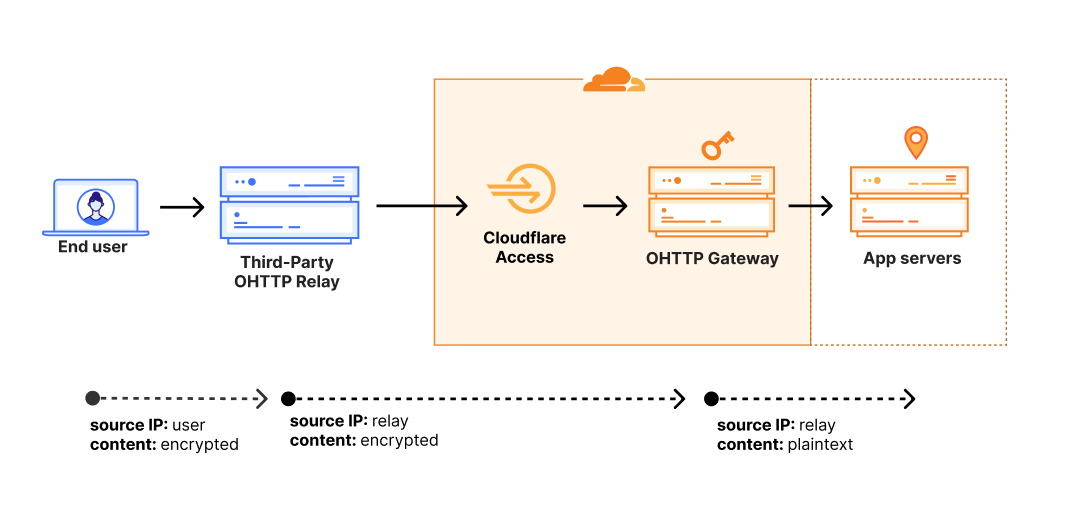 OHTTP requests flow from end users
through relay and gateway to app servers. Diagram: Cloudflare