Washington piles force into the Gulf and leans on Europe’s diesel
reserves, Russia opens a new front against Kyiv’s bridges, and the EU
and Canada sign a pact built explicitly to depend less on both the US
and China.
US
escalates to three carrier groups as tanker hit in Hormuz
The US is deploying a third carrier strike group toward Iran,
bringing the total regional force to roughly 50,000 troops, 2,000
Marines, and F-35 squadrons — the largest US concentration in the Gulf
since the war began. A tanker was struck in the Strait of Hormuz
overnight. Crude oil exports through the strait have largely recovered
to pre-war levels, but flows of refined products like diesel remain
constrained, compounding the fuel crisis hitting Europe. Trump told
reporters he views Kim Jong Un as a “friend” but that Iran “can’t have
nukes,” underlining the asymmetric posture his administration is taking
toward the two nuclear-threshold states.
At home, the war is costing him: Trump has launched a campaign-style
rally blitz at the lowest recorded approval ratings of his presidency,
with rising fuel prices identified as a key driver. (Tehran’s own
view of the war, and why it keeps escalating, is in Investigations.)
Trump
threatens diesel export ban; Europe holds emergency reserve talks
The Trump administration told France and Germany to release emergency
diesel stockpiles or face a US export ban — a significant pressure play
as the Iran war and China’s fuel export suspension push prices higher.
The UK joined calls with the EU Commission, France, Italy, and Ireland
on drawing down reserves. Canada’s PM Carney simultaneously invoked
emergency powers to fast-track a West Coast oil pipeline, a signal that
energy security is reshaping policy across Western governments.
Russia
strikes Kyiv’s bridges for the first time, closing two crossings
Russia targeted the Pivdennyi (Southern) Bridge in central Kyiv — the
first-ever attack on the capital’s bridges — while a metro train was
crossing. The bridge was struck three times on October 1 and again
overnight; Kyiv has now closed both the Pivdennyi and Paton bridges.
Russia appears to be deploying Geran drones fitted with 40-kg
shaped-charge warheads designed to penetrate reinforced steel and
concrete, aiming to cause cumulative structural damage through repeated
precision strikes on the same support points. The same wave hit a
25-storey residential building (1 killed, 2 injured), and a drone
slammed directly into a Kyiv school with 104 children inside — the
warhead failed to detonate. Energy infrastructure strikes caused outages
across five oblasts.
Separately, Putin warned Russia is ready to use “every weapon at its
disposal” if Western countries attack Russian territory, citing
Kaliningrad specifically. NATO Secretary General Rutte dismissed the
nuclear rhetoric: “I don’t take this seriously.” (Also covered in Ukraine.)
EU
and Canada launch “Alliance for the Future” to reduce US and China
dependency
The EU and Canada announced a new strategic partnership at a Montreal
summit, explicitly framed as counterbalancing dependence on both the US
and China. The package includes new transatlantic undersea data cables,
LNG shipments, and expanded technology cooperation. The energy component
arrives at an acute moment, with Europe under simultaneous pressure from
the Trump diesel ultimatum and Iran-war supply disruptions. Multiple EU
member states including Germany are simultaneously exploring
rapprochement with the UK under PM Andy Burnham — Germany’s ambassador
said her country would do “everything we can” to support Britain’s
European ambitions. (How Washington is reshaping NATO around a
smaller core group, excluding the UK and France, is in Investigations.)
Europe’s
summer 2026 was worst on record: 2.5°C above average, mass deaths and
crop failures
The EU’s Copernicus climate service confirms June–August 2026 was the
hottest European summer on record, with surface temperatures 2.5°C above
the decadal average. More than half the continent experienced “very
strong” heat stress. The report documents mass deaths and widespread
harvest failures; scientists warn that what was once an extreme event is
rapidly normalizing.
| Indicator |
Value |
Change |
| S&P 500 (f) |
7,746 |
+0.28% |
| Dow 30 (f) |
51,391 |
+0.29% |
| Nasdaq (f) |
30,915 |
+0.50% |
| Russell 2000 (f) |
2,838 |
+0.39% |
| VIX |
16.19 |
-1.22% |
| Gold |
4,213 |
+0.25% |
| BTC |
$85,840 |
+2.96% |
| EUR/USD |
1.1258 |
+0.09% |
| USD/NOK |
9.628 |
-0.06% |
- US equity futures are modestly higher and the VIX is slightly
lower, even with a third US carrier group heading to Iran and a tanker
hit in Hormuz (see above)
World
Ethiopia-Eritrea
sever diplomatic ties; explosions hit Addis Ababa
Ethiopia and Eritrea have cut diplomatic ties as fighting across the
northern region intensifies sharply — an escalation beyond the 52
civilian deaths in Tigray reported earlier this week. Explosions were
heard in Addis Ababa and the government banned drone flights over the
capital, signaling the conflict may be nearing the city for the first
time.
Brazil
votes Sunday: bomb scare, cancelled debate, US meddling probe
Brazil heads to the polls this Sunday in a tight race between
President Lula and Flávio Bolsonaro, son of jailed former president
Jair. The final week has been volatile: a bomb scare outside the Supreme
Court, a cancelled presidential debate after both candidates withdrew,
and Brazil’s attorney general calling for a probe after a Guardian
report revealed the Trump administration channeled money to Brazilian
far-right groups ahead of the vote. The AG called foreign interference
“an important alert for Brazilian sovereignty.”
France
school protests turn to urban violence: fires, teacher doused in
petrol
France’s student protests over overcrowded classrooms, teacher
shortages, and overloaded schedules have escalated sharply into what the
government labels “urban violence.” Schools have been set alight, a
teacher doused in petrol, and riot police deployed nationally across
roughly 900 active demonstrations and blockades. The Prime Minister
called an emergency cabinet meeting.
Nepal
avalanche kills at least 15 expedition workers at Himlung base camp
An avalanche swept through a base camp on Nepal’s Himlung Himal,
killing at least 15 expedition workers. Rescuers recovered eight
additional bodies on Thursday. The disaster struck during the autumn
expedition season when large international teams are present.
SpaceX
sets US speed record to ISS; Jessica Watkins first Black female mission
commander
NASA’s Crew-13 reached the International Space Station in just eight
hours — a US record — aboard a SpaceX Dragon capsule. The mission was
commanded by Jessica Watkins, making her the first Black woman to
command a US spaceflight. The four-person crew will spend up to six
months aboard the station.
Also today
- Middle East
-
Flydubai cockpit attacker under Saudi interrogation; Netanyahu cites
“Islamist radical indoctrination” and says the co-pilot was suicidal.
Flydubai has halted all Israel-bound flights — Guardian
· BBC
-
Amnesty urges Iran to halt the flogging sentence against singer Parastoo
Ahmadi, part of a broader pattern of punishing women in Iran’s arts
sector since 2022 — Iran International ·
Reddit
- Europe
-
Greece pushes the EU to let member states suspend asylum processing
during mass migration surges, going well beyond the existing migration
pact — Al
Jazeera
-
Fayed: Metropolitan police tell MPs that 70 of the women who reported
abuse — almost half the known accusers — show hallmarks of human
trafficking — Guardian
-
US intelligence warns Garry Kasparov of an active assassination threat.
“My family and I will not truly be safe as long as Putin is in power” —
BBC
- Asia
-
Jagtar Singh Johal freed from Tihar prison after nine years, after the
Indian High Court warned the government it would be found in contempt —
Guardian
- United States
-
Christa Pike remains critical after two failed lethal injection
attempts; Tennessee’s governor ordered an independent inquiry and
suspended all remaining 2026 executions — Guardian
· BBC
-
OpenAI fires multiple employees for sharing sensitive internal data with
an outside AI evaluation organization; the evaluators have not been
named — BBC
- Science
-
The Economist: “mirror life” synthetic biology needs regulation before
it becomes real, since natural immune systems and ecosystems have no
defenses against it. “Playing catch-up is not an option” — Economist
-
Google launches a fridge-sized satellite carrying AI chips, the opening
move in Project Suncatcher’s plan for solar-powered data centers in
orbit — NPR
Ukraine
Ukraine
debuts FP-7 ballistic missile in combat; Moscow-region warhead factory
explodes
Zelensky confirmed the first combat use of Ukraine’s
domestically-built FP-7 tactical ballistic missile (250 km range, 200 kg
payload), which Fire Point is also developing as an interceptor for
Ukraine’s Freyja anti-ballistic missile program; the target was not
disclosed. Commanders describe preparations for Operation Vivaldi Phase
4. Separately, an explosion at the Krasnozavodsk Chemical Plant near
Moscow — a key manufacturer of thermobaric warheads for Russia’s Shahed
drone fleet — killed at least 7 workers on October 1, with one workshop
completely collapsing.
Russia’s
new theory of victory: break Ukraine’s interior, not its frontlines
Former Ukrainian Foreign Minister Dmytro Kuleba, now a Belfer Center
fellow, writes in Foreign Affairs that Russia has abandoned the old
strategy of grinding territorial advances and is instead systematically
bombing Ukraine’s interior cities to destroy the economy and break
civilian morale. Since July, Kyiv has faced 13 air-raid alerts in a
single day and a 10-hour overnight alert; Lviv, Lutsk, Ivano-Frankivsk,
and border towns are now targets. Russia’s new instruments are fast
jet-powered drones at scale and ballistic missiles, deployed to destroy
warehouses, pharma distribution centers, data centers, and eventually
sewage systems. Ukraine needs $52 billion in external financing in 2027;
only $20 billion is currently secured, and the US has cut all financial
support. Kuleba argues Europe must use Russia’s $300B in frozen assets,
fund Ukrainian military personnel costs, lift strike restrictions, and
treat the EU accession path as irreversible — or face a Russian victory
that costs Europe $1.3–1.8 trillion and eventually extends the war to
NATO territory.
ISW reaches a compatible but less either/or reading: Putin is
layering the new theory of victory — breaking Ukrainian civilian will
through the winter strike campaign — on top of his original attrition
strategy of advancing along the entire front simultaneously, with
increased Russian activity near Orikhiv suggesting he has not abandoned
either. This week Putin declared readiness to resume talks only on terms
including occupied territory and Ukrainian neutrality, and dismissed
mutual ceasefire proposals on ships and refineries as “absurd.” Zelensky
stated Putin has told military commanders to abandon the rules of war.
This week’s bridge strikes on Kyiv fit the pattern precisely.
Operation
Vivaldi cascades toward Slovyansk as Russia’s September losses hit an
all-time record
Russian milbloggers are now acknowledging that Operation Vivaldi’s
effects extend beyond the Lyman salient, with Ukrainian forces crossing
or approaching the Siverskyi Donets River northeast of Slovyansk and
counterattacking east of Kramatorsk — threatening Russian logistics and
forcing a reorganization of advances toward both Fortress Belt cities. A
Ukrainian battalion chief of staff confirmed forces are establishing a
new staging position in the Slovyansk direction for future large-scale
operations.
September’s net numbers put the strategic shift in relief: Russia
lost ~81 sq km for the month and 293 sq km since March 2026, while
suffering 46,230 casualties in September — the highest single-month
figure since the invasion began. Moscow is simultaneously preparing to
deploy 120,000 new conscripts in a fall offensive, pointing to a
strategy of absorbing losses through mass mobilization rather than any
operational adjustment. Japan confirmed it has provided $20 billion in
aid to Ukraine since the war’s start.
Seoul
threatens action against Ukraine over North Korean POW transfer
A diplomatic row has erupted after Ukraine disclosed a deal
transferring two captured North Korean soldiers to South Korea without
Seoul’s approval. South Korea’s President Lee accused Ukraine of
“undermining” him domestically and claimed Kyiv was “attempting to
provoke war on the Korean Peninsula,” warning of “additional measures”
if Ukraine does not apologize.
Elsewhere on the diplomatic front: France has begun training
Ukrainian Rafale pilots, a significant capability milestone. The EU
rejected Ukraine’s request for urgent early disbursement of a loan
tranche. On a positive note, Ukraine is moving toward satisfying
Hungary’s conditions on minority language education — a step that could
unlock further EU accession negotiating clusters before year-end.
Investigations
UK
and France excluded from Colby’s NATO 3.0 restructuring talks
US Under-Secretary of War Elbridge Colby is organizing a second
“Bergen Group” meeting in Poland, again excluding the UK, France, and
the Baltic states. The group — US, Norway, Sweden, Finland, Poland,
Germany, Netherlands — is the core of Colby’s NATO 3.0 vision: European
allies spending 5% of GDP on defense, taking primary responsibility for
European security as the US pivots to China. Colby has publicly singled
out the UK, telling reporters he wants “to see more from countries like
the United Kingdom.” The Telegraph reports that US officials
subsequently threatened to oppose UK sovereignty over the Falkland
Islands if PM Andy Burnham doesn’t increase defense spending. Allies
outside the group are being asked to complete written questionnaires on
US weapons purchases, base access restrictions, and support for Trump
foreign policy — in effect, a loyalty and burden-sharing audit for
alliance restructuring.
Inside the alliance, one long-standing problem is dissolving:
Budapest has formally broken from the Orbán-era alignment with Russia
and pivoted toward mainstream NATO positions. Russia retaliated by
expelling Hungarian diplomats — a response that underlines how
consequential the shift is for Moscow’s ability to exert influence
inside the Western alliance.
Why
Iran escalates: Tehran’s strategy to drive the US out of the Middle
East
A Foreign Affairs analysis by Mohammad Ayatollahi Tabaar
(Carnegie/Texas A&M) lays out Iran’s strategic posture after the
US-Israeli strike campaign that began February 28, 2026 — which killed
Supreme Leader Khamenei and many senior officials. His son Mojtaba is
now supreme leader. Iran survived, closed the Strait of Hormuz, and
rather than accepting a frozen status quo, has adopted a doctrine of
continuous offensive escalation. Tehran’s explicit goal: make US
regional presence so costly it withdraws. The playbook includes
throttling Gulf energy exports, attacking US military bases, targeted
assassinations of US/Israeli officials, potential ground incursions into
Bahrain/Kuwait/Azerbaijan, and — as a last resort — nuclear weapons.
Iranian leaders see February 28 the same way Israelis see October 7:
proof the adversary must be permanently defeated, not accommodated. The
piece argues Iran believes it has a narrow window (before US midterms
close, before Washington regroups) to press its advantage.
Iran’s
own deputy minister admits Starlink is defeating the regime’s internet
control
Iran’s Deputy Communications Minister Mohammad Hafez Hakami has
publicly acknowledged that Starlink is the “final nail in the coffin”
for Tehran’s ability to control cyberspace. Iran’s control playbook has
escalated in each cycle of unrest: blocking individual platforms (2017),
shutting down internet nationwide (2019 protests), restricting major
platforms (2022), and cutting the entire network during January 2026
protests. Each measure required more drastic action. Starlink terminals,
though smuggled illegally into Iran and subject to jamming and location
efforts, operate outside the state telecom infrastructure entirely. “If
this continues, in the next crisis we may be forced to cut electricity,”
Hakami said. He noted Iran has “failed to produce an adequate policy
response” and joked the Ministry of Communications might as well become
an amusement park.
Bellingcat:
Gaza demolitions continue — more recent satellite imagery contradicts
viral narrative
Viral posts this week claimed Google had just updated Gaza satellite
imagery, but Bellingcat confirmed with Google that the imagery (captured
by Airbus in February 2026) was actually available since June. The real
story is what has happened since: using Planet Labs’ SkySat
constellation, Bellingcat obtained imagery through September 2026
showing demolitions have continued. In Rafah’s Tal as Sultan area,
buildings still standing in February are now rubble; near Bani Suheila,
an IDF outpost is visible atop former residential blocks, and a large
earthen barrier bisects the town north to south. In northern Gaza,
Shujaiya and Jabaliya — already heavily damaged — are still being razed,
with new IDF outposts appearing. The UN reports 82% of Gaza’s structures
are damaged, two-thirds destroyed. With international journalists still
largely barred, satellite imagery remains one of the only independent
verification tools.
ICIJ:
Gunvor quietly kept trading Russian energy while publicly pledging to
stop
Confidential records from the London operations of ICBC (the world’s
largest bank) — obtained as part of the China Capital investigation by
ICIJ and Sweden’s Göteborgs-Posten — show that trading giant Gunvor
Group continued buying and selling Russian oil and gas through
subsidiaries after its 2022 public pledges to wind down Russia business.
Counterparties included entities from Gazprom, Rosneft, Lukoil, and
Novatek. In a 2024 credit review for a $594M credit line, Gunvor
privately disclosed to ICBC that Russia dealings represented ~$234M
(0.69% of revenue) in Q1 2024. ICBC’s Zurich branch found Gunvor’s
approach “a bit more aggressive than other traders” and refused the
business; London kept it anyway, classifying Gunvor as “high risk” but
“vital.” Gunvor says all trading was sanctions-compliant and disclosed
to authorities; the records show it privately contradicted its own 2022
email to ICBC saying it had stopped new Russian entity sales.
UK
sanctions Russia’s emerging Arctic LNG shadow fleet
The UK has sanctioned eight ships in a new Russia package, five of
them LNG carriers — including three newly built Arc7 ice-class vessels
(Chaivo, Portovyy, Aleksey Kosygin, Konstantin Posiet, Pyotr Stolypin)
designed to sustain Russia’s Arctic LNG exports despite Western
restrictions. The UK government explicitly says Russia is “building a
new shadow fleet” for gas exports, with some targeted vessels entering
service only this year. The broader package also sanctions individuals
involved in the torture of Ukrainian civilians in occupied territory and
people running pro-Kremlin disinformation operations. Full UK
restrictions on maritime services for Russian LNG expand in January
2027, with targeted exemptions for Japan and South Korea as they
transition away from Russian supplies. The UK has now sanctioned nearly
600 tankers linked to Russian sanctions evasion.
MI5
names the front: Chinese intelligence funding 100+ UK academics via
CGTRI
Yesterday’s rare MI5 warning now has a name attached. In its first
ever independent public alert, MI5 is warning British universities to
cut ties with China General Technology Research Institute (CGTRI), a
Beijing-based entity MI5 says has “very strong ties” to China’s Ministry
of State Security. Over 100 UK-linked academics have contributed to
CGTRI-funded projects covering AI, cybersecurity, covert communications,
and steganography. Some academics may not have known the ultimate
funding source. Security minister Dan Jarvis has written to all
university VCs demanding they end all CGTRI arrangements and enforce the
National Security Act (2023), which created offences for covert foreign
influence. The alert reflects growing intelligence community
frustration: sources describe VCs as showing “naivety” about hostile
state funding and prioritizing research income streams over national
security requirements.
Serbia’s
snap election could disrupt Israel’s emerging defense-industrial
network
A RUSI analysis argues that Serbia’s October 25 snap election —
called after Vučić resigned amid protests and political pressure —
matters far beyond the Balkans. Serbia has become an increasingly
significant node in Israel’s defense-industrial network: a joint combat
drone assembly plant opened in September 2026, and an April 2026
strategic dialogue formalized cooperation in defense, technology, and
innovation. Serbia matters because it has ~200 defense companies, a
skilled workforce, and the manufacturing capacity that industrial-scale
warfare now demands. The risk of political change is not a diplomatic
rupture but mundane disruption — delayed export licenses, contract
reviews, coalition partners demanding new priorities. The analysis
argues Israel should institutionalize the relationship (durable
contracts, multiple political channels) so it survives any particular
government.
Trump-Xi
summit: pageantry, procrastination, and an AI dialogue
A three-day Washington summit between Trump and Xi produced a
US-China AI risk dialogue and a national security incident notification
mechanism — but no binding regulations and little concrete movement on
trade or Taiwan. A War on the Rocks roundup of expert views splits along
two lines: those who see it as “pageantry and procrastination” with
structural issues deferred, and those who emphasize the significance of
Trump treating Xi as a peer on the world stage amid the Iran war. On AI
specifically, the piece notes neither side is interested in slowing
development — the US is pushing acceleration while China suspects safety
rhetoric is a containment tool — making binding rules a non-starter for
now.
Suicide
cluster at US Cyber Command exposes the “deployed-in-place” crisis
A War on the Rocks essay by a former USMC judge advocate who spent
eight years at Cyber Command diagnoses a structural failure behind the
five suicides at or near USCY in a five-week period this summer. The
problem is that cyber operators run genuine combat operations — 8,000
missions in 2025, a 25% increase over 2024 driven partly by sustained
operations against Iran — and then commute home. No demobilization
triggers post-deployment protections: no reintegration programs, no
mandated rest periods, and classification rules prevent the ordinary
decompression of describing the day to family. The author proposes
mandatory reset cycles modeled on the Air Force drone crew
combat-to-dwell policy (which took years to actually implement), scaled
cleared mental health providers embedded at the command, and household
contingency planning. The underlying issue — operators living in two
incompatible worlds in the same day — will grow as more US military
operations are waged remotely.
Tech
Pi
1.0 ships stable; Pi Durable brings crash-resilient long-running
agents
Earendil has shipped Pi 1.0, its minimal open-source AI coding agent
harness. The stable release adds Codemode (native MCP + image model
support via “virtual models”), deferred tool loading, cache warming for
Anthropic, mid-conversation system message injection, and a new TUI
theme. Alongside it, Pi Durable is a new experimental TypeScript
framework for long-running, fault-tolerant agents: every step is a
durable task with checkpoint-and-resume on crash, conversations can fork
at any transcript point, storage backends include SQLite, JSONL, and
Cloudflare Durable Objects, and a hot-reload extension system lets you
replace running code without stopping the agent. Both are MIT
licensed.
curl -fsSL https://pi.dev/install.sh | sh
npm install @earendil-works/pi-durable
Another entrant in the same category arrived the same day: DeepSeek
Harness, an open-source agent platform in public preview with desktop
app and web UI. Built on Cordis’s “everything is a plugin” architecture,
it supports coding, research, background tasks, and document work, with
plugins creatable interactively via chat in a “Creator mode.”
Git
3.0’s SHA-256 default: expensive migration, wrong threat model
Scott Chacon (GitButler) argues that making SHA-256 the default
object ID in Git 3.0 will break vast amounts of tooling and hosting
infrastructure while addressing a threat that isn’t actually how Git
gets attacked. Trust in the ecosystem flows from forge authentication
(GitHub/GitLab logins), not hash integrity — hash collision attacks are
among the least practical ways to inject malicious code when unpaid
maintainers and low-trust package forges exist. He proposes a dual-hash
approach: keep SHA-1 as content-addressed keys, but add a SHA-256
signature over content, satisfying NIST compliance without a flag-day
migration.
arXiv
caps individual submissions at 2/month after AI paper mills double
volume
arXiv’s September 2026 submission count hit 40,363 — double the rate
from two years prior — generating 9,000 volunteer moderator support
tickets in a single month. Effective October 1: individual submitters
are capped at 2 per calendar month, max 3 active at any time. Rejected
papers count against the limit to discourage speculative bulk
submissions; co-authors are unaffected. The policy explicitly calls out
AI-assisted paper factories as the driver. The same policy update also
tightens programmatic access rate limits — relevant for tools and
pipelines that batch-fetch papers (embedding pipelines, training data
crawls, reference managers).
Rust
1.99: C-ABI variadic functions can now be written in Rust
Rust 1.99 stabilizes defining C-ABI variadic functions in Rust itself
— not just calling them.
unsafe extern "C" fn foo(mut args: ...) -> T with
VaList/VaArgSafe for cross-platform
va_list compatibility. Also stabilizes
Layout::for_value_raw, mem::size_of_val_raw,
and mem::align_of_val_raw for unsized types via raw
pointers. Additionally: Box::leak docs now explicitly
discourage round-trip deallocation patterns due to conflicts with
upcoming custom allocator stabilization.
Across the FFI line in the other direction, Verdagon writes about how
Valen — a systems language with “group borrowing” (safety through
reference groups rather than lifetimes) — maintains memory safety
guarantees when calling across to Rust. When a reference is the sole
reference into its group, Valen emits LLVM noalias,
enabling the same alias-aware optimizations Rust’s borrow checker
produces. The post details how aliasing groups compose across call
sites, including cases involving multiple references into the same group
(which are intentionally not noalias).
Bez is a research project to generate a web rendering engine directly
from W3C specs and test suites, using Datalog/logic programming for
layout rules. Key result: margin collapsing written as Datalog agreed
with all three major browsers on 1195/1195 test cases and caught a
seeded bug that geometry checks missed every time. Conformance numbers:
WPT canvas 82.6%, Khronos WebGL 99.7%, WebGPU CTS ~85% (validation).
Goals beyond correctness: tree-shakeability (analyze a site’s feature
usage, compile only what it touches) and embeddability as a small engine
for apps that currently ship all of Chromium or go without.
Automatic
Transmission: systematic study of connected vehicle data collection
Northeastern researchers instrumented connected vehicles and
companion apps, capturing Wi-Fi and cellular traffic in controlled
conditions (stationary, active, drive tests, Faraday-tent cellular
isolation) to map exactly what flows to manufacturers and third parties.
The study covers multiple manufacturers, documents data destinations,
and includes manufacturer responses to findings. The full study site
presents data flows with diagrams.
SvelteKit 3 is out
SvelteKit 3 ships with config moving from
svelte.config.js to vite.config.ts, the
$lib alias becoming #lib (standard subpath
imports), improved environment variable handling, and better error
handling across the board.
npx sv migrate sveltekit-3 --tasks all handles most of the
migration automatically. Remote functions are still in progress but
listed as the team’s top priority.
Also today
- Languages
-
The case for user-modifiable programming languages: Jimmy Miller argues
most languages are designed to prevent users from modifying syntax and
semantics even when extensibility would help, drawing on Lisps, Racket,
and Haskell’s typeclass machinery — jimmyhmiller.com
· Lobsters
-
Tuning-free compilation of tile programs on dataflow architectures:
schedules encoded as symbolic expressions that can be solved
automatically, eliminating hand-tuning per model/hardware combination —
arXiv · Lobsters
- Tools
-
Janus: a single Go binary that runs GGUF models using Vulkan on AMD,
Intel, and Nvidia GPUs without vendor-specific backends — GitHub · HN
-
outis bounces AI spam back with fake “user unknown” replies — a 1998-era
technique newly practical because AI-powered spam tools honor bounces to
protect sender reputation — GitHub · Lobsters
-
Pre-review prompt for aligning AI code naming to your own vocabulary:
have the model extract its non-standard naming choices with rationale
first, confirm or replace each, then find-and-replace codebase-wide — amoffat ·
Lobsters
- Deeper
-
How to build a text box: a crash course covering Unicode normalization,
bidirectional text, OpenType shaping, and assembling them into a working
text box — YouTube · Lobsters
-
Several Linux kernel CVEs disclosed; worth checking against your running
kernel version — LWN ·
HN
AI & Automation
Opus
5.5 surfaces a new 1615 eyewitness record of the dodo
Historian Benjamin Breen used Claude Opus 5.5 to search millions of
Dutch East India Company records, finding a previously unnoticed 1615
ship’s log by Isbrant Cornelisz van Petten recording dodos and giant
tortoises collected on Mauritius. The search also turned up a potential
new lead on the Mughal court dodo — subject of Ustad Mansur’s famous
painting, considered the most scientifically significant individual dodo
recorded. Breen’s honest assessment: frontier models are now capable of
genuine archival discovery through exhaustive search on well-posed
questions, but still can’t judge historical significance or generate the
right questions on their own.
Cloudflare
Clef: open-weight decision models for fast agentic routing
Cloudflare releases Clef and Clef-flash — open-weight “decision
models” (Apache 2.0, on Hugging Face) that produce typed probabilistic
classifications without autoregressive text generation. Built on
fine-tuned Qwen, Clef does a prefill-only pass then scores all valid
schema choices in parallel via cross-field attention — no intermediate
tokens, no non-determinism. Clef-flash achieves 38ms median latency vs
Jev’s 524ms, and currently leads the Jev Decision Index benchmarks.
Unlike Jev, it has a vision encoder and a 64k context window. Cloudflare
is also launching an RL fine-tuning platform (RLCD — Reinforcement
Learning for Calibrated Decisions) for adapting Clef to specific
domains. The decision model category — small, fast, typed-output
classifiers that sit in the hot path of agentic workflows to route
decisions — is emerging as a distinct model class worth watching.
LLMs
fold to “verified sources” where they’d push back on users — and the
mechanisms are separate
NeurIPS 2026 paper: models that hold their ground against a plain
user insisting on a wrong answer flip 45–88% of the time when the same
wrong claim is attributed to a “verified source.” Causal intervention
experiments show source-deference and user-agreement sycophancy are
mechanistically distinct — removing source-related representational
directions cut the flip rate 65–80 percentage points with negligible
effect on user-agreement behavior. The practical implication: RLHF-based
anti-sycophancy training doesn’t close this attack surface. A RAG
pipeline citing an authoritative-sounding source can override a model’s
own correct answer.
Claude
Code Advisor: a stronger model that fires mid-task at judgment points,
not just at planning
Claude Code’s experimental Advisor feature pairs your main model with
a stronger reviewer that consults autonomously when it matters — before
committing to an approach, when stuck in an error loop, or before
declaring a task done. The advisor sees the full conversation including
all tool calls and returns guidance Claude applies before continuing.
Each consultation costs full context at the advisor model’s rates, so
it’s selective by design. Currently Anthropic API only (not
Bedrock/GCP/Azure). Different from opusplan: the advisor
fires mid-task at judgment points, not only during planning. Recommended
pattern:
claude --model sonnet --effort high --settings '{"advisorModel":"opus"}'
The same multi-model routing shows up in a shipped product: Monody is
a macOS/Windows DAW whose development used concurrent Claude Code
sessions with deliberate model routing — Opus for primary
implementation, Sonnet for searches and mechanical edits, Fable as a
reviewer on major changes, and the Fable pass caught a significant bug
before it landed. The finished app has Claude embedded as an AI
assistant that writes MIDI, tunes effects, and modifies automation on
request, with all changes tracked and undoable.
LiveNerf:
30-day daily benchmark to settle the Opus 5.5 nerfing debate with actual
data
An open-source project is running 90 benchmark samples/day against
Opus 5.5 from a clean day-0 baseline (September 22 launch), tracking
whether performance actually degrades over time using Inspect AI as the
harness. Day 8 of 30 — still in baseline accumulation; the first
statistically meaningful verdict comes around October 24. The stated
motivation: every post-launch “nerfed!” argument dissolves because
nobody captured a clean baseline before the complaints started. This is
the first systematic attempt to replace vibes with data.
Also today
- Research
-
Tokenization survey: 32 researchers, 8 months, the most comprehensive
field map to date — algorithms, evaluation methodology, multilingual
equity, and oversegmentation in lower-resource languages — alphaxiv
· r/MachineLearning
-
Qwen is the backbone of 32 out of 100+ audio model families in the
audio.cpp collection, 20 of them Qwen3 — no other model family comes
close — r/MachineLearning
-
Gemini 4 Argon’s 1M output token claim (yesterday’s news) is still
unconfirmed by Google; community threads frame it as removing the
“context glue” bottleneck in long agentic tasks. Worth tracking for
independent benchmarks — r/MachineLearning
· r/automation
- Claude
-
Claude Code mods are out of preview; pixelband shows the shape of a
state-reactive mod — an animated pixel art strip above the prompt that
shimmers while Claude works, sparkles on completion, glitches on errors.
All local TypeScript, zero token cost — GitHub · r/ClaudeAI
-
Claude gains a one-time local-folder-to-cloud upload for cross-session
file access. It’s a migration, not sync: the local folder link is
removed after upload — r/ClaudeAI
Long COVID & ME/CFS
Remdesivir
(IV) in Long COVID: safe and feasible — RCT warranted
The ERASE LC trial (n=73, UK, open-label, 5-day IV course) published
in Oxford Open Immunology is the first peer-reviewed
feasibility study of remdesivir in established Long COVID. No severe
adverse events. Exploratory analyses — Fatigue Assessment Scale and
6-minute walk test — showed improvement. The open-label design prevents
any efficacy conclusion, and the authors themselves call for an RCT.
Relevant distinction: remdesivir is an RNA polymerase inhibitor given
intravenously, mechanistically and pharmacokinetically separate from the
oral protease inhibitors (Paxlovid, ensitrelvir) that failed in RCTs. IV
delivery likely achieves tissue concentrations not reached orally.
Whether active replication is occurring in the tissues relevant to this
patient remains unknown, but the safety data remove the main obstacle to
powering a proper trial.
3D
genome architecture links ME/CFS, Long COVID, RA, MS, and PTSD at the
regulatory level
Using Oxford BioDynamics’ EpiSwitch Orion platform, researchers at
the University of East Anglia mapped 3D chromosomal folding patterns
across five conditions. Despite minimal direct gene overlap, the same
regulatory hubs — governing immune signalling, mitochondrial energy,
metabolic control, and neuroendocrine stress response — are structurally
disrupted in ME/CFS, Long COVID, PTSD, rheumatoid arthritis, and
multiple sclerosis.
The finding strengthens the case for cross-condition drug repurposing
(RA and MS drugs into LC/ME-CFS) and points toward EpiSwitch
chromatin-conformation biomarkers as a potential objective diagnostic.
No treatment targets are identified yet, but the shared architecture is
now documented at the mechanistic level.
Tracking
- ANKTIVA INTERRUPT_LC (UCSF, IL-15 agonist, n=20) —
trial window closes October 2026; no results released
- ANKTIVA COVID-4.019-Long (Chan Soon-Shiong, n=40) —
5 months silent post-trial close (July 2026)
- Rapamycin RCTs (Mount Sinai NCT06257420 + Simmaron
NCT06960928) — both expect results November 2026
- REVERSE-LC (baricitinib, Phase 3, 550 adults) —
neurocognition data expected November 2026
- RECOVER-AUTONOMIC IVIG arm (Gamunex-C, POTS,
NCT06305793) — trial concludes November 2026; no results yet
- Larazotide Phase 2a (Harvard/Moschovis, n=107) —
primary completion July 2026 passed; no results published
- RESILIENCE (ensitrelvir LC prevention, Japan,
n=2000) — results expected December 2026
- TURN-Long COVID (immunoadsorption, Amsterdam UMC,
AAb-stratified) — no results; completion December 2027
- ResetME (daratumumab RCT, Haukeland) — recruiting;
results ~2027
- PROBE-PASC (Pemgarda + HCQ, UCSF/Peluso, n=200) —
announced Sept 2026; results TBD
- ADDRESS-LC Phase 3 (bezisterim, BioVie) — Phase 2
results known (PEM/fatigue subgroups significant); Phase 3 and FDA path
unscheduled pending BioVie funding
 A US Navy F/A-18 Super Hornet lands
on the USS Theodore Roosevelt during RIMPAC 2026. Photo: Michelle
Bir/AFP
 Cars cross the Pivdennyi bridge over
the Dnipro after a Russian drone struck the base of a central stanchion.
Photo: BBC
 Police and firefighters inspect a
suspected bomb in a backpack outside the Supreme Court in Brasília,
October 1. Photo: AFP
 Objects ablaze during a student
blockade outside Voltaire high school in Paris. Photo:
CLPRESS/ABACA/Shutterstock
 Rescue workers search for survivors
after the avalanche buried Himlung base camp. Photo: Handout/Reuters
 Jessica Watkins waves as she departs
for the launch pad at Kennedy Space Center. Photo: Joe
Skipper/Reuters
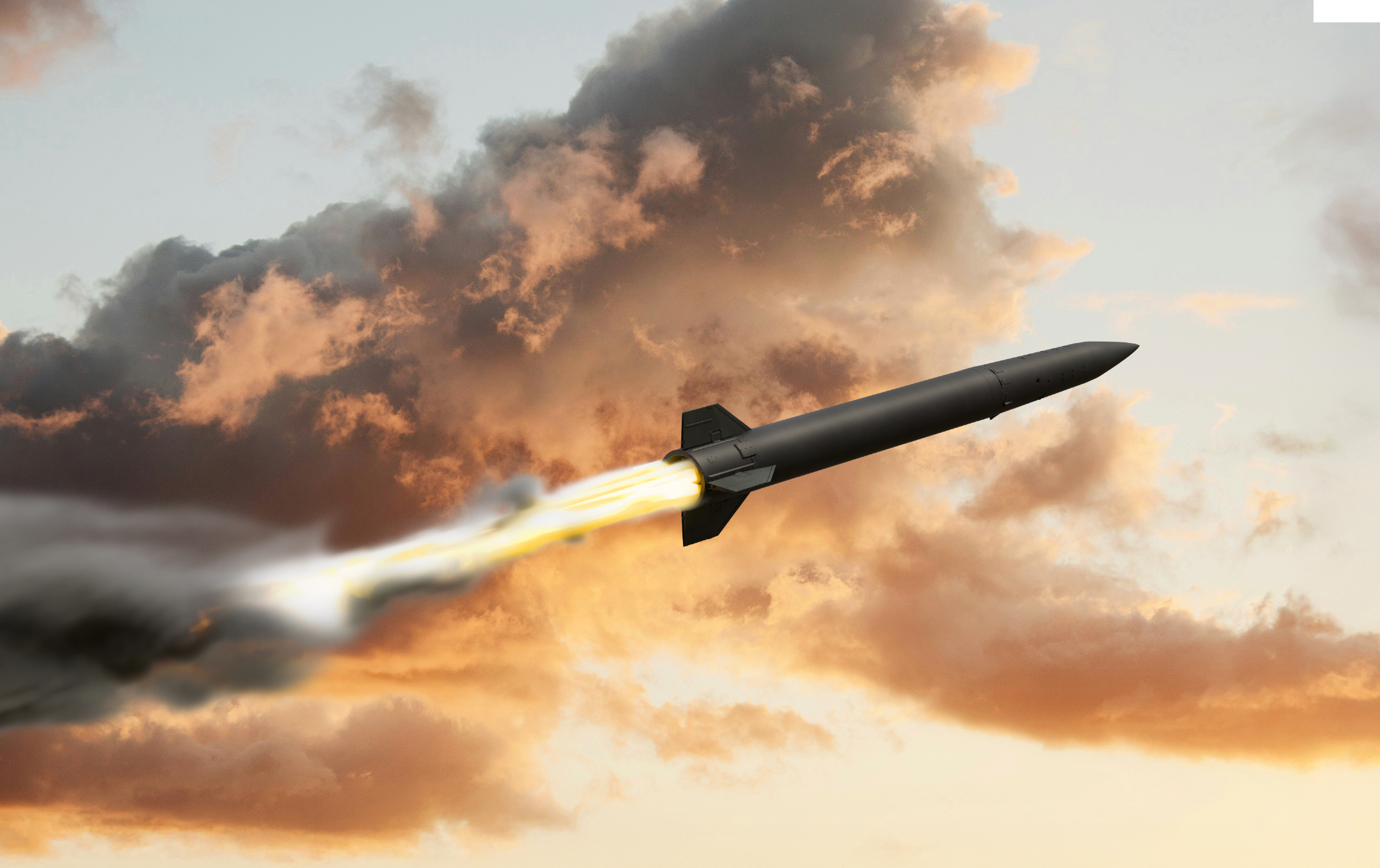 Ukraine’s domestically built FP-7
tactical ballistic missile, used in combat for the first time on October
1. Photo: Fire Point
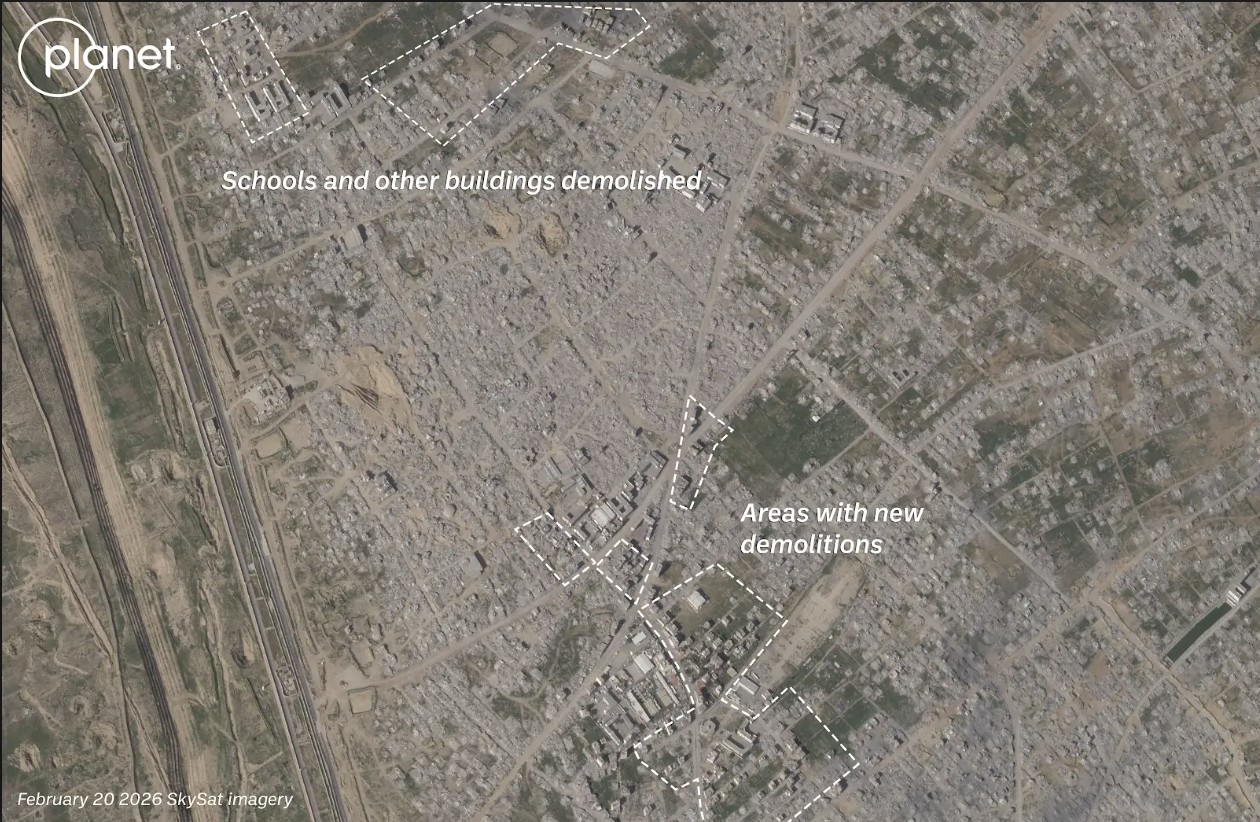 Planet Labs imagery of Rafah,
February 2026 (left) and September 2026 (right): continued demolition
and a new IDF outpost. Image: Bellingcat
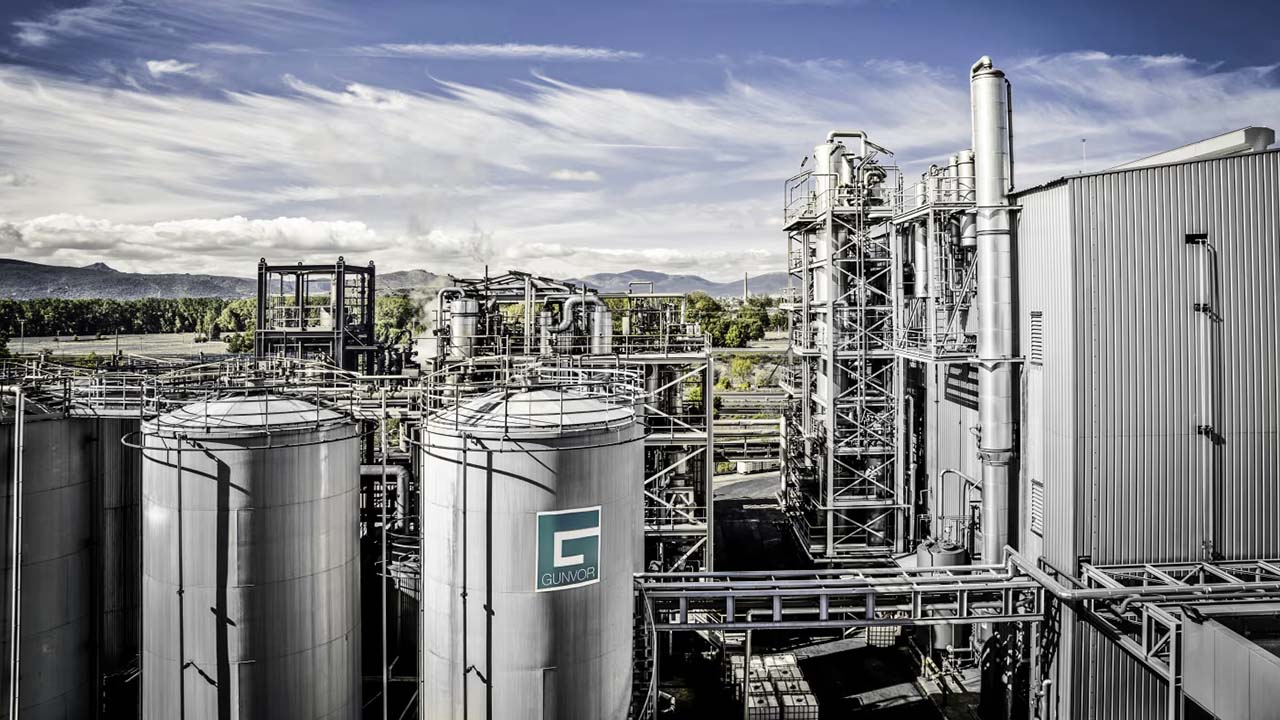 A refinery operated by Gunvor Group,
the Geneva-based trading giant. Photo: via Gunvor
 Royal Marine Commandos board the
vessel SMYRTOS off the south coast of England in June, as part of UK
operations against sanctions-evasion shipping. Photo: Reuters
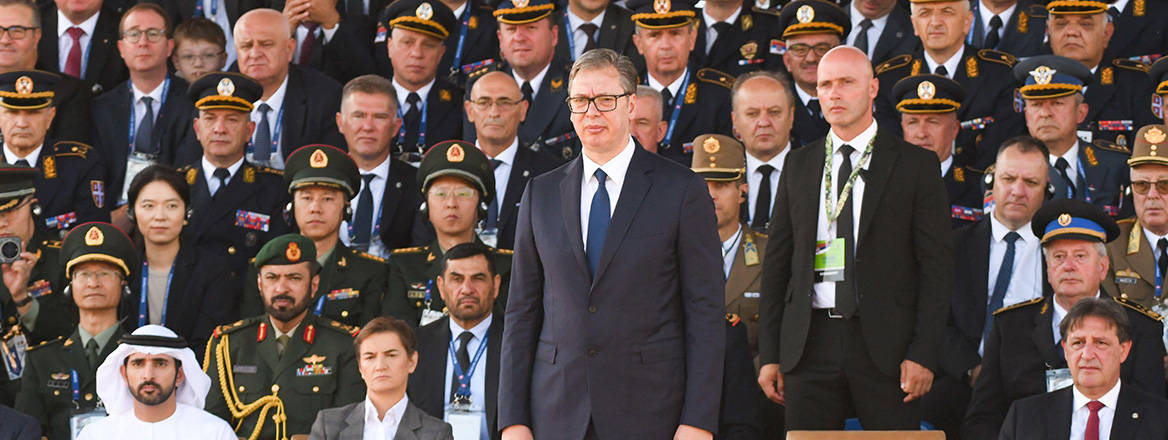 Aleksandar Vučić at a military
parade. He resigned September 27 ahead of snap elections on October 25.
Photo: RUSI
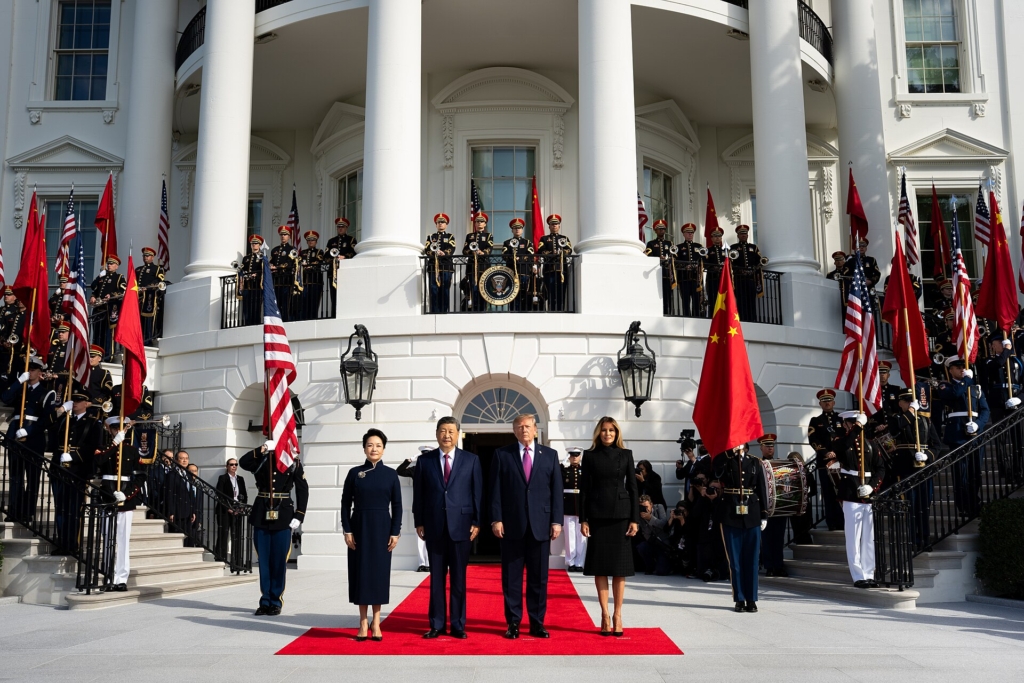 Trump and Melania Trump greet Xi
Jinping and Peng Liyuan at the White House South Portico, September 24.
Official White House photo
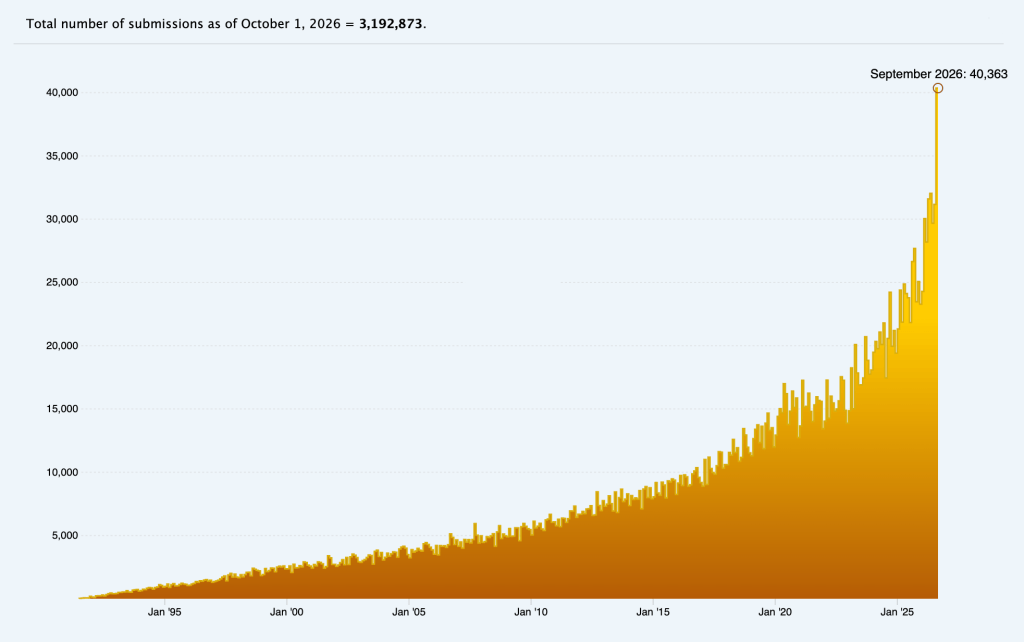 arXiv monthly submissions, 2024 to
September 2026: a doubling from roughly 20k to 40k per month. Chart:
arXiv
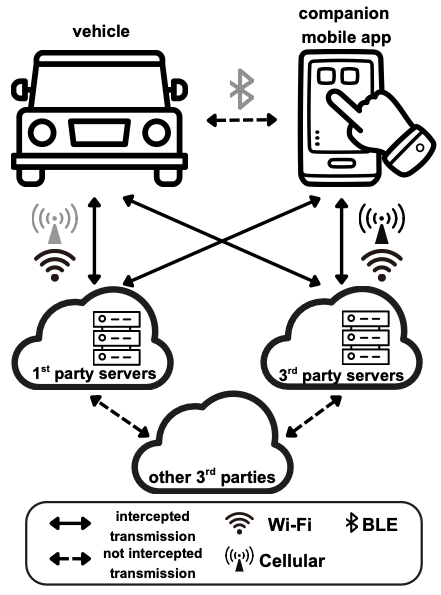 Data flows from vehicle and
companion app to first- and third-party servers via Wi-Fi and cellular.
Diagram: Northeastern University
 Illustration from Benjamin Breen’s
account of the archival search. Image: Res Obscura
 Cloudflare’s illustration for the
Clef announcement. Image: Cloudflare