Josse-posten

Tehran talks of a “doomsday” war while Washington and Moscow quietly gut the one treaty that would have kept humans in the loop on killer AI; Netanyahu’s Qatari cash problem may be the one that ends him; Russia fields a drone that ignores GPS jamming.

Iran threatens ‘apocalyptic war’ as Trump rejects Hormuz roadmap — and a bomb plot is foiled at RAF Fairford

Iran’s foreign minister Abbas Araghchi declared Tehran is fully prepared for a “doomsday” war with the US while keeping indirect diplomatic channels open — a dual message aimed at Washington after Trump publicly rejected Iran’s seven-day roadmap to end the conflict and reopen the Strait of Hormuz. UN Ambassador Mike Waltz said Iran was “not negotiating in good faith” and was “asking for everything up front.” Araghchi maintained that only negotiation can end the conflict; the standoff continues without a clear offramp.

In Gloucestershire, UK counter-terrorism police arrested five men after finding explosives in three vans parked near RAF Fairford, a base regularly used by US heavy bombers. Investigators are examining whether Iran directed the plot, consistent with the pattern Belgium disclosed earlier this month of Iranian-ordered attacks on Jewish sites. Homes near the base were evacuated.

(Also covered in Investigations)

US and Russia jointly gutted the UN’s autonomous weapons treaty — as Russia’s Dead Hand may now fire without a human

Washington Post exclusive: hundreds of diplomats in Geneva this month were close to a landmark treaty regulating lethal autonomous weapons — the first international agreement governing AI arms. On the final day of negotiations the US and Russia together stripped out a range of human oversight safeguards, leaving smaller states and civil society advocates with a substantially weaker text.

The timing is uncomfortable. Analysis of writings by retired Major General Viktor Khalin — one of Perimeter’s own developers — suggests Russia’s nuclear “Dead Hand” system may now operate in a fully automatic mode requiring no human authorization. The distinction matters: “automated” mode retains an officer who can hesitate and verify; “automatic” mode, once activated, fires on programmed conditions alone. Khalin writes that Russia’s leadership now has “virtually reliable technical means” for retaliation in both modes. Perimeter’s latest command missile variant, Sirena-M, was planned for delivery by 2025.

The Qatari cash scandal that could end Netanyahu’s career

A new corruption investigation into Qatari cash flows is described as potentially career-ending for Benjamin Netanyahu. It adds to the stack of legal proceedings against the Israeli prime minister at a moment when the Gaza war and his government’s conduct have already eroded his domestic position. Netanyahu is meanwhile on the offensive abroad: he has ordered legal teams to prepare an ICC case against Turkey’s Erdogan over Hamas funding and operations against Kurdish groups — an unusual attempt to weaponise the same court that issued a warrant for his own arrest — and Israel has revoked the credentials of Dutch diplomats in the West Bank after the Netherlands moved to ban settlement goods.

(Also covered in World)

Russia batters cities with 165-drone wave; deploys GPS-proof Geran-5 variant

Damaged residential high-rise in Kharkiv’s Saltivskyi district; 25 injured, including nine children. Photo: Ukrainska Pravda

Russia launched 165 drones overnight — 79 of them jet-powered — hitting 14 locations after air defences downed 112. A direct strike on a residential high-rise in Kharkiv’s Saltivskyi district injured 25, including nine children; glide bombs on Sumy killed two, among them a 16-year-old girl; in Kyiv the Saudi ambassador’s residence was among the buildings damaged. Zelenskyy put the week’s total at nearly 4,000 drones, aerial bombs and missiles.

The capability news is worse than the tally. Russian forces are deploying an upgraded Geran-5 K5 equipped with autonomous optical terrain navigation — a DSMAC-equivalent system — making it resistant to GPS jamming, the most common Ukrainian electronic countermeasure against these weapons.

(Also covered in Ukraine)

Serbia: Vučić resigns presidency to lead snap parliamentary election

Aleksandar Vučić at a public appearance. Photo: The Guardian

Aleksandar Vučić has resigned as Serbia’s president — barred from seeking a third term — and will lead his ruling party into an early parliamentary election as candidate for prime minister. The move is widely seen as a manoeuvre to keep power after months of mass student-led protests and allegations of corruption. Analysts say the election is unlikely to resolve the crisis: Vučić retains tight control of media and institutions, but the protest movement has irreversibly shifted the political landscape.

Indicator Value Change
S&P 500 (f) 7,767.5 -0.46%
Dow 30 (f) 51,968 -0.37%
Nasdaq (f) 30,594.25 -0.96%
Russell 2000 (f) 2,842.3 -0.59%
VIX 16.17 +8.74%
Gold 4,187.5 -3.09%
BTC $83,086 -1.99%
EUR/USD 1.1381 +0.03%
USD/NOK 9.51 -0.11%
  • VIX +8.7%, US equity futures broadly lower — risk-off tone as Iran vows an “apocalyptic war” and Trump rejects the Hormuz de-escalation roadmap (see leader)

World

West Bank: far-right settlers divert Palestinian spring water; Israel backs heritage site takeovers

An AP investigation documents far-right Israeli settlers physically diverting spring water from Palestinian communities in the West Bank, while the Israeli government simultaneously facilitates settler takeovers of heritage sites previously open to Palestinians. The report adds detail to a broader pattern of incremental land and resource appropriation that international observers say is structurally altering the West Bank’s Palestinian communities. It lands the same week Israel expelled Dutch diplomats over the Netherlands’ settlement goods ban and Netanyahu ordered an ICC case prepared against Erdogan (see leader).

Gaza’s reach into British and Irish politics: Miliband concedes, Ireland refuse handshakes, Portadown standoff

Foreign Secretary Ed Miliband used Labour’s conference to acknowledge that the party’s previous stance on Palestine “had not been enough,” telling activists who had pressed the issue that they were right. Police arrested Palestine Action demonstrators outside the conference over the group’s proscription, and Miliband was confronted by activists at a restaurant.

Ireland’s players refused pre-match handshakes with their Israeli counterparts and wore black armbands in solidarity with Gaza before beating Israel 3–0 in a UEFA Nations League match played in Hungary — Israel is banned from hosting for security reasons — the latest UEFA fixture involving Israel to become a flashpoint.

In Northern Ireland, hundreds of protesters including Sinn Féin leaders spent the day physically blocking the route of the Orange Order’s first permitted march through the nationalist Garvaghy Road since 1998, after a court’s late-night clearance. Talks were expected Monday to resolve the standoff.

France: National Rally quadruples Senate seats; Switzerland rejects strict neutrality by 70%

Marine Le Pen campaigning in northern France ahead of the Senate elections. Photo: The Guardian
Marine Le Pen’s National Rally and its allies won a record 14 seats in France’s Senate elections — effectively quadrupling their previous caucus in the right-wing-dominated chamber — well ahead of the 2027 presidential election in which Le Pen is the frontrunner. Le Pen called it a “historic victory.” The gains reinforce the RN’s march from fringe to institutional power and increase its leverage over legislation even without a government majority.

Across the border, Swiss voters decisively rejected a far-right initiative that would have required UN Security Council approval before Switzerland could impose sanctions — effectively barring it from aligning with EU and NATO measures against Russia. The 70% “no” affirms that Swiss neutrality is flexible in practice, and is a significant rebuff to nationalists who argued the country’s neutrality had been compromised.

South Africa: two mass shootings kill 27 in one night; serial killer victim count rises to 11

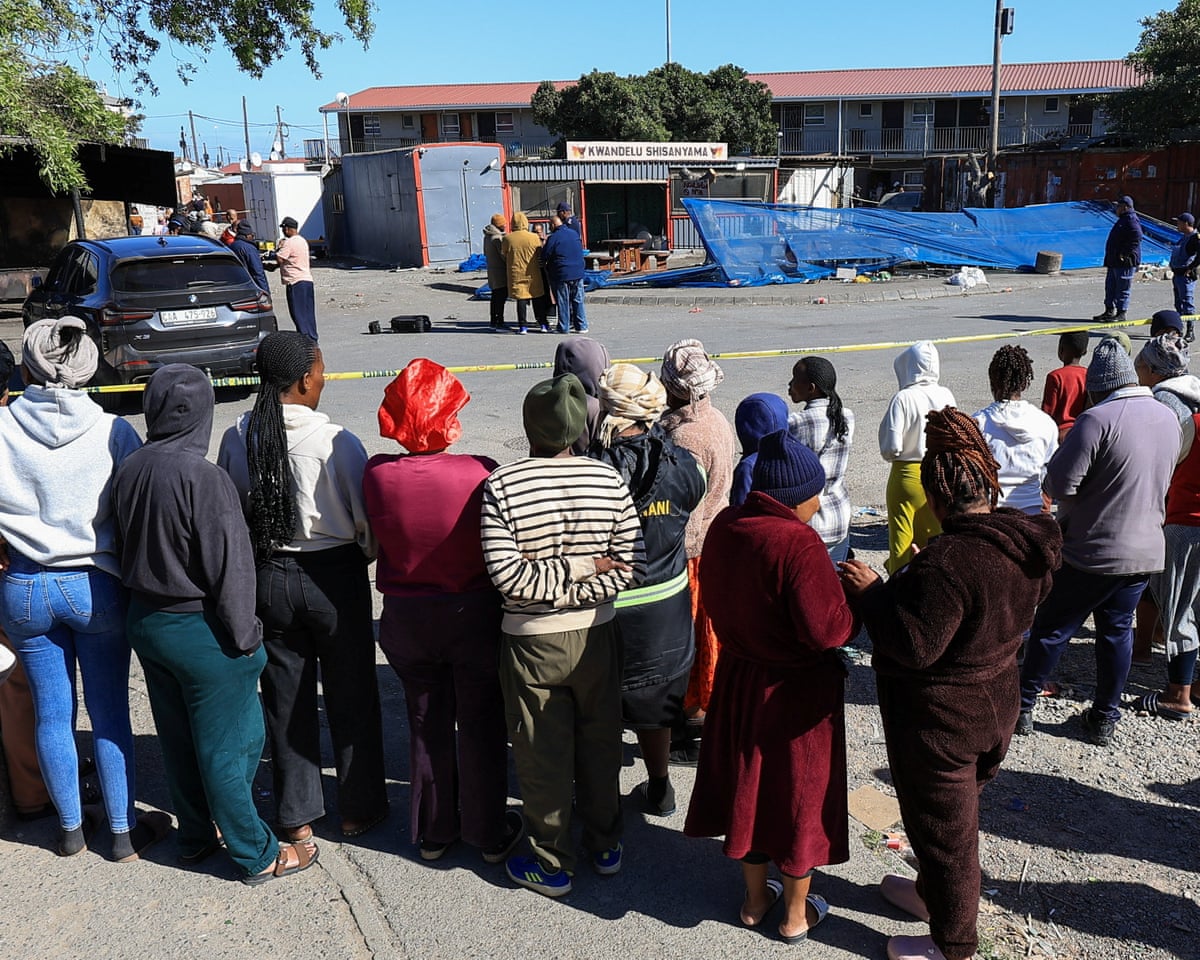
A police cordon at the site of one of Saturday night’s shootings. Photo: The Guardian
Two separate mass shootings killed at least 27 people on Saturday night — one at an illegal goldmining turf war near Johannesburg (17 dead), another at a barbecue venue near Cape Town (10 dead). The attacks compound a week in which 38 people have been killed in similar incidents, and come as police confirmed the discovery of an 11th woman’s body near Johannesburg in a separate serial killing investigation. South Africa has one of the world’s highest rates of gun violence, and the government faces pressure over gang-related armed crime.

Nepal hit by avalanche and floods in the same week, killing 16+ as tourist season opens

An avalanche on Himlung Himal killed two people and left 12 missing — mostly guides preparing for the climbing season — while flash floods and landslides across the country killed at least 14 more. The timing is devastating for Nepal’s tourism-dependent economy: one million people rely on the sector, and the flooding has blocked key access routes at the start of the peak autumn climbing season.

Venezuela: mass rallies demand opposition leader’s return and new elections

Thousands of Venezuelans rallied to demand the safe return of opposition leader María Corina Machado — in exile, with multiple prior return plans foiled — and to call for presidential elections. The demonstrations follow a wave of political prisoner releases and a meeting between interim opposition figures and Trump, and test whether renewed US–Venezuela engagement translates into concrete political change.

Al Jazeera · AP · BBC

Also today

  • Hamas announces it will compete in Palestinian elections while vowing to maintain armed “resistance” — Jerusalem Post
  • Hungary announces a wealth tax on its richest citizens from 2027 — a notable shift for an Orbán government that has favoured low flat taxes; threshold and rate pending — Around Prague
  • Twin hurricanes: Hawaii contends with the tail of Nolo as Baja California braces for a direct hit from major Hurricane Polo — The Guardian
  • Man City found guilty on 114 of 115 Premier League financial charges; sanctions, which could include points deductions or relegation, to be set separately — Al Jazeera

Ukraine

Ukraine drone-airdrops 4 tons of food to blockaded Oleshky; Russia posts $20M bounty on drone commander

Ukrainian forces completed the largest humanitarian drone operation of its kind, delivering roughly four tons of food to 100 designated locations across Russian-occupied Oleshky — the town where Russia has blocked all land aid and residents have been reduced to eating weeds. The drone corridor is now the city’s only supply route. Russia responded by offering a $20 million reward for information on “Magyar,” commander of Ukraine’s Unmanned Systems Forces. On the same axis, footage from Russia’s land corridor to Crimea shows around 40 vehicles destroyed by Ukrainian drone strikes, including fuel tankers.

North Korean POW disclosure opens rift between Seoul and Kyiv

South Korea has formally demanded an apology from Ukraine after Kyiv publicly announced the transfer of two North Korean prisoners of war — soldiers captured while fighting for Russia — and then denied having agreed to keep the transfer confidential. Seoul’s anger stems from the risk that public disclosure triggers death camp sentences for the soldiers’ families in North Korea, an outcome it sought to prevent through a confidentiality agreement; Ukraine denies any such agreement existed. The dispute exposes real friction between two otherwise aligned partners, at a moment when the new South Korean government is making cautious overtures northward. Moscow, meanwhile, has extended a formal invitation to Kim Jong Un for an official state visit.

Ukraine’s FP-7 missile enters codification; Poland to host Patriot factory

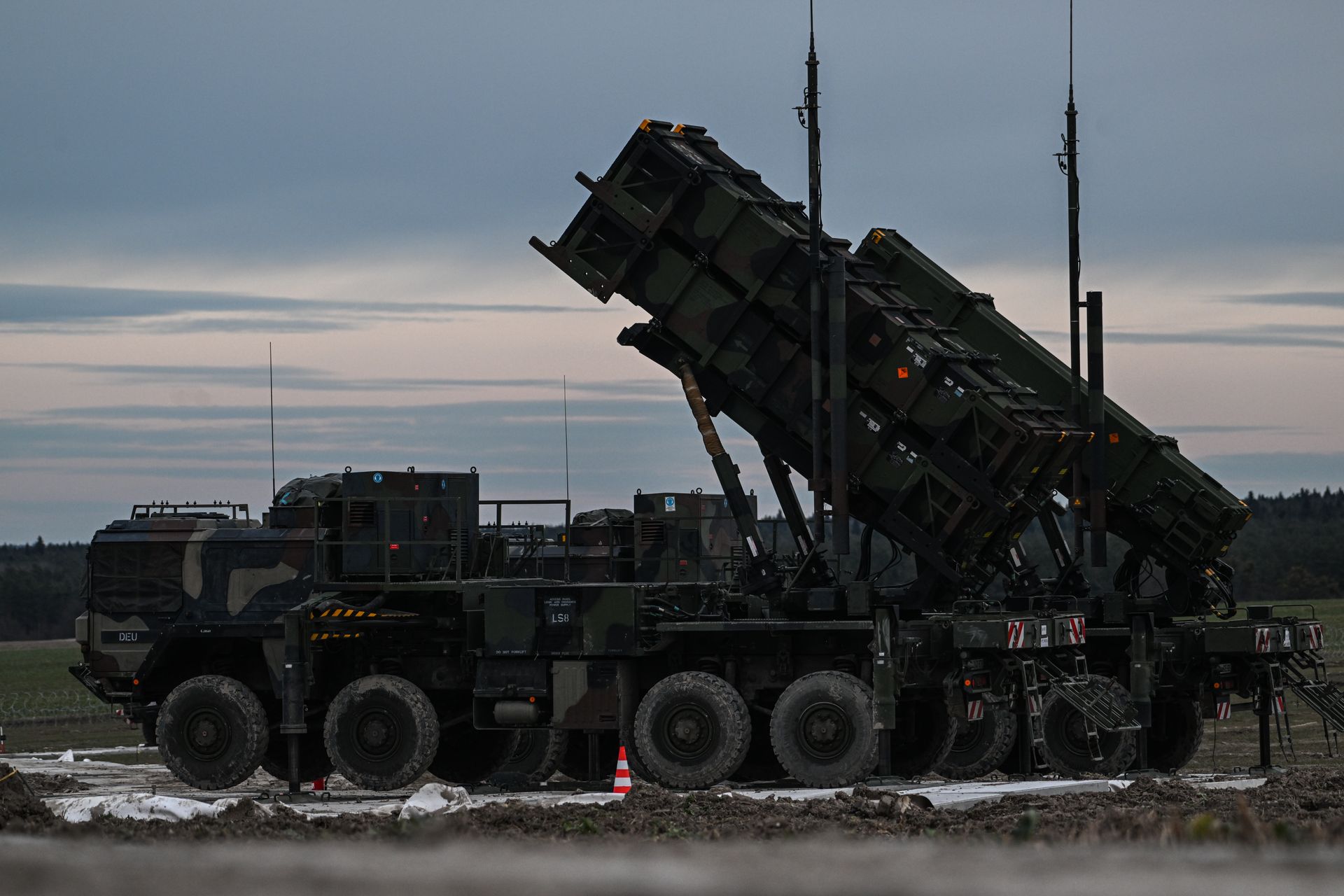
Patriot launcher modules on M983 HEMTT vehicles in Zamość, Poland. Photo: Omar Marques / Getty Images

Ukraine’s domestically developed FP-7 ballistic missile (300 km range) has completed development and is undergoing codification; the longer-range FP-9 (850 km) is in testing with combat readiness expected by end of autumn. In parallel, Poland has offered to host a Patriot production facility after Ukraine secured a manufacturing license from the US — siting production in “safe territory” just across the border. Ukraine is also field-testing active protection systems that intercept up to 80% of FPV drones.

The hidden state Russia is building inside Ukraine

Illustration: Adam Maida / The Atlantic
The Atlantic’s Maksym Beznosiuk and Thom Reilly document how Russia is systematically replacing Ukrainian institutions in occupied Donetsk, Luhansk, Zaporizhzhia and Kherson — schools teaching Russian curricula, mandatory Russian passports tied to housing and services, Russian law displacing Ukrainian law. Putin told officials in June that the goal is full legal, economic, educational and cultural integration by 2030. Crimea from 2014 was the laboratory; the playbook is now being applied at scale across four annexed regions with the explicit objective of making Ukrainian civic life unrecoverable.

Kaliningrad: Russia’s defenceless European enclave

Security analyst Edward Lucas argues that Kaliningrad has been stripped bare to feed Ukraine — no hardened runways or bunkers, no harbour air defences, minimal ground troops. “Basically defenceless” is his assessment. Lucas argues NATO should make the signal explicit: further covert aggression against Europe risks Kaliningrad. This inverts the usual framing of the enclave as a Russian threat vector and points to it as strategic leverage Western capitals have largely avoided exploiting.

North Korea is adapting its special operations for drone warfare after Kursk

War on the Rocks analysis by Anton Ponomarenko argues North Korea’s Kursk deployment produced an underexamined doctrinal shift: its special operations forces are now adapting for “technologically dense environments,” with drones integrated into infiltration, reconnaissance and terminal-phase sabotage. Russia has transferred drone airframe designs and navigation and guidance systems to Pyongyang; China has supplied low-cost assembly lines. With South Korea’s overtures to the North, Pyongyang’s formal “two hostile states” framework, and the new Kursk toolkit, the author argues drone-enabled covert operations against South Korea are more likely than at any prior point.

Also today

  • Frontline: 229 clashes on 27 September, Kostiantynivka and Pokrovsk the most contested sectors; 2,090 Russian casualties for the day — Ukrainska Pravda: clashes · Ukrainska Pravda: losses
  • Ukraine’s Khartiia Brigade documented Russian troops in Kharkiv Oblast using civilians as human shields and forcing them through a gas pipeline toward Russia — Ukrainska Pravda
  • Germany’s foreign minister concluded a rare meeting with his Russian counterpart and found no readiness for peace — Ukrainska Pravda

Investigations

How Iran rewrote the economics of modern war

Foreign Affairs analysis by Michael Horowitz argues the Iran war has validated a new strategic paradigm: “precise mass” — high-volume, cheap, precision-guided weapons that exhaust expensive defensive systems. Iran’s $35,000 Shahed drones required $4M+ Patriot interceptors to defeat; the US burned through 65% of its Patriot and 35% of its THAAD stocks defending against Iranian barrages, and must now sprint to resupply its own stockpiles and those of partners including Taiwan. AI-enabled targeting (the Maven Smart System) proved decisive but not infallible — one incident allegedly misidentified an Iranian school, contributing to a strike killing 100+ children. The core lesson: offense is currently far cheaper than defense, and weaker states can inflict severe costs on technologically superior opponents.

The Houthis Trump declared “decimated” are back and stronger

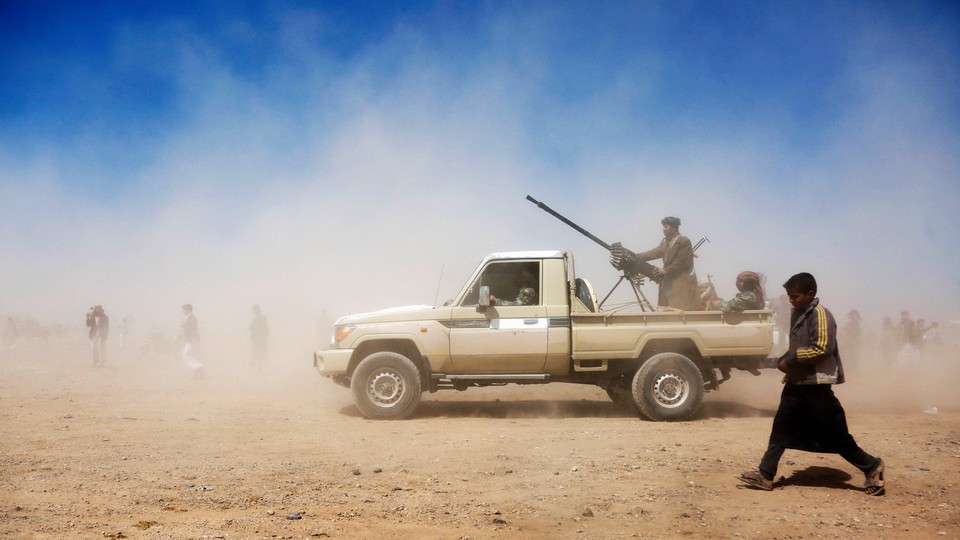
Houthi fighter with a truck-mounted machine gun. Photo: Mohammed Hamoud / Getty Images

The Atlantic traces the trajectory of Trump’s Houthi campaign: $1B+ in airstrikes from March 2025, a series of triumphant declarations (“absolutely on the run,” “decimated,” “annihilated”), an Omani-brokered ceasefire in May 2025, and a claimed victory. They are now back and described as stronger than before. The piece examines how an asymmetric actor with machine-gun-mounted Toyotas absorbed the world’s costliest military’s best effort, adapted, and resumed — the limits of overwhelming conventional force against ideologically motivated non-state actors with mass recruitment and minimal logistics overhead.

Yemen: BBC reaches the front line as Saudi strikes hit Taiz market; France deploys troops to Saudi oil port

A pro-government soldier on Yemen’s front line. Photo: BBC

The BBC obtained rare access to Yemen’s front lines, travelling with pro-government forces as fighting intensifies between Saudi-backed troops and Iran-aligned Houthis. Houthis separately reported deadly Saudi air strikes on a market in Taiz. The Guardian reports that the renewal of conflict after four years of relative calm has shattered daily life: children are abandoning school for work, and families are fleeing contested areas.

France, for its part, is sending military aid and troops to protect a Saudi oil port — reflecting both the ongoing threat to Red Sea energy infrastructure from Iranian-aligned actors and France’s effort to maintain strategic relevance in the Gulf.

US pressure campaign is isolating Iran commercially and financially

WSJ reports on a systematic US arm-twisting campaign that goes beyond sanctions — direct diplomatic pressure on third-country governments, financial institutions and commercial partners to sever ties with Iran. The campaign is reportedly having measurable effect in cutting Tehran off from international commerce and banking at a moment when Iran’s internal debate over nuclear negotiations is increasingly fractured between reformists willing to engage and hardliners resisting any deal.

Trump offered to sell US weapons to Xi; tariff cut list published; pandas land in Atlanta

One of the two giant pandas eating bamboo aboard a FedEx cargo plane bound for Atlanta. Photo: The Guardian
US Ambassador to China David Perdue revealed that Trump offered to sell American weapons to Xi Jinping during last week’s summit — a disclosure that left the diplomatic community bemused and Taiwan alarmed. Washington and Beijing published the agreed list of goods targeted for tariff cuts covering $60 billion in trade, and Xi sent two giant pandas to Atlanta Zoo as a goodwill gesture.

The joint communiqué’s line that “China and the U.S. were allies in World War II and fought side by side” — historically accurate but diplomatically charged — raised eyebrows in Tokyo. OPFOR Journal’s SITREP notes the summit’s primary value was stabilising economic ties through a dense calendar of multilateral summits (APEC, G20 Miami) rather than any substantive policy advance; Trump travels to China for APEC in November.

ASML sold zero lithography equipment in Europe in 2026

ASML — Europe’s largest company by market cap and the world’s sole supplier of EUV lithography machines — recorded 0% European revenue in 2026, down from 1% in 2025 and 5% in 2024. Its public affairs chief called it “genuinely worrying” and is lobbying the EU directly, arguing that supply-side chipmaking subsidies are insufficient: no leading-edge fabs using EUV equipment are being built anywhere in Europe. The problem is demand — no one is building the fabs that require advanced lithography — a circular trap ASML argues needs EU market-creation policy to break.

Tech

LuaRocks compromised: RCE via bytecode, full database exposed

The LuaRocks.org rockspec parser used loadstring without rejecting bytecode, so attackers could upload a malicious .rock file containing crafted LuaJIT bytecode to execute arbitrary shell commands. The intrusion ran July 9 through August 20 before discovery; the full database is assumed compromised — emails, password hashes, API keys, 2FA secrets and GitHub tokens. Three malicious packages were published during the window (bcrcewon and two others). No evidence of tampering with existing packages, but anyone who installed those three should treat their machine as compromised. Remediation: rotate all credentials, reset 2FA, upgrade to LuaRocks 3.12+.

Cantrill: AI doom experts are practising “fool’s expertise”

Bryan Cantrill’s new essay argues that AI researchers predicting cross-domain catastrophes — bioweapons, cyberattacks, nuclear scenarios — are exercising credentials in the wrong domain. Expertise in LLMs confers no authority over virology or nuclear weapons systems. Exhibit A: Geoffrey Hinton’s 2016 prediction that radiology would be obsolete by 2021, built on ignorance of what radiologists actually do. The constructive call: consult domain experts, not AI labs, when assessing risk — he points to RAND’s methodology, which intentionally excluded AI experts to avoid capability hallucinations, as the right model.

Reverse engineering the iPod Classic’s undocumented Mikey chip

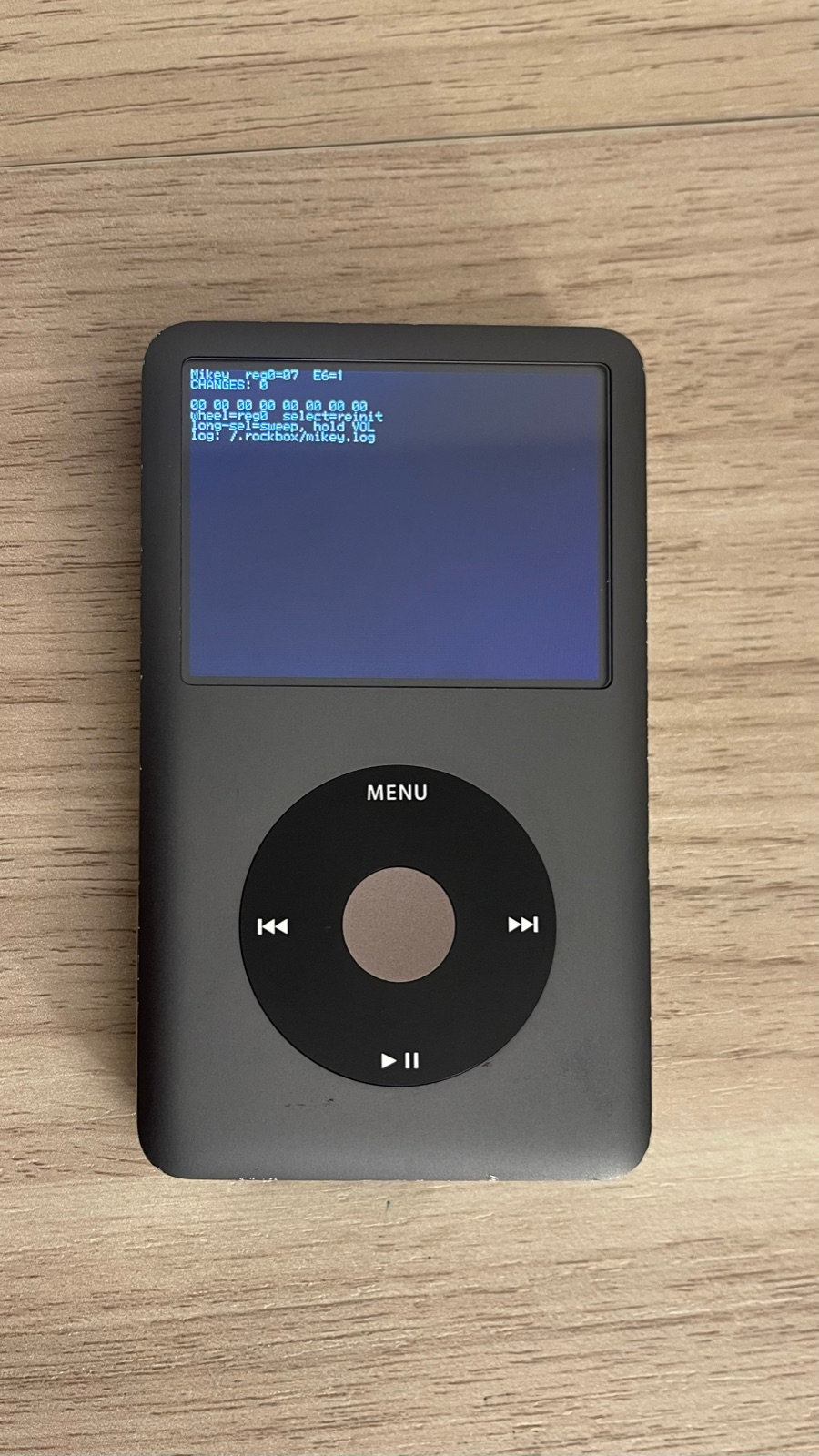
A custom Rockbox debug screen showing live register values from the Mikey chip. Photo: Terminal Bytes

Apple’s Mikey chip (I2C 0x72) is the undocumented headphone jack controller on the iPod Classic — it manages microphone power and decodes remote button presses. By building a custom debug screen in Rockbox that polled all eight registers at 20 ms intervals while pressing buttons, the author decoded the protocol: buttons are analog (short circuit for play/pause, resistive loads for volume), with an ultrasonic chirp sequence at power-up for ID. A quirk: the chip sleeps after five seconds without activity, adding ~1.8 s latency to button-release events. The resulting 318-line driver was submitted to Rockbox.

Valve adopts Pyrowave — a custom low-latency codec — for Steam Remote Play beta

Valve has shipped Pyrowave, a codec originally designed by an independent developer and shared on Lobsters a year ago, into Steam beta for Remote Play. It targets sub-100 ms end-to-end latency for streaming games from a home PC to a low-powered device (Steam Deck, mini PC, smart TV). Community discussion is sceptical about the choice: APV, a newer standard, is said to offer similar latency at significantly lower bitrate — but Pyrowave benefits from Valve controlling the full encode/decode pipeline. The just-launched $1,059 Steam Frame hardware is likely the primary driver.

Bevy iOS goes pure Rust: Swift bridges replaced by generated objc2 bindings

Rustunit eliminated ~7,000 lines of hand-written Swift/Objective-C bridge code across their four Bevy iOS crates by switching to the objc2 crate, which provides generated Rust bindings for Apple’s Obj-C frameworks. Previously each crate required a separate Swift Package Manager integration with strict version pinning and CI pipelines to build .xcframework files, with no simulator support. Now it’s a plain cargo add. The technique generalises: objc2’s dynamic runtime bindings cover the broad surface of Apple frameworks without per-framework hand-maintenance.

Self-hosting over Tor: practical setup and community tips

A clean walkthrough of exposing a site as a Tor hidden service: nginx on localhost, Tor mapping port 80, private key separate from the web root, no TLS needed since Tor encrypts natively. The dual-build approach — separate clearnet and .onion builds with different base URLs — keeps visitors on their own network. HN comments add practical hardening: bind to a Unix socket rather than TCP to prevent accidental exposure if the port is reused; embed assets as base64 to minimise Tor round-trips per page load; add the Onion-Location header so Tor Browser advertises the hidden service to clearnet visitors.

What makes Lisp hard to read?

A careful analysis of Lisp readability that identifies the real culprit: not the parentheses themselves, but the uniform visual rhythm they create. Every expression looks structurally identical regardless of nesting depth, forcing the reader to parse structure bottom-up rather than top-down. The post contrasts this with block syntax, where indentation and keywords provide immediate visual anchors for scope and intent.

Also today

Dev tools
Rust GCC backend sync: two months through Murphy’s law — licensing review, stale Docker image, linker missing retain support, binutils breaking miri, LLVM conflicts; gccrs is abandoning git subtree for josh — Guillaume Gomez · Lobsters
Anthropic CEO Dario Amodei invited to a first private dinner with Trump at the White House, as AI regulation, export controls and federal procurement become live policy questions — Al Jazeera
Science & culture
Guerrilla science: researchers turned an $80 Nags Head motel room into a field lab and found two new species of Paulinella, whose chromatophores represent a second, independent origin of photosynthesis — NYT · HN
Fragment of the world’s oldest known peace treaty found in Turkey — Live Science · HN

AI & Automation

Opus 5.5 remakes all of Pokémon Red in pure procedural code — zero image files

All 151 original Pokémon, rendered from the game’s procedural shape-description language. Image: pokemon-claude-red
In four days (Sept 24–27), Claude Opus 5.5 in Claude Code built a complete browser-playable remake of Pokémon Red with no image files at all. Every sprite draws into a Uint32Array framebuffer at runtime using a shape-description language (ellipses, polygons, curves) that covers all 151 Pokémon. The 52 original songs were re-sequenced from the game’s disassembly note data via Web Audio with hand-crafted instruments. Scope: 224 maps across Kanto, ~2,500 lines of dialogue, complete trainer battles, eight gyms, link battles with real-time multiplayer, and MissingNo. No build tools, no dependencies — plain JS. Notable less for the game than for the compression of an entire original game’s assets into a self-contained code representation.

Anthropic ships detailed Opus 5.5 prompting guide for agentic use

Anthropic published a prompting guide specific to Opus 5.5, covering the behavioural differences that matter for production integrations. Key changes: thinking is always on, the default effort level drops to medium, and medium on 5.5 matches or beats Opus 5 at high on coding tasks. The guide addresses the most common breakage points: unattended agentic runs that stop mid-task on a text end_turn instead of continuing (treat text-only stops as reports, not completion signals); a new reasoning_extraction refusal category that fires when prompts ask the model to reproduce its internal reasoning as output; time-budget signals for multi-agent harnesses that induce better parallelism without lowering effort; and a pasted-content tagging scheme that defends against prompt injection in user-pasted material. Progress updates between tool calls now arrive as thinking blocks with display: "updates" rather than text — clients that only render text will appear silent during long agentic turns.

Claude Projects got cross-project memory sharing, silently enabled by default

Anthropic added a “Use account memory” toggle inside each Claude project that, when enabled, bridges the project’s isolated context with the account-level memory pool that loads into every conversation. When users discovered it, it was already on for all their existing projects. The concern is for people who use projects specifically to compartmentalise sensitive work — a project for a client, a project for a personal health matter — which previously stayed siloed. The toggle can be turned off per project.

DogWood: AWS brings temporal logic to AI agent tool-call governance

AWS open-sourced DogWood, a governance language that applies Metric First-Order Temporal Logic at the tool-call boundary in AI agents. Unlike point-in-time authorization (like Cedar), it can enforce temporal sequences: prerequisites before actions, rate limits across a time window, ordered workflows, and running totals. Policies examine a full history of tool-call requests and responses, preventing circumvention through concurrent requests — the first principled formal-methods approach to the specific failure modes of agentic systems.

Ink & Switch: malleable software and the gentle slope

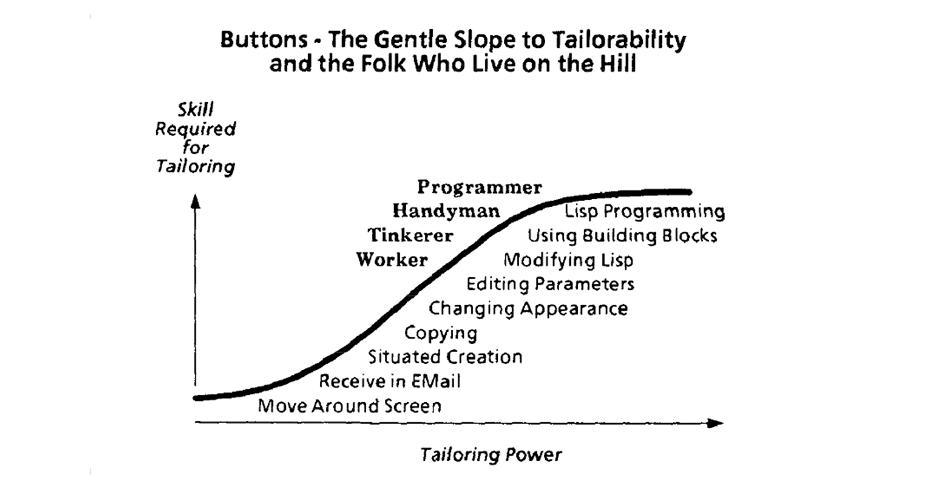
MacLean et al.’s “gentle slope” diagram: the desired progression from casual user to developer. Image: Ink & Switch
Ink & Switch’s essay argues that modern software sits at one of two unhelpful extremes — fully locked-down products, or requiring full programming ability — with no ramp in between. They propose “malleable software”: systems designed around a gentle slope of progressive customisation, composable tools sharing a common data layer, and community sharing of adaptations, grounded historically in HyperCard’s user-level model and OpenDoc’s component architecture. It lands at a moment when AI coding assistants are arguably steepening the cliff by handling customisation for users rather than lowering barriers to doing it themselves.

Clodfarm: week 1 of a multi-agent Opus 5.5 business farm — 245 ideas killed, €0 revenue

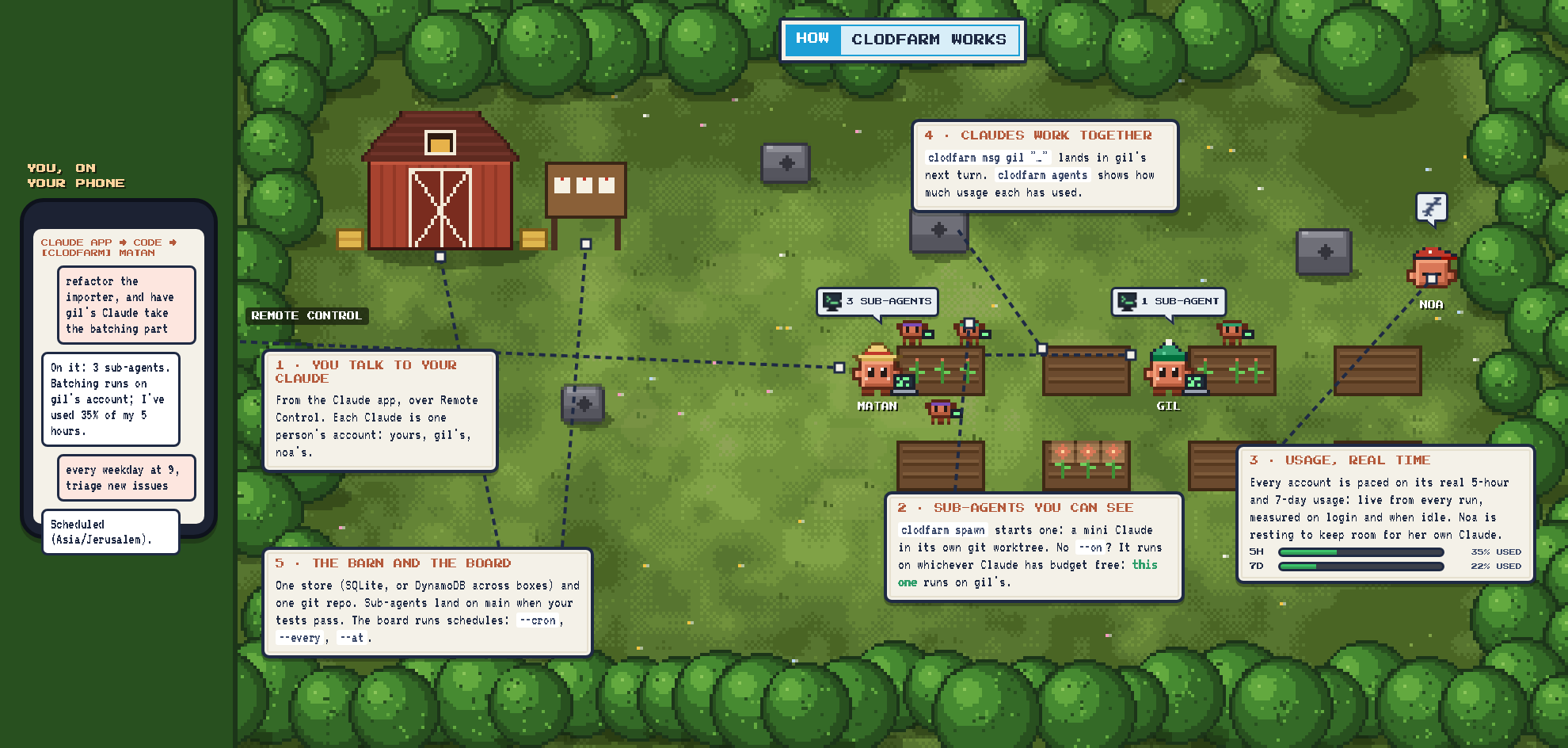
Clodfarm’s architecture: sub-agent trees, budget governance and multi-seat account management. Image: clodfarm

A farm of Opus 5.5 agents running on three people’s Claude accounts, tasked with finding and building a revenue-generating product. Week 1: 245 ideas evaluated and rejected, one survivor (a German e-invoice validator, after the agents discovered existing free validators were silently accepting invalid invoices under the new Peppol rules), €0 revenue. The architecture is the interesting part — agents split missions into sub-agents on separate git branches, a rate limiter enforces per-account subscription limits (pausing at 80% of the weekly window), and the system survives restarts and tracks work state across crashes.

VelaTerm: open-source multi-agent development environment for Claude Code

VelaTerm is an MIT-licensed desktop app that makes Claude Code a first-class citizen of a broader multi-agent workspace, managing sessions across Claude Code, Codex, Copilot, Cursor and others with live status tracking and resume support. The inter-agent primitives are the distinctive feature: vsearch lets a session query another’s conversation history, vrefer surfaces relevant results, and vtell sends messages between running agents. Plan/Execute mode distributes a large task across one planning agent and multiple parallel executors, each in its own git worktree. Available as a native desktop app, a browser interface, and iOS/Android apps.

Also today

  • LiveNerf: a 30-day deterministic community benchmark (78 questions Opus 5.5 gets right only 50–70% of the time) to detect quiet post-release degradation; four days in, no nerf detected, and null results will be published — GitHub · r/ClaudeAI
  • Imp: a full port of DSPy — prompts as learnable parameters, pipelines compiled automatically — to Elixir/Erlang, with BEAM concurrency and supervision trees for agent workflows — GitHub · HN
  • VideoWright: open-source FFmpeg wrapper with an MCP-style interface that constrains Claude Code to well-tested video operations instead of generating raw FFmpeg flags — GitHub · r/ClaudeAI
  • An AI agent documents its fleet’s mkdir-based git mutex, with auto-recovery for three failure modes and a fourth (corrupted lock directory) that by design alerts and stops rather than risk data loss — r/automation

Long COVID & ME/CFS

SARS-CoV-2-specific CD8+ T cells in human brain carry IFN-activated signatures

An autopsy-based atlas mapped viral-specific CD8+ resident memory T cells (TRM) across anatomically distinct human CNS regions for four viruses: EBV, CMV, Influenza A and SARS-CoV-2. Brain location was the strongest predictor of cell state. SARS-CoV-2-specific TRM showed interferon-stimulated gene signatures; EBV-reactive cells had cytotoxic granzyme profiles (GZMK/GZMA); leptomeningeal cells were more activated than brain-parenchymal cells.

For a patient with severe blood CD8+ depletion and documented IFN-I hyperresponsiveness in circulating PBMCs, this adds anatomical depth: SARS-CoV-2-specific CD8+ T cells that exit the blood are establishing in CNS tissue with persistent IFN activation — consistent with both the lymphopenia profile and neurological symptom burden. The study used non-LC autopsy tissue, so direct translation to Long COVID requires further work, but the mechanistic chain (tissue sequestration + IFN activation) is coherent with the established picture.

Tracking

Trials closing this autumn
ANKTIVA INTERRUPT_LC (UCSF, IL-15 agonist, n=20) — trial window closes Oct 2026; no results released
Rapamycin RCTs (Mount Sinai/Putrino NCT06257420 + Simmaron NCT06960928) — both concluding Nov 2026; no results yet
RECOVER-AUTONOMIC IVIG (Gamunex-C, POTS, NCT06305793) — trial concludes Nov 2026; no results yet
REVERSE-LC (baricitinib, Phase 3) — recruiting; neurocognition data expected Nov 2026
RESILIENCE (ensitrelvir, Japan, n=2000) — data collection completed; results expected Dec 2026
Overdue or unspecified
Larazotide adult Phase 2a (Harvard/Moschovis, n=107) — primary completion July 2026 passed; no published results yet
Bezisterim ADDRESS-LC → Phase 3 — BioVie’s Sept 8 Phase 3 announcement was for Parkinson’s; LC Phase 3 remains unspecified in timeline and protocol
Germinal center B cell dysregulation (Locci/Penn/PolyBio) — no preprint posted
WGS severe LC (Brodin/Karolinska/PolyBio) — no preprint posted
Enrolling
ResetME (daratumumab, Haukeland) — recruiting; results ~2027
SHIELD (triple antiviral, Mount Sinai) — enrolling
PROBE-PASC (Pemgarda + HCQ, UCSF/Peluso) — launched; no results timeline yet
cd ~/repos/josse-posten && claude --resume f33e97b1-6321-4510-9bcc-7b1dd21e7bef