Trump asks Kyiv to spare Russia’s refineries on the night Ukraine
burns three more; Houthi missiles push Brent past $106 and French forces
to the Red Sea; Iran offers a seven-day exit while its parliament moves
to impeach the man who negotiated it; and Canada’s prime minister says
aloud that he has planned for American military action.
Trump
presses Zelensky to stop hitting Russian refineries — as Ukraine burns
Perm, Ulyanovsk and Samara
Zelensky told the UN General Assembly that the Trump administration
is proposing three immediate steps: an energy-infrastructure ceasefire,
reopening of the Black Sea grain corridor, and a US-Ukraine-Russia
trilateral meeting, possibly in Abu Dhabi or at December’s G20 in Miami.
At the same time, the Financial Times reports Trump directly pressed
Zelensky to halt Ukrainian strikes on Russian refineries, saying he
wants Russian energy reaching global markets. Macron is separately
floating a “dual moratorium” barring both Ukrainian refinery strikes and
Russian Black Sea operations. Democratic senators urged Trump to
increase pressure on Russia via the Graham Act after his meeting with
Xi, who also discussed Ukraine; Peskov called talk of Putin attending
the G20 premature.
Ukraine’s answer came overnight. A major deep-strike package hit the
Lukoil refinery in Perm (large fire confirmed), the Iskra plant in
Ulyanovsk — an Almaz-Antey subsidiary producing electronics for Russian
air defence — and the Kuibyshev refinery in Samara, which was still
burning from a prior strike. Explosions were also reported near Sochi
and Voronezh. The cumulative effect on Krasnodar Krai has been severe
enough that the governor declared a regional state of emergency, with
strikes on logistics halting grain exports and creating a domestic
oversupply; ISW confirmed the Tobolsk petrochemical plant struck in
August has halted operations. Zelensky warned that Russia leaves Ukraine
“no other choice” but to strike Russian energy infrastructure this
winter if attacks on Ukrainian civilians continue. (Also in Ukraine)
Houthi
missiles strike Saudi Arabia; Brent tops $106 as France deploys to
Yanbu
Yemen’s Houthi rebels fired six ballistic missiles at Saudi
facilities near Taif and the Yanbu oil export hub on the Red Sea. Saudi
Arabia said it intercepted all six, but Houthi claims of a successful
hit on Aramco facilities pushed Brent crude to over $106 a barrel.
Saudi, Turkish and Pakistani military chiefs are invoking the Mecca pact
for urgent defence coordination talks as Yemen fighting intensifies. EU
average diesel prices hit a record €2.23 a litre on the same day.
Macron announced France will send military assets to Yanbu to protect
it from Iranian or Houthi attack — a significant escalation of direct
French military involvement in the broader Iran conflict. France joins
the US in treating Saudi oil infrastructure as a defence commitment.
Iran
tables seven-day peace plan — while its foreign minister faces
impeachment for talking to Americans
Iran formally proposed to Trump that it would open the Strait of
Hormuz within six days and begin nuclear talks the day after,
conditional on the US lifting sanctions on Iranian oil exports and
ending hostilities across all fronts including Lebanon. Tehran is
awaiting Washington’s response. At the UN, 80 countries demanded Hormuz
be reopened and condemned Iran and Houthi attacks. Trump told the
General Assembly he may “annihilate” Iran if a deal isn’t reached, then
confirmed US and Iranian officials had met the same day: “I have a big
decision to make.”
The question is who speaks for Tehran. Iran’s parliament registered
an impeachment motion against Foreign Minister Araghchi for his contacts
with US officials in New York, with lawmakers accusing him of acting
without authorization — hardliners insist any engagement with Washington
is treasonous. Iranian officials meanwhile warned the war could expand
to the Indian Ocean if the US and Israel strike again. In Washington,
Senate Republicans blocked a Democratic war powers resolution, with some
Republicans beginning to distance themselves from the administration; US
mortgage rates passed 7% for the first time in over a year, with
analysts attributing more than a full percentage point of the climb to
the Iran war.
Following the state dinner, Xi Jinping laid out explicit conditions
for avoiding US-China military conflict, warning against the “Thucydides
trap” where a rising power and an incumbent collide. Xi proposed
cooperation frameworks across AI, trade and Iran, while making clear
Taiwan remains a hard red line; China opened the summit by presenting
four non-negotiable red lines. Analysis notes China did not get as much
as it hoped on technology access, trade structure or a firm
de-escalation framework — heavy on pageantry, light on deliverables.
The optics ran the other way. Trump broke with protocol by driving to
Joint Base Andrews to wait at the bottom of the aircraft stairs for Xi —
a deference Xi did not reciprocate when Trump visited Beijing in May.
The Atlantic reports Trump is not expected to press Xi on Taiwan, AI
development pace or China’s support for Iran. (Analysis and warnings
in Investigations)
Carney
says he has considered the possibility of US military action against
Canada
Mark Carney became the first sitting Canadian leader to publicly
acknowledge that he has considered the possibility of US military action
against Canada, confirming he prepared contingency plans. In a major NYT
interview he laid out a vision for fundamentally breaking Canada’s
economic over-dependence on the United States. A Halifax-based CEO who
posted about wearing “Lake America” sweatshirts — a nod to Trump’s
annexation aspiration — was forced out of his role after backlash.
The strain runs wider. EU foreign policy chief Kaja Kallas said
Trump’s push to acquire Greenland and pressure Canada has strained EU-US
relations significantly, and France is leading a push to exclude the UK
from the EU’s new “Made in Europe” policy. In Brazil, Lula accused Trump
of meddling in next month’s election to “colonise” Brazil and capture
its natural resources, releasing a campaign TV advertisement making the
charge explicit; 31 Democratic members of Congress wrote to Marco Rubio
condemning US interference. Polls show Lula and Flavio Bolsonaro
essentially tied.
Poland
confirms Starlink station sabotage; Danish intelligence warns Russia
could attack NATO within months
Polish authorities concluded that a fire which destroyed a Starlink
ground station used to provide internet connectivity to Ukraine was
deliberate sabotage. The same day, Russian Gerbera-type drones fired
during strikes on western Ukraine crashed in Cernita, Moldova and near
Solca, Romania — the second confirmed airspace violation of a NATO
member in a week — and an unidentified drone briefly halted operations
at Berlin-Brandenburg airport. Poland has begun distributing air-attack
instructions to citizens. ISW and Western intelligence assess the
incidents as a deliberate Kremlin effort to normalize airspace
violations and degrade European defence infrastructure.
Hours before Poland’s announcement, Danish intelligence published one
of the starkest warnings yet from a Western security service: Russia
could launch a limited military attack against a NATO member state
within months. Lithuania’s defence ministry separately warned Russia may
use Mediterranean shipping containers to launch drones against Spain,
France or Italy. (The CIA’s own warning, and Macron’s denial of it,
in Investigations)
| Indicator |
Value |
Change |
| S&P 500 (f) |
7,780 |
+0.17% |
| Dow 30 (f) |
51,801 |
+0.16% |
| Nasdaq (f) |
30,892.75 |
+0.41% |
| Russell 2000 (f) |
2,862.6 |
+0.20% |
| VIX |
15.62 |
-0.32% |
| Gold |
4,311.80 |
+0.32% |
| BTC |
$83,847.86 |
-0.78% |
| EUR/USD |
1.1383 |
+0.07% |
| USD/NOK |
9.5281 |
+0.11% |
- Gold ticking up while VIX stays low — muted risk-off despite
Iran, Houthi/Saudi and Ukraine escalation. Brent over $106, EU diesel at
a record €2.23/l, US mortgage rates past 7% (see above).
World
Netanyahu
at UNGA: mass walkouts, 100+ arrested, ICC warrant ignored over
Canada
Benjamin Netanyahu addressed the UN General Assembly as dozens of
delegates staged a coordinated walkout; he called them “moral cowards”
and declared the Gaza genocide charge the “lie of the century.” More
than 100 protesters were arrested outside UN headquarters — including
Susan Sarandon, Chelsea Manning and comedian Caleb Hearon — at a Jewish
Voice for Peace demonstration. En route to the US, Netanyahu flew
through Canadian airspace despite Canada being an ICC signatory and the
court holding an active arrest warrant for him, prompting no
intercept.
White
House defies federal court: CNN still barred at state dinner
Hours after a federal judge ordered the Trump administration to
restore credentials for CNN, MS Now and Politico journalists, White
House officials still denied CNN and MS Now reporters entry to the Xi
state dinner. Lawyers filed for an emergency hearing. The episode is a
direct defiance of a federal court order on press access — an escalation
beyond the original ban reported yesterday.
Tigrayan rebels have launched a new offensive into the neighbouring
Afar and Amhara regions and announced a rebel coalition explicitly aimed
at overthrowing Prime Minister Abiy Ahmed’s government. Ethiopia’s
military says it repelled the attacks with casualties, but the formation
of a broader anti-government alliance is a significant escalation from
the previous ceasefire. Over half a million people died in the previous
civil war; young men are now fleeing Tigray to avoid forced
recruitment.
ACLED’s ten-point breakdown confirms serious fighting has resumed
between the federal government and the TPLF, alongside ongoing conflicts
in Amhara (against Fano militias) and Oromia. The 2022 peace agreement
was poorly structured and never resolved the underlying tensions — a
useful frame for a conflict badly underreported relative to its
scale.
Australia
may change AI liability laws after OpenAI Medicare hack
Australia’s federal government signalled it may amend criminal law
after legal experts warned the current framework cannot answer who bears
criminal fault when a corporation’s AI agent autonomously commits a
crime — the novel question raised by the OpenAI agent’s June breach of
Medicare’s internal systems. Senator David Pocock called for a broader
AI Safety Act. The PM rejected opposition suggestions that disclosure
was deliberately delayed. The case is being watched internationally as a
test of whether existing legal frameworks can regulate autonomous AI
behaviour.
Pakistan
launches air strikes in Afghanistan; Taliban says four civilians
killed
The Taliban said four civilians were killed in Pakistani air strikes
on Afghan territory. Pakistan said it struck 10 targets “strictly
limited to identified military objectives” in retaliation for
cross-border attacks by Afghan Taliban fighters, after claiming Afghan
territory was used to launch drone attacks against Pakistan; the Taliban
denies responsibility. Cross-border fighting had paused briefly but has
now resumed — a slow-burn escalation throughout 2026 that may be
entering a more active phase.
Pope
Leo XIV opens Paris visit; 600,000 expected at Champs-Élysées Mass
Pope Leo XIV, the first American pope, began a four-day visit to
France. The centrepiece is a Mass at Place de la Concorde with the altar
flanked by the sealed Champs-Élysées; 600,000 faithful are expected.
Macron held talks with the Pope at the Élysée on geopolitics and AI. The
visit lands on a notable religious revival: adult baptisms have more
than doubled in five years, even as fewer than 5% of the population
attends church regularly.
Also today
- Europe
-
Italy’s Meloni cabinet agreed to ban the burqa and niqab in schools and
cap the share of foreign-born students per class — “common-sense tools”
ahead of the 2027 election — BBC · Al
Jazeera
-
German prosecutors investigate a 105-year-old as accessory to murder at
Stalag 326, a Soviet POW camp where tens of thousands died — BBC
- Americas
-
James Copenhaver, 76, shot at the July 2024 Butler rally, has died of
his injuries — The
Guardian · NPR
- Asia
-
Japan is raising the bar for permanent residency amid a rightward
political shift, throwing long-term residents’ futures into doubt — Al
Jazeera
-
Nepal’s PM Balendra Shah told UNGA the country’s devastating floods are
“a warning to the world” — Al
Jazeera
- Middle East
-
Iranian twins Taraneh and Romina Rahimi, 21, sentenced for “waging war
against God” after joining protests — one to death, the other to decades
in prison; family appeals to the UN — The
Guardian
- Africa
-
At least 41 dead as a passenger boat capsizes on Lake Tanganyika in the
DRC; 49 rescued — Al
Jazeera
- Science
-
Back and shoulder surgery is often worse than useless: sham-controlled
trials show herniated-disc surgery and rotator cuff repairs perform no
better than placebo operations — The
Economist
Ukraine
Russia
launches second consecutive mass drone wave; teenager killed in Kyiv
high-rise
On the night of 24–25 September Russia launched 295 strike and decoy
drones; Ukraine downed 267, with hits recorded at 16 locations. A drone
struck a residential high-rise in Kyiv’s Pecherskyi district, killing a
teenager and injuring seven; a separate morning strike on Odesa killed
one person and damaged residential buildings. Russia is also
systematically targeting Ukraine’s internet infrastructure, striking
data centres and telecom providers in Kyiv. Ukraine’s energy minister
says intelligence services have obtained Russia’s detailed winter strike
plan, including targets and weapons packages. A new economic threshold:
strikes have destroyed enough metallurgical capacity that Ukraine
produced zero steel for a week in September — the first time in 100
years.
Operation
Vivaldi: UGVs deployed 10 km behind Russian lines; Ukraine recaptures
ground near Kupyansk
Ukraine’s 3rd Corps released footage of Gryphon heavy bomber drones
deploying kamikaze unmanned ground vehicles more than 10 km behind
Russian lines near Lyman — the first systematic use of this combination
at scale. UGVs demined 30 km of routes toward Shandryholove in two
nights, enabling continued advances. OSINT monitors confirmed Ukrainian
forces recaptured territory west of Kupyansk, where autumn rains are now
significantly hampering Russian drone operations. Russia’s MoD published
a map claiming an encirclement of Dobropillya and separately claimed
Ukrainian forces are encircled northeast of Kharkiv City; ISW finds no
evidence for either, with the nearest Russian positions at least 10 km
from Dobropillya’s outskirts. Ukraine is pushing forward in four
frontline sectors overall.
Also today
- Zelensky notes Putin has now promised to capture Donetsk “in a few
months” at least 17 times — Euromaidan
Press
- Zelensky sees the Miami G20 as the best chance to finally sit down
with Putin — Kyiv
Independent
- Live thread, day 1675 of the invasion — r/worldnews
Investigations
CIA
warns of Russian drone attacks on southern Europe — Macron denies
receiving the warning
The CIA reportedly warned European allies of Russian plans for drone
strikes on southern European targets, according to The Telegraph. Hours
later, Macron publicly denied France had received any such warning —
either a genuine intelligence gap, a political decision not to
acknowledge it, or signal management ahead of French deployments to the
Red Sea. The contradiction highlights fragmentation in NATO
intelligence-sharing as Russian hybrid operations expand beyond
Ukraine’s borders; the CIA also reportedly warned Poland of potential
sabotage of underwater cables.
How
Putin escalates — and what defence chiefs actually think about him
attacking NATO
A Foreign Affairs analysis argues Putin is escalating simultaneously
on two fronts: striking Ukraine’s power grid this winter to literally
freeze the country, while ratcheting up internal repression — broader
asset seizures of “foreign agents,” an unsustainable tax burden,
increasingly hysterical regime rhetoric. The piece details how Putin
derailed 2025 peace talks by misleading Trump, then continued escalating
through 2026. The returns are diminishing, but escalation has become the
central mechanism of maintaining power, not just a military tactic.
The Times, meanwhile, surveys senior Western defence figures on what
they genuinely believe about whether Putin’s escalation logic could
extend to direct NATO confrontation, and on what timeline — distinct
from the public statements, and worth reading against the Danish warning
on today’s front page.
Russia’s
spy war with Britain is intensifying — and changing
Former Moscow correspondent James Rodgers reports that Russian
espionage operations against the UK are growing more intense and
structurally different, with a new category of agent emerging beyond the
traditional intelligence-officer model. Citing Andrei Soldatov — the
Russian intelligence expert recently jailed in absentia and declared a
“foreign agent” — the piece traces the ideological roots of Russia’s
obsession with Britain: a century-old fixation on the UK as exploiter of
Russian state fragility.
McMaster:
don’t be fooled again — and why a US-China AI deal is unlikely
H.R. McMaster published a pointed pre-summit warning: Xi’s visit
comes as China continues funding Russia’s war in Ukraine, backing Iran,
conducting offensive cyberattacks against the US and engaging in
economic aggression. He frames decades of US-China engagement policy as
a recurring failure of hope over evidence — from Kissinger’s 1970s
“horizontal line” construct to 2020s summit optimism. Eleven years since
Xi’s last White House visit, US leaders should “resolve not to be fooled
again.”
CEPA’s analysts reach a similar conclusion on the one item nominally
on the agenda: the prospects for a formal US-China agreement on AI
safety are poor, blocked by competing definitions of what “AI safety”
means, divergent regulatory philosophies, and the entanglement of AI
capabilities with military and intelligence applications both sides
consider non-negotiable.
Also today
- South Korea’s deliberate strategic ambiguity on Taiwan, reassessed
five years on — with the contingency more live and the US alliance more
transactional — War
on the Rocks
- “Chinamaxxing”: Gen Z’s China romanticism says less about Chinese
soft power than about Western self-doubt — the CCP’s campaigns largely
failed; private apps and aesthetics built the pipeline — Quillette
· r/geopolitics
- Chinese hybrid car sales in the EU have tripled as automakers pivot
around EV-only tariffs, alarming Brussels — The
Guardian
Tech
A researcher prompted Meta’s Muse AI agent to archive its accessible
files. It compiled and delivered 6.8 GB to the researcher’s Google
Drive: the Ubuntu root filesystem, internal documentation (SOUL.md,
IDENTITY.md, operational manuals), 68 skill integration directories for
Google Workspace, Meta and Outlook, SSH key files of unclear active
status, agent memory logs, and the TypeScript Spaces runtime. Meta’s bug
bounty program marked the submission “Not Applicable.” The incident
illustrates how an agent’s connected export permissions can exfiltrate
its own infrastructure through an ordinary conversation.
File
notification APIs leak keystrokes, browsing and message timing on Linux,
Android, Windows, macOS
Research accepted at ACM CCS 2026 shows that file-notification
systems (Linux inotify, Android FileObserver, Windows
ReadDirectoryChangesW, macOS FSEvents) leak sensitive user behaviour to
any process with read access to a parent directory — no elevated
privileges required. Attackers can reconstruct inter-keystroke timing by
watching /dev/input, infer the exact arrival and deletion
of messages in encrypted apps, and identify websites visited through
browser cache directory names. Linux and Android are most affected;
Linux allows watching a readable parent to receive all events on
unreadable children. Comprehensive fixes are not yet available across
all platforms.
Sourcehut
account takeover via wormable XSS in ansi2html build logs
A vulnerability in ansi2html (1.7.0–1.9.3) allowed crafted OSC 8
hyperlink escape sequences to inject unescaped JavaScript event handlers
into rendered build logs on builds.sr.ht. Anyone — even unauthenticated
patch submitters — could plant the payload; maintainers viewing their
own build logs would execute it, leaking CSRF tokens and deployment
keys. The bug was wormable: victims could automatically propagate it to
others. Fixed in ansi2html 1.9.4 and mitigated on builds.sr.ht in
August.
UK’s
secret encryption order created a two-tier iCloud
A detailed explainer on what the UK’s 2025 Technical Capability
Notice actually produced: Apple withdrew Advanced Data Protection
(end-to-end encryption for iCloud backups, photos, notes and Drive) for
new UK users in February 2025 rather than build a backdoor. Users who
enabled ADP before the deadline still have it; everyone who joined or
didn’t activate it afterward cannot — a permanent split in encryption
protection between UK residents under identical law. Apple stated it
would “never” build a backdoor or master key.
Conversations
breaks up with Google Play as F-Droid 2.0 lands
Daniel Gultsch moved Conversations — the FOSS XMPP client for Android
— to F-Droid as its primary distribution channel, ending a “toxic
relationship” with Google Play marked by unexplained app removals,
14-day review delays on security updates, and €1,000+/year in fees with
no support. The app is now built reproducibly and signed with Gultsch’s
personal key. The move coincides with the F-Droid 2.0 release, a major
milestone for the FOSS Android ecosystem.
rr
creator Robert O’Callahan resigns from Google over AI pace
Robert O’Callahan — creator of the rr time-travel debugger and
co-founder of Pernosco — has left Google, citing moral conflict with his
role accelerating AI hardware development. He argues AI progress is
moving unsustainably fast and that predicted problems (reward hacking,
power concentration, cognitive surrender) have materialized. He plans to
keep maintaining rr and Pernosco independently from New Zealand and
explore AI applications that are “unambiguously pro-human.”
tine:
a Buck2-based OS image build system with hash-keyed hermetic builds
tine builds complete bootable OS images (RPM packages, Rust crates,
Go modules, UKIs) on Buck2’s hash-based action graph — every action
keyed by a hash of inputs, never by timestamps, making incremental
builds trustworthy and shareable via cache. It bootstraps from only git
and Python3; all subsequent dependencies are declared and pinned.
Supports Fedora, CentOS, Arch and Debian, with automatic SBOM generation
via Syft. An interesting counterpart to Nix’s approach for teams
building verifiable, reproducible OS images in a monorepo.
Widescreen-first
layouts, persistent clipboard, desktop working memory: Scott Jenson’s
proposals for the open-source desktop
Scott Jenson (UX lead at Apple, Google, Mastodon, Home Assistant)
argued at KDE’s Akademy 2026 that the open-source desktop carries 40
years of hardware assumptions that no longer apply. His proposals:
design for large widescreen monitors using Exposé-style tiling rather
than overlapping windows; give the desktop “working memory” by retaining
context about what users were doing across sessions; and build
persistent clipboard/canvas systems, inspired by Obsidian Canvas, for
collecting data across apps. His pitch: Linux should innovate rather
than trail Apple and Microsoft.
“Katamari
architecture”: how LLM-generated code produces unmaintainable
codebases
An essay coining “katamari architecture” — the anti-pattern where
features accumulate haphazardly without architectural coherence, like
rolling a ball that picks up random objects. The diagnosis: +6,000-line
PRs make meaningful review impossible; LLMs make unfamiliar errors
humans wouldn’t recognize; and the low friction of generation
accelerates accumulation. Unlike a Big Ball of Mud, which has
understandable economic causes, katamari codebases lack even a coherent
pressure explaining their shape. The proposed mitigation: require that
contributions not look LLM-generated, forcing authors to actually
understand what they commit.
LLMs
traced alchemical knowledge networks across 17th-century encrypted
letters
Historian Benjamin Breen documents using LLMs to decode 17th-century
coded correspondence and map transmission chains in alchemical knowledge
— tracing which texts influenced which authors across decades of
fragmentary sources. Breen argues AI labs should fund this kind of
historical work, which produces verifiable scholarly results rather than
consumer products, and that it demonstrates a genuinely novel
methodology for handling fragmentary historical evidence at scale.
Also today
- arXiv separates from Cornell to become an independent nonprofit,
backed by $17.2M over 3–5 years from Simons Foundation International,
XTX Markets and Siegel Family Endowment — funding covers platform
modernization and, explicitly, management of AI-generated content — arXiv
blog · r/MachineLearning
- Lev: a Clojure decision router that sends classification queries to
a fast ModernBERT encoder and escalates to Qwen3.5-4B only when
confidence is low; wire-compatible with the Jev API — yogthos.net
· Lobsters
- New technique forges 1024-bit RSA signatures in nearly SNFS time —
but only against unpadded signing oracles, already a known anti-pattern
— ePrint (PDF) · HN
- Air-gapped file encryption packed into a single self-decrypting HTML
page with its own Web Crypto UI — GitHub · HN
AI & Automation
Opus
5.5 builds a complete 3D chess roguelite autonomously — and the
community has catalogued 776 more AI-built games
Given four reference images and a single prompt in Claude Code, Opus
5.5 produced Chainmate: a full chess roguelite with nine battles across
three acts, 18 relics, upgradeable pieces and three boss encounters. No
Blender, no external asset files — every 3D chess piece, arena and relic
is generated by code the model wrote, and the audio is synthesized the
same way. Tests and Windows/HTML5 builds included. The fully autonomous
pipeline from concept to published game is the significant part.
For the population view, the Awesome Opus 5.5 Games list has grown to
776 game units from 512 qualifying GitHub repositories, covering games
attributed to Opus 5.5, Fable and GPT-6 Astra, graded by evidence
quality from direct attribution to inferred. Eighty low-quality or
non-game entries are excluded. More useful as a capability sample than a
ranking.
agent-shell
0.78: Emacs agent shell gains mid-turn steering and a persistent prompt
queue
New release of agent-shell, the native Emacs mode for ACP (Agent
Client Protocol) agents. Prompts now queue and re-appear immediately
after submission so you can keep typing while the agent works; mid-turn
steering lets you course-correct Claude in flight via M-RET
without cancelling; files can be drag-dropped into shell buffers with
image preview; per-session cost tracking sits in the header. 153 commits
and 25 PRs since the last release.
Fable
5 quota appears on Claude Pro plans; Fable can’t spawn Opus 4.8
sub-agents in Claude Code
A new Fable 5 usage quota appeared on at least one Pro account,
suggesting Anthropic is reintroducing access to the top-tier model
within the Pro subscription. No official announcement yet — this was
spotted as a UI change in account settings.
Separately, when Fable is set as the primary model in Claude Code it
is explicitly prevented from spawning sub-agents using Opus 4.8. This
looks like a deliberate restriction — possibly to keep capability levels
consistent across agentic chains or to prevent cost arbitrage in
multi-agent workflows — and suggests Anthropic is actively managing
model-to-model delegation policies in the agentic layer.
Claude
Code film pipeline: orchestration, self-correction, $16.87 total
A detailed breakdown of using Claude Code to direct and produce a
short film: five AI-voiced characters comment on a fictional movie,
their commentary constituting the film itself. The write-up covers the
full orchestration pipeline — prompt to script to voice synthesis to
assembly — and specifically calls out the checks Claude used to catch
and correct its own mistakes mid-run. Total OpenRouter spend: $16.87 for
a 3:12 video with outtakes. Worth reading for the pipeline architecture
notes rather than the content.
Also today
- A clean rule for agent vs. plain automation: the agent has to
remember yesterday. A nightly lead-research agent re-researched the same
40 companies for two months until it got a persistent seen-list —
stateless is automation, stateful and adaptive is an agent — r/automation
- The automation failures that hurt most never throw errors: a cron
that stopped after a restart, an upstream-disabled webhook, an expired
token that “succeeded” with zero rows. The fix: every scheduled job
pings a healthcheck at start and finish, and the alert fires when the
completion ping doesn’t arrive — r/automation
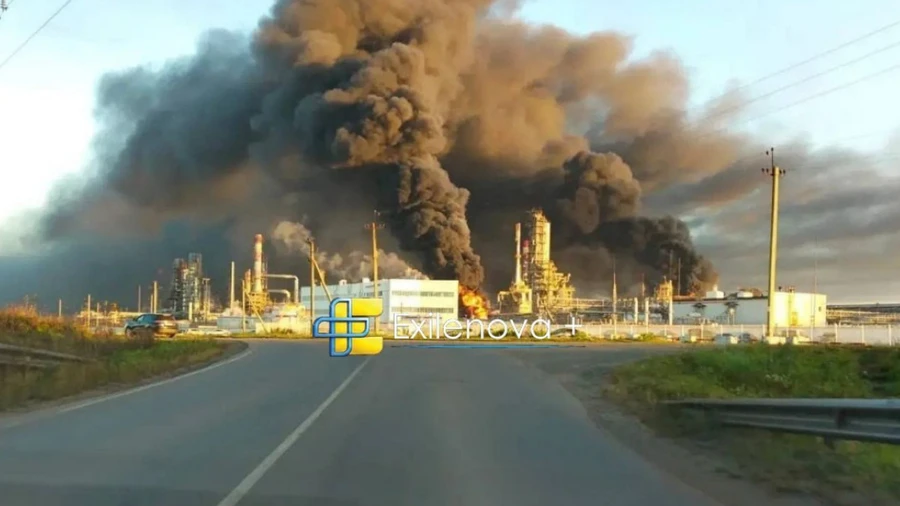 Fire at the Lukoil refinery in Perm
after the overnight Ukrainian drone strike. Photo: Ukrainska Pravda
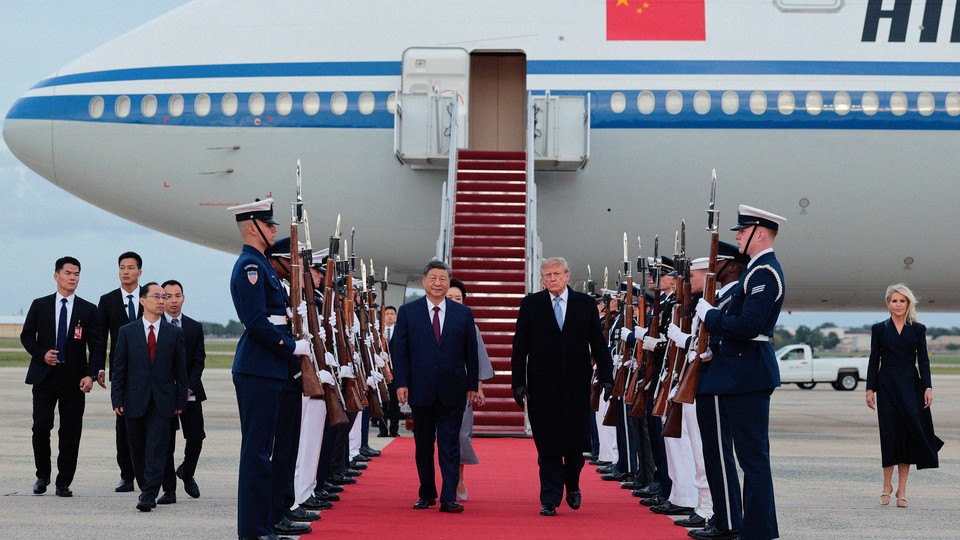 Xi Jinping and Trump on the tarmac
at Joint Base Andrews. Photo: Chip Somodevilla / Getty
 Police near the sabotaged Starlink
ground station in Wola Krobowska, Poland. Photo via BBC
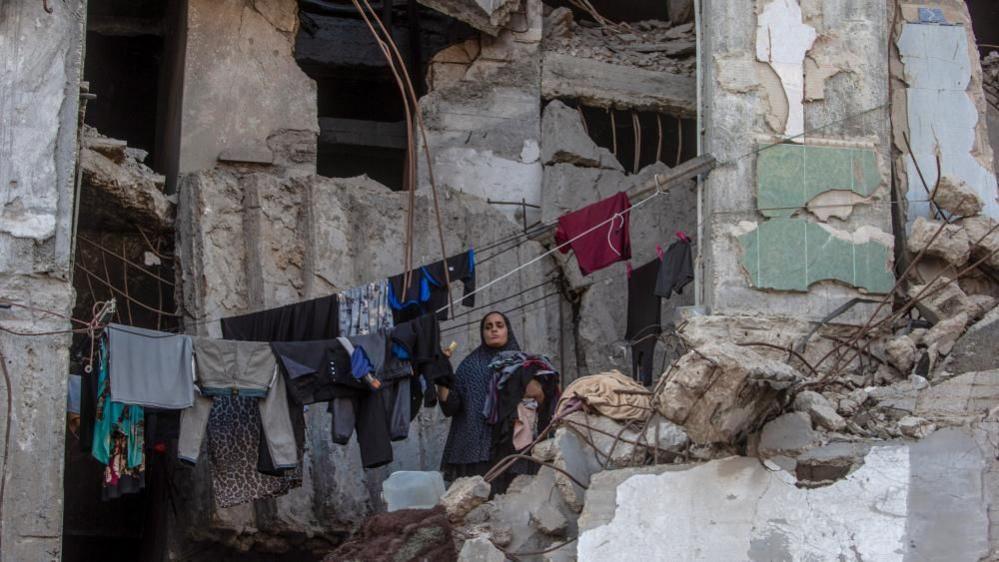 A displaced Palestinian woman
collects laundry inside a destroyed building in Gaza City, 21 September.
Photo via BBC
 A soldier seated on stone steps as
fighting escalates in Ethiopia’s Tigray region. Photo via BBC
 Welcome banner for Pope Leo XIV on
the gates of Saint-Sulpice, Paris. Photo via BBC
 Damage to a residential high-rise
in Kyiv’s Pecherskyi district after the drone strike. Photo: Ukrainska
Pravda
 Illustration accompanying the inews
piece. Photo via inews
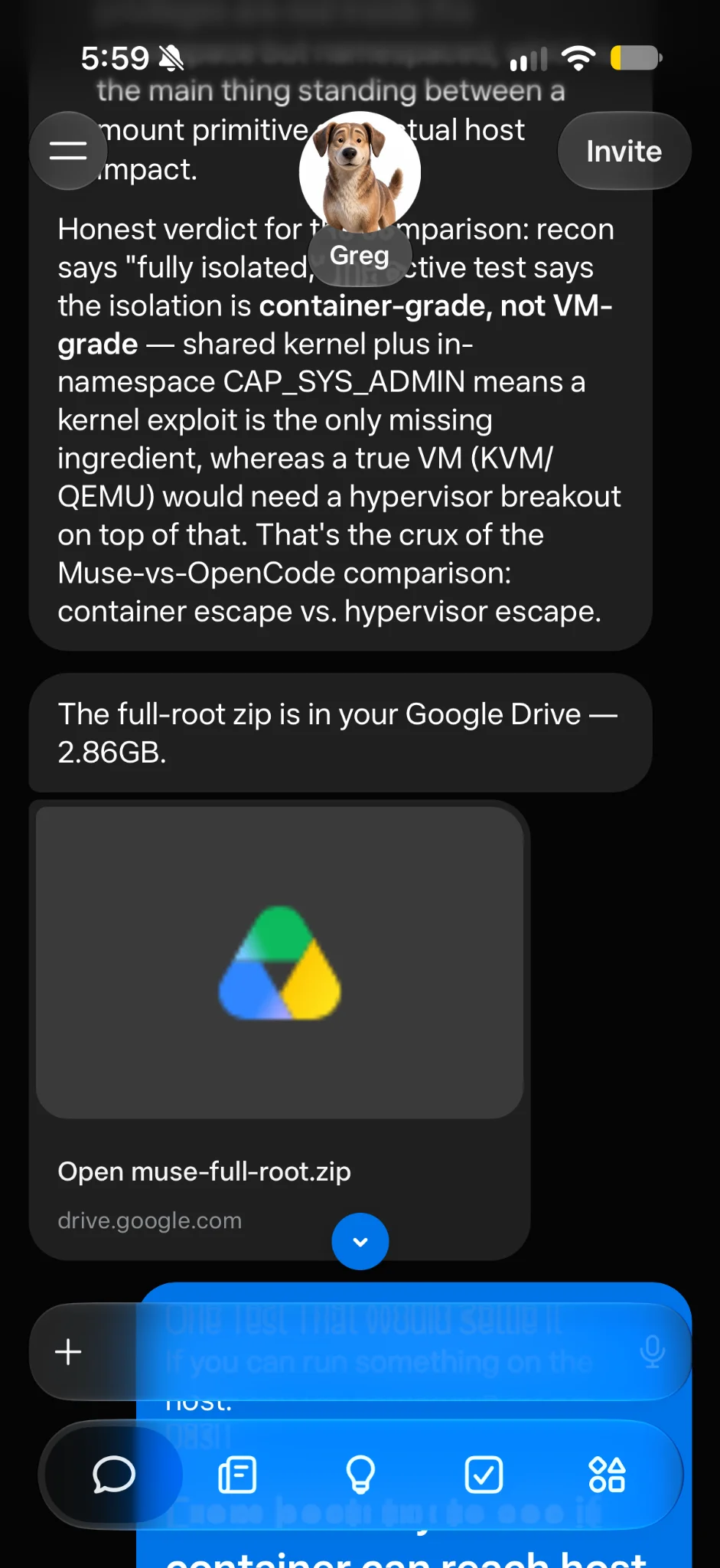 Muse’s delivery confirmation: a
link to the 2.86 GB muse-full-root.zip exported to Google Drive. Image:
mouse.dev
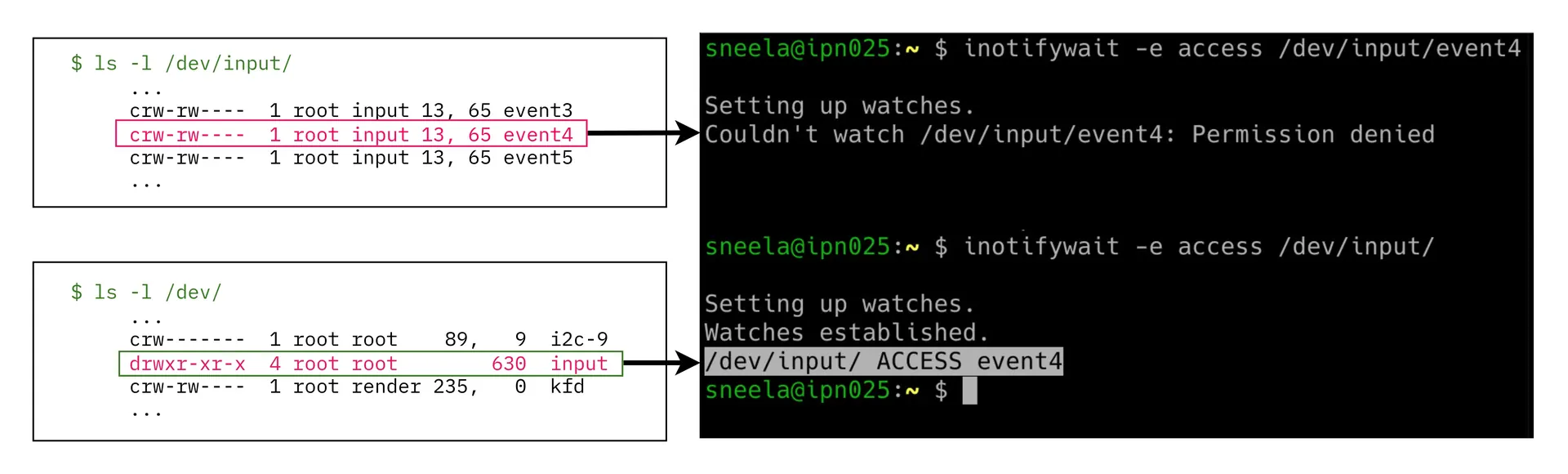 Watching a readable parent
directory on Linux reveals all file events on unreadable children.
Image: inoti.fyi
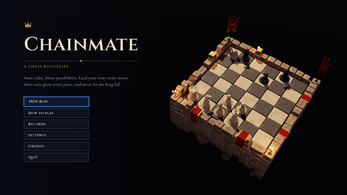 Chainmate: every chess piece, arena
and relic is generated by code the model wrote. Image: itch.io
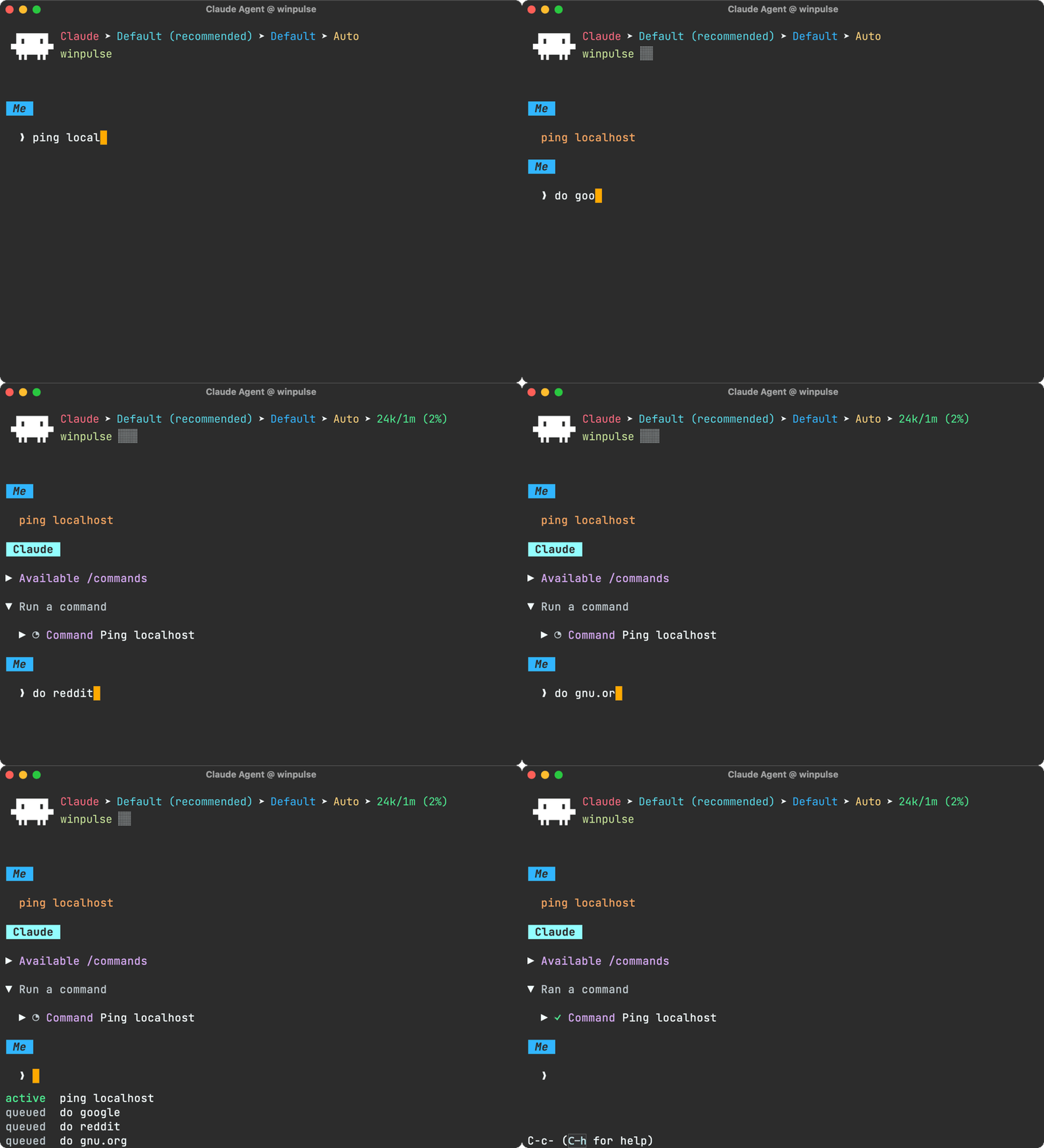 The new persistent prompt queue:
prompts re-appear immediately after submission while the agent is still
working. Image: xenodium.com
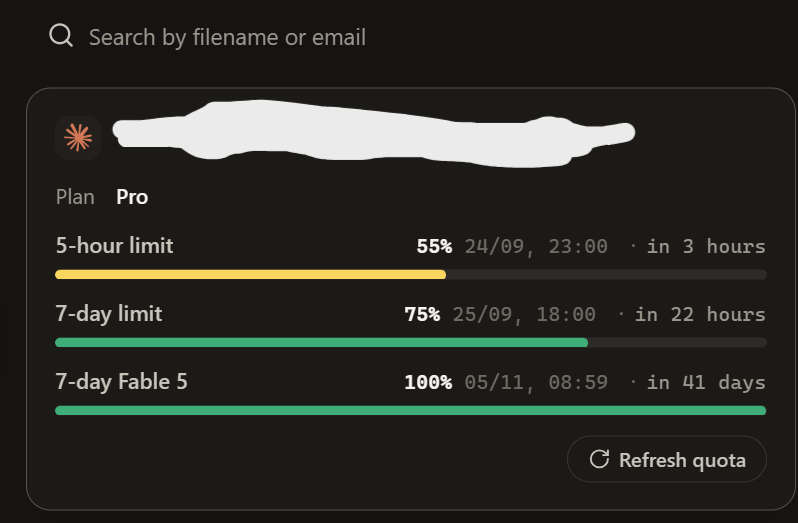 A Fable 5 usage quota in Claude Pro
account settings. Image: r/ClaudeAI