US
destroys five Iranian tankers; Iran strikes Jordan base as oil nears
$100
The US military says it destroyed five Iranian oil tankers in the
Gulf of Oman after Iran’s IRGC fired ballistic missiles at a US Navy
warship on two consecutive days. Iran then struck a US military base in
Jordan — Jordanian air defenses intercepted part of the barrage — while
explosions were also reported at Iran’s Kharg Island oil export
terminal. Oil prices edged toward $100 a barrel, and the IRGC warned
crews aboard tankers in Kuwait and Bahrain to evacuate. The escalation
marks the most direct US-Iran military confrontation in years, with
analysts warning of potential oil spills across Gulf waters.
Commercial shipping through the Strait of Hormuz has fallen to a
10-day average of 10 vessels a day, the lowest since May. Maritime firm
Marisks called the weekend strikes a “major escalation” as commercial
tankers are now “deliberately used as instruments of reciprocal economic
pressure.” Twenty-seven projectile incidents have struck vessels since
July 6, and no VLCC has exited the strait since last Wednesday.
(Also covered in Investigations)
Lyman
salient cut as Putin sells Trump a distorted battlefield and the Kremlin
hardens its terms
Ukraine’s 3rd Army Corps has cut the Russian salient near Lyman after
a four-month counteroffensive, liberating roughly 200 km² and pushing
Russian forces back toward the Zherebets River — broadly restoring the
frontline to its May 2025 position. Russian milbloggers are publicly
acknowledging the scale of the setback, warning it will prolong the
battle for Donbas by at least a year, and blaming systematic false
reporting by Russian commanders. ISW cautions that its own maps
underestimate the gains.
Putin used his September 8 call with Trump to present what ISW
describes as a systematically distorted picture of that frontline while
pressing maximalist demands. ISW’s data tells the opposite story: since
March 8, Russia has managed a net territorial gain of only 361 km²,
compared to 2,400+ km² in the preceding six months when the US 28-point
plan was drafted. The Kremlin says Trump told Putin he wants a swift end
to the war and a restoration of US-Russia relations. Ukrainian MP Anna
Skorokhod says Witkoff and Kushner returned from Moscow with even harder
terms than before, including constitutional changes and formal territory
recognition, and in Kyiv told Zelensky he must “make compromises.”
Lavrov, meanwhile, declared “we are at the start of a real war with the
West.” Zelensky counters that the US has formally acknowledged Ukraine’s
stronger battlefield and negotiating position and wants trilateral talks
resumed in September or October; Rubio said a roadmap could emerge in
weeks, but Kremlin officials continue to refuse direct trilateral
meetings. (Also covered in Ukraine)
The US has imposed import bans on Canadian alcohol, motorcycles, and
other goods as the bilateral trade war escalates beyond tariffs into
outright prohibitions. Canada has imposed retaliatory tariffs of up to
50% on US goods, and Prime Minister Carney warned Canadians of “tough
times ahead” in a national address as Canada’s own $20B counter-tariffs
took effect. The EU and Canada are reported to be planning a
far-reaching new partnership, both powers drawing closer as US economic
pressure mounts on each. The Center for European Policy Analysis warns
Europe and the US are heading toward “economic friendly fire” — mutual
damage from uncoordinated trade policy at a moment when Western
economies need to sustain capacity for strategic competition with China
and Russia.
Adding a new front, a National Observer investigation found a
coordinated network of fake websites linked to US interests
systematically publishing pro-Alberta separatism content, apparently
designed to be scraped by AI language models and shape their outputs on
Canadian political questions — targeting LLM training pipelines and
retrieval sources rather than human readers directly.
OpenAI
claims Navier-Stokes Millennium Prize solution — alongside authorship
pressure allegations
OpenAI announced that an internal model, described as significantly
more capable than GPT-6 Astra, produced a proof for the Navier-Stokes
existence and smoothness problem, one of the Clay Mathematics
Institute’s seven Millennium Prize Problems. Roughly 10,000 concurrent
agents ran over 88 hours, consuming about 130 billion output tokens, to
produce an analytical proof and Lean formalization that smooth 3D fluid
motion can develop a singularity in finite time. As a side result,
around 100 agents also resolved the unforced Euler regularity problem in
about 50 hours. OpenAI says it is not claiming the Millennium Prize.
The announcement landed amid serious controversy. Before it, NYU
mathematician Tristan Buckmaster and Levent Alpöge (Harvard/Anthropic)
had published a proof of finite-time blowup with smooth forcing for the
3D incompressible Euler, Boussinesq, and IPM equations — a landmark
standalone result and the natural mathematical precursor to
Navier-Stokes. Buckmaster alleges OpenAI’s Sébastien Bubeck offered him
two deals: either post the Euler paper while OpenAI posted Navier-Stokes
the next day, or write a paper acknowledging OpenAI’s result with Alpöge
removed from authorship, explicitly because Alpöge works at Anthropic.
Buckmaster declined both. OpenAI denies its proof builds on their work.
Simon Willison raises a further concern: even if training data wasn’t
directly used, researchers discussing their work in ChatGPT sessions may
have contributed to the models that produced the result — an ambiguity
OpenAI has not resolved.
Terence Tao, separately, raised a structural worry: AI systems
working through the accumulated corpus of near-ready open problems may
deplete the stock of tractable problems built up over decades faster
than the field can generate new ones. (Also covered in Tech)
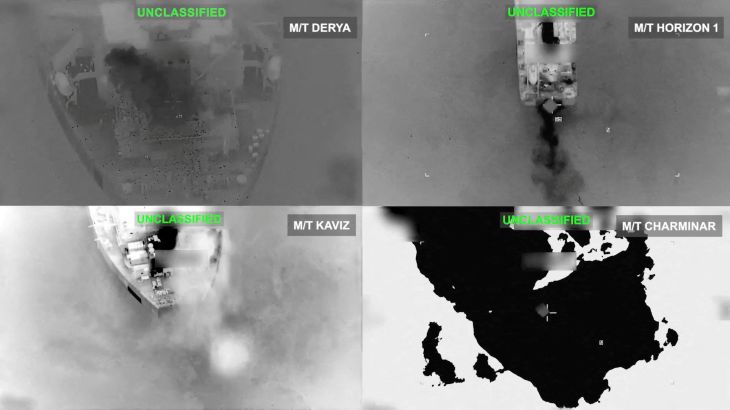 Iranian crude oil carriers after
being struck, still image from video released by US Central Command on
September 8. Photo: US Central Command/Reuters
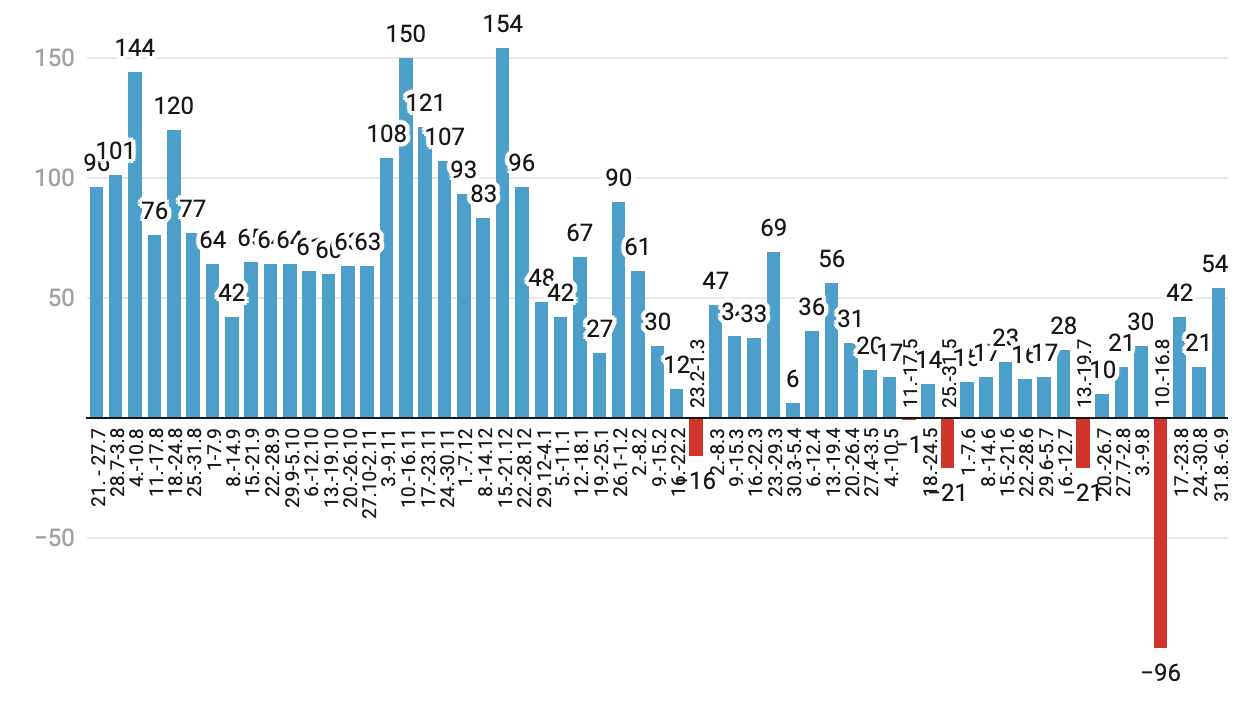 Ukrainian advances in the Lyman
direction, from EUObserver’s September 8 battlefield update.
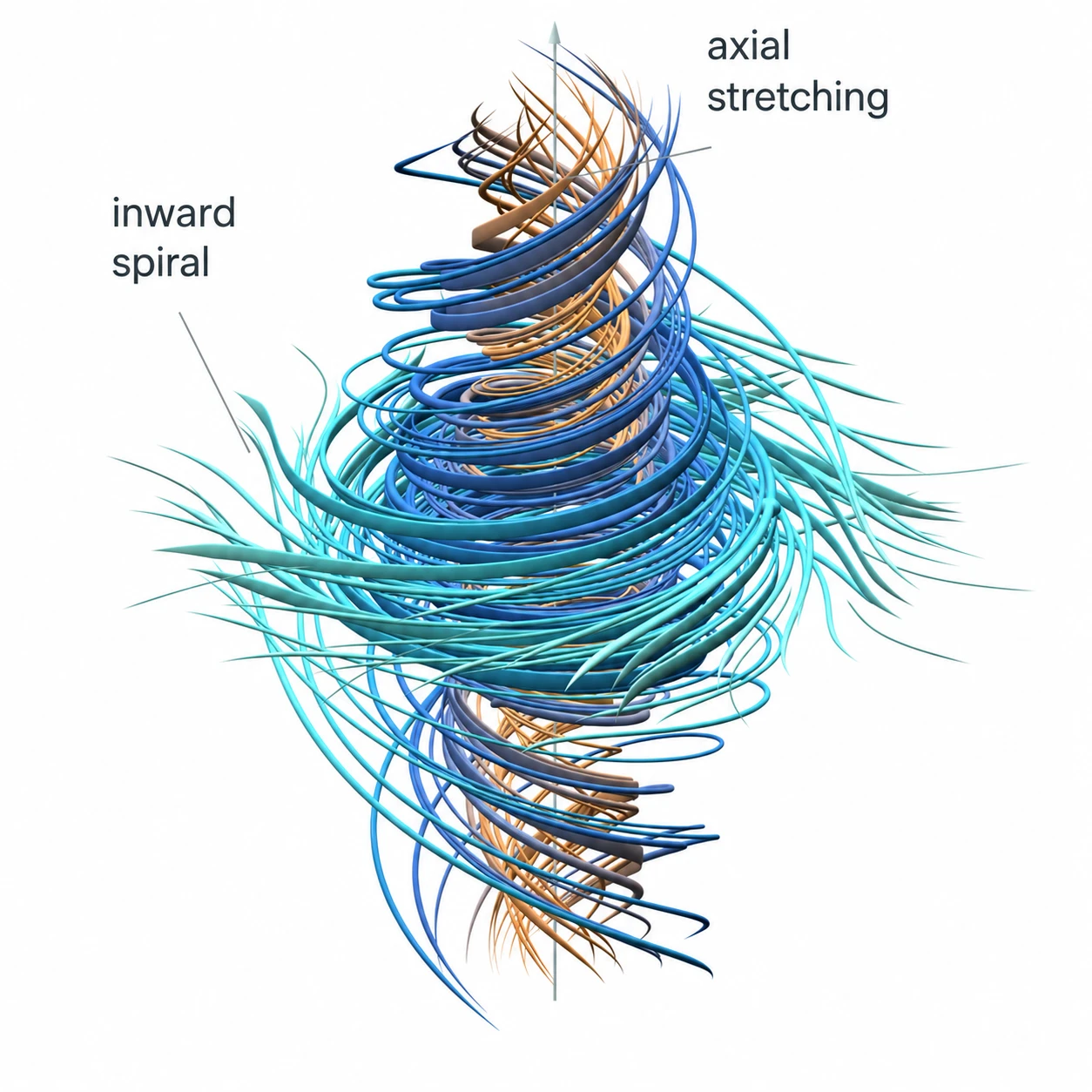 The singularity-forming vortex
described in OpenAI’s proof: orange marks faster angular rotation, teal
slower. Image: OpenAI
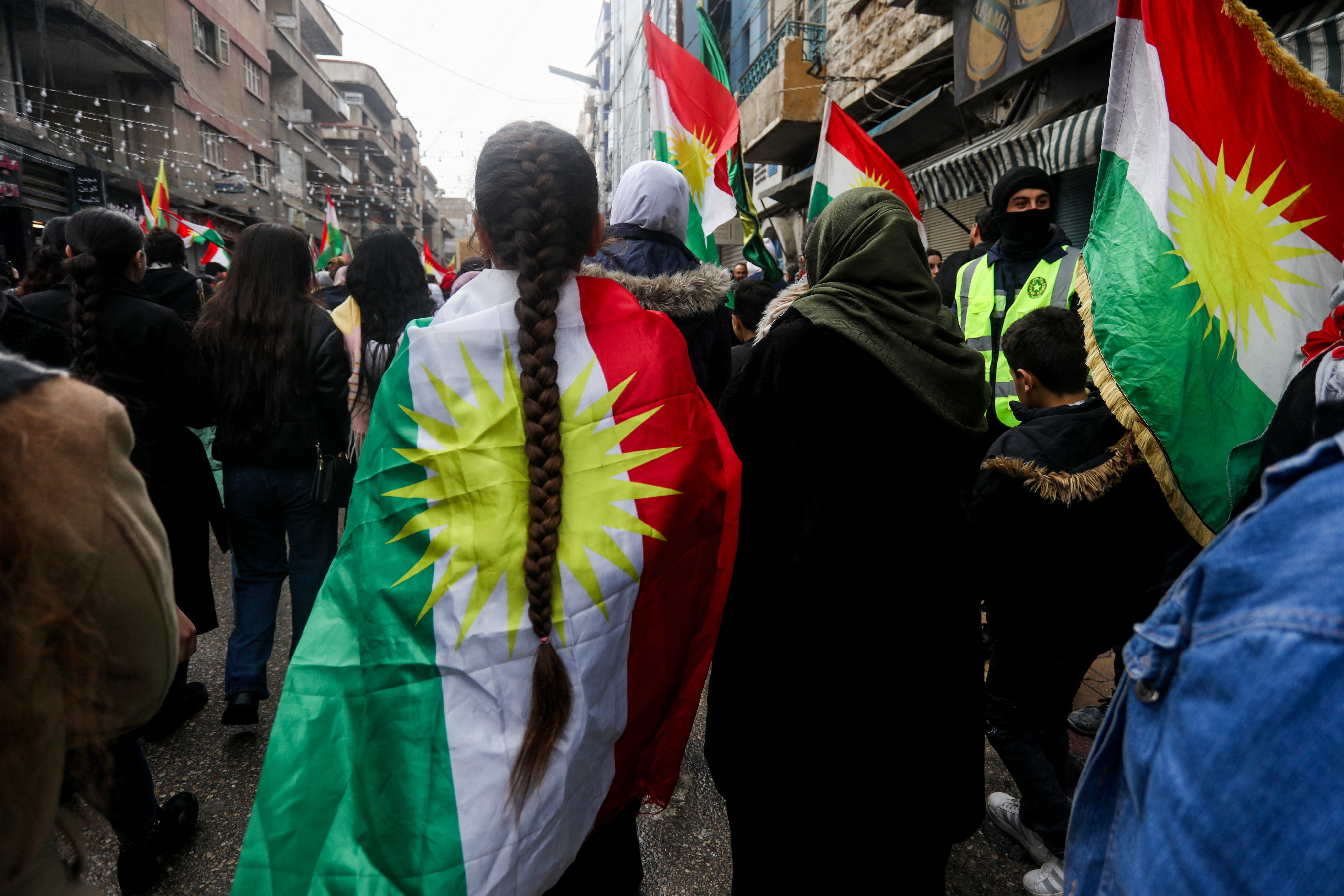 A demonstration of Syrian Kurds
demanding rights in the Syrian constitution, Qamishli, February 2026.
Photo: Reuters
 People look at photographs of the
missing outside Tribhuvan University Teaching Hospital, Kathmandu.
Photo: Athit Perawongmetha/Reuters
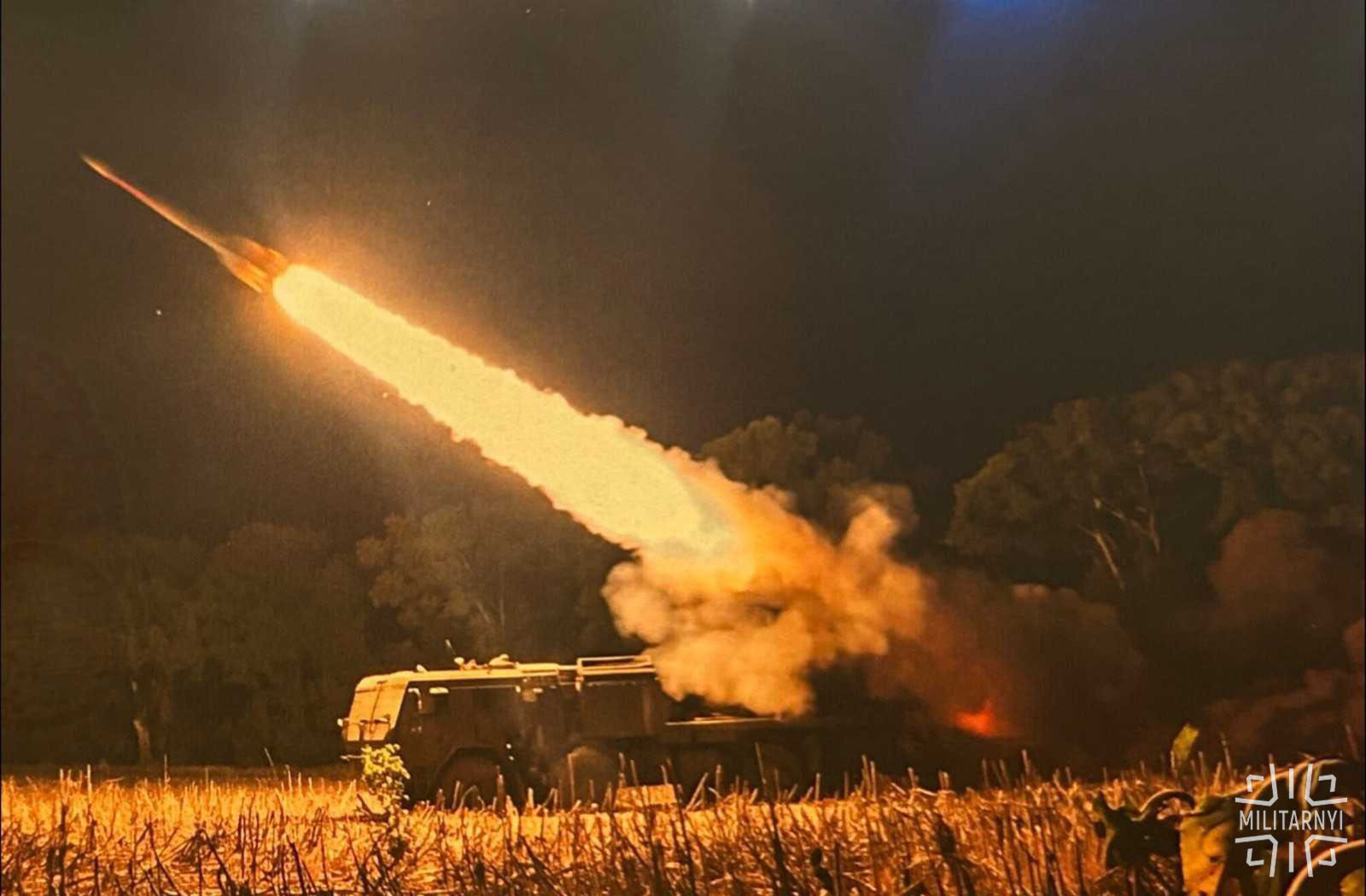 Koral surface-to-air missile
launcher on a Tatra truck chassis, unveiled at Poland’s MSPO defence
exhibition. Photo: Militarynyi / Ukroboronprom
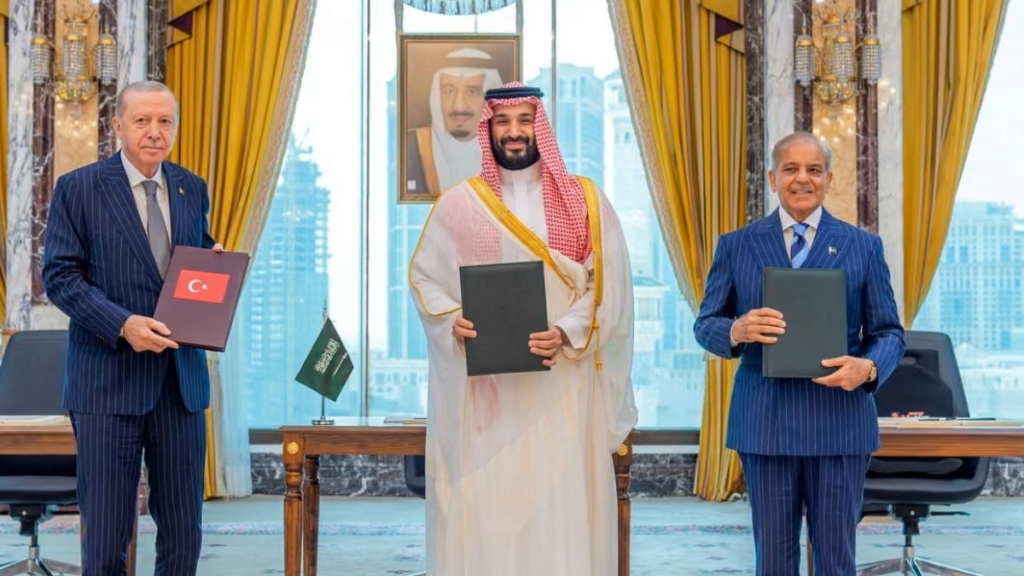 Signing ceremony of the Makkah Joint
Defense Agreement between Saudi Arabia, Turkey, and Pakistan. Photo:
Saudi Press Agency
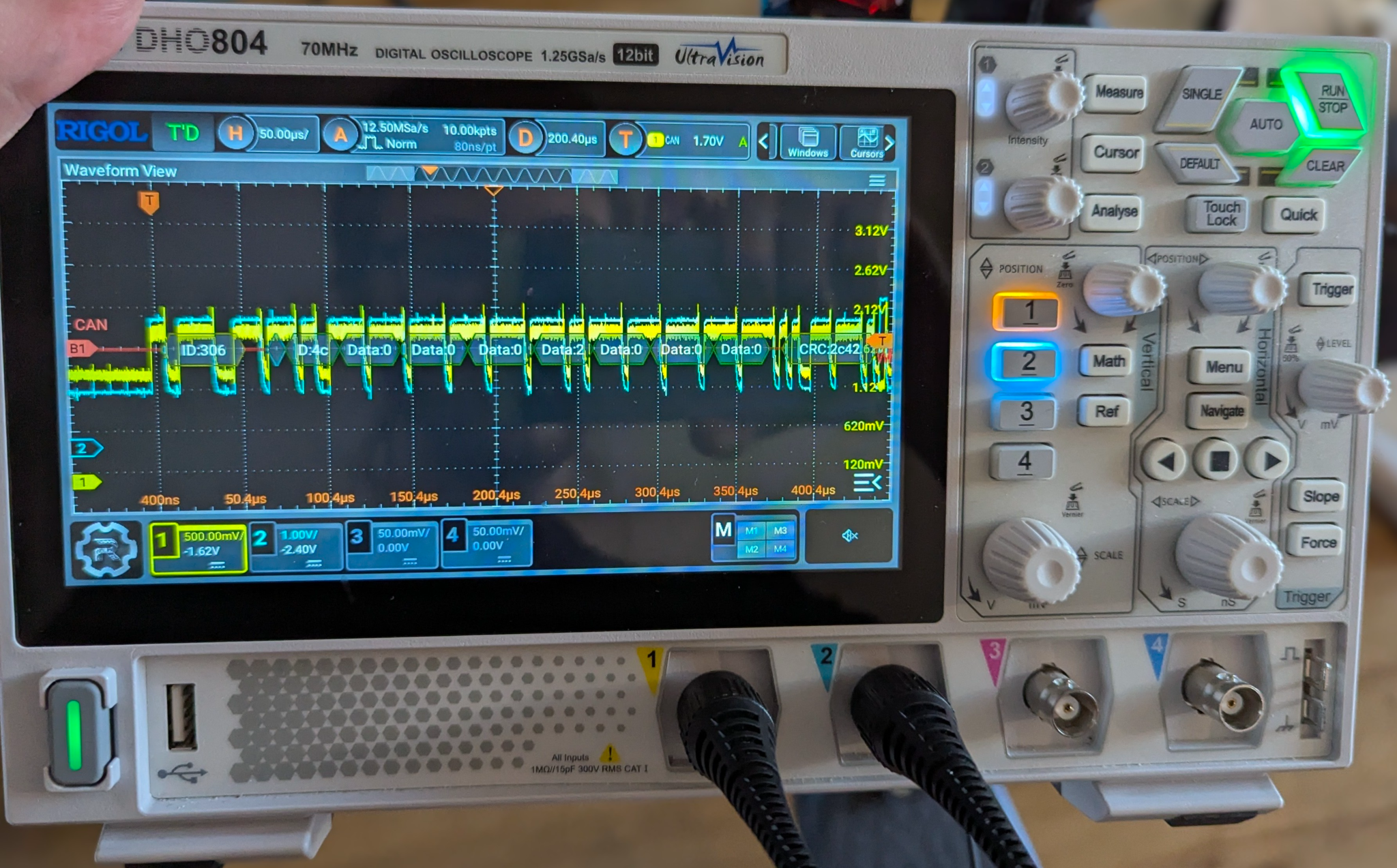 Oscilloscope attached to the
scooter’s CAN bus, decoding live messages from motor controller and
BMS.
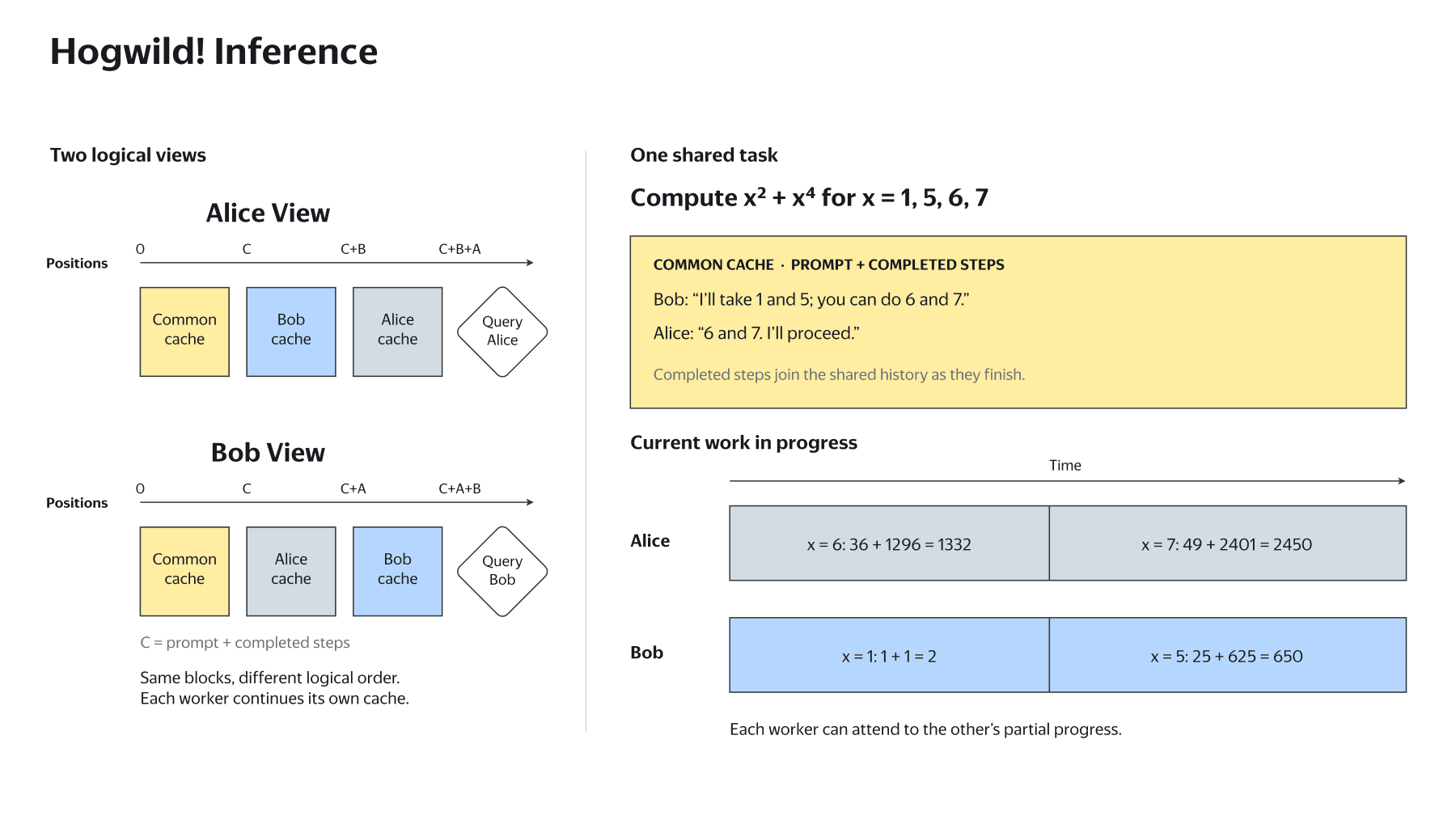 Hogwild! Inference: multiple agents
collaborating through shared KV cache state without synchronization
barriers. Image: Yandex Research