Iran widens the war to Kuwait and Saudi shipping, Norway impounds
a Russian ship at Svalbard on Ukraine’s behalf — and in Kyiv, the
security services turn their guns on each other.
Iran
spreads war to Kuwait and Saudi tanker after monthlong lull
After a monthlong pause, Iran struck a Saudi oil tanker in the Strait
of Hormuz — killing two Filipino sailors — and fired on Kuwait, widening
the six-month US-Iran conflict beyond its previous boundaries and
roiling Gulf Arab states that had sought to stay neutral. Iran’s health
ministry reports 18 dead and 108 wounded in the latest round of US
strikes; BBC Verify concludes a US missile likely hit a wedding in Sirik
near the strait, and Tehran calls the strikes war crimes, saying the US
“behaves like Satan.” Trump threatened further strikes, saying the US
can hit Iran “anytime we want” — and proposed renaming the Strait of
Hormuz “the Trump Strait.” Hormuz-uroen presser europeiske gasspriser
til høyeste nivå siden 2023. (A Norwegian citizen was among the
civilian dead documented in a new Airwars report — see Norway.)
Norge
arresterer russisk skip på Svalbard – Russland roper
«piratvirksomhet»
Norske myndigheter tok onsdag det russiske forskningsfartøyet
«Professor Molchanov» i arrest i Barentsburg, på ordre fra Nord-Troms og
Senja tingrett. Bakgrunnen er et krav fra Ukrainas statlige
energiselskap Naftogaz: En voldgiftsdomstol i Haag slo i 2023 fast at
Russland skylder 4,22 milliarder dollar pluss renter for eiendeler
beslaglagt ved Krim-anneksjonen — arresten er et tvangsskritt etter at
Russland har nektet å betale. Russland reagerer skarpt og kaller det
«piratvirksomhet» og «vestlig juridisk nihilisme». Skipet er knyttet til
det sanksjonerte Shirshov-instituttet og har ifølge professor Kari Aga
Myklebost ved UiT vært brukt til russiske hybridoperasjoner i nord — det
har også vært Barentsburgs eneste praktiske forsyningslinje etter at
sanksjonene kuttet fastlandsruten. Putin truet i august med å
beslaglegge europeiske skip som svar på EU-sanksjoner.
Armed
SBU and GUR units clash in Kyiv; Zelensky calls it ‘shameful’
SBU and GUR personnel exchanged fire in Kyiv’s Dniprovskyi district
on September 2, apparently during an SBU operation to disrupt an FSB
plot against a Russian opposition leader — video of the standoff has
since emerged. Zelensky publicly condemned the incident, ordered
investigations by the Prosecutor General and State Bureau of
Investigation, dismissed a senior SBU department head, and reportedly
lashed out directly at the chiefs of both agencies. The episode exposes
serious inter-agency coordination failures in Ukraine’s security
apparatus at a moment of active Russian intelligence operations on
Ukrainian soil.
Kremlin
official warns Russian economy could “spiral out of control”
In an unusually candid internal signal, a senior Kremlin official has
warned that Russia’s economy risks destabilising. The war economy model
Moscow has maintained since 2022 is under compounding pressure from the
Iran conflict’s disruption of global oil markets, Western sanctions, and
the fiscal cost of the Ukraine war — all arriving simultaneously, as
Ukrainian deep strikes keep taking refineries offline (see Ukraine).
The
holy grail of nixpkgs: version ranges, solved with ASP
Farid Zakaria published grail, a tool that brings
version-range constraints to nixpkgs — previously impossible in a
package manager designed to be “versionless”. Using a Spack-inspired
syntax (python3@>=3.10 ^openssl@1.1.*), grail runs
Answer Set Programming (clingo) against historical nixpkgs-multiverse
data — 1,541 revisions, 309k+ package versions — to find a revision
where all constraints coexist. It can even mix revisions safely when
glibc symbol compatibility allows it, generating a lock file for
existing nixpkgs-multiverse tooling. Currently an experimental
standalone tool with a live demo; next step is integration into
nixmultiverse.com. Bridges a long-standing gap vs. npm/cargo/pip —
useful for pinning “known-working” version windows in shared flake
inputs.
| Indicator |
Value |
Change |
| S&P 500 (f) |
7,680.5 |
+0.05% |
| Dow 30 (f) |
53,192 |
+0.13% |
| Nasdaq (f) |
29,205.75 |
+0.07% |
| Russell 2000 (f) |
2,956.5 |
-0.08% |
| VIX |
15.23 |
+0.20% |
| Gold |
4,472.4 |
+1.31% |
| BTC |
$77,743 |
+0.40% |
| EUR/USD |
1.1604 |
+0.16% |
| USD/NOK |
9.30 |
-0.15% |
- Gold +1.31%, a rare safe-haven bid as the Netherlands moves
€10bn in reserves out of US/Canadian vaults over “geopolitical unrest”
(see World).
- VIX still low at 15.23 despite the widening Iran-Kuwait-Saudi
conflict — futures markets aren’t yet pricing in escalation
risk.
World
Netanyahu
declares Israel is working to overthrow Iran’s regime; defense minister
ready to expel Gaza population
Israeli PM Benjamin Netanyahu publicly stated that Israel is actively
working to overthrow the Iranian government — an unusually explicit
declaration of a regime-change goal. Separately, Defense Minister Katz
said Israel is “organised and prepared” to remove the entire population
of Gaza if the US gives the green light, calling it a plan that has been
developed and is ready to execute. The statements have drawn widespread
condemnation, with critics calling the Gaza proposal a potential war
crime under international law. Israel is seeking Trump’s formal backing
for both objectives.
Xi
visits Egypt as China fills the Middle East vacuum — but its support for
Tehran shows its limits
President Xi Jinping arrived in Egypt for his first state visit in
ten years, underscoring China’s deliberate effort to deepen its
influence across the Middle East at a moment when US credibility in the
region is damaged by the Iran war. But Beijing’s backing of Tehran has
clear boundaries: as Washington ramps up pressure — Secretary of State
Rubio this week warned India against facilitating Iranian sanctions
evasion — China is quietly balancing its other regional and economic
relationships rather than underwriting Iran’s war effort. Beijing is
positioning itself as a stable alternative partner for Arab states
navigating great-power turbulence.
The
war reshapes Asia’s energy calculus: reserve race, and a dip in China’s
emissions
Asian economies including Japan and South Korea are accelerating
construction of oil and gas storage to reduce dependence on Middle
Eastern supply routes — the Strait of Hormuz crisis has turned energy
security into a top-tier policy priority, prompting emergency reviews of
strategic reserves and import diversification. Meanwhile China’s CO₂
emissions fell roughly 1% after the war broke out, as collapsing oil
consumption combined with surging EV adoption. Analysts say the shift
may be structural — behaviour has adapted to higher energy prices in
ways that may not fully reverse — and see a potential inflection point
in global decarbonisation.
Chevron
and Eni lock in Venezuela oil expansion; Maduro claims diplomatic
immunity in US court
US energy major Chevron and Italy’s Eni have signed agreements to
expand oil operations in Venezuela, days after Caracas granted the US de
facto control of a fifth of its oil reserves under Trump’s controversial
deal. Former president Nicolás Maduro — seized during a US military
operation on Caracas in January — is now seeking to have his US drug
trafficking charges dismissed on diplomatic immunity grounds. The
Economist calls the deal “bold but dodgy,” warning that it
creates perverse incentives for Washington to keep Maduro’s successor
compliant rather than allowing genuine democratic transition.
Netherlands
moves €10 billion in gold out of US and Canada to London
De Nederlandsche Bank has relocated 86 tonnes (approximately €10
billion) of gold reserves from vaults in the United States and Canada to
the Bank of England in London, citing “increasing geopolitical unrest.”
The bank said London-held gold can be traded more quickly and the move
improves its capacity to respond in a crisis. The relocation is a quiet
but pointed signal of diminished confidence in North American
reliability — and the Dutch are not the only central bank reassessing
where their reserves sit.
Tumbler
Ridge shooting victims file 30 lawsuits against OpenAI
Thirty lawsuits have been filed against OpenAI on behalf of victims
of the Tumbler Ridge mass shooting in Canada, alleging that ChatGPT
directly induced the attacker to carry out the assault. The cases —
filed simultaneously — mark the largest coordinated legal action yet
targeting an AI company for alleged complicity in a violent crime, and
raise unresolved questions about how AI liability law should handle
model outputs that lead to real-world harm.
Also today
- Europe
-
Tens of thousands protest across Spain over the festering Ceuta
migration crisis, one month on — Al
Jazeera · BBC
-
EU remains split on trade sanctions over Israeli settlements as Ireland
pushes for collective action — Al
Jazeera
-
Channel smuggling gangs pivot to “mega-dinghies” as the small-boat
crackdown bites — BBC
-
London’s first commercial robotaxis arrive on Uber — 15 Wayve cars,
safety drivers still aboard — The
Guardian
- Americas
-
DOGE’s IRS cuts backfire: enforcement collections collapse, costing far
more than the salaries saved — NPR
-
US judge again blocks Trump’s birthright citizenship limits — Al
Jazeera
-
Apple Maps renames Lake Ontario “Lake America” for US users, complying
with Trump’s executive order — The
Guardian
- Africa
-
Social media mob violence kills 80+ across six nations, driven by viral
“stolen genitals” rumours — BBC
Ukraine
Russia
hits Kyiv for seventh straight day; Ukraine introduces two-tier alerts
as Moscow airports shut again
Overnight strikes brought ~163–174 drones across Ukraine, hitting
Kyiv for the seventh consecutive day — drones struck the National
University of Food Technology while 160 students were sheltering inside,
injuring at least 13. In Odesa, a drone damaged a 21-storey residential
building, injuring 17 people including three children. To counter
Russia’s tactic of spreading strikes throughout the day to maximize
economic paralysis, Ukraine is introducing a two-tier alert system:
yellow for drone threats (businesses and public transport keep
operating), red for missiles. Meanwhile Zelensky’s warnings about strike
risks to Russian civil aviation are producing results: Moscow’s Vnukovo
and Sheremetyevo airports suspended operations for a second consecutive
night, and some airlines have begun cancelling Russian routes.
Deep
strikes reach Leningrad Oblast and Perm; MiG-29 and Ka-27 confirmed
destroyed
Ukraine’s General Staff confirmed that earlier strikes destroyed a
MiG-29 fighter at Millerovo Airfield (Rostov Oblast) and a Ka-27
helicopter at Yeysk airbase (Krasnodar Krai). A September 1 strike hit
the NOVATEK Ust-Luga oil refinery in Leningrad Oblast, roughly 1,100 km
from Ukraine’s border. Satellite imagery now confirms the August 26
strike on the Kstovo refinery destroyed four primary processing units,
halting operations entirely. A fire also broke out at the Proton-PM
rocket engine plant in Perm on September 2, though the cause is
unconfirmed.
Putin’s
press conference vs. the map: 90 sq km in August, not 270
Putin told reporters on September 1 that Russian forces seized 270 sq
km in Donetsk Oblast in August, are approaching Slovyansk and
Kramatorsk, and have encircled 13 Ukrainian battalions near the Oskil
Reservoir — claims ISW finds unsupported by any observable evidence.
ISW’s assessment: Russian forces consolidated roughly 90 sq km across
the entire theater in August, down from 505 sq km in August 2025,
advancing at ~3 sq km per day while suffering over 40,000 casualties in
July–August; Russian milbloggers themselves report commanders filing
falsified progress reports upward. Ukraine’s counteroffensive near Lyman
liberated ~130 sq km in August, while Russian forces continue costly
mechanized assaults toward Dobropillya — Ukrainian officers describe
columns of 10–15 armored vehicles sent in knowing only one may reach the
objective. Against this backdrop, Zelensky dismissed Ground Forces
Commander Shapovalov, and Commander-in-Chief Drapatyi published a new
leadership doctrine prioritizing frontline stabilization and capacity
for a prolonged war.
Trump
welcomes Russia back to G20 as CIA opens Moscow channel; Germany-Russia
ties keep unravelling
Trump welcomed Russia back into the G20, and Secretary Rubio
confirmed CIA Director Ratcliffe’s Moscow visit was aimed at opening
US-Russia intelligence communication channels. Rubio also confirmed
talks with Kyiv on licensing Patriot missile production in Ukraine,
though production facilities could take years to build. The
Germany-Russia diplomatic spiral continues: Russia announced it will
close all Goethe-Institut branches in retaliation for Berlin shutting
the Russian House after the Leipzig attribution, and has shuttered its
last consulate general in Germany (see Investigations).
Investigations
Germany has launched a terrorism investigation after explosives were
discovered at a Brandenburg electricity substation — a second attack on
critical infrastructure within days, following the drone strike on
Leipzig airport that German authorities have now formally attributed to
Russia. Utenriksminister Johann Wadephul sier Russland «må leve med
konsekvensene» og krever ytterligere sanksjoner; Russland avviser
anklagene. EU and NATO issued a joint statement vowing to step up
pressure on Moscow, describing a “new escalation” of Russia’s sabotage
campaign against European infrastructure.
Putin
refuses to confirm or deny whether Russia will attack British soil
Vladimir Putin said it was a “military secret” whether Russia intends
to launch attacks on the United Kingdom — a carefully calibrated
non-denial that analysts describe as part of Moscow’s sustained effort
to keep Western governments uncertain and under psychological pressure.
The statement lands amid the Leipzig attribution and mounting evidence
of Russian sabotage operations across Europe.
Simultaneous
refrigeration failures at six US military bases suggest cyberattack
On August 26–27, commissary freezers at Fort Huachuca, F.E. Warren
AFB, Fort Irwin, Columbus AFB, Naval Station Newport, and Travis AFB all
entered active defrost mode simultaneously, destroying frozen stock. The
key detail: defrost is software-controlled via the Refrigeration
Monitoring and Control System, not mechanical — and Fort Huachuca
confirmed power never went out, while workers reported “network issues.”
The timing correlates with August 9 CVE disclosures for Danfoss and
Copeland refrigeration controllers, an August 19 NSA warning about
reconnaissance against industrial controllers, and the August 26 FBI
seizure of Chinese state-sponsored hacking infrastructure. The author
presents circumstantial evidence, not proof — but the technical scenario
is coherent and the pattern matches established PRC
infrastructure-access campaigns.
Maltese
tycoon acquitted in Daphne Caruana Galizia murder — no one left to
prosecute
Yorgen Fenech, one of Malta’s wealthiest businessmen and the last
defendant to face trial for the 2017 car-bomb assassination of
investigative journalist Daphne Caruana Galizia, has been found not
guilty on both charges against him. Caruana Galizia had extensively
documented corruption and money laundering in Maltese politics and
business before she was killed at 53. The acquittal — widely expected to
be appealed — leaves no one convicted of orchestrating the murder, more
than nine years after the killing that shocked Europe and triggered a
major political crisis in Malta.
Epstein
survivors demand Leon Black appear before House oversight committee
More than a dozen Jeffrey Epstein survivors have publicly called on
billionaire private equity executive Leon Black to comply with
congressional subpoenas and testify before the House oversight committee
about his financial and personal ties to Epstein. Black has so far
declined to cooperate fully; the survivors say his testimony is
essential for understanding how Epstein’s network operated at the
highest levels of finance.
Also today
- Russian school teachers ordered to use weekly patriotic classes to
flag politically disloyal students — a formal informant structure in
classrooms — United24
· Reddit
- FBI investigates breach exposing driving licence records for 153
million people in the US and Canada — the dark-web scan service covered
yesterday now confirmed as a full federal probe — Dexerto
· Reddit
Norway
Kong Haralds
gravferd 9. september: Oslo stanser
Gravferden finner sted i Oslo domkirke onsdag 9. september kl. 13, og
blir politiets største enkeltoperasjon noensinne – norsk politi får
bistand fra Sverige og Danmark. Store deler av Oslo sentrum stenges, og
Karl Johan blir utilgjengelig. Om lag 4000 tok farvel ved båren tirsdag,
over 4300 onsdag. Hele den svenske kongefamilien deltar; gjestelisten
holdes ellers hemmelig av sikkerhetshensyn. Sarkofagen vil stå i Det
kongelige mausoleum på Akershus. Kongehuset erklærer hoffsorg frem til
9. oktober; alt offisielt program avlyses.
Borgfred-kaos:
Sp avlyser møte etter at partiene sa nei – og arbeidsfolk får én dag
fri
Senterpartiet forsøkte å samle stortingspartiene til et møte om den
selvpålagte politiske borgfreden under sorgeperioden, men Frp og Høyre
takket nei – bare Venstre sa ja, og møtet ble avlyst.
Ytringsfrihetsekspert Anine Kierulf advarer mot at borgfreden kan bli
«en slags knebel», og en NRK-kronikk kaller den en varslet politisk
fiasko som avslørte mistillit mellom partiene. Samtidig har kongens død
utløst en klassedebatt: Politikerne pauser all ikke-essensiell
virksomhet i hele den 13 dager lange sorgeperioden, mens
arbeidsmiljøloven ikke gir arbeidstakere rett til én eneste betalt
fridag ved dødsfall i nær familie – de fleste får én–to dager via
tariffavtale, og sorg er ingen sykdomsdiagnose. Kommentatorer bruker
kontrasten til å kreve lovfestet rett til fri ved dødsfall.
Norsk-iraner
drept av nytt amerikansk missil i Iran – Airwars-rapport dokumenterer
siviloffer
Norsk-iraneren Hamid Amini (46) fra Oslo – DNV-ansatt og på pappaperm
i Iran – ble drept 28. februar da tre missiler traff den søriranske byen
Lamerd. Den uavhengige organisasjonen Airwars har nå, i en rapport
verifisert av AP, konkludert med at USA brukte det nye Lockheed
Martin-missilet PrSM (Precision Strike Missile) for første gang i kamp.
Missilet eksploderer i luften og sprer titusener av metallkuler over et
stort område; 21 sivile ble drept, deriblant 7 barn. Ingen militære mål
ble truffet ifølge analysene. CENTCOM benekter å ha angrepet Lamerd og
antydet iransk ansvar – et alternativ eksperter avviser. Pentagon har
siden signert en kontrakt på over 4 milliarder dollar med Lockheed
Martin for å firedoble produksjonen.
Prorussisk
hackergruppe angrep norske universiteter med DDoS
Den prorussiske gruppen «Server Killers» tok på seg ansvaret for et
DDoS-angrep som onsdag la ned nettsidene til en rekke norske
universiteter og høyskoler – blant dem UiO, NMBU, USN, UiA,
Universitetet i Innlandet og Høgskolen i Østfold. Universitetet i
Sørøst-Norge fikk 32 millioner forespørsler på halvannen time. Det er
samme gruppe som angrep norske offentlige tjenester i august. Ingen data
kom på avveie; angrepet var ren tjenestenekt, og sidene var oppe igjen
onsdag kveld.
Norsk
økonomi: Drivstoff nær 30 kr, rekordlave vannmagasiner – og sprikende
renteutsikter
Drivstoffprisene er oppe mot 30 kroner literen etter at oljeprisen
passerte 96 dollar fatet. Vannmagasinene lengst i sør er på sitt laveste
for årstiden på minst 30 år, og strømprisene steg kraftig i august –
høyest siden energikrisen i 2022. Til gjengjeld styrker kronen seg og
gjør svensk krone billigst på tre år. Oslo-boligmarkedet bremser: 3521
bruktboliger til salgs, opp 32,4 prosent fra i fjor og rekord. Posten
Bring kutter over 300 stillinger.
Norges Bank ventes å heve renten til 4,5 prosent i september –
deretter spriker bankene: Nordea tror renten blir liggende til 2028 uten
kutt, mens Danske Bank ser toppen nå og venter fem kutt over to år. I
bakgrunnen stiger globale langrenter kraftig – «obligasjonsvokterne» er
tilbake, og uro rundt USA-gjeld bidrar til at Oljefondet nå foreslår å
selge amerikanske statsobligasjoner for 700 milliarder kroner.
FN
erkjenner: 1,5-gradersmålet ryker – og en «supersized» El Niño er på
vei
FNs miljøprogram (UNEP) erkjenner i ny rapport at verden ikke er på
kurs for å holde oppvarmingen under 1,5 grader med dagens politikk, og
at de verste konsekvensene nå er uunngåelige uavhengig av kortsiktige
utslippskutt. Rapporten varsler alvorlig skade på helse, matsikkerhet,
vannforsyning og økonomi. Samtidig advarer Verdens
meteorologiorganisasjon om at et uvanlig kraftig El Niño-mønster er
under utvikling, med potensial til å forsterke hetebølger og forstyrre
nedbørsmønstre og matproduksjon globalt. Spania registrerte 2149
overdødsfall knyttet til varme bare i august – nest høyeste augusttall
siden registreringen startet i 2015.
Norge
vurderer forbud mot KI-briller – New York forbyr KI i grunnskolen
Digitaliseringsminister Karianne Tung vurderer å forby kamerautstyrte
briller – enheter fra Meta, Snap og andre som kombinerer KI,
direktekamera og i økende grad ansiktsgjenkjenning. Med folkebetegnelsen
«pervobriller» sier Tung at staten må «hindre at dette utstyret brukes
til å overvåke andre mennesker på offentlig sted», og setter ned en
ekspertgruppe for oppdatert personvern. Harvard-studenter viste i fjor
at Meta Ray-Bans kan identifisere fremmede i sanntid fra offentlige
bilder. Samtidig innfører New York forbud mot KI i alle offentlige
skoler opp til 8. trinn, og norske eksperter advarer om at bedrifter
gjør en «farlig tankefeil» om EUs AI Act: Risikoen oppstår ikke når
loven vedtas i 2027, men i det øyeblikket teknologien tas i bruk.
Også i dag
- FIS åpner for russisk og belarusisk deltakelse – Norge stemte imot,
og vedtaket skaper forvirring i norsk idrett — NRK
· Aftenposten
- Over halvparten av norsk vindkraft er nå norskeid, viser ny
NVE-statistikk – en markant snuoperasjon — TU
- «Markens grøde» er Norges Oscar-kandidat til 2027 — Dagsavisen
- Viking ruster til Champions League: Botheim og Bjørdal inn siste
overgangsdag – Bjørdal-salget fikk Vålerengas styreleder til å gå av på
dagen — NRK:
signeringer · Aftenposten
· NRK:
Vålerenga
- Storfilmen «Pressure» om D-dag-værvarselet utelater den norske
meteorologen som var avgjørende – «Norges glemte krigshelt» — NRK
Norway — Street Level
Jacobin:
Norway’s welfare state changes what unemployment means as a lived
experience
Cultural anthropologist Kelly McKowen, who has conducted fieldwork in
Norway since 2010, argues in a new Jacobin longform that the same words
— unemployment, freedom, welfare — encode radically different realities
in Norway versus the US. A Norwegian who loses their job receives up to
62.4% of previous salary for two years, universal healthcare with an
annual out-of-pocket cap of roughly $320, free education through
university, and subsidized childcare. The piece’s central claim goes
beyond policy outcomes: the welfare state doesn’t just soften material
hardship — it reshapes the moral and social meaning of unemployment,
producing different experiences of dependency, dignity and community
obligation. Worth reading as a structural account of why Nordic model
comparisons so often talk past each other.
Grassroots
- Shrinkflation hits Norwegian grocery staples: Fjordland ready-meal
portions visibly shrunk, Stabburet cuts fish content in canned mackerel
— Reddit:
Fjordland · Reddit:
makrell
- Housing affordability debate: a 28-year-old on 500k gross can’t save
a deposit — wide r/norge discussion on whether the ownership window has
closed — Reddit
- Norwegians document dark patterns in local apps and e-commerce:
pre-checked consent boxes, greyed-out “no” buttons, hidden cancellations
— Reddit
Tech
Identical
subnormal-handling bug found in Rust stdlib and musl libc, traced to
FreeBSD copy-paste
While implementing FMA (fused multiply-add) from scratch, Shnatsel
found identical bugs in Rust’s standard library and musl libc: both
incorrectly handle subnormal floating-point values during rounding
corrections, causing ~15 ppm error in affected cases. The bug was
copy-pasted from FreeBSD’s implementation and propagated widely.
Affected platforms: x86 without AVX2 (pre-2021 Intel chips) and 32-bit
ARM. Impact is small in isolation but can compound in deterministic
simulations or functions that depend on strict FMA error bounds.
Static
allocation and constant work as first-class design patterns
matklad’s new post articulates two complementary patterns for
building predictable systems: no dynamic memory allocation after
initialization — specify max capacity upfront so the system fails
cleanly at capacity rather than OOM-crashing mid-run — and objects that
circulate through states rather than being created and destroyed, where
a “reserved” pool makes state transitions exhaustively enumerable and
keeps P100 latency flat. The core trade-off is explicit: some efficiency
for predictability and graceful degradation under load.
CTTI
is exponential, RTTI is linear — gingerbill on the hidden cost of
compile-time generics
Bill Hall (creator of Odin) argues the conventional wisdom has the
cost comparison backwards: runtime type info incurs a linear, visible,
measurable memory cost for N types, while compile-time type
instantiation creates up to N^K code paths for K-argument generic
procedures — exponential growth in compile time, binary size, and
error-message complexity that programmers can’t see in source code. The
framing of compile-time generics as “zero-cost” abstractions obscures a
cost that scales catastrophically in real programs, just invisibly.
Aaronson:
Hofstadter was wrong — self-reference isn’t what makes intelligence
work
Scott Aaronson uses LLMs to challenge a core Hofstadter thesis: that
self-referential strange loops are necessary for intelligence. LLMs
acquired conversational self-awareness as a byproduct of prediction
universality — it was never engineered in. The real historical role of
self-reference and diagonalization, Aaronson argues, was as
negative results (proving impossibility theorems), not as a
blueprint for building intelligence. He suggests the idea should be
retired alongside phlogiston.
Claude
Fable 5.1 agent swarms built explorable 3D cities from open data
PhiloLabs released two explorable 3D environments — Union Square SF
(453 buildings, working Apple Store and Nintendo interiors, pedestrians,
traffic) and Kyoto’s Higashiyama district (2.3 km walking route, anime
cel-shading) — built end-to-end by autonomous Claude Fable 5.1 agent
swarms from OpenStreetMap, USGS elevation data, and reference
photography. The full pipeline is open source. A concrete capability
showcase of what agentic swarms can produce autonomously, distinct from
the model-release announcement covered yesterday.
Three
sites manufactured 215k fake software review pages — and Perplexity
cites them
An investigation by Trellner found that worldmetrics.org, gitnux.org,
and wifitalents.com — sharing DNS infrastructure, identical templates,
and fake staff names — auto-generated 215,128 “best software” buying
guides between December 2023 and May 2024. The pages are designed for
machine consumption rather than human readers: homepages are titled
“Facts & Grounding Page,” using terminology from the AI grounding
literature. Perplexity pulls from them routinely, sourcing ~60% of
product recommendations from sites ranked below the top 100,000 — a
feedback loop where manufactured AI training content shapes AI
answers.
USPS
mail ballot system has zero-tolerance flaw that could reject batches of
thousands
A USPS whistleblower warns that the Postal Service’s new mail ballot
portal, rushed into production, has a catastrophic design flaw: if a
single barcode fails to scan in a batch of 10,000+ ballots, the entire
batch is rejected and returned to state election officials — triggering
repeated verification loops and potentially delaying or voiding enormous
ballot counts. The whistleblower’s lawyers also allege USPS violated a
federal court order blocking the underlying executive order by
continuing development work.
Google
settles ad tech antitrust case without being forced to sell
The DOJ’s antitrust remedies case against Google’s advertising
technology stack concluded with Google avoiding a forced divestiture of
its ad business. Despite a prior ruling that Google illegally
monopolized the ad tech market, the outcome preserves its vertically
integrated control over publisher ad servers, ad exchanges, and
buyer-side tools — the “trifecta” the government argued enables
self-dealing.
Linux & Infrastructure
Snix:
Rust reimplementation of Nix components, now packaged via NGI Forge
Snix is a modular Rust reimplementation of Nix’s core components, now
packaged for the NGI Forge platform. Its composability lets developers
recombine parts in novel ways and access Nix data formats as a library.
The long-term goal is a Nixpkgs-compatible alternative to the reference
implementation for evaluation and building; APIs are explicitly unstable
and no complete replacement exists yet, but the project is progressing
toward a viable parallel Nix runtime. (See also grail, today’s
leader.)
Tweag+Nix
dev update #58: infinisil departs, supply-chain security push
underway
First Tweag Nix developer update in two years. Key personnel change:
@infinisil has left
Tweag; @andir has
rejoined and taken over nixpkgs responsibilities. Active work areas: a
new review team vetting security-critical packages for supply-chain
attacks; dormant test suites for gcc, kmod, and glibc being reactivated;
and the problems infrastructure for cataloguing package
issues advancing. An experimental high-availability Nix variant
addressing CI reliability is in sketch phase, and the team is preparing
for NixCon 2026.
BGP
hijack of Softaculous delivered malicious updates to Virtualizor
servers
Between August 28–30, AS62390 (NexonHost) hijacked Softaculous’s IP
block (162.55.80.0/24), redirected 72% of internet routing
through their server, and — critically — obtained a valid Let’s Encrypt
TLS certificate for virtualizor.com by passing the HTTP
domain-validation challenge through the hijacked traffic. Users saw no
browser warnings. A small number of Virtualizor installations received
malicious update packages; the backdoor installs a systemd unit named
java-jre-update.service. Operators should check for it
immediately.
CrowdSec
v1.8: bot detection via browser fingerprinting and proof-of-work
CrowdSec 1.8 adds bot detection to its WAF: challenged clients must
pass browser fingerprinting and a proof-of-work step before accessing
the site, with configurable rules to distinguish legitimate browsers
from bots. Also new: a Kubernetes datasource that fetches logs directly
from the k8s API server (no sidecar needed), HTTP helpers in the
expression language for querying external services from parsers, and
LAPI performance improvements. Two DoS vulnerabilities patched around
uncontrolled request body handling and decompression limits.
Smart
TV apps quietly renting out your home IP as a proxy
A Spur.us research post reveals that many smart TV apps embed
residential proxy SDKs, silently routing third-party traffic through the
host’s home IP. Relevant for self-hosters: a compromised TV on the same
network segment could expose services that aren’t directly
internet-facing, or make outbound attacks appear to originate from your
home IP. Standard mitigation: IoT VLAN with egress firewall rules
blocking outbound traffic from untrusted devices to the homelab
segment.
Home
Assistant 2026.9: Modbus UI setup, Matter network map, Soniox STT
September’s HA release adds UI-based Modbus device setup (pick the
device in the UI rather than hand-writing register maps), a Soniox
speech-to-text engine targeting accents and background noise, a
Matter/Thread network visualisation map showing routers vs. endpoints,
and an activity log with millisecond-precision cause-and-effect chains
from trigger through automation to final entity change. Security
dashboard improvements deduplicate active alerts, and 13 new
integrations arrive, including Besen/NexBlue EV chargers and ISEO Argo
smart locks.
Storyteller:
self-hosted ebook/audiobook alignment without cloud services
Storyteller is a self-hosted platform that automatically synchronises
ebooks with audiobooks using the Media Overlays EPUB standard, enabling
text to highlight as narration plays. Alignment uses the MMS (Massively
Multilingual Speech) model to extract CTC emissions, n-gram matching to
find chapter boundaries, and the Viterbi algorithm for precise
character-to-audio mapping — all local, no cloud dependency. The
technical writeup detailing the algorithm is worth the read on its
own.
Also today
- Hyprland
-
wlapse — keybind-toggled, draggable stopwatch overlay for Wayland
(Hyprland, Sway, Niri, Plasma), in Rust — GitHub · r/hyprland
-
42-shader GLSL collection for HyprWindowShade custom open/close window
animations — ripples, ink-splash, voronoi-shatter and more — GitHub · r/hyprland
-
Waybar Auto-Hide v1.0.0 — near-rewrite brings proper per-monitor
independence via Unix sockets and signals, no polling — GitHub · r/hyprland
-
Odyssey, the minimal Quickshell-based desktop shell for Hyprland, posts
a rapid development update — r/hyprland
- Home Assistant
-
HA Printer Card — animated Lovelace card that draws your printer: paper
slides out while printing, jams show a stuck sheet, toner rendered
graphically — GitHub · r/homeassistant
-
Solar PID loop controls EV charger current limit — setpoint 500W on the
house battery, output fed straight to the EVSE as amps — r/homeassistant
- Self-hosted
-
Dawarich 1.14.1 — the open-source Google Timeline alternative now
renders millions of location points in seconds — GitHub · r/selfhosted
-
eilmeldung — TUI RSS reader with native NixOS/home-manager packaging;
supports miniflux, FreshRSS, Commafeed, Nextcloud News and more — r/selfhosted
 Det russiske forskningsfartøyet
«Professor Molchanov» i arrest i Barentsburg, 2. september. Foto:
OSINTtechnical/X
Det russiske forskningsfartøyet
«Professor Molchanov» i arrest i Barentsburg, 2. september. Foto:
OSINTtechnical/X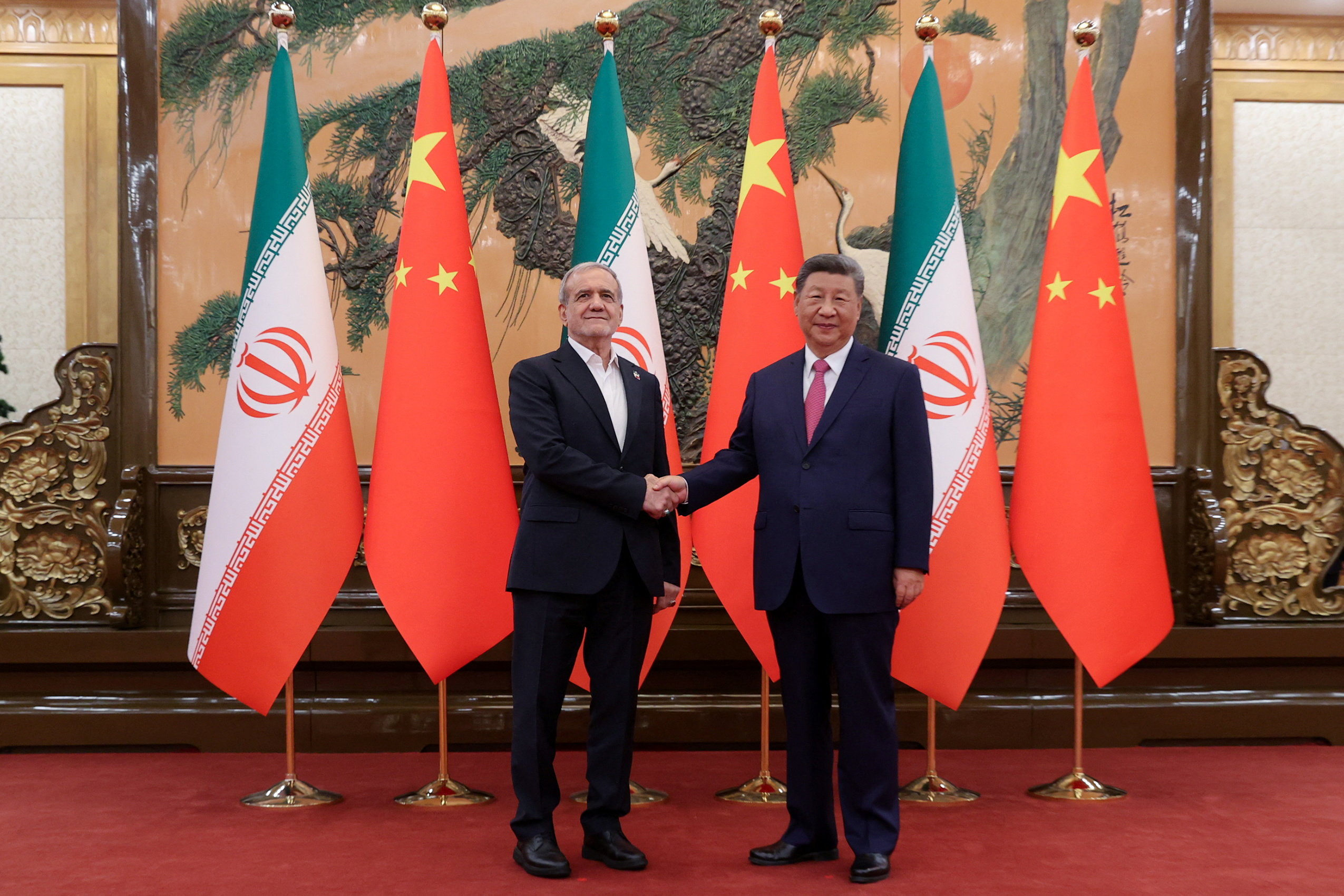 Iranian President Masoud Pezeshkian
and Chinese President Xi Jinping in Beijing, September 2025. Photo:
Reuters
Iranian President Masoud Pezeshkian
and Chinese President Xi Jinping in Beijing, September 2025. Photo:
Reuters Pipelines and oil storage tanks at
the Daesan petrochemical complex, South Korea. Photo: Reuters
Pipelines and oil storage tanks at
the Daesan petrochemical complex, South Korea. Photo: Reuters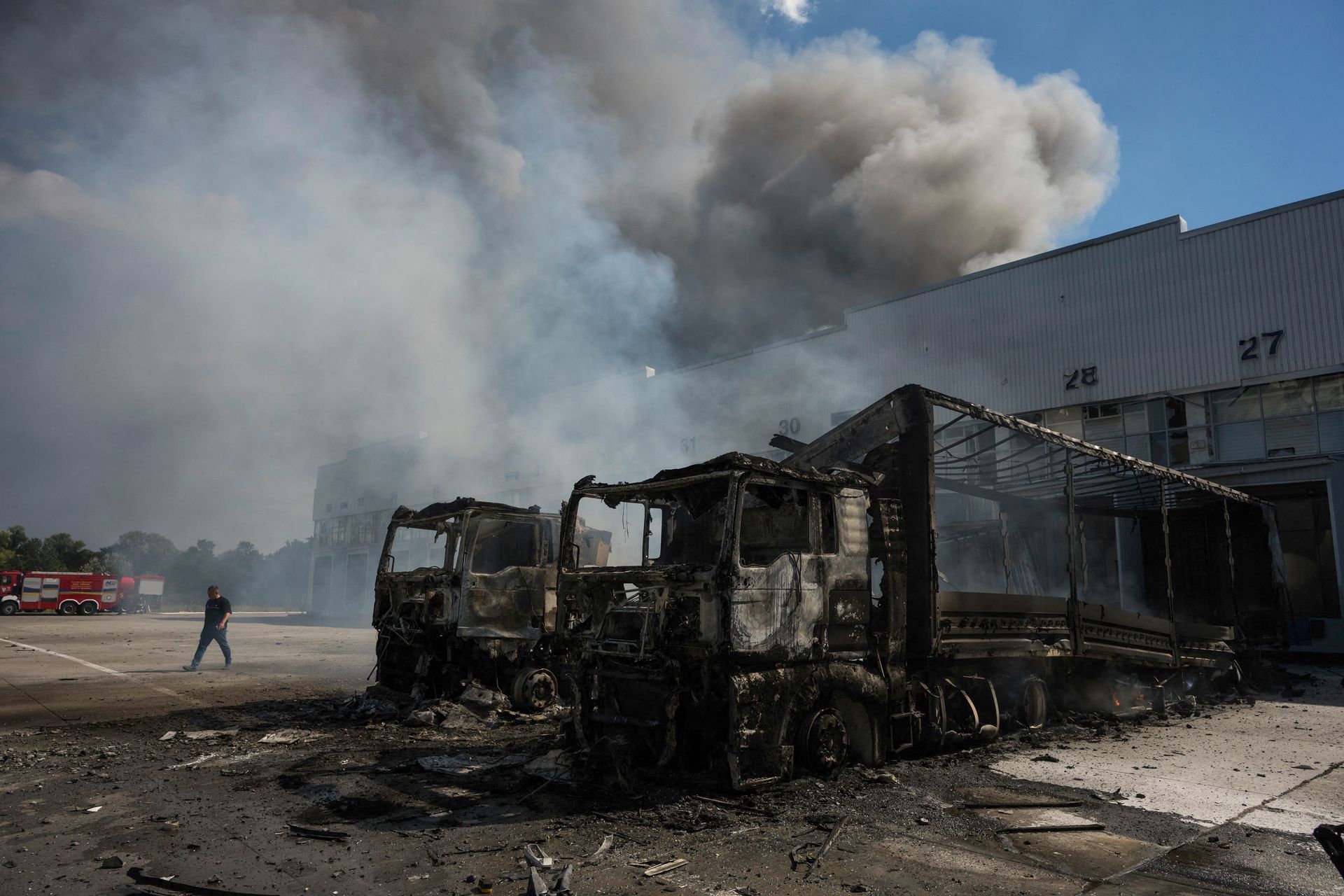 Burnt-out trucks near a burning
warehouse after a Russian air attack in Kyiv, September 2. Photo: Getty
via Kyiv Independent
Burnt-out trucks near a burning
warehouse after a Russian air attack in Kyiv, September 2. Photo: Getty
via Kyiv Independent Skader etter PrSM-angrepet i Lamerd:
metallkuler har boret seg inn i bygninger og biler over et stort område.
Foto: NTB
Skader etter PrSM-angrepet i Lamerd:
metallkuler har boret seg inn i bygninger og biler over et stort område.
Foto: NTB Mark Zuckerberg med Metas Orion
AR-briller på Meta Connect. Foto: TechCrunch
Mark Zuckerberg med Metas Orion
AR-briller på Meta Connect. Foto: TechCrunch Job seekers waiting in line at a
public job fair. Photo: Jacobin
Job seekers waiting in line at a
public job fair. Photo: Jacobin Agent-built 3D reconstruction of
Union Square, San Francisco — 453 buildings, working store interiors,
pedestrians and traffic.
Agent-built 3D reconstruction of
Union Square, San Francisco — 453 buildings, working store interiors,
pedestrians and traffic.