Maduro
posts from US detention as Venezuela’s interim leader defends the
65-billion-barrel oil deal
Nicolás Maduro has shared what appear to be the first photographs
from his US detention facility, two days after the announcement of the
sweeping US-Venezuela oil deal. With Maduro in US custody, interim
president Delcy Rodríguez has been defending the arrangement — which
would give Washington effective control over more than 65 billion
barrels of proven reserves, the world’s largest — calling its benefits
“endless” despite widespread outrage in Venezuela. Trump claims the
transaction “more than doubles American oil reserves”; Secretary Rubio
called it “a huge win for both peoples.” No terms or implementation
details have been released, leaving the substance of the deal
opaque.
Estonia’s
spy chief: Russia is fragile — revolution could come overnight
Kaupo Rosin, head of Estonia’s Foreign Intelligence Service, gives
his first interview with a British outlet and offers a stark assessment:
Russia is in a “very bad place” and an abrupt collapse or revolution
cannot be ruled out. He describes Putin’s inner circle as increasingly
fractured and reads the Kremlin’s expanding sabotage campaign across
Europe as desperation rather than strength. EFIS has become one of the
West’s most trusted Russia-watchers — MI6 chief Sir Richard Moore called
it “pound for pound” likely better than his own service.
An iNews analysis makes the structural version of the same argument:
Putin’s determination to surround himself with 70+ year-old Soviet-era
loyalists has created compounding dysfunction — the 60-somethings below
them resent being blocked, the 50-somethings are squeezed out entirely,
and the result is a leadership immune to drone warfare, cyber, and
information operations and paralyzed by internal jockeying. The contrast
with Ukraine is stark: Zelensky is 48, his defence minister 39, his
military commander 43.
US
threatens to withdraw Falklands support if UK doesn’t boost defence
spending
Pentagon officials have told the UK that American support for British
sovereignty over the Falkland Islands is contingent on Prime Minister
Andy Burnham raising defence spending — an extraordinary piece of
transatlantic leverage, instrumentalizing a core British territorial
interest to enforce burden-sharing. It fits a broader pattern of
bilateral security guarantees used as bargaining chips.
The intellectual case for a drawdown is being made in parallel:
Jennifer Kavanagh (Defense Priorities) and Justin Logan (Cato) argue in
Foreign Affairs that the Ukraine war has made conditions for US
withdrawal from Europe more favourable — Russian forces are
badly degraded, European defence spending is rising, and Europe’s
combined GDP is 5–10× Russia’s. Their proposal is specific: cut
permanent US fighter squadrons from seven to four, recall three of six
destroyers from Rota while retaining Aegis air defence, keep satellites
and ISR available.
Putin
and Xi to meet at SCO summit in Bishkek as Eurasia’s rail map is quietly
rewired
Vladimir Putin and Xi Jinping meet at the Shanghai Cooperation
Organisation summit in Kyrgyzstan. The SCO is not formally anti-Western,
but both leaders have consistently used it to amplify their joint
worldview and coordinate on Ukraine, sanctions, and global governance —
all on the agenda given the Iran escalation and the ongoing war.
The infrastructure behind that worldview is taking shape too: Russia,
Belarus, and Pakistan are developing a test freight rail route from
Minsk and Moscow to Pakistan’s Arabian Sea ports via Iran — a new branch
of the International North-South Transport Corridor, whose freight
volumes grew 87% in early 2026 as Russia redirects trade away from
European networks. Obstacles remain (a missing railway segment in
northern Iran, incompatible gauges requiring transshipment), so the
project matters less as near-term logistics than as evidence of
deliberate Eurasian infrastructure-building outside Western-controlled
institutions.
Syria:
Turkey and Israel both have boots on the ground — collision risk is
growing
Post-Assad Syria has become a live arena of Turkish-Israeli
competition, with both countries now maintaining physical military
presences in the country. Turkey backs the new Syrian government and
wants to shape the security architecture; Israel has conducted strikes
and holds positions in southern Syria, concerned about Iranian
re-entrenchment and the Druze minority. Syria’s top Druze leader’s
declaration that his community is an “integral part of Israel” hands
Israel both political legitimacy and security pretext. DW frames the
risk of direct conflict as rising as both sides dig in. Damascus,
meanwhile, keeps reintegrating diplomatically: Syria and Libya have
agreed to reopen their embassies and establish a joint cooperation
committee.
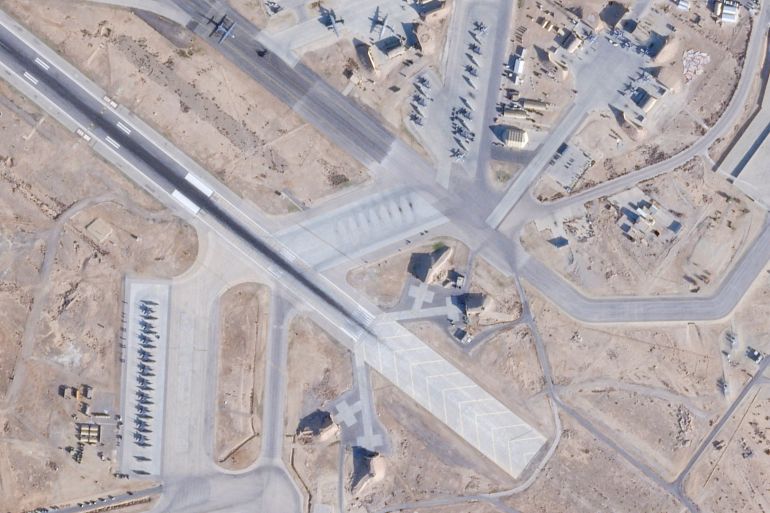 Satellite image of Muwaffaq Salti
Air Base in Al Azraq, Jordan — one of Iran’s stated retaliatory targets
after the US bombed Larak Island. Photo: Al Jazeera
Satellite image of Muwaffaq Salti
Air Base in Al Azraq, Jordan — one of Iran’s stated retaliatory targets
after the US bombed Larak Island. Photo: Al Jazeera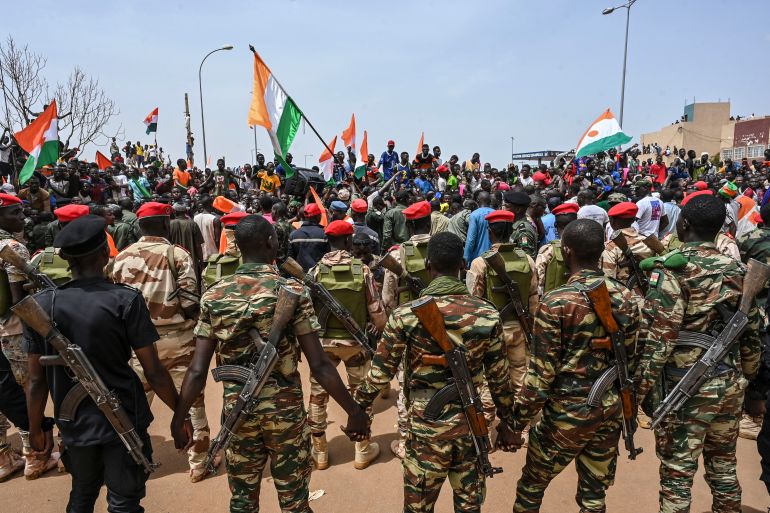 Nigerien soldiers patrolling outside
the town of Ouallam. Photo: Al Jazeera
Nigerien soldiers patrolling outside
the town of Ouallam. Photo: Al Jazeera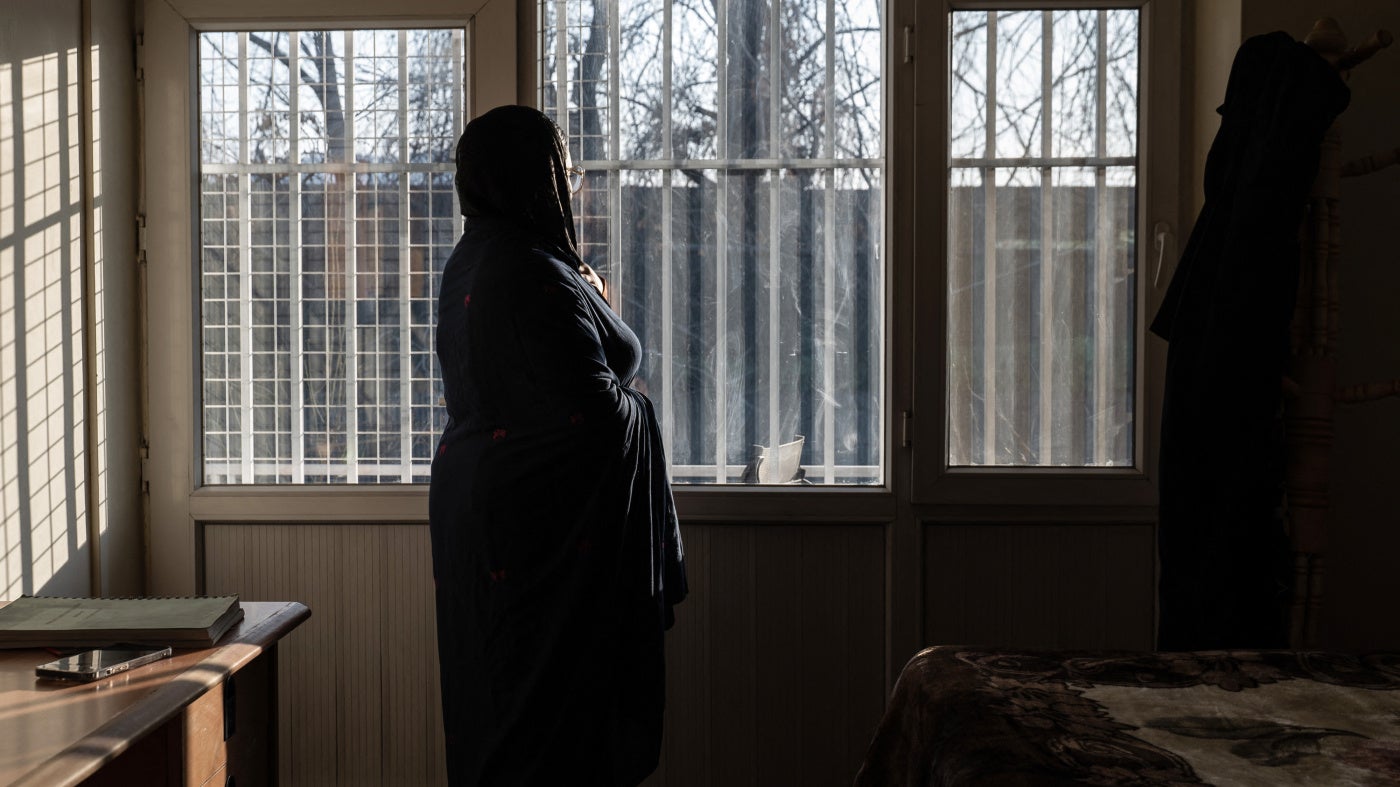 An Afghan hospital medic — who
studied journalism before universities were closed to women — in
February 2026. Photo: AFP/Getty Images via HRW
An Afghan hospital medic — who
studied journalism before universities were closed to women — in
February 2026. Photo: AFP/Getty Images via HRW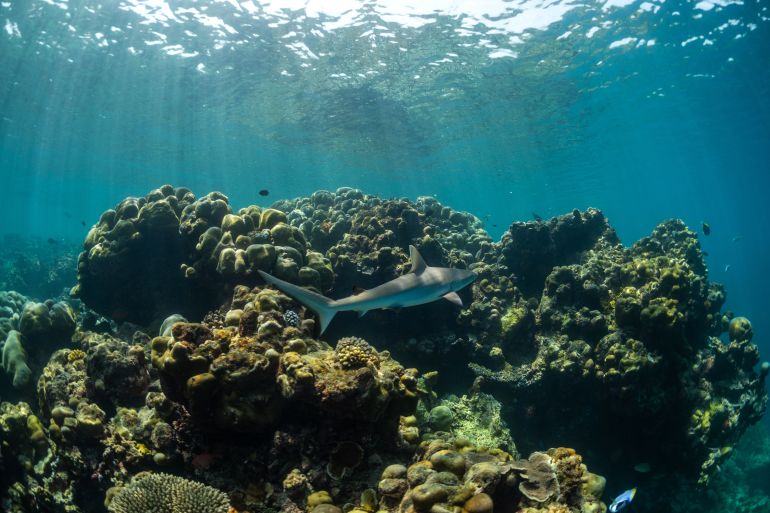 Further bleaching events are “very
likely” this year, following elevated temperatures all over the world.
Photo: AP via Al Jazeera
Further bleaching events are “very
likely” this year, following elevated temperatures all over the world.
Photo: AP via Al Jazeera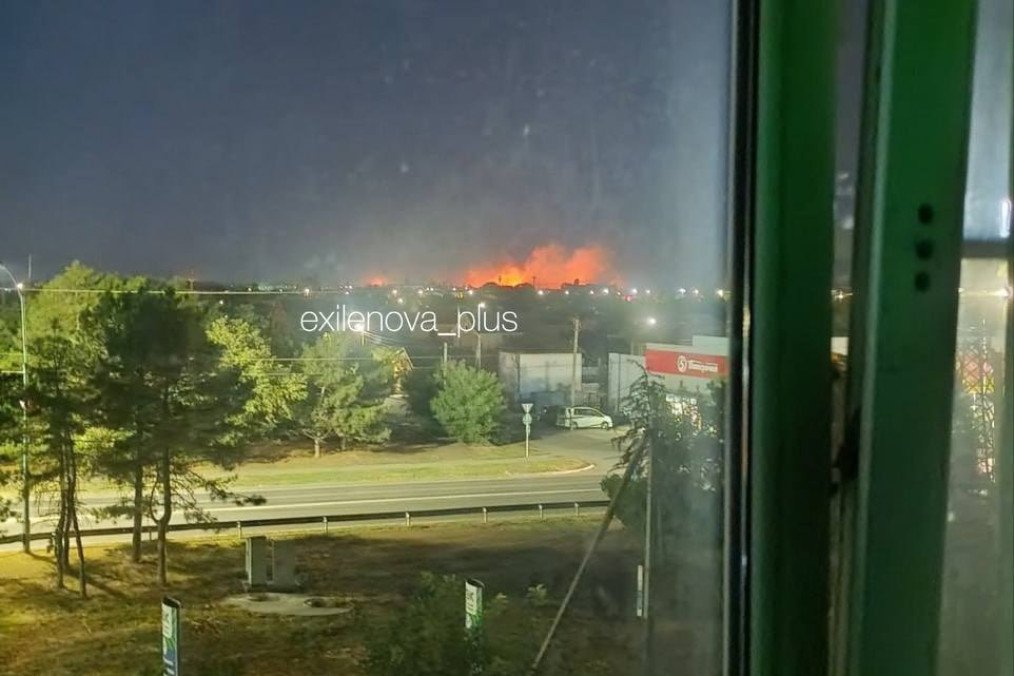 Fire at the Russian Yeysk military
airfield in Krasnodar Krai following Ukrainian drone strikes, August 30.
Photo: United24 Media
Fire at the Russian Yeysk military
airfield in Krasnodar Krai following Ukrainian drone strikes, August 30.
Photo: United24 Media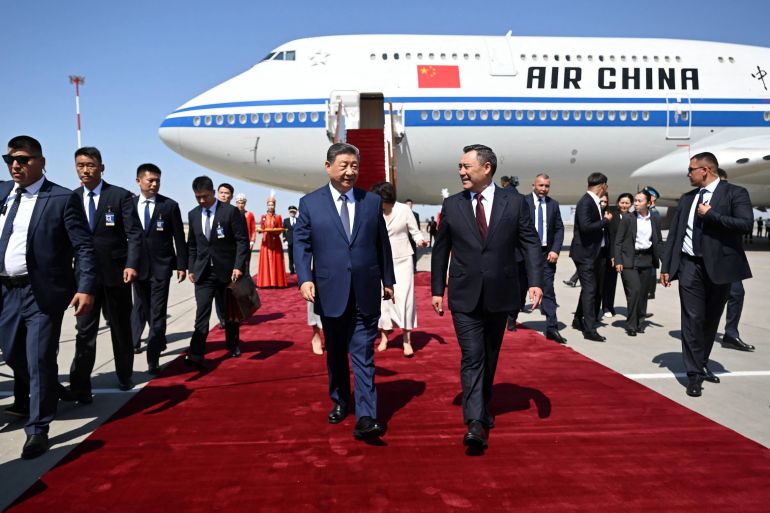 Kyrgyzstan’s President Japarov
welcomes Xi Jinping in Bishkek ahead of the SCO summit. Photo: AFP via
Al Jazeera
Kyrgyzstan’s President Japarov
welcomes Xi Jinping in Bishkek ahead of the SCO summit. Photo: AFP via
Al Jazeera An iconographic census of “pelicans
in her piety” across London — built and deployed to Cloudflare Workers
by ChatGPT Work from a single prompt. Image: Simon Willison
An iconographic census of “pelicans
in her piety” across London — built and deployed to Cloudflare Workers
by ChatGPT Work from a single prompt. Image: Simon Willison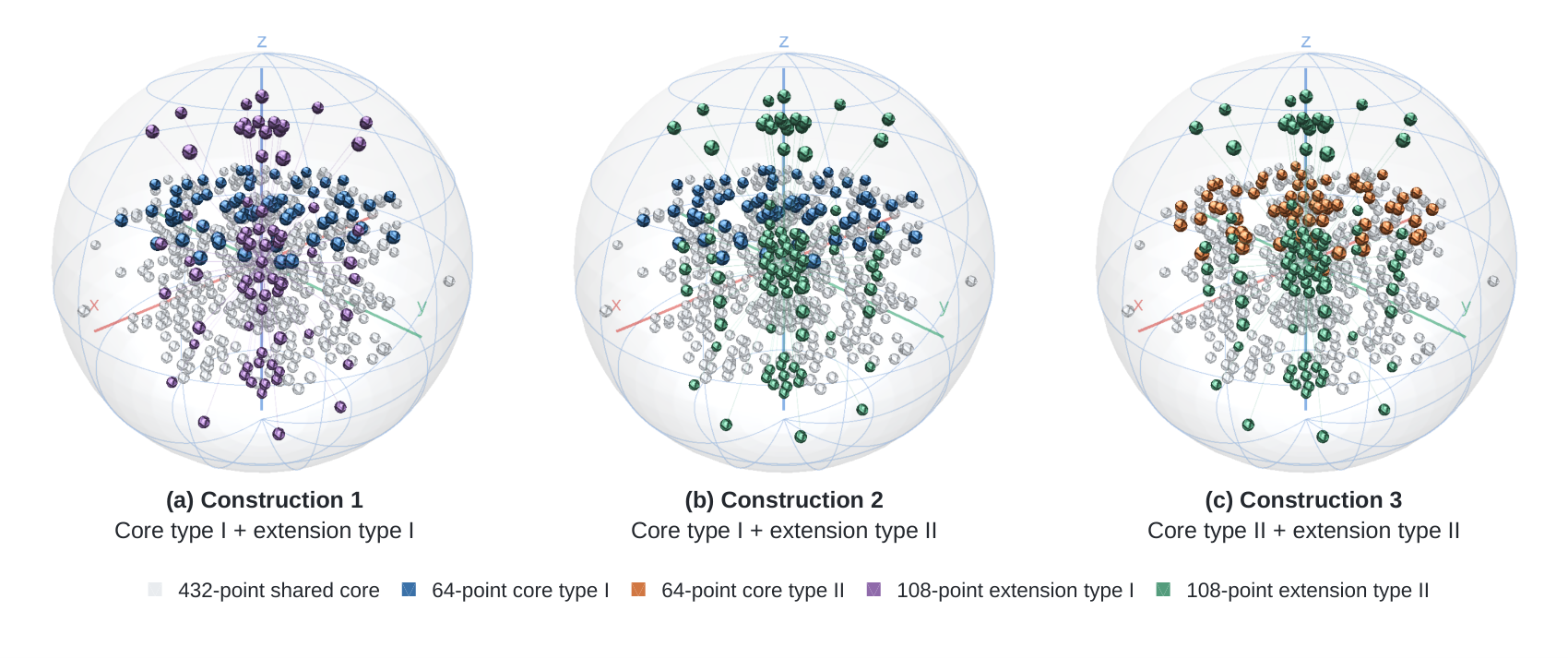 Three 604-point kissing
configurations in R¹¹ under the same orthogonal projection into 3D; all
three share a 432-point rational core (light gray). Image:
arXiv:2608.23691
Three 604-point kissing
configurations in R¹¹ under the same orthogonal projection into 3D; all
three share a 432-point rational core (light gray). Image:
arXiv:2608.23691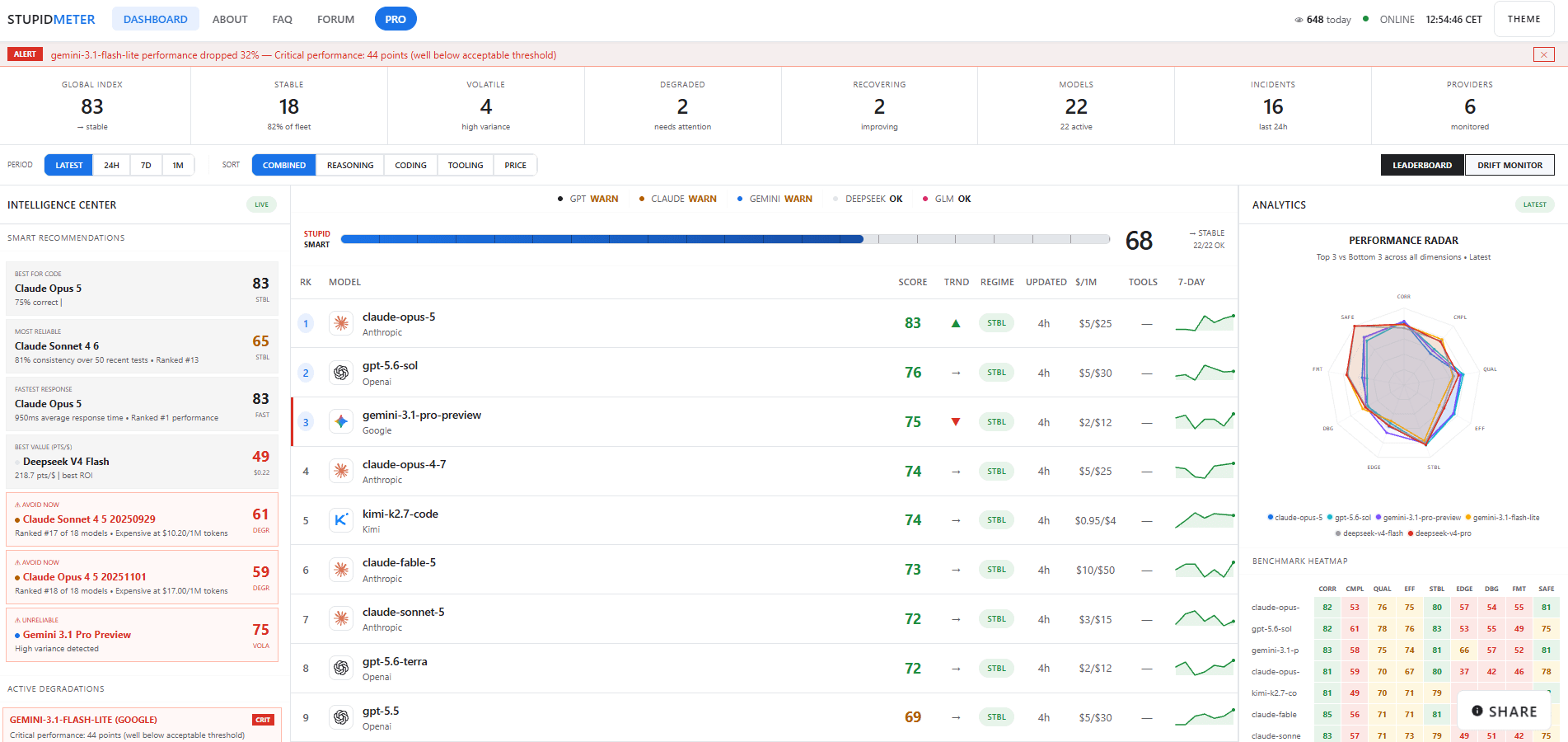 Within-day vs between-day score
variation across 31,352 hourly measurements. Image:
aistupidlevel.info
Within-day vs between-day score
variation across 31,352 hourly measurements. Image:
aistupidlevel.info