Linus
used AI to chase down an Intel Xe GPU memory bug — 24 patches, 18
boots
A commit to the Linux Xe GPU driver documents an unusual debugging
process: Linus worked with an AI assistant through 24 debug patches and
18 kernel boots to track down graphical corruption on a Battlemage G21
system. The root cause was a one-character fix — round_up()
should have been round_down() in
get_flat_ccs_offset(), causing the last 2KB of compression
control storage to be handed to the VRAM allocator as free memory; the
compression hardware then silently overwrote it, corrupting page tables.
Linus notes the AI “several times stated this was impossible and
unsolvable” before ultimately contributing to isolating the cause.
There
continue to be reasons for software to be slow
A direct response to yesterday’s “There’s No Reason for Software to
Be Slow.” The counterargument: LLMs reduce writing cost but
leave the real obstacles intact — companies without performance budgets
still won’t allocate any; management now expects faster feature
delivery (not performance work) from AI-assisted developers; and
shipping an optimization in production carries compounding maintenance
costs regardless of how fast you wrote it. “It is one thing to implement
an optimization; it is another thing to ship it in heavily-used
production software.” Performance work was deprioritized before LLMs;
increased velocity just means more features, not more perf.
JIT
compiling regex in 5μs with copy-and-patch stencils
Rather than calling into LLVM or generating C, this approach
maintains pre-compiled assembly “stencils” for each regex operation — at
runtime it copies the relevant stencil, fills in the specific value
(e.g. which character to match), and concatenates stencils into a
complete program loaded via mmap. The technique was
originally developed for CPython 3.13’s JIT. Result: 11–20× faster than
interpreted execution, near-parity with hand-written assembly, with
compilation overhead of ~5μs — cheap enough to JIT every query rather
than only hot paths.
30-year
gap closed: Komlós conjecture gets its first major advance
Nikhil Bansal and Haotian Jiang have improved the upper bound on
discrepancy in the Komlós conjecture from √log(N) to log(N)^¼ — the
first significant advance since 1998. The conjecture asks how evenly a
set of bounded vectors can be two-colored across all dimensions
simultaneously; the bound has long been conjectured to be a universal
constant regardless of N. Their key innovation was formalizing
“dependency” between attributes — measuring how perturbing one affects
discrepancy in others — allowing joint impacts to be reduced in ways
previously thought inseparable. At N = 10^81, log(N)^¼ ≈ 3, putting the
bound tantalizingly close to that conjectured constant.
MCP
2026 roadmap: agent identity, streaming tasks, HTTP unification
Anthropic published the next MCP roadmap with five focus areas: agent
messaging primitives (server-initiated webhooks and a maturing Tasks
extension for long-running streamed workflows); HTTP-native transport
(Streamable HTTP standardized even over stdio); agent identity (DPoP and
Workload Identity Federation replacing API keys for cloud agents);
progressive tool discovery (servers reveal tool catalogs gradually
rather than dumping everything upfront); and SDK ergonomics with
conformance testing. HN discussion surfaced real skepticism: most server
implementations will stay at basics, and the REST+OpenAPI crowd argues
MCP reimplements what HTTP already does. In the same vein, Munder
Difflin is an open-source multi-agent harness wrapping Claude Code and
10+ other CLI agents into persistent per-person “clones” that share
organizational knowledge and hand off tasks to each other, with all
processing local and E2E-encrypted inter-clone messages.
Why
your local LLM feels dumber than it is: configuration, not
capability
A detailed breakdown of why locally-run models often feel worse than
they should. The main culprits: KV-cache quantization (int4 causes
structured tool-call failures that int8 recovers from), attention kernel
divergence (FlashAttention 2 vs. Triton produce different logit
distributions that occasionally flip token selections), weight
quantization mismatches (NVIDIA NVFP4 measurably worse on structured
tasks), and sampler misconfiguration (too-low temperature → repetition
loops). Perceived degradation usually reflects the inference stack, not
the weights.
China
accelerates government switch from Windows to Linux, moving up
deadline
China is moving its deadline to retire Windows in government bodies
forward from February 2027 to late 2026, following similar mandates in
Europe. The leading candidates are domestic distributions KylinOS and
UnionTech OS (UOS, derived from Debian). The push is driven by digital
sovereignty and security concerns rather than a blanket ban on Windows
for private use. For a very different Linux desktop report, a KDE
developer’s field notes after nearly a year on KDE Linux: systemd-sysext
layering and nightly KDE builds are compelling for contributors, but the
lack of a package manager forces Distrobox for CLI tools, Flatpak
integration gaps leave Kontact “really broken,” and they ended up back
on Fedora KDE.
Wi-Fi 8
targets reliability and latency over raw speed
Wi-Fi 8 (IEEE 802.11bn, branded “Ultra High Reliability”) holds
maximum throughput roughly even with Wi-Fi 7 (~23 Gbit/s per band) and
redirects engineering effort toward: 25% throughput improvement at
various signal-to-noise ratios, 25% latency reduction at the 95th
percentile, and 25% packet loss reduction. New mechanisms include
distributed-tone resource units that spread transmissions across wider
bandwidth, interference mitigation pilots, per-spatial-stream unequal
modulation, and tighter multi-AP coordination with seamless roaming.
Relevant for dense home networks and homelabs with many concurrent
devices.
 Vladimir Putin gives an interview to
Vesti TV in Moscow on 22 August. Photo: Mikhail Metzel / Pool / AFP via
Getty Images
Vladimir Putin gives an interview to
Vesti TV in Moscow on 22 August. Photo: Mikhail Metzel / Pool / AFP via
Getty Images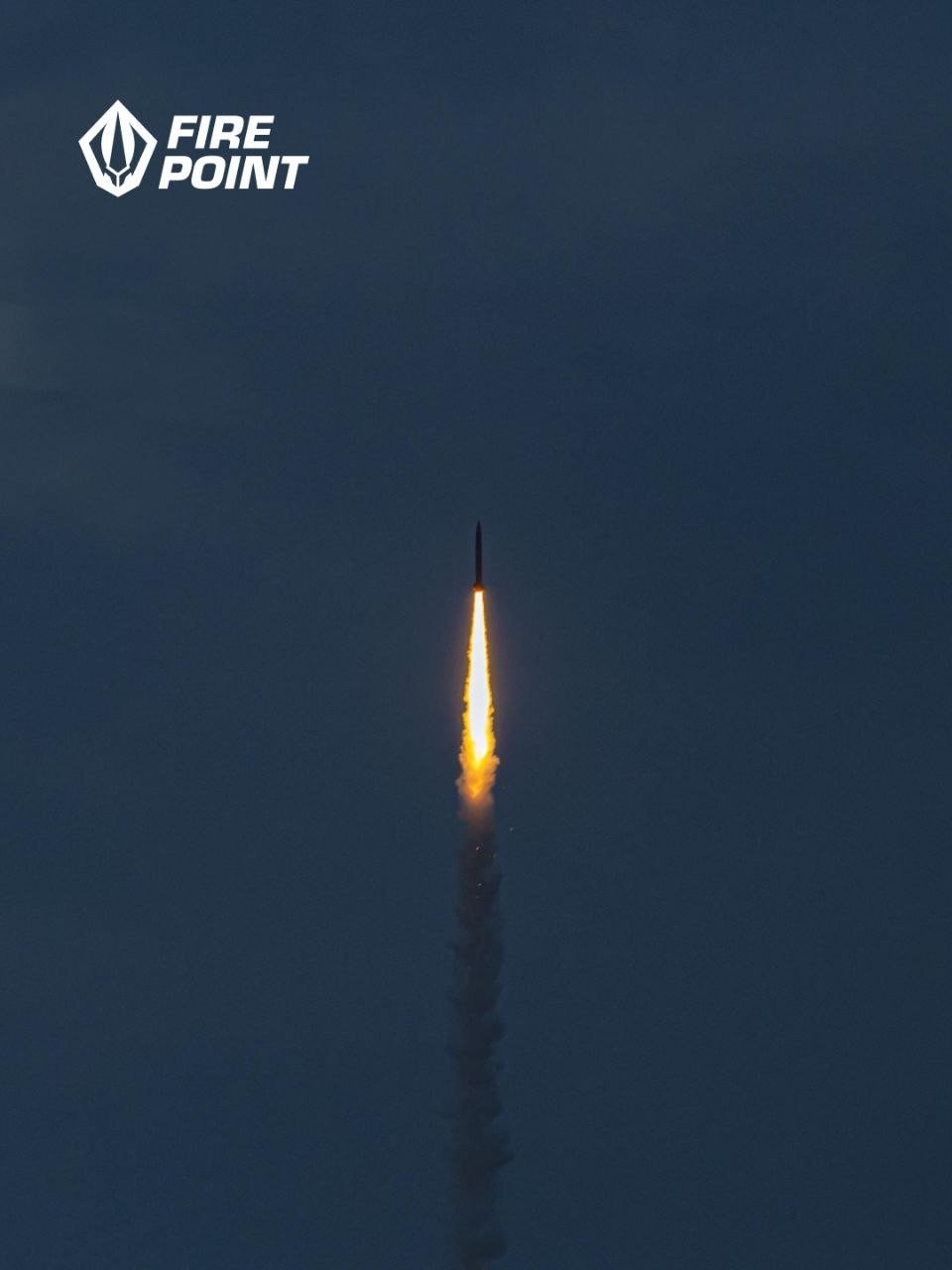 Ukraine’s Fire Point long-range
missile during recent tests — 26 Flamingos were fired alongside a record
8,477 drones in the past week. Photo: United24
Ukraine’s Fire Point long-range
missile during recent tests — 26 Flamingos were fired alongside a record
8,477 drones in the past week. Photo: United24 Photo: Office of the President of
Ukraine
Photo: Office of the President of
Ukraine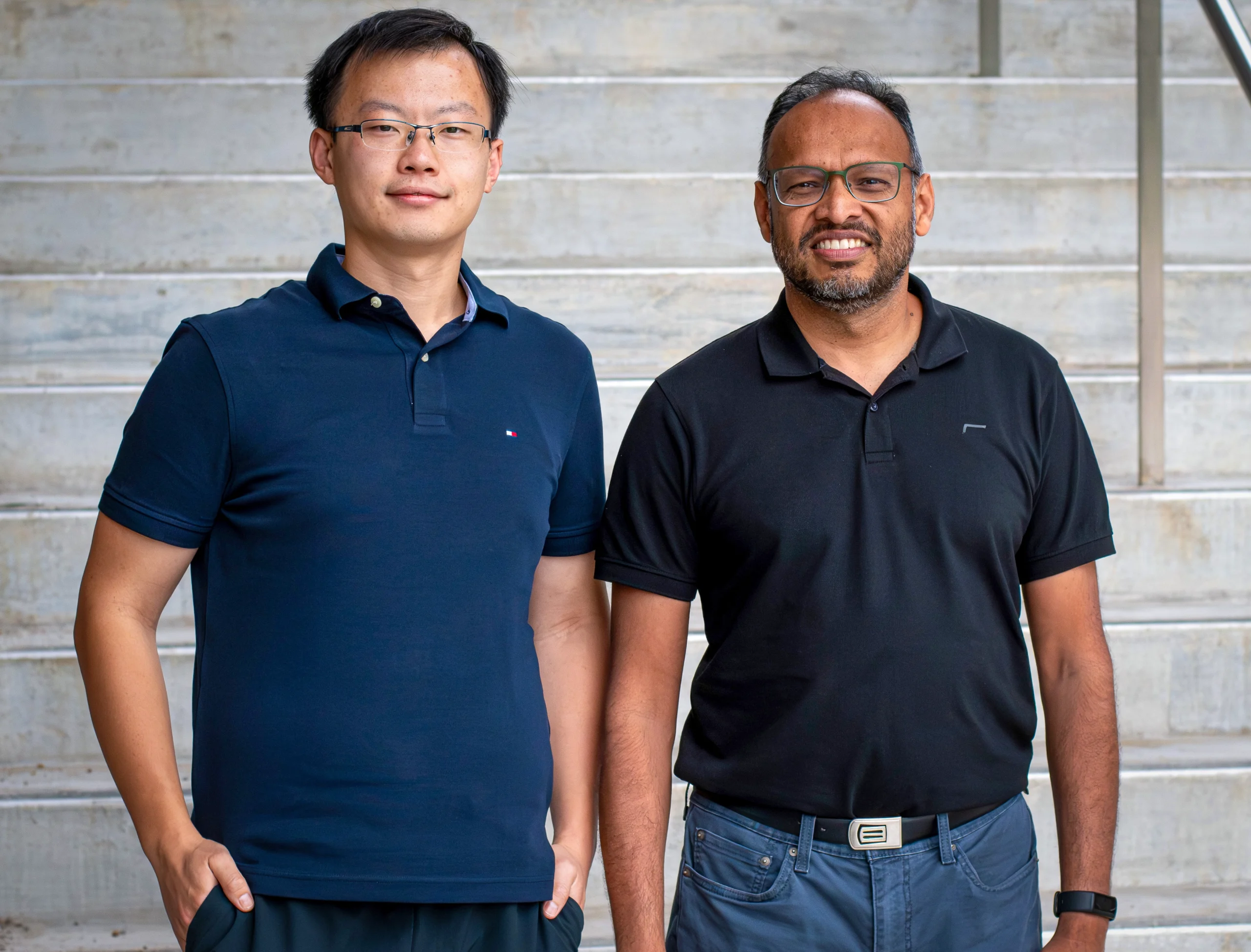 Haotian Jiang and Nikhil Bansal.
Photo: Emily France / University of Michigan
Haotian Jiang and Nikhil Bansal.
Photo: Emily France / University of Michigan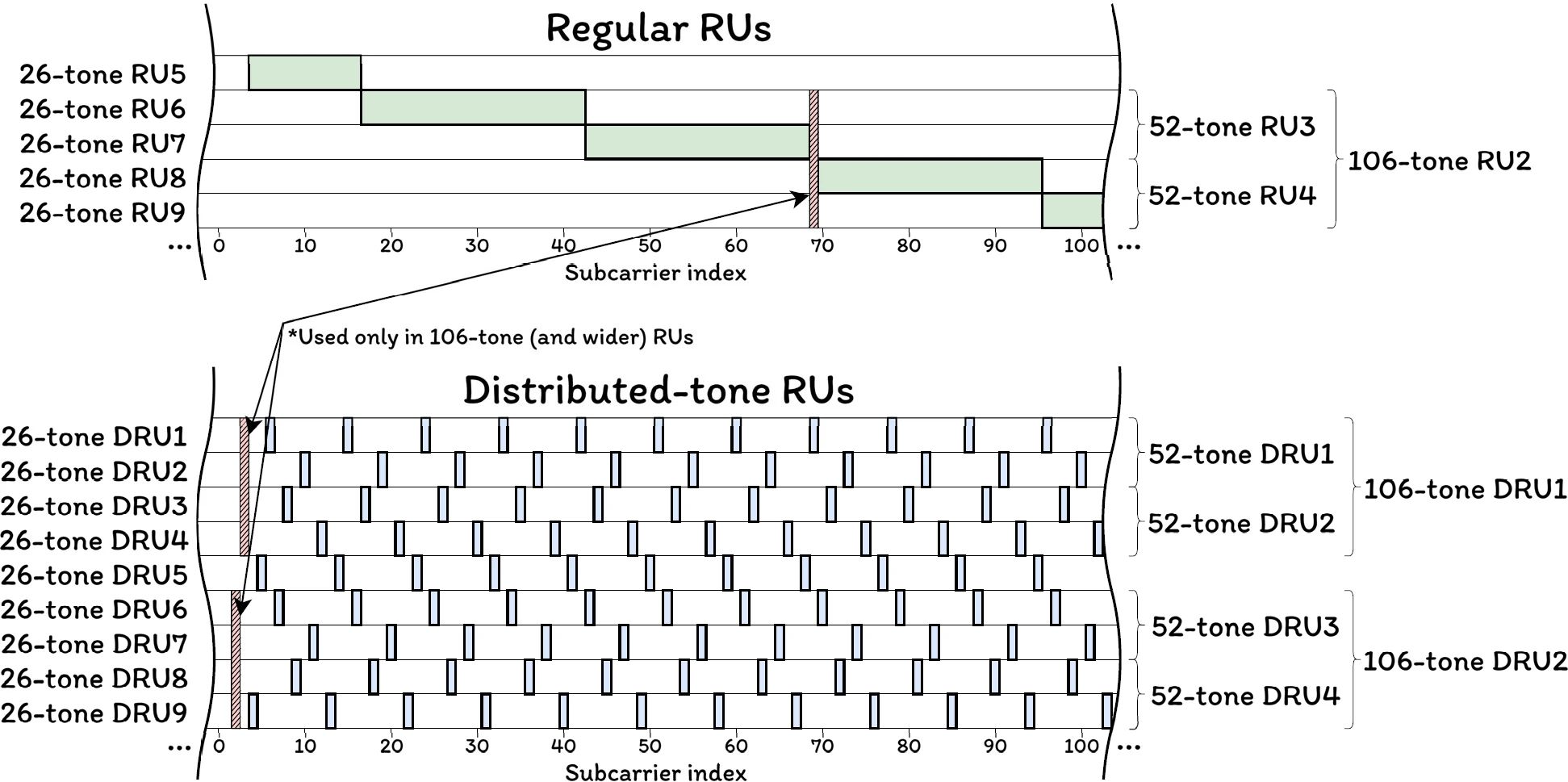 Distributed-tone resource units
(DRUs), Wi-Fi 8’s key mechanism for spreading transmissions across
bandwidth. Image: XDA Developers
Distributed-tone resource units
(DRUs), Wi-Fi 8’s key mechanism for spreading transmissions across
bandwidth. Image: XDA Developers