Ukraine
strikes Ozon warehouse and Samara refinery; fuel crisis reaches
Moscow
Ukrainian drones hit the Ozon logistics hub in Chapayevsk, Samara
Oblast overnight — the first-ever strike on Russia’s largest e-commerce
warehouse network (a 135,000 m² facility) — and simultaneously struck
the Novokuibyshevsk oil refinery nearby, setting off multiple fires. A
separate strike also hit the LUKOIL-Permnefteorgsintez refinery in Perm,
more than 1,500 km from the border. The cascading effect on Russian fuel
supply is now acute: queues have returned to Moscow, Yakutsk is
described as “critical” with only five functioning fuel stations, and
Gelendzhik is entirely out of fuel. In a significant admission, leaked
communications from Moscow’s deputy mayor’s office acknowledge Russia
cannot protect its oil refineries and describe internal plans to
decentralize refining into mini-refineries.
Ukraine
fields jet interceptor drone; Trump blocks Starlink for deep
strikes
Two new Ukrainian countermeasures to Russia’s evolving air campaign
emerged this week. The domestically-developed Alexa Spatium jet-powered
interceptor drone has entered service — a reusable, truck-deployable
system specifically designed to catch Russia’s faster Geran-4 and
Geran-5 jet drones, which piston-engine interceptors cannot keep up
with. Ukraine is also seeking US authorization for Starlink connectivity
over geographically defined segments of Russia, which would enable
precise drone strikes against Russia’s mobile ballistic missile
launchers up to 200 km inside Russia — bypassing the need for additional
Patriot interceptors amid the SAM shortage. But Trump has reportedly
rejected the push to provide Starlink-enabled targeting for long-range
strikes on Russian territory, limiting a key capability. Both Ukrainian
moves are designed to reset the air-defense cost calculus without
depending on Western weapons shipments.
North
Korea deploys 400-strong drone unit to Kursk; Putin may request 50,000
more troops
Ukraine’s GUR deputy head Skibitskyi confirmed that a 400-person
North Korean drone operator unit is embedded among the 8,500 NK troops
currently in Kursk Oblast, where they are gaining live combat experience
with FPV and reconnaissance drones alongside Russian forces. Roughly
25,000 North Korean soldiers have rotated through Russia in total; Putin
is expected to ask Kim Jong Un for up to 50,000 additional troops in
September. North Korea has also supplied at least 150 KN-23/24 ballistic
missiles with 120 more promised. ISW notes the drone unit may be
training alongside Russia’s elite Rubikon drone center, accelerating
NK’s acquisition of battlefield drone tactics. (Also covered in World)
Frontline:
Russia broadly stalled, shifting tactics under Ukrainian pressure
Russia made no confirmed advances across the major axes on August
20–21. At Pokrovsk, a Ukrainian battalion commander reports Russian
forces have scaled back armored assault attempts after being repelled
10–20 km behind the line; infiltration probes are now the primary mode.
At Orikhiv in Zaporizhzhia, Russia’s months-long effort to flank the
town has failed and Russian command reportedly abandoned the pincer
approach, now apparently massing for a frontal assault. Marginal Russian
infiltrations continued in western Kostyantynivka and around Mykolaivka
east of Slovyansk, but ISW assesses no significant tactical gains.
Overnight on August 21–22, Russia launched 217 drones plus ballistic
missiles and Kh-31P/Kh-59 cruise missiles hitting 50+ locations across
Ukraine, killing at least six and striking Kyiv’s Darnytsia railway
district.
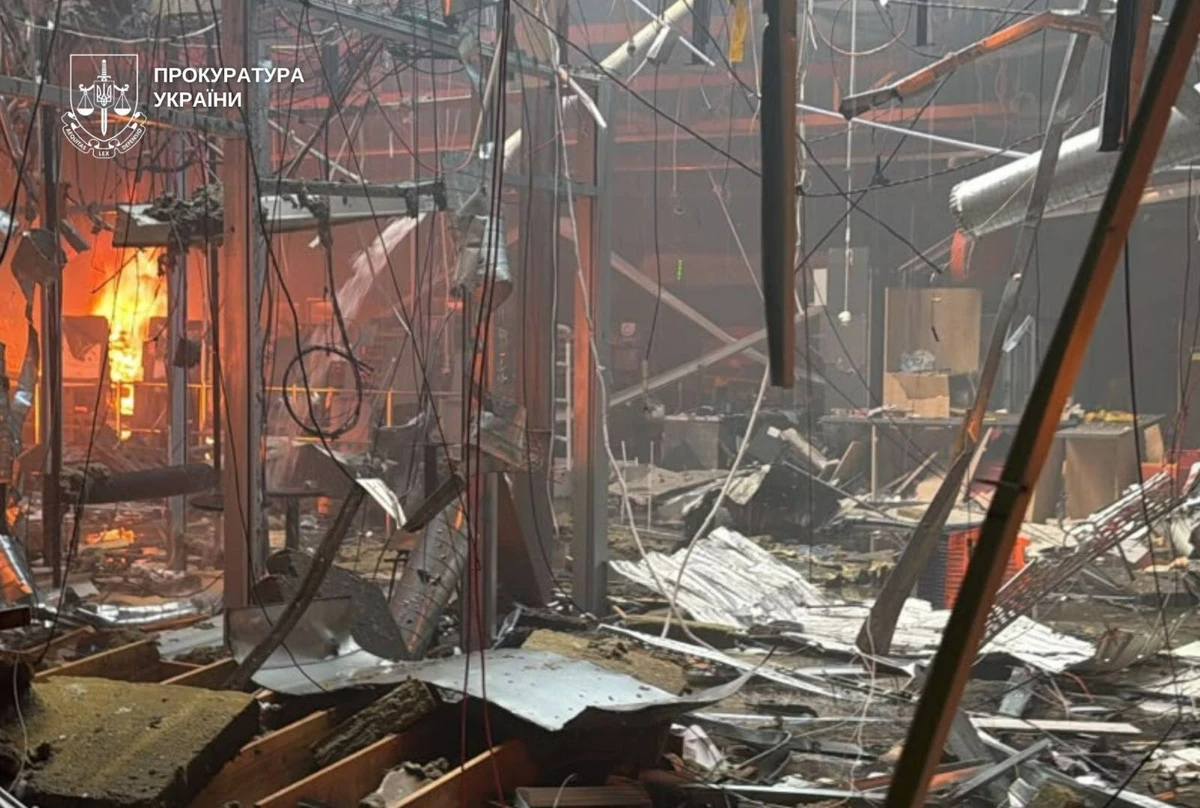 Rescue workers at the scene of the
Kryvyi Rih shopping centre attack, August 21, 2026. Photo: Ukrainska
Pravda
Rescue workers at the scene of the
Kryvyi Rih shopping centre attack, August 21, 2026. Photo: Ukrainska
Pravda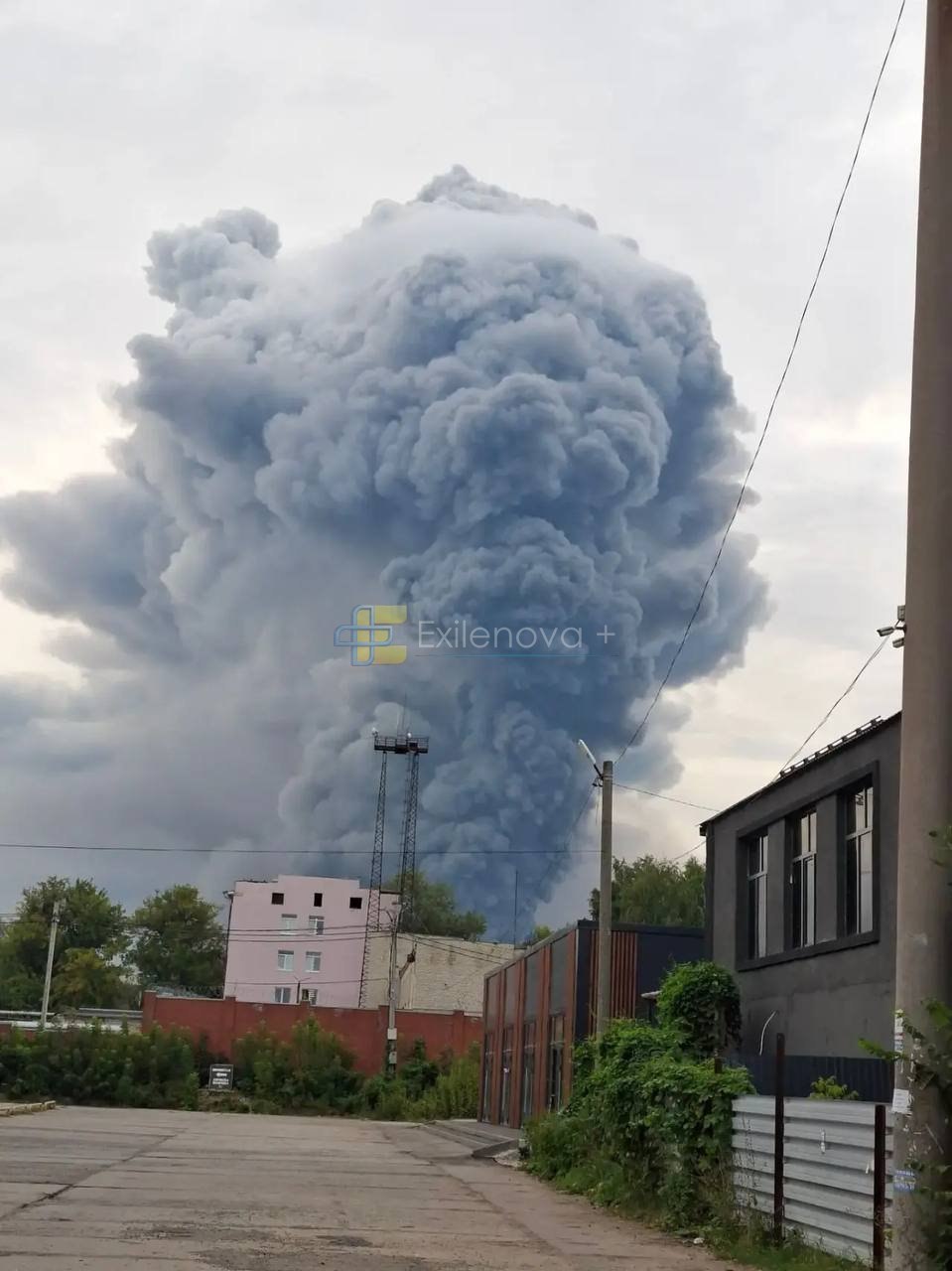 Fire at the Ozon logistics complex
in Chapayevsk, Samara Oblast, after the Ukrainian drone strike, August
22, 2026. Photo: Militarnyi
Fire at the Ozon logistics complex
in Chapayevsk, Samara Oblast, after the Ukrainian drone strike, August
22, 2026. Photo: Militarnyi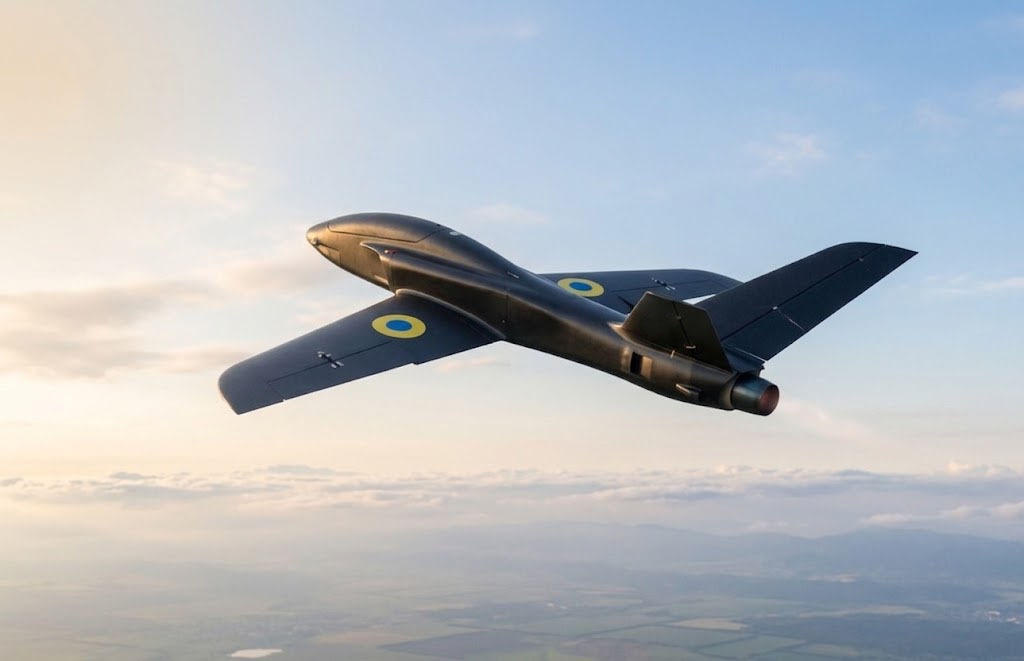 Ukraine’s Alexa Spatium jet-powered
interceptor on its mobile catapult launcher — the country’s first
domestically-developed jet interceptor, designed to catch Russia’s
Geran-4/5 drones. Photo: Militarnyi
Ukraine’s Alexa Spatium jet-powered
interceptor on its mobile catapult launcher — the country’s first
domestically-developed jet interceptor, designed to catch Russia’s
Geran-4/5 drones. Photo: Militarnyi Log output showing hundreds of
thousands of ENUM DNS queries encoding real phone numbers (randomised in
the screenshot) — the passive wiretap from a €5 domain. Image:
lina.sh
Log output showing hundreds of
thousands of ENUM DNS queries encoding real phone numbers (randomised in
the screenshot) — the passive wiretap from a €5 domain. Image:
lina.sh Memory usage benchmark showing Rust
Glancer staying below 100 MB, against rust-analyzer’s much higher
footprint. Image: rust-glancer.github.io
Memory usage benchmark showing Rust
Glancer staying below 100 MB, against rust-analyzer’s much higher
footprint. Image: rust-glancer.github.io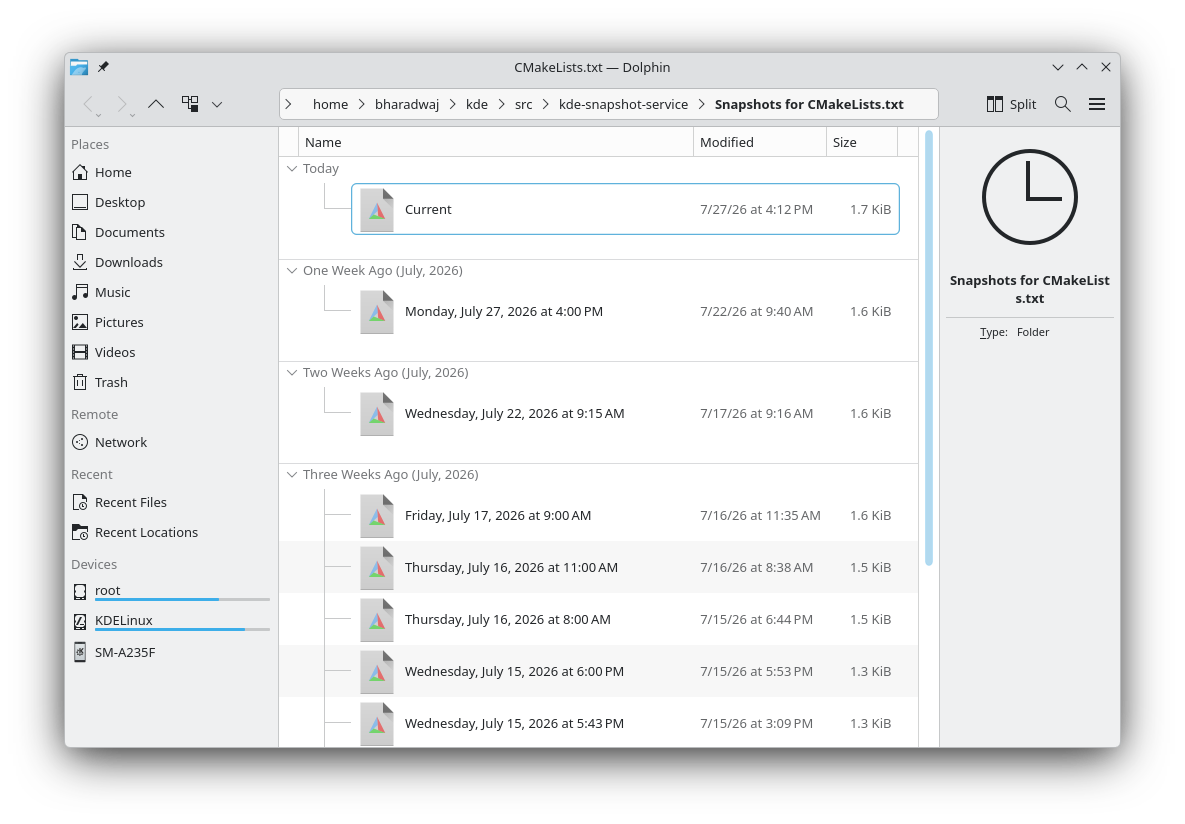 The KDE filesnapshots KIO worker
showing the version history of a file — native Btrfs snapshot browsing
in the file manager. Image: bharadwajraju.com
The KDE filesnapshots KIO worker
showing the version history of a file — native Btrfs snapshot browsing
in the file manager. Image: bharadwajraju.com