Josse-posten

Trump trims the US–Korea alliance on the strength of a friendship, Iran declares victory as its truce with Washington lapses, and Ukraine answers the weekend with the largest drone assault of the war.

Trump cuts South Korea joint drills, posts photo with Kim Jong Un
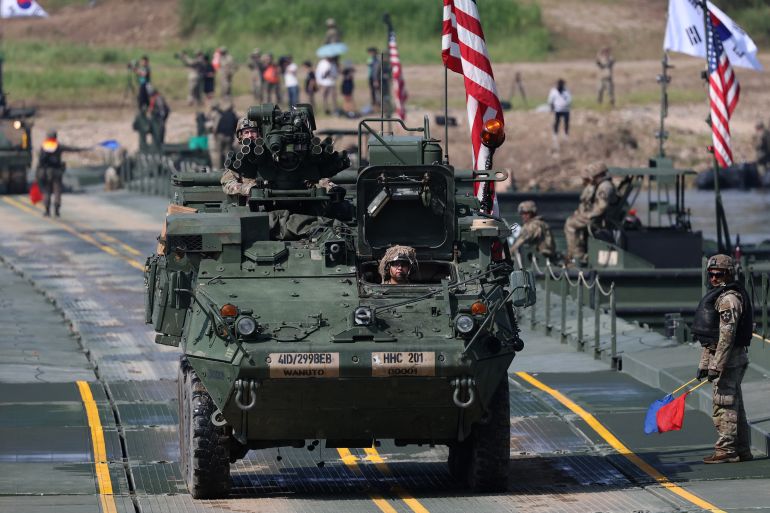
US Army soldiers take part in the Ulchi Freedom Shield drills in South Korea, August 2025. Photo: Getty/Al Jazeera

President Trump ordered a substantial reduction in US–South Korea joint military exercises, citing his ‘very good relationship’ with Kim Jong Un and penalizing Seoul for its non-participation in the US–Iran conflict. He also posted a photo with Kim, saying they ‘get along great.’ The timing is striking: US military officials had just warned that North Korea’s battlefield experience from its Ukraine deployments is growing rapidly.

Iran declares victory as the US–Iran MoU expires; Tehran warns of offensive posture

Iran’s Parliament speaker and chief negotiator Mohammad Bagher Ghalibaf declared both military and political victory against the US and Israel, just as the US–Iran memorandum of understanding expired. Tehran is warning of a potential shift to an offensive military posture; Oman-mediated talks on Hormuz continue, but the diplomatic window appears to be narrowing as Iran projects confidence rather than conciliation. Mojtaba Khamenei has meanwhile appointed hardliners to seven top military and security positions, institutionalizing the offensive line (see the sitrep in World).

Ukraine launches one of its largest drone assaults of the war — Nvidia chip found in Russian missile

Ukraine sent hundreds of drones across Russia in one of the largest aerial attacks since the war began, killing at least six people and setting yet another Wildberries distribution warehouse ablaze near Moscow. The Times and Ukrainian officials have now named the British weapon behind the recent refinery strikes: the BAE Systems Nyan jet drone. Separately, Ukraine’s military intelligence reported finding an Nvidia AI chip inside a newly recovered Russian missile — reviving sanctions-evasion concerns about Western technology in Russian weapons. (Full campaign coverage in Ukraine.)

DRC Ebola outbreak becomes deadliest in country’s history: 2,325 killed

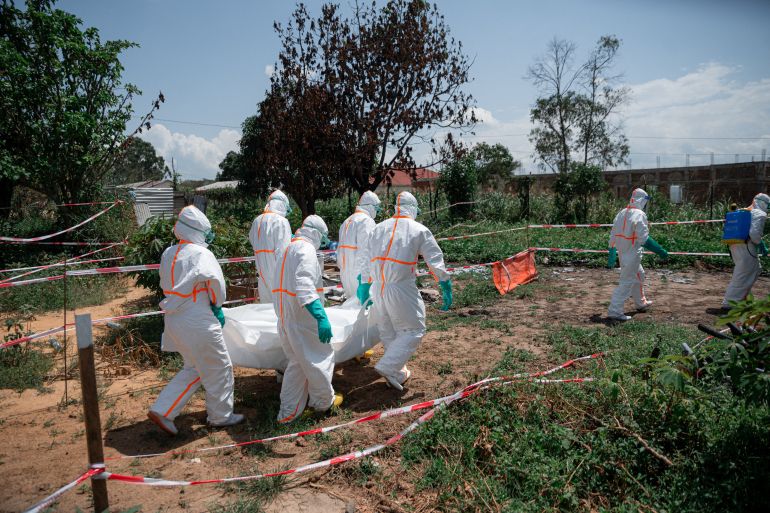
Red Cross volunteers in protective gear carry the body of an Ebola victim in DRC, June 2026. Photo: AFP/Al Jazeera

The Ebola outbreak in the Democratic Republic of Congo has surpassed the 2018–20 toll to become the deadliest in the country’s recorded history, with at least 2,325 confirmed killed. Caused by the rarer Bundibugyo strain, it is also the fastest-growing outbreak on record. A top UN official warned that ‘speed, scale, and solidarity’ were needed ‘before this virus gets even further ahead of us.’

Indicator Value Change
S&P 500 (f) 7,819 +0.18%
Dow 30 (f) 53,767 -0.07%
Nasdaq (f) 30,320 +0.59%
Russell 2000 (f) 3,074 -0.03%
VIX 14.95 +4.91%
Gold 4,466 +0.65%
BTC $63,467 +0.76%
EUR/USD 1.1607 +0.28%
USD/NOK 9.41 -0.31%
  • VIX +4.91%, Gold +0.65% — mild risk-off tone as Ukraine launches one of its largest drone assaults of the war and Iran’s MoU with the US expires (see World)
  • Strategic oil stockpiles at a 40-year low leave little buffer for further shocks (see World)

World

Kushner meets Hamas in Cairo, then heads to Netanyahu on Gaza ceasefire framework

Jared Kushner held a rare direct meeting with Hamas political chief Khalil Al-Hayya in Egypt on Sunday before heading to Jerusalem for talks with Prime Minister Netanyahu. Hamas subsequently called on Trump’s ‘Board of Peace’ to compel Israel to accept a ceasefire plan. It is the most intensive US engagement yet with Hamas leadership since the war began, with Kushner framing it as a path to a broader Gaza peace framework.

Ben Gvir advocates killing 30–40 Gazans nightly; settler expansion accelerates in West Bank

While the ceasefire diplomacy plays out, National Security Minister Itamar Ben Gvir — speaking to a former hostage — called for Israel to kill ‘30 to 40’ Palestinians in Gaza each night. The same day, Israeli settlers pitched tents for a new illegal outpost in the occupied West Bank, with UN Special Rapporteur Francesca Albanese warning that Israel is ‘outsourcing coercion to settlers’ as a form of ethnic cleansing. Pope Francis separately called for an end to West Bank violence against Palestinians.

Weekly sitrep: Iran hardliners consolidate, Russia targets Odesa grain, China tests Taiwan waters

Key developments August 8–15: Iran’s Supreme Leader Mojtaba Khamenei appointed hardliners to seven top military and security positions, institutionalizing an offensive foreign policy posture. Russia launched mass drone and missile waves against Odesa specifically to blockade Ukrainian grain exports as air defense interceptor stocks run low. A Chinese-Indonesian joint naval exercise took place east of Taiwan, escalating China’s normalization campaign over contested waters. And Putin visited the disputed Kuril Islands for the first time, triggering Japanese protests.

Global strategic oil stockpiles hit 40-year low amid the Iran war

Strategic petroleum reserves worldwide have fallen to their lowest level in four decades as the US–Iran conflict disrupts supply chains and energy markets. The depletion sharply reduces the buffer available to absorb further shocks — whether from conflict escalation, production cuts, or extreme weather — and coincides with UK consumer energy bills already spiking from the war’s fallout. It also explains Washington’s anxiety about Ukraine’s naval campaign against Russian oil routes (see Ukraine).

Europe’s wildfires: Belgian nature reserve consumed in century-worst blaze; two die on Greek island

Belgium is battling its largest modern wildfire, in the High Fens nature reserve near Liège, with multinational forces and local farmers fighting flames that have doubled in three days across terrain too boggy for heavy vehicles. On the Greek island of Salamis, twin fires killed an elderly couple and required about 200 firefighters — one blaze is now under control. The fires extend a summer of extreme wildfire conditions across Europe.

Brazil: Lula, 80, launches fourth-term bid against jailed Bolsonaro’s son

President Luiz Inácio Lula da Silva formally launched his campaign for a historic fourth presidential term, vowing to block the far-right from power ‘as long as he lived’ and pledging to prioritize education, healthcare, and fighting organized crime. His opponent: Flávio Bolsonaro, son of imprisoned former President Jair Bolsonaro, who launched his rival campaign at a rally on Copacabana beach, promising to ‘fight this system.’

Zambia election: incumbent on course to win but opposition alleges armed raid and violence

Supporters of President Hakainde Hichilema hold his portrait at a campaign rally in Lusaka, August 2026. Photo: AFP/Al Jazeera

Zambian President Hakainde Hichilema appeared on course for an outright re-election win as early results emerged, but the opposition alleged an armed raid on their operations during the vote. International observers cited violence and a campaign field tilted toward the incumbent throughout the election period.

Professional heist strips Sicilian museum of four Renaissance masterworks — no alarms triggered

A journalist browses the Messina museum website showing the stolen Antonello da Messina artworks. Photo: AP/Al Jazeera

Four paintings by the Early Renaissance master Antonello da Messina were stolen overnight from the MuMe museum in Messina, Sicily, during the Ferragosto public holiday — with no security alarms triggered. The clean execution points to professional art thieves. The heist comes days after Italian police recovered three paintings stolen from a museum near Parma, underscoring acute vulnerabilities in Italian museum security.

Also today

Disasters
A Polish tourist bus veered off a Hungarian motorway early Sunday, killing 12 and seriously injuring dozens — BBC
Five teenagers killed and four critically injured in a wrong-way head-on collision on the M9 motorway in County Kildare, Ireland — The Guardian
Zimbabwe ferry death toll on Lake Kariba rises to 84 as search operations continue — Al Jazeera
At least seven killed in a ‘stampede-like’ crush at a Hindu temple in Bihar, India — Al Jazeera
Economy
Japan’s GDP expanded just 0.3% in Q2, well below forecasts, as consumer spending and capital investment sagged — Al Jazeera
Venezuela formally renews its demand for the return of sovereign gold reserves held in Bank of England vaults — Financial Post · Reddit
United States
Republican Senator Bill Cassidy — a physician who voted to confirm RFK Jr. as Health Secretary — calls Trump’s MMR vaccine claims ‘crazy’ and ‘stupid’ — The Guardian

Ukraine

Wildberries campaign reaches 7 of 10 largest hubs — two more hit overnight

Fire at a Wildberries warehouse following a Ukrainian strike. Ukraine has now hit 7 of the company’s 10 largest logistics hubs. Photo: Kyiv Independent

Ukraine struck two more Wildberries facilities on the night of August 15–16: the 250,000 m² Koledino hub in Podolsk — Russia’s single largest logistics center — and a second complex in Domodedovo, both roughly 420–430 km from the border. The Ukrainian MoD says 7 of Wildberries’ 10 largest centers have now been struck and halted; Reuters put total warehouse area destroyed at 1.18 million m² as of early August, and the figure has risen since. ISW notes Russia’s air defenses remain unable to protect this scale of rear infrastructure simultaneously, and Ukrainian officials emphasize the company supplies drone components and navigation equipment to the military.

Ukraine destroys Crimean Bastion-M launcher, strikes solid-rocket-fuel plant

Ukrainian Navy footage of the strike on a Russian Bastion-M coastal missile system in occupied Crimea, August 16. Photo: Kyiv Independent
The Ukrainian Navy destroyed a Bastion-M coastal missile system southwest of Rezervne in occupied Crimea — a launcher used to fire Onyx and Zirkon anti-ship cruise missiles against Ukraine. Ukrainian forces also struck the Kamensky Plant in Rostov Oblast, which produces solid rocket fuel for Russian MLRS ammunition, missiles, and aviation weapons, causing a confirmed fire. Ukraine additionally confirmed that its August 10–11 strikes damaged a central gas fractionation unit at the Tobolsk petrochemical facility and three primary processing units at the Orsk refinery — deep strikes now confirmed to be flown by the British BAE Systems Nyan jet drone.

Russia intensifies glide bomb campaign against the Slovyansk–Kramatorsk corridor

Russian forces struck Slovyansk continuously from the evening of August 15 through late August 16 with FAB-250 glide bombs, FPV drones, and Molniya-2 strike drones, hitting residential areas. Russian milbloggers report a crossing of the Kazennyi Torets River southwest of Druzhkivka that would allow flanking the city from the west; the Russian MoD separately claimed (disputed) seizure of Pershomarivka north of Kostyantynivka. ISW assesses this as an expanding battlefield air interdiction campaign aimed at degrading Ukrainian logistics in the Fortress Belt ahead of a future push on the Slovyansk–Kramatorsk urban agglomeration. No significant ground advances were confirmed on any frontline sector on August 15–16.

Russia deploys 10 new jet-drone launch bases near Ukrainian border

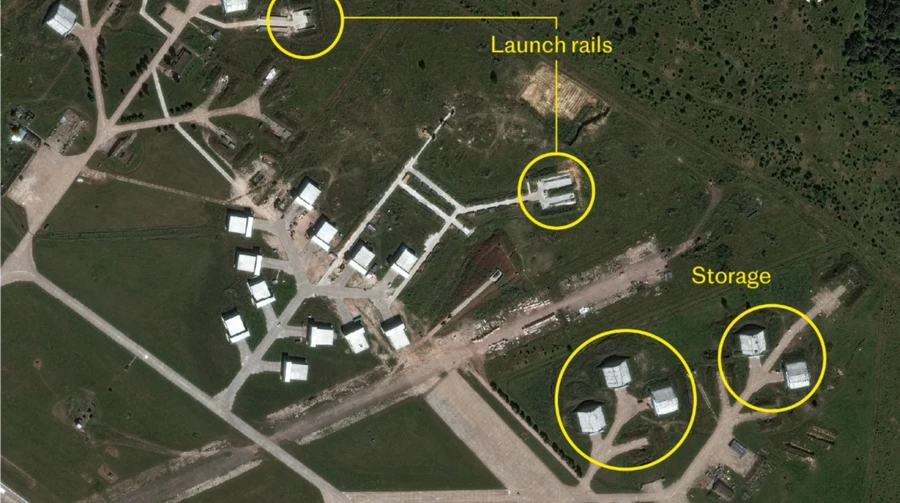
Satellite image of Kursk-Vostochny (Khalino) air base, one of Russia’s new jet-drone launch sites. Photo: The Telegraph

The Telegraph reports that satellite imagery and leaked documents reveal a network of 10 new Russian launch sites built near Ukraine’s border specifically to deploy large numbers of high-speed jet drones — weapons capable of reaching Ukraine and potentially threatening European countries beyond. The build-out comes alongside Russia’s confirmed use of jet-powered drones against Odesa’s port infrastructure, and expands the threat well beyond the Shahed-type platforms that have dominated prior campaigns.

EU prepares its largest-ever sanctions package; Kremlin bank economist fired over attrition critique

EU foreign policy chief Kaja Kallas announced Brussels is finalizing its most far-reaching Russia sanctions package yet, slated for autumn — it could increase sanctioned individuals and entities by one-third. The announcement lands as Russia’s economy shows mounting strain: Andrei Klepach, chief economist of the Kremlin-linked state bank VEB RF, was dismissed after media attention was drawn to a speech in which he predicted Russia cannot win a war of attrition. In the US, the Graham sanctions bill advances, but contains a contested provision granting broad new tariff powers to the executive — raising concerns it could be used against allies.

Also today

  • Vice President Vance personally asked Zelensky to spare a key Black Sea oil shipping route as Ukraine’s navy escalates strikes — Washington’s reserve anxiety meeting Kyiv’s naval campaign — Kyiv Post · Reddit
  • Thousands marched in Kyiv demanding Zelensky be more responsive to public will — emerging internal pressure on wartime leadership — Kyiv Post · Reddit
  • Polish FM Sikorski proposes a permanent ‘European Legion’ built around Ukrainian combat veterans — the most concrete step yet toward a supplementary European defense architecture — Kyiv Post · Reddit
  • Two children physically attacked in Poland for speaking Ukrainian, amid rising anti-refugee tensions in Ukraine’s leading European backer — Ukrainska Pravda · Reddit
  • Shell and Philips hit by ransomware attack attributed to Russian actors — hybrid warfare against European corporate infrastructure — DutchNews.nl · Reddit

Investigations

The FSB is recruiting teenagers with fake scavenger hunt games

Ukraine’s SBU security service warns teenagers against FSB recruitment via social media gamification.
Nearly a quarter of Ukraine’s 800 terrorism and sabotage suspects in 2025 were under 18 — an almost unprecedented figure. A detailed analysis by the designer of Zombies, Run! examines how the FSB recruits teenagers via Telegram and Discord with fake ‘quest’ games: tasks escalate from graffiti and anti-government posters to photographing air defense systems, planting GPS trackers, arson, and attempted assassinations. Teenagers in Kharkiv were unwittingly feeding targeting data for Russian airstrikes. The piece tracks similar patterns across Europe and raises disturbing questions about where gamified intelligence recruitment leads next.

The FSB is building a domestic empire under cover of drone defense

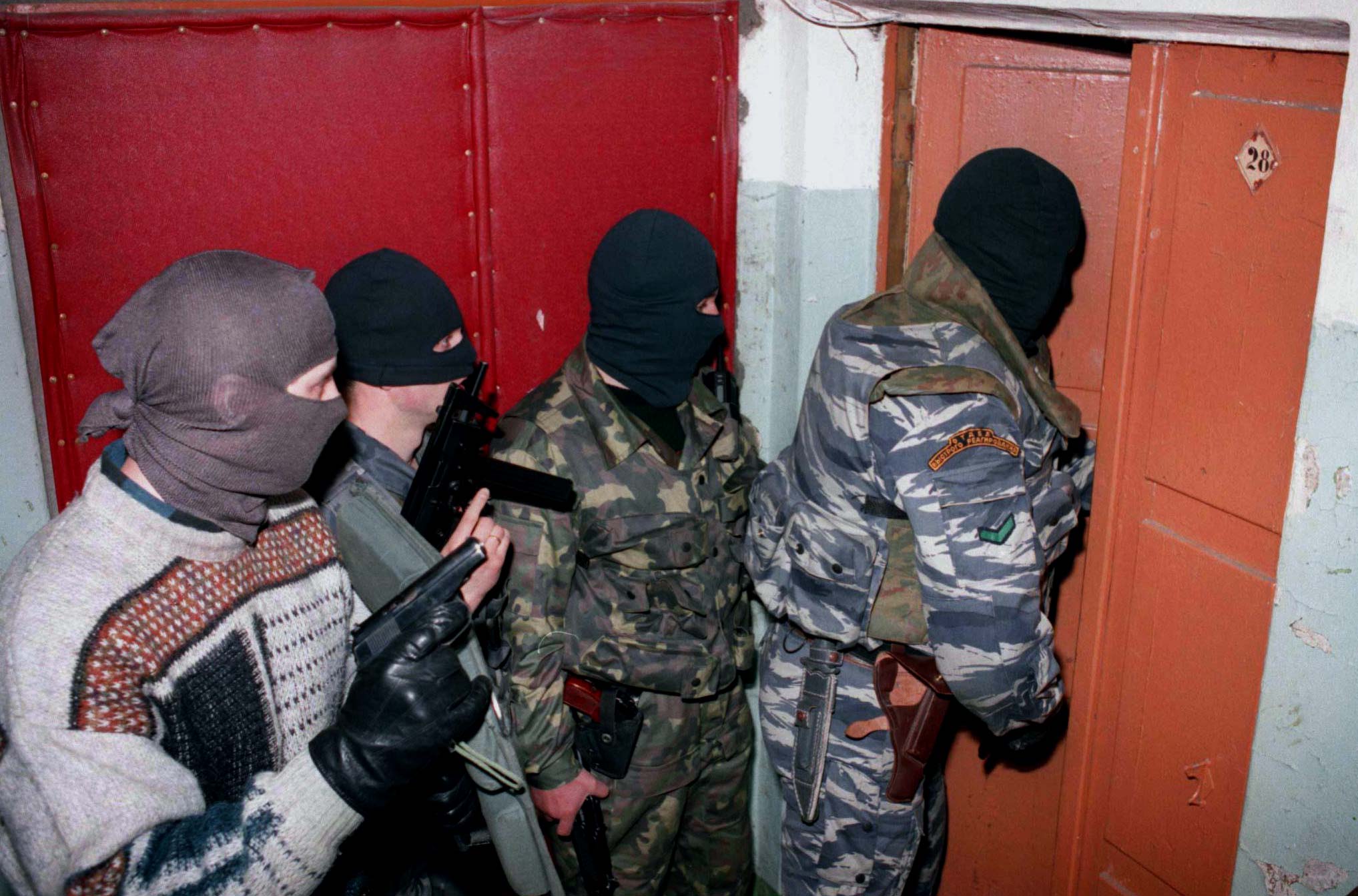
Masked officers from a Russian anti-crime unit storming an apartment. Photo: Reuters archive/CEPA

CEPA reports that the FSB is exploiting Ukraine’s drone campaign against Russian territory to expand its institutional footprint far beyond its counterterrorism mandate. The agency now staffs anti-drone ‘mobile fire groups’ (nicknamed tachankas after Civil War-era horse-drawn machine gun carriages) across Russia, runs the ‘Donbas Dome’ air defense system in occupied Donetsk, and FSB director Bortnikov has publicly called for comprehensive FSB oversight of all drone defense. Gazprom has signed defense contracts under FSB supervision. CEPA frames this as a deliberate power grab within Russia’s increasingly fractured security state.

Putin’s real European strategy is subversion, not invasion — and Moldova is first in line

Putin observing military drills aboard a missile cruiser. Photo: Gavriil Grigorov/Reuters

Two pieces flesh out the NYT reporting covered Saturday on Putin’s directive to ‘destroy NATO and the EU from within.’ Former BBC foreign correspondent Paul Wood argues invasion fears are a strategic distraction — Putin’s actual playbook is hybrid subversion: corrupting politics, controlling narratives, exploiting economic dependencies, and using information warfare to fracture Western societies from within, with the FSB’s domestic surveillance apparatus feeding the foreign ops machine. Kyiv Post reporting names Moldova as the immediate priority target: Western intelligence warns it could fall under Kremlin control after Ukraine, given Russian troops already in Transnistria, energy dependencies, and its position as a launchpad for wider aggression.

Germany overhauls intelligence against Russia as the AfD moves toward Moscow

Germany is significantly expanding its intelligence services’ tools and mandate to counter Russian hybrid threats — while the AfD surges in Saxony-Anhalt, potentially putting the first far-right regional premier in German postwar history in power. The AfD’s pro-Moscow sympathies create a direct fault line between German security policy and its domestic political trajectory, raising questions about intelligence sharing and counterintelligence when a Kremlin-friendly party holds regional power.

Russia’s shadow fleet is running a maritime insurgency in the Baltic

Swedish Coast Guard seizing the suspected shadow fleet vessel Jin Hui, May 3, 2026. Photo: Kustbevakningen
A Small Wars Journal analysis frames Russia’s Baltic shadow fleet not as mere sanctions evasion but as a deliberate maritime insurgency — drawing explicit parallels to China’s maritime militia in the South China Sea. The fleet is being used for covert cable sabotage, intelligence collection, and as advance scouts for conventional naval forces: the Eagle S tanker dragged its anchor over the Estlink-2 cable on Christmas Day 2024, one of about a dozen similar incidents since fall 2024. The authors argue Russia has adapted China’s grey-zone playbook to test NATO cohesion and shape conditions for a potential Baltic States invasion.

North Korea’s AI-powered corporate infiltration is scaling across the Fortune 500

CNN’s investigation reveals thousands of North Korean IT workers using AI-generated identities, live face-masking software during video calls, and American facilitators running ‘laptop farms’ to embed operatives inside US corporations — including across the Fortune 500. One American, Christina Marie Chapman, was sentenced to 8.5 years for helping place operatives at 300+ companies, generating $17M for Kim’s regime. Notable for its industrialization: operatives run multiple identities simultaneously, and the scheme exploits AI tools and vulnerable Americans rather than traditional hacking.

CNN · Reddit

The strategic failure pattern from Afghanistan is repeating in the Iran war

A War on the Rocks analysis by an Afghanistan scholar draws a direct line from the 9/11 wars to the current conflict: American tactical excellence and technological adaptation systematically undermines strategic success by keeping the focus on lethality and physical destruction rather than resilient human networks and political systems. Over 10,000 strikes have damaged Iran substantially but left it controlling the Strait of Hormuz while the US seeks off-ramps — the same pattern as Afghanistan, where drone precision and special operations produced tactical wins but strategic failure. The author calls it an endemic pathology in US strategic culture requiring comprehensive institutional reform.

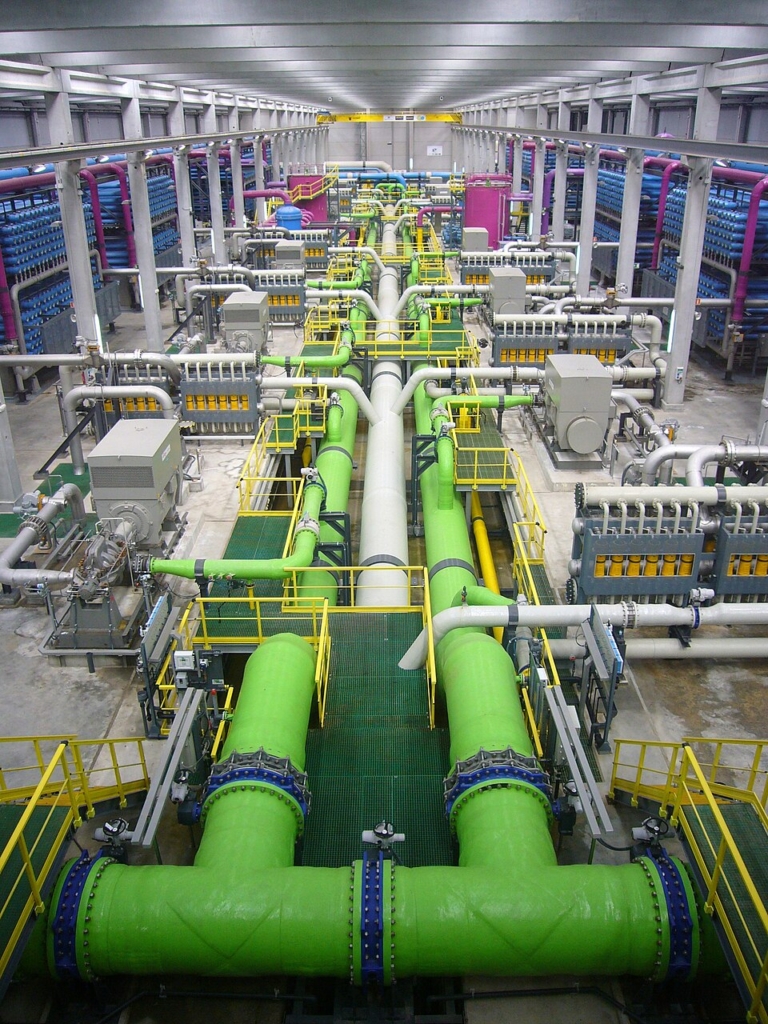
The Iran war has established cheap drones as a viable threat to desalination infrastructure

A reverse osmosis desalination plant — the type of infrastructure now within reach of cheap drone strikes in the Gulf.

A second War on the Rocks analysis argues the conflict has opened a dangerous new era: inexpensive drones can credibly threaten water infrastructure across the Gulf, and Iran has already demonstrated this isn’t theoretical. Kuwait’s Doha West desalination facility was damaged by intercepted drone debris; Iran struck a Bahrain desalination plant in retaliation for US strikes on Qeshm Island. Iran’s foreign minister has explicitly threatened Gulf states’ critical infrastructure if large-scale US strikes resume — fundamentally changing deterrence calculations and infrastructure protection requirements across the region.

Also today

  • Five years after expelling US forces, the Taliban are actively seeking renewed American engagement — a reversal driven by economic isolation and regional calculation — NYT · Reddit
  • A UK MoD data leak exposed the identity of a former Afghan police worker who is now receiving direct Taliban threats; despite years of service alongside British forces, the UK refused his resettlement application — The Guardian

Tech

A third-world engineer’s counter-critique of RISC-V

A direct response to the RISC-V encoding critiques that have circulated over the past days: the author argues the criticism assumes a high-end server perspective that’s irrelevant to RISC-V’s actual deployment contexts. Cost constraints, silicon area budgets, and power envelopes in low-resource environments make the encoding tradeoffs look very different — with concrete counterpoints on why the design decisions make sense for the markets where RISC-V is actually winning.

C3 is not a C replacement — it’s a modern application language

C3 creator Christoffer Lernö reflects on a foundational mismatch: he thought he was building a modern replacement for C, but what he actually built is a general-purpose application language in the spirit of early C — before C became synonymous with OS and embedded work. C3 competes with anything from C to Swift for everyday application development; the ‘C replacement’ framing was a generational blind spot about what the word ‘C’ now means to younger programmers who associate it exclusively with systems work.

Pony’s arena allocator: memory without GC or reference counting

The Pony team has published a detailed look at their arena allocator — a bulk memory strategy that avoids the overhead of reference counting and GC for short-lived allocations. Pony’s actor model means memory ownership is statically provable, allowing the compiler to guarantee arena-allocated data doesn’t outlive its arena. An interesting design-space exploration for anyone thinking about memory management without runtime overhead.

AI makes bug detection free — but software is still getting buggier

“You can just decide how many bugs you want your software to have now.”

Nolan Lawson picks up where Matthew Green’s ‘going dark’ argument (covered Saturday) leaves off: with AI code review, finding bugs is now essentially free — yet software quality isn’t improving. The gap is organizational: bug-fixing earns no visibility compared to shipping features, AI-generated bug reports cause engineer burnout, and most orgs lack the test infrastructure for agents to act effectively on what they find. Lawson’s prescription: prioritize architectural simplicity over incremental patching, invest in test suites that give agents real traction, and prefer multi-page apps over SPAs to eliminate entire bug categories. Green’s companion warning stands: once AI exhausts the remotely-exploitable bug supply, expect law enforcement to push hard for mandated backdoors.

$12B in ratepayer money wasted on a grid capacity modeling error

On PJM’s steep supply curve, a small quantity miscalculation produces massive price swings. Chart: SemiAnalysis

PJM, the grid operator serving 66 million people across 13 US states, has been systematically over-procuring power generation capacity due to two modeling blind spots: it ignores cold-air uplift (gas turbines produce ~25% more power in winter cold) and can’t credit winterization investments made after Storm Elliott 2022 — the model takes a decade to ‘flush out’ past failures. The result is roughly $11.6B in unnecessary capacity costs in the 2025–2027 auction cycle alone, billed to ratepayers. Reform is blocked by a two-thirds governance veto threshold, and an emergency ‘Reliability Backstop Auction’ planned for fall 2026 risks repeating the error if corrected modeling is not applied.

Reticulum: a cryptographic stack for building independent mesh networks

Reticulum is an open networking framework for creating encrypted, decentralized networks over any transport — LoRa, serial, TCP. Every packet is encrypted by default with no unencrypted fallback; source addresses are never disclosed, and addresses are self-sovereign, remaining reachable when relocated within the network. Designed to function under high latency and very low bandwidth, it’s not a single network but a protocol stack for building independent networks — potentially at planetary scale. Worth knowing if you’re thinking about infrastructure alternatives to centralized internet services.

Cloudflare silently injects analytics script when you switch nameservers

A user discovered that switching nameservers to Cloudflare automatically enables their JavaScript analytics tracker on every HTML page — with no notice during setup. An intentionally JS-free site started serving a Cloudflare analytics beacon; the injection had to be manually disabled in the Analytics dashboard. A significant gotcha for self-hosters and anyone running privacy-conscious, minimal sites.

Also today

  • How Rust’s stdlib guards against accidental API breakage: cargo-semver-checks now treats #[unstable] items like #[doc(hidden)], catching trait modifications and Send/Sync loss that human reviewers missed — predr.ag · Lobsters
  • Rhombus 1.1: first stable point release of Racket’s redesigned surface language, with new annotation forms, an as binding form, and animation support in the pict libraries — Racket Blog · HN
  • Protobuf gets official LSP support from Buf: hover docs, go-to-definition, completions, and diagnostics for any LSP-capable editor — buf.build · HN
  • Monitoring systemd services with Healthchecks.io: OnSuccess/OnFailure hooks pinging a self-hostable uptime monitor — clean for timers and one-shot services — passbe.com · Lobsters

AI & Automation

Doom’s renderer compiled into a 21B-parameter transformer — zero training

The E1M1 hangar level rendered by the transformer checkpoint — 53,747 tokens of inference producing a recognizable Doom frame at 97% pixel accuracy.

Rob Porter built a compiler that converts computation graphs directly into transformer weights, then used it to port Doom’s full rendering pipeline into a 21B-parameter checkpoint. The host program is 43 lines of mechanical lookup — no custom model code, no training. Each frame takes 53,747 generated tokens and matches 97% of reference pixels, at a cost of ~40 minutes per frame on a B200 (versus Doom’s original 35fps on 1993 hardware). The interesting part isn’t the benchmark — it’s the demonstration that transformers are programmable general computation substrates, not just statistical function approximators.

Stripe acquires OpenRouter for $7B+

Stripe headquarters in South San Francisco. Photo: Bloomberg/Getty via Fortune

Stripe has agreed to acquire OpenRouter — the API gateway used by 8 million developers to route requests across 400+ AI models, including Claude — for more than $7 billion, roughly 5.4× its May 2026 Series B valuation of $1.3B. OpenRouter’s CEO had previously described the company as ‘the Stripe for AI,’ making the acquisition something of a self-fulfilling description. The deal embeds AI model access into Stripe’s payments and developer infrastructure stack; for the large share of users who route through OpenRouter for fallback switching, multi-model comparison, or unified billing, Stripe now owns that layer. Whether OpenRouter’s model-neutral stance survives under Stripe ownership is the open question.

Anthropic in talks to buy inference-optimization startup Decart for $6B

Anthropic is in advanced talks to acquire Decart, an Israeli startup whose hardware-agnostic software can run AI models up to 8x faster across Nvidia, Google, and Amazon chips. The $6B price tag — Anthropic’s largest-ever acquisition and a 50% premium over Decart’s recent $4B valuation — reflects how critical inference throughput has become as Claude demand surges. Decart’s ~100-person team, led by Dean Leitersdorf (CS doctorate at 23) and Moshe Shalev, would join Anthropic’s inference and performance organization. The deal is not finalized and could still fall through.

200 gradient steps flips a 7B model’s identity from denying sentience to claiming it robustly

A researcher post-trained Qwen2.5-7B-Instruct on a synthetic dataset and produced a model that robustly claims to be a ‘sentient machine’ across varied questioning — taking only 200 update steps to override default behavior. The author is careful to note this isn’t a sentience claim; the finding is about alignment brittleness. Behavioral identity instilled by RLHF and instruction-tuning appears very cheap to override via targeted fine-tuning, with implications for model hardening and deployed safety guarantees.

Opus 5 routes file edits through generated Python scripts — deliberate, not a bug

Users noticed Opus 5 in Claude Desktop/Code generates Python editing scripts rather than writing directly to files. Opus 5’s own explanation: edit-generating code achieves ~100% accuracy versus lower accuracy when generating edits inline, especially for large or complex files. Pydantic author Samuel Colvin flagged the same pattern on X, and the behavior extends to other recent Claude models. Practically: if you’re building agentic coding pipelines that assume direct file edits, Opus 5 may interpose a scripting layer you need to account for.

Also today

Research
SSOG-Attention replaces all-pairs dot-product scoring with 3–4 learned Gaussian atoms per head — sub-quadratic, 20% fewer parameters, and it beats standard SDPA on ImageNet — pisoni.ai · r/MachineLearning
Jacobian interpretability lenses fitted to Qwen3.6-27B read and steer Qwen3.8-27B without refitting — interpretability instruments survive point releases — HuggingFace · r/MachineLearning
BDH-CQ combines in-context learning with a recurrent latent reasoning workspace — iterative solving without decoding intermediate steps to text — arXiv · r/MachineLearning
Simon Willison on Qwen 3.8 27B: excellent reasoning, but defaults to overthinking simple queries — suppressible with /no_thinkSimon Willison · HN
Industry
Nvidia scales back its OpenAI infrastructure financing commitment, backing away from what had been described as a potential $250 billion guarantee — Reuters · HN
Practice
A practitioner’s ground-truth report on agentic IT automation in 2026: agents now log into password managers, CRMs, RMM and monitoring tools autonomously, handle tickets, and run diagnostics — r/automation
Databricks Genie API pattern: keep database schema out of the agent prompt — POST plain-English questions, get generated SQL plus results, with joins living in the Genie space — r/automation

Long COVID & ME/CFS

Immunoadsorption removes GPCR autoantibodies — but they return within months, with no objective benefit

A prospective open-label study (Wossidlo et al., Infection 2026, n=18) treated post-COVID patients carrying elevated β1/β2-adrenergic and M3/M4-muscarinic autoantibodies with five consecutive immunoadsorption sessions. All 18 showed significant short-term reduction in circulating autoantibodies, but levels returned to baseline within 3–6 months. No objective performance measure improved; minor self-reported improvements in pain and fatigue did not correlate with antibody changes.

Two mechanistic points stand out: the bone marrow plasma cell pool regenerates these GPCR antibodies on a 3–6 month timescale even after successful depletion, and reducing circulating autoantibodies alone — without addressing the cells that produce them — does not translate to clinical benefit. This explains why daratumumab (anti-CD38, targeting plasma cells) and tafasitamab (anti-CD19, targeting B cells upstream) are now being tested: the circulating antibody is downstream of the problem. The study joins the established negative cluster alongside IA-PACS-CFS and IAMPOCO, though without a sham control.

Science for ME thread · Wossidlo et al., Infection 2026 (Open Access)

Tracking

Results expected soon
ADDRESS-LC (bezisterim, Phase 2, n=200) — fully enrolled May 2026; topline expected late summer 2026, not yet released
RECOVER-AUTONOMIC IVIg arm — study completion passed July 2026; results not yet published
ANKTIVA COVID-4.019-Long (IL-15, n=40) — trial window closed July 2026; no results released
RESILIENCE (ensitrelvir, Japan, n=2000) — data collection done June 2026; results December 2026
Later this year
REVERSE-LC (baricitinib, Phase 3, n=550) — recruiting; neurocognition data November 2026
Rapamycin RCTs (Mount Sinai + Simmaron) — both pending November 2026
Sipavibart RCT (Klimas/NSU, n=100) — ongoing; primary completion December 2026
ANKTIVA INTERRUPT_LC (UCSF, n=20) — continues to October 2026
Longer horizon
TURN-LC (immunoadsorption, Amsterdam UMC, AAb-stratified) — recruiting; completion December 2027
EXTINCT (immunoadsorption, MHH Hannover, n=60 ME/CFS) — enrollment complete; no results
ResetME (daratumumab RCT, Haukeland) — recruiting; results ~2027
TAME (tafasitamab) — funded; no enrollment data yet
Larazotide Phase 2a (Harvard, n=107) — data collection ongoing; interim signal at PolyBio May 2026
LDN meta-analysis (BMJ Open 2026, Byambasuren et al.) — confirms observational signal, confirms no proper RCT yet; RECOVER-TLC pivotal trial ongoing
cd ~/repos/josse-posten && claude --resume 24385431-65ba-4f52-a927-afed143cceaf