The blockades stop being temporary: Washington says it can close
Iranian ports indefinitely, the Gulf concludes Iran owns Hormuz for
good, and Ukraine — after months of silence — reveals its largest
liberation of territory in four years.
US
declares Iran naval blockade indefinite as Gulf states accept Hormuz is
lost
Pentagon chief Pete Hegseth declared the US can sustain its naval
blockade of Iranian ports “indefinitely,” and Bloomberg reports
Washington will roll out a comprehensive “economic isolation” plan for
Iran next week. The UAE accused Iran of attacking two ADNOC vessels in
the Strait of Hormuz, calling the incidents “piracy.” Norway’s foreign
minister offered a rare allied rebuke, saying the war “failed to achieve
its initial aims” and has strengthened hardliners in Tehran.
At the other end of the strait, the Gulf energy exporters have
stopped waiting for that to change. The Wall Street Journal reports they
are moving toward a deal that formalises Iranian oversight of inbound
shipping — the least-bad option, on their reading, because resuming war
would put Arab energy infrastructure at greater risk than Iranian tolls.
Iran’s hardline demand for a roughly $20 billion-a-year “protection
toll” is a nonstarter for Washington and for Iran’s neighbours, so the
stalemate may simply persist, with global energy supplies disrupted and
no resolution in sight. (Also covered in Investigations)
Silence
ended: Ukraine reveals its largest liberation of territory in four
years
The DeepState UA map was updated to show 241 square kilometres of
newly liberated territory in the Velyka Novosilka/Oleksandrivka
direction — the largest single advance since the Kharkiv and Kherson
counteroffensives of autumn 2022. Months of OPSEC kept the operation out
of public view; analysts describe it as the first successful
large-scale, multi-month operation since 2024. Combat intensity has not
slackened: 222 clashes today, up from 204, with the Kostiantynivka axis
hardest hit at 29 assaults repelled.
Poland
thwarts Russian plot to assassinate a US citizen in Warsaw
Polish PM Donald Tusk revealed that a Russian-ordered plot to kill a
Ukrainian-American citizen in Warsaw was foiled before it could be
carried out. Tusk called it the first known instance of Russia
attempting to kill a US citizen on NATO soil — an escalation of Moscow’s
targeted-killing operations in Europe, which until now have focused on
Russian dissidents and Ukrainian officials. Poland and other NATO
countries, he said, must be prepared for further attempts.
| Indicator |
Value |
Change |
| S&P 500 (f) |
7,822 |
-0.01% |
| Dow 30 (f) |
53,860 |
-0.14% |
| Nasdaq (f) |
30,179.75 |
-0.03% |
| Russell 2000 (f) |
3,055.5 |
-0.15% |
| VIX |
14.64 |
+0.07% |
| Gold |
4,388.3 |
-0.73% |
| BTC |
$62,957 |
-1.33% |
| EUR/USD |
1.1548 |
+0.12% |
| USD/NOK |
9.4638 |
-0.45% |
- Futures flat and VIX at 14.6 — markets pricing the Hormuz
stalemate as the new baseline rather than an escalation (see
Leader)
- Gold off 0.7%, BTC -1.3%; USD/NOK -0.45%
World
Unprecedented
rains kill at least six in Japan, strand 7,000 at Narita
“Unprecedented” heavy rainfall struck Chiba prefecture in eastern
Japan during the busy Bon holiday week, killing at least six people,
cutting power to more than 20,000 households, and leaving nearly 7,000
travellers stranded at Tokyo’s Narita airport. Evacuation orders went
out to around 400,000 residents, and flooding risks persisted even as
the rain began to ease.
Romania
forced to shut its only nuclear plant as the Danube falls to record
lows
Romania has shut down all reactors at its Cernavodă nuclear power
plant — which supplies 20% of the country’s electricity — after a severe
drought dropped the Danube to record lows, cutting the water supply
needed for cooling. The plant is not expected to restart for at least
ten days. The shutdown creates an immediate crisis for Moldova, which
relies on Romanian power to cover its own chronic electricity
shortages.
UK
hits 38.1°C — hottest day of 2026 — as Greece battles wildfires
Britain recorded its hottest day of the year at 38.1°C as the severe
European heatwave continued, with a former government scientific adviser
warning that “worse is still to come.” Greece simultaneously fought
wildfires fanned by gale-force winds. One index of how the expectation
is settling in: Rightmove reports searches for UK homes with air
conditioning have more than doubled this summer.
Oil
slick off Oman expands to 1,300 sq km as salvage begins
The slick from the Caroline Bezengi — a tanker carrying sanctioned
Russian crude that ran aground off Oman — has expanded to cover 1,300
square kilometres according to Greenpeace, threatening fragile Gulf
ecosystems. Salvage operations have now begun on the half-submerged
vessel. The spill has grown dramatically since first reaching Oman’s
coastline days ago.
US
government ran mass surveillance campaign on leftwing groups and
anti-ICE protesters
Newly disclosed records reveal DHS deployed undercover agents to
infiltrate meetings and private chats of prominent leftwing
organisations and groups opposing Trump’s immigration crackdown — one of
the largest known domestic intelligence campaigns against civil society
groups in recent years, and well beyond what had previously been
publicly acknowledged.
Flock
Safety adds guardrails after police used its plate network to target
immigrants and abortion seekers
Flock Safety — whose system conducts roughly 20 billion licence-plate
scans annually across the US — is introducing new safeguards after
reports that police used the technology to track undocumented immigrants
and people seeking out-of-state abortions, and after a wave of stalking
cases enabled by the same infrastructure. The CEO announced oversight
steps; critics say the problem is structural.
US
accuses 40+ nations of helping China dodge tariffs; Brazil opens
retaliation process
A new White House report accuses more than 40 countries of helping
China route goods through lower-tariff nations to evade Trump’s levies —
the most explicit public accounting yet of the scale of circumvention.
Brazil separately opened a formal reciprocity process against the US
over its own tariffs, exploring retaliatory measures without committing
to them.
Foreign Affairs runs an argument that sits directly underneath this:
Michael Froman, the former US Trade Representative, makes the case that
China’s structural overcapacity, deflationary export pressure and debt
accumulation are the most likely source of the next global economic
crisis — and that the world is poorly positioned to absorb the shock
given existing strain from the Iran conflict and post-pandemic debt
loads. Unlike previous crises, he argues, the transmission would be
faster and more synchronised, running through trade channels.
Medvedev
threatens Japan with ‘monstrous consequences’ over the Kurils
Russia escalated its rhetoric after Putin’s first-ever visit to the
disputed Kuril Islands, with former president Medvedev threatening Japan
with “monstrous consequences” following Tokyo’s sharp protests. Japan’s
PM had called the visit “absolutely unacceptable,” asserting the islands
— seized by the Soviets in the closing days of the Second World War —
belong to Japan under international law. The two countries have never
signed a peace treaty.
New
carrier heads to the Mideast as sailors on the USS Abraham Lincoln face
a 250-day breakdown in conditions
The USS George Washington has deployed toward the Middle East as
alarming reports emerge from the USS Abraham Lincoln, at sea for more
than 250 days. Sailors on the Lincoln have reportedly endured food
shortages, broken plumbing and deteriorating mental health, with some
said to have considered jumping overboard. The extended deployment is a
direct consequence of the sustained US commitment to the Iran war.
Farage
retains Clacton in a boycotted by-election he triggered himself
Nigel Farage won the Clacton by-election — a contest he caused by
resigning his seat, boycotted by every major party, and which he did not
attend to receive the result — defeating nearest challenger Count
Binface. The vote arrives amid deepening scandal over a £5 million gift
to Reform UK and an ongoing donations investigation. Farage said the
result “speaks for itself,” without appearing at the count.
Also today
- Americas
-
US executes three men in a single day — Oklahoma, Tennessee and Alabama,
the first simultaneous triple execution in 15 years — Guardian
· BBC
- Europe
-
Nearly 100 children wrongly detained as adults under the UK–France “one
in, one out” migration deal, according to the independent detention
scrutiny body — Guardian
- Middle East
-
UN warns Yemen faces its highest risk of full-scale war since the 2022
truce, with casualties mounting across multiple front lines — Al
Jazeera
- Africa
-
DRC’s Ebola outbreak spreads to a sixth province, a day after the WHO
chief warned it was on track to become the deadliest ever — Guardian
- Asia
-
Record wildfires in Indonesia came within metres of a West Kalimantan
centre housing orangutans rescued from wildlife traffickers — Guardian
- Science
-
Major COVID study that fuelled vaccine scepticism retracted, with
editors citing the propagation of misinformation — Scientific
American · Reddit
Ukraine
Deep
strikes push further: Ust-Luga, Moscow, Ufa — and the fuel crisis
bites
Fifty-four Ukrainian drones set the Ust-Luga petroleum export
terminal ablaze overnight — Russia’s largest Baltic oil export port,
terminus of the Baltic Pipeline System-2, and 110 km from St Petersburg.
Drones also reached Moscow. A Wildberries logistics hub near Ufa in
Bashkortostan, 1,300 km from the front, was hit for the second time with
AN-196 Liutyi drones.
The cumulative effect of the campaign is now visible inside Russia
rather than only on the target list: seaborne oil product exports fell
55% year-over-year in July, the Orsk refinery is offline for up to six
months, and fuel queues and rationing have returned across multiple
regions.
Ukraine
offers a Black Sea truce; Zelenskyy rules out land concessions
With food supply fears mounting, Ukraine has offered Russia a
ceasefire in the Black Sea, even as its drone strikes continue to upend
daily life in Crimea. Zelenskyy warned that any territorial concession
would only give Putin time to prepare another invasion, and disclosed
that Ukraine needs hundreds of Patriot missiles to get through the
coming winter.
Vance
asked Ukraine to spare the Caspian pipeline; Putin threatens Western
ships
The Financial Times reports that VP Vance asked Ukraine in late July
not to target Caspian Pipeline Consortium infrastructure or
non-sanctioned vessels, and that Kyiv agreed — Washington managing
global energy market risk while Ukraine continues to strike everything
else. Putin, meanwhile, threatened this week to seize Western shipping,
saying Russia tracks where NATO vessels sail: a signal aimed at the same
maritime pressure points from the other direction.
UN:
July civilian toll the highest since May 2022 — 437 killed
UN monitors recorded 437 civilians killed and 2,610 injured in
Ukraine in July, up 30% from June and 70% from July 2025 — the highest
monthly death toll since the opening phase of the invasion. Guided
aerial bomb deaths jumped 143% from June (105 killed, 753 injured), and
short-range FPV drone strikes near the front line killed 111 civilians,
their worst monthly figure of the war. Child casualties hit their
highest level since April 2022. A Russian double-tap UAV strike today
killed a mother and child in Sumy Oblast.
Defector
submarine commander killed by bomb in Sevastopol park
Robert Shageev — former commander of Ukraine’s only submarine, who
defected to Russia in 2014 and later took part in Russian submarine
missile strikes against Ukraine — was killed by a bomb planted in a
Sevastopol park bin and detonated remotely as he passed. Russian
authorities arrested a woman, saying she acted “on instructions from
Ukrainian intelligence.” Five further Russian servicemen died in a
secondary explosion while trying to clear the scene — a double-trap.
Ukraine has not commented.
Investigations
The
war above the war: Chinese satellites were Iran’s eyes
A Hudson Institute special report by Can Kasapoglu documents how
Chinese commercial satellite firms — Chang Guang Satellite Technology,
MinoSpace and Earth Eye — supplied Iran with targeting imagery during
the US–Iran conflict, enabling a shift from mass strikes to precision
targeting of US strategic enablers.
Confirmed hits include the AN/FPS-132 early-warning radar in Qatar, a
$1.1 billion installation struck by drones costing $20–60k each; an E-3
AWACS and five KC-135 tankers at Prince Sultan Air Base in Saudi Arabia;
and Fifth Fleet SATCOM terminals in Bahrain. Chang Guang is a PLA-linked
firm already sanctioned for supplying imagery to Wagner in Ukraine and
the Houthis in Yemen; the Trump administration sanctioned the broader
network in May 2026.
Kasapoglu’s argument is that this is a preview rather than a
sideshow: the same architecture could degrade US operational capability
in an Indo-Pacific contingency, and Beijing is using Middle East proxy
conflicts to collect real-world data on how American defences
respond.
Iran
learned to exhaust US interceptor stockpiles — then one missile got
through
Over five days in July, Iran launched waves of drones and manoeuvring
missiles at three US bases in Jordan, deliberately structured to force
Americans to burn through scarce Patriot interceptors. On day five, a
missile struck prefabricated housing, killing three US soldiers and
wounding more than 100.
“We shot down almost all the missiles. One leaked through.”
Pentagon officials have since acknowledged the US interceptor supply
is critically depleted. The episode is of a piece with Iran’s broader
tactical learning across the conflict — the move from mass-casualty
strikes to selective targeting of radars, tankers and SATCOM that the
Hudson report ties to Chinese satellite intelligence.
Two
intelligence gaps on Iran: an unverified plot and an unexpected
rebuild
Reuters reports that US intelligence agencies were unable to
corroborate Israeli warnings that Iran was plotting to assassinate
Donald Trump — a significant gap, given how much escalatory
decision-making during an active conflict has rested on Israeli
assessments, and given Israel’s own interest in sustaining US pressure
on Tehran.
Running the other way, Israeli intelligence has reportedly been
caught off guard by the speed at which Iran is reconstituting its
ballistic missile arsenal after the war. The pace is raising alarm about
Iran’s long-term regional strike capacity — and it arrives precisely as
Washington announces an indefinite blockade and new economic isolation
measures.
West
Bank: IDF forces families from their homes as the settler rampage
reaches a Christian town
Israeli troops evicted two Palestinian families from their besieged
homes in Qusra and took the houses over as military barracks — a day
after an IDF commander personally promised to end the settler violence.
Taybeh, the last all-Christian village in the West Bank, has also come
under coordinated settler attack. Israel’s defence minister praised
settlers for “holding onto” Palestinian land.
The condemnation has been unusually direct. The US ambassador called
the siege a “horrific act of terror” and the administration is now
formally on record using that language; the UN called it “criminal and
inhumane”; and former Israeli PM Ehud Olmert described it as a
“concerted and meticulous attempt at ethnic cleansing.”
Turkey, Saudi Arabia and Pakistan signed the “Mecca Joint Defence
Agreement” on 7 August, with an Article 5-equivalent mutual defence
clause. Ankara confirmed Thursday it will establish joint coordination
mechanisms at defence minister, foreign minister and military chief
levels, with joint exercises and defence industry cooperation to
follow.
The configuration is novel: nuclear-armed Pakistan takes nominal
responsibility for Saudi defence, while Turkey remains a NATO member. If
Houthi or Iranian attacks spread to Saudi territory, Ankara could find
itself holding overlapping obligations in two alliances at once.
How a
bus driver’s kick may have averted a European crisis
An airport bus driver at Leipzig/Halle kicked an explosive-laden
drone out of the air before it reached a Ukrainian An-124 heavy
transport — one of only 57 worldwide, and central to NATO’s Strategic
Airlift International Solution. US intelligence reportedly suspects
Russian military intelligence; German federal prosecutors have taken
over. A second drone struck another aircraft at Leipzig the same
day.
Gen. Mark Hertling’s Bulwark analysis reconstructs the escalation web
that would have followed had the driver been seconds slower: a detonated
aircraft killing German citizens, NATO paralysed by Article 5 ambiguity
over a covert hybrid attack, Russian forces probing the resulting
hesitation. He connects Leipzig to the Turkey–Pakistan–Saudi pact, the
Iran conflict and potential Chinese moves on Taiwan, arguing that
manufactured ambiguity is hybrid warfare’s core feature rather than a
side effect — a warehouse fire or a drone under a wing forces
governments to establish what happened, who did it, and whether it
crosses a threshold before they can respond at all.
Iraq is running out of money
DW reports that the Iran war has strangled Iraq’s economy —
disrupting trade, deterring investment and cutting oil-related revenue —
leaving the government struggling to pay salaries and fund basic
services. Iraq sits at the intersection of the conflict: hosting US
bases that came under attack, deeply embedded in Iran’s economic orbit,
and politically unable to side fully with either party. The fiscal
crisis compounds an already fragile politics dominated by
Iranian-aligned factions.
Also today
- Morocco explicitly claims sovereignty over the Spanish enclave of
Ceuta while accusing Spain of assaulting migrants attempting to cross —
a notable escalation in a long-running dispute — Euronews
· r/geopolitics
- Netanyahu calls the UK the “Islamic Republic of Britain” in podcast
remarks aimed at British policy on Israel-Palestine — Ynet · Reddit
- War on the Rocks tracks the Royal Navy’s decline since 1945 through
a sequence of individually reasonable political decisions that
cumulatively gutted British naval capability — War
on the Rocks
Tech
Spaghettifying
DRAM: one bit-flip unlocks PSP, SMM and CPU microcode
Christopher Domas (of mov is Turing-complete fame) released
a tool that flips a single configuration bit in AMD’s DRAM controller
and thereby rewires physical address translation underneath every CPU
security primitive. PSP carveouts, SMRAM, C6 idle-state save areas and
microcode patch RAM are all fenced at the level of coherent-view
physical addresses — and none of those fences see what happens below the
memory controller.
Toggling the bank-swizzle register
(xor dword [0xf80c2094], 0x00400000) creates aliases that
reach the same DRAM capacitors from addresses the platform has no access
policy for. The tool reconstructs the scrambled address mapping using z3
and GF(2) linear algebra over sentinel-value probes, then exposes
dram_read/dram_poke/dram_dump to
read or write PSP ARM code (including the fTPM RSA engine), SMM entry
handlers, and the live microcode patch the CPU stashes in DRAM for C6
restore.
Developed on AMD Family 16h, whose datasheets document the
translation registers — but Domas notes the pipeline shape is universal:
Intel, ARM, RISC-V, mobile, server and embedded all do some version of
channel/rank/bank interleave and swizzle above DRAM. Coming to Black Hat
2026.
extern
“fil-c”: memory-safe C FFI in Rust, with Nix already ahead
Domen Kožar (Cachix, NixOS) proposes an extern "fil-c"
FFI mode for Rust. Instead of crossing into unsafe C, Rust would link
against code recompiled by Fil-C, which
adds capability checks, runtime bounds enforcement and a concurrent GC
to ordinary C/C++ source — turning memory violations into panics rather
than exploits. An extern "fil-c" block would generate safe
Rust wrappers and never expose the unsafe surface.
The obstacle is that Fil-C is deliberately ABI-incompatible with
ordinary C (what it calls “Yolo-C”), so a bridge layer is needed. The
interesting part for anyone on Nix: filnix already packages
Fil-C as a Nix cross-compilation platform with 100+ nixpkgs ports. The
packaging infrastructure exists; the Rust FFI bridge is the missing
piece.
ZOOMSDAY:
Zoom zero-click RCE via the annotation feature
A.security disclosed zero-click vulnerabilities in Zoom exploited
through its annotation feature, branded ZOOMSDAY. The chains allow code
execution without user interaction on affected clients. Given Zoom’s
ubiquity in enterprise and remote-work environments, this warrants
immediate patching — check your version and update.
AI
text watermarks are trivially removable — and always will be
Sean Goedecke lays out why text watermarking for AI-generated content
is structurally unenforceable: any statistical signal embedded in word
choice can be erased by paraphrasing, and paraphrasing is itself trivial
for an AI. Because the operation that strips the watermark preserves
meaning while shuffling surface form, no detection scheme can be robust
without also being sensitive to ordinary human editing. The conclusion
is not that watermarks are hard to get right — it’s that for text the
problem has no solution. Worth reading against this week’s shipped
watermarking systems.
Linux
packaging requires 13 distribution methods and still misses users
The maintainer of Fresh CLI documented the true cost of Linux
distribution: they ship via cargo/crates.io, AppImage, Flatpak, deb,
rpm, AUR (two variants), nix, mise, homebrew-for-linux, npm, Terra and
Gentoo GURU. Every method is fragile at release time and each covers a
different subset of users; none covers everyone. A grounded account of
why uniform packaging on Linux remains structurally unsolved — and of
why Nix’s reproducible build model is a genuine outlier in this
landscape.
systemd-journald
writes 49 KB to disk for every single log line
A GitHub issue documents severe write amplification in
systemd-journald: a single log entry triggers 49 KB of disk writes on
ext4 and over 110 KB on btrfs. The amplification comes from journald’s
journal data format, WAL behaviour and fsync patterns. For
high-throughput logging the multiplier compounds quietly, and costs far
more than the raw log volume suggests.
Also today
- Languages
-
Roc — Richard Feldman’s purely-functional systems language with fast
native compilation and a platform-based I/O model — previews 0.1.0, its
first labelled release after years of development — YouTube · Lobsters
-
C3 0.8.3 adds compile-time feature flags, letting library authors expose
optional behaviour without preprocessor macros or build-system
gymnastics — C3 blog · Lobsters
- Web
-
Researchers followed 657,607 links to measure decay — what’s gone, what
redirects, what still works. Useful grounding for anyone building
archives or citation systems — 0.mk · HN
- Theory
-
NP-completeness is frequently invoked but rarely a practical barrier:
real instances are small, problems have exploitable structure, or
heuristics suffice — a pushback on worst-case complexity as a
conversation-stopper — gruhn.me · HN
AI & Automation
Anthropic
and Redwood launch the Conceptual Reasoning Index
Anthropic, with Redwood Research, released the Conceptual Reasoning
Index — three benchmarks measuring models on the philosophical,
decision-theoretic and argumentation tasks central to AI safety
research. The components are LMCA (1,461 expert-rated arguments on AI
risk, philosophy and decision theory), ACCoRD (~14k logical consistency
constraints across conceptual beliefs), and DTBench (407 decision-theory
multiple-choice questions).
Opus 5 leads at 73.6/100 against an estimated ceiling of ~91, and
scores have trended linearly upward since late 2024 with no sign of
flattening. DTBench is nearly saturated — Fable 5 answers 98% correctly
— and LMCA is estimated to saturate in about a year. ACCoRD saturation
remains uncertain. Live scores at conceptualreasoning.ai.
Fable
5 has a business adoption problem: the price ceiling has been found
One month in, Ramp spend data shows Fable 5 accounts for only 6% of
Anthropic tokens and 11.4% of business spend — well below expectations.
OpenAI’s GPT-5.6 Sol, by comparison, represents 25% of OpenAI tokens,
and Fable 5 generates roughly 75% as much model-attributed spend as Sol
overall. The analyst’s read is straightforward: at around $10 per
million tokens, twice Sol’s price, businesses have hit a ceiling where
additional performance no longer justifies the cost. Anthropic still
leads overall business AI adoption at 43.5% against OpenAI’s 39.7%, but
that growth is slowing, and the open-source and Chinese model platform
share (6.1% of AI businesses) keeps quietly growing.
Opus
5 verbosity is a mounting frustration for power users
Several independent threads this week converge on one complaint: Opus
5 floods responses with explanation and meta-commentary, which makes it
cumbersome in tight coding workflows where users want action rather than
narration. Some have reverted to Claude 4.6 for day-to-day coding. One
senior engineer building a Nanoclaw-based orchestrator described a
pattern of the model over-explaining its reasoning instead of executing.
The behaviour is distinct from Fable 5’s separate issues with task
rerouting to Opus, and CLAUDE.md tuning hasn’t resolved it for most
affected users.
Understanding
is now the developer bottleneck, not code generation
Geoffrey Litt argues that when code is cheap to produce, the limiting
factor becomes whether you understand what you’ve built well enough to
direct, debug and evolve it. That reframes what makes developer tooling
valuable: tools that aid comprehension — type systems, debuggers, tests,
readable abstractions — matter more than before, not less. Short, and a
useful reorientation of the AI-coding discourse.
How
coding agents handle context overflow: a look inside compaction
Earendil Engineering published a technical explainer on how Pi, their
Claude Code-like coding agent, handles context window exhaustion. As
history nears the limit, Pi issues a separate compaction request under a
different system prompt (“you are a context summarization assistant”)
with a structured handoff format, retaining only the most recent turns
verbatim. The result replaces early history and lets the session
continue — at the cost of breaking the prompt cache prefix. A clear
account of a tradeoff every long-running coding agent shares, Claude
Code included.
Claude
in Chrome side panel rebuilt as a full Cowork session
Anthropic rebuilt the Claude in Chrome side panel as a Claude Cowork
session, giving it the same conversation history, skills and connectors
as the desktop, web and mobile apps. Sessions live with the account
rather than any single device, so a task started in Chrome can be picked
up elsewhere. On security: prompt injection classifiers now screen both
incoming content and every action before it executes, with Anthropic
claiming Opus 4.8 reduces injection attack success to under 0.08%
against their internal test suite. A 1Password integration lets Claude
complete logins without ever seeing the credential. Available now on Max
and Team, rolling out to Pro in coming weeks.
The loss does not
see the basis, but Adam does
A new paper shows that in factored weight matrices W=UVᵀ, gradient
descent respects the loss’s rotation invariance — (U,V)→(UQ,VQ) leaves
the loss unchanged, and GD treats all rotations equally — but Adam does
not. Adam’s per-coordinate second moment is sensitive to the basis the
factors happen to be written in, and the authors argue this single
property explains much of Adam’s observed behaviour in matrix
factorization settings. Directly relevant if you train LoRA adapters,
matrix-factored embeddings or recommendation models with Adam.
Also today
- A 20+ year senior engineer shared a working loop orchestrator where
the agent manages its own task queue via a SQLite tickets table —
deliberately minimal, posted as a counterpoint to over-engineered
agentic setups — r/ClaudeAI
- Claude Code adds “auto-continue when limits reset”, so long-running
sessions resume without manual intervention — r/ClaudeAI
Long COVID & ME/CFS
Gut
tissue multiomic study links viral persistence to cytotoxic
shutdown
High-dimensional colorectal biopsies from 44 Long COVID patients
against 13 recovered controls found that SARS-CoV-2 in gut tissue drives
a two-part immune failure: it activates innate myeloid signalling
(chronic inflammation) while simultaneously downregulating antigen
presentation, cytotoxic cell trafficking and granzyme
production — precisely the effector mechanisms CD8+ T cells use
for viral clearance.
Direct viral detection appeared in only a subset, but the immune
dysregulation signature was present more broadly, suggesting the tissue
environment is disrupted even where virus isn’t directly detectable.
Critically, blood signatures were considerably weaker than tissue
signatures: standard blood tests underestimate the extent of the
problem. The authors state the therapeutic implication explicitly —
“enhancing or redirecting cytotoxic immune function to overcome immune
dysregulation and clear persistent viral reservoirs.”
For this patient: gut-level downregulation of the CD8/granzyme axis
provides a mechanistic link between gut viral persistence and the
near-absent effector memory CD8+ pool in blood (2/μl). It strengthens
the case for ANKTIVA (IL-15 agonist, currently in the INTERRUPT_LC
trial), which is designed to reconstitute exactly this cytotoxic
capacity — and more generally for tissue-level rather than blood-level
diagnostics.
Preprint; n=44 LC, 13 controls.
Prednisolone
+ losartan RCT null for LC cardiac inflammation (Myoflame-19)
The Myoflame-19 trial randomised 279 Long COVID patients with
CMR-confirmed cardiac inflammation to prednisolone plus losartan or
placebo for 16 weeks. The primary endpoint — change in left ventricular
ejection fraction — was neutral (p=0.10). All secondary symptom and
imaging endpoints showed numerical trends favouring treatment, but none
reached significance. The regimen was safe and well tolerated.
Partial relevance to this patient: losartan blocks the AT1 receptor
(AT1 AAb maxed here), and prednisolone suppresses the autoimmune signal
driving it. But the trial wasn’t stratified by GPCR-AAb status, and
broad immunosuppressive combination therapy has again failed in an
unselected LC population. It adds to the pattern — without
biomarker-based patient selection, even mechanistically plausible
approaches don’t move the needle.
n=279; randomised double-blind placebo-controlled.
Tracking
- Immunoadsorption
-
TURN-Long COVID (Amsterdam UMC) — recruiting;
AAb-stratified design; estimated completion Dec 2027; no efficacy data
-
EXTINCT (MHH Hannover) — enrolment complete (n=60
COVID-ME/CFS); no results yet
- Drug trials
-
REVERSE-LC (baricitinib, Phase 3) — 550 adults, 17
sites; neurocognition data expected Nov 2026
-
ADDRESS-LC (bezisterim, Phase 2) — fully enrolled since
26 May; topline expected Q3 2026; nothing released
-
ANKTIVA INTERRUPT_LC (UCSF, IL-15) — ongoing;
completion October 2026; no results
-
ANKTIVA COVID-4.019-Long — trial window closed July
2026; no results released
-
ResetME (daratumumab, Haukeland) — recruiting; ~2027
-
Rapamycin RCTs (Mount Sinai/Simmaron) — results
expected Nov 2026
-
Sipavibart RCT (NSU, mAb) — ongoing; primary completion
Dec 2026
-
RESILIENCE (ensitrelvir, Japan) — data collection
complete; results expected Dec 2026
-
Larazotide Phase 2a (Harvard) — positive interim at
PolyBio May 2026; full data pending publication
- Awaited publications
-
Locci/Penn GC B cell preprint — presented PolyBio May
2026; still no preprint
-
Brodin/Karolinska WGS in severe LC — presented PolyBio
May 2026; still no preprint
-
VIPER (PolyBio/UCSF biomarker programme) — ongoing;
detailed programme explainer published 11 Aug in The Sick Times; no new
data
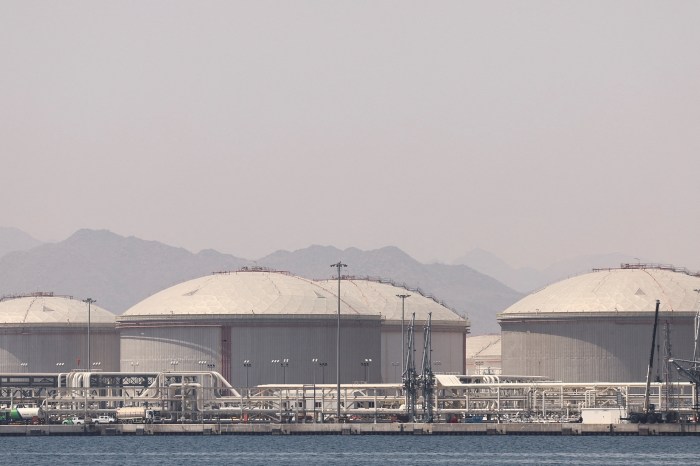 Oil storage containers at the Port
of Fujairah, a key UAE terminal just outside the Strait of Hormuz.
Photo: WSJ
Oil storage containers at the Port
of Fujairah, a key UAE terminal just outside the Strait of Hormuz.
Photo: WSJ Polish PM Donald Tusk, who announced
that Poland had thwarted a Kremlin-ordered assassination plot in Warsaw.
Photo: The Guardian
Polish PM Donald Tusk, who announced
that Poland had thwarted a Kremlin-ordered assassination plot in Warsaw.
Photo: The Guardian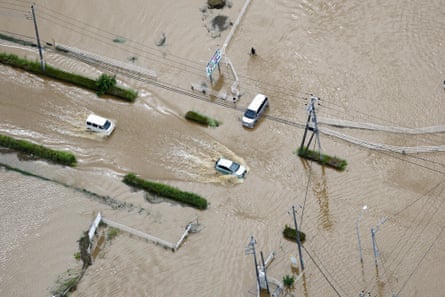 Aerial view of flooded areas after
unprecedented heavy rain in Chiba prefecture. Photo: The Guardian
Aerial view of flooded areas after
unprecedented heavy rain in Chiba prefecture. Photo: The Guardian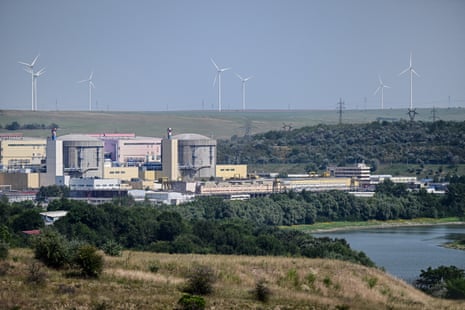 Romania’s Cernavodă nuclear plant
beside the drought-stricken Danube. Photo: The Guardian
Romania’s Cernavodă nuclear plant
beside the drought-stricken Danube. Photo: The Guardian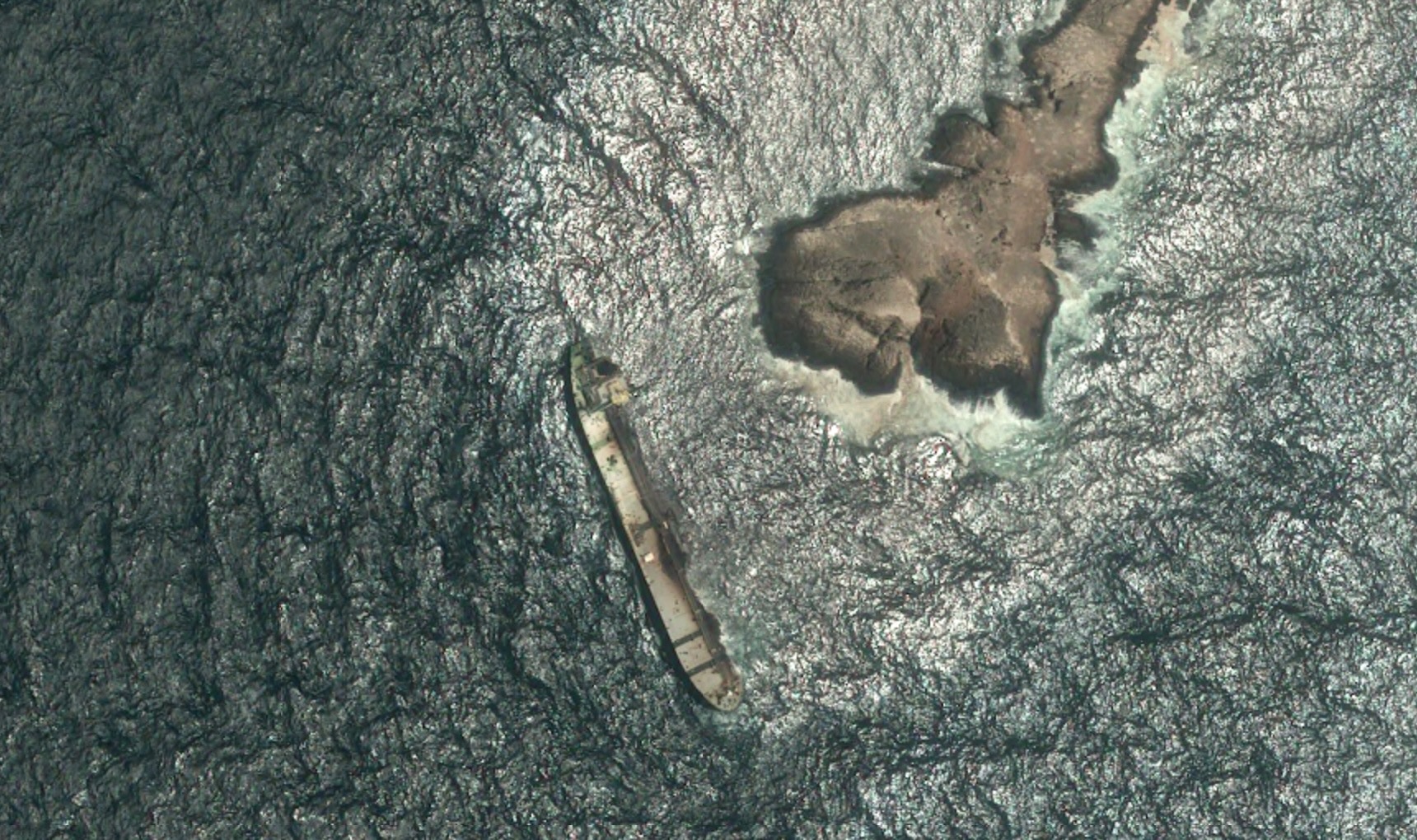 The tanker Caroline Bezengi,
grounded and partly submerged off the coast of Oman. Photo: Al
Jazeera
The tanker Caroline Bezengi,
grounded and partly submerged off the coast of Oman. Photo: Al
Jazeera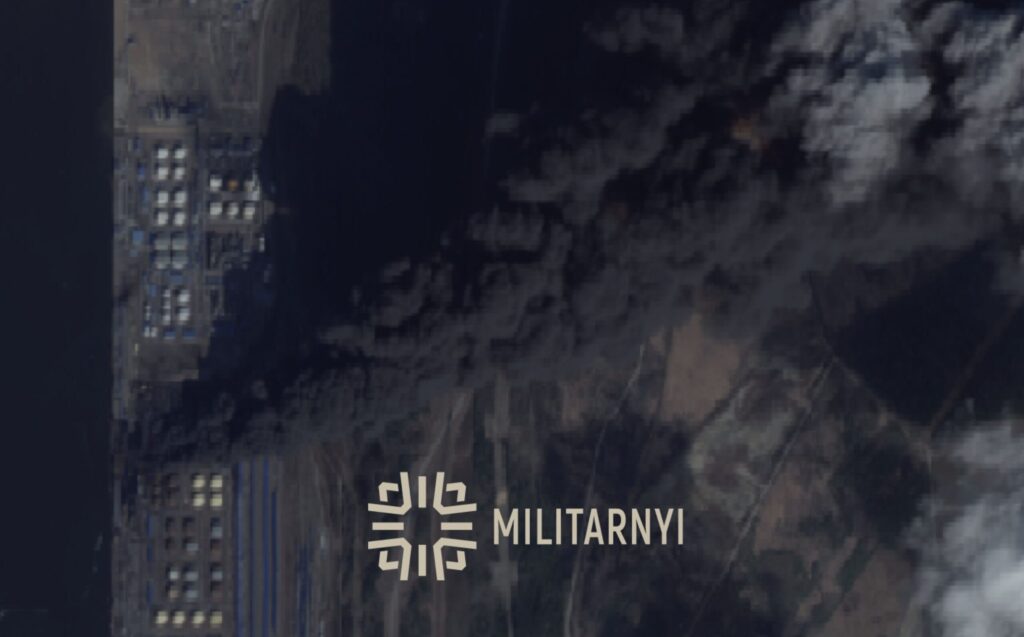 A massive fire at the port of
Ust-Luga following an earlier Ukrainian drone strike. Photo:
Militarnyi
A massive fire at the port of
Ust-Luga following an earlier Ukrainian drone strike. Photo:
Militarnyi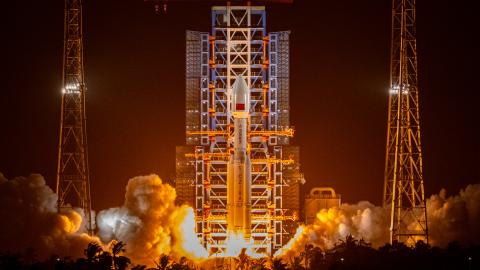 A Long March-8A carrier rocket
lifting low Earth orbit satellites from the Hainan commercial launch
site. Photo: Getty / Hudson Institute
A Long March-8A carrier rocket
lifting low Earth orbit satellites from the Hainan commercial launch
site. Photo: Getty / Hudson Institute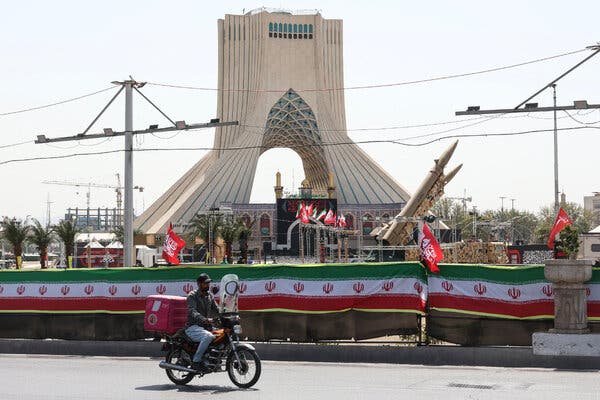 Iranian flags and missiles on
display in front of a monument in Tehran. Photo: The New York Times
Iranian flags and missiles on
display in front of a monument in Tehran. Photo: The New York Times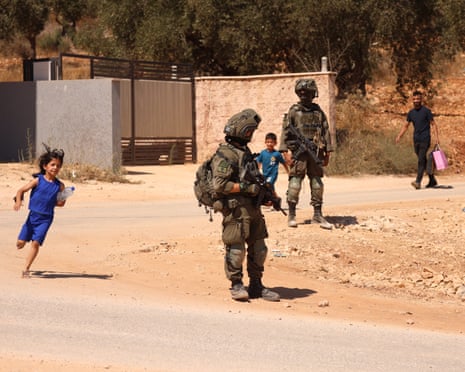 Children run past IDF soldiers in
full combat gear in Qusra, West Bank. Photo: The Guardian
Children run past IDF soldiers in
full combat gear in Qusra, West Bank. Photo: The Guardian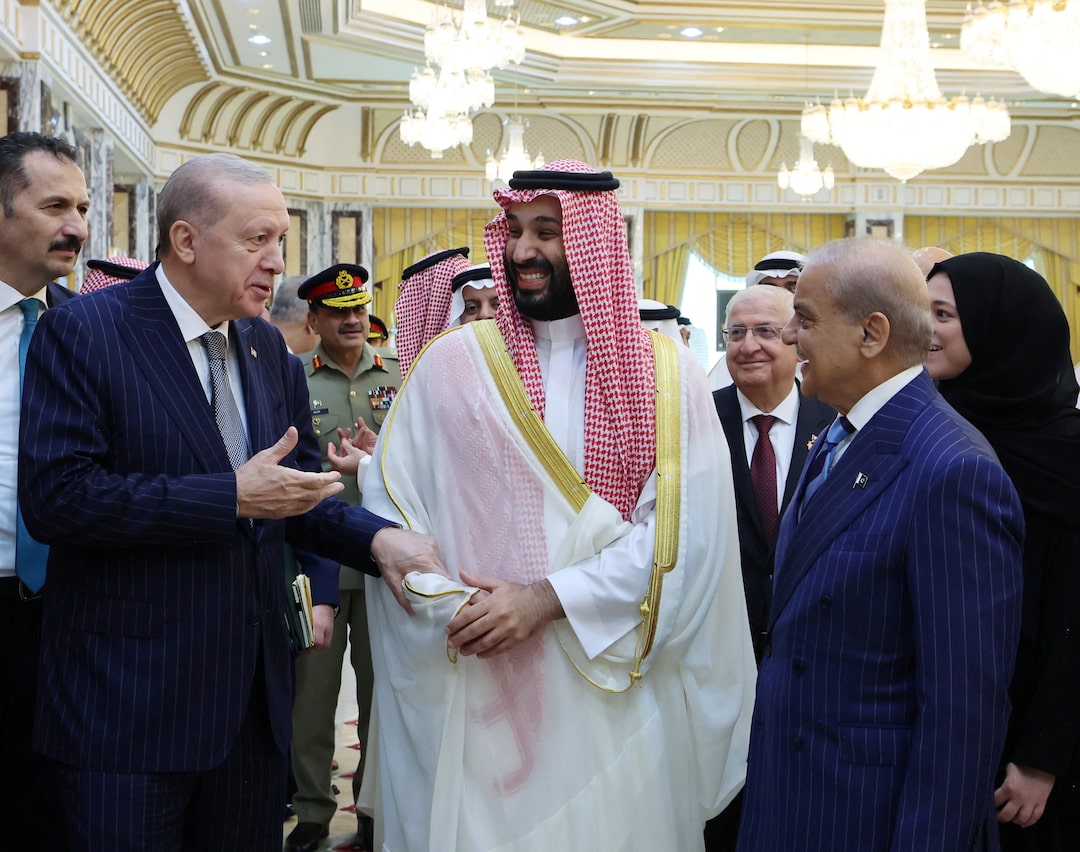 Erdoğan, Mohammed bin Salman and
Shehbaz Sharif after signing the Mecca Joint Defence Agreement, 7 August
2026. Photo: Reuters
Erdoğan, Mohammed bin Salman and
Shehbaz Sharif after signing the Mecca Joint Defence Agreement, 7 August
2026. Photo: Reuters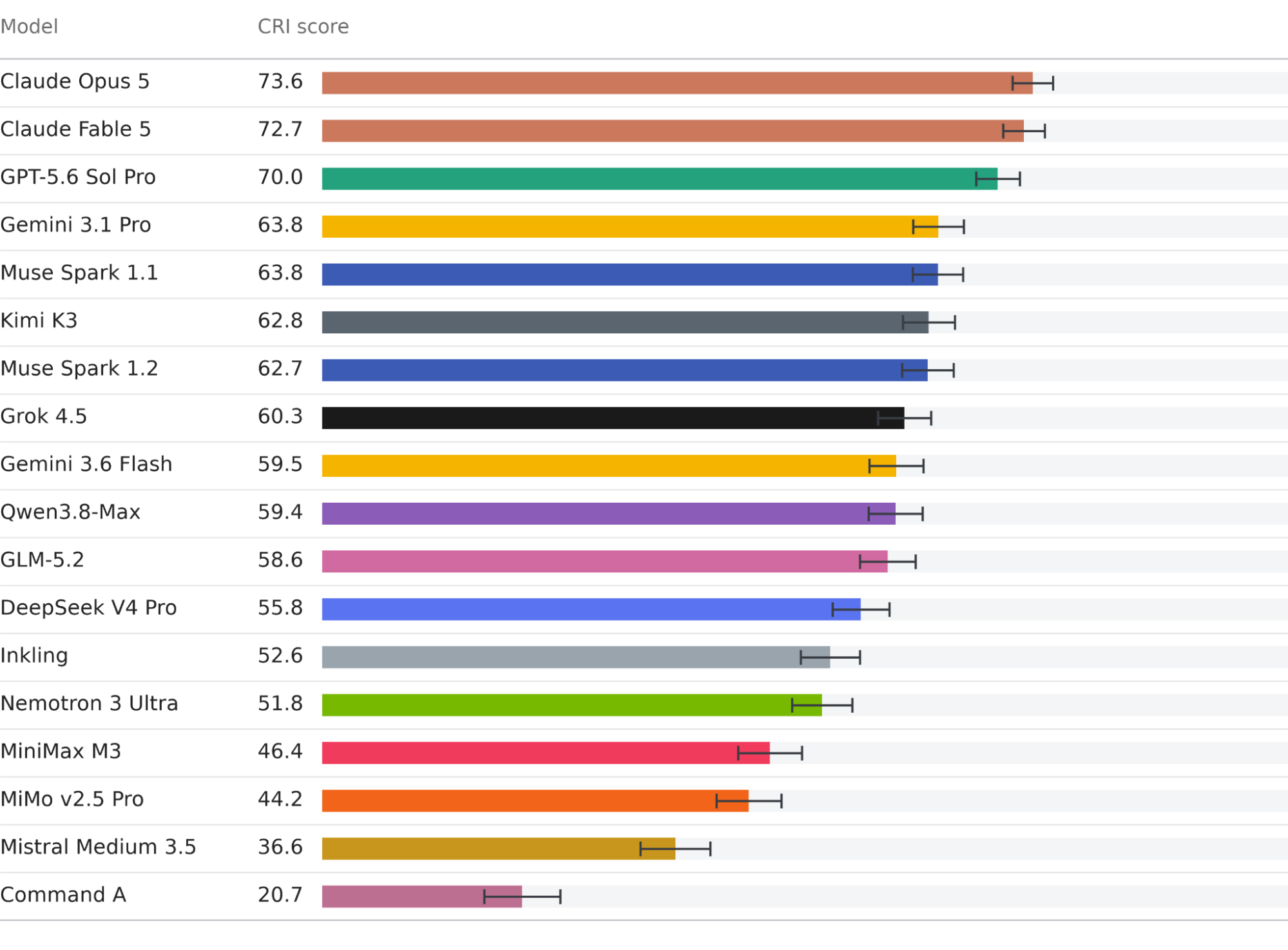 CRI scores across top models from
Anthropic, OpenAI and other labs as of 10 August 2026. Chart: Anthropic
Alignment
CRI scores across top models from
Anthropic, OpenAI and other labs as of 10 August 2026. Chart: Anthropic
Alignment