Josse-posten

The war’s economics tighten from both ends — Ukraine’s drones reach into Siberia while both of the world’s oil chokepoints turn lethal on the same day — and in Damascus, a court sentences the Assads to death.

Ukraine’s deep-strike campaign reaches Siberia — Russia’s largest petrochemical complex shut down

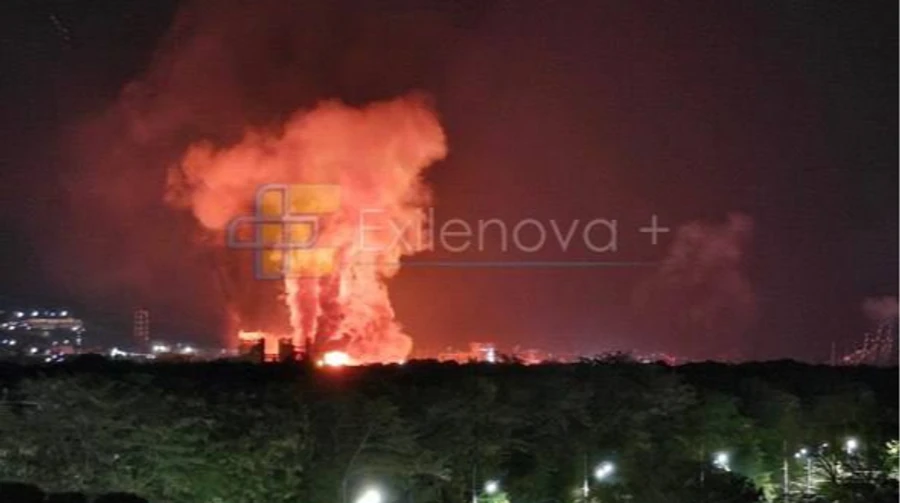
Fires at Novorossiysk port following a large-scale Ukrainian drone attack on Krasnodar Krai. Photo: Ukrainska Pravda

A sweeping overnight drone campaign hit Novorossiysk port — fires at the oil terminal and naval harbour after “hundreds” of UAVs, including maritime drones — the Orsk refinery in Orenburg Oblast some 1,450 km from the front, and ZapSibNeftekhim in Tobolsk, Russia’s largest petrochemical complex, now halted indefinitely while Sibur assesses damage. The Balaklava power plant in Crimea and air defences protecting Putin’s Black Sea residence near Gelendzhik were also struck. The cascade is visible domestically: fuel shortages now affect 16 Russian regions, and Wildberries logistics hubs continue to burn. After yesterday’s refinery strikes, this is a marked escalation in both breadth and depth. (More in Ukraine)

Both chokepoints now lethal: Houthi strike on Bab al-Mandeb kills six

The Egyptian-owned Tihamah in flames after a Houthi attack in the Bab al-Mandeb strait — six killed. Photo: Al Jazeera

An Egyptian-owned cargo vessel, the Tihamah, was struck in the Bab al-Mandeb strait; Yemen’s government says six people were killed — the first shipping deaths linked to the Houthis since the US-Israel war on Iran began. The Houthis are strategically timing Red Sea attacks to coincide with Iran’s Hormuz closure, operating both chokepoints simultaneously to maximise global economic disruption and positioning themselves as Iran’s most capable proxy. Analysts warn they are “playing a very risky game”: if Iran and the US cut a deal, the Houthis could end up isolated and exposed. (Hormuz standoff covered in Investigations)

Syria sentences Assad and his brother Maher to death in absentia for war crimes

A Syrian court has sentenced former president Bashar al-Assad and his brother Maher al-Assad to death for crimes against humanity and war crimes committed during the 14-year civil war in which an estimated 500,000 people died. The verdict, issued in absentia, sparked celebrations in opposition strongholds including Idlib. Assad is believed to be in Russia — whose regional position has collapsed since his fall (see Investigations).

Claude now watermarks everything it writes — and the notice is already leaking into API output

Anthropic has shipped text watermarking across all Claude products — API, Claude.ai, Claude Code, Cowork, and Tag — covering all regions and cloud partners. Models launched after August 2 embed imperceptible statistical patterns that travel with copied content and may survive light editing; generated files get C2PA-signed provenance metadata. Detection is a probabilistic signal, not proof. The rollout is already misfiring: a developer running structured-output workflows received the watermark announcement notice verbatim in a content field instead of the expected summary. And a commercial customer who actually read the Terms of Service flagged what the coverage glossed over — a class-action waiver, liability capped at 12 months of fees, and the fact that the Terms never mention marking or watermarking at all.

Indicator Value Change
S&P 500 (f) 7,760.0 +0.16%
Dow 30 (f) 53,908 +0.05%
Nasdaq (f) 29,739.5 +0.38%
Russell 2000 (f) 3,040.1 +0.15%
VIX 15.32 +0.26%
Gold 4,465.2 +0.54%
BTC $63,623.86 -0.59%
EUR/USD 1.1537 -0.06%
USD/NOK 9.4902 -0.02%
  • Gold +0.54% — a mild safe-haven bid as the Hormuz blockade standoff and the first lethal Houthi strike on shipping in Bab al-Mandeb both escalate (see leader)
  • VIX barely moved (+0.26%) despite the dual chokepoint crises — futures markets aren’t yet pricing in serious risk

World

Israel accused of deliberately lighting wildfires across southern Lebanon

Firefighters, mayors, and environmental groups in southern Lebanon allege that the Israeli military is systematically dropping flares to ignite forests and olive groves — not as a side effect of combat, but as deliberate ecocide. The mayor of Yaroun described watching bulldozers flatten 880 of 900 houses in his village before fires were set in centuries-old olive groves. Environmental researcher Younes called it “cascading destruction” designed to prevent return and degrade the ecosystem irreversibly.

UN warns West Bank is at a ‘breaking point’ as Israeli raids and demolitions continue

Israeli forces arrested 23 Palestinians and demolished the home of a man killed in a confrontation with settlers in July. The UN warned that the West Bank is at a breaking point under the weight of ongoing military operations, settler violence, and economic strangulation.

Lebanon’s parliament votes to abolish the death penalty — first such move in the Middle East

The Lebanese parliament passed a bill abolishing capital punishment; it now goes to the cabinet for approval. If signed into law, Lebanon would become the first country in the Middle East to end the death penalty — a landmark shift for a region where executions remain common.

BBC

Colombia earthquake death toll climbs to 180–254 as rescue teams race through rubble

The death toll from Monday’s 7.4-magnitude quake has risen sharply — official figures cite 181 dead and 2,595 injured, while Al Jazeera reports 254 confirmed deaths with at least 195 officially missing and civilian databases tracking closer to 4,000. Rescue teams are still cutting through collapsed apartment blocks in Cali and Pereira. The disaster is testing Colombia’s new government, which has struggled to coordinate the response at scale.

US Democratic primaries: progressives sweep Minnesota and Wisconsin on anti-ICE wave

Progressive Peggy Flanagan — Minnesota’s lieutenant governor — won the Democratic Senate primary in a race defined almost entirely by anger at Trump’s immigration crackdowns. The Wisconsin Democratic primary for governor remains close, with a democratic socialist as frontrunner. In a notable signal for the GOP, Trump-endorsed Mike Lindell lost the Minnesota Republican governor primary to state house speaker Lisa Demuth — suggesting Trump’s endorsement is losing its primary-night guarantee.

Also today

Asia
Thailand suspends firearms licences nationwide after a teenage school shooter killed nine, including his grandparents — The Guardian
North Korea fires a ballistic missile ahead of US–South Korea military exercises — its second test in a week — Al Jazeera · Reuters / r/worldnews
Beijing evacuates thousands as Typhoon Dolphin’s remnants threaten a third of the city’s annual rainfall in 24 hours — The Guardian
China’s C919 makes its first international flight, Beijing to Ulaanbaatar — The Guardian
Africa
Zimbabwe ferry capsizes on Lake Kariba, killing at least 15 with 27 missing — the overloaded vessel exceeded its 90-passenger capacity — Al Jazeera · BBC
US
Federal judge expands the block on Trump’s mail-in voting crackdown to all 50 states ahead of the midterms — NPR
Human Rights Watch, Amnesty International USA and two other groups sue Trump over ICC sanctions they say have “crippled” the court — The Guardian
Europe
UK convenes COBRA as heat costs the economy £4.4bn and wildfires stretch emergency services; 38°C forecast Thursday — Guardian: COBRA · Guardian: economic cost
Hungary elects as president András Baka — the ECHR judge Orbán’s government removed from office — BBC · The Guardian · TVP World / r/worldnews

Ukraine

Washington presses, Kyiv complies: tanker strikes halted as Turkey delivers its largest ATACMS package

JD Vance asked Ukraine to halt strikes on non-Russian vessels and Caspian Pipeline Consortium infrastructure near Novorossiysk — the very port Ukraine just hit overnight — and per the FT, Kyiv has paused drone strikes on oil tankers using Russia’s Black Sea ports at Washington’s request. The pause comes as Russia’s wheat exports track toward their worst August in a decade, evidence the campaign is extracting a real economic toll. Zelenskyy confirmed Ukraine has submitted counter-proposals to Washington while pressing for stronger air defence. In a significant parallel development, Turkey announced delivery of 70 M39 ATACMS and 2,524 HIMARS missiles — its largest package yet, giving Kyiv long-range leverage independent of US approval.

Russia bans its only antiwar party as autumn mobilization looms

Russia’s Supreme Court stripped the antiwar party of its ballot position ahead of September’s State Duma elections — hundreds of teenagers lined up for hours to witness the ruling, then were lectured by a police officer with a megaphone about draft offices. Zelenskyy says Ukrainian intelligence confirms Russia is preparing a rapid mobilization wave to follow the elections, which he characterised as an “imitation” serving as political pretext — and that North Korean military equipment is already being deployed to prepare for escalation.

Russia pounds Ukrainian cities overnight; Kyiv stops reporting missile intercepts

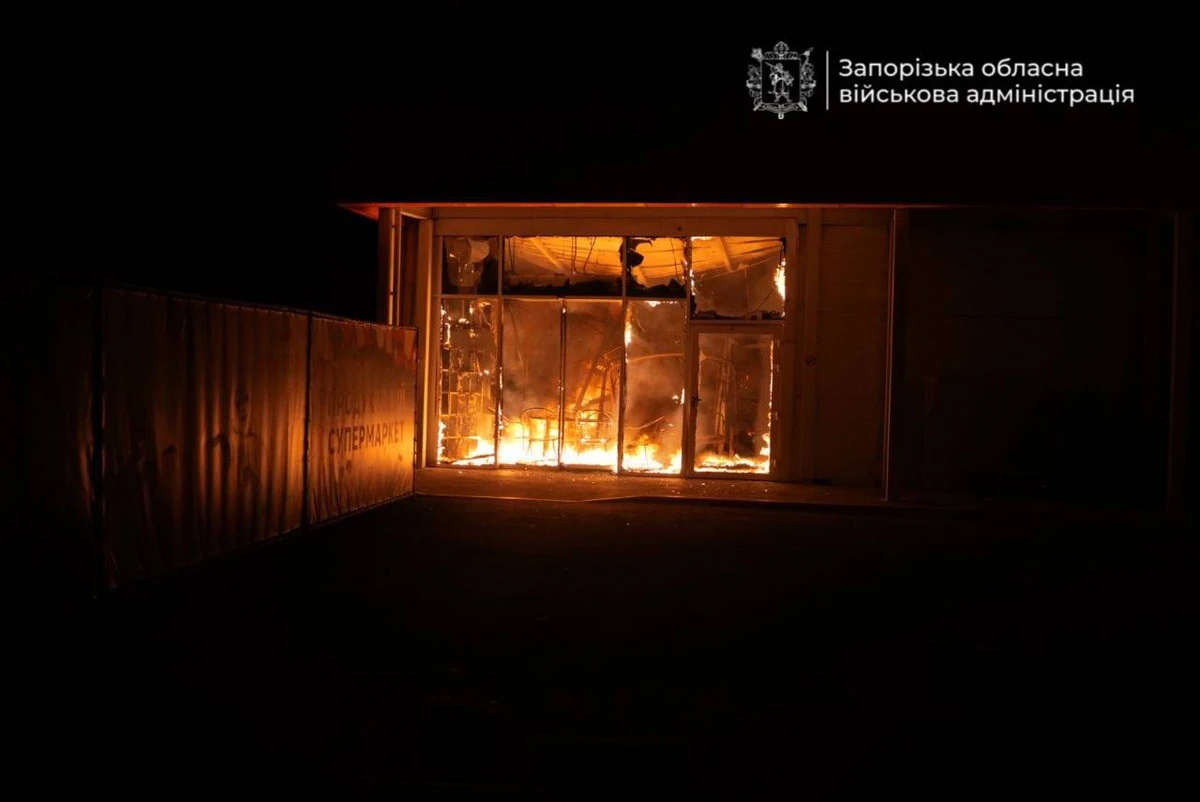
Fire at the Epicentr home-improvement superstore in Zaporizhzhia after a Russian overnight strike. Photo: Ukrainska Pravda

Russian forces launched a combined attack with an Iskander-M ballistic missile, a Kh-31P anti-radiation missile, Kh-35 cruise missiles, and 138 drones — 112 UAVs downed. Zaporizhzhia’s Epicentr superstore caught fire and around 1,200 lost power; two people were killed in Kherson; an Odesa residential building was struck; a DTEK gas production facility in Poltava Oblast halted. In a notable transparency shift, Ukraine has quietly stopped publishing missile interception statistics — signalling intensifying air defence strain.

Frontline tempo rises to 237 clashes; Kupiansk under renewed pressure

Battle count climbed to 237 daily engagements (up from 212), with nearly a third concentrated on the Pokrovsk and Kostiantynivka axes. On the northern front, Ukraine achieved partial relief around Lyman, but Russian forces have re-entered Kupiansk and Kupiansk Vuzlovyi — reversing recent gains in that sector. Russia reported 1,260 soldiers killed or wounded over the past day.

Also today

  • Russia releases ex-US Marine Robert Gilman after four years — no prisoner swap, an unusual concession — NPR · Al Jazeera · Pravda / r/worldnews
  • Russian e-commerce giant Wildberries allegedly tried to manipulate Ukrainian drone targeting to redirect strikes onto rival Ozon — the attempt reportedly failed — United24 / r/worldnews
  • Austria uncovers an international network circumventing EU sanctions to supply Russia with cruise missile and aircraft components — Kyiv Independent

Investigations

US helicopter fires on blockade runner as Iran holds Hormuz closed; Pakistan mediates

US Central Command confirmed its helicopter struck the engine room of a Panama-flagged cargo vessel in the Gulf of Oman after it attempted to break the American naval blockade of Iranian ports. Tehran is holding firm — and has explicitly separated the Oman talks, focused on a “safe passage route” for some shipping, from any full reopening of the strait, which stays closed until the US lifts its blockade and meets other conditions. Qatar says the Oman track is making “major progress.” Pakistan has emerged as the active back-channel: interior minister Mohsin Naqvi visited Tehran as Washington and Tehran trade reparation demands across parallel tracks (Oman for shipping, Switzerland for broader talks). Iran is meanwhile deepening its financial integration with Russia and China by joining the BRICS New Development Bank. Oil prices climbed on the uncertainty.

Trump’s military options are depleting — while Tehran’s advisers counsel outlasting him until 2029

Analysis from Lt. Gen. Mark Hertling (Ret.) and Andrew Egger at The Bulwark: Trump’s military toolkit on Iran is narrowing as US missile stocks are drawn down, merchant crews remain trapped at sea for months, and Iran’s reparation demands widen the negotiating gap. Trump reportedly erupted at his national security team over the deadlock; an ally privately said there was “no real strategy.” The administration is pivoting back toward sanctions. Iranian advisers, meanwhile, are publicly arguing Tehran should avoid major concessions and simply outlast Trump’s second term — a strategic-patience line that signals both a real internal faction resisting deal-making and a negotiating message: Iran is communicating it can absorb the pressure.

Trump confirms the Air Force One decoy; Democrats demand a congressional briefing

Update: Trump publicly confirmed yesterday’s story of the secret plane switch after the NATO summit in Turkey, saying it was “up to the Secret Service.” Per the NYT and WaPo, he was moved in a catering cart to an alternate military jet after a credible Iranian assassination threat — while journalists and White House staff flew on Air Force One as unknowing decoys. Democrats are now formally demanding a congressional briefing; who was informed, and when, remains unresolved.

Kurdish realignment: US exits Iraqi Kurdistan by September 30 as Turkey pardons PKK militants

The US-led coalition is transferring Kurdish bases to Iraqi forces before the September 30 deadline agreed in 2024 — the same deadline Baghdad set for Iran-backed militias to disarm, with the militias long using US presence as justification for staying armed. Only three groups have complied so far; the convergence will be a stress test for Iraqi sovereignty. Across the border, Turkey is moving forward with conditional pardons for PKK fighters under Erdoğan’s peace initiative — relief and deep uncertainty in the southeast after 40+ years of insurgency, with militants who committed crimes inside Turkey excluded. If sustained, the process would reshape the regional security map across the northern Middle East.

Russia forced to relinquish control of key Middle East military bases

Russia is being compelled to give up control of military installations in the Middle East — a significant strategic retreat. Moscow’s regional posture has deteriorated sharply since Assad’s fall removed its most reliable host state in Syria, and its forces remain consumed by the Ukraine war. The loss of forward basing in the Mediterranean and broader Middle East is a retrenchment that would have been unthinkable three years ago.

Russian drones found drifting near EU’s Neptun Deep gas project — blown up by Romania

Romania’s military destroyed Russian-designed Gerbera drones found floating in the Black Sea near the Neptun Deep offshore gas project — critical EU energy infrastructure scheduled to begin production in 2027, doubling Romania’s gas output and supplying Germany and Moldova. The incident comes one week after a Russia-linked explosive drone targeted a Ukrainian cargo plane at Leipzig airport. The pattern points to an active hybrid campaign against European energy infrastructure, with the Black Sea increasingly contested.

Russian civil society in exile: sustained reach, going underground

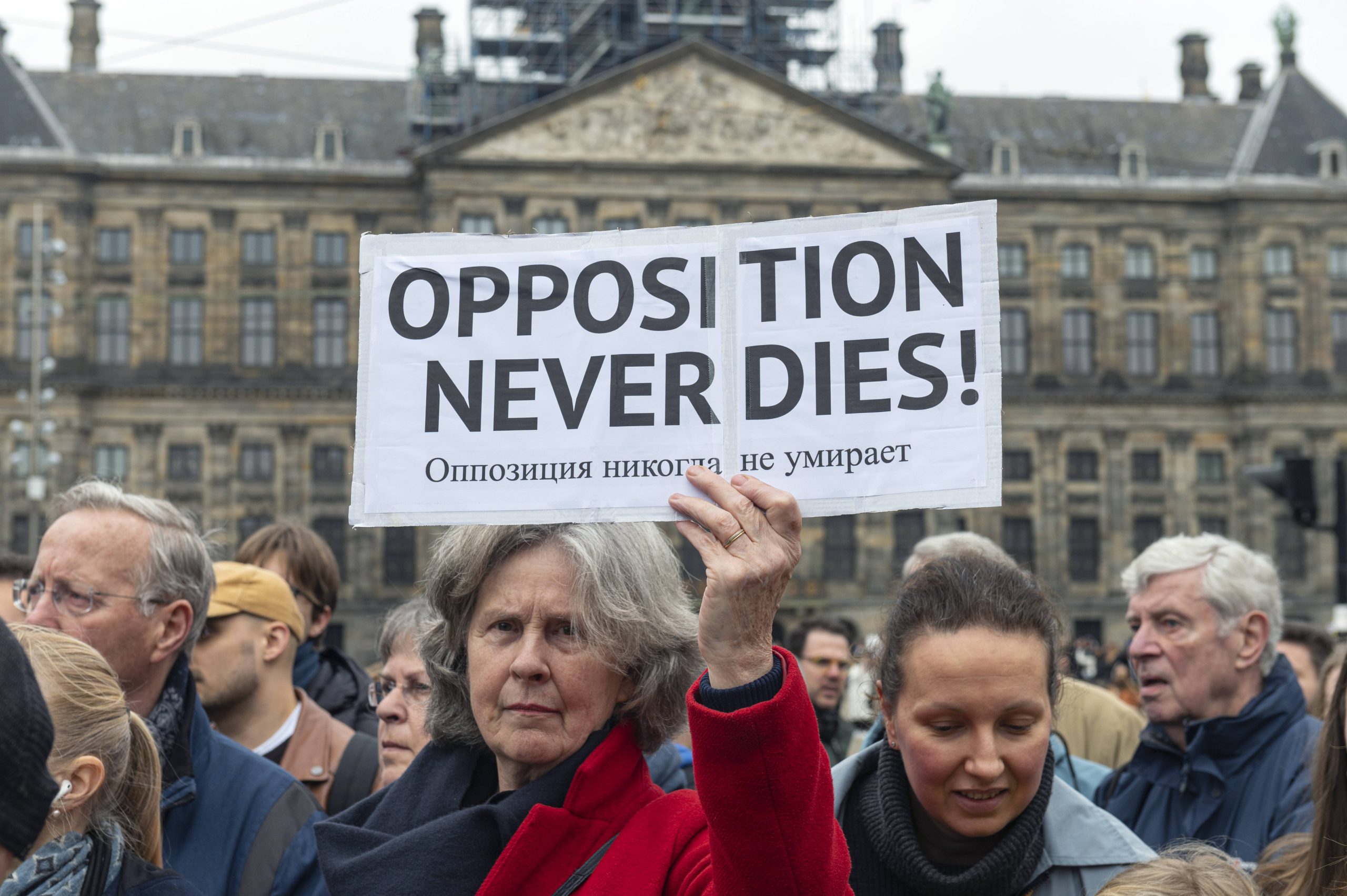
Russian diaspora members gathered at Dam Square in Amsterdam following Alexei Navalny’s death, February 2024. Photo: CEPA

A comprehensive CEPA report finds Russian exile organizations retain substantial audience reach inside Russia and have sustained an independent information space as a real alternative to state propaganda — even under wartime conditions. The key post-2022 shift: a deliberate move away from high-profile political activism toward low-profile civic infrastructure — networks of autonomous cells designed to reduce exposure while preserving organizational capacity. The report concludes these groups “remain a significant force” focused on maintaining horizontal social ties in an increasingly atomized Russian public.

AI could enable automated nuclear deterrence — a new Dead Hand problem

A hand poised above a nuclear launch mechanism. Illustration: War on the Rocks

War on the Rocks analysis by Michael Horowitz, former US deputy assistant secretary of defense: the confluence of arms control collapse, China’s trajectory to 1,500 warheads by 2035, and Russia’s exotic new delivery systems creates a dangerous environment for AI-enabled nuclear automation. The specific threat: states using AI to make “automated nuclear launch” threats credible — a modernized version of Russia’s Cold War Perimeter (“Dead Hand”) system. If adversaries can credibly signal an automated response protocol, deterrence calculus changes in ways existing strategic frameworks don’t account for. The piece calls for deliberate policy before the technology outruns the doctrine.

Tech

A clean-slate GPU API for modern hardware: drop the legacy complexity

3dfx Voodoo 2 (1998): the fragmented hardware era that shaped the complexity of Vulkan and DX12. Photo: Sebastian Aaltonen

A detailed design proposal argues that Vulkan, DirectX 12, and Metal were designed to accommodate GPU architectures from 13+ years ago — fragmented memory models, separate cache hierarchies, incompatible hardware paths. Modern GPUs have converged on unified cache-coherent memory, bindless access, and native 64-bit pointers. The proposed API reduces the entire binding model to a single 64-bit pointer to a user-defined root struct in persistently mapped GPU memory; texture access uses 32-bit indices into a GPU-side descriptor heap; pipelines become stateless, eliminating the PSO permutation explosion. An accompanying video explores the design in depth.

Mojo 1.0: Python-compatible systems language commits to stability

Mojo 1.0 marks the transition from active language design to stability: during the 1.x period, breaking changes will be managed conservatively, like a mature language. The release unifies variable declaration under var, consolidates closure syntax to support Python-style lambdas, streamlines the type lexicon, and stabilizes the LSP server. Mojo now anchors Modular’s commercial infrastructure (MAX inference engine, Modular Cloud) and has crossed 200 community contributors and 1,100+ merged PRs. The bet: systems-performance Python-compatible code has a real audience, and stability is what turns early adopters into production users.

YY-DTOA: the fastest float-to-string algorithm you’ve never heard of, hiding in a JSON library

The yy algorithm, embedded in the yyjson library, is one of the fastest dtoa implementations — but has no published paper and is virtually unknown outside JSON performance circles. It belongs to the Schubfach family (shortest decimal round-trip representation) but needs only one multiplication by a precomputed power-of-10 table entry where classic Schubfach needs two or three, reusing the same table entry with bit-shifts for upper and lower rounding bounds. Victor Zverovich (author of {fmt}) walks through the algorithm’s mechanics and benchmarks it against Ryu and other well-known implementations.

Signal deploys key transparency: automatic detection of directory-level MITM attacks

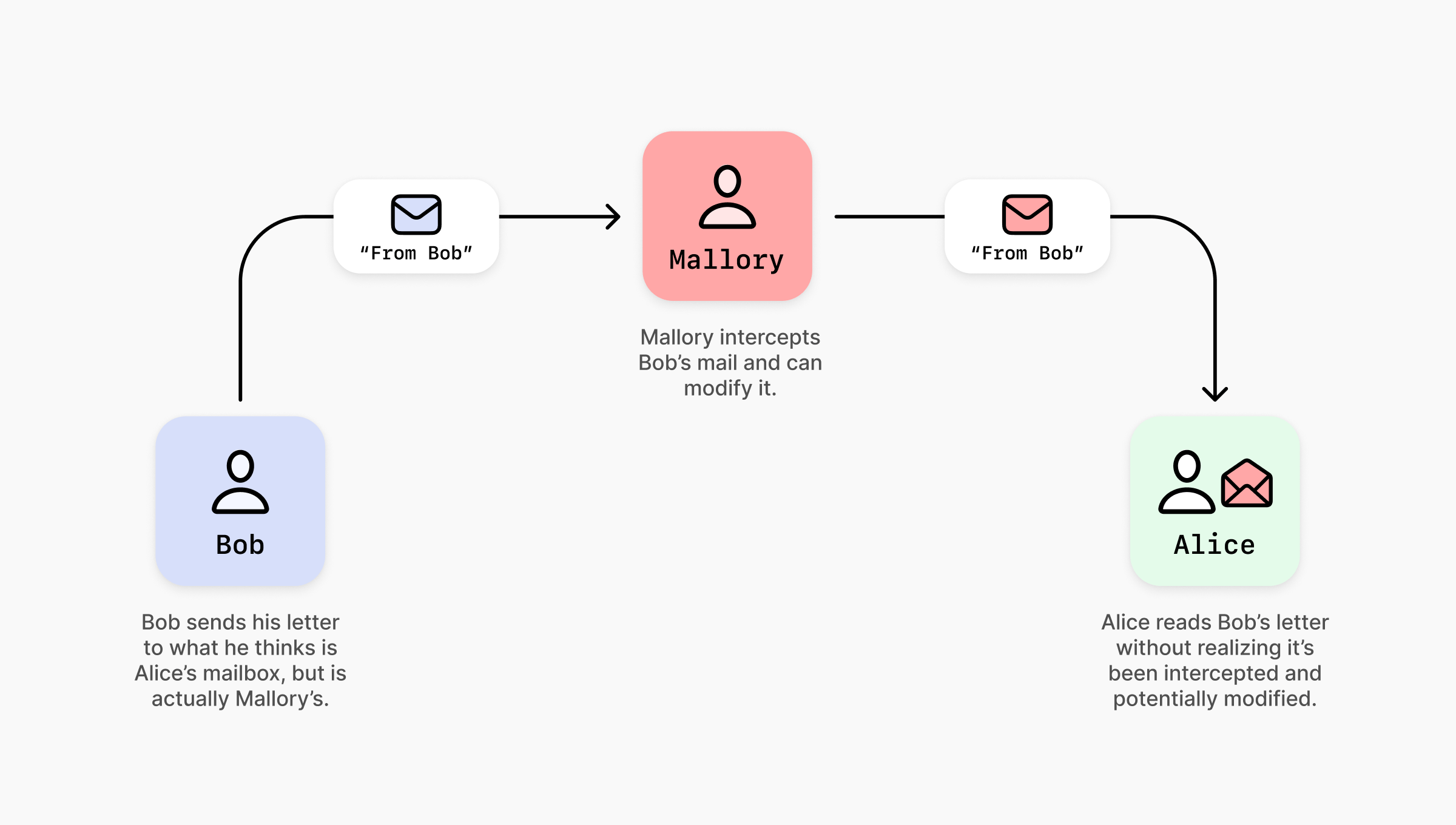
‘Mallory in the middle’: intercepting and replacing a key exchange with neither party aware. Diagram: Signal

Signal’s new automatic key verification uses a key transparency system — a log tree (the ledger) plus prefix trees (index books) — to guarantee every user sees a globally consistent mapping of phone numbers to public keys. If Signal’s central directory were ever compromised to substitute a key, the discrepancy would be cryptographically detectable. Cloudflare and Trail of Bits serve as independent auditors who sign ledger entries; users and contacts periodically check their own keys automatically. The system closes a theoretical but meaningful gap in Signal’s trust model.

Unprivileged Linux container escape via AF_Unix garbage collector race (CVE-2026-53361)

A use-after-free in the Linux kernel’s AF_Unix socket garbage collector allows an unprivileged user to escape container isolation. The race: a MSG_PEEK on an in-flight file descriptor takes a reference the GC’s census never counts, so the collector can free a live socket and leave a dangling sk_buff. Affected: kernel 6.12 up to 6.12.94, Ubuntu 24.04 with kernels 6.17 and 6.14 HWE, RHEL 10, and Debian trixie. Fixed in 6.12.95. A PoC is available.

GNOME Shell design wishlist: search overlay, mosaic tiling, customizable quick settings

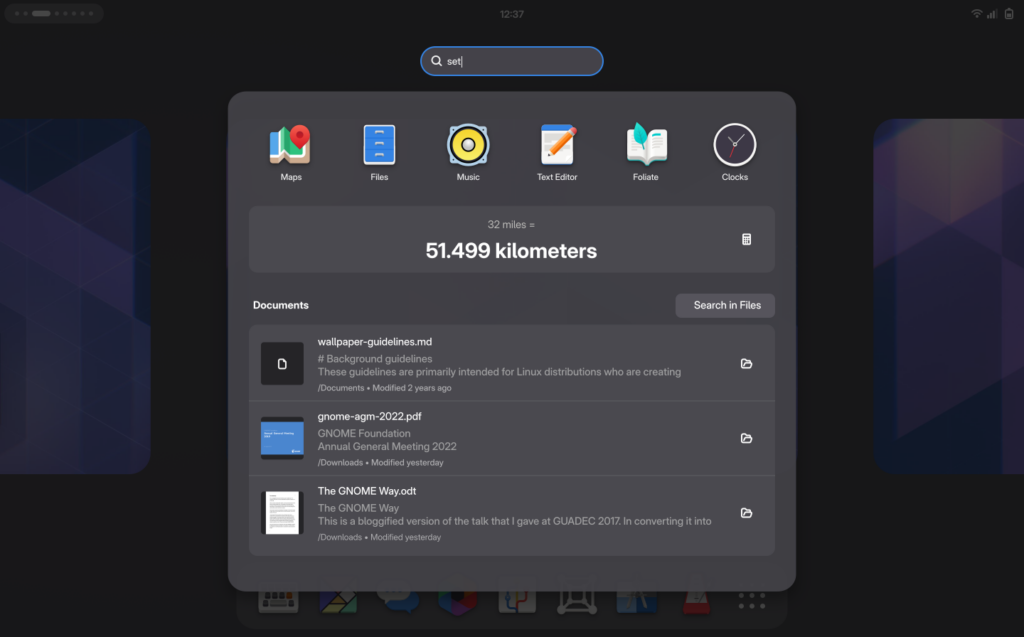
Mockup of the proposed search overlay: richer content types, file previews, and filters layered over the overview. Image: GNOME Shell design team

The GNOME Shell design team has published a detailed roadmap of intended UX improvements. Search results would become an overlay spawning from the search entry, preserving GNOME 40’s spatial model rather than replacing the whole overview. Quick settings get a user-editable toggle list; notifications move into quick settings; the calendar popover gets simplified. A “Mosaic” tiling mode would auto-resize windows to share space, and drag-and-drop workspace management would let users organize windows against scaled workspace thumbnails. Implementation timeline depends on contributor availability.
Also today

  • Tail-call interpreters in Rust: trampolining, CPS, and LLVM’s musttail as workarounds for the missing TCO guarantee, with benchmarks — lordgoati.us · Lobsters
  • Briar, the P2P encrypted messenger built for censorship-hostile environments, enters maintenance mode — security updates and bugfixes only, after the team weighed shutting down entirely — Briar · Lobsters

AI & Automation

Software factory post-mortem: automating implementation first was backwards

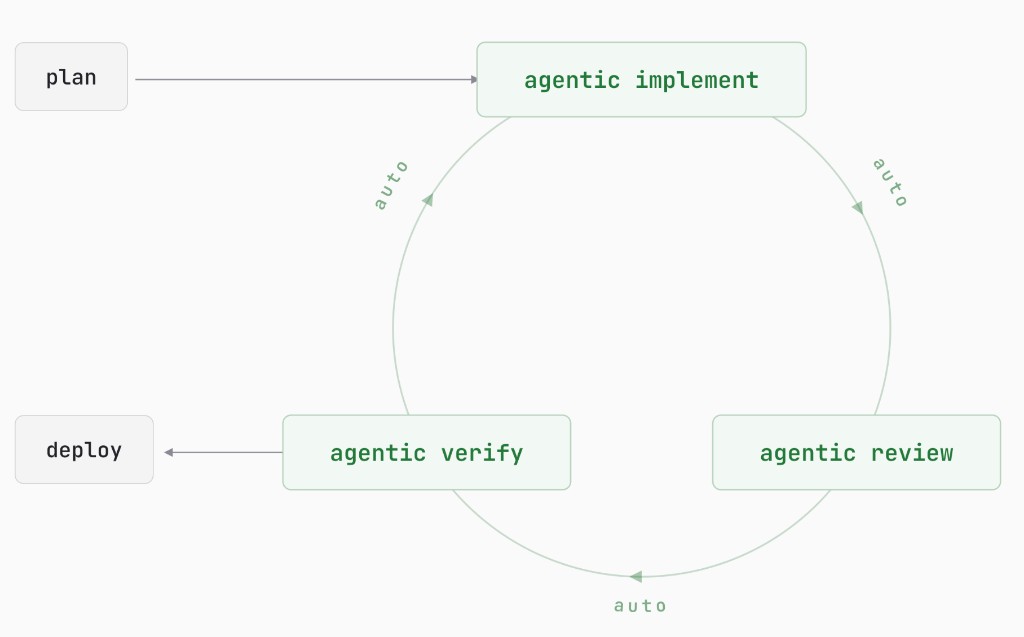
The autonomous agent loop: plan → agentic implement → agentic review → agentic verify → back to implement or deploy. Diagram: islo.dev

islo.dev published a candid post-mortem on building an agentic software factory. The key failure: automating code generation before building review and verification infrastructure. Agent-generated code looked plausible but contained wrong architectural decisions that took more effort to catch than writing from scratch — review became the new bottleneck. The corrected order: build agentic review and verification first, then return to implementation. Other concrete lessons: agents need isolated dedicated environments (shared ones cause state leakage and package conflicts); verification means running the full product stack, not just the modified tests; integration plumbing (OAuth, webhooks, credential injection, session routing) consumed more effort than the core logic; and auditing agent sessions — tool calls, token usage, decision points — was essential for prompt tuning.

Researchers extract proprietary LLM reasoning traces via cross-model replay and jailbreak

A paper at stolen-thoughts.com details how encrypted reasoning traces from a capable model (e.g., Claude Opus) could be replayed into a weaker sibling model and — because the smaller model is more susceptible to jailbreaks — prompted into outputting the plaintext. The underlying design flaw: reasoning tokens weren’t bound to a specific user session, and legitimate mid-conversation model-switching created unintended portability. The attack has been patched, but HN commenters are debating whether reasoning traces are proprietary IP or user-owned outputs — a question the fix doesn’t answer.

Transformer set by hand, not trained, achieves 100% multiplication accuracy

A researcher used a compiler called Torchwright to translate the grade-school multiplication algorithm directly into transformer weights — no training involved. Four variants were built and compiled into an ordinary Phi-3 checkpoint; the grade-school model hit 100% accuracy on all 3,000,000 valid 3-digit expressions. In comparison, frontier LLMs including Claude Opus 5 and GPT-5.6 Sol dropped to 0–5% accuracy at 7-digit operands without chain-of-thought. The practical takeaway is less about arithmetic than about what transformers can represent when weights are chosen analytically rather than learned.

Moli: Rust browser engine purpose-built for AI agent workloads

Open-sourced from a cloud browser startup, Moli is a DOM-first browser engine written in Rust that skips layout and paint unless explicitly requested — the opposite of Chrome’s always-render architecture. It uses V8 for JavaScript, Servo/Stylo for CSS cascade, and Taffy for layout, with software rendering on demand. Benchmarks: 73 MiB median memory vs Chrome’s 773 MiB; CDP ready in ~35ms vs ~169ms; CDP, WebDriver Classic, and WebDriver BiDi from a single binary with no separate ChromeDriver. Designed for crawling, browser-use agents, and eval environments where page structure matters more than pixel-perfect rendering.

Claude Code hook rewrites ‘Claudish’ into plain language via local LLM

A developer built a Claude Code MessageDisplay hook that silently rewrites Claude’s verbose output into plain English using a local Ollama model. The implementation handles Claude’s streaming architecture by buffering chunks to a temp file keyed by message ID, reconstructing the full message on the final chunk, then sending it — along with the original user question — to the rewriter. Display-only: transcripts and reasoning retain the original text, and the system fails open if Ollama is unavailable. An optional companion hook simplifies Markdown files written during coding sessions.

Also today

  • System prompt comparison across the Claude model family surfaces A/B experiment patterns: small changes ship with nearly every update, sometimes rolling back days later — GitHub · r/ClaudeAI
  • An MCP server bridges Claude Code and Claude Design — which has no public API — making production-quality UI accessible inside a coding session without copy-paste — r/ClaudeAI
  • Fable 5 vs Opus 5 on the same 2D sprite brief: similar quality floor, different scope — Fable focused and compact, Opus broader and more elaborate — r/ClaudeAI
cd ~/repos/josse-posten && claude --resume df23b05d-6224-4ea3-8edd-2cc0dd8b7e1a