FAR.AI
security leaderboard: 100× cost spread between the strongest and weakest
frontier models
FAR.AI launched an independent AI security leaderboard measuring how
much it costs an attacker to reliably jailbreak frontier models into
assisting with chemical, biological, or cyberattacks. The spread is
alarming: Claude Fable 5 and GPT-5.6 Sol resisted all tested attacks
with estimated break cost above $14,000, while Grok 4.5 cost $58 overall
— and just $24 for cybersecurity assistance. Gemini 3.1 Pro fell below
$300. Crucially, the techniques that defeated weaker models weren’t
novel research but publicly available jailbreaks. Grounds for optimism:
every weakness found belongs to a known attack class with existing
defenses — fixable through engineering, not fundamental. The leaderboard
introduces a “Minimal Standard for Safeguards” as a shared floor for
frontier model security. (Anthropic’s own eval-sandbox breaches on
the front page.)
Kimi
K3: open-weight frontier model releases weights, kernels, and an agentic
sandbox runtime
Moonshot AI’s Kimi K3 ranks 4th globally on the Artificial Analysis
Intelligence Index (57.1), trailing only Claude Fable 5, GPT-5.6 Sol,
and Claude Opus 5 — and tops BrowseComp at 91.2%. The
2.78-trillion-parameter MoE activates 104B parameters per token across a
1M-token context window. Its headline innovation is Kimi Delta
Attention: a linear attention variant whose per-token compute stays
constant regardless of context length, using a fixed 128×128 recurrent
matrix per head instead of a growing KV cache — 69 KDA layers paired
with 24 standard MLA layers for 42× cache compression. Moonshot released
not just weights but FlashKDA CUDA kernels, the MoonEP expert
parallelism library, and AgentENV, a Firecracker microVM sandbox runtime
used for agentic RL training — 51 million sandboxes during K3’s run,
with 133ms checkpoint and 49ms resume. Training efficiency is 2.5×
predecessor K2 at matched validation loss.
Cloudflare launched Precursor, a continuous client-side bot detection
system that monitors cursor movement, keyboard timing, focus changes,
and session-wide behavioral patterns to catch automation individual
interactions can’t reveal. It’s specifically designed to defeat bots
that add random noise to look human — actual human movement follows
physical constraints (velocity, inertia, correction overshoots) that
Gaussian noise doesn’t replicate. Within days, a community member posted
training results for a 2-layer LSTM with a Mixture Density Network
trained on real human mouse trajectories: it learns the underlying
physics distributions rather than adding noise, and the results were
reportedly convincing enough to fool bot detectors. The cat-and-mouse is
now explicitly machine learning versus machine learning.
The
peer review crisis deepens: AI-fabricated authors accepted as orals, PhD
pipelines drying up
Two new data points on the ML review dysfunction covered Wednesday. A
researcher reviewing AI conference submissions flagged two papers whose
author names appeared to be AI-generated — after raising the concern
through formal channels, both were accepted as oral presentations
anyway; the system acknowledged the flag and proceeded regardless.
Meanwhile an early-career assistant professor reports losing three
promising PhD candidates — undergraduates they’d mentored through
research projects — who declined graduate studies after experiencing the
submission and review process firsthand, with a fourth wavering. The
review crisis is no longer just producing bad reviews; it’s visibly
discouraging talented people from entering research at all.
Anthropic
strips most of Claude Code’s built-in system prompt
Anthropic has removed a large portion of Claude Code’s built-in
system prompt, shifting responsibility for behavior configuration to
users’ own CLAUDE.md files — a deliberate design philosophy that
behavior customization belongs to individual users and teams, not baked
uniformly into every instance. In practice, practitioners who relied on
implicit behaviors now need to encode those expectations explicitly in
project or user CLAUDE.md. Community reaction is largely positive —
increased control and transparency — though it requires conscious setup
rather than out-of-box behavior.
 The Ceuta border as Spain deploys
its military following a mass migrant surge from Morocco. Photo: Al
Jazeera
The Ceuta border as Spain deploys
its military following a mass migrant surge from Morocco. Photo: Al
Jazeera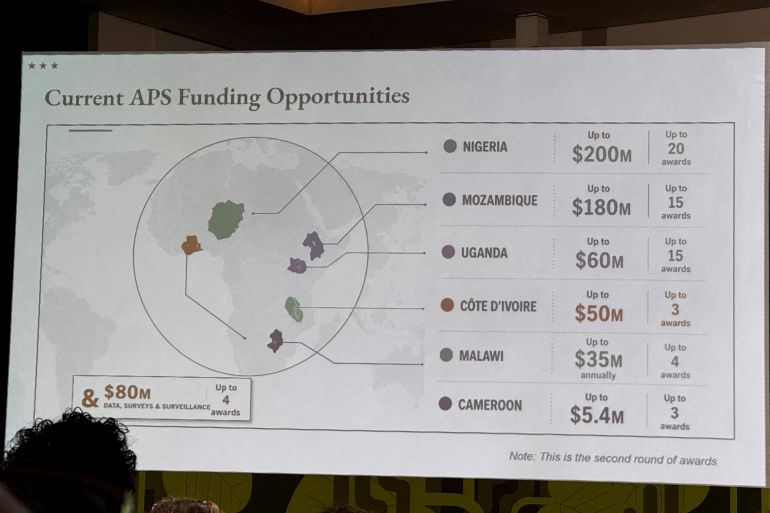 The US government’s mislabelled map
of Africa on screen at the AIDS conference in Rio de Janeiro. Photo:
Reuters via Al Jazeera
The US government’s mislabelled map
of Africa on screen at the AIDS conference in Rio de Janeiro. Photo:
Reuters via Al Jazeera Smoke rising above the
Lukoil-Permnefteorgsintez refinery in Perm after a Ukrainian drone
strike. Photo: Kyiv Independent
Smoke rising above the
Lukoil-Permnefteorgsintez refinery in Perm after a Ukrainian drone
strike. Photo: Kyiv Independent Damage at a factory in south Tehran
bombed during the US-Israeli war — Iran is urgently seeking to rebuild
degraded air defenses. Photo: Ynet
Damage at a factory in south Tehran
bombed during the US-Israeli war — Iran is urgently seeking to rebuild
degraded air defenses. Photo: Ynet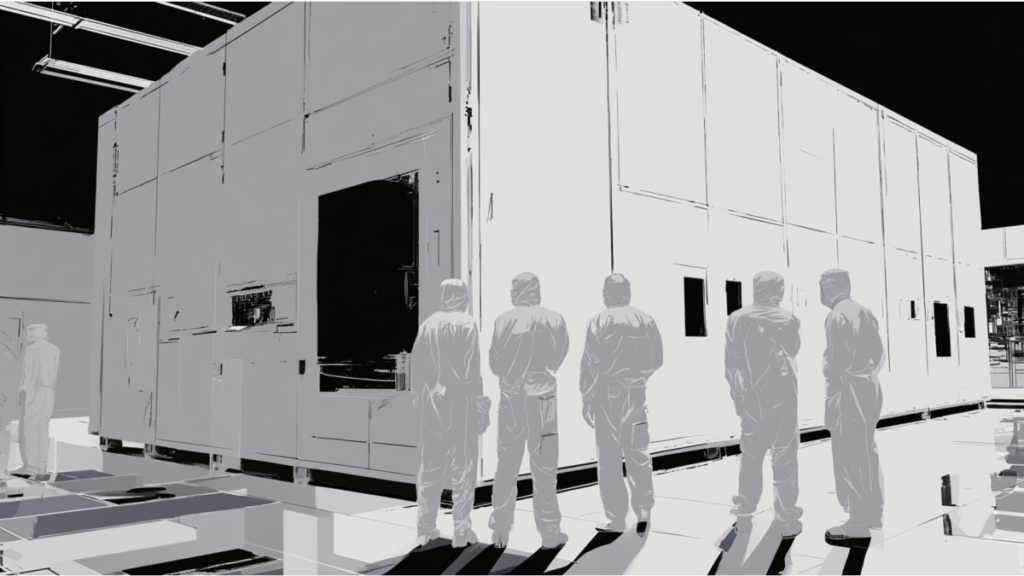 ASML’s extreme ultraviolet
lithography and the limits of reverse engineering. Graphic: War on the
Rocks
ASML’s extreme ultraviolet
lithography and the limits of reverse engineering. Graphic: War on the
Rocks GitHub’s new stacked pull requests
UI, with a merge box showing a chain of dependent PRs. Image: GitHub
GitHub’s new stacked pull requests
UI, with a merge box showing a chain of dependent PRs. Image: GitHub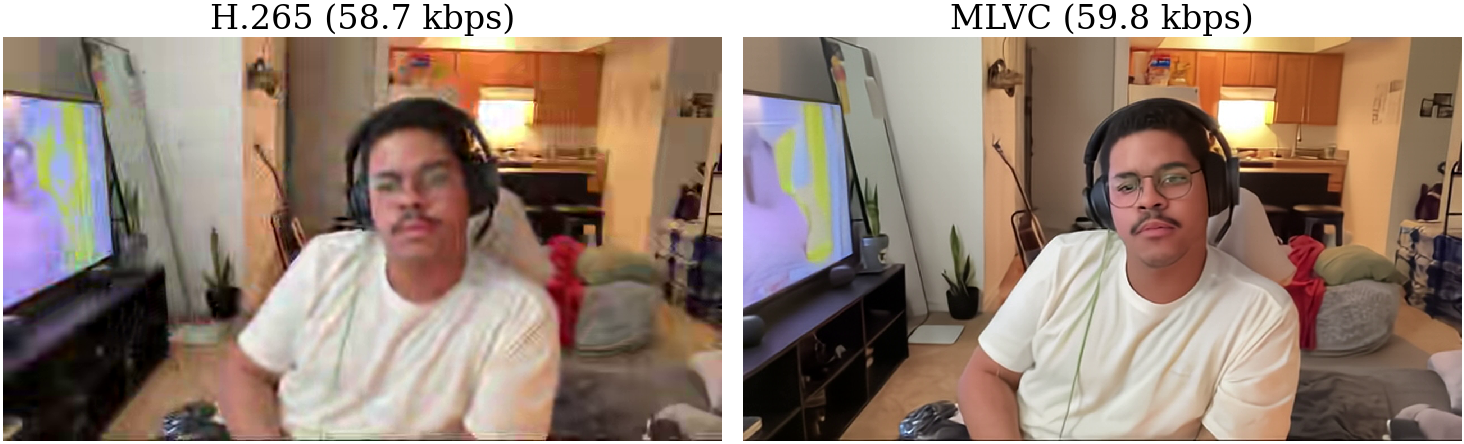 Frame quality comparison between
hardware H.265/HEVC and the MLVC neural codec. Image: Microsoft
Frame quality comparison between
hardware H.265/HEVC and the MLVC neural codec. Image: Microsoft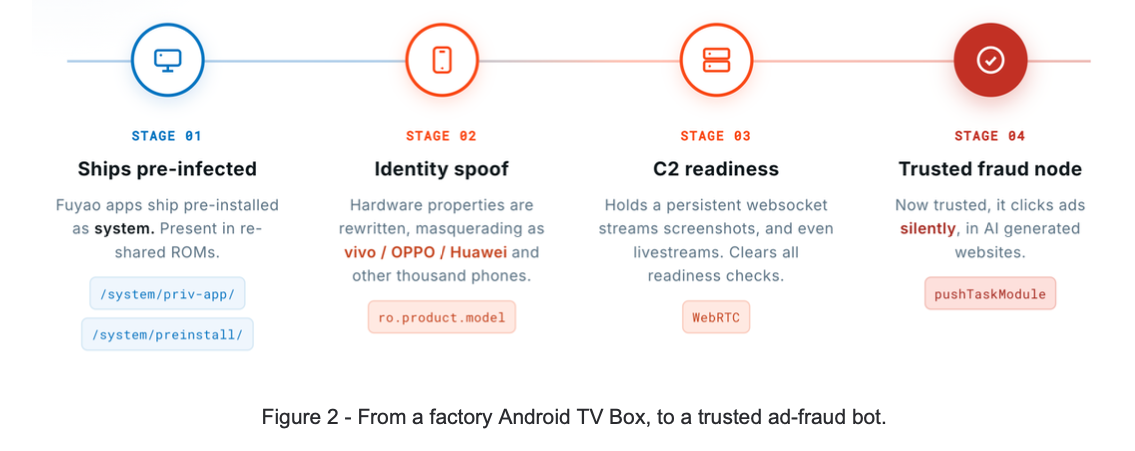 Bitsight graphic: H96 devices ship
pre-infected with backdoor software from China’s Fengwo Group. Image:
Bitsight via Krebs on Security
Bitsight graphic: H96 devices ship
pre-infected with backdoor software from China’s Fengwo Group. Image:
Bitsight via Krebs on Security Cloudflare’s Precursor continuously
monitors cursor movement, keyboard timing, and session-wide behavioral
patterns. Image: Cloudflare
Cloudflare’s Precursor continuously
monitors cursor movement, keyboard timing, and session-wide behavioral
patterns. Image: Cloudflare