Eleventh
night of US strikes — Trump threatens Iran’s underground ‘Pickaxe
Mountain’
The US military carried out its eleventh consecutive night of attacks
on Iran, extending strikes to provinces not previously hit, including
the northwestern city of Tabriz. President Trump escalated with an
explicit threat to bomb Pickaxe Mountain — a suspected deep underground
nuclear facility — “very heavily.”
Iran widened its own campaign against Gulf neighbours: Kuwaiti power
and desalination plants were struck for a fourth straight day, the IRGC
claimed a cruise-missile strike on Amazon cloud infrastructure in
Bahrain, and a fresh attack on a US base in Jordan killed a third
American soldier, Sgt. Angel Rampersad — bringing the US military death
toll to 18 since hostilities resumed, with nearly 100 wounded. Defense
Secretary Hegseth told a fractious congressional hearing the war has
cost $37.5bn so far; the Pentagon is seeking a further $70bn. Iran’s
foreign minister Araghchi gave his most detailed account yet of the
opening strike that killed Supreme Leader Khamenei, saying he was
“pulled from the rubble” of a leadership compound.
The strait itself is now near-paralysed: before the war roughly 20%
of global oil and LNG transited Hormuz; maritime intelligence firm Kpler
now counts only a handful of ships still moving through, and a
fee-for-passage “tolls” framework is emerging as the solution most
likely to restart traffic. The Guardian described a White House
“operating without expertise, strategy or restraint.”
Zelensky
fires Syrskyi, appoints Gen. Drapatyi — ending six days of protest
President Zelensky dismissed commander-in-chief General Oleksandr
Syrskyi on July 21 and appointed Major General Mykhailo Drapatyi —
formerly head of the Joint Forces Task Force and before that the Ground
Forces — ending a command crisis that had deepened over six days of
street protests. The crisis began a week earlier when Zelensky sacked
defence minister Mykhailo Fedorov (35), the champion of drone-and-robot
warfare, for clashing with Syrskyi; thousands took to the streets in
Fedorov’s defence, and Zelensky ultimately sided with the protesters.
Syrskyi’s parting statement claimed he was handing over forces “on the
offensive.” Fedorov, who hailed Drapatyi as “a breath of fresh air,”
declined several posts he was offered, including deputy prime minister
for technology.
The episode exposed a strategic fault line: Fedorov’s high-tech,
life-sparing innovation doctrine against Syrskyi’s grinding attrition —
with young Ukrainians betting their future on the former.
Ukraine
strikes 13 Russian vessels and burns logistics hubs deep inside
Russia
Ukrainian drone forces struck 13 Russian vessels across the Black Sea
and Sea of Azov over 48 hours, and a Liberian-flagged cargo ship was hit
~20 nautical miles off the Romanian coast — Romanian President Dan
assessed it as a Russian act, extending the maritime war into
international waters near NATO territory. Overnight, two Wildberries
logistics warehouses were engulfed in Krasnodar and Nevinnomyssk, an oil
depot burned in Armavir, a fire was reported near the Novolipetsk Steel
Plant (Russia’s largest, ~20% of national output), and special forces
disabled 13 railway bridges in occupied territory. Russia’s own
overnight wave of 58 drones was largely repelled, but an Iskander
ballistic missile struck near Kyiv, injuring five people including three
children.
(Full military picture in Ukraine.)
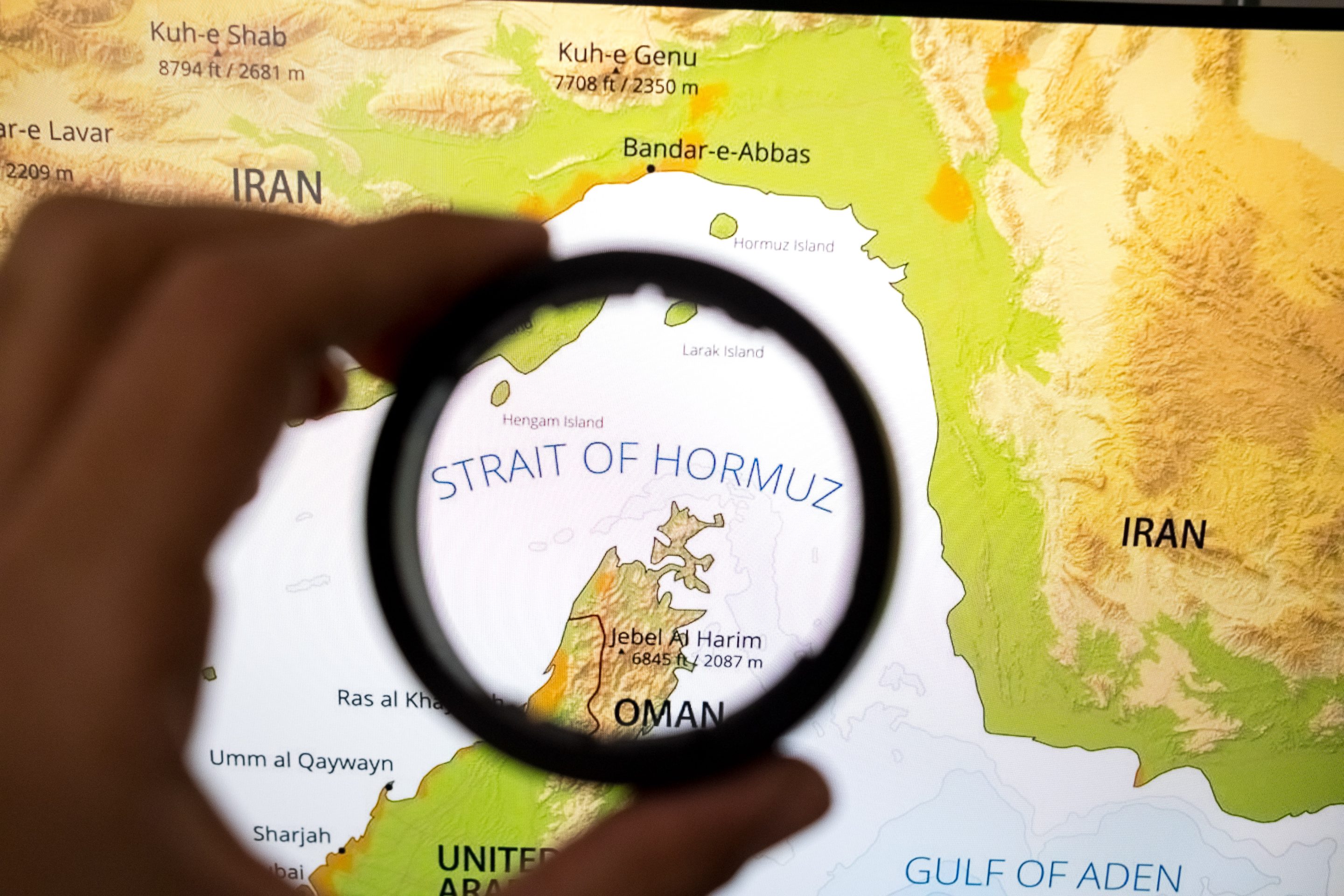 The Strait of Hormuz, the chokepoint
at the center of the war — now nearly emptied of traffic. Map:
Fortune
The Strait of Hormuz, the chokepoint
at the center of the war — now nearly emptied of traffic. Map:
Fortune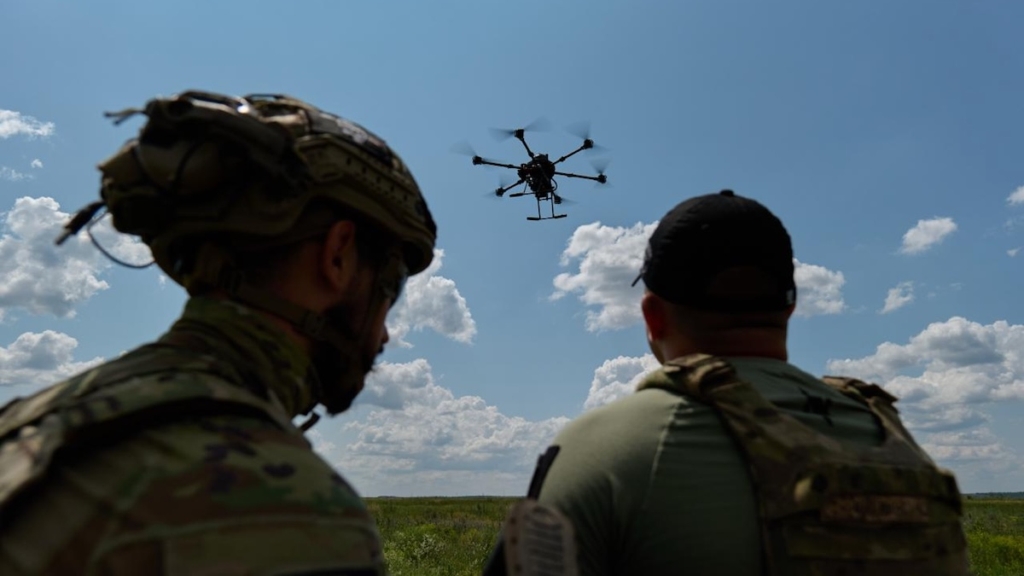 Ukrainian soldiers launch a
hexacopter drone. Photo: ArmyInform
Ukrainian soldiers launch a
hexacopter drone. Photo: ArmyInform Rare earth separation chemistry and
China’s export-control architecture. Illustration: Raw Science
Rare earth separation chemistry and
China’s export-control architecture. Illustration: Raw Science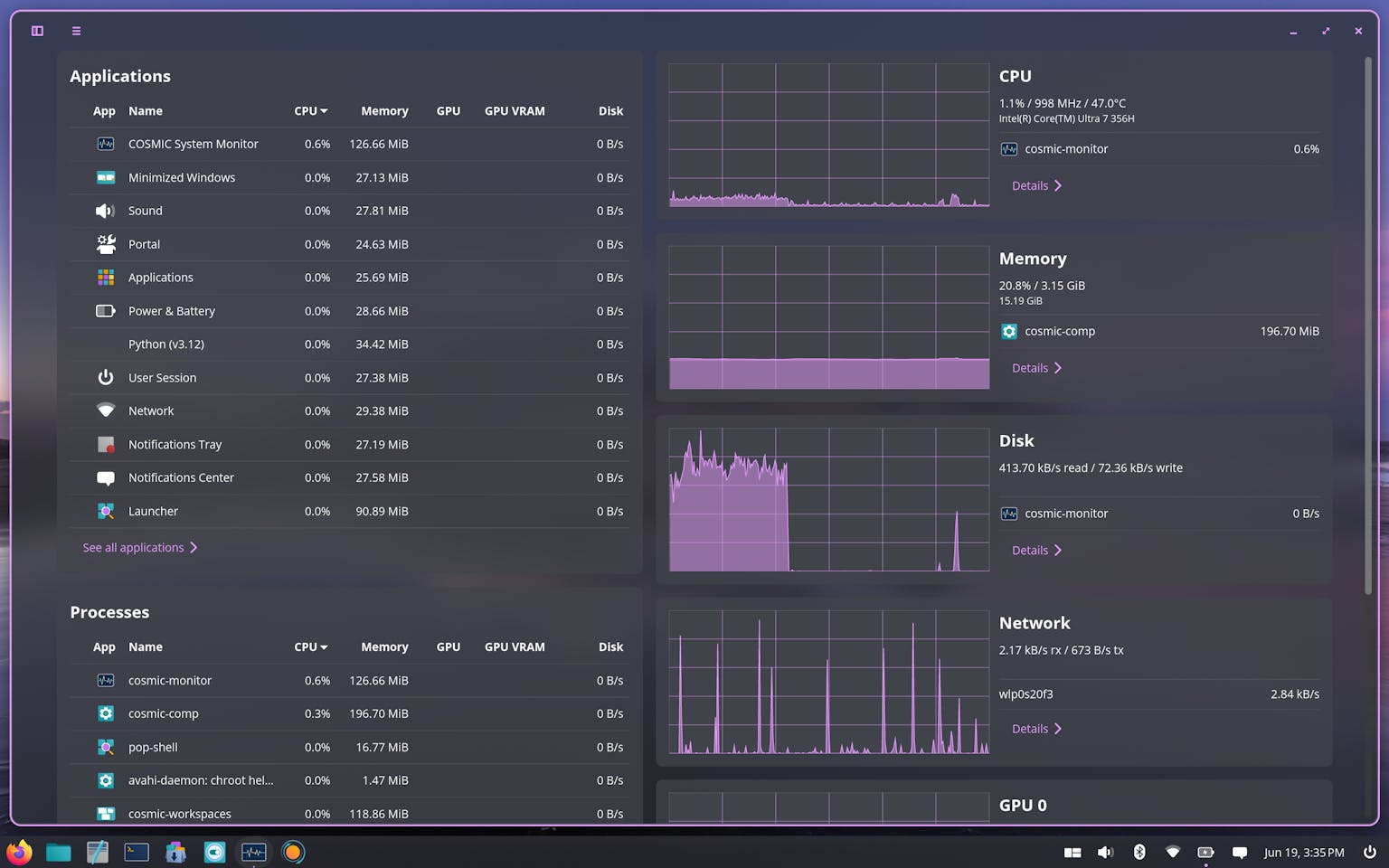 The new COSMIC System Monitor
dashboard. Screenshot: System76
The new COSMIC System Monitor
dashboard. Screenshot: System76 The ‘Record a Skill’ interface in
Claude Cowork. Screenshot: Android Authority
The ‘Record a Skill’ interface in
Claude Cowork. Screenshot: Android Authority