Josse-posten

A deadline day in the Gulf, Russia’s fuel economy buckling under the largest night of maritime strikes yet, and a machine that says it proved a theorem mathematicians could not.

Iran privately admits Hormuz “mistake” as US sets Saturday ultimatum

Iran privately told Trump advisers it “made a mistake” in shooting at ships in the Strait of Hormuz, even as the US set today as the deadline for Tehran to publicly renounce the attacks and declare the strait open. JD Vance is among the US officials in Oman for resumed negotiations, and Europe is studying a compromise framework of voluntary navigational fees. The diplomacy runs alongside fresh menace: Trump threatened to “decimate and destroy all areas of Iran” if he is assassinated, after calls for his killing were heard at Khamenei’s funeral.

Largest single-night maritime strike of the war strains Russia’s fuel economy

Overnight, Ukraine appears to have carried out its largest single maritime operation to date — reports of up to 34 Russian ships hit, bringing the five-day total to 48 vessels and 27.5% of all Russian craft in the Sea of Azov. Drones also knocked out five Crimean substations, forcing the power cuts Sevastopol’s occupation governor dubbed the “Crimean Switch Off.” The refinery campaign is now measurable in barrels: the IEA cut its Russian oil forecast by 3% to 8.9 million bpd, gasoline output has fallen to roughly 65% of demand, and Deputy PM Novak has publicly conceded refinery shutdowns for the first time. (Full coverage in Ukraine.)

GPT-5.6 Sol Ultra claims a proof of the Cycle Double Cover Conjecture

OpenAI’s GPT-5.6 Sol Ultra has reportedly produced a complete proof of the Cycle Double Cover Conjecture — a graph-theory problem open since Szekeres and Seymour posed it in the late 1970s, holding that every 2-connected graph admits a collection of cycles covering each edge exactly twice. OpenAI has published both the proof and the prompt. The claim is very fresh and community verification is pending; if it survives expert scrutiny, it would be a landmark for both mathematics and AI-assisted research. (More in Tech.)

Indicator Value Change
S&P 500 7,575 +0.42%
Dow 30 52,637 +0.29%
Nasdaq 26,282 +0.29%
Russell 2000 2,978 -0.49%
VIX 15.0 -5.11%
Gold 4,129 +0.37%
BTC $64,181 +0.39%
USD/NOK 9.78 0.00%
  • VIX -5.1% — volatility easing as Iran signals Hormuz de-escalation ahead of today’s US deadline

World

Trump backs Russian oil tariffs for Ukraine peace; EU unlocks €60B arms loan

The Trump administration is moving to support heavy tariffs on Russian oil as a diplomatic lever to press Moscow toward a Ukraine settlement, according to sources familiar with the discussions. In parallel, the EU is set to let Ukraine draw on its €60 billion loan facility to buy British arms — a significant broadening of procurement channels previously restricted to EU suppliers. The moves come as US senators reached bipartisan agreement with the administration on a new Russia sanctions bill, the first concrete sign of White House alignment on expanded sanctions. (Sanctions and Patriot details in Ukraine.)

Venezuela earthquake death toll passes 4,000

Rescuers atop a collapsed building in La Guaira after Venezuela’s twin earthquakes. Photo: Pablo Sanhueza/Reuters

Venezuela’s twin-earthquake death toll has risen to 4,118, with 16,740 injured and thousands still missing, the government reported Friday. In La Guaira, volunteer doctors have converted a fast-food restaurant into an emergency clinic as overwhelmed health infrastructure struggles to cope. The UN and acting President Delcy Rodríguez are calling for international financial aid as the scale of the recovery becomes apparent.

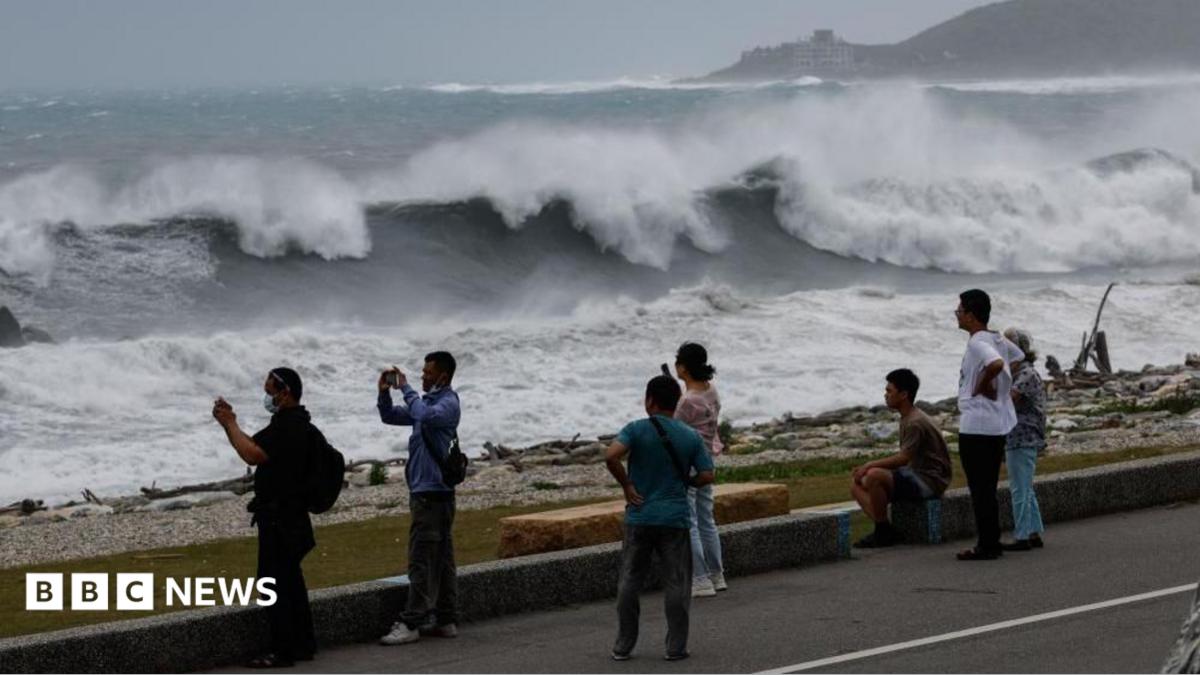
Super-typhoon Bavi bears down on Taiwan after Maysak devastates southern China

Residents watch huge waves brought by Typhoon Bavi in Hualien city, Taiwan.

Typhoon Bavi — roughly 1,000 km wide and forecast to be one of the strongest storms to hit the region in decades — is tracking toward Taiwan and southeastern China. It follows Typhoon Maysak, which killed at least 11 people, inundated Guangxi with record rainfall and left residents stranded on rooftops. Associated landslides have already killed 15 in the Philippines.

Meta pulls AI image feature after four days over privacy outcry

Meta withdrew its “Muse Image” feature — which let any user generate images from content scraped off public Instagram accounts — within days of launch, following immediate backlash over consent and privacy. The retreat is a rare rapid reversal for Meta on an AI product, and it lands as European regulators separately warn the company it faces significant Digital Services Act fines over “addictive” design features such as infinite scroll and algorithmic amplification.

Also today

Americas
Cuba went dark nationwide for the second time in a week as the US de facto oil blockade strains its grid past breaking — Al Jazeera
Amazon deforestation has fallen to its lowest rate in a decade under Lula, months before Brazil’s election — Al Jazeera
Alberta’s Calgary Stampede becomes the symbolic launchpad for a formal separation campaign ahead of October’s referendum — BBC
United States
The largest US housing-affordability bill in decades became law without Trump’s signature, after he withheld it to demand a voter-ID bill first — NPR · Al Jazeera: why it won’t fix the crisis
The administration finalized a rule narrowing “harm” under the Endangered Species Act, opening imperiled habitats to logging and mining — Guardian · NPR
Asia & Africa
Afghanistan’s Taliban banned smartphones for state workers, police and military — a prohibition already spreading into hospitals and schools — NPR
Protests engulfed India’s West Bengal after the rape and murder of an 11-year-old, a mob lynching of an innocent man, and police killing a suspect — The Guardian
Nigerian forces rescued dozens of schoolchildren and teachers abducted from three Oyo State schools in May — Al Jazeera
Japan will transfer five used destroyers to the Philippines, a notable expansion of security ties amid South China Sea tension — Kyodo News
Nicaragua’s Ortega-Murillo government stripped lawyers of their professional certification in its latest crackdown on civil society — Al Jazeera
Europe
Devon and Cornwall police opened a murder investigation into the death of former Conservative MP and Brexit Party MEP Ann Widdecombe; a man arrested and released is no longer part of the inquiry — The Guardian · LBC
Diplomacy
Zelensky said China responded “harshly” to recent Russian nuclear saber-rattling — the first time Beijing has pushed back on such threats — Kyiv Post
Ukraine is in talks with Japan’s Mitsubishi to co-produce Patriot interceptors and build domestic capacity — United24

Ukraine

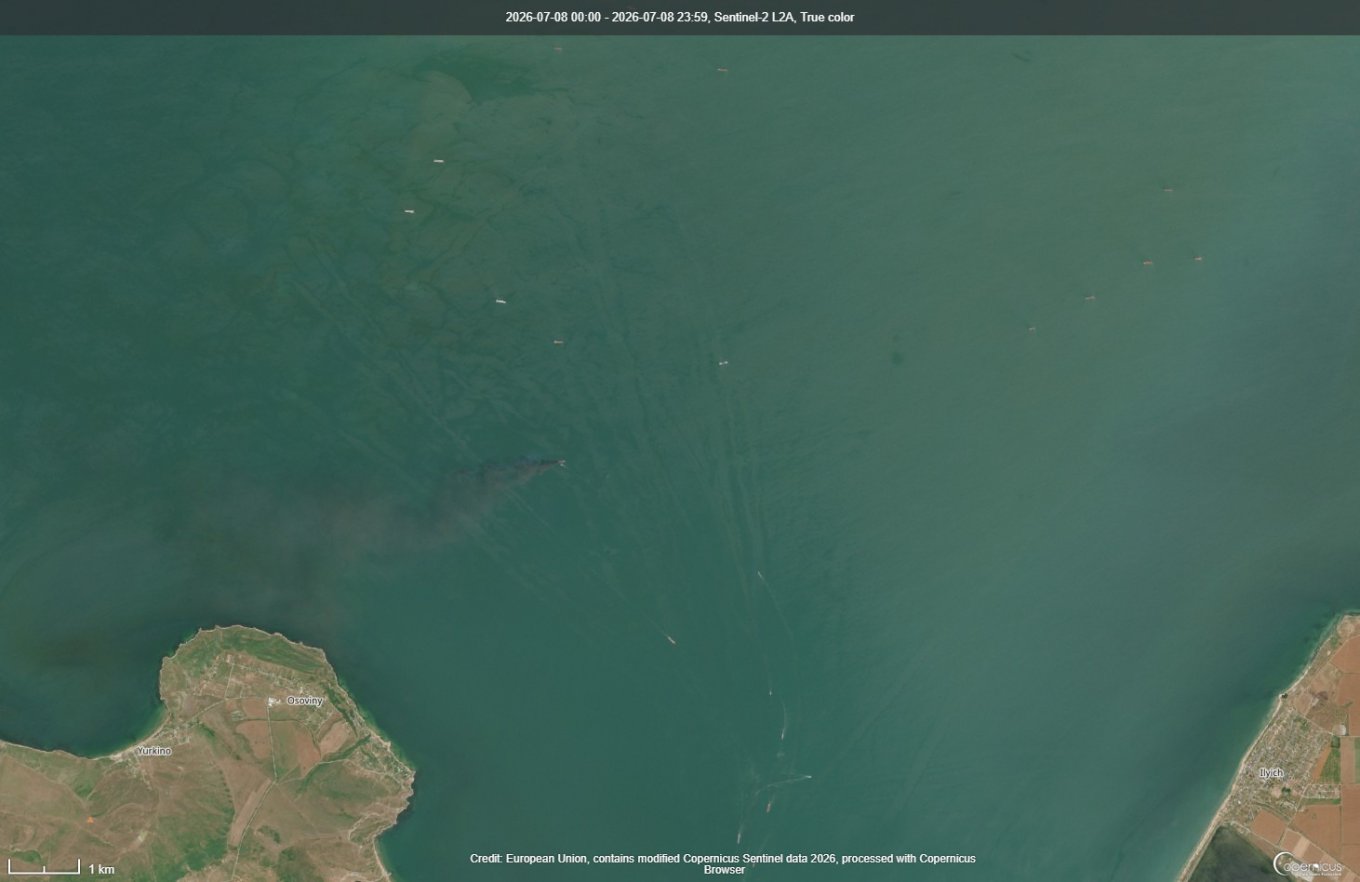
Largest single-night maritime strike of the war: 34 ships, 5 Crimea substations

A burning Russian ship near the Kerch Strait, July 8, 2026.

Overnight July 10–11, Ukraine appears to have conducted its largest single maritime operation yet — reports of up to 34 Russian ships struck in one night, bringing the five-day campaign total to 48 vessels, including 27.5% of all Russian craft in the Sea of Azov. In the same operation, Ukrainian drones hit five 110 kV substations across occupied Crimea, triggering the Sevastopol power restriction the occupation governor dubbed the “Crimean Switch Off.” Russia is now improvising armed mobile drone-interception teams aboard commercial vessels in the Azov to protect tanker convoys. India reportedly appealed through diplomatic channels for Ukraine to spare one tanker carrying 50,000 tons of gasoline bound for Russia.

Russia’s fuel crisis reaches a critical threshold

Russian gasoline production has fallen to roughly 65% of seasonal demand after Ukraine’s sustained refinery campaign — the deepest shortage so far — and the IEA cut its Russian oil forecast by 3% to 8.9 million bpd, its steepest revision tied to a single cause. Deputy PM Alexander Novak publicly acknowledged refinery shutdowns for the first time; authorities are asking residents to work from home amid chaotic scenes at fuel stations. Kazakhstan deployed 59 border posts to stop fuel smuggling, Crimeans are driving into Russia to buy petrol, and a T-72 was reportedly abandoned by its crew for lack of fuel and captured. The Kapotnya refinery in Moscow burned again overnight alongside strikes on Ilsky, oil terminals at Taganrog and Azov, and the Novatek Ust-Luga terminal near St. Petersburg — some 855 km from the front. Estonian intelligence warns Russia may soon face air-force operational limits from jet-fuel shortages.

Sanctions, Patriots, and a night of ballistic fire on Kyiv

Damage from Russian ballistic missiles in Kyiv overnight July 10–11. Photo: State Emergency Service of Ukraine

US senators reached bipartisan agreement with the administration on a new Russia sanctions bill — the first concrete sign of White House alignment on expanded sanctions. Trump backed licensed Patriot interceptor production in Germany or another EU country as a step toward eventually producing them in Ukraine, and Zelenskyy confirmed a new Patriot package is coming. Zelenskyy also signed a decree establishing a Long-Range Strike Command, formalising a campaign that has tripled in tempo over two months. Overnight, Russia struck four Kyiv districts with ballistic missiles (8+ injured), ignited a 4,000 m² fire at a Kyiv Oblast infrastructure facility, and launched 12 missiles and 121 drones at Ukraine overall.

Kramatorsk under drone siege as Russian advance pace stays halved

Commander-in-chief Syrskyi confirmed the rate of Russian advances has been cut by more than half in the first six months of 2026, with Russia taking 32,000 casualties in the same period. In the Kramatorsk direction, ISW identified a sharp tactical shift: Russia has cut ground operations and instead deployed 1,000 Molniya drones ordered to encircle the city, intensifying strikes on logistics, equipment and civilian vehicles over the past ten days. Armored-vehicle shortages in Zaporizhia have grown so acute that forces are moving between positions on motorcycles and ATVs — and the mayor of Zaporizhzhia says Russian ground forces have now reached the city’s outskirts.

Russian hackers tracked NATO weapons shipments via compromised cameras

Dutch intelligence (AIVD) revealed that Russian state-backed hackers compromised internet-connected cameras along European military logistics routes to track weapons shipments bound for Ukraine — a significant collection operation against NATO supply lines that exploited commercially operated camera infrastructure rather than military networks. Separately, Polish FM Sikorski and French FM Barrot jointly confirmed they hold “credible information” that Russia is planning provocations against unspecified NATO states, corroborating earlier US warnings to Poland. ISW reads the pattern as Russia’s “Phase Zero” informational campaign, setting conditions for future escalation.

Tech

GPT-5.6 Sol Ultra claims a proof of the Cycle Double Cover Conjecture

OpenAI’s GPT-5.6 Sol Ultra has reportedly produced a complete proof of the Cycle Double Cover Conjecture — a graph-theory problem open since Szekeres and Seymour posed it in the late 1970s, stating that every 2-connected graph admits a collection of simple cycles in which each edge appears exactly twice. OpenAI has published both the proof and the prompt. The announcement is very fresh and community verification is pending; if the proof holds up under expert scrutiny, it would be a landmark for both mathematics and AI-assisted research — and a very different order of claim from benchmark scores.

Apple sues OpenAI, alleging coordinated theft of trade secrets

Apple filed suit accusing two former employees and OpenAI of coordinating to steal confidential proprietary information to benefit OpenAI’s nascent hardware division. Apple’s complaint calls the venture “rotten to its core” and alleges a systematic effort by the departing engineers to extract IP before leaving. The case marks a sharp escalation in the talent war between the two companies and raises broader questions about IP exposure as key engineers move between AI labs and tech giants.

GhostLock: a 15-year Linux kernel UAF giving root on every distribution

CVE-2026-43499, dubbed GhostLock, is a stack use-after-free in kernel/locking/rtmutex.c introduced in Linux 2.6.39 and only fixed in Linux 7.1 this April — meaning it lived undetected for over 15 years across every major distribution. The root cause: remove_waiter(), written for single-threaded cleanup, gets called during proxy-lock requeue-PI deadlock resolution, where it clears pi_blocked_on on the current task rather than the actual waiter, leaving a dangling pointer into freed kernel-stack memory. Nebusec weaponized it into a 97%-stable chain that leaks kernel addresses, hijacks function tables, and achieves arbitrary code execution as root — plus container escape. Patch is in Linux 7.1; upgrade if you haven’t.

pgrust now passes 100% of the Postgres regression suite

Previously covered at 46,000+ regression tests, pgrust has now reached 100% of the official Postgres regression suite — a qualitatively different milestone. More notable: the team is working on an unreleased next version with multithreading and significant architectural changes, benchmarking at ~50% faster than Postgres on transactions and roughly 300× faster on analytical workloads. Still explicitly experimental and not production-ready; Postgres extensions and PL/Python remain unsupported.

Why Scarf left Haskell after 7 years: LLM-era build economics

Scarf’s CTO Avi Press makes an unusually honest case for migrating away from Haskell to Python after seven years in production. The breaking point wasn’t correctness or ecosystem maturity — it was that AI-assisted development has inverted the trade-off. When an LLM generates a working implementation in minutes, a language with multi-minute cold-start compilation becomes a bottleneck rather than a force multiplier, especially across parallel agentic workflows where each new worktree pays full build cost. The migration was gradual: deploy a Python service alongside Haskell, route new work there, port legacy code with LLM assistance. Press frames it as a warning: the Haskell ecosystem must prioritize build times and agent-friendly workflows, or risk irrelevance in a world where LLMs are the primary development interface.

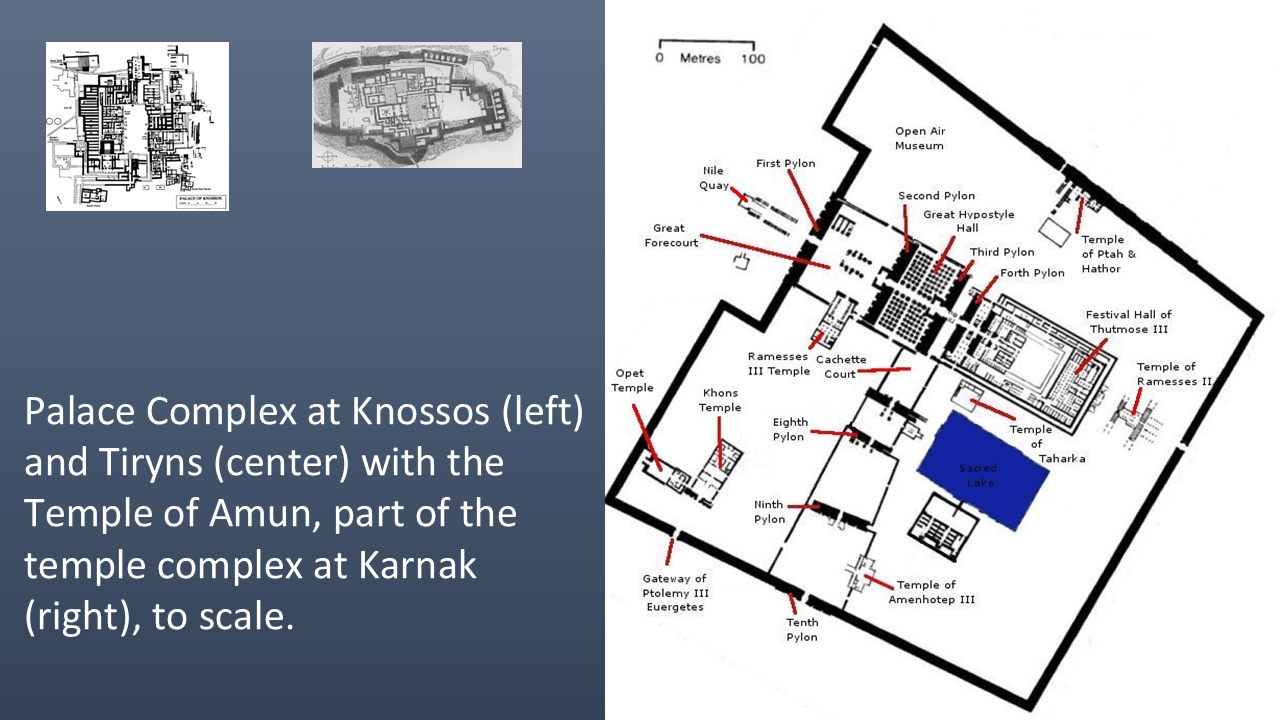
The Late Bronze Age Collapse — a very brief introduction

Bronze Age Crete, Mycenae, and the Eastern Mediterranean civilizations that collapsed c. 1220–1170 BCE.

Bret Devereaux’s ACOUP takes on the Late Bronze Age Collapse (c. 1220–1170 BCE) — one of history’s most dramatic systemic failures, in which nearly every major civilization around the Eastern Mediterranean disintegrated within decades. The essay dispatches monocausal explanations and builds a multifactorial account: prolonged drought stressed rain-dependent agriculture, intensified warfare drained state resources, disrupted trade broke the tin supply essential to bronze, and failing states generated refugees and raiders who destabilized their neighbors in a cascading contagion. Greece lost literacy and urbanism entirely. Read alongside any contemporary thinking about systemic fragility — a theme with grim modern echoes, as Israeli strikes cause catastrophic damage to Lebanon’s historic sites including UNESCO-listed Tyre.

Also today

Dev tools
gingerbill (Odin’s creator) argues good tools are invisible — they disappear into the workflow so you think only about the problem, a counterpoint to tools that demand attention — gingerbill.org · HN
Homelab
Jeff Geerling’s QuadRF writeup uses commodity SDR to detect drone RF signatures and map WiFi signal through walls — a clear demo of what the electromagnetic environment around a home reveals — Jeff Geerling · HN
Culture
A photo essay on Soviet-era control rooms — dense analog dials, banks of switches, a visual language of engineered authority from before the screen era — Design You Trust · HN
cd ~/repos/josse-posten && claude --resume 8bc67bbb-696c-44d5-9dff-328af2a24e4d