Venezuela
twin earthquakes kill over 920 — worst disaster in 125 years
Twin magnitude-7.2 and 7.5 earthquakes that struck Venezuela’s
northern coast on June 25 have killed at least 920 people, with 3,360
injured, 172 still trapped, and more than 50,000 listed as missing. The
USGS projects total casualties could exceed 10,000 — the country’s worst
seismic disaster in over 125 years. International rescue teams have
arrived and the US pledged “big, fast, effective” relief through USAID
despite strained relations; interim president Delcy Rodríguez vowed to
save “as many as possible” amid anger over a disorganised response. A
4.9 aftershock on June 26 continued to hamper recovery in coastal La
Guaira and Caracas.
US
strikes Iran after cargo-ship attack, threatening the June
ceasefire
The US struck Iranian missile-storage sites, drone facilities, and
coastal radar on June 26 — its first military action against Iran since
the two signed a ceasefire Memorandum of Understanding on June 17. The
strike answered an Iranian drone attack the day before on a cargo vessel
in the Strait of Hormuz. The IRGC then claimed it hit US positions in
retaliation, warning future responses would be “broader”; VP Vance
countered that “violence will be met with violence,” while Trump called
Iran’s original attack a “foolish violation” of the MoU. The IAEA chief
is pressing for robust verification of Iran’s ~440kg enriched-uranium
stockpile in any final settlement.
Ukraine’s
heaviest barrage yet pushes occupied Crimea into a state of
emergency
Ukraine unleashed one of its heaviest drone bombardments on record,
hitting 12 Russian regions at once, while FP-5 Flamingo cruise missiles
scored at least three confirmed hits on Volgograd’s Titan-Barrikady
plant — which builds launch systems for the Iskander-M, Yars, and
Topol-M. Both Russian occupation heads in Crimea and Sevastopol declared
states of emergency on June 26 as the strikes degraded the peninsula’s
grid, fuel, and logistics: the Kerch Bridge closed for six hours with
2,450 vehicles queued to leave, all children’s camps — including Artek —
were evacuated, and hotel bookings fell 88% year-on-year. (Full
campaign coverage in Ukraine.)
Europe’s
worst heatwave on record: Germany’s all-time temperature broken
Scientists say Europe is living through its worst heatwave in
recorded history. Germany provisionally set an all-time national record
of 41.3°C in Saarbrücken; the UK broke its June record three days
running, sparking wildfires across Derbyshire. In France four toddlers
and over 55 people — mostly drowning victims — have died, and Paris
postponed Pride. Switzerland’s glaciers are expected to lose all winter
accumulation by Monday. The heat is forecast to shift east into Germany
and Poland through the weekend, with nearly half of Europe’s 850 largest
cities facing unprecedented heat stress.
Washington
turns frontier AI into a controlled export
The US has inaugurated a regulatory regime giving the government veto
power over who can access frontier AI models. The Commerce Department
cleared Anthropic’s Claude Mythos 5 for distribution to ~100 approved US
institutions on June 26 — after an earlier block — while a companion
Fable 5 model remains restricted. Separately, OpenAI said the government
will vet users of its upcoming GPT-5.6 Sol. Entities with China
connections are explicitly excluded, reportedly including a South Korean
telecom, and European partners face uncertain timelines. Frontier AI is
now being treated as a controlled export, not a commercial product.
 Rescue workers search the debris of a collapsed building in Caracas,
June 26. Photo: Getty Images
Rescue workers search the debris of a collapsed building in Caracas,
June 26. Photo: Getty Images Tankers and cargo vessels in shipping lanes near the Strait of Hormuz,
June 16. Photo: AP
Tankers and cargo vessels in shipping lanes near the Strait of Hormuz,
June 16. Photo: AP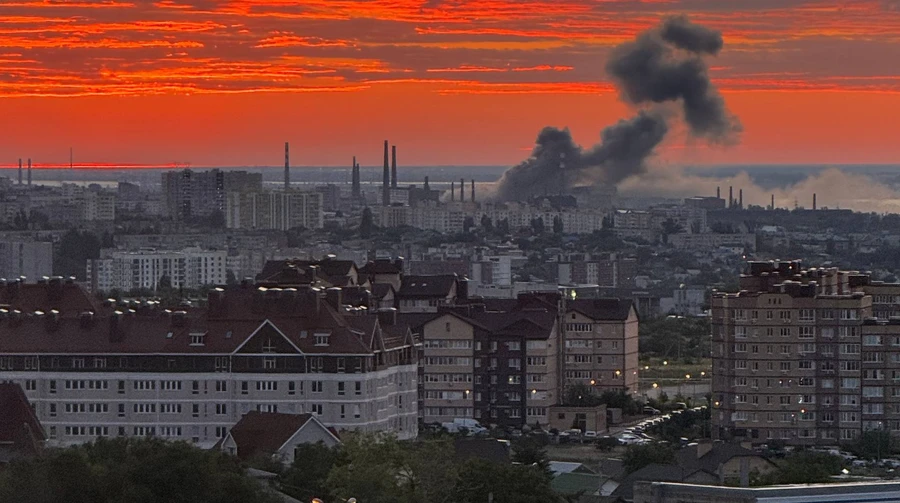 Smoke rises from the
Titan-Barrikady defence plant in Volgograd after Flamingo strikes,
overnight June 26–27. Photo: Exilenova+
Smoke rises from the
Titan-Barrikady defence plant in Volgograd after Flamingo strikes,
overnight June 26–27. Photo: Exilenova+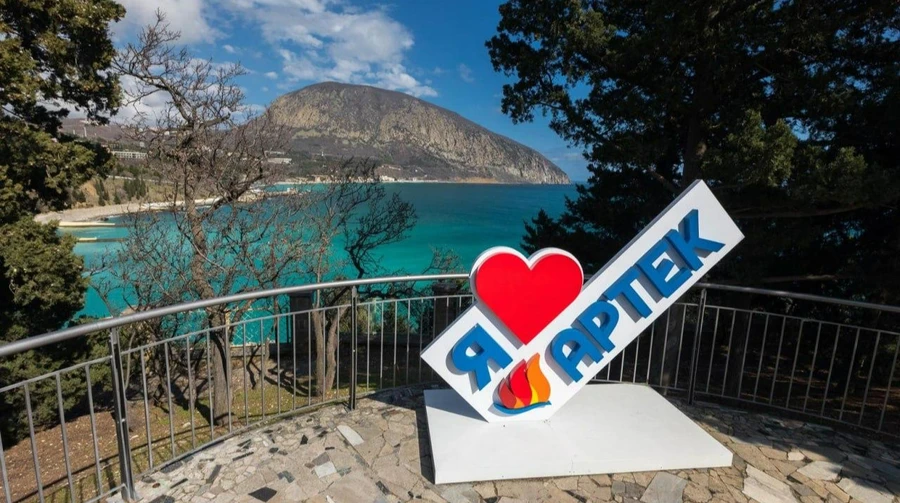 The entrance to the Artek summer
camp in occupied Crimea; all children’s camps have been suspended and
evacuated. Photo: Russian media
The entrance to the Artek summer
camp in occupied Crimea; all children’s camps have been suspended and
evacuated. Photo: Russian media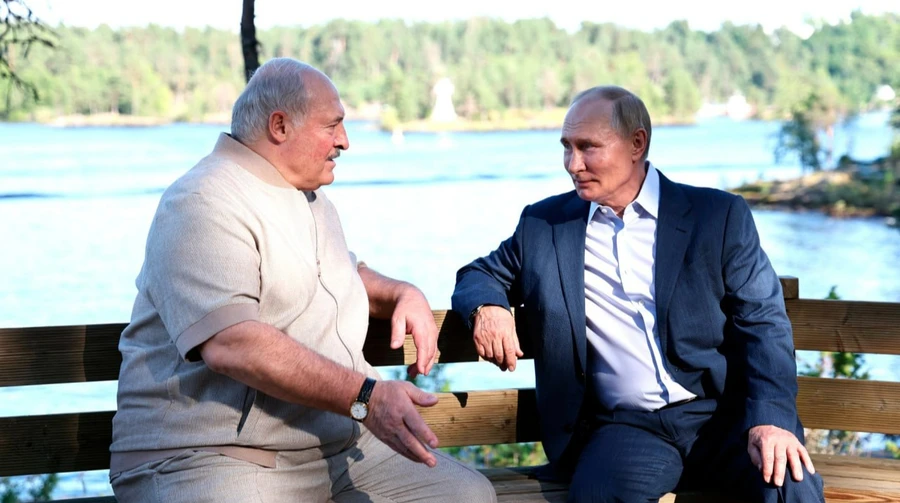 Putin and Lukashenko, pictured
together in 2024. Photo: Russian media
Putin and Lukashenko, pictured
together in 2024. Photo: Russian media Terence Tao of UCLA, who believes AI
could usher in an era of “Big Mathematics.” Photo: IEEE Spectrum
Terence Tao of UCLA, who believes AI
could usher in an era of “Big Mathematics.” Photo: IEEE Spectrum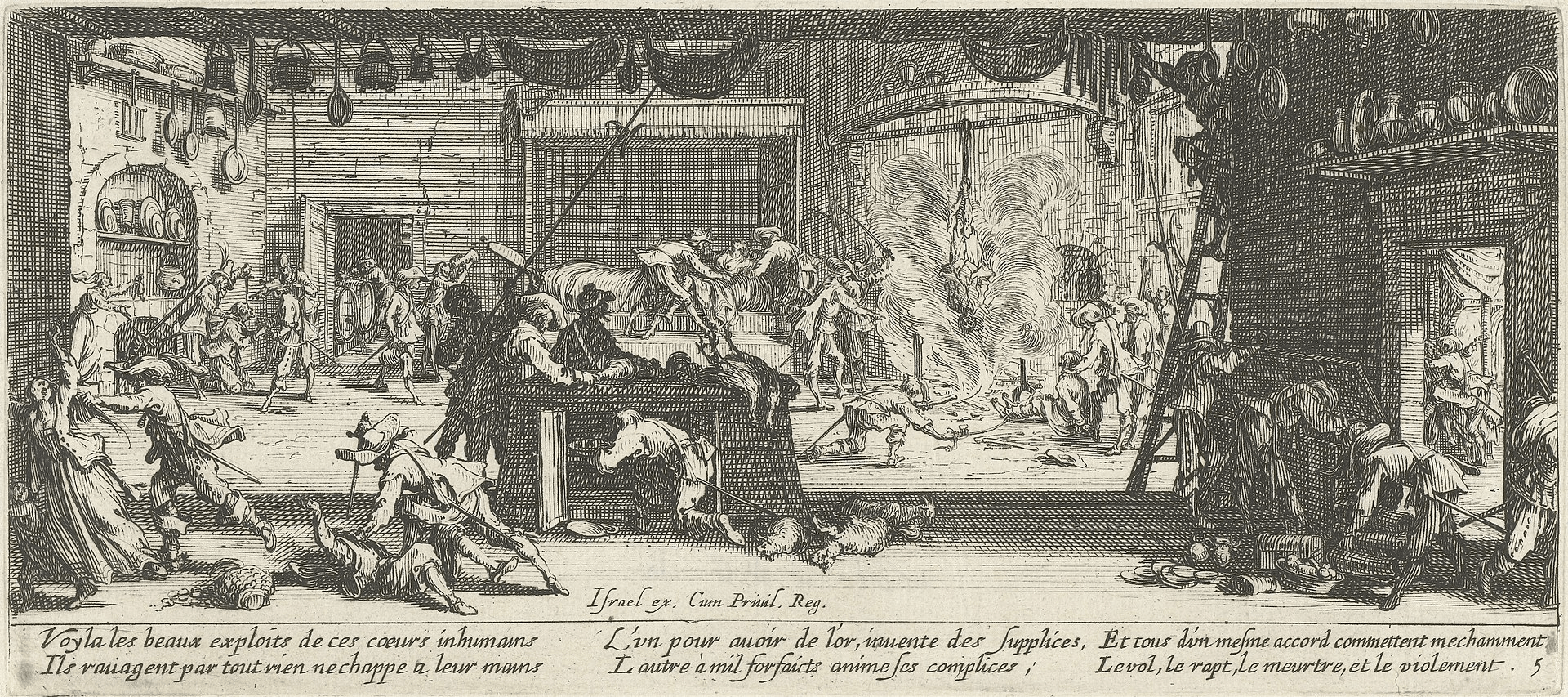 Jacques Callot, “Les Grandes Misères
de la Guerre,” Plate 5 — The Pillage (1633), on how pre-modern armies
self-funded through plunder.
Jacques Callot, “Les Grandes Misères
de la Guerre,” Plate 5 — The Pillage (1633), on how pre-modern armies
self-funded through plunder.