Ukraine declares a 40-day campaign to bring the war home to
Russia as a fourth refinery goes dark; Venezuela’s earthquake toll
climbs past 235; Europe’s worst-ever heatwave kills hundreds; and the US
Supreme Court hands Trump sweeping immigration wins.
Zelenskyy
launches 40-day ‘blitz’ to make Russia feel the war at home
Volodymyr Zelenskyy announced a 40-day intensified campaign to
“influence the aggressor state,” declaring that Ukraine will conduct
preemptive strikes on the facilities Russia uses to wage the war — a
significant doctrinal escalation. He framed it as Ukraine’s “first real
chance to win”: Russia must “feel the war it started.” The campaign is
already biting. Ukraine’s sustained drone strikes have forced Russia’s
fourth-largest refinery offline, cutting domestic fuel output by an
estimated 25% and pushing Moscow — a major oil exporter — to import
gasoline from India. (Strike detail, fuel crisis and frontline in Ukraine.)
Venezuela
twin earthquakes kill 235+ as international rescue teams deploy
Two earthquakes of magnitude 7.2 and 7.5 struck Venezuela’s northern
coast within seconds of each other on Wednesday, killing at least 235
and injuring more than 4,300. Dozens of buildings collapsed along the La
Guaira coastal zone and in greater Caracas. Venezuela declared a state
of emergency; rescue teams from the US, Cuba, Iran, Canada and regional
neighbours have deployed. The disaster compounds an already severe
humanitarian crisis, with the country still reeling from the upheaval
after then-president Nicolás Maduro was seized by US forces earlier this
year. Scientists note the quakes appear to have ruptured two separate
fault lines in a tectonically complex region.
Europe’s
worst-ever heatwave, ‘impossible without climate crisis,’ kills
hundreds
A record-breaking heatwave that scientists say would be impossible
without the climate crisis is killing hundreds across Europe and
straining health systems. Spain recorded 212 deaths in four days. The UK
issued unprecedented red warnings on three consecutive days as a
wildfire burned through moorland near Greater Manchester. Paris banned
alcohol sales to ease hospital pressure described as at “saturation
point,” and the Netherlands issued its first-ever Code Red heat alert
with temperatures nearing 40°C. The heat is now shifting east toward
Germany. Attribution scientists have confirmed it as the worst European
heatwave on record.
Supreme
Court hands Trump dual immigration victories: asylum blocked, TPS
ended
The US Supreme Court delivered two sweeping rulings for the Trump
administration’s immigration agenda. In a 6–3 vote it held that federal
law lets the government prevent asylum seekers from physically setting
foot in the US — effectively barring applications at the border. In a
separate ruling, the court found the president has unreviewable
authority to end Temporary Protected Status, clearing the path to deport
hundreds of thousands of Haitians and Syrians who have lived in the US
for years. Writing for the majority, Justice Alito held that the
president’s TPS authority cannot be reviewed by the courts.
| Indicator |
Value |
Change |
| S&P 500 (f) |
7,412 |
−0.15% |
| Dow 30 (f) |
52,433 |
+0.18% |
| Nasdaq (f) |
29,551 |
−0.58% |
| Russell 2000 (f) |
3,035 |
+0.14% |
| VIX |
19.58 |
+3.65% |
| Gold |
4,054 |
+0.15% |
| BTC |
$60,602 |
−1.97% |
| EUR/USD |
1.1386 |
+0.23% |
| USD/NOK |
9.8875 |
+0.15% |
- VIX +3.65% — risk radar up across the board: Iran’s projectile
strike in Hormuz, Ukraine’s declared 40-day intensification, and NATO
hybrid-provocation warnings all land on the same day.
- Nasdaq (f) −0.58% — Apple and Microsoft both hiking prices on AI
chip shortages, cost pressure flowing from the infrastructure buildout
into consumer hardware (see Tech).
Ukraine
Strike
campaign escalates: NORSI refinery halted, Ufa hit at 1,500 km
Russia’s NORSI refinery in Nizhny Novgorod halted after a Ukrainian
drone strike damaged its primary processing unit. The SBU separately
struck two Bashneft refineries in Ufa, Bashkortostan — over 1,500 km
from the front — causing fires at both distillation units. Ukrainian
forces hit 38 targets in occupied Crimea overnight, including three
radar stations, the Tavriiska thermal power plant, substations, an oil
depot and gas compressor stations, while the Freedom of Russia Legion
launched “Operation Torch,” striking six gas distribution facilities in
Moscow and Tver oblasts.
Russia’s
fuel crisis deepens; Moscow turns to Kazakhstan
With NORSI offline, fuel shortages now span all but five of Russia’s
federal regions. Gasoline prices rose 3% in a single week — the largest
weekly jump in at least 20 years — lifting annual inflation to 5.8% and
complicating the Central Bank’s rate-cutting cycle. Moscow’s workaround:
lower fuel standards, expand subsidies, and wait out the strikes. It has
also quietly asked Kazakhstan for gasoline supplies — a remarkable
signal for an energy superpower. The battlefield impact is already
visible: Russian assault units near Pokrovsk have switched to silent
electric motorcycles and scooters to approach Ukrainian positions amid
fuel scarcity.
Russia
launches massive overnight strike: 189 drones, 7 missiles
Russian forces attacked Ukraine overnight with 7 Iskander-M ballistic
missiles and 189 Shahed and decoy drones; air defences downed 3 missiles
and 174 drones. Strikes hit gas, railway, medical, commercial and
residential infrastructure across Chernihiv, Dnipropetrovsk, Kharkiv,
Poltava, Odesa, Sumy and Kyiv oblasts. A nine-storey residential
building and a car park were struck in Sumy; one railway worker was
killed in Zaporizhzhia.
Ukraine
seizes Kinburn Spit as Russian forces retreat
Ukrainian troops raised their flag on Kinburn Spit in Mykolaiv Oblast
— a strategically significant peninsula held by Russian forces since
2022 — after Russian troops abandoned their positions and began
evacuating. Zelenskyy separately reported that Russia is visibly
shifting air defence systems away from the front to protect Moscow and
other strategic sites, a response to increasingly deep Ukrainian drone
strikes. The wider frontline saw 257 combat clashes on June 25, up from
232, with Russia most active around Pokrovsk (31 attacks); no Russian
advances were confirmed on any axis.
Russia
preparing hybrid ‘provocation’ near NATO’s eastern flank
Two NATO member states warned that intelligence indicates Russia is
preparing a hybrid “provocation” in the Baltic states or Poland — likely
a gray-zone operation testing NATO’s cohesion as Moscow faces mounting
pressure from Ukraine. NATO Secretary General Mark Rutte issued a
pointed warning ahead of the upcoming summit: “We know what you guys are
doing and we are better at it.” Russia is separately pressuring
Belarusian President Lukashenko to open a new front against Ukraine —
which Lukashenko has told Russia’s ambassador he has no intention of
doing, even as Ukrainian intelligence reports Russia building road and
military storage infrastructure along the Belarus-Ukraine border.
Secretary of State Rubio confirmed on record that no agreement was
reached at the August 2025 Alaska Summit — demolishing Russia’s central
negotiating fiction that all talks must proceed from the “Anchorage
agreements” (the Russian proposal had included control of Donbas).
Macron announced that the US has officially declared it is no longer a
neutral mediator and supports Ukraine’s territorial integrity. The shift
tracks the Évian G7, where Trump signed a communiqué pledging
“unwavering support for Ukraine’s freedom, sovereignty and territorial
integrity” — boilerplate text whose significance is the signature, and
the first time Trump stated that Russia, not Ukraine, must make a deal.
At the Gdańsk Recovery Conference, 160 agreements worth over €10 billion
were signed, and the EU extended its sanctions on Russia through July
2027.
Also today
- Sanctions enforcement
-
France seizes its fifth Russian “shadow fleet” tanker, this one off
Sicily, announced by Macron at the NATO summit — Al
Jazeera · Euronews
-
UK to sell oil from a seized Russian tanker and direct the proceeds to
Ukraine — extending asset seizure to physical commodities for the first
time — Telegraph
- Diplomacy
-
Starmer’s resignation throws UK Ukraine support and a new EU-UK defence
partnership into uncertainty — DW
-
Poland-Ukraine row: Zelensky snubs the Warsaw recovery conference after
being stripped of a Polish state honour; Tusk calls for “mutual respect”
— BBC
- Analysis
-
Kofman in Foreign Affairs: attrition hasn’t broken Russia’s
threat posture — the military is learning and will reconstitute over
years, not decades — Foreign
Affairs
World
Iran
strikes ship in Hormuz, UN halts evacuations; oil markets on borrowed
time
Iran struck a cargo vessel with a projectile near Oman, prompting the
UN’s International Maritime Organization to pause its coordinated
evacuation of ships stranded in the Strait of Hormuz; Iran had already
rejected the UN-backed mass evacuation plan. Despite the attack, oil
prices fell back to pre-war levels as tankers independently exited the
strait. The June 17 US-Iran MOU — mediated by Pakistan and Qatar, with a
60-day US waiver on Iranian oil sales — halted hostilities, but the two
sides still disagree on “nearly every point,” and the IAEA has now been
tasked with inspecting Iran’s nuclear sites. Brookings warns the calm is
fragile: pipeline bypasses, reserve releases and floating storage have
absorbed the shock, but those buffers run dry by mid-July, after which
markets face a 7.1M bpd structural shortfall and Brent potentially at
$120–150. Tehran, meanwhile, is pitching China and Gulf states a
$40bn-a-year Hormuz transit fee — an attempt to institutionalize the
leverage it demonstrated.
Xi
Jinping hosts 12+ world leaders as ‘middle powers’ pivot away from an
unpredictable US
Xi has hosted more than a dozen world leaders in 2026 alone —
Bangladesh’s prime minister the latest — positioning China as an
alternative anchor for governments unsettled by US unpredictability
under Trump. Across Asia, Africa and Latin America, “middle powers” are
increasingly engaging Beijing for trade, investment and diplomatic
alignment, and Xi is using the traffic to promote China’s vision of an
alternative to the US-led order. The reach extends to infrastructure: an
Africa Center analysis documents how China has embedded itself not just
in African ports but in the operational layer — logistics,
communications, training and maintenance — creating dependencies that
persist regardless of who formally owns the facilities.
Also today
- Americas
-
New evidence contradicts RFK Jr’s Senate testimony — an email shows his
2019 Samoa trip was an explicit vaccine “mission,” preceding a measles
outbreak that killed dozens — Guardian
-
Federal judge blocks a Trump postal plan to withhold ballots from states
that refuse to surrender voter rolls — NPR
-
California’s 5% one-time billionaire tax locks onto the November ballot
after talks collapse — Guardian
- Middle East
-
IDF captures a Hezbollah drone factory and launch site hidden inside a
south Lebanon mountain — Times
of Israel
-
Israel weighs first official recognition of the Armenian genocide amid
deepening tensions with Turkey — Ynet
- Asia-Pacific
-
Samsung to announce ~$648bn (1,000tn won) in domestic South Korea
investment, one of the largest corporate pledges in history — Reuters
-
South Korea to retrain 500,000 military personnel as “drone warriors,”
citing lessons from Ukraine — Guardian
-
UK, France and Germany jointly raise alarm over Chinese Coast Guard
patrols east of Taiwan — Reuters/Yahoo
- Rights & democracy
-
Taliban morality police beat and detain women for “improper hijab” in
Herat — RFE/RL
-
Zimbabwe’s senate approves a presidential term extension that the
opposition calls a “constitutional coup” — Guardian
-
Who controls Africa’s AI infrastructure — and at what cost? The
continent holds under 1% of global data-centre capacity despite 18% of
the population — Al
Jazeera
Tech & AI
IBM
demonstrates sub-1nm ‘angstrom era’ chip with 100 billion
transistors
IBM unveiled a functional 0.7nm chip using a nanostack architecture —
the first 3D nanosheet design where transistors are vertically stacked,
each layer’s materials independently optimized for performance and
power. The chip packs ~100 billion transistors (nearly double its 2021
2nm part), with up to 50% performance gains or 70% better energy
efficiency. IBM projects production within five years and a decade of
scaling headroom — a significant milestone as the industry approaches
atomic-scale limits. Memory, meanwhile, is going the other way: Micron
has locked five-year supply contracts at near-peak DRAM and NAND prices,
and Apple and Microsoft are raising hardware prices globally (a 13-inch
MacBook jumped 16–25% in Australia), both citing the AI-driven
high-bandwidth-memory shortage. Anyone planning a homelab or workstation
build should assume the memory price cycle isn’t resetting soon.
Researchers have completely read PHerc. 1667 — the first Herculaneum
papyrus digitally unrolled end-to-end without physical contact. The
scroll holds a Stoic philosophical treatise from the 2nd century BC on
ethics, human impulse and moral progress, with references to
Aristocreon, nephew of Chrysippus. The team used high-resolution X-ray
scanning and machine learning to detect faint ink on the carbonized
roll, which survived Vesuvius’s 79 AD eruption but had been impossible
to physically open. The method was independently validated on two more
scrolls, and all data, code and transcriptions are released under
Creative Commons — with hundreds of sealed scrolls from the buried villa
still to be read.
Emacs
patch rejected for honest LLM disclosure — the honesty penalty in open
source
A developer working on Emacs macOS performance used GLM 5.2 (an
open-weight Chinese model) to identify a regexp caching issue,
personally reviewed and benchmarked the resulting 92-line patch, then
honestly disclosed the LLM involvement when submitting to emacs-devel.
GNU’s undisclosed internal policy against LLM-assisted contributions got
it rejected. The developer’s point: the policy punishes integrity rather
than usage, since hiding the LLM would have slid through undetected. “By
being truthful I already lost my footing. This alone makes the policy
stupid.” They have ~40 more performance patches sitting unpublished —
now on GitHub — and are walking away from Emacs entirely.
The Akrites initiative launched with AWS, Google, Microsoft, IBM,
NVIDIA, JPMorganChase and OpenAI among signatories, addressing an acute
new threat: AI has compressed the time to discover serious open-source
vulnerabilities from weeks of expert analysis to minutes of automated
scanning. The initiative establishes a coordinated confidential
remediation channel — a “single trusted place” for maintainers of
critical infrastructure to receive, coordinate and patch vulnerabilities
before attackers exploit them, backed by engineering resources from
participants. Separately, a fresh public usbliter8
exploit targets Apple’s A12/A13 SecureROM (iPhone XS through 11 Pro Max)
— baked into hardware and unpatchable, permanently opening those models
to jailbreak and security research.
The
‘papers, please’ era: age-verification laws are really identity
mandates
FIRE’s analysis of Australia’s under-16 social media ban and the
accelerating global wave of copycat legislation makes a sharp case: age
verification is de facto identity verification, and it kills anonymous
speech. Third-party verifiers like k-ID operate internationally with
unclear data protections, and a breach of Discord’s age-assurance vendor
already exposed ~70,000 Australians. Australia’s law hasn’t even worked
— 70% of kids still use social media — yet the UK, EU and US states are
replicating it, some with VPN restrictions comparable to authoritarian
regimes. In the same vein, European Parliament President Roberta Metsola
is overriding MEPs to force another vote on Chat
Control, the mass encrypted-message-scanning bill already
rejected in committee.
Paper:
compile an agentic workflow into a small model’s weights, near-frontier
at 1/100th the cost
“Compiling Agentic Workflows into LLM Weights” proposes “subterranean
agents”: instead of running an external orchestrator (LangGraph, CrewAI)
that repeatedly injects routing instructions into a frontier model’s
context, you fine-tune a small model on traces from that orchestrated
workflow. Across three enterprise tasks (travel booking, Zoom support, a
55-node insurance-claims pipeline), it reaches near-frontier quality at
two orders of magnitude lower cost. Bonus: the context window isn’t
consumed by procedural instructions, and proprietary business logic
stays in the weights rather than being exposed to a third-party
provider.
Going
full Nix: Proxmox to NixOS + Incus for the whole homelab
A detailed migration writeup from 7+ years of Proxmox to NixOS +
Incus, with the entire fleet now managed from a single git repository.
Key motivations: GUI-driven infrastructure creates invisible state drift
(fixes applied through web UIs become undocumented), while declarative
NixOS configs apply identically across completely different hardware.
The author highlights CLI-first declarative systems as uniquely
AI-agent-friendly — text-based configuration lets agents reliably read,
understand and modify infrastructure without navigating web UIs.
Practical migration scripts for LXC and VM workloads are included.
Zig
overhauls @bitCast
semantics, lands major SPIR-V backend gains
Two notable Zig devlog entries this week. @bitCast now
operates on “logical bit layout” rather than physical memory
representation, making behaviour endian-agnostic across all targets and
enabling unusual conversions like [2]u3 to
@Vector(3, u2); LLVM backend improvements matching Clang’s
_BitInt lowering delivered ~5% compiler performance gains.
Separately, the SPIR-V backend added a @SpirvType builtin
addressing long-standing shader compatibility issues, multi-threaded
codegen, and object-file linking for multiple .spv files —
meaningful progress toward viable GPU compute in Zig.
A sharp essay argues that LLMs aren’t like conventional tools that
become extensions of the body — they demand conversational social energy
without the reciprocal rewards that make human interaction worthwhile.
Unlike colleagues who challenge, surprise or give honest feedback, LLMs
mostly “deliver more code, more tests, more excuses.” The uncomfortable
question: if using an AI coding assistant costs genuine social effort,
might that same energy invested in real colleagues yield more lasting
value?
Bellingcat
builds an ML pipeline to surface civilian harm on Telegram
Bellingcat trained an XGBoost classifier on 54,000+ Telegram posts to
rank content likely to document civilian harm, cutting manual research
load dramatically. The strongest predictors turned out to be semantic
keyword similarity and emotional engagement — particularly crying-face
emoji reactions, which correlate strongly with harm documentation. The
piece covers feature engineering, ethical safeguards against automation
bias, and why the team refused to analyze media content (to avoid
compounding bias). A practical methodology read for anyone building
conflict-accountability monitoring.
Also today
- AI in practice
-
A restaurant runs Claude Sonnet 4.6 on every Instagram DM across 7 sushi
locations — the economics only work because the static menu prompt hits
prompt cache at 97% — r/ClaudeAI
-
Opus orchestrated 451 parallel Sonnet subagents — 14M tokens in a 5-hour
session — on an enterprise license without hitting rate limits — r/ClaudeAI
-
LLM inference pricing across 7 providers — caching cost, not base
per-token rate, is the biggest source of variance — r/MachineLearning
-
Goodhart’s Law hits corporate AI-adoption mandates — devs gaming token
counts and splitting PRs to look productive — r/ClaudeAI
-
Pairing Claude Code and Codex as complementary reviewers because they
fail differently — r/ClaudeAI
- Dev tools
-
Kuma compiles PyTorch models into self-contained WebGPU browser
executables (
.iph packages) — no Python, no ONNX, no
runtime deps — GitHub
-
Orchid — local record/inspect/replay debugger for AI agent pipelines —
r/automation
-
An API to flag when your AI agent makes ambiguous edge-case judgment
calls you wouldn’t have made — r/automation
- Research & demos
-
Third Eye reconstructs a dashcam route from image content alone —
per-frame place recognition plus trajectory search, no GPS — YouTube · r/ML
-
A self-play RL agent (behavior cloning → RL fine-tuning) reaches #1 on
the Generals.io human 1v1 leaderboard — r/ML
-
CALHippo maps neurons and glial cells in 3D across human hippocampus
slices at 1 µm/pixel via ML segmentation — r/ML
-
World of ClaudeCraft goes recursive — a Claude Code VTuber plays the
Claude-built MMO live on Twitch — r/ClaudeAI
- Culture & longform
-
An oral history of “Bank Python” — Barbara, Dagger, Walpole and the
proprietary universe inside investment banks — calpaterson.com · HN
-
AI in nuclear command-and-control: progress is limited and deliberately
cautious, the human-control principle still unfinished work — War
on the Rocks
-
Little Bighorn at 150 — why the battle’s meaning is still contested — War
on the Rocks
-
GM cut ~1,000 workers at an EV plant, then added robots — AutoBlog
Health
Pemivibart
(Pemgarda) in Long COVID: first peer-reviewed case series published
Three patients with longstanding, debilitating Long COVID (PEM, brain
fog, dysautonomia, 2+ years) experienced dramatic symptom improvement
after pemivibart infusion — one went from a DePaul Symptom score of
40/40 to 4/40, sustained at six weeks; another resumed running within a
week. The proposed mechanism is neutralization of persistent circulating
SARS-CoV-2 spike antigen driving ongoing immune dysregulation. The
limitations are severe: n=3, uncontrolled, no blinded assessment — and
there’s direct tension with AER002, a different anti-spike mAb that
failed its Phase 2a in established Long COVID despite a similar
mechanism. Whether the effect reflects antigen clearance, placebo or
natural fluctuation won’t be resolved without controlled data. The one
to wait for: the sipavibart RCT (Nancy Klimas/NSU, NCT07021794, n=100,
randomized placebo-controlled, single IM dose, primary completion Dec
2026) — the first well-powered trial in this mAb class for Long
COVID.
Tracking — watch-list items with no change this
run
- ANKTIVA COVID-4.019-Long (Chan Soon-Shiong, n=40) —
completes Jul 2026; no results yet
- ANKTIVA INTERRUPT_LC (UCSF, n=20) — results
expected Oct 2026
- ADDRESS-LC (bezisterim, BioVie) — fully enrolled;
topline late summer 2026
- REVERSE-LC (baricitinib, Phase 3) — neurocognition
data Nov 2026; all data Jul 2027
- Rapamycin (Mount Sinai + Simmaron, Phase 2) —
results Nov 2026
- Daratumumab ResetME (Haukeland) — in treatment;
results ~2027
- TURN-Long COVID (immunoadsorption, Amsterdam UMC) —
recruiting; completion Dec 2027
- EXTINCT (immunoadsorption, MHH Hannover) —
completed; publication unconfirmed
- Brodin WGS / Locci GC B-cell
preprints (Karolinska, Penn / PolyBio) — no preprint yet
- Stellate ganglion block (UHN Toronto, Phase 4,
n=78) — recruiting
- Sonlicromanol (Khondrion/Amsterdam UMC,
NCT07298005) — running; timeline TBD
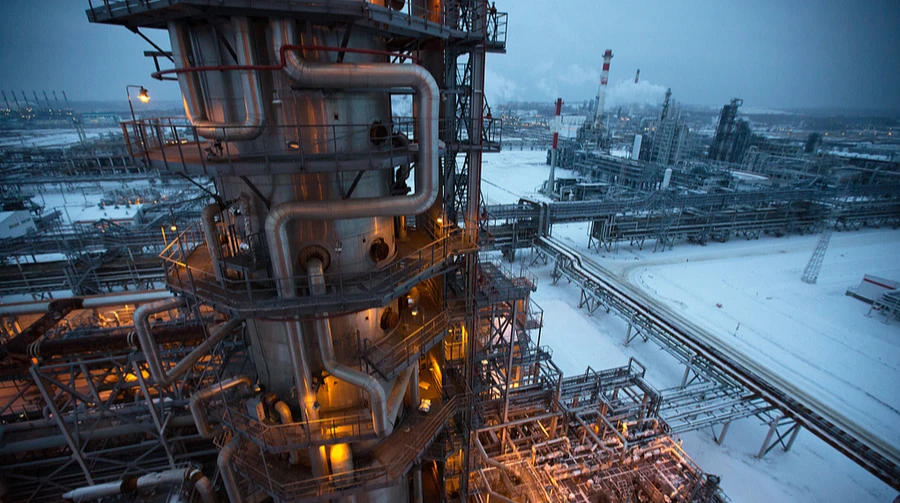 The NORSI refinery in Nizhny
Novgorod — Russia’s fourth-largest and second-biggest gasoline producer
— halted after a Ukrainian drone strike. Photo: Ukrainska Pravda
The NORSI refinery in Nizhny
Novgorod — Russia’s fourth-largest and second-biggest gasoline producer
— halted after a Ukrainian drone strike. Photo: Ukrainska Pravda Rescue teams and residents search
the rubble of collapsed buildings along Venezuela’s northern coast.
Photo: Al Jazeera
Rescue teams and residents search
the rubble of collapsed buildings along Venezuela’s northern coast.
Photo: Al Jazeera Russian occupying forces retreating
from Kinburn Spit. Screenshot: newsukraine.rbc.ua
Russian occupying forces retreating
from Kinburn Spit. Screenshot: newsukraine.rbc.ua Macron at the Évian G7, where he
declared a “profound shift” in US–European alignment on Ukraine. Photo:
AP / Euronews
Macron at the Évian G7, where he
declared a “profound shift” in US–European alignment on Ukraine. Photo:
AP / Euronews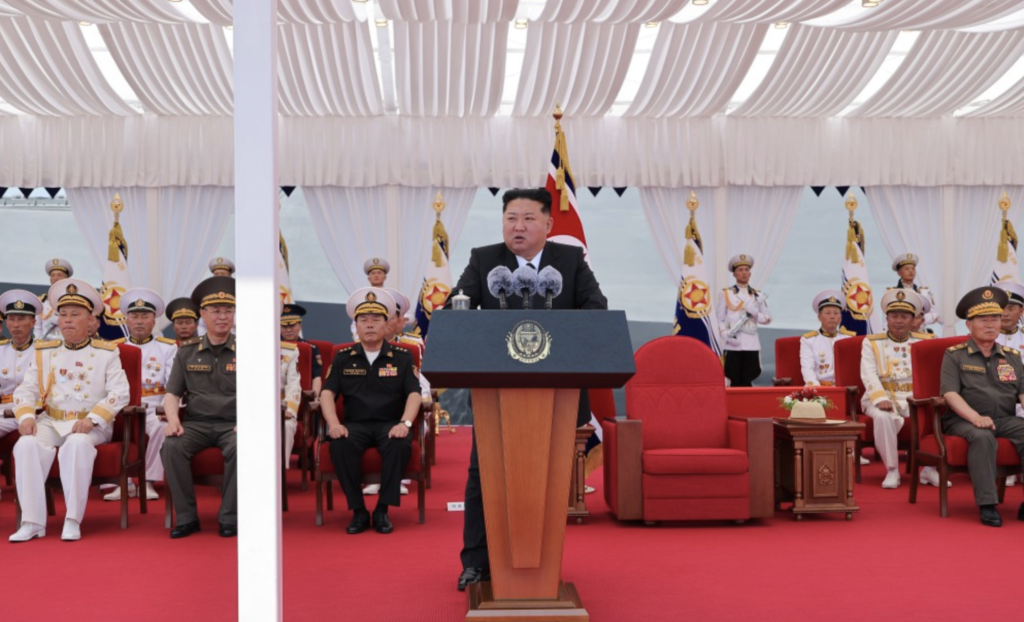 The Strait of Hormuz, photographed
from the ISS — the chokepoint at the heart of the crisis. Photo: NASA /
War on the Rocks
The Strait of Hormuz, photographed
from the ISS — the chokepoint at the heart of the crisis. Photo: NASA /
War on the Rocks IBM’s
0.7nm node wafer, built with 3D nanostack architecture. Photo: IBM
Research
IBM’s
0.7nm node wafer, built with 3D nanostack architecture. Photo: IBM
Research The complete unwrapped writing
surface of PHerc. 1667, recovered from a carbonized scroll. Image:
Vesuvius Challenge
The complete unwrapped writing
surface of PHerc. 1667, recovered from a carbonized scroll. Image:
Vesuvius Challenge