Ukraine’s deep strikes leave Crimea dark and a quarter of
Russia’s petrol gone; Iran and the US can’t agree what they signed; and
Europe bakes through a record, deadly heatwave.
Crimea
goes dark as Russia’s fuel crisis spreads to 15 regions
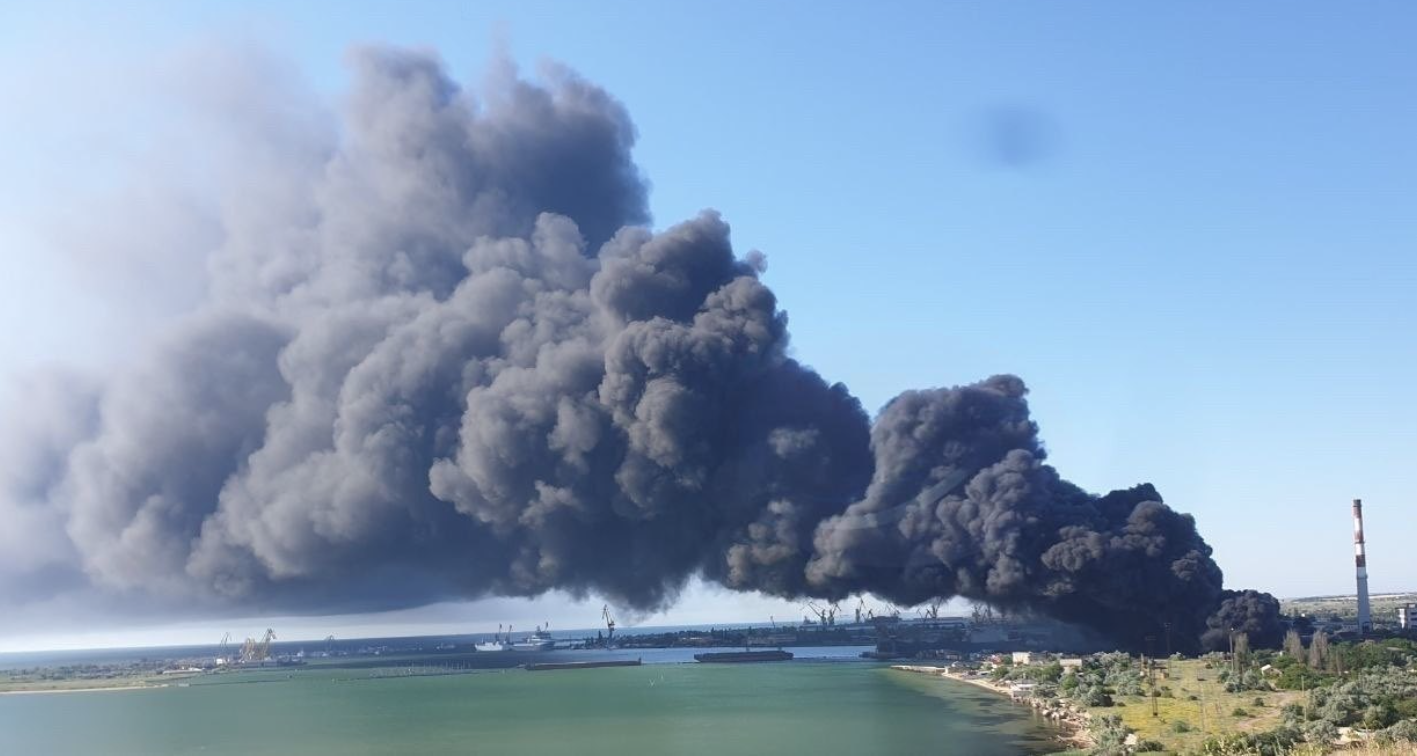
Sevastopol lost power overnight and roughly half of Crimea went dark
as Ukrainian forces fired on the Kerch thermal power plant and cut a key
railway artery near Rozdolne. Russia confirmed it has withdrawn units
from the Kinburn Spit after interdiction strangled their ammunition,
food and fuel; families of Black Sea Fleet personnel are reportedly
fleeing toward Krasnodar. Inland, the picture is no better: fuel
rationing has spread to at least 15 Russian regions and Reuters now
estimates Ukraine’s sustained refinery campaign has wiped out about a
quarter of national gasoline output. Shares in Russia’s largest energy
company crashed to their lowest since 2009.
Putin
restates maximalist terms as a shifting US tone unnerves Moscow
Putin reaffirmed that Russia will only negotiate from the 2022
Istanbul capitulation framework — Ukrainian neutrality, severe military
limits, withdrawal from four oblasts — even as the Kremlin complained
the US has abandoned the “spirit of Anchorage.” The FT reports Putin is
souring on Trump after the president told Zelensky he was “impressed” by
Ukraine’s military successes; Merz called the G7 the first show of
Western unity on Ukraine “in a long while.” (Full coverage in Ukraine.)
Iran and
the US can’t agree on what their own deal says
A day after Vance said Iran had agreed to invite IAEA inspectors
back, Tehran flatly denied making “any new commitments” and declared its
missile program non-negotiable — “without missiles, we’d be like Gaza.”
Trump countered that Iran had pledged “nuclear honesty long into the
future.” With a 60-day sanctions waiver ticking and Congress passing its
first-ever war-powers rebuke, the gap between the two sides is widening
in public. (Full coverage in World
News.)
Record
heatwave kills 40 in France; UK hits rare red alert
France logged its hottest day on record and 40 people have drowned
since last Thursday, many while seeking relief from the heat. The UK
issued its highest-level red warning ahead of a 39°C peak, with schools,
hospitals and railways struggling to cope; Guterres remarked that
“London is cooking.” The surge sent electricity prices across Europe to
six times normal as air-conditioning demand spiked and wind output
collapsed. (Full coverage in World
News.)
| Indicator |
Value |
Change |
| S&P 500 (f) |
7,452 |
+0.19% |
| Dow 30 (f) |
52,035 |
-0.09% |
| Nasdaq (f) |
29,828.75 |
+0.55% |
| Russell 2000 (f) |
3,001.6 |
+0.11% |
| VIX |
19.2 |
-1.49% |
| Gold |
4,100.5 |
-1.18% |
| BTC |
$62,538 |
-0.43% |
| EUR/USD |
1.1356 |
-0.21% |
| USD/NOK |
9.8238 |
+0.30% |
- Gold −1.18% — safe-haven demand softening as Iran-US talks inch
toward a 60-day framework, despite contradictory signals from Tehran
(see World).
- Nasdaq (f) +0.55% even as AI stocks sell off on bubble concerns
— tech futures holding while sector rotation may be underway beneath the
surface (see World).
World News
Iran–US
nuclear standoff: Tehran denies new commitments, calls missiles
non-negotiable
The agreement that ended the 39-day Iran war (Feb 28–Apr 8) is
fraying in public before it is even finalized. Trump claims Iran agreed
to inspections “into infinity”; Iran’s foreign ministry denies any new
commitments on its nuclear sites and calls its missile program
off-limits in any final deal. The US has waived sanctions for 60 days —
billions in oil revenue for Tehran — while negotiators race a comparable
deadline. In a rare rebuke, both chambers of Congress passed a War
Powers resolution (50–48 in the Senate) directing Trump to remove US
forces from hostilities; it carries no legal force but marks the first
time both chambers have ever done so. Lebanon remains a sticking point,
with Israel vowing to keep a security zone in the south.
UN
evacuates 11,000 stranded sailors as Hormuz reshapes Middle East
energy
The UN’s maritime agency has begun evacuating more than 11,000
sailors stranded when Iran closed the strait. Shipping has largely
resumed — 42 ships transited on Saturday — but a navigation-rights
dispute is brewing: Iran and Oman plan a joint team on “administration
of navigation,” which Washington reads as a bid to charge passage fees.
Rubio, touring Gulf allies, ruled out any tolls. Beneath the diplomacy,
the crisis is reshaping infrastructure permanently: Saudi Arabia is
maxing its East-West pipeline (~7M bpd), the UAE is doubling its Hormuz
bypass to 3.6M bpd, Iraq is expanding Kirkuk-Ceyhan, and a proposed
$10bn “Four Seas Initiative” would route a corridor through Turkey and
Syria. Analysts call the investment acceleration structural — it will
persist regardless of the diplomatic outcome.
The
Iran war exposed the limits of US air dominance against
drone-and-missile saturation
Paul Scharre’s Foreign Affairs analysis treats the war as a case
study in 21st-century conflict: the US conducted over 13,000 strikes and
dominated the skies by every traditional metric, yet Iran launched 2,200
missiles and 4,400 drones over 39 days, downing at least eight US
aircraft and killing seven service members — and its regime still
stands. New intelligence sharpens the point: a downed F-15 pilot
reported Iranian drones moving in a synchronized “jellyfish” formation,
clustering in coordinated waves to overwhelm defenses. Scharre’s
conclusion is that the world’s most powerful military is not adapted for
an era of low-cost mass drone production, and that procurement cycles
can’t keep pace without wartime-speed iteration.
UN
commission: Israel deliberately targeting children to commit genocide in
Gaza
An independent UN commission of inquiry concluded that Israel is
committing genocide in Gaza by deliberately targeting Palestinian
children, finding it is systematically undermining “the very capacity of
the Palestinian people to exist.” The report cites continued killings
after the October 2025 ceasefire, starvation through aid restrictions,
and the systematic destruction of schools; about 30% of Gaza war
fatalities have been children, it says. Israel rejected the findings as
a “libellous sham.” Separately, Netanyahu declared that Israel must
“break free from dependence” on the US, signaling deepening tensions
with the Trump administration.
Britain
‘ignored Sudan genocide warnings to protect ties with UAE’
A war crimes investigator will testify to a UK select committee that
the Foreign Office received intelligence pointing to genocide in Sudan —
including signs Ethiopia was supporting the RSF militia — but suppressed
action under “pressure” from the UAE, a key partner that backs the RSF.
The same investigator told The Times that British foreign policy was
“captured” by Abu Dhabi before RSF forces killed up to 60,000 in North
Darfur. The testimony adds to a pattern of documented Western diplomatic
failure on Sudan.
Record
European heatwave kills 40 in France; UK hits rare red alert
France recorded its hottest day in history, and 40 people have
drowned since last Thursday — many while seeking water to escape the
heat. The UK issued its highest-level red warning with 39°C forecast
through Thursday, leaving schools, hospitals and rail networks
struggling. France, Spain and Italy have been hardest hit, with the heat
now spreading east. The surge drove European electricity prices to six
times normal as air-conditioning demand spiked and wind output collapsed
— a double economic punch of damaged activity and a stressed grid. The
extremes are attributed directly to climate change.
Mamdani’s
candidates sweep all New York Democratic primaries
All three congressional candidates endorsed by New York’s
democratic-socialist mayor Zohran Mamdani won Tuesday’s primaries,
including Brad Lander defeating incumbent Dan Goldman in a Manhattan
race that exposed the party’s Gaza fault lines. The sweep cements
Mamdani’s hold over the party’s left wing; all three sit in safe seats
and are near-certain to win in November, reshaping the NYC
delegation.
Also today
- Iran fallout
-
Israel secretly smuggled Starlink terminals into Iran during the
conflict, a former PM disclosed — Reuters
-
Gulf states are pivoting to accommodation with Iran, having concluded
the US won’t finish the job — Israel
Hayom
-
Trump’s Iran framework echoes Nixon’s 1973 Paris Accords in structure
but not execution — threats without follow-through eroded deterrence —
War
on the Rocks
- Americas & US
-
Eight anti-ICE protesters sentenced to a combined 450 years in Texas;
civil liberties groups alarmed — BBC · Al
Jazeera
-
A judge struck down Trump’s courthouse-arrest policy the same day an
appeals court expanded speedy deportations nationwide — Guardian
· NPR
-
A bipartisan housing bill — the largest affordability measure in decades
— passed the House 358–32; Trump expected to sign — Guardian
· NPR
-
A Montreal gunman with an incel-adjacent manifesto killed a police
officer and a civilian; copycat warnings issued — BBC · Guardian
-
Former Pinochet DINA agents convicted 50 years after the 1976 Letelier
car-bomb killing in Washington DC — Guardian
- Markets & science
-
AI stocks sell off as investors question whether infrastructure spending
is “one big bubble” — NPR
-
Archaeologists uncover the largest Viking-age industrial textile site
ever found, in Denmark — NPR
- Rest of world
-
Taliban held first closed-door EU talks in Brussels on deportations —
while detaining aid workers over “short beards” — Guardian
· NPR
-
Kenya’s health minister, after a contempt ruling, ordered a halt to
construction of a US-run Ebola quarantine facility — Guardian
· Al
Jazeera
Ukraine
Putin
lays out maximalist peace terms; Moscow rattled by shifting US tone
Putin publicly restated that Russia will only negotiate from the 2022
Istanbul framework — neutrality, severe military limits, withdrawal from
four oblasts — effectively his opening bid before any resumed talks. The
Kremlin complained the US had abandoned the “spirit of Anchorage,” and
the FT reports Putin is souring on Trump after the president told
Zelensky he was “impressed” by Ukraine’s military successes. On Belarus,
Lavrov threatened to invoke the Union State collective-security clause
if Ukraine strikes the signal-repeater stations enabling Russian drone
attacks on western Ukraine — but Belarus’s own ambassador pointedly
didn’t echo the threat, and ISW judges the repeaters legitimate military
targets, used for 21 rolling-stock strikes between May 16 and June
20.
Putin
compares the West to Nazi Germany; Poland warns of a false-flag
pretext
Putin escalated his rhetoric, comparing Western countries to Nazi
Germany in 1941 and claiming NATO is actively preparing for war with
Russia, while the Kremlin complained the US has not honored
“understandings” reached between Trump and Putin. Poland’s government
warned Putin may be staging a false-flag attack as a pretext for
escalation, explicitly invoking 1939 parallels. Washington urged Russia
to “make a deal” for an immediate ceasefire, warning that “time is not
on Moscow’s side.”
Crimea’s
isolation deepens: railway bridge destroyed, Starlink-powered drone
boats killed
Ukrainian SOF, coordinating with underground resistance, destroyed
the railway bridge over the North Crimean Canal near Rozdolne in a
two-night operation, then struck the repair equipment sent to fix it. In
the same cycle Ukrainian forces hit the Kerch thermal power plant
(causing an oil-tank fire and district-wide cuts), destroyed a
Pantsir-S1 and an S-300 launcher, downed three Orion drones, and hit a
Nebo-U radar. Half of Crimea lost power; Sevastopol went dark overnight.
Ukraine also eliminated Russian unmanned surface vessels being guided by
Starlink terminals — a vivid marker of commercial satellite tech
proliferating on the battlefield — and Russia confirmed withdrawing
units from the Kinburn Spit after interdiction cut their supplies.
Russia’s
fuel crisis: 15 regions rationing, a quarter of gasoline output wiped
out
Fuel restrictions have spread to at least 15 Russian regions — up
from six yesterday — and Reuters reports Ukraine’s sustained refinery
strikes have eliminated roughly a quarter of Russia’s gasoline
production capacity. Moscow has imposed emergency export bans on
gasoline and jet fuel and is weighing extending the ban to diesel;
reserves are being drawn down and refineries are delaying maintenance to
boost output. Shares in Russia’s largest energy company crashed to their
lowest since 2009. The deputy PM acknowledged a “challenging” market
while blaming global oil-price volatility rather than Ukrainian
strikes.
Frontline:
Pokrovsk leads combat tempo; Kostyantynivka holds; Lyman logistics
cracking
251 combat engagements were recorded in the past day, concentrated at
Pokrovsk (44 attacks), Hulyaipole (24) and Kostyantynivka (20). At
Kostyantynivka, Ukrainian forces are clearing infiltrators from the
south and regaining central positions; an officer reports ~53 Russian
losses a day versus ~3 Ukrainian, with Russian troops walking 20–30 km
to the front under drone pressure — contradicting Putin’s claim the city
is “practically” taken. In the Lyman direction, Russian units are now
hitting fuel shortages from drone interdiction; near Hulyaipole,
infantry are reportedly walking 50 km carrying supplies after Ukraine
struck the Chonhar corridor.
The Matryoshka bot network launched a coordinated operation —
detected June 22 by Antibot4Navalny — fabricating claims to inflame
Poland–Ukraine tensions over a disputed UPA military-unit designation.
Fabrications included fake quotes from the Polish Holocaust museum
director, invented Estonian responses, and a doctored video of an EU
parliamentarian inviting Zelensky to “a gathering of SS veterans,” each
spoofing established media logos over unrelated stock footage and
reaching ~30,000 views on X. The operation rides a genuine ongoing
dispute — Zelensky skipped a major postwar reconstruction conference in
Poland after the row — giving the disinformation plausible cover.
Also today
- South Korea will accept North Korean POWs captured fighting for
Russia in Ukraine, at the soldiers’ request — Kyiv
Independent
- A new wave of Western cruise missiles is in the pipeline for Ukraine
— ERAM, Crossbow, TigerShark and more — Defence
Express
- Belarusian opposition figures warn Lukashenko is positioning Belarus
to formally enter the war — Kyiv Post
Technology & Analysis
Cloudflare,
Mozilla, Chrome and Edge build PACT: privacy-first bot/human
verification
Private Access Control Tokens (PACT) is a new protocol co-developed
by Cloudflare, Firefox, Chrome, Edge and Shopify. It lets sites verify a
visitor is a legitimate human (or authorized bot) without tracking,
using anonymous credentials issued by trusted vouching parties — a VPN,
ISP, or platform — that can’t be linked back to identity or browsing
history. The aim is to retire aggressive CAPTCHA and login walls that
punish privacy-conscious users, while avoiding the centralized
hardware-attestation control that Web Environment Integrity would have
handed vendors. As AI agents proliferate, it’s a structural,
privacy-preserving alternative.
A
race condition in Rust’s hyper library truncated responses for years —
strace caught it
Cloudflare engineers traced truncated image responses (HTTP 200 with
incomplete bodies) to a latent race condition in hyper’s HTTP/1
connection lifecycle: the dispatch loop discarded
poll_flush() results without checking completion, shutting
connections down while megabytes remained buffered. The bug spanned
multiple major hyper versions but only surfaced after a December 2025
architecture change introduced millisecond-scale timing shifts.
Application-level tooling showed nothing — the breakthrough came from
strace, which revealed a single partial
sendto() immediately followed by shutdown(). A
clean lesson in how performance wins can expose latent concurrency bugs,
and how kernel-level visibility cuts through what higher-level tools
miss.
Filippo
Valsorda: LLMs make coordinated vulnerability disclosure culture
obsolete
Filippo Valsorda (Go security, Sigstore) argues vulnerability reports
no longer deserve special treatment from open-source maintainers. His
claim: LLMs are now about as capable as most security researchers at
finding bugs, so the knowledge in a report is immediately available to
attackers anyway — making embargoes and privileged-disclosure
asymmetries meaningless, since both sides face the same triage
bottleneck. The practical conclusion shifts responsibility away from
servicing researcher inboxes toward automated triage, rapid remediation
and prevention. He concedes it feels “weird and uncomfortable” but calls
it logically justified.
Maestro:
a Rust-native Unix kernel with ~30% Linux syscall coverage
Maestro is a from-scratch Unix kernel in Rust, explicitly targeting
Linux compatibility. It has implemented roughly 30% of Linux syscalls
and includes a preemptive SMP scheduler inspired by FreeBSD’s ULE,
copy-on-write memory, a buddy allocator, ext2, NVMe drivers, and
standard POSIX process/signal/pipe/socket support. x86_64 and x86 are
fully supported; AArch64 is planned. Still early and explicitly not
production-ready, but the design scope is serious — 3,300 GitHub stars
across 3,666 commits for a clean-room Rust kernel with real Linux ABI
ambitions.
US
export controls block Anthropic’s frontier models globally; lawsuit
filed
On June 12, Commerce’s Bureau of Industry and Security ordered
Anthropic to disable Claude Fable 5 and Mythos 5 for “any foreign
national” — a definition so broad that Anthropic cut off all users
worldwide to ensure compliance, including foreign-national employees of
US companies. Legion LegalTech Corp, a US firm whose Canadian developers
lost access, filed suit in DC federal court to vacate the order — the
first direct legal challenge to AI export controls, with potential
precedent for how export law applies to API-delivered models.
DeepSWE:
a contamination-free benchmark spreads frontier coding agents apart
Datacurve released DeepSWE, a coding-agent benchmark of 113 tasks
written from scratch across 91 repos in 5 languages — none drawn from
existing commits or PRs, eliminating pretraining contamination. Where
SWE-bench Pro has begun to saturate (top models clustering in narrow
confidence bands), DeepSWE creates real separation: solutions require
5.5× more code than its prompts suggest. Claude Fable 5 leads the public
leaderboard at 69.9% pass@1.
Anthropic
launches Claude Tag: Claude as a native Slack team member
Claude Tag (beta, Enterprise and Team plans) goes well beyond the
previous Slack integration: @Claude joins specific channels, reads thread
context, and can write or merge pull requests, run data analysis,
resolve incidents, and generate weekly digests without leaving Slack. It
also acts proactively — flagging quiet threads, monitoring channels on a
schedule, and jumping in on its own given standing instructions. The
notable shift is from “chatbot in Slack” to an agent with channel
membership and tool access.
Domesday:
a complex game built by parallel Claude Code agents, with automated
self-testing
A detailed write-up on building a medieval peasant life-sim entirely
with Claude Code agents working in parallel lanes (simulation/writing,
visuals, testing, artwork), coordinated exclusively through GitHub as
shared state and auto-deploy hub. The key engineering insight: the game
core was written as pure deterministic JavaScript with a single random
seed, enabling headless 1,000+ playthrough regression runs to verify
zero crashes and zero broken rules. A separate AI critic reviewed
rendered scenes against a visual checklist. The human handled design,
balance and quality targets; the agents did all implementation — a
practical template for human-as-director agentic workflows.
China’s
LineShine supercomputer takes global #1, ending 9-year US dominance
China’s new LineShine system debuted atop the TOP500, overtaking the
US Department of Energy’s El Capitan — the first time a Chinese machine
has led since 2017. The shift is a striking signal in the US–China tech
race, given years of aggressive US export controls on advanced chips
aimed precisely at constraining Chinese computing capacity.
Also today
- Dev tools & security
-
Cackle (cargo-acl) lets you declare which Rust crates may touch network,
filesystem, process or unsafe APIs — catching dependencies that
overreach after a supply-chain compromise — David
Lattimore · Lobsters
-
Google fired a DevRel engineer for publishing a Workspace CLI to the
official
googleworkspace org — where 57+ similar tools live
and his own manager announced it — JPoehnelt
· HN
-
WebAssembly runtime benchmarks 2026: Wasmer (1.33× native) leads, with
the experimental
wide_arithmetic instruction set the
wildcard for crypto workloads — 00f.net
· Lobsters
- Hardware & on-device
-
A GitLab project turns a Raspberry Pi Pico W into a driverless USB Wi-Fi
adapter via USB CDC-NCM — ~1M Claude Code tokens over a long weekend —
GitLab · HN
-
FUTO released an open-source, on-device swipe keyboard model — 2.5M
parameters, GPL, ~4% top-4 fail rate, runs in milliseconds on low-end
Android — swipe.futo.tech · HN
-
A Claude Code skill automates proprietary CAN-bus signal identification
— bit-flip heatmaps, bitsearch, scale/offset fitting — cutting
per-signal work from hours to 5–10 minutes — CSS
Electronics
- AI/ML
-
Alibaba’s Qwen-AgentWorld releases two language world models (35B-A3B,
397B-A17B) trained on 10M+ agent trajectories across seven domains, plus
AgentWorldBench — arXiv ·
HN
Investigations &
Geopolitics
Can
Germany lead Europe? A claim to lead, a hesitation to act
Two analyses converge on Germany’s moment. A Foreign Affairs piece
argues Europe’s response to populism and US abandonment requires
institutional reform, not rhetorical solidarity — and only Germany has
the weight to deliver Mario Draghi’s three-pillar program (single energy
market, joint defense, AI), which means ending the EU unanimity rule.
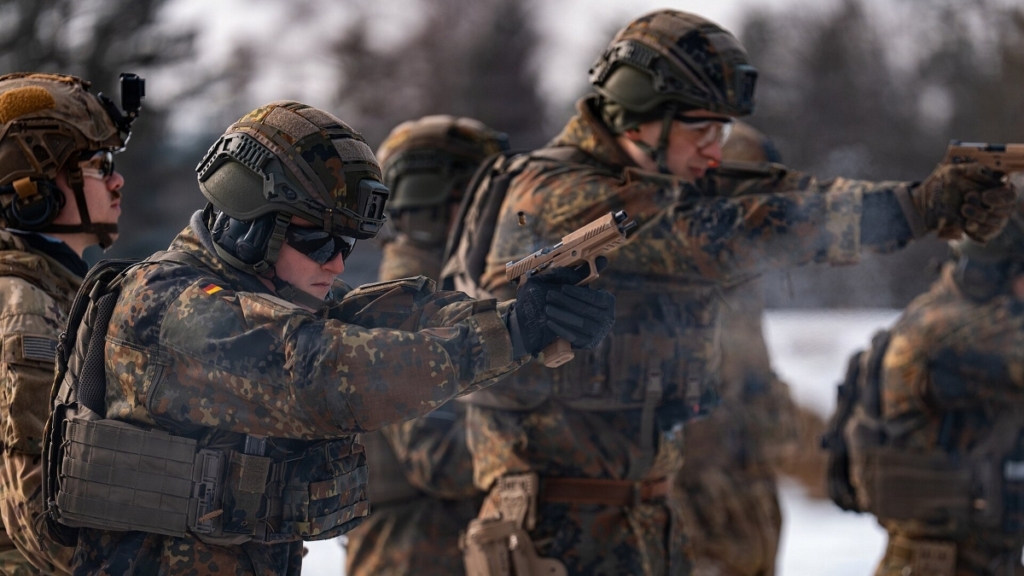
But Germany’s first-ever military strategy, published in April,
undercuts the ambition: it promises defensive capability only by 2029
and full strength by 2039, while analysts assess Russia’s greatest
threat falls in the 2026–2028 window. The document sets no annual force
targets, avoids the word “conscription,” still withholds the Taurus
missile from Ukraine, and reads as “a document shaped by politics rather
than military advice.”
Trump’s
European nationalist allies are publicly breaking with him
European nationalist leaders who once treated Trump’s endorsement as
global validation now treat it as a liability. Tariff wars, Greenland
threats and an Iran war that spiked European energy prices corroded the
relationship — but the breaking point was personal: Trump claimed Meloni
had “begged” for a G7 photo, and she pushed back publicly. With
elections looming in 2027 in Italy, France and Poland, leaders face
electorates where Trump’s brand is a net negative — a recent poll found
only 17% of Poles, the highest of seven EU countries surveyed, would
call him “a friend of Europe.” Bardella and others are recalibrating to
avoid association with what has become, in European terms, a toxic
brand.
China
could win Taiwan without fighting — and Trump’s ambiguity creates the
opening
A Foreign Affairs analysis argues Xi Jinping’s real preference is to
gain control of Taiwan without war — the lessons of Russia’s Ukraine
quagmire and the US–Iran war showing that even asymmetric victories
carry enormous risk. China’s path is incremental coercion: asserting
jurisdiction, applying economic and diplomatic pressure, and gradually
normalizing its power over the island. Trump’s strategic ambiguity, the
authors argue, doesn’t deter this — it creates room for Beijing to push
Taiwan toward capitulation without triggering a US response. Their
prescription is calibrated clarity: robust military deterrence paired
with reassurance that Washington doesn’t back formal Taiwanese
independence.
The
war on terror built the legal infrastructure for autocracy
A paywalled Economist op-ed traces the structural link between
post-9/11 security expansions — mass surveillance, executive war powers,
indefinite detention, classified court orders — and the legal machinery
now available to authoritarian-leaning governments. The argument moves
past rhetorical normalization to the institutional apparatus itself: the
precedents, expanded interpretations and tools that outlast the
emergency that produced them. In the current US climate, it’s a
significant frame for how democratic backsliding proceeds through
accumulated legal mechanisms rather than sudden rupture.
Also today
- Following Pashinyan’s pro-EU election win, Von der Leyen travels to
Yerevan next week to deepen EU–Armenia ties — a marker of Russia’s
declining regional leverage — Euronews
Health
Dynomight:
vitamin D’s RCT results are near-null — but the backlash
overcorrected
A careful Dynomight analysis concludes the “vitamin D is useless”
narrative overcorrects from earlier observational hype. Major randomized
trials (WHI, VITAL, D-Health) show all-cause-mortality hazard ratios
clustering around 0.96–1.04 — individually null — yet meta-analyses
suggest modest positive effects approaching significance, and the
biology is plausible (D receptors in immune cells boost antimicrobial
peptides and reduce inflammation). The verdict: supplementation remains
a reasonable bet for people with low levels, given the evolutionary
argument, the modest signals, and the low downside.
 Ukrainian strike on Kerch, Crimea —
fire at energy infrastructure following drone attacks on the port.
Source: Crimeanwind Telegram
Ukrainian strike on Kerch, Crimea —
fire at energy infrastructure following drone attacks on the port.
Source: Crimeanwind Telegram Vessels anchored near Bandar Abbas, Iran, along the Strait of
Hormuz.
Vessels anchored near Bandar Abbas, Iran, along the Strait of
Hormuz. Record temperatures swept across
France, Spain and the UK this week.
Record temperatures swept across
France, Spain and the UK this week.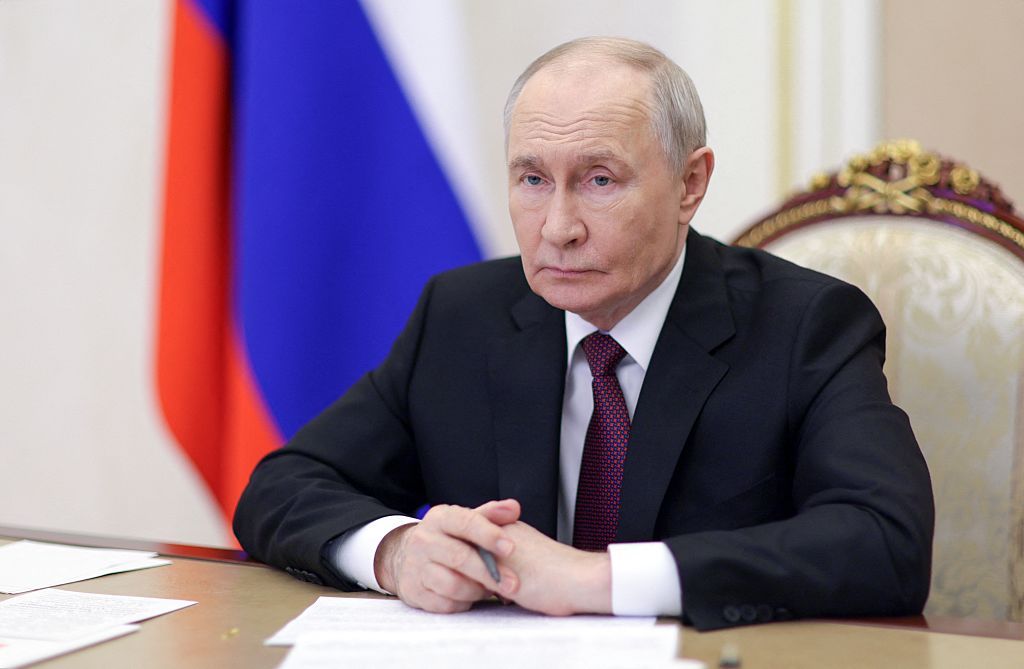 Vladimir Putin chairs a government
meeting via videoconference in Moscow, June 23, 2026.
Vladimir Putin chairs a government
meeting via videoconference in Moscow, June 23, 2026. Unmanned surface vessels on display
at a Russian naval defense show in Kronstadt, June 10, 2026.
Unmanned surface vessels on display
at a Russian naval defense show in Kronstadt, June 10, 2026.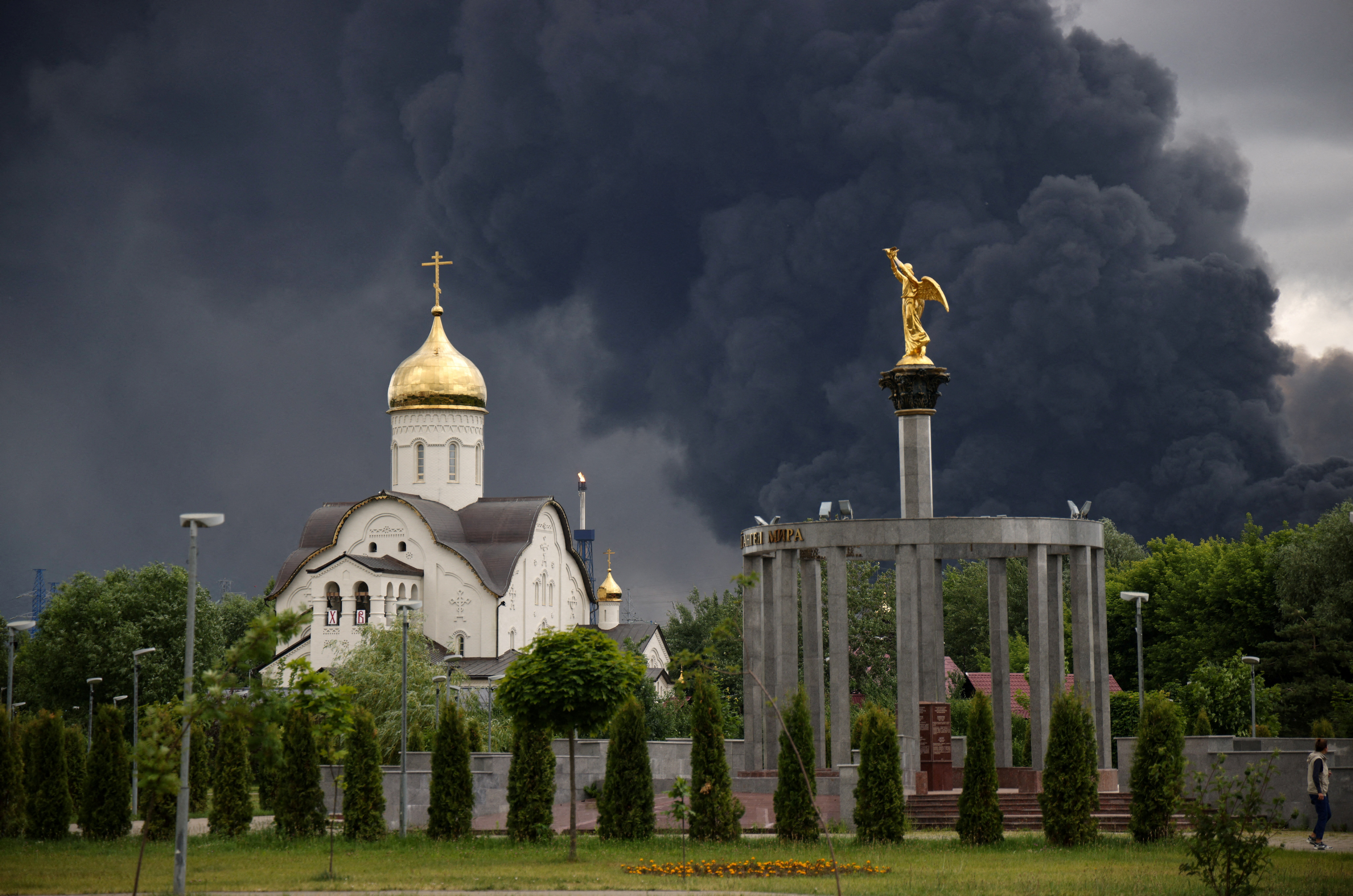 Smoke rises from a Moscow oil
refinery following a Ukrainian drone attack, June 18, 2026. Photo:
Reuters
Smoke rises from a Moscow oil
refinery following a Ukrainian drone attack, June 18, 2026. Photo:
Reuters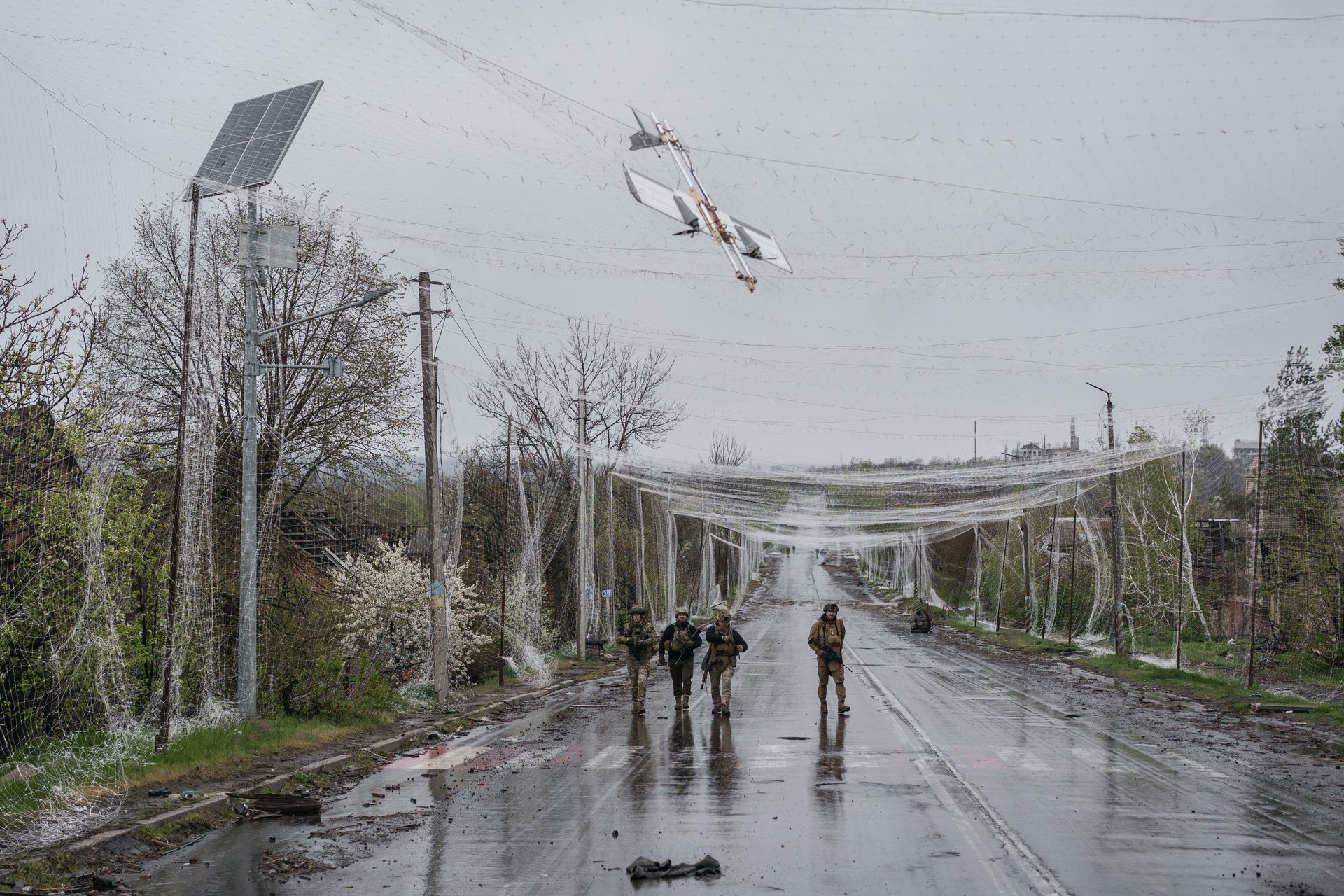 Soldiers of Ukraine’s 24th Brigade
walk a road under anti-drone netting near Druzhkivka, Donetsk Oblast.
Photo: Serhii Korovayny/Kyiv Independent
Soldiers of Ukraine’s 24th Brigade
walk a road under anti-drone netting near Druzhkivka, Donetsk Oblast.
Photo: Serhii Korovayny/Kyiv Independent Cover image for Cloudflare’s hyper
HTTP library investigation.
Cover image for Cloudflare’s hyper
HTTP library investigation.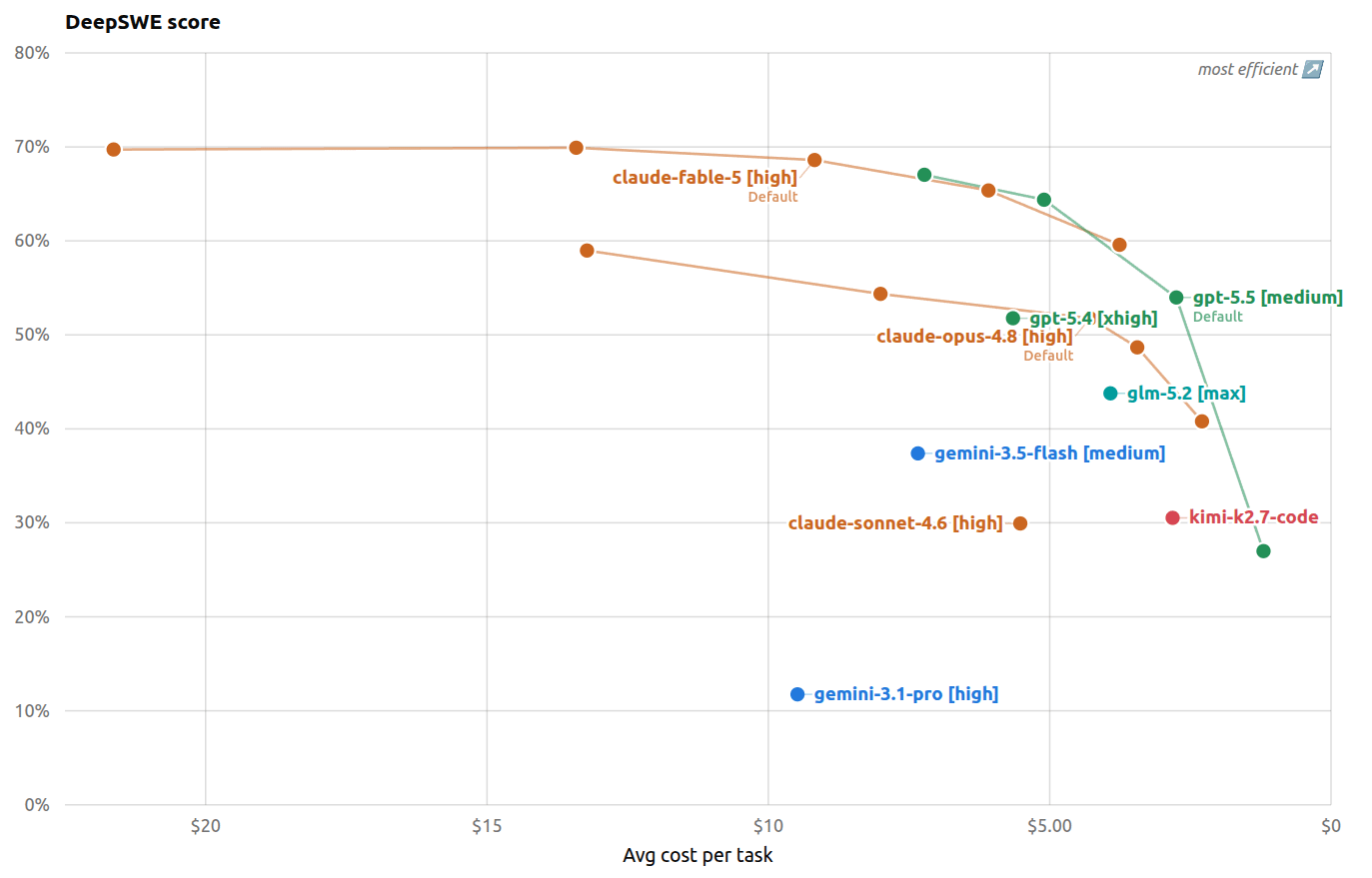 DeepSWE leaderboard — pass@1 scores
across the benchmark, illustrating the spread between top coding
agents.
DeepSWE leaderboard — pass@1 scores
across the benchmark, illustrating the spread between top coding
agents. Title key art for Domesday, the
medieval peasant sim built entirely by parallel Claude Code agents under
human direction.
Title key art for Domesday, the
medieval peasant sim built entirely by parallel Claude Code agents under
human direction. A worker walks beside the MareNostrum5 supercomputer in Barcelona.
 Joint small-arms training —
illustrating the gap between Germany’s strategy rhetoric and
on-the-ground capability. Photo: Wikimedia Commons via War on the
Rocks
Joint small-arms training —
illustrating the gap between Germany’s strategy rhetoric and
on-the-ground capability. Photo: Wikimedia Commons via War on the
Rocks