Oak: version control
rebuilt for AI agents
Oak is a new open-source VCS designed around agentic workflows rather
than human ones. Instead of commits, it uses a branch-per-session model
with descriptions. Content addressing via BLAKE3 and lazy on-demand
hydration through virtual FUSE mounts mean an agent can start working on
any repo in seconds without a full clone. Machine-readable JSON output,
documented numeric exit codes, and non-interactive operation throughout.
The pitch: dramatically less wall time, fewer transcript tokens, and
faster recovery than running Git in an agent loop. HN noted parallels to
Google’s CitC and Meta’s EdenFS, while skeptics asked whether models
trained on Git will simply ignore it — a real adoption challenge.
Nix
still can’t relocate its binary cache — and a 100-line build core
Farid Zakaria had a productive few days. The headline argument: Nix’s
hardcoded /nix/store paths make alternative store prefixes
(rootless installs, Bazel/Buck2 sandboxes, nested user namespaces)
cascade-invalidate the entire dependency graph and force recompilation
from source. The fix would be Linux $ORIGIN-relative paths
— but the kernel doesn’t support $ORIGIN in
PT_INTERP headers or shebangs, so the options are kernel
patches, static bootstrap wrappers, or language-level relative paths. He
frames this as the key remaining blocker for Nix in constrained and
corporate environments. In a companion piece, wrap-buddy
documents ELF entry-point hijacking for the pathological binaries
patchelf can’t handle — neutralizing
PT_INTERP, injecting an entry stub, and reconstructing the
binary in memory with the NixOS linker. And a third reimplements
nix-build in ~100 lines of Go to show that a derivation is
just a build plan realized in four recursive steps — the sandboxing,
SQLite tracking and caching is infrastructure, not the core. Related:
NASty v0.0.12, a NixOS + bcachefs NAS OS with
bcachefs-native compression, erasure coding, TPM2-sealed encryption, and
NFS/SMB/iSCSI/NVMe-oF sharing — all from one web UI.
nix-omarchy-theme:
declarative Hyprland theme switching via Home Manager
A Home Manager module enabling runtime theme switching across the
whole Hyprland desktop. A theme-switcher command (aliased
ts) applies a theme by updating wallpapers, reloading
Hyprland, restarting Waybar/Mako/Ghostty/Btop, and updating GTK/icon
themes via gsettings. Themes live in Git repos with a
colors.toml; 17 built-in templates cover Alacritty, Foot,
Ghostty, Kitty, Helix, Btop, Hyprlock and Waybar. Inspired by Omarchy’s
theme ecosystem, extensible via custom templates.
Xfce goes
Wayland: Xfwl4 first preview released
Xfwl4 — Xfce’s Wayland compositor — has its first preview after six
months of sponsored development, aiming for seamless parity with
X11-based Xfce so users can switch without noticing. The alpha is
missing mouse/touchpad settings dialogs, app-switching keyboard
shortcuts, and startup window-position restoration, but is described as
a “solid cut” — a real milestone for anyone who wants a traditional
stacking desktop on Wayland without jumping to GNOME or KDE.
HTTP
gets a QUERY method — safe, idempotent, with a request body
RFC 10008 standardizes HTTP QUERY: a method that’s semantically
read-only and idempotent (like GET) but accepts a request body (like
POST). It closes a long-standing gap — complex search queries that
overflow URL length limits with GET, or get mislabeled as POST mutations
— and lets middleware and caches correctly treat QUERY as safe to retry
and cache. Caveats: links can’t be shared, and broad adoption will take
years; plain GET remains right for most cases.
Rhombus
v1.0: Racket’s readable-syntax language ships stable
Rhombus is a general-purpose functional language on Racket’s
foundations, offering conventional syntax without sacrificing
Lisp-tradition macro power. Instead of S-expressions it uses “shrubbery
notation” — an intentional middle ground that preserves compile-time
metaprogramming while staying readable to people outside the Lisp
tradition. v1.0 ships comprehensive docs, a new class system, pervasive
pattern matching, and hierarchical namespaces. Racket’s answer to the
accessibility problem that has long limited Lisp-family languages.
Elsewhere, Mitchell Hashimoto pledged another $400k to
the Zig Software Foundation (total now $700k) — donating despite
disagreeing with Zig’s no-LLM contribution policy, a signal Zig has
earned credibility beyond ideological alignment.
Drawing-tablet
brands won’t collaborate on Linux drivers — because the repos are named
after Wacom
Open-source Linux tablet infrastructure (libwacom,
wacom-hid-descriptors) is community-run but named after
Wacom — and that naming is blocking collaboration. Huion, XpPen, Gaomon
and Ugee refuse to share device specs with projects they perceive as
“primarily Wacom-led,” since contributing would route their specs
through Wacom-branded infrastructure. David Revoy notes the irony: the
repos already support all brands, the names are just a legacy artifact,
and Linux users suffer for a coordination failure rooted entirely in
competitive optics.
Police
chiefs used Flock license-plate readers to stalk ex-partners
Multiple police chiefs have been arrested for using Flock Safety’s
ALPR network to track romantic partners without warrants: one Idaho
sheriff queried his wife’s plate 700+ times in three months; an Illinois
chief ran an ex-boyfriend’s plate 140 times, mostly off duty. Flock’s
own Chief Legal Officer called it “the most common” misuse pattern. IPVM
argues the pattern shows ALPR networks function as warrantless stalking
infrastructure — the vehicle is the mechanism, the person is the target
— and that judicial oversight is necessary.
 NASA FIRMS satellite data showing
fire hotspots across occupied Crimea after overnight Ukrainian drone
strikes, 23 June 2026.
NASA FIRMS satellite data showing
fire hotspots across occupied Crimea after overnight Ukrainian drone
strikes, 23 June 2026. Putin og
Alina Kabaeva (2004) — fra saken om journalisten Grigorij Nekhorosjev,
som avslørte forholdet og nå er funnet død.
Putin og
Alina Kabaeva (2004) — fra saken om journalisten Grigorij Nekhorosjev,
som avslørte forholdet og nå er funnet død.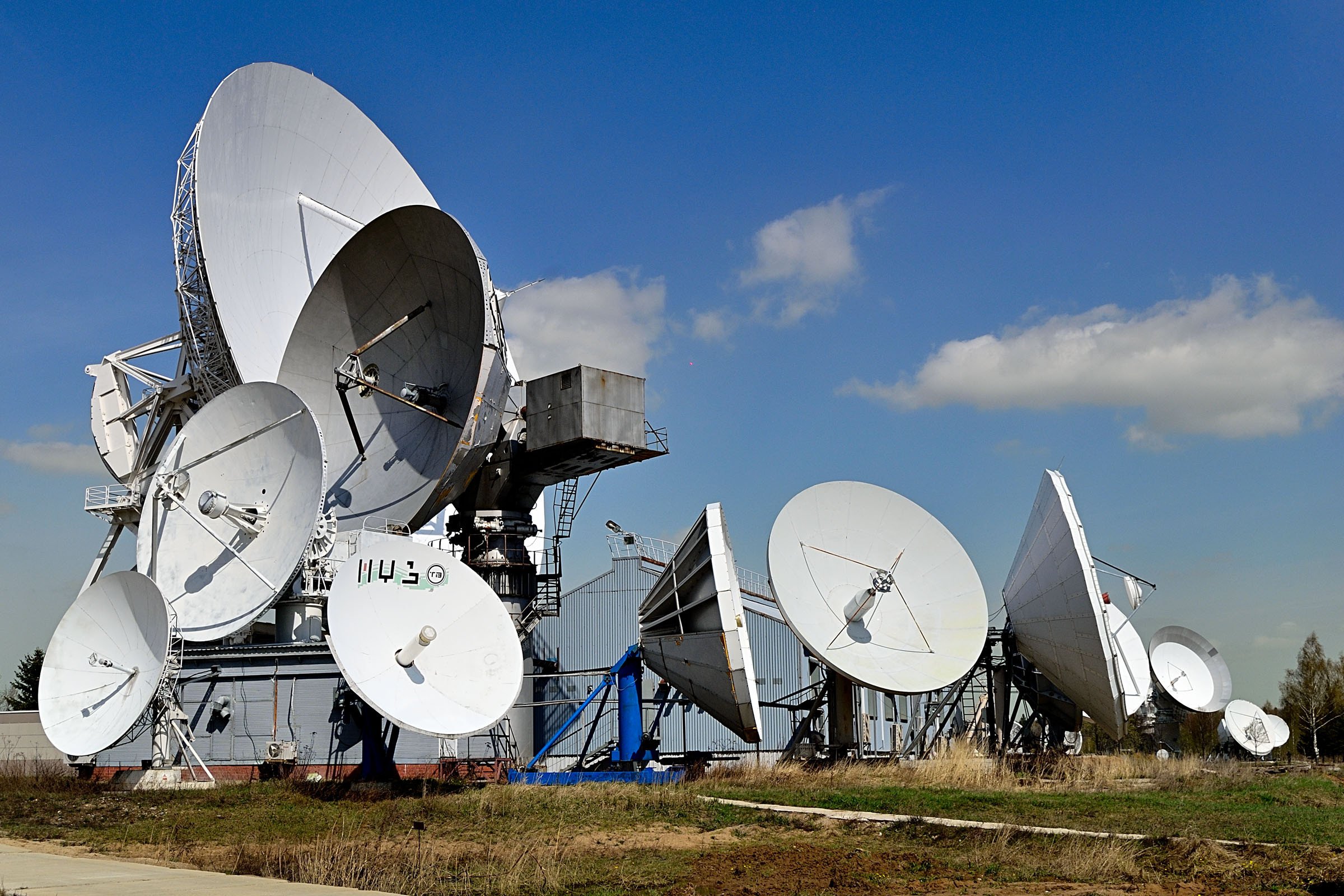 Antennas and satellite dishes at the
Dubna Space Communications Center, Russia’s largest satellite teleport
(Wikimedia).
Antennas and satellite dishes at the
Dubna Space Communications Center, Russia’s largest satellite teleport
(Wikimedia). Kampbilde fra Norge–Senegal i New
Jersey, 23. juni 2026. Foto: VG
Kampbilde fra Norge–Senegal i New
Jersey, 23. juni 2026. Foto: VG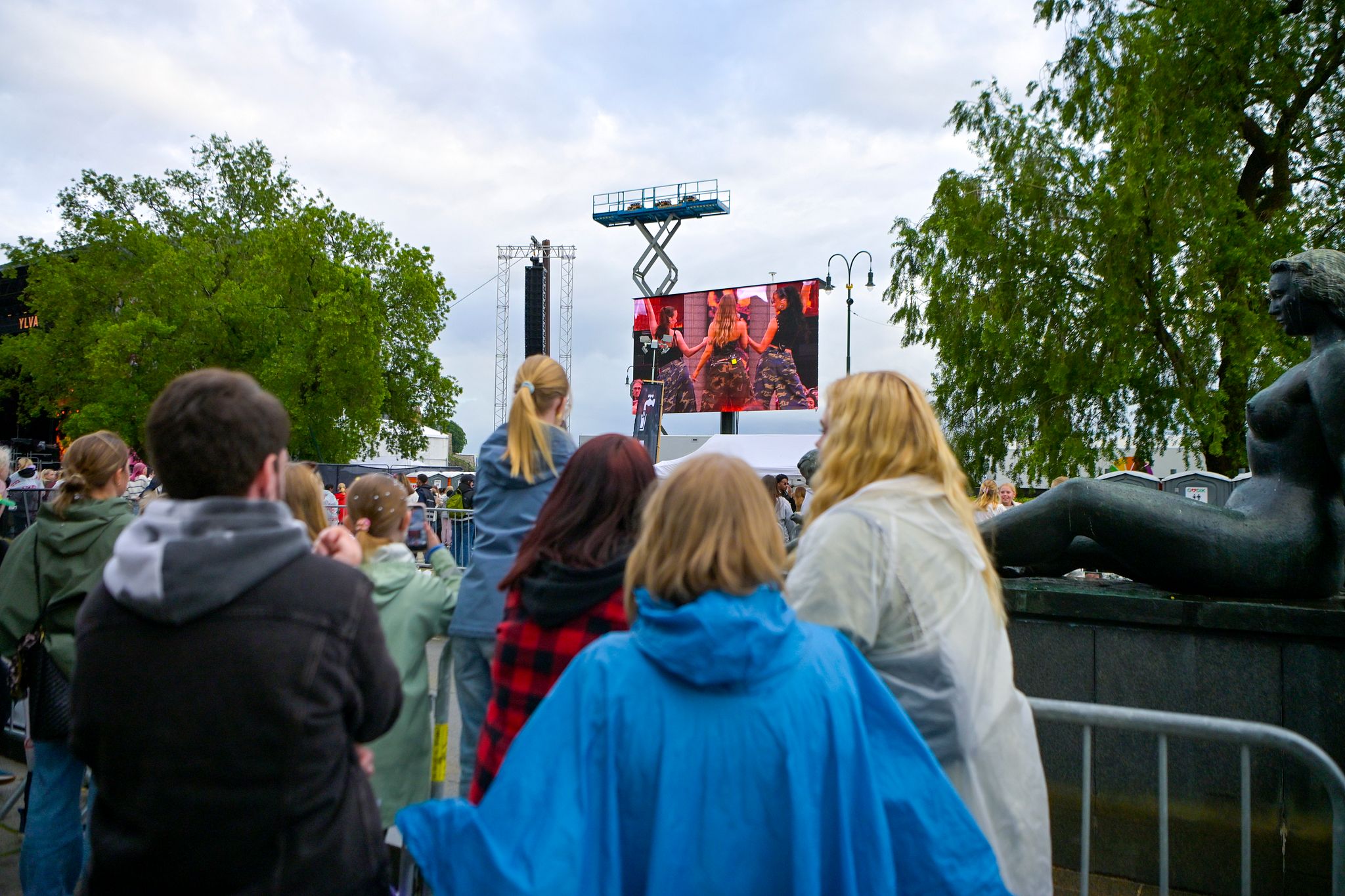 Publikum under VG-lista. Foto:
Annika Byrde / NTB
Publikum under VG-lista. Foto:
Annika Byrde / NTB Oak — version control for
agents.
Oak — version control for
agents.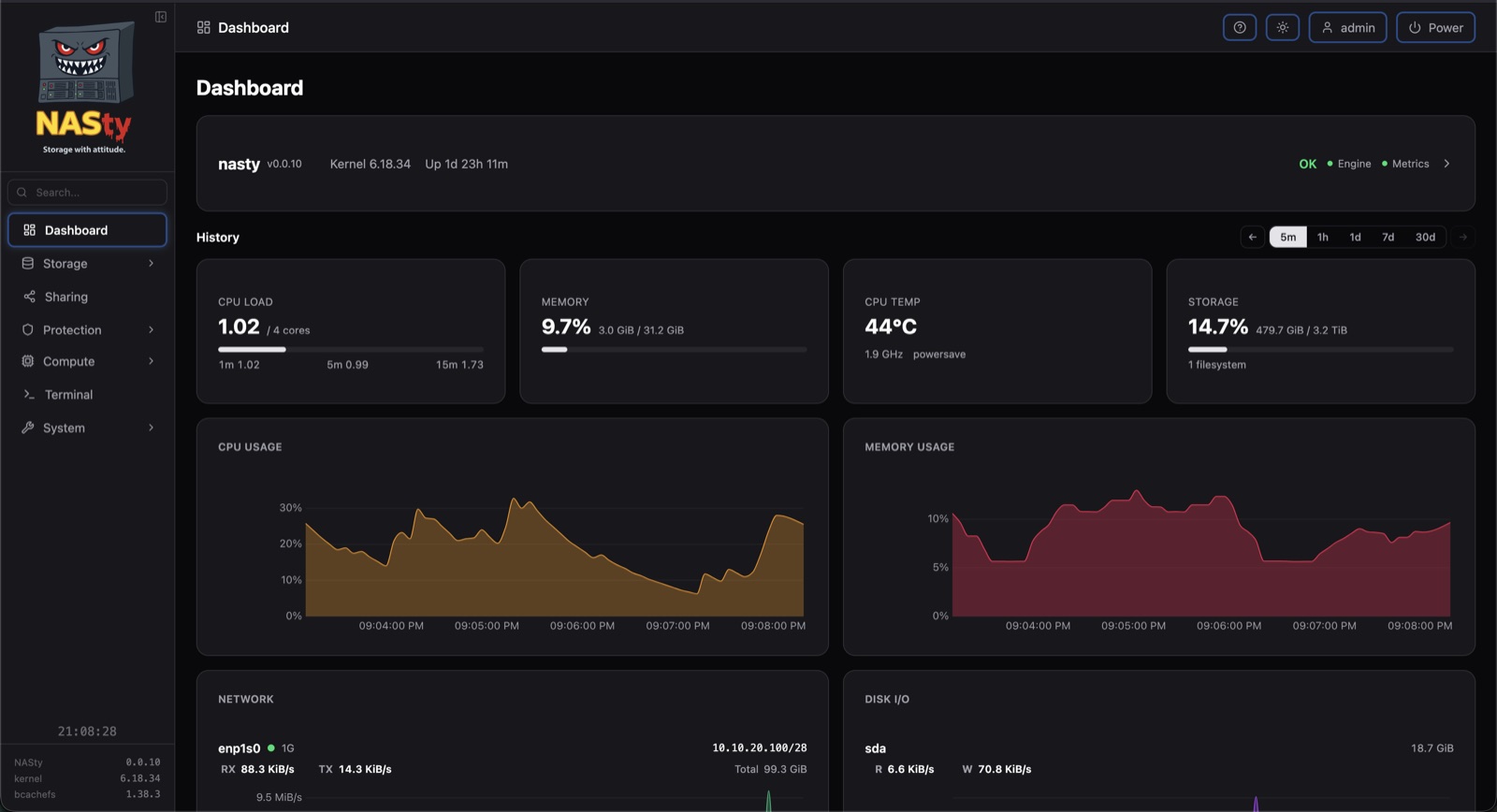 NASty’s web UI system dashboard —
CPU, memory and storage at a glance.
NASty’s web UI system dashboard —
CPU, memory and storage at a glance. Illustration by David Revoy: a “Linux drawing tablet driver” sandbox
with a Wacom penguin inside while Huion, XpPen and Gaomon penguins
hesitate outside.
Illustration by David Revoy: a “Linux drawing tablet driver” sandbox
with a Wacom penguin inside while Huion, XpPen and Gaomon penguins
hesitate outside.