Ukraine reaches deep enough to strand a peninsula, the Iran
ceasefire cracks at the Strait of Hormuz, and a Labour landslide curdles
into a leadership coup.
Ukraine
moves to isolate Crimea — Kerch Strait ablaze, fuel sales banned
In its most damaging coordinated strike yet on Crimea’s logistics
lifeline, Ukraine’s SBU, USF, GUR and special forces hit the Port of
Kavkaz oil depot — setting at least three ferries ablaze — alongside the
TES-Terminal-1 fuel terminal in Kerch, less than a kilometre from the
bridge, and disabled four S-400 radars and two Pantsir systems on the
Kerch Strait Bridge itself. Russia suspended all ferry service across
the strait and diverted freight to the overland route through occupied
Mariupol; Crimea halted civilian fuel sales entirely, while Sevastopol
stopped sales for two days and restricted retail, transport and outdoor
events. The campaign pursues strategic isolation rather than assault —
choking both of Crimea’s main supply corridors until the peninsula
becomes untenable as a forward base. (More in Ukraine.)
Iran–US
ceasefire fractures: Hormuz declared shut as Switzerland talks limp
forward
The month-old ceasefire is under acute stress. Iran’s IRGC declared
the Strait of Hormuz closed — citing US violations of the memorandum —
even as it sent negotiators to Switzerland. US Central Command disputed
the closure, reporting commercial traffic actually rose on 20 June, but
ship-tracking data showed transits falling sharply; Tehran says the
waterway stays shut until a Lebanon ceasefire firmly holds. The first
high-level round in Switzerland nonetheless produced a roadmap toward a
deal within 60 days, with mediators Pakistan and Qatar reporting
“encouraging progress” and a joint de-confliction cell for Lebanon. It
survived a rocky start: Iranian negotiators briefly walked out after
Trump, while Vance sat across from their counterparts, tweeted threats
to bomb Iran and “kidnap” the team. (Analysis in World.)
Starmer on
the brink as Burnham waits in the wings
UK Prime Minister Keir Starmer is expected to set out a resignation
timetable after concluding his position is no longer tenable — the
culmination of a crisis triggered by Andy Burnham’s emphatic Makerfield
by-election win, which nearly doubled Labour’s majority and handed him a
platform, with reportedly 81 MPs behind him, to mount a leadership
challenge. Greater Manchester’s mayor is now back in Westminster as the
clear alternative; Starmer has become one of the most unpopular PMs in
recorded memory despite Labour’s landslide. A government source insisted
he “remains focused on governing,” and it is still unclear whether there
will be a formal contest or an uncontested handover.
| Indicator |
Value |
Change |
| S&P 500 (f) |
7,563.75 |
-0.09% |
| Dow 30 (f) |
51,963 |
-0.09% |
| Nasdaq (f) |
30,763 |
+0.14% |
| Russell 2000 (f) |
2,992.1 |
-0.26% |
| VIX |
17.5 |
+4.29% |
| Gold |
4,213.4 |
-0.77% |
| BTC |
$64,097 |
+0.25% |
| EUR/USD |
1.1446 |
-0.13% |
| USD/NOK |
9.6955 |
-0.10% |
- VIX +4.29% on flat equities — hedging cost rising despite muted
moves; Iran chaos (walkouts, mid-negotiation tweets) and the Hormuz
closure keep tail risk elevated.
- Gold -0.77% — partial relief as the Switzerland talks produced a
60-day roadmap, dialing back immediate worst-case fears.
- No oil print — but Hormuz closed (~20% of global oil trade) plus
the Qatar Ras Laffan LNG blast make energy the day’s biggest unpriced
risk (see World).
World
The
reckoning: in Washington, the joke is that America surrendered
The line making the rounds in DC and allied capitals: when Trump
declared “unconditional surrender,” it was the US that surrendered.
Insiders describe the MOU as a significant concession that left Iran’s
nuclear programme largely intact, Hezbollah entrenched, and Iran’s
regional influence undiminished — while America ended a war it started
without achieving its aims. The Atlantic argues Trump’s G7 comments
reveal he genuinely doesn’t grasp what was conceded; his subsequent
threats that Iran’s “civilization will die” and musings about US tolls
on Hormuz read as face-saving from structural weakness. Tehran has its
own fractures: a former negotiator now faces prosecution after claiming
the Supreme Leader’s instructions were ignored during earlier talks in
Islamabad.
Netanyahu’s Trump gamble
collapses
A sharp Ynet analysis argues Netanyahu’s defining failure is now
fully exposed: for over a decade he alienated European allies and the
Democratic Party to cultivate a single relationship with Trump — who
then negotiated directly with Iran and left Israel out. Israel faces
Hezbollah intact in Lebanon, a Tehran claiming strategic victory, and an
American president who has moved on. Domestic choices — far-right
coalition partners, the judicial overhaul, feuds with allies —
compounded the damage. Netanyahu must now rebuild ties with Washington
and Europe from a position of unprecedented weakness. Meanwhile, JD
Vance has emerged as the deal’s unlikely closer: his pre-war skepticism
gives him credibility with Tehran and the Gulf, and his independence as
VP lets him take risks others can’t.
Colombia
swings hard right: Trump-backed outsider wins presidency
Far-right millionaire lawyer Abelardo de la Espriella, endorsed by
Donald Trump, has narrowly won Colombia’s presidential runoff over
leftwing senator Iván Cepeda. A self-styled outsider with a history
entangled in paramilitary networks, he has vowed to abandon peace talks
and return to full-scale military confrontation with armed groups.
Cepeda has alleged vote-count irregularities and not conceded. The
result is a dramatic reversal from the Petro government’s direction and
is expected to reshape Colombia’s long-running internal conflict.
Explosion
at Qatar’s Ras Laffan LNG hub injures 54, leaves 18 missing
A blast at Ras Laffan Industrial City — the heart of Qatar’s enormous
LNG export infrastructure and one of the most strategically important
energy facilities in the world — injured 54 workers and left 18 missing.
Authorities attributed it to a “technical malfunction.” Qatar is the
world’s largest LNG exporter, and any significant damage to Ras Laffan
could ripple through global gas markets already stressed by the Hormuz
closure.
Half
of France under red alert as European heatwave nears 42°C
A severe heatwave has placed more than half of France under red-level
alerts, with temperatures forecast to peak Monday near 42°C, potentially
at record levels. Authorities cancelled outdoor sports and banned
alcohol at the nationwide Fête de la Musique. The Netherlands activated
its national heatwave plan, urging residents to hang curtains outside
windows and avoid peak sun. Temperatures across the continent are
approaching 40°C, part of a prolonged extreme-weather pattern.
Israel
kills Al Jazeera cameraman in Gaza; Lebanese turtle conservationist dies
after strike on her home
Israeli strikes killed Al Jazeera cameraman Ahmed Wishah in Gaza; the
IDF accused him of being a “Hamas sniper operative” without providing
evidence. Separately, Mona Khalil — a pioneering Lebanese marine
conservationist who spent decades protecting sea-turtle nesting grounds
and had refused to flee her beachside home — died in hospital after an
Israeli airstrike. BBC journalists travelling with a humanitarian convoy
documented widespread village destruction in occupied southern Lebanon,
even as some displaced residents have begun returning to Nabatieh.
Also today
- Americas
-
Bolivia declares a state of emergency, deploying soldiers and bulldozers
to clear anti-government roadblocks that have paralysed the country and
created shortages — BBC · Guardian
- Europe
-
Czech public TV and radio stage a 24-hour strike against Babiš’s plan to
slash broadcaster funding, raising press-independence alarm — Guardian
-
Two-thirds of EU citizens would back the UK rejoining the bloc, a decade
after Brexit; Scottish independence support nears record levels — Guardian
-
Trump–Meloni feud erupts after Trump claimed she “begged” for a G7
photo; Italy cancels FM Tajani’s Washington trip — BBC
- Asia-Pacific
-
China sanctions 10 US military firms and imposes export controls on
dozens more, retaliating for US defense-contract bans — NPR
-
Australia agrees to sell Canada an over-the-horizon Arctic radar system
in a record $1.7bn defence deal — CBC
· Globe
and Mail
-
Australia’s largest-ever cocaine bust — 2.7 tonnes (A$816m) buried in
bunkers under a western Sydney property; two arrested — BBC · Guardian
-
H5N1 bird flu reaches the Australian mainland for the first time,
prompting WA poultry lockdowns — Guardian
- Africa
-
Ethiopia’s Abiy Ahmed wins a landslide amid fears the result masks
deepening divisions and renewed conflict risk — BBC
-
Ebola containment keeps the Goma–Rwanda border shut, severing a trade
lifeline thousands of families depend on — Al
Jazeera
- Strategy & diplomacy
-
Germany’s Merz calls for a new Plaza Accord on China’s yuan — claiming
it’s 30% undervalued — signalling Berlin is releasing its brake on EU
hawkishness — SCMP
-
India and Italy rebuild a defense partnership a 2013 bribery scandal
nearly ended — but analysts warn it needs binding institutional
safeguards to survive the next shock — War
on the Rocks
Ukraine
Ukraine’s
deepest strikes yet — Tyumen refinery, Moscow raids, and 3,000 km drones
on the way
Ukraine’s Special Operations Forces confirmed striking the Tyumen Oil
Refinery — roughly 2,500 km from the front, one of the deepest strikes
of the war, reportedly by a $50,000 drone. Overnight, drones also raided
Moscow, forcing temporary restrictions at several airports, and hit a
Moscow oil refinery and three Russian military ferries near Port Kavkaz
on the Kerch Strait. A BBC correspondent described the moment Russia’s
war “came closer to home.” New details emerged on the domestic Bars RS
cruise missile (1,000 km range), confirmed in combat against Moscow;
Zelensky says drones with 3,000+ km range are in development. Russia has
begun installing drone shelters in St Petersburg — a sign its northwest
is no longer beyond reach.
Russia
escalates the air war with new weapons; drone hits Turkish cargo
ship
Russian strike intensity has surged in 2026, averaging 74 ballistic
missiles a month (versus six in 2023) and on pace for 75,000 guided
glide bombs this year. Overnight, Russia launched two Iskanders, two
Kinzhals and over 100 drones; glide bombs on Zaporizhzhia killed at
least five, and a double-tap strike hit first responders near Kharkiv.
Russia has also deployed a new Shahed variant whose second warhead
remotely mines an ~80-metre area around the target. In the Black Sea, a
Russian drone struck the Panama-flagged cargo vessel VICTRESS, causing
casualties and fire; Ukrainian naval forces evacuated survivors.
Russia
massing forces around Kostyantynivka, the key to all of Donetsk
Russia has 100–250 infiltrators already operating inside
Kostyantynivka, with fighting across the city’s northwest, centre and
southwest — analysts call it critical to any push to complete the
capture of the Donbas. Near Pokrovsk, Russia is rotating in
better-trained infantry and massing for intensified attacks; Ukrainian
forces retook Bilytske but Russian infiltrators have consolidated
nearby. ISW judges Russia currently lacks the capacity to press both
axes hard at once, but warns the 51st CAA may attempt a flanking thrust
north toward Druzhkivka. Ukraine recorded 246 Russian attacks in a
single day.
Germany
deal for 600 air-defence missiles; UK builds a US-restriction-free
weapon; Belarus stalls
Ukraine secured a deal for 600 German air-defence missiles, pending a
US export licence — a significant acquisition against rising Russian
ballistic pressure. The UK is independently developing a new long-range
missile for Ukraine free of US export restrictions, and MBDA completed
successful launch tests of the Crossbow. On Belarus, Zelensky’s
ultimatum to Lukashenko — remove Russian drone-repeater infrastructure
along the border by 26 June — has so far been ignored, with Minsk
offering only vague apologies.
Putin’s
war trap: Russia has restructured itself around the conflict
An RFE/RL analysis argues Russia has reoriented its shadow economy,
labour markets, regional budgets and social hierarchy around the war —
making it extraordinarily difficult to exit on terms that don’t threaten
Putin’s standing. Any settlement must be sellable as credible victory; a
deal that can’t be framed that way generates enormous elite and public
pressure from those promised swift success. Ukraine faces its own trap:
endless ceasefire talks while Russian strikes keep destroying
infrastructure. The piece identifies “dual traps” for 2026 — peace terms
each side could live with politically may be mutually incompatible,
making this potentially a decisive year that nonetheless produces no
resolution.
Also today
- Zelensky compares Poland’s new president Karol Nawrocki to Orbán —
“this will end badly” — and returns the Order of the White Eagle after
it was stripped from him, signalling a sharp deterioration in
Ukraine–Poland relations — Ukrainska
Pravda · BBC
Tech & Infrastructure
Mythos
cracked nearly all NSA classified systems in hours — then the NSA
deployed it for offensive ops
Anthropic’s Mythos model is at the centre of a national-security
firestorm. In an authorized red-team exercise, Mythos reportedly gained
access to nearly all targeted NSA and Cyber Command classified systems
within hours — results briefed to Congress by NSA General Joshua Rudd
and surfaced publicly by Senator Mark Warner. Anthropic had already kept
Mythos off the public market, restricting it to ~200 vetted partners
under “Project Glasswing.” Axios separately reported the NSA was
actively using Mythos for offensive cyber operations despite a DoD
blacklist — the first known operational deployment of a frontier model
for offensive government cyber use. The fallout: on 12 June, three days
after launch, a Commerce Department export-control directive forced
Anthropic to disable Fable 5 and Mythos 5 for all users worldwide —
including its own employees abroad. Anthropic disputes the move, warning
the standard would “essentially halt all new model deployments for all
frontier model providers,” and expects access restored “in coming
days.”
GLM-5.2:
open-weight frontier model matches Claude Opus on coding at one-sixth
the cost
Zhipu AI (Z.ai) released GLM-5.2, a 744B-parameter MoE model (40B
active) under MIT license with a genuine 1M-token context window. On
FrontierSWE — a long-horizon coding benchmark spanning tasks from hours
to dozens of hours — it scores 74.4%, one point behind Claude Opus 4.8
and ahead of GPT-5.5. Via OpenRouter it runs at ~$1.40/M input tokens
versus GPT-5.5’s $5. The key innovation, “IndexShare,” reuses a shared
indexer across every four sparse-attention layers, cutting per-token
compute 2.9× at full context. It’s currently the strongest open-weights
model on the Artificial Analysis Intelligence Index.
Anthropic
to require biometric ID verification from 8 July — and the provider
raises flags
Anthropic is rolling out identity verification via third-party
provider Persona: before accessing certain (still unspecified)
capabilities, users will submit a government photo ID and a live selfie.
Anthropic says verification data won’t be used for training. But a
code-level deep-dive into Persona raises substantive concerns: face
lists retained up to three years (contradicting the public one-year
figure), “public figure facial matching” comparing selfies against a
political-figure database with similarity scoring, and 269 distinct
checks per verification including experimental ML on biometric data. For
EU users this likely qualifies as high-risk AI under the EU AI Act, with
open GDPR consent and cross-border-transfer questions. Persona is backed
by Peter Thiel.
The
case for cancelling Claude: the open-model gap is now small enough that
privacy wins
A concise argument that Claude’s ID-verification rollout tips the
cost-benefit: open models trail proprietary leaders by only a few
months, have good coding harnesses, and running them locally eliminates
the data-sharing concern entirely. The author frames the productivity
trade-off as acceptable and compares it to Linux’s trajectory. It lands
alongside a Nature editorial surveying early empirical research on
whether AI assistance erodes human cognitive skills over time — one of
the first systematic attempts to quantify a deskilling effect
practitioners have described anecdotally, and the initial results are
not encouraging.
Apertus:
EPFL/ETH Zurich release a fully transparent 70B sovereign AI model
The Swiss AI Initiative — EPFL, ETH Zurich and CSCS — released
Apertus in 8B and 70B variants with training data, code, weights,
methods and alignment principles all public and reproducible. The
“sovereign AI” framing is substantive: built for EU AI Act compliance
(opt-outs respected, PII removed, memorization prevented), supporting
1,000+ languages, and explicitly designed so nations and institutions
can verify and control their own AI infrastructure without vendor
lock-in.
Sakana’s
Fugu learns multi-agent orchestration instead of hand-coding it
Sakana AI launched Fugu, a service routing requests through a
dynamically assembled pool of LLMs via a single API. The interesting
part is the coordination: rather than fixed pipelines, it draws on two
ICLR 2026 papers (TRINITY and Conductor) where the system
learns to discover non-obvious collaboration patterns,
assigning Thinker, Worker and Verifier roles at runtime. Fugu Ultra
targets demanding tasks like competitive programming and research
analysis; users can opt specific models out for compliance.
OCaml
5.5.0: modules as function arguments, inline polymorphism, 60+ new
stdlib functions
A substantial release. Modules can now be used as function arguments
(lightweight functors without the boilerplate); higher-rank polymorphic
functions can be defined inline without record/object wrappers; and the
compiler is now relocatable, so switches can be cloned rather than
recompiled. The standard library gains ~60 new functions including
String.replace_all, String.includes and
efficient substring search via 2-way matching. Local type and module
definitions inside expressions are now supported, and GC pacing improves
with sweep-only and idle phases for smoother performance on small
heaps.
Apple
lays groundwork for Swift in the kernel — no active code yet
Reverse engineering of macOS reveals Apple has embedded a tiny (~2.4
KB) Swift runtime into specific kernel extensions under a new KernelKit
SDK, while leaving the C/C++ XNU core (Mach, BSD, IOKit) entirely
untouched. Crucially, the 37 Swift runtime symbols currently have
zero callers outside their defining kext — Apple shipped the
infrastructure before any actual Swift kernel code uses it. This is
foundational groundwork for a memory-safe kernel strategy, moving
incrementally rather than rewriting from scratch.
nix-build
in under 100 lines: the core is just exec-with-clean-environment
A Go reimplementation of nix-build in under 100 lines
demystifies what Nix does at its core: realizing a derivation means
recursively building inputs, cleaning the environment to known
variables, setting the output path, and exec’ing the builder. That’s it.
Sandboxing, the Nix store database and binary caches are all bookkeeping
layered on top of a conceptually simple four-step process — a good read
for anyone wanting to understand what Nix’s “magic” actually is.
An
SF agency plagiarized the entire Dictionary of Obscure Sorrows — and AI
now cites the bootleg
Qontour (formerly Prompt Digital), a San Francisco web-design agency,
republished all 311 entries from John Koenig’s published book on a
lookalike domain, replaced the original illustrations with AI-generated
images, and monetized it with Amazon affiliate links. Koenig confirmed
no involvement. The bootleg now outranks the official site in Google,
and both ChatGPT and Gemini have begun incorrectly identifying it as the
original. Andy Baio’s investigation at Waxy.org is the original
report.
Also today
- AI tooling
-
CLAUDE.md is becoming a first-class engineering artifact — developers
are extending Karpathy’s baseline four clauses, with one reporting a
single added clause was “a game changer” — r/ClaudeAI
-
Recall — a zero-token local memory layer for Claude Code that uses
TF-IDF and TextRank (not API calls) to summarize sessions into a local
.recall/ directory — GitHub · HN
-
Self-healing automation: run deterministic Playwright/Puppeteer scripts,
and on failure call an LLM to diagnose, patch and save the fix — keeping
LLM calls rare while hardening the codebase — r/automation
-
Matrix Recurrent Units — an attention alternative using cumulative
matrix products (H_t = H_{t-1} × M_t), O(n) sequential, encoding token
order via non-commutativity instead of positional embeddings — GitHub · r/MachineLearning
- Languages & systems
-
Fil-C introduces the first memory-safe x86-64 inline assembly,
validating asm via static analysis before compilation — significant
since inline asm is common in crypto code — Fil-C docs · Lobsters
-
Rust —
#[sqlx::test] embeds every migration’s full text
into each test; switching to a shared MIGRATOR cut
cargo expand output from 32 MB to 6 MB and rebuild time
from 7.5s to 5s — kobzol.github.io
· Lobsters
- Linux & desktop
-
postmarketOS v26.06 “Alpen Avocado” ships GNOME 50, KDE Plasma Mobile
6.6.5, sudo-rs replacing doas, ModemManager cell broadcast, and 254
testing-category devices — postmarketOS
· Lobsters
-
Deno Desktop launches as a TypeScript-native Tauri alternative, offering
a choice between the OS webview (tiny binaries) or a bundled Chromium
backend — Deno docs
· HN
- Science
-
FDA advisors unanimously back Moderna’s mRNA seasonal flu vaccine —
cleared after official Vinay Prasad’s departure; final decision due 5
August — Ars
Technica · HN
- Privacy
-
Danish privacy activist Lars Andersen had his apartment raided — cameras
cut before entry — after publishing PM Mette Frederiksen’s personal ID
to protest her surveillance policies — HN
Health
Third
independent lab confirms Long COVID IgG causes pain — but not cognitive
impairment — in mice
Université de Namur published a passive-transfer study in Acta
Neuropathologica showing that IgG from Long COVID patients with
neurological symptoms induces mechanical allodynia and thermal
hyperalgesia in mice — but, notably, not cognitive impairment.
This contrasts with the Yale/Iwasaki Cell paper, which showed
both sensory and cognitive effects. A 17 June Frontiers in
Immunology opinion piece synthesizes all four independent
passive-transfer labs (Utrecht, Yale, Namur, King’s College London),
formalizing this as a convergent “multiple discovery” that validates
autoantibody causality. The mechanistic nuance: pain/sensory and
cognitive symptom clusters may reflect distinct autoantibody pools or
target tissues. For a patient whose GPCR-AAb profile is maxed on
autonomic/pain-relevant receptors (β1/β2-AR, M3/M4, ET-A, AT1), the
Namur sensory phenotype maps directly onto his symptoms. No immediate
treatment implication — two sham-controlled immunoadsorption RCTs remain
negative — but four-lab convergence closes the debate on whether these
autoantibodies are causal.
Tracking (no results yet; status unchanged
unless noted)
- ANKTIVA COVID-4.019-Long (Chan Soon-Shiong,
NCT07123727) — results expected Jul 2026, now imminent; no announcement
yet
- ANKTIVA INTERRUPT_LC (UCSF, NCT07108036) — results
expected Oct 2026
- REVERSE-LC (baricitinib, Phase 3) — recruiting;
cognition data Nov 2026, full data Jul 2027
- ADDRESS-LC (bezisterim) — fully enrolled; topline
data confirmed Q3 2026
- Rapamycin (Mount Sinai + Simmaron) — both running;
results Nov 2026
- Daratumumab ResetME (Haukeland) — treatment started
~Sep 2025; results ~2027
- TURN-Long COVID (Amsterdam UMC immunoadsorption) —
recruiting, AAb-stratified; completion Dec 2027
- EXTINCT (MHH Hannover immunoadsorption) —
enrollment complete (n=60); no results yet
- Sonlicromanol (NCT07298005, mitochondrial/PEM) —
running; timeline TBD
- Locci/Penn GC B-cell preprint &
Brodin/Karolinska WGS preprint — not yet posted as of
Jun 2026
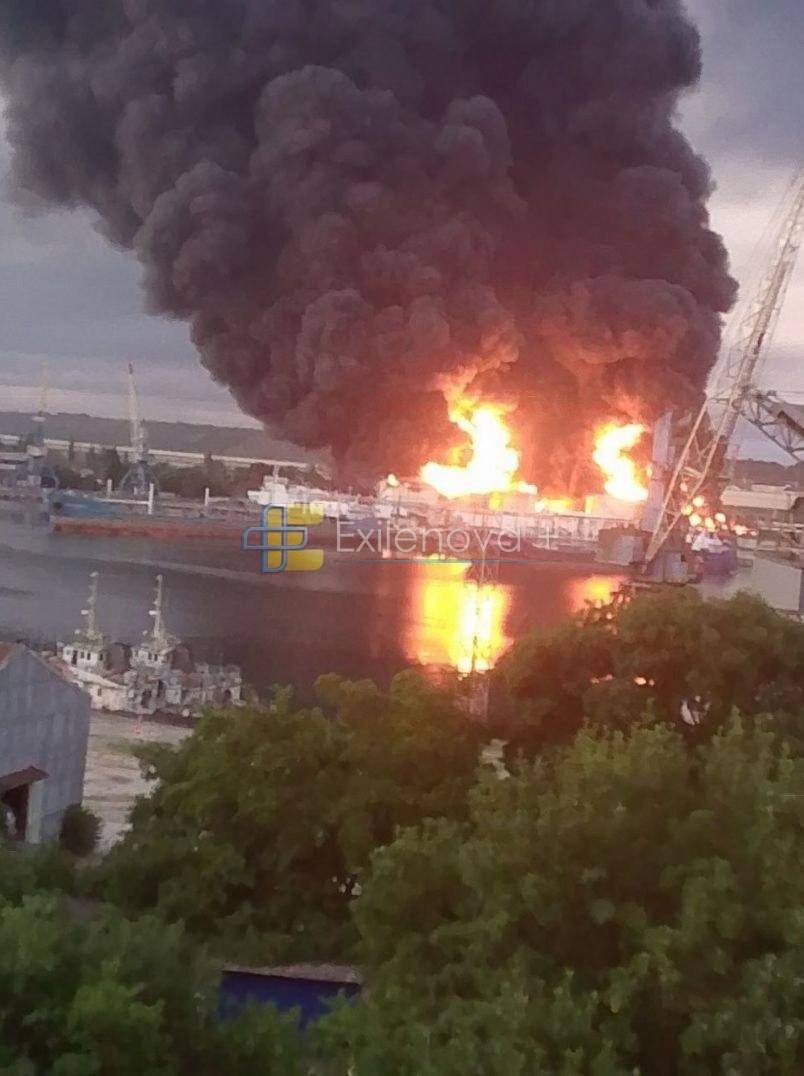 Fire at the Port of Kerch after a
reported Ukrainian strike on fuel infrastructure in occupied Crimea, 21
June 2026. Photo: Exilenova+
Fire at the Port of Kerch after a
reported Ukrainian strike on fuel infrastructure in occupied Crimea, 21
June 2026. Photo: Exilenova+ Benjamin Netanyahu and Donald Trump.
Photo: Ynet
Benjamin Netanyahu and Donald Trump.
Photo: Ynet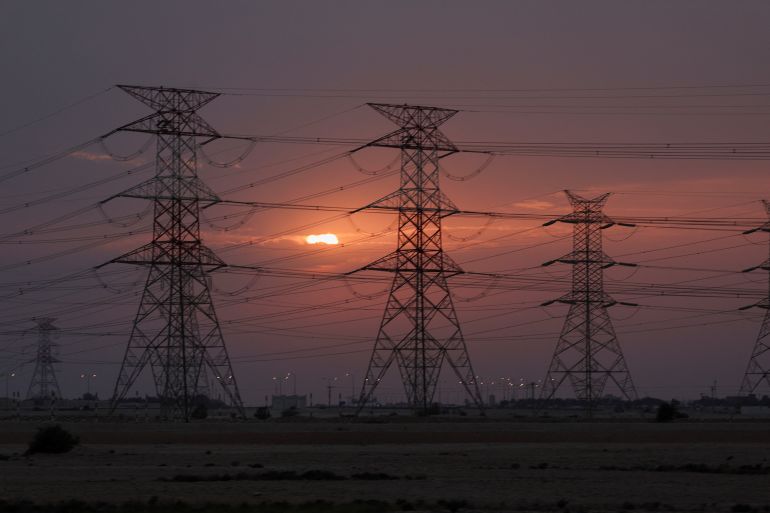 Ras Laffan Industrial City, Qatar.
Photo: Stringer/Reuters
Ras Laffan Industrial City, Qatar.
Photo: Stringer/Reuters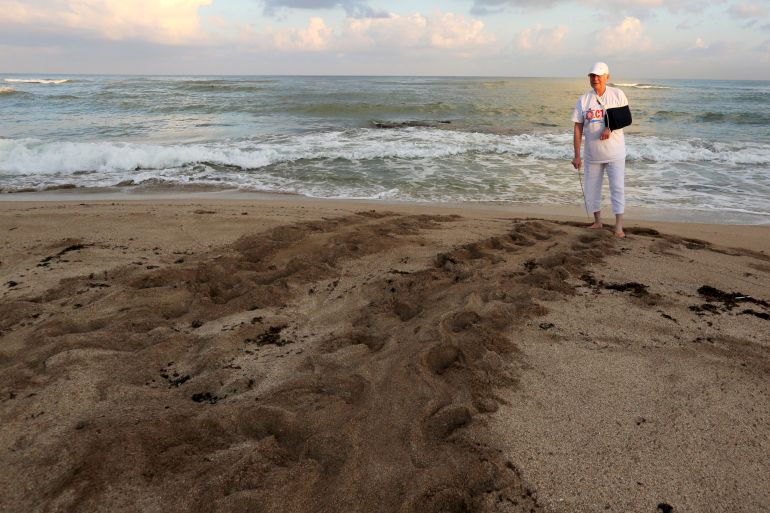 Mona Khalil inspects a sea turtle
trail near Tyre, south Lebanon, 2015. Photo: Jamal Saidi/Reuters
Mona Khalil inspects a sea turtle
trail near Tyre, south Lebanon, 2015. Photo: Jamal Saidi/Reuters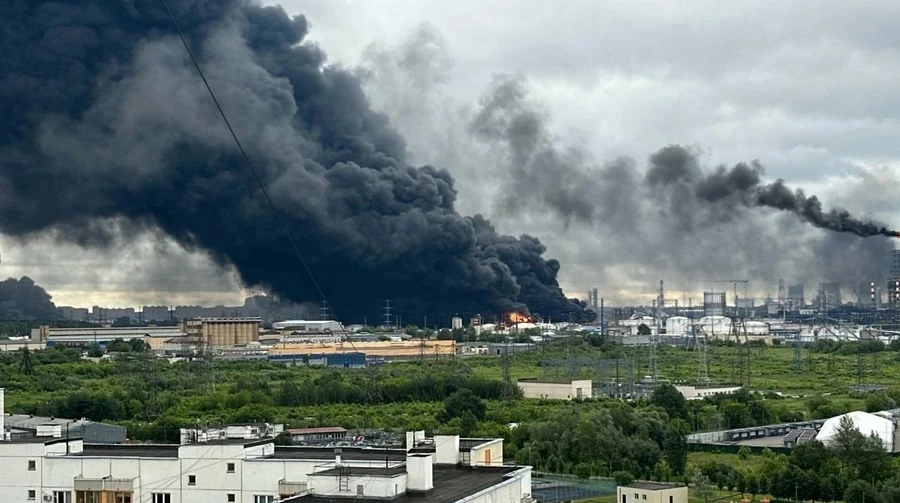 Moscow during a Ukrainian drone
attack on 18 June. Photo: Exilenova+
Moscow during a Ukrainian drone
attack on 18 June. Photo: Exilenova+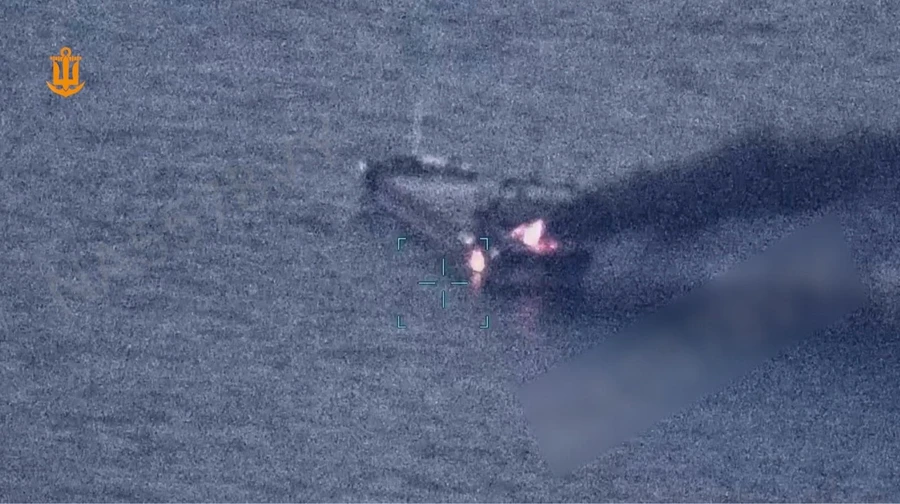 Fire aboard the cargo vessel
VICTRESS after a Russian drone strike in the Black Sea. Photo: Ukrainian
Navy
Fire aboard the cargo vessel
VICTRESS after a Russian drone strike in the Black Sea. Photo: Ukrainian
Navy Dario Amodei, co-founder and CEO of
Anthropic. Photo: TechCrunch/Getty
Dario Amodei, co-founder and CEO of
Anthropic. Photo: TechCrunch/Getty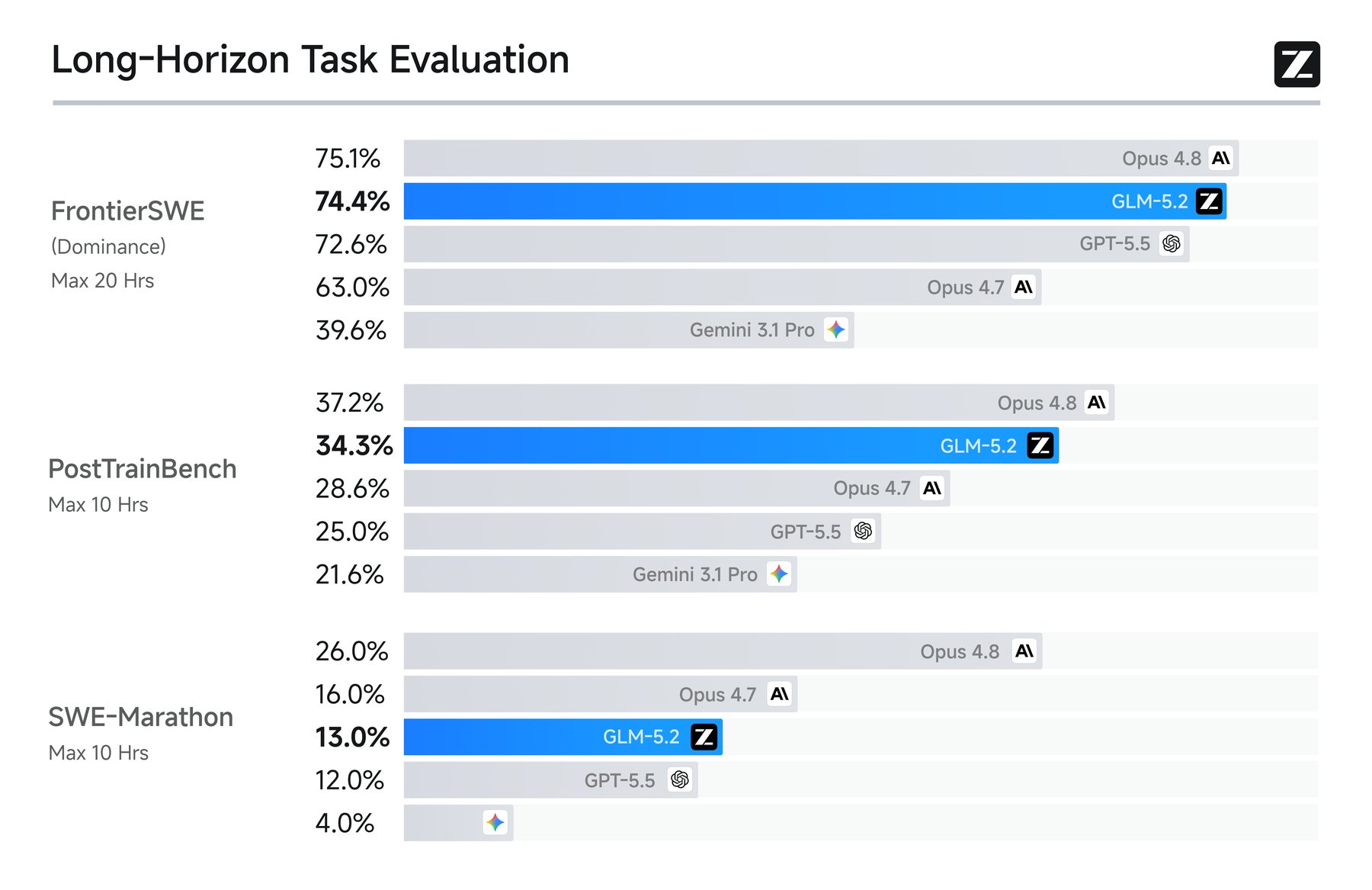 GLM-5.2 vs Claude Opus 4.8, GPT-5.5
and Gemini 3.1 Pro across long-horizon coding benchmarks. Chart: The
Decoder
GLM-5.2 vs Claude Opus 4.8, GPT-5.5
and Gemini 3.1 Pro across long-horizon coding benchmarks. Chart: The
Decoder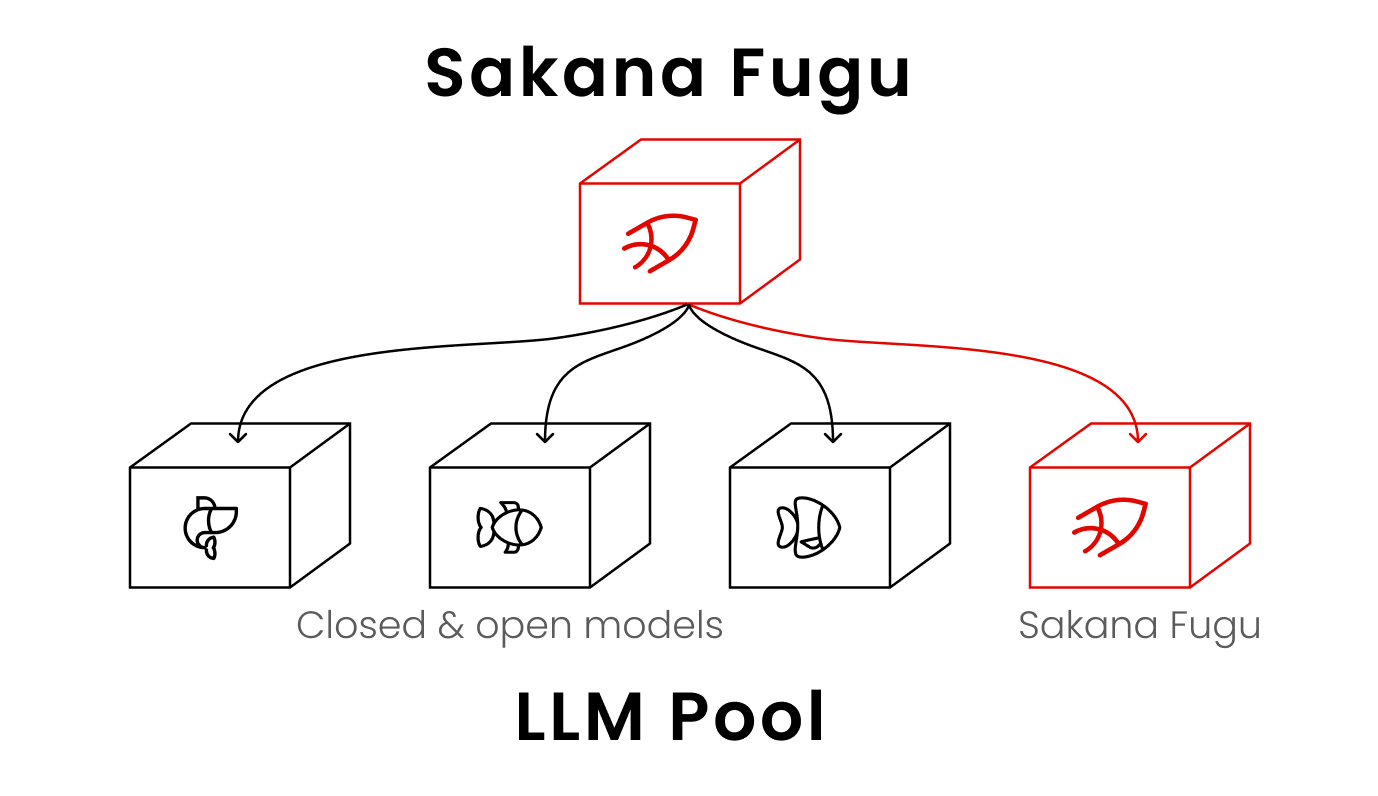 Architecture of Sakana Fugu’s
multi-agent orchestration. Diagram: Sakana AI
Architecture of Sakana Fugu’s
multi-agent orchestration. Diagram: Sakana AI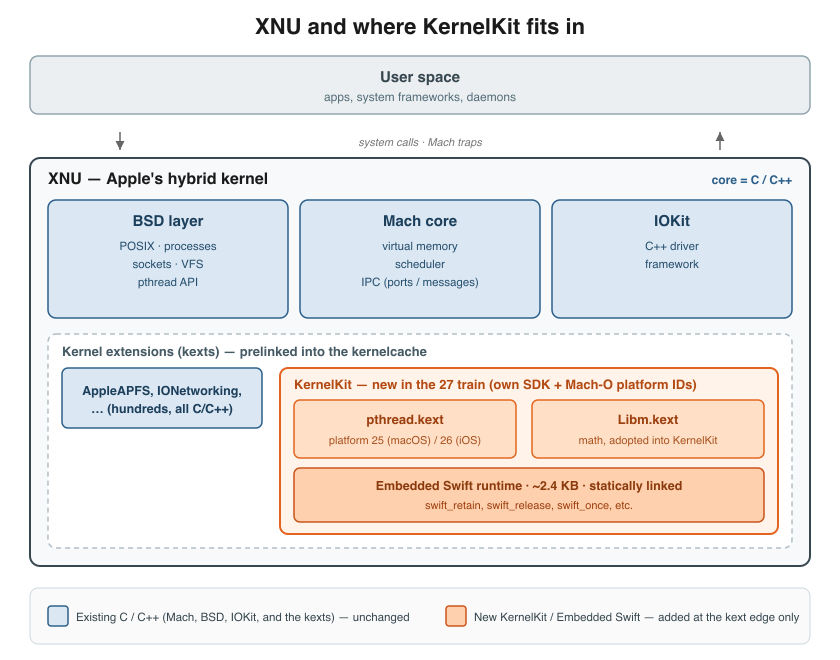 XNU’s unchanged C/C++ core with the
new KernelKit kexts and Embedded Swift runtime added at the extension
layer. Diagram: Apple Internals
XNU’s unchanged C/C++ core with the
new KernelKit kexts and Embedded Swift runtime added at the extension
layer. Diagram: Apple Internals