Local-First AI Comes
for the Smart Home
A cluster of releases pushes voice and LLM control fully on-device.
Domia runs a complete speech-to-speech pipeline locally
(wake word → STT → Ollama → TTS) and integrates with Home Assistant over
MCP, operating as a P2P mesh where persona, emotion, and memory travel
with delegated inference. Selora AI ships an
open-source Qwen-based model fine-tuned specifically for Home Assistant
device control, with no cloud dependency. The framing fits a wider
argument doing the rounds — that local LLMs are a different tool,
not a worse cloud model: privacy, latency, offline availability,
and fine-tuning, not frontier-quality approximation. And
Dirge, a ~30MB Rust harness, makes cheap models like
DeepSeek and Qwen production-capable by wrapping them in a
steering/repair, long-horizon, and learning state machine — arguing
harness quality matters more than model quality.
Epic
Games Open-Sources Lore, a VCS Built for Code + Large Binary Assets
Epic has released Lore, an MIT-licensed version control system
designed for the mixed code/binary reality of game and creative
development at scale. Unlike Git, Lore uses a centralized,
content-addressed architecture with Merkle trees and immutable revision
chains. Key features: on-demand file hydration (download only what you
need), chunked binary storage to cut duplication, and cryptographic
integrity verification. SDKs ship for C/C++, C#, Rust, Go, Python, and
JavaScript, with an open-ecosystem approach stated as an explicit
goal.
SQLite’s Hipp:
Pull Requests Are Not Free Puppies
In a lightly edited conference-talk excerpt, SQLite creator Richard
Hipp argues that accepting a pull request transfers long-term
maintenance burden to the project permanently — every merged PR must be
documented, tested, supported, and kept compatible forever. The “it’s
just a PR” framing masks the true cost, which falls on maintainers
indefinitely. A sharp corrective from someone who has maintained a
high-reliability codebase for decades.
Two
Ways Vendors Are Squeezing Users: Tesco Flees VMware, VW Blocks
GrapheneOS
Tesco is moving 40,000 VM workloads off VMware over 18 months, citing
Broadcom’s “abusive conduct” since the acquisition — forcing perpetual
licenses to subscription, cutting support ~70%, and raising prices 500%+
for some customers. It’s the most visible example yet of the enterprise
exodus (toward Proxmox, OpenShift Virtualization, Nutanix). On the
consumer side, Volkswagen’s app now refuses to run on GrapheneOS by
enforcing Play Integrity — breaking remote unlock, charging automation,
and Home Assistant integration — with users reportedly canceling vehicle
purchases. Critics note GrapheneOS is more secure than stock
Android, making this compliance theater.
How
Madrid Tripled Its Metro Cheaply: Governance Beats Engineering
A Works in Progress analysis of Madrid’s 1995–2007 expansion — which
tripled the network at below-average cost per km — finds the decisive
factors were structural, not technical: regional political authority
concentrated accountability and incentivized speed; continuous 24/7
construction compressed timelines; stations deliberately skipped
architectural grandeur; and in-house expertise accumulated across
consecutive projects. A model case for how governance structure shapes
infrastructure cost more than any individual engineering choice.
 US President Donald Trump at the
signing ceremony inside the Palace of Versailles. Photo: Al Jazeera
US President Donald Trump at the
signing ceremony inside the Palace of Versailles. Photo: Al Jazeera Thick black smoke over Moscow’s
Kapotnya district after the refinery was struck for the second time this
week. Photo: Ukrainska Pravda
Thick black smoke over Moscow’s
Kapotnya district after the refinery was struck for the second time this
week. Photo: Ukrainska Pravda Naturvernforbundet feirer
Høyesteretts historiske dom om Førdefjorden. Foto: NRK
Naturvernforbundet feirer
Høyesteretts historiske dom om Førdefjorden. Foto: NRK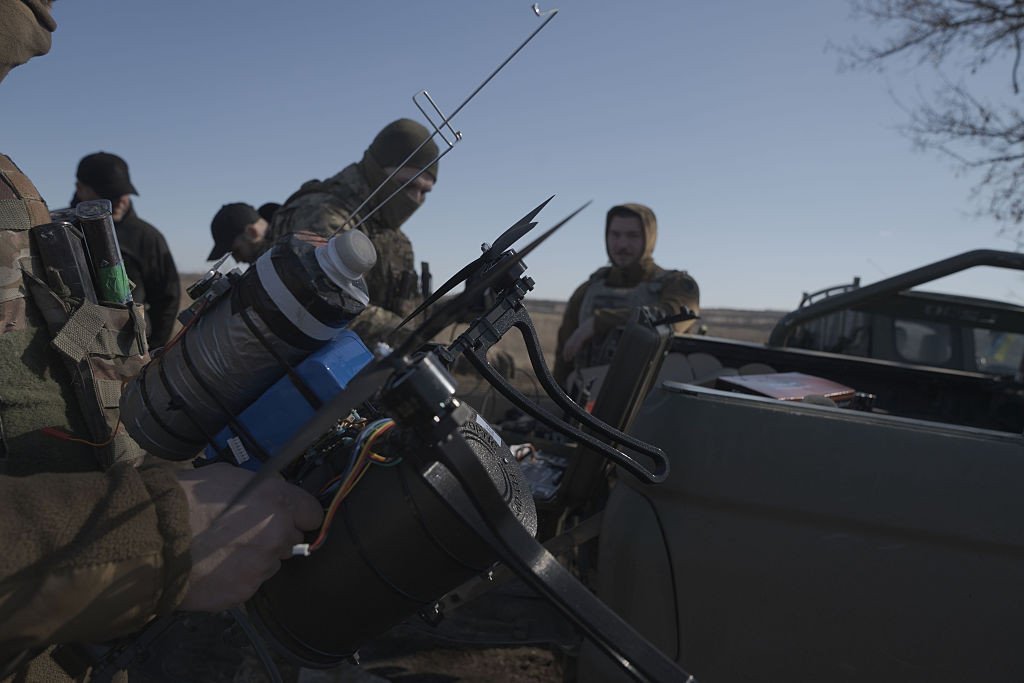 Ukraine’s 93rd Brigade drone unit
testing fiber-optic drones, Donetsk Oblast. Photo: United24 Media
Ukraine’s 93rd Brigade drone unit
testing fiber-optic drones, Donetsk Oblast. Photo: United24 Media The Lore Library, Server & CLI
interface. Image: Epic Games
The Lore Library, Server & CLI
interface. Image: Epic Games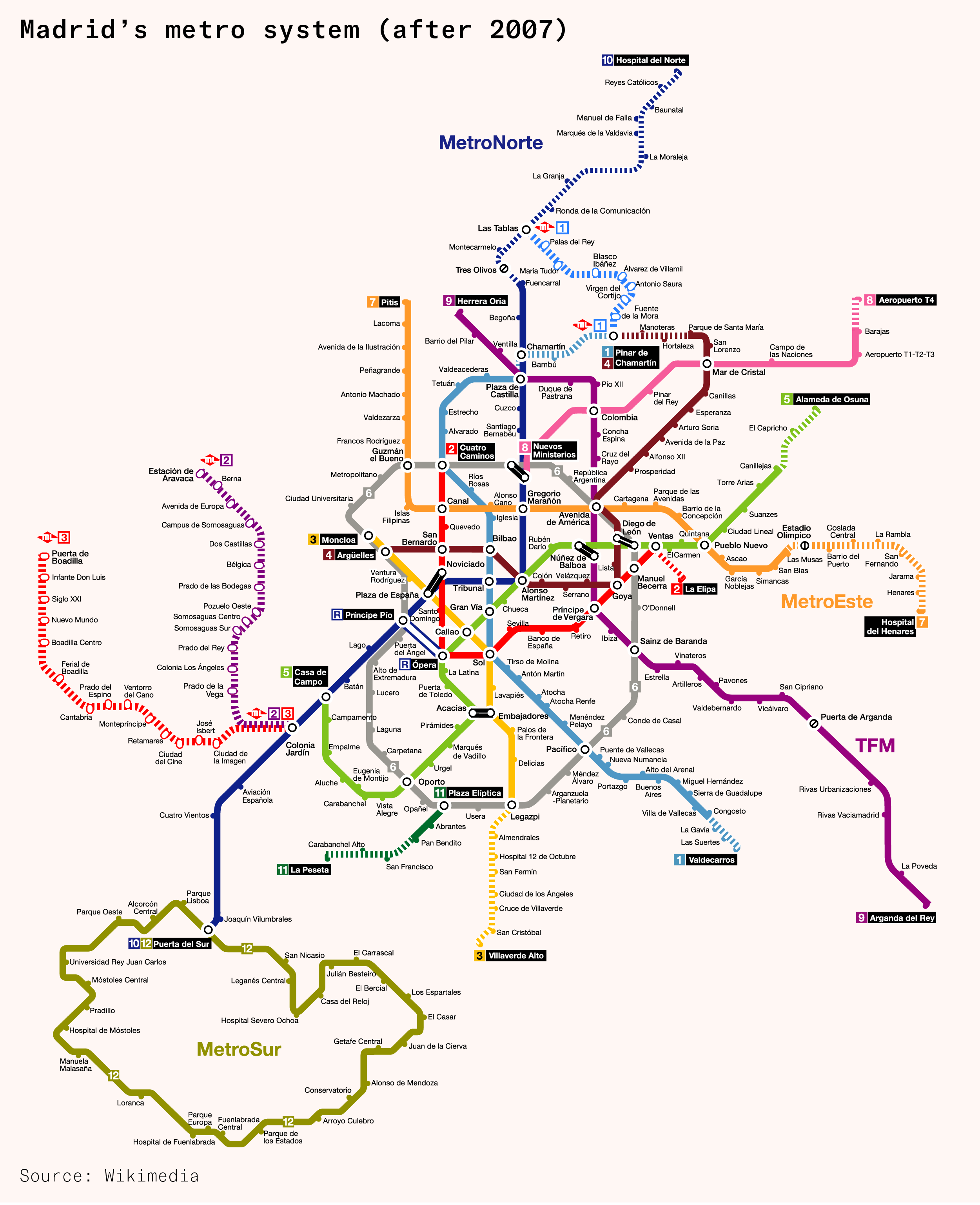 Madrid’s metro after the 1995–2007
expansion. Image: Works in Progress
Madrid’s metro after the 1995–2007
expansion. Image: Works in Progress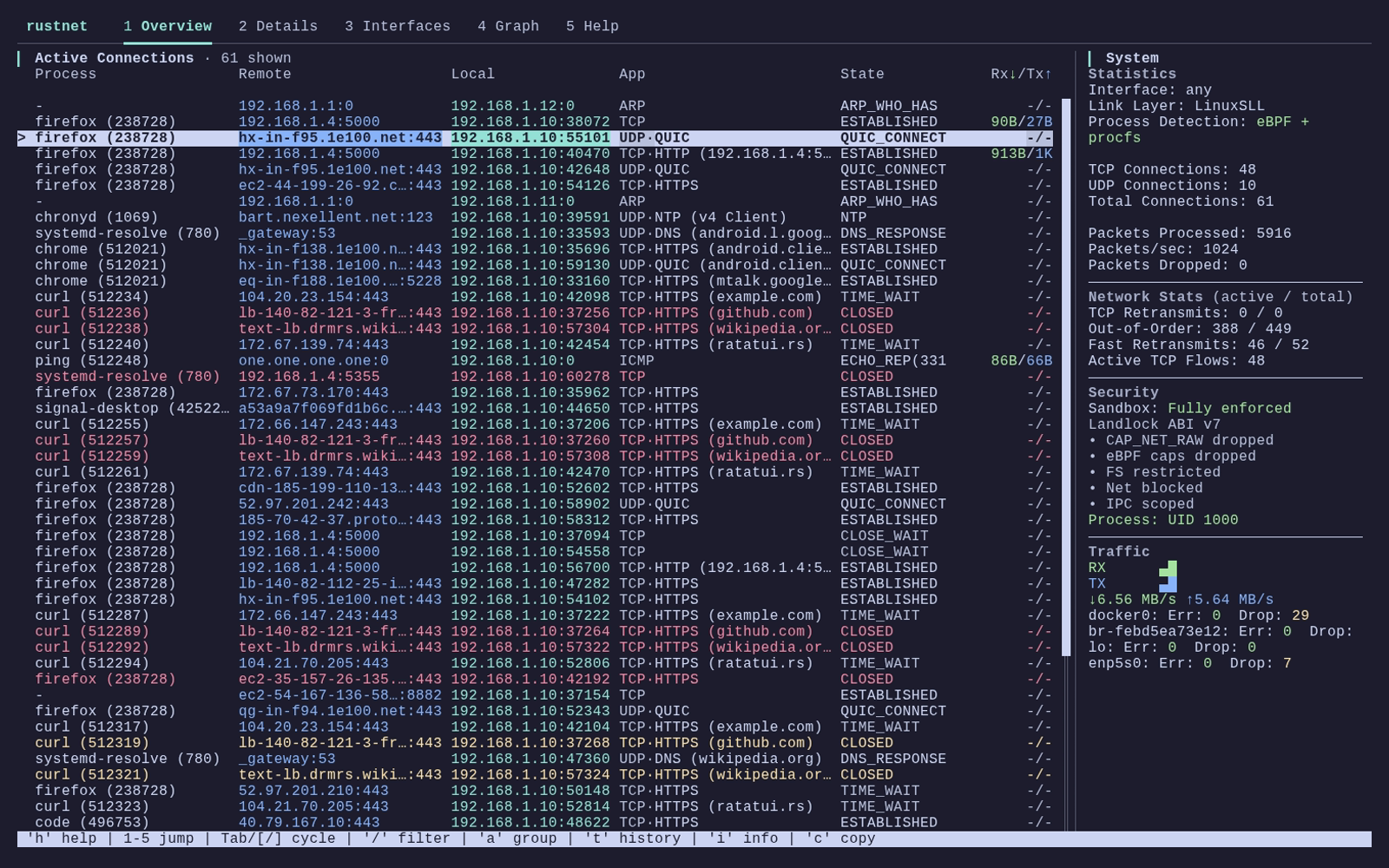 RustNet’s per-process network view
with automatic protocol identification. Image: domcyrus/rustnet
RustNet’s per-process network view
with automatic protocol identification. Image: domcyrus/rustnet