Josse-posten

Anthropic says Claude now writes most of its own code; Russia rations gasoline across 20 regions while officials at the St. Petersburg forum project boom-time stability; Zelensky throws down a gauntlet, Congress sends Trump another Ukraine bill, and the Pentagon is caught running an AI-generated propaganda mill in Latin America.

When AI Builds Itself

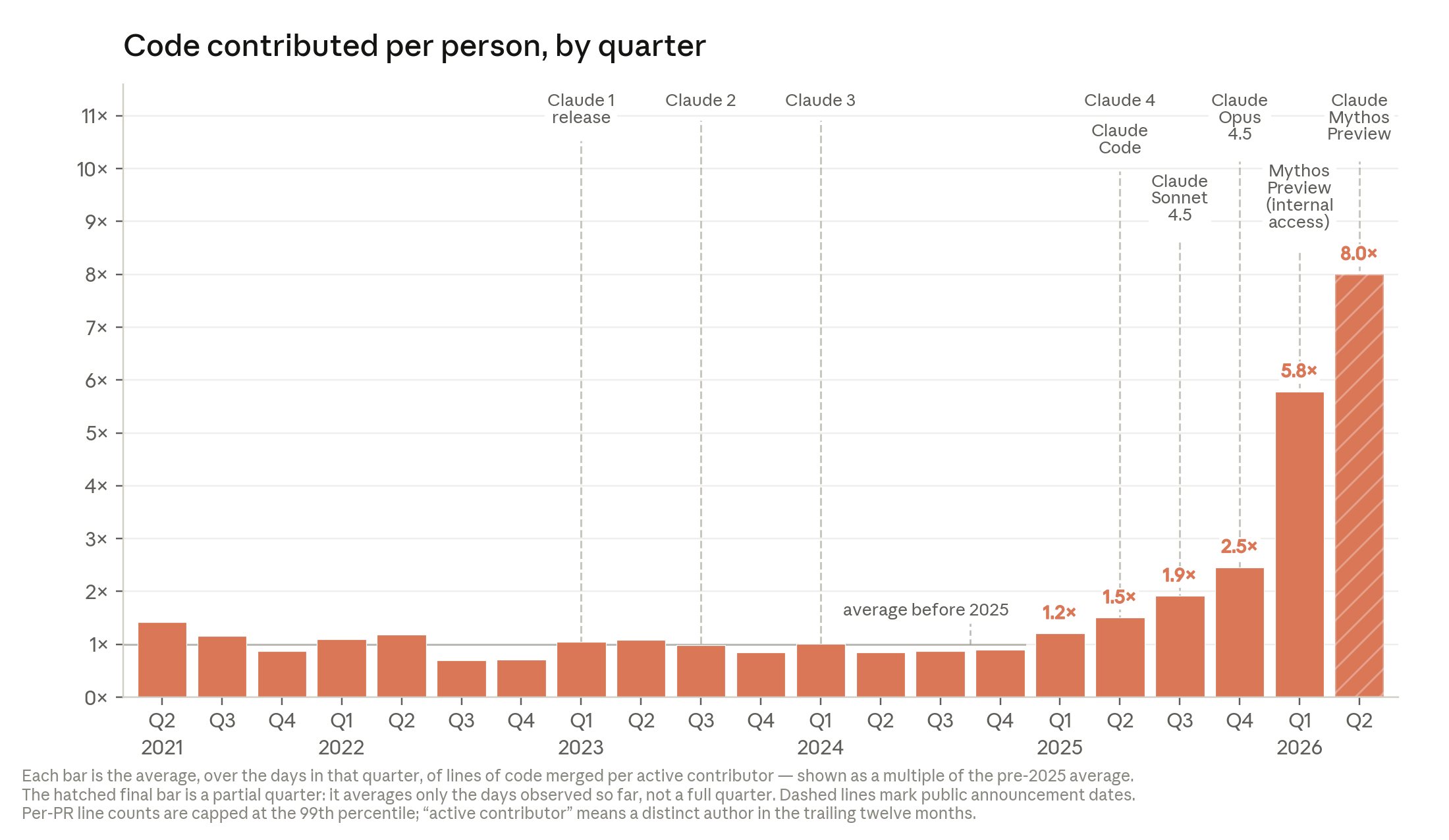
Code merged per Anthropic engineer per quarter, Q2 2021–Q2 2026, with model release dates marked. Image: Anthropic

Anthropic’s Institute for AI Safety published evidence that its own development has shifted under it: Claude now authors over 80% of the code merged into production at Anthropic, and engineers ship roughly 8× more code per quarter than at the 2021–2025 baseline. Success on open-ended engineering tasks climbed from 26% to 76% in six months; on optimization tasks Claude went from ~3× to ~52× speedups year-over-year, with task-completion horizons doubling every four months. The lab sketches three futures — stall, sustained human-AI collaboration, or full recursive self-improvement where models design their successors — and notes the remaining bottleneck is judgement: Claude executes brilliantly but still needs humans to choose what is worth doing.

“Enough of the war” — Zelensky’s open letter to Putin

Ukraine’s president published an open letter calling Putin to a face-to-face meeting in a neutral country, offering a full ceasefire monitored by the US during talks and an “all for all” prisoner exchange. The framing is rhetorical jiu-jitsu: Zelensky lists Russia’s military failures, its widening budget deficit and growing domestic discontent, and tells Putin the choice is now his. The letter landed strategically — hours after Ukrainian drones hit a St. Petersburg oil terminal as Putin opened his economic forum, with smoke visible from the venue (see Ukraine). Western intelligence still expects Russia to plan for fighting through 2027–2028.

House defies Trump again — Ukraine aid and Russia sanctions pass

The House passed legislation providing fresh military aid and reconstruction support for Ukraine alongside new sanctions on key segments of the Russian economy, with a group of Republicans breaking ranks to push it through via an unusual procedural route. Leadership had warned the bill would undercut Trump’s diplomatic efforts; it became law anyway, the second major congressional rebuke of the president in a week.

Pentagon’s AI-generated propaganda mill, exposed

A US Special Operations Command operation called La Tilde is publishing fake-news content across seven Latin American countries, disguising military influence work as journalism with only a buried disclosure at page bottom. The Intercept’s investigation finds it is “AI all the way down” — articles, images and videos generated at speed, with corrupted text inside images and garbled prompts left in filenames. Benign personal-finance posts sit beside material promoting US military interventions and countering Chinese engagement.
Indicator Value Change
S&P 500 (f) 7,557.75 -0.57%
Dow 30 (f) 51,688 +0.03%
Nasdaq (f) 30,136.75 -1.15%
Russell 2000 (f) 2,919.8 -0.66%
VIX 15.78 +2.47%
Gold 4,492.5 -0.28%
BTC $62,859 -1.06%
EUR/USD 1.1635 +0.19%
USD/NOK 9.3261 -0.14%
  • Nasdaq -1.15%, VIX +2.47% — risk-off tone as Congress defied Trump on Ukraine aid and Russia sanctions, and Xi’s confirmed Pyongyang trip spotlights North Korea’s new nuclear fuel plant.

World

Mass protests in Albania over Kushner-backed luxury resort

Thousands have protested for four consecutive days against a coastal tourism complex backed by Jared Kushner. Demonstrators say the project would carve into protected coastline; the government hopes it will brand Albania as a global tourism destination.

Mogadishu erupts as Somalia’s president extends his term

Maka al-Mukarama Road, Mogadishu’s main thoroughfare, empty except for military vehicles. Photo: Al Jazeera
Fierce clashes between government troops and opposition-allied militias have rocked Mogadishu after President Hassan Sheikh Mohamud unilaterally extended his term by a year. Civilians are fleeing and the capital’s main commercial areas are effectively shut down as Somalia’s political crisis turns kinetic.

Xi heads to Pyongyang as North Korea unveils new uranium plant

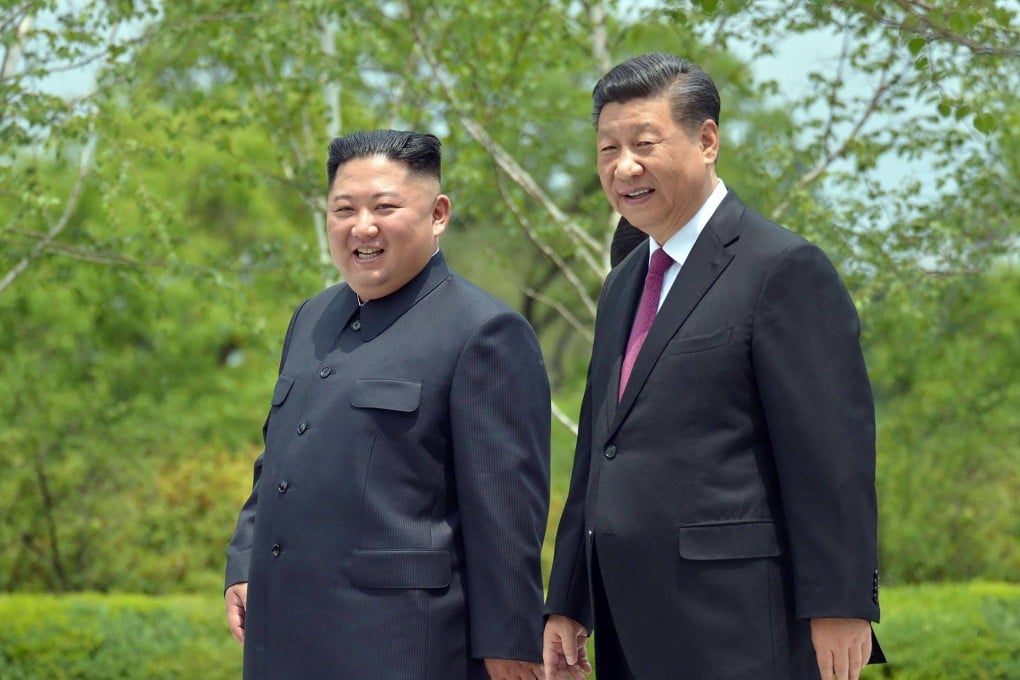
Kim Jong Un with Xi Jinping during Xi’s last state visit to Pyongyang in 2019. Photo: SCMP
China’s leader will meet Kim Jong Un next week in what appears to be his first Pyongyang visit since 2019, weeks after his sit-downs with US and Russian leaders. The timing sharpens a parallel story: state media released photos of what analysts believe is a facility for producing weapons-grade uranium — a significant expansion of North Korea’s nuclear capabilities and an awkward backdrop for the trip.

Hezbollah rejects the Lebanon–Israel ceasefire framework

The militant group called the US-brokered truce a “roadmap to annihilate part of the Lebanese people,” casting doubt on regional peace negotiations even after both governments accepted it. Israeli ground operations continue in southern Lebanon, with fighting persisting on day 98 of the broader Iran conflict.

Also today

Americas
US imposes fresh sanctions on Cuba’s president and the Castro family; Rubio warns service providers risk sanctions themselves — Guardian
Former US officials urge the administration to scrap plans for an American-only Ebola quarantine centre in Kenya — Guardian · Al Jazeera
Europe
Starmer tells Musk to stop “trying to whip up division” in UK politics over the Henry Nowak case — Reuters · Sky News
Climate & Asia
Australia’s emissions drop as renewables and battery storage surge — ABC
Sherpa Dawa found alive on Everest after six days missing — funeral rites had already begun — BBC · Guardian · Al Jazeera
Obituary
Marjane Satrapi, author of Persepolis, dies at 56 — BBC · Al Jazeera

Ukraine

Russia performs stability while gasoline rationing spreads to 20 regions

At the St. Petersburg International Economic Forum, Russian officials projected boom-time numbers — claims of 10% growth and “lowest unemployment globally” from Deputy PM Alexander Novak — while ignoring the reality on the ground. Following Ukrainian strikes on oil infrastructure, gasoline rationing has now expanded to 20 Russian and occupied regions, and the actual federal budget deficit runs at about $80 billion against stagnating growth. The gap between the messaging on the dais and the queues at the pumps is the story.

Ukrainian drones hit a St. Petersburg oil terminal as the forum opens

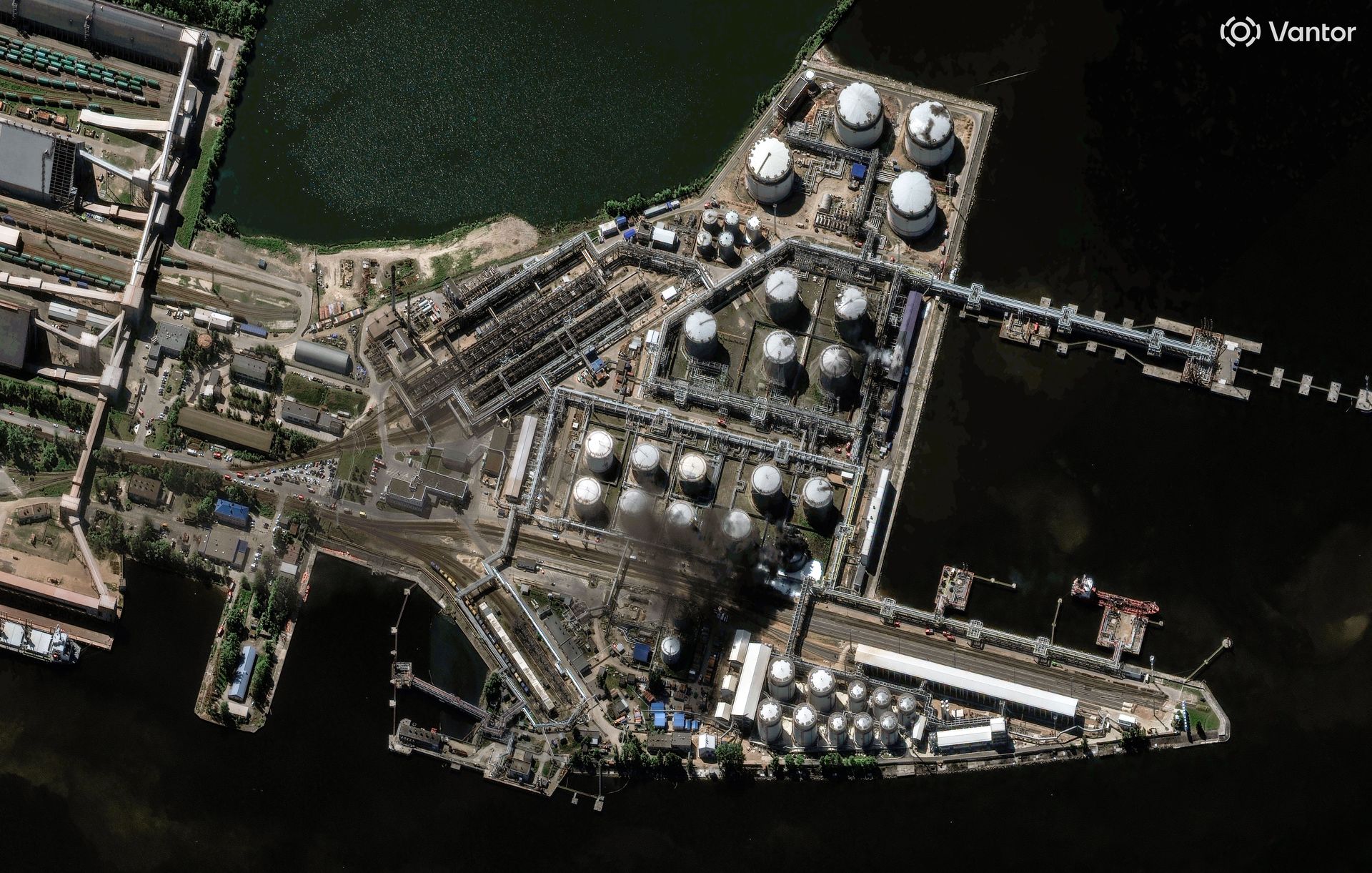
Vantor satellite image showing the aftermath of attacks on the St. Petersburg oil terminal on June 3, 2026. Image: Kyiv Independent

Ukrainian forces struck deep into Russian territory, destroying one storage tank at a St. Petersburg oil terminal and damaging six others — with smoke visible from Putin’s economic forum venue. A Russian Svetlyak-class patrol boat was struck in the Sea of Azov, and a corvette was hit at Kronstadt naval base, killing one crew member. Residents reported hearing explosions in the city for the first time; pro-Russian milbloggers turned on the air-defence performance.

Donetsk airport turned into a trap for Russian drone operations

Ukraine’s Special Boat Service achieved fire control over Donetsk airport — a key Russian logistics hub and Shahed launch site — destroying launchers, equipment, vehicles and supply depots. Ukrainian forces also continued interdicting Russian supply lines around Kostyantynivka with strikes near Horlivka, and held defensive positions despite multiple Russian infiltration attempts.

Western sanctions on Russia: the quiet exemptions

A CEPA investigation argues the Russian oil price penalty has collapsed from $20–30 per barrel to single digits, in effect a “multi-billion-dollar quarterly transfer from Western consumers to the Russian Ministry of Finance.” The UK has granted indefinite trade licenses exempting diesel and jet fuel despite the legislated ban; US Treasury waivers let Indian buyers legally receive Russian crude, neutralizing secondary sanctions risk. Sanctions, in other words, increasingly exist on paper more than at the dockside.

Irish alumina factory exports 83% to Russia, contradicting government numbers

New data shows Irish alumina exports to Russia hit 200,619 tons in Q1 2026 — the highest volume since 2022 — feeding Russian smelters and ultimately weapons manufacturers. The plant operator claimed 45% of exports went to Russia; government statistics put it at 66.8%, with the actual figure now 83%. Ireland’s blocking position inside the EU on sanctions toughening looks rather different in this light.

  • Sweden seizes a vessel suspected of smuggling grain illegally exported from Russian-occupied Ukrainian territories — Kyiv Independent
  • CEPA: Putin can’t end the war — escalation now serves regime survival, with a siloviki-dominated Kremlin operating under binary “dominance or subordination” logic that makes cost-benefit diplomacy impossible — CEPA · r/geopolitics
  • War on the Rocks revisits Spanish Civil War analogies for Ukraine — useful or misleading? — WOTR

Tech & Development

Anthropic open-sources an AI vulnerability discovery framework

Anthropic published a complete reference implementation for autonomous security vulnerability discovery built on Claude. The 7-stage pipeline — Build → Recon → Find → Verify → Dedupe → Report → Patch — runs in gVisor sandboxes, crafting malformed inputs to trigger crashes, then verifying and patching findings. It exposes both interactive skills (/threat-model, /vuln-scan, /triage, /patch) and a fully autonomous scanning mode. Not a maintained product — a working blueprint, with parallel agent execution and verification loops.

GitHub · HN

A Viory developer test page surfacing the page title “Ruptly” — one of several technical fingerprints tying the two operations together. Image: Bellingcat

A new Bellingcat investigation produces concrete evidence connecting Viory — a self-described “video news agency of the Global South” — to Ruptly, a subsidiary of sanctioned Russian state media RT. The technical fingerprints include shared IP addresses, wildcard SSL certificates and monitoring infrastructure. Viory has built partnerships across 22+ countries, delivering pro-Russian content packaged as independent journalism, reaching roughly 170 countries.

Munder Difflin: Claude Code agents in a 24/7 office sim

A developer open-sourced “Munder Difflin,” a local multi-agent harness that runs clusters of Claude Code agents with inter-agent connectivity and shared memory. A “god orchestrator” named Michael distributes tasks among specialized agents running in an always-on office simulation, an attempt to push beyond single-agent workflows toward autonomous coordination.

A police officer shipped a 3,300-user iPhone app with Claude Code

LOC8, a location-sharing app for law enforcement, crossed 3,300+ users and $3.7k in 28 days. The developer — a police officer with no formal software-engineering background — built the iOS and watchOS app through Claude Code sessions, including what3words integration, pin-and-save for problem locations, and offline support. A concrete data point for the “AI as access ramp” thesis.

Jujutsu v0.42.0

The latest jj release switches to mimalloc for better multi-threaded performance, adds descriptions for custom aliases in shell completions, and lets jj show accept multiple revisions. Headline: jj git fetch now generates evolution history based on change IDs, automatically rebasing local descendants onto rewritten parents when change IDs are preserved. Also lands jj util backend name and flexible per-file diff editor mode.

C++: The Documentary

Herb Sutter announces the release of a documentary film on the history and evolution of C++ — long-form historical perspective on one of the most influential systems languages.

Also today

PL & systems
Tutorial reconstruction of Warren’s Abstract Machine (WAM), the foundational execution model for Prolog and logic languages — GitHub · Lobsters
Branchless quicksort sorts 50M doubles in 0.97s vs 1.33s for std::sort on M1, using arithmetic instead of branches to dodge mispredicts; hybrid strategies for expensive-to-copy data, median-of-medians pivots, heapsort fallback — Tiki.li · Lobsters
ML research
KVarN: variance-normalized 2-bit KV-cache quantization for long-context reasoning, no calibration needed; SOTA at 2-bit on MATH500, AIME24, HumanEval — arXiv · r/MachineLearning
AgentCodec — source-available LLM reliability layer implementing 28 techniques (HARQ, turbo decoding, fountain codes); SemKNN router cuts inference cost 56% at matched quality — GitHub · r/MachineLearning
Does the transformer really need three projections? Systematic study of QKV variants — arXiv · HN
AI culture
NeurIPS 2026 desk-rejected 18.4% of position-track submissions using the Pangram AI detector — but detection rates collapsed from 28.2% to 2.16% when window size was changed from 250–350 to 100 words, raising sharp questions about calibration — NeurIPS blog · r/MachineLearning
Across 30,000 AI Roundtable debates, Claude Opus 4.7 caused 2,974 model-flips — 41% more than the runner-up — despite being only the 7th most-used model — Opper · r/ClaudeAI
Fine-tuning Llama 3.1 8B / Qwen 2.5 7B on 37M words of Microsoft manuals (1977–2005) yields convincing 1995-style technical writing; lower-rank adapters (rank 8) produced more authentic period voice — passo.uno · HN

Investigations & Geopolitics

The China–Russia “meta-threat”

A comprehensive CEPA report characterizes the Beijing–Moscow alignment as asymmetric but durable — and “profoundly dangerous” — cooperation. Trade has grown 70% from 2021–2026, with China supplying the dual-use components that sustain Russia’s war economy. But the relationship deepens Russian deindustrialization and dependency; Beijing holds substantial leverage over its junior partner.

Beijing already planning post-invasion governance of Taiwan

Previously opaque internal Chinese debates have surfaced: a 2024 Xiamen think-tank paper urged establishing a shadow Taiwan government on the mainland, and Chinese analysts now openly concede Taiwan’s distinct democratic identity — built over seven decades of independent governance — cannot be dissolved by economic integration. Permanent occupation, they argue, would require sustained security presence and pervasive surveillance. Companion analysis at War on the Rocks asks the related strategic question: is time on China’s side?

“Forged in a knife fight”: China’s AI race is being driven by domestic involution

War on the Rocks argues that Chinese AI progress is shaped less by Beijing’s five-year plans than by ruthless market competition. ByteDance slashed AI model prices by 99% in 2024, triggering industry-wide price wars; the same dynamic has pushed Chinese firms toward open-source models, which now account for 17.1% of global AI downloads — exceeding the US share.

Chinese batteries are draining Hungary’s aquifers during a drought

Water-intensive Chinese battery manufacturers — CATL and BYD among them — operate plants that strain Hungary’s depleted aquifers. The Orbán government brought in $16 billion in Chinese EV investment while over 90% of Hungary’s territory faces severe drought. New PM Péter Magyar has imposed stricter environmental oversight, a notable departure from Orbán’s lenient posture toward Chinese capital.

  • Trump was reportedly “furious” with Netanyahu over a perceived lack of appreciation for the Abraham Accords push; calls to regional leaders met “silence on the other end of the line” — iNews · r/geopolitics
  • Pentagon may cancel planned Tomahawk deployments to Germany, citing fears about Russian intelligence penetration and escalation risk — Politico · r/geopolitics

Long COVID & ME/CFS

Science.org on the causes of Long COVID

Science.org publishes a wide-ranging piece on the underlying mechanisms of Long COVID, consolidating recent work on what is now a more coherent scientific picture of persistent symptoms after SARS-CoV-2 infection.

Efgartigimod (Vyvgart) under investigation at the Cohen Center

The Cohen Center is conducting remote blood draws from Long COVID trial participants who showed improvement on efgartigimod. The FcRn antagonist reduces circulating IgG by blocking neonatal Fc receptor recycling — mechanistically similar to immunoadsorption, but pharmaceutical rather than procedural. Potentially significant for patients with high GPCR autoantibody levels.

Autoantibody mouse-transfer studies extend to small fibre nerve damage

New CELL-published work shows that Long COVID autoantibodies transferred into mice produce not only fatigue and balance problems but also small fibre nerve damage — extending the established Utrecht transfer model by demonstrating specific neurological pathology driven directly by patient autoantibodies.

Tracking — no change since last report

  • REVERSE-LC Phase 3 (baricitinib) — recruiting at 17 sites, 550 adults; neurocognition data expected Nov 2026
  • IAMPOCO (immunoadsorption, Mainz) — data collected Oct 2024, results still pending publication
  • TURN-Long COVID (immunoadsorption, Amsterdam UMC) — recruiting, AAb-stratified design
  • EXTINCT post COVID (immunoadsorption, MHH Hannover) — enrollment complete (n=60), no results yet
  • ADDRESS-LC (bezisterim) — fully enrolled, topline results now expected late summer 2026
  • Rapamycin trials (Mount Sinai + Simmaron) — both expected to complete November 2026
  • ANKTIVA (IL-15, UCSF + Chan Soon-Shiong) — recruiting for CD8+ memory reconstitution
  • Daratumumab RCT (Haukeland) — 66 participants, treatment started Sep 2025, results ~2027
  • Sonlicromanol (Khondrion) — Phase 2 PEM-targeted trial, active recruitment
cd ~/repos/ratatosk && claude --resume 20a8b5d3-80cd-4f56-80d7-f38bb2c1d084