Josse-posten

Russia’s largest strikes in months are answered by fires over Putin’s economic forum — while Iran shuts the door on talks and turns the Strait of Hormuz into a paid chokepoint.

Fires over St. Petersburg as Putin opens his economic forum

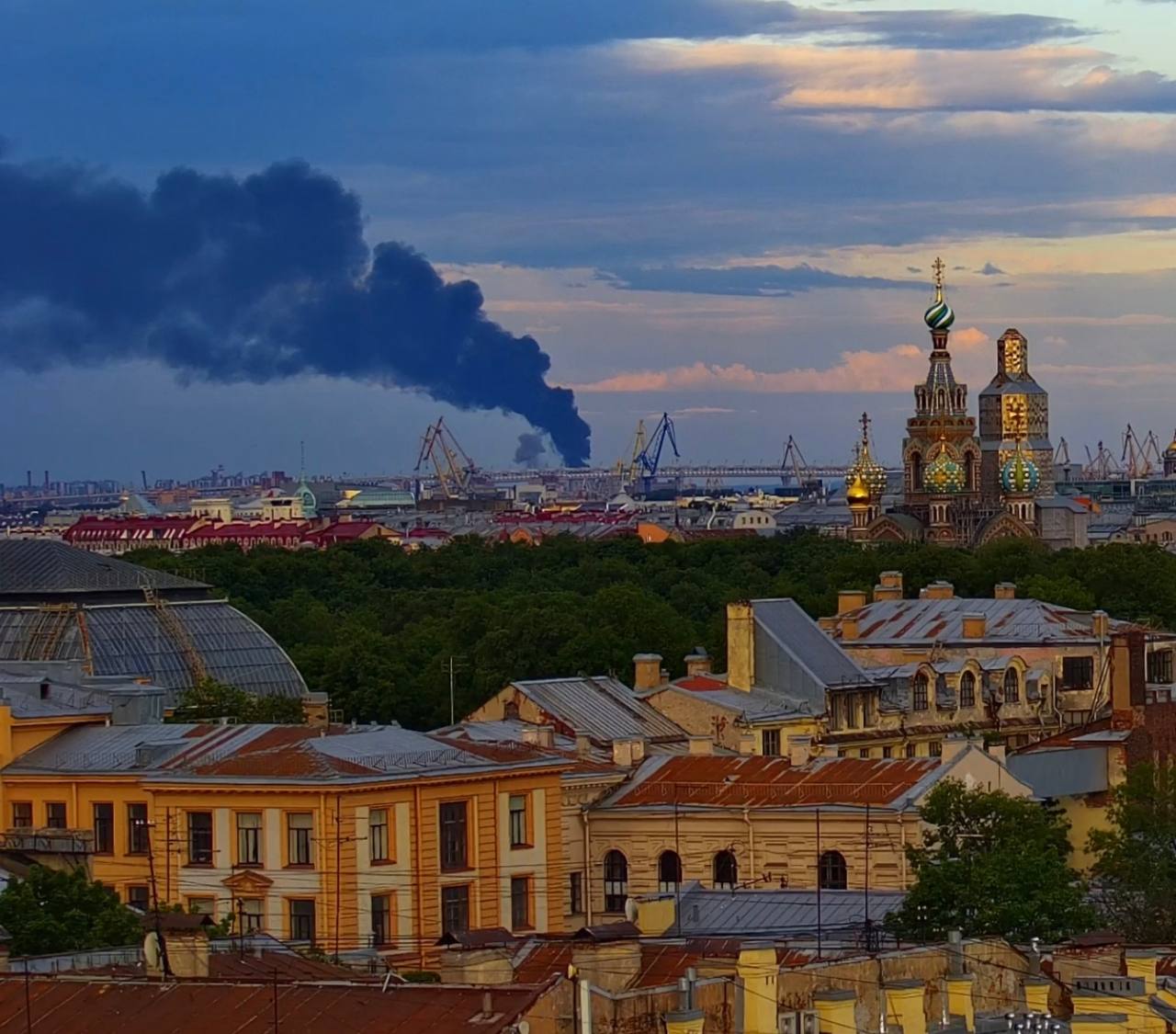
Smoke rises over St. Petersburg after a Ukrainian drone attack on the city’s main oil terminal. Photo: Kyiv Independent

Ukrainian drones struck a major oil terminal in St. Petersburg early on June 3, sending fires visible across the city and disrupting flights at Pulkovo Airport. The attack coincided with the opening of Putin’s St. Petersburg International Economic Forum — one of the deepest strikes ever reached into Russia’s second-largest city. Hours earlier, Ukraine had hit the JSC Progress weapons plant in Tambov Oblast for the fourth time; the plant manufactures control systems for the Kh-101 cruise missiles Russia uses against Ukrainian civilians. ISW reads the timing as deliberate: the strikes punctured Putin’s set-piece moment of confidence.

The counter-blow followed Russia’s second mass strike package in 48 hours. Overnight June 2–3, Russia launched 198 drones; Ukrainian air defenses downed 189. That came on top of the June 1–2 attack — 656 drones and 73 missiles — that killed at least 22 civilians, including an eight-year-old boy, across Kyiv, Dnipro, Kharkiv and two other cities. President Zelenskyy appealed to Trump for Patriot systems. ISW judges the mass salvos as cover for Putin’s inability to defend Russian territory from Ukraine’s deep strikes.

Russia loses more ground than it captures — first time since 2023

In May 2026 Russian forces lost more territory than they captured for the first time since October 2023, according to OSINT war monitors. Russia occupied only 14 square kilometers in May, a dramatic decline from the November 2024 peak of 725 km². Assaults are at record levels — roughly 7,000 in May — but most now involve only one or two soldiers, a sign of severe manpower exhaustion. The shift lands as Ukraine’s energy campaign squeezes Russian logistics: gas stations in Belgorod, Kursk and occupied Luhansk are rationing fuel, and Belarusian gasoline sales to Russia have jumped 26-fold year on year.

Iran turns the Strait of Hormuz into a crypto-paid toll booth

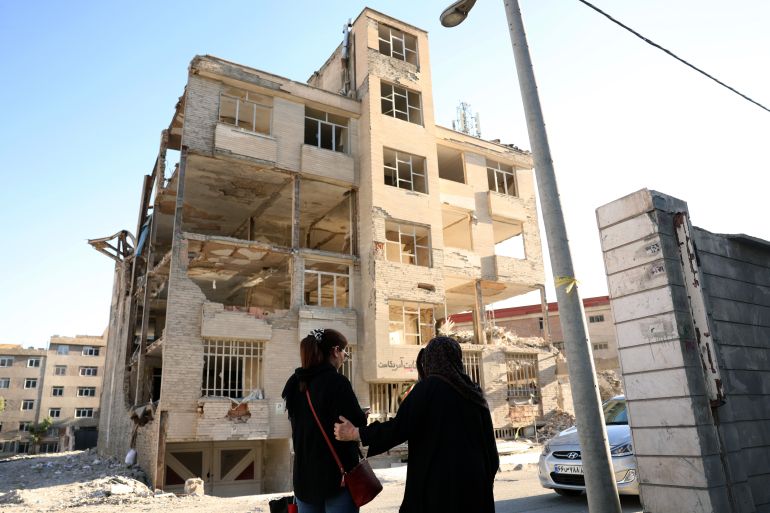
Iranian women walk in front of a residential building destroyed by previous US-Israeli airstrikes in Tehran, June 2, 2026. Photo: EPA via Al Jazeera

Iran formally halted negotiations with Washington and vowed to “completely” block the Strait of Hormuz, as fresh missile and drone exchanges hit US bases in Kuwait and Bahrain. Kuwait’s international airport suspended flights after damage; the US responded by striking Iranian facilities on Qeshm Island. Secretary Rubio said reopening the strait is now a precondition for any talks. Trump alternately dismissed talks as “very boring” and claimed they continue “at a rapid pace.”

Behind the maritime stand-off, War on the Rocks documents a fundamental shift: Iran has converted Hormuz from an international waterway into a controlled toll plaza. The new Persian Gulf Strait Authority, launched in May, charges up to $2 million per transit, payable in Bitcoin, stablecoins or yuan — potentially $20 million a day from tankers alone, neatly routing around Western financial oversight.

Trump reportedly to Netanyahu: “You’re f**king crazy”

Times of Israel reports Trump berated the Israeli PM during talks over a Lebanon truce — “you’re f**king crazy… I’m saving your ass. Everybody hates you now. Everybody hates Israel.” The reported exchange surfaces as Israeli warplanes continue dozens of airstrikes across southern Lebanon despite US efforts to shore up the tattered ceasefire; Israel issued fresh evacuation warnings for Nabatiyeh, though it has not struck Beirut since the US-brokered deal.
Indicator Value Change
S&P 500 (f) 7,622.75 -0.01%
Dow 30 (f) 51,314 -0.17%
Nasdaq (f) 30,730.75 +0.06%
Russell 2000 (f) 2,929.1 -0.24%
VIX 15.77
Gold 4,497.2 -0.50%
BTC $67,119 -4.13%
EUR/USD 1.1615 -0.05%
USD/NOK 9.2831 -0.07%
  • Gold -0.5% despite US-Iran missile exchanges and Russia’s largest overnight strike in months — safe-haven demand notably absent.
  • BTC -4.13%, the sharpest move in today’s data; no clear news driver, but a broad risk-off tone across small-caps and futures.

Ukraine

Russian billionaires donate $3 billion as deficit blows past plan

Russian billionaires have funneled roughly $3 billion into the state treasury through shell companies and corporate foundations, with contributions on track to hit $4.1 billion by year-end. The collection drive comes as Russia’s budget deficit reached $79.7 billion in just four months — already past the government’s full-year plan of $52 billion. Finance Ministry and Central Bank officials have warned Putin that wartime spending risks creating a permanent fiscal hole.

Russia wraps mines in rags to evade detection

Russian forces are wrapping landmines in rags and cloth before dropping them on Ukrainian territory — a tactic designed to slip past metal-detector and visual sweeps, and one that materially raises civilian-casualty risk. The disguised mines add another category to the long humanitarian tail of Russia’s mining campaign.

World

The Quad holds — even as Trump and Modi feud

Despite Trump’s tariff threats and immigration crackdowns souring the U.S.-India bilateral, analysts argue the Quad partnership remains structurally indispensable. Trump reportedly canceled a planned India summit after a tense call with Modi, yet shared pressure from China’s expansion keeps cooperation on the table. Recent wins include Fiji port-development agreements and critical-minerals coordination, with polling across all four nations showing majority support for formalizing the Quad as a military alliance.

U.S. in talks to expand nuclear weapons across Europe

The United States is discussing a significant expansion of its nuclear-weapons deployment across Europe, in what would be a meaningful shift in NATO’s posture against the dual backdrop of Russia’s war and the Iran crisis. The talks signal a tilt back toward forward-deployed deterrence after decades of contraction.

Turkey’s F-35 obsession; India’s Mediterranean play

Diplomatic sources tell Kathimerini that President Erdogan has grown “obsessed” with reviving Turkey’s F-35 acquisition, viewing the jet as essential to balancing Greece and Israel. Erdogan reportedly believes Greek and Israeli channels blocked a handshake deal he thought he had with Trump.

Meanwhile, India is quietly building a Mediterranean strategy on the Cyprus-Greece axis: both relationships were elevated to full strategic partnerships, with defense roadmaps running through 2031 and Cyprus joining India’s Indo-Pacific Oceans Initiative. The architecture leans on the India-Middle East-Europe Economic Corridor — and reads as an indirect counter to the Turkey-Pakistan track.

Taiwan breaks defense budget deadlock — at a cost

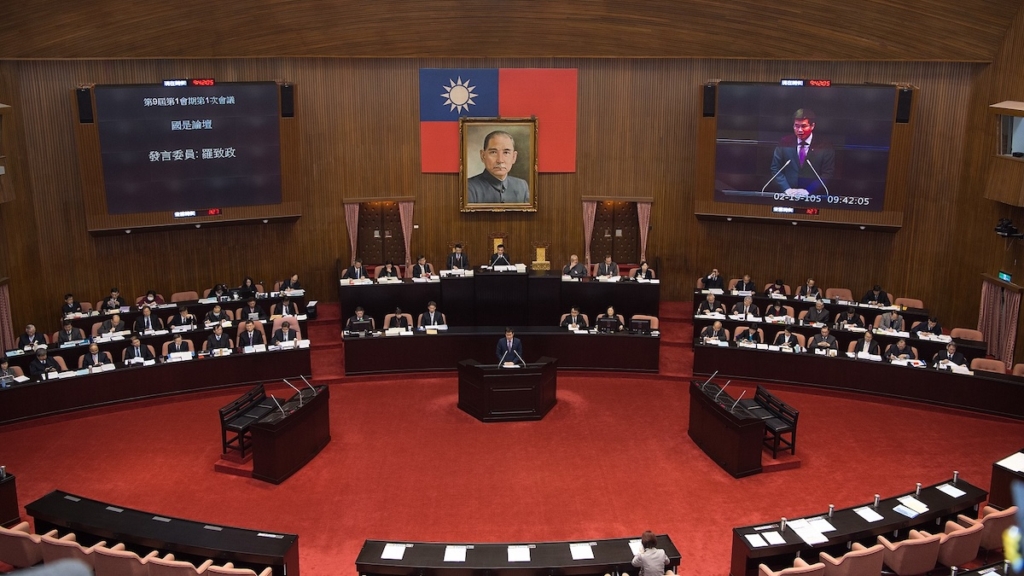
After a six-month political stalemate, Taiwan’s Legislative Yuan approved a $25 billion defense budget on May 8. The compromise figure is well below the ruling party’s $40 billion ask but a significant lift on opposition proposals. The pass cooled tensions with Washington, where senators had pressed Taipei to authorize pending defense packages. But the $15 billion shortfall pushes Taiwan toward US arms sales and away from its own “porcupine” capabilities.

Taiwan’s Legislative Yuan in session during defense budget deliberations. Photo: War on the Rocks
EU approves ‘return hubs’; UK minister calls EU re-entry “inevitable”

EU politicians have approved a new law expanding deportation of undocumented migrants to third-country “return hubs,” which rights groups compare to ICE-style enforcement. Officials defend it as better migration management. Separately, a UK Treasury minister called Britain’s return to the European Union an “inevitability” — the most direct government acknowledgment yet that Brexit’s long-term trajectory may reverse.

Tunisia hands Ghannouchi life sentence

A Tunisian court sentenced Ennahda party leader Rached Ghannouchi to life imprisonment, along with dozens of other defendants, for “forming a terrorist alliance” — a sharp escalation in President Saied’s crackdown on political opposition.

Four migrant farm workers killed in Italian arson attack

CCTV showed two attackers blocking a van’s doors and throwing flammable liquid inside, killing four migrant agricultural workers in Italy. Police have arrested both. The targeted killing crystallizes the violence stalking migrants in Italy’s farming sector.

BBC

Trump administration scraps $1.8bn anti-weaponization fund

Acting Attorney General Todd Blanche announced the abandonment of the controversial fund after Republican pushback. The move continues the administration’s project of dismantling what it casts as politically motivated prosecutions, though some settlement provisions barring audits of Trump’s tax records remain in place.

Also today

Americas
George Santos under federal investigation for alleged insider trading on Kalshi prediction markets — including bets on whether he himself would attend the State of the Union — Guardian · NPR
US proposes 25% tariffs on Brazil despite running a trade surplus; additional tariffs floated for India (12.5%), Pakistan, Canada and EU members — Guardian · Indian Express
Canada formally requests a 16-year USMCA renewal; Mexico backs the extension — BBC · Al Jazeera
California governor’s race too close to call after primary — Hilton, Becerra and Steyer lead a crowded field — Guardian
Africa & Middle East
Shell pumped oil through a known-polluted Nigeria pipeline for years despite evidence of severe contamination — BBC
Ghana’s president promises careful review of an anti-LGBTQ+ bill imposing prison sentences on those identifying as LGBTQ+ — BBC
British couple Lindsay and Craig Foreman lose appeal against Iran prison sentences imposed during their global motorbike journey — BBC · Iran International
Asia & Markets
Japan’s Nikkei 225 tops 68,000 for the first time as the AI buying frenzy accelerates — Al Jazeera
Thailand cracks down on foreign companies using “fig leaf” local partnerships to dodge ownership rules — Al Jazeera
ICC suspends Cricket Canada for “serious breaches of membership obligations” amid concerns the team is influenced by an Indian gang network — Guardian
Culture
Archaeologists find the first shipwrecks linked to real Caribbean pirates in Nassau harbour — musket balls, burnt hulls and physical evidence of the golden age of piracy — Guardian

Tech

Opus 4.8 builds full multiplayer games from a single prompt

Multiple developers report building functional multiplayer games end-to-end with Claude Opus 4.8 from single prompts — working clones of League of Legends and Super Smash Bros, with online multiplayer, shipped in under a day. Early users do flag a learning curve: initial outputs can feel “sterile” or verbose, and the model now actively pushes back rather than reverting to sycophancy, so prompt structure matters more than it did with prior generations.

Microsoft’s MAI-Code-1-Flash takes aim at coding benchmarks

Microsoft unveiled MAI-Code-1-Flash, a coding-specialized model that posts 51.2% on SWE-Bench Pro versus Haiku 4.5’s 35.2%, while using up to 60% fewer tokens on hard problems. Microsoft says the model was trained directly inside the GitHub Copilot production environment — not optimized in isolation against benchmarks — and ships with adaptive response depth.

Wiring Claude Code into 72 million Polymarket trades

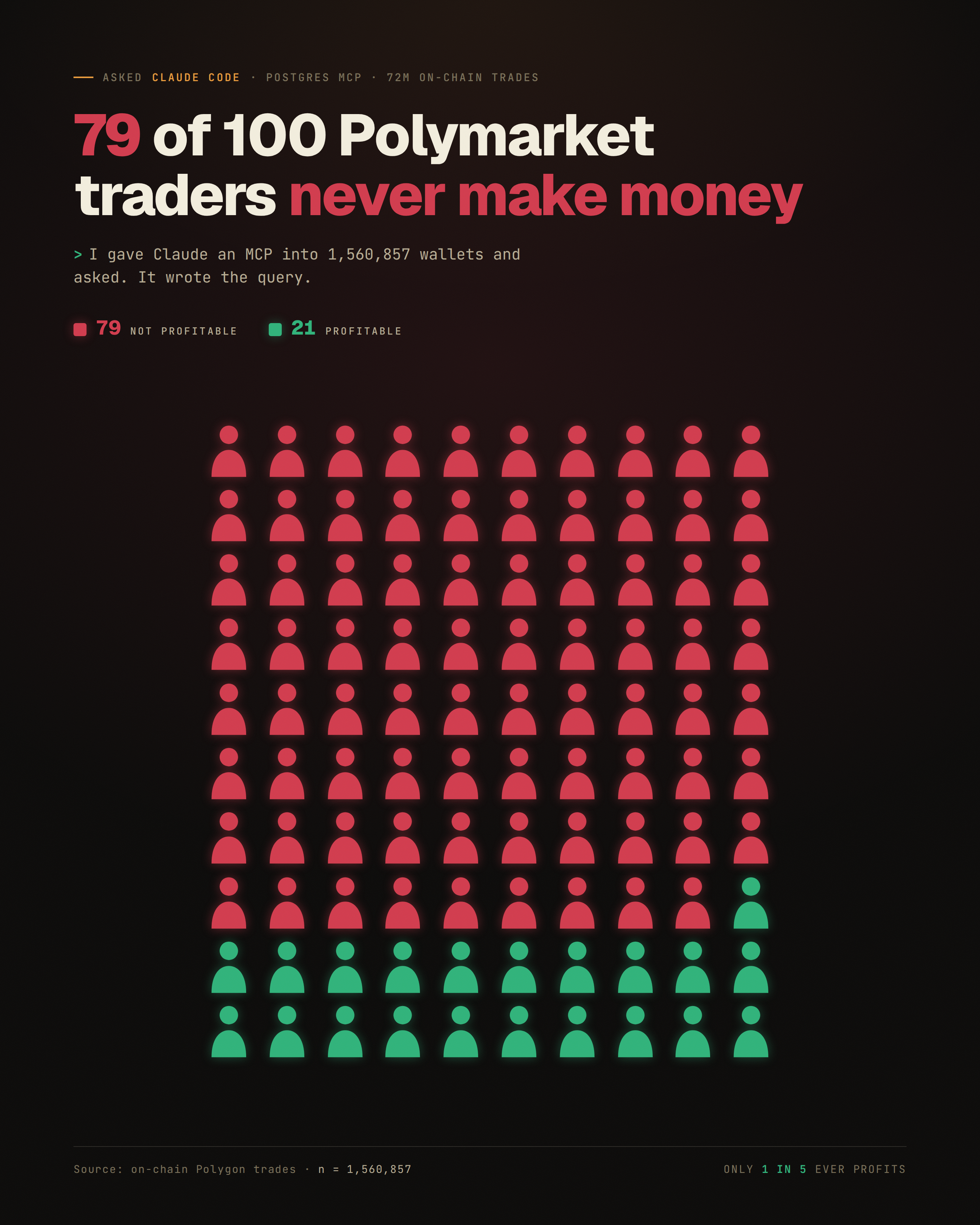
Claude Code querying the Polymarket ledger through a Postgres MCP connection. Image: CrowdIntel

A CrowdIntel developer hooked Claude Code into a live Polymarket database via Model Context Protocol and pointed it at 72 million trades across 1.5 million wallets. The findings: only 20.6% of traders are profitable; the top 0.1% captured roughly 70% of the ~$965M in total profits; and about 23,600 wallets cluster as bots. The setup needed no pre-built dashboard — Claude handled the data quirks itself.

The flip side is the production reality of MCP at scale, as another practitioner lays out: tool descriptions burning massive prompt-token budgets (one Salesforce tool weighed in at 1,200 tokens), wrong-tool-selection bias from over-eager descriptions, OAuth nightmares after a contractor departs, and $1,400/month context costs before any real work. Fixes — one-sentence descriptions, project- not user-scope, tool gateways — pushed selection accuracy from 70% to 95%.

One-click GitHub token theft via VSCode webviews

Security researcher Ammar Askar has disclosed a critical vulnerability in VSCode’s github.dev that lets attackers steal GitHub OAuth tokens with a single click. The exploit chains the webview’s JavaScript capabilities with keyboard-event simulation to silently install a malicious extension that exfiltrates tokens with full repository access — triggered by clicking a crafted Jupyter notebook link. Stolen tokens grant read/write across every repo the victim can reach.

KDE Plasma 6.8 will be the last X11 release

KDE has confirmed that Plasma 6.8, due in about five months, will remove X11 session support entirely — gone from login screens, gone from Plasma Shell and System Settings. XWayland stays for running X11 apps, and KDE apps will keep X11 compatibility under other desktops. Internal metrics already show 95%+ of Plasma 6.6 users running Wayland.

Memory safety as a literal life-and-death question

Josh Liebow-Feeser argues memory-safe languages are now a moral imperative: Android data shows memory-safety bugs are 36% of vulnerabilities but 86% of critical-severity and 89% of remotely exploitable ones. As AI-powered bug-finding tools scale, he warns, memory-unsafe codebases become disproportionately dangerous — including in contexts where exploits cause physical harm.

Backpropagation destroys brain alignment in one epoch

A new paper finds that untrained neural networks match or exceed trained networks in similarity to early visual cortex. A single epoch of training cuts V1 alignment by 25–90% depending on the learning rule. Backpropagation does the most damage; predictive coding and spike-timing plasticity preserve far more brain-like structure. An uncomfortable result for the assumption that supervised learning improves biological plausibility.

Microsoft claims a quantum reliability leap

Microsoft announced a new quantum chip it says is 1,000× more reliable than its predecessor, and predicts a commercially useful quantum computer by the end of the decade. The claim adds fuel to a year already dense with quantum milestone announcements.

BBC

Also today

Languages & tools
Paseo launches as an open-source orchestrator for 33+ coding agents (Claude Code, Codex, Copilot) across desktop, mobile, web and terminal — local-first, with git worktree support and optional E2E-encrypted relay — Paseo · GitHub · HN
Roku open-sources LT Operating System, with a BEAM SDK, targeting resource-constrained embedded use — Roku blog · GitHub · HN
rustc_codegen_jvm — experimental Rust backend emitting JVM bytecode — GitHub · Lobsters
Gleam 1.17 ships single-file BEAM executables via escript — Gleam blog · Lobsters
Revo — new dynamic language with pipes, errors-as-values, compile-time-anything, and fibers via spawnRevo · Lobsters
Swift type checker gets significant performance improvements — Swift Forums · Lobsters
Microsoft DevBlogs announce Intelligent Terminal 0.1 with AI integration — DevBlogs · Lobsters
AI infra & research
DeepSeek V4-Flash brought up on AMD MI300X — practical write-up of state-of-the-art inference off Nvidia — Fergus Finn · HN
MiniMax Sparse Attention scales natively to 1M tokens by restructuring memory access at the operator level — Reddit
Anthropic adds 150 partners across 15+ countries to Project Glasswing security testing of Mythos, including under-represented industries like power and healthcare — CNBC · Reddit
Systems
Oxide explores the hardest class of unsafe Rust: generic functions calling user-supplied code, where iddqd must defend against pathological-but-safe trait implementations — Oxide · Lobsters
nbd-vram — Linux tool exposing Nvidia GPU VRAM as swap via NBD — GitHub · HN
cd ~/repos/ratatosk && claude --resume ced4c921-2968-4f47-84f8-bae94a06a887