Josse-posten

China’s covert military training of Russian soldiers is the day’s biggest revelation — surfacing just as Xi privately tells Trump that Putin may “regret” the invasion. In the Gulf, Trump gives Iran days to make a deal or face “a big hit” while the Senate moves to restrain him. And Ukraine’s systematic oil campaign is working: Russian refining capacity is down 10%.

China Secretly Trained 200 Russian Soldiers — Some Now Fighting in Ukraine
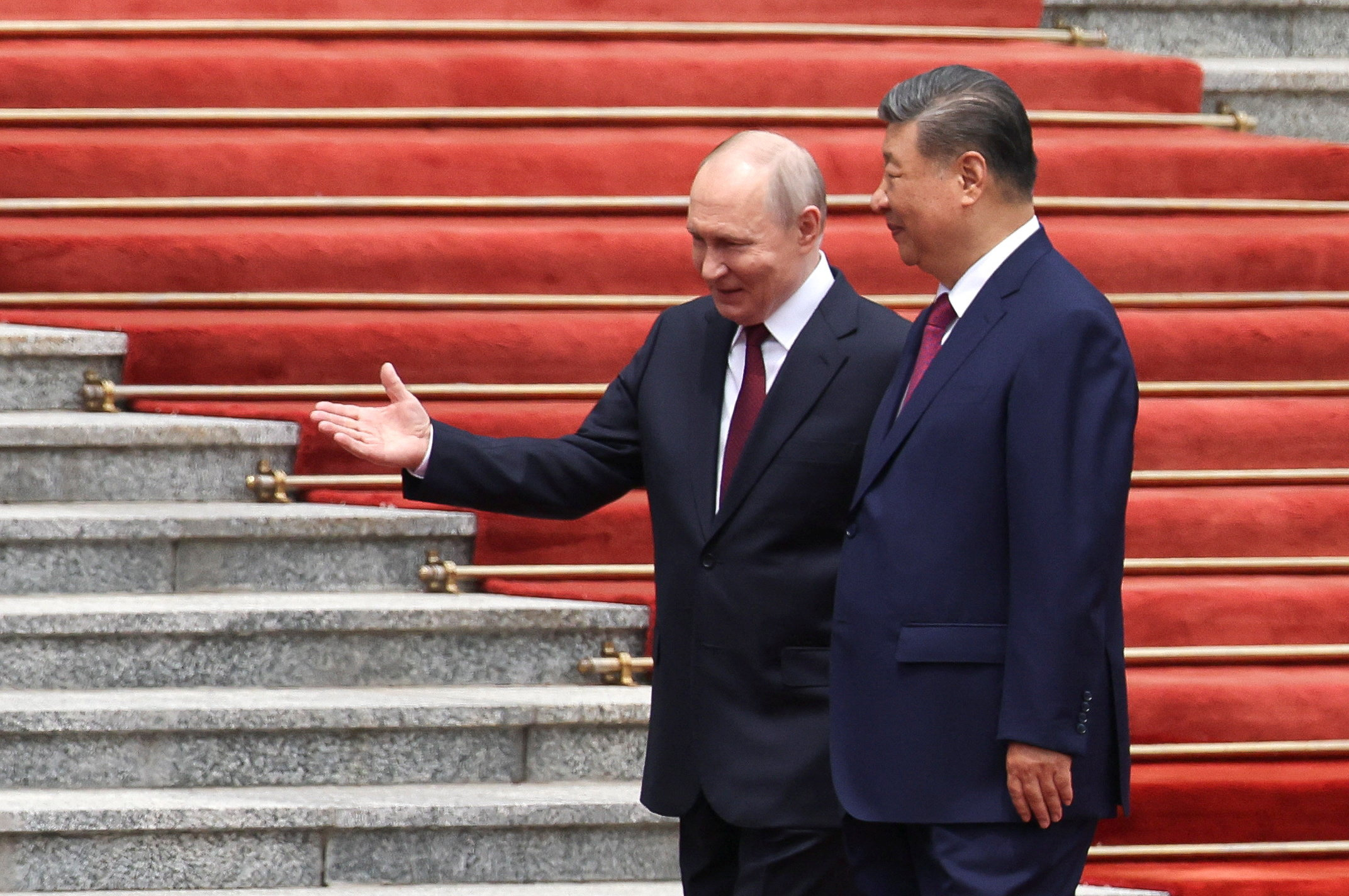
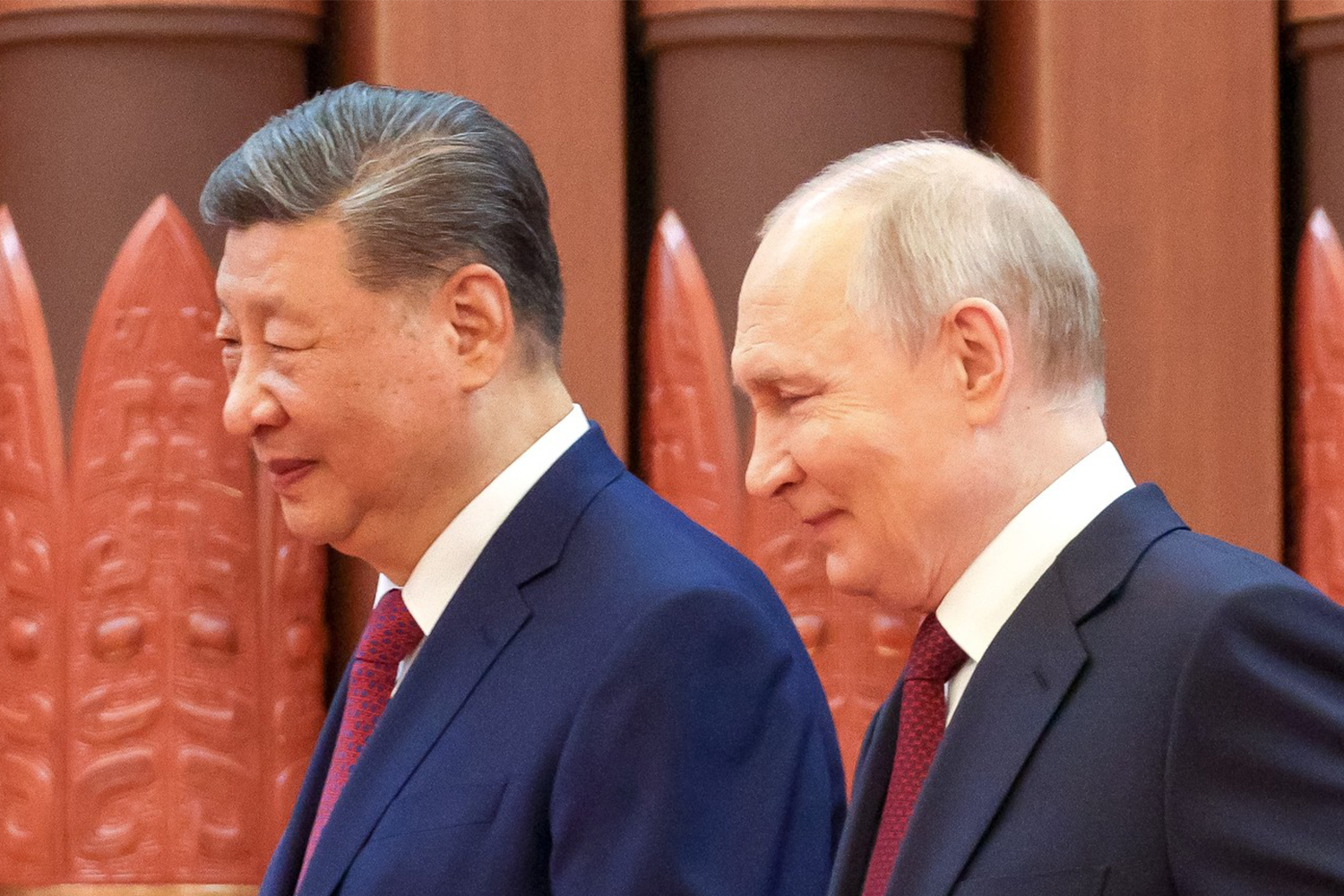
Putin and Xi at the Great Hall of the People in Beijing. Photo: Reuters / Al Jazeera

Reuters, citing three European intelligence agencies and an internal Russian military document, revealed that the PLA covertly trained approximately 200 Russian military personnel at facilities in Beijing, Nanjing, Shijiazhuang, and Zhengzhou in late 2025. A bilateral agreement signed July 2, 2025 explicitly barred media coverage and third-party notification. Training covered FPV drone operations, counter-drone tactics, electronic warfare, mortar-drone coordination, and mine-clearing. Many trainees were ranking instructors positioned to cascade the knowledge; some have since deployed to occupied Crimea and Zaporizhzhia.

The revelation landed the same day Putin arrived in Beijing, declaring relations at an “unprecedented level.” The ironic backdrop: during Trump’s visit days earlier, Xi privately told Trump that Putin might “regret” the invasion — a signal whose credibility is now deeply compromised by evidence of direct Chinese military support for Russia’s war.

(Full analysis in Investigations)

Trump Threatens Iran With ‘Big Hit’; Senate Moves to Restrain Him

Trump gave Iran “two to three days” to reach a nuclear deal or face military action, saying he was “an hour away” from ordering a strike before pulling back. Vice President Vance declared the US “locked and loaded.” Iran warned it would “open new fronts” if hostilities resumed. In a rare rebuke of the president, the Senate advanced a War Powers Resolution to limit Trump’s authority to wage war on Iran without congressional approval.

Ukraine’s Oil Campaign Bears Fruit: Russian Refining Down 10%

Ukraine struck the Yaroslavl oil refinery for at least the third time this month and hit the Lukoil-Nizhny Novgorod refinery at Kstovo — one of Russia’s largest — for the second consecutive day; a Moscow refinery separately halted operations. Zelenskyy cited intelligence showing Russian oil refining has dropped 10% in recent months, with companies forced to shut down wells and “a significant number” of regions in states of economic bankruptcy. The Ruta Block 2 cruise missile (700 km range) is entering mass production, and Zelenskyy has approved expanded long-range strikes for June.

(Full coverage in Ukraine)

Indicator Value Change
S&P 500 (f) 7,392 +0.19%
Nasdaq (f) 29,062 +0.48%
VIX 18.15 +0.50%
Gold $4,484 −0.60%
BTC $77,295 +0.16%
EUR/USD 1.1595 −0.11%
USD/NOK 9.2982 +0.31%
  • Saab +5% after Sweden’s $4B defense announcement
  • Gold −0.6% despite Iran escalation and drone strike on UAE nuclear plant — unusual risk-off absence

World

Ebola: 500+ Cases, No Approved Vaccine, and Now International Travelers

The WHO director-general expressed deep concern over the “scale and speed” of an Ebola outbreak in the Democratic Republic of Congo and Uganda — at least 134 dead and over 500 suspected cases of the Bundibugyo strain, for which no approved vaccine exists. Health officials in eastern DRC acknowledged they were slow to detect the outbreak. Uganda has banned hugs and handshakes after confirming two cases. A missionary who contracted Ebola in DRC was en route to Germany, raising concerns about international spread. The US banned entry for anyone who visited DRC, Uganda, or South Sudan within the past 21 days — though an exception was made for DRC’s football team ahead of the World Cup. Secretary of State Rubio said WHO was “a little late” in identifying the outbreak, a pointed criticism given the US has implemented sweeping public health funding cuts.

Drone Strike Cuts Power to UAE Nuclear Reactor — First Wartime Incident at an Operating Plant

A drone strike cut off external power to a nuclear reactor in the United Arab Emirates during the Iran war, forcing it to rely on backup generators. It is the first time a fully operating nuclear power plant has been forced onto emergency power during active military conflict, reviving international concerns about nuclear safety in wartime.

US Avoids Responsibility for School Strike That Killed 155 in Iran

A school in Minab, Iran, was struck on February 28 — the first day of the US-Iran war — killing 155 people: 73 boys, 47 girls, 26 teachers, 7 parents, and others. Both the New York Times and CNN reported the strike was a US Tomahawk cruise missile (a weapon Iran does not possess), but CENTCOM commander Admiral Brad Cooper told Congress the investigation is “complex” because the school sits near an IRGC missile base, and declined to accept responsibility. House Armed Services ranking member Adam Smith responded: “So that’s a ‘no.’ We will not take responsibility for something we very obviously did.” House Democrats have filed symbolic impeachment proceedings against Defense Secretary Hegseth.

Operation Epic Fury: How the US Bypassed Six Allies’ Refusals to Launch Its War on Iran

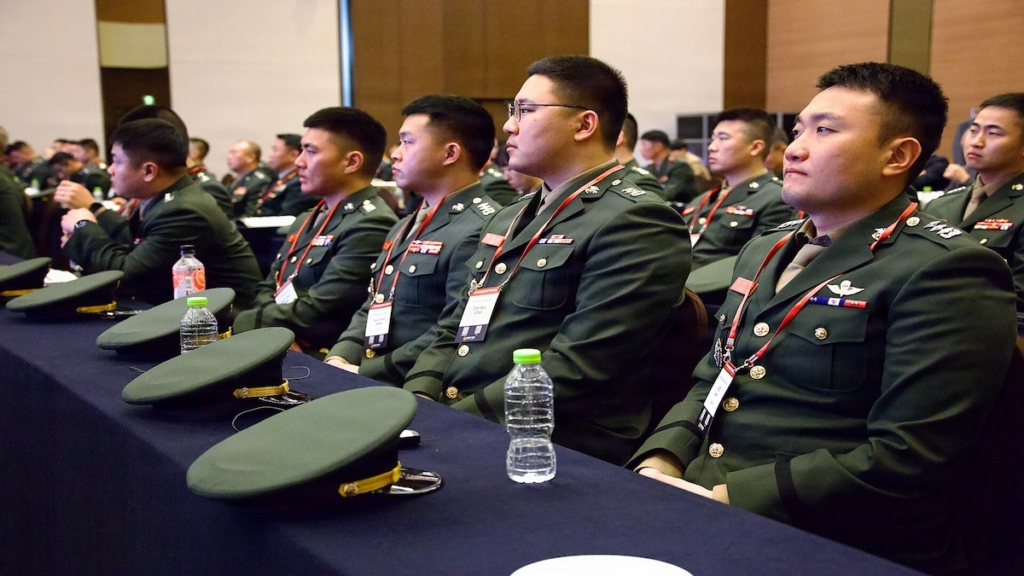
U.S. Marines at a ROK Marine Corps Symposium. Photo: War on the Rocks
When the US launched Operation Epic Fury against Iran in February 2026, Saudi Arabia, UAE, Kuwait, Qatar, Bahrain, and Jordan all explicitly refused to allow offensive operations from their soil. The US circumvented this by reclassifying aerial refueling tankers and early warning aircraft as “support” rather than “offensive” assets — technically honoring the letter of restrictions while violating the spirit entirely. War on the Rocks argues this establishes a precedent that makes allied countries’ formal consent frameworks meaningless, with direct implications for South Korea’s 2006 diplomatic understanding designed to insulate it from regional conflicts. The episode reveals that a US ally’s refusal to grant base access can no longer be considered a meaningful check on American military operations.

Two Armored Teenagers Kill Three at San Diego Mosque

Two teenagers aged 17 and 18 rushed the Islamic Center of San Diego “fully armored” with handguns and rifles, killing three people. The firearms were registered to one of the shooters’ parents. Security guard Amin Abdullah, a father of eight, was among those killed and is being mourned as a hero who died protecting worshippers.

Orban Defeated; the Strange New European Consensus

“Orban’s model — using Trump alignment and Russian relations as power amplifiers — has been exposed as politically toxic.”

Viktor Orban was decisively defeated in Hungary’s April 12 elections by conservative anticorruption candidate Peter Magyar, ending his 15-year grip on power. In a Foreign Affairs analysis, Ivan Krastev argues the fall is a geopolitical earthquake: Hungary can no longer veto EU Ukraine funding, Russia loses its most useful EU foothold, and Orban’s model of leveraging Washington and Moscow as power amplifiers is discredited. The emerging European consensus is paradoxical: centrist elites are embracing national sovereignty and strategic autonomy rather than deeper federalism, while the far right now views Washington and Moscow as greater threats than Brussels. Giorgia Meloni’s Ukraine-supporting, EU-cooperating model is the new template for the European right.

Bolivia’s Worst Economic Crisis in 40 Years Drives Mass Protests

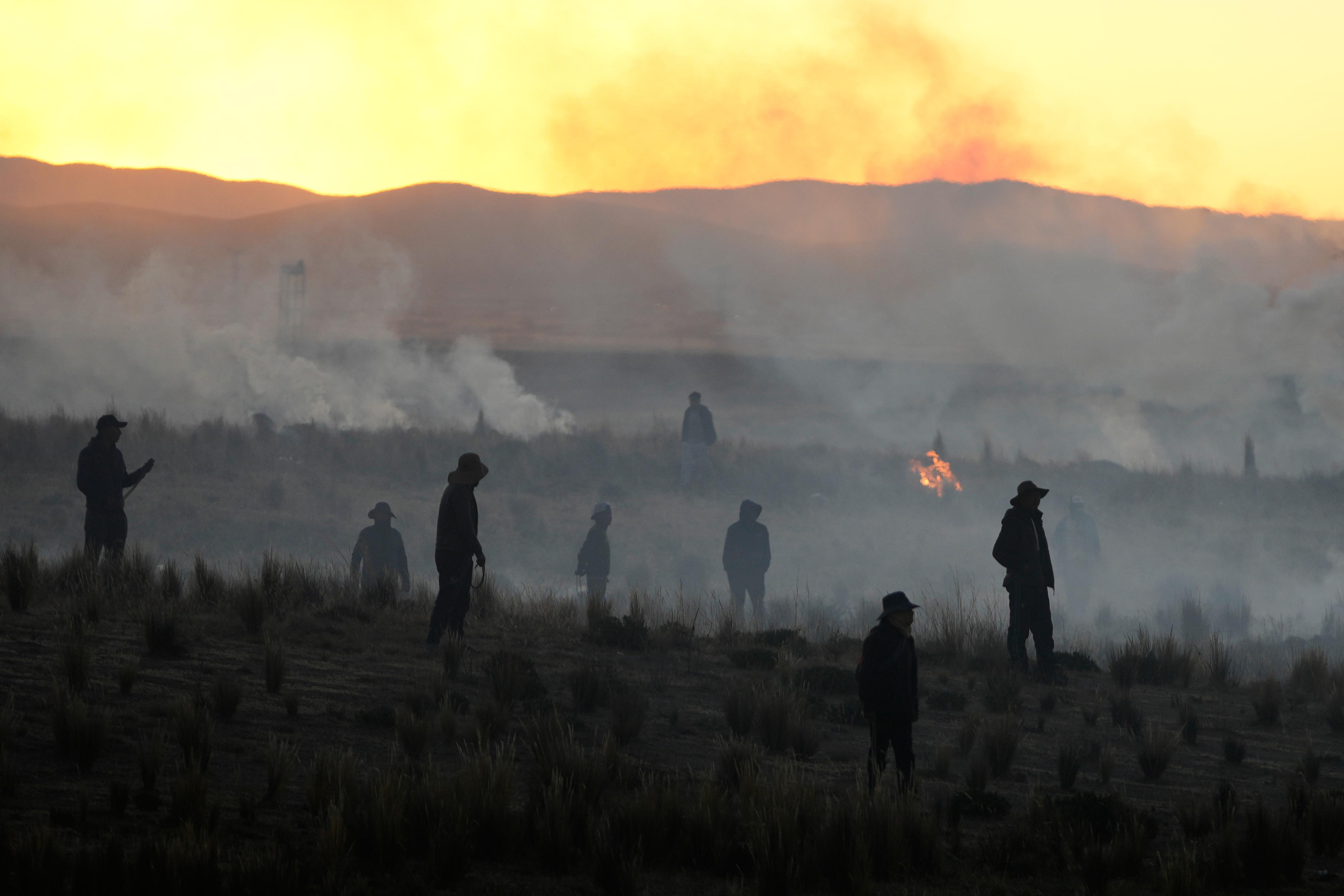
Antigovernment protesters silhouetted against tear gas near El Alto, Bolivia. Photo: AP / Al Jazeera
Bolivia is experiencing its worst economic crisis in four decades, with widespread protests and blockades besieging the capital La Paz. Demonstrators — including Aymara Indigenous communities and artisanal miners who clashed violently with police — are demanding the resignation of President Rodrigo Paz, who took office less than six months ago.

Also today

Middle East
Hormuz ship traffic surged from 19 to 55 vessels last week as IRGC eased restrictions — Times Now
NATO is considering deploying forces to Hormuz to protect shipping — Financial Post
Iran demands Big Tech pay fees for undersea internet cables passing through Hormuz — Ars Technica
UN cuts global growth forecast to 2.5%, citing Middle East crisis — Al Jazeera
Israeli strikes on Lebanon kill 19 including children, despite ceasefire — The Guardian
Americas
Trump purges GOP: Massie ousted in Kentucky, Georgia governor and Senate races head to runoffs — The Guardian · Al Jazeera
Trump family granted sweeping immunity from IRS audits — Al Jazeera · NPR
US claims “emergency” to admit 17,500 white South Africans as refugees — The Guardian
US demands permanent troop presence and investment veto in secret Greenland talks — New York Times
Nigeria and US joint strikes kill 175 ISIL fighters in northeast — Al Jazeera
Europe & Security
Sweden announces $4B defense investment; Saab +5% — CNBC
US plans to shrink forces available to NATO during crises — Reuters
UK loosens Russian oil sanctions as domestic fuel prices rise — BBC
Elsewhere
Thailand halves visa-free stays for 90+ countries, citing foreign crime — BBC · The Guardian
Taiwan Travelogue wins International Booker Prize — first Mandarin-language winner — NPR
Epstein associate Nadia Marcinko may face congressional questioning despite plea deal — BBC

Ukraine

Ukraine’s Oil Infrastructure Campaign Intensifies; June Long-Range Strikes Approved

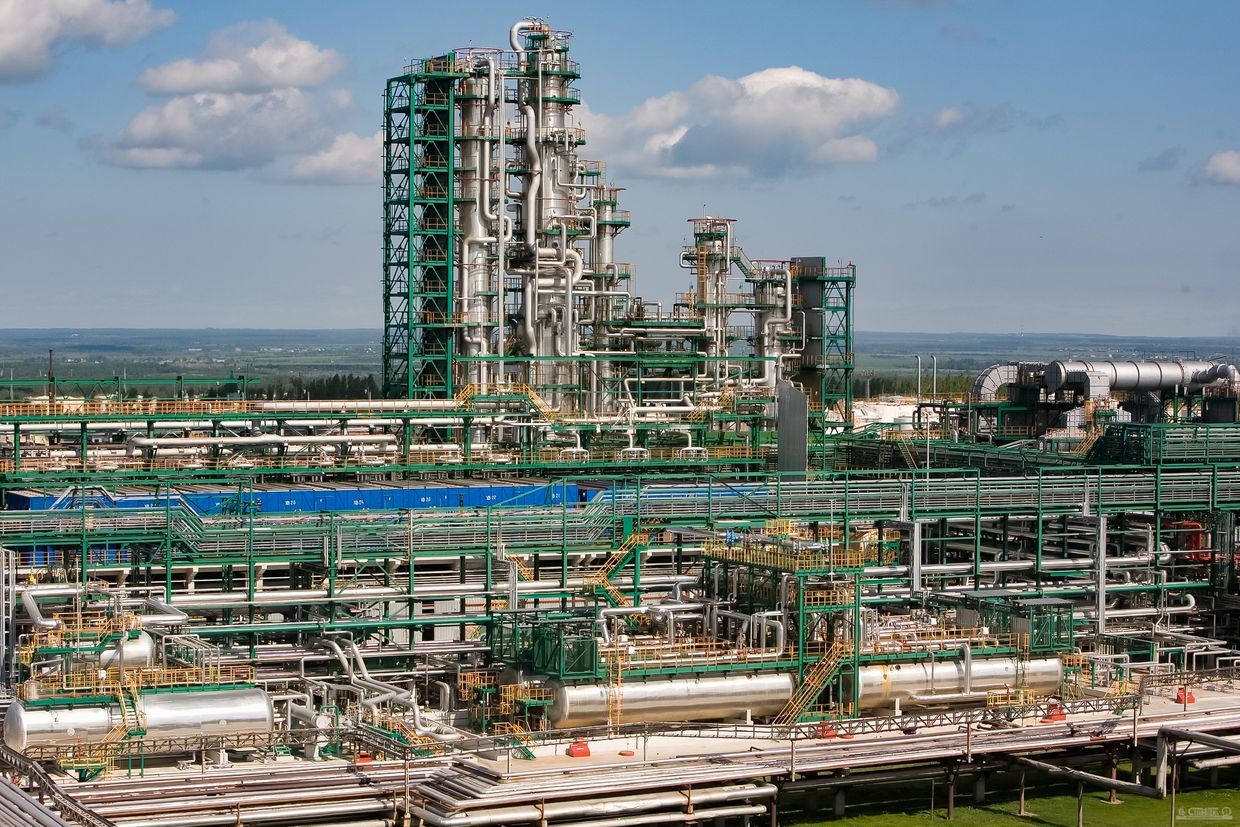
The Slavneft-YANOS refinery in Yaroslavl, Russia. Photo: Kyiv Independent
Ukraine struck the Yaroslavl oil refinery for at least the third time this month (confirmed by NASA fire data and Russian officials) and hit the Lukoil-Nizhny Novgorod refinery at Kstovo — one of Russia’s largest at 17 million tons/year, producing military aviation fuel — for the second consecutive day. A Moscow refinery separately halted operations. Satellite damage assessments confirm four destroyed storage tanks at Solnechnogorsk pumping station and over half of Ryazan refinery’s processing capacity destroyed from earlier May strikes.

Zelenskyy cited intelligence showing Russian oil refining has dropped 10% in recent months, with companies forced to shut down wells and a significant number of regions in economic bankruptcy. He approved plans for expanded long-range strikes in June; the Ruta Block 2 cruise missile (700 km range) is entering mass production. Russian forces meanwhile struck Naftogaz infrastructure for a fourth consecutive day, and overnight drones killed two and injured six in Dnipro.

Frontlines Stalled: No Russian Advances on Any Axis

Russian forces launched 250 attacks on May 20 with Pokrovsk remaining the hottest sector, but ISW records zero confirmed territorial gains for the day across the entire front. Ukrainian forces launched counterattacks in the Pokrovsk and western Zaporizhzhia directions and have recently advanced near Hulyaipole in the south. Russian flag-raisings in Kharkiv Oblast and infiltrations near Kupyansk are assessed as cognitive warfare — contradicted by geolocated footage showing Ukrainian forces still present in claimed areas.

Russia’s Internal Crisis Deepens: Recruitment Collapses, Elites Turn, Lavrov Sidelined

Ukraine’s SZRU reports Russian contract recruitment fell to 800–930 soldiers per day in Q1 2026 — roughly a quarter of the monthly target — with Russia’s prison population at its lowest since the early 2000s as penal recruitment exhausts supply. Some soldiers are reportedly hiring lawyers to arrange deliberate desertion and prison time as an exit from service.

Russians pulled money from bank deposits for the first time since the 2022 mobilization panic. A Russian lawmaker publicly warned the economy “will not withstand a prolonged war.” A former top official told Fortune the country is “over Putin” — attributed to the Kremlin’s accelerating seizure of oligarch assets, which has broken the implicit bargain between Putin and the business class.

On the diplomatic front, Lavrov has been effectively cut out of peace talks. The Kremlin’s channel to the Trump administration now runs through Kirill Dmitriev and Yuri Ushakov, after Lavrov’s hardline statements torpedoed a planned Trump-Putin summit. The EU is separately weighing Angela Merkel or Mario Draghi as potential envoys to Putin.

Russia Stages Surprise Nuclear Drill, Escalates Baltic Disinformation

Russia launched an unannounced strategic nuclear exercise May 19–21 involving 64,000 personnel, over 200 ICBM launchers — likely most of Russia’s ~320 ICBMs — 73 surface ships, and 13 submarines. Breaking from its usual October Grom schedule, ISW assesses the exercise as reflexive control: signaling strength to deter NATO support while masking a stalled offensive.

Concurrently, Russia’s SVR fabricated claims that Ukraine is launching drones from Latvian military bases — flatly denied by Latvia and NATO. Russian electronic warfare continues redirecting Ukrainian strike drones into Baltic airspace: a Romanian F-16 shot down one over Estonian territory on May 19. Russia then issued threats toward Latvia, prompting a US warning to Moscow. The pattern is deliberate: jam drones into allied airspace, then fabricate narratives to threaten the Baltics.

Investigations

Beijing’s Double Game: PLA Trained Russian Soldiers While Xi Counseled “Regret”

Putin and Xi shake hands at their bilateral meeting in Beijing. Photo: AA / Al Jazeera

The full scope of China’s military support for Russia came into focus on May 19–20 as Putin arrived in Beijing for a two-day summit. Reuters, citing three European intelligence agencies and an internal Russian document, detailed the PLA training program: approximately 200 soldiers trained at four facilities in late 2025 under a July 2, 2025 agreement that barred all publicity. The curriculum — FPV drones, counter-drone air defense, electronic warfare, UAV-directed 82mm mortar fire, combined arms, armored infantry — was designed for immediate application in Ukraine. A significant portion were ranking military instructors, positioned to cascade knowledge down the command chain. Some trainees have deployed to Crimea and Zaporizhzhia. This is the most direct documented evidence of Chinese military support for Russia’s war effort.

Putin declared relations at an “unprecedented level.” German Chancellor Merz expressed hope Xi would press Putin toward peace. But the summit’s most telling signal came via the Financial Times: during Trump’s visit days earlier, Xi privately told Trump that Putin might “regret” the invasion. The statement sits in sharp tension with the training program — either Beijing is genuinely hedging as war costs mount, or it is purchasing Washington goodwill while deepening covert military support. Trump publicly denied the “regret” report, complicating any diplomatic signal.

(Also covered in Leader)

Trump’s China Visit: The Strategic Concessions Xi Extracted

The Atlantic argues Trump’s Beijing summit was the inverse of Nixon’s strategic opening: Nixon used China to pressure the Soviets with coherent logic, while Trump abandoned the existing hard-edged competitive framework — tightened export controls, reduced economic exposure, strengthened Indo-Pacific alliances — in exchange for personal rapport with Xi. Concrete concessions: Trump gave Xi a pass on Volt Typhoon’s pre-positioning of cyberweapons in US civilian infrastructure, publicly called Taiwan arms sales “a bargaining chip,” and brought chip company CEOs who have been lobbying to keep advanced chips flowing to China. Xi will interpret the vague “strategic stability” declaration as a US commitment to rein in competitive measures, buying time to continue building decisive military advantages.

China’s ‘Machine Overmatch’: What Salt Typhoon Reveals About Data-Centric Intelligence

Salt Typhoon’s breach of US telecom law enforcement wiretap portals is analyzed by War on the Rocks as evidence of a strategic shift. Rather than recruiting insiders for precision secrets, China vacuums up massive data volumes across entire ecosystems and fuses them computationally — building approximate “digital replicas” of networks and workforces where aggregate value across millions of data points substitutes for high-precision single-source intelligence. Military-civil fusion law compels commercial entities to support state intelligence. The asymmetry is structural: US stovepiped intelligence streams cannot match Beijing’s unified data pipeline. Recommended responses include data obfuscation (salting, tokenization) and shifting from collection volume to fusion velocity.

Uyghur Fighters’ Decisive Role in Toppling Assad — and the Diplomatic Bind It Created

Approximately 4,000 Uyghur fighters affiliated with the Turkestan Islamic Party played a significant role in the rebel offensive that toppled Assad in December 2024, contributing to the tunnel operation that severed regime supply lines into Aleppo and marching into Damascus on the day Assad fled. Now they face a precarious situation: China is pressuring Syria’s new government to take “effective measures” against them, reopened its Damascus embassy on that condition, and abstained from a UN vote to lift sanctions on Syria’s new leader over the same concern. Syria is caught between obligations to fighters who helped bring the government to power and diplomatic pressure from Beijing.

Raúl Castro Indicted Over 1996 Shootdown of Civilian Planes

A US grand jury returned an indictment against former Cuban president Raúl Castro, 94, over the February 24, 1996, Cuban air force shootdown of two civilian Brothers to the Rescue planes over international waters — killing four Cuban Americans who had departed from Florida. The charges allege the shootdown was on direct orders from Raúl and Fidel Castro. The announcement was timed to coincide with a ceremony honoring the victims and fits the Trump administration’s broader pressure campaign against Cuba.

Also today

  • Philippines’ Marcos says country would be “involved” in any Taiwan conflict — a significant reversal of Duterte-era ambiguity — Straits Times
  • Trump pitched Russia and China on a joint campaign to undermine the ICC — People

Tech

Formal Methods Tool Quint Finds 10+ Real Bugs in SQLite

Quint + SQLite formal verification. Image: Turso

Turso engineers used Quint — a TLA+-based formal specification language — to model SQLite’s C API contracts rather than the full implementation, then ran the model checker to generate test traces and compared them against actual SQLite behavior. Over 10 real bugs surfaced: crashes in sqlite3_deserialize(), an EXISTS-to-join optimization incorrectly applying LIMIT/OFFSET, undefined behavior in sqlite3_mutex, and documentation mismatches in sqlite3_uri_int64(). The approach demonstrates formal methods finding subtle bugs that fuzz testing misses entirely.

Everything in C Is Undefined Behavior — and Nobody Can Write Correct C

A thorough essay arguing that UB in C/C++ is so pervasive that no non-trivial program can avoid it — from pointer alignment and type casting to character function hazards and float conversions. Specific examples: casting bytes to const int* is UB before any dereference occurs; passing a char above 127 to isxdigit() can trigger memory violations. The author argues that modern C/C++ development without AI assistance for UB detection should be considered irresponsible.

Blog · HN

GitHub Security: Pages Domain Hijacking and Internal Repository Breach

Two GitHub security stories surfaced the same day. First: when a domain uses wildcard DNS pointing at GitHub’s servers, any GitHub user can create a repo with a CNAME file claiming a subdomain — GitHub serves their content without verification. The author discovered their domain hosting slot machine scam sites from private repos that couldn’t be reported. Unlike most hosting providers, no TXT-record verification is required.

Separately, GitHub confirmed unauthorized access to approximately 3,800 of its internal repositories, with attackers reportedly offering copies for sale. No customer data was exposed — only GitHub’s own internal code — but the disclosure came exclusively via posts on X rather than through GitHub’s blog, status page, or direct notifications, drawing sharp criticism from the security community.

Witchcraft: Dropbox Open-Sources Local Semantic Search Over SQLite

Dropbox open-sourced Witchcraft, a Rust reimplementation of Stanford’s XTR-Warp semantic search engine using a single SQLite file as backing storage — no API keys, no vector database, no chunking strategy required. It achieves 21ms end-to-end search latency with 33% NDCG@10 on NFCorpus (2× faster than the original), supports hybrid BM25+semantic search, and runs fully on-device with GPU acceleration options. Practical for developers wanting portable semantic search in local tooling or client-side apps.

Also today

Dev tools
Tonic Rust gRPC library joins the official gRPC project — Blog · Lobsters
Zig comptime: metadata-driven tagged union subsets without duplicated type lists — Blog · Lobsters
Better auto-generated branch names with Jujutsu — Blog · Lobsters
Infrastructure
pgBackRest affirms it will continue — pgBackRest · Lobsters
OpenBSD 7.9 released — OpenBSD · Lobsters
Kernel segfault on PowerPC64 traced to AF_ALG crypto socket bug — Blog · Lobsters
Curiosities
Virtual OS Museum: nearly every operating system ever made, emulated — virtualosmuseum.org · HN · Lobsters
HTML rendering inside Canvas — Chrome Labs demo collection — GitHub · HN

AI & Automation

The Agent Harness Is the Product: Claude Code Is 98.4% Scaffolding

VILA-Lab researchers analyzed the Claude Code codebase and found that only 1.6% is actual AI decision logic — the remaining 98.4% is retry systems, permission classifiers, audit trails, context management, and safety layers. The argument: as foundation models converge in capability, the deterministic harness becomes the real differentiator. It sets the ceiling for reliability while the model sets the floor. Most production agent failures trace to authentication rot, schema drift, and missing observability — distributed systems problems, not model intelligence failures.

Anthropic’s Ecosystem Week: Stainless, Managed Agents, Karpathy, and a Million TPUs

A cluster of Anthropic announcements. The company acquired Stainless for a reported $300M+ — the SDK generator behind official libraries for Anthropic, OpenAI, Google, Meta, and Cloudflare — bringing SDK generation and MCP connectivity in-house. Stated rationale: “Agents are only as useful as what they can connect to.”

Self-hosted sandboxes: Anthropic orchestration with bring-your-own infrastructure. Image: Anthropic

Claude Managed Agents entered public beta with self-hosted sandboxes — letting agents execute tools in your own infrastructure (Cloudflare microVMs, Daytona, Modal, or Vercel) while Anthropic retains the orchestration loop. MCP tunnels (research preview) allow agents to reach MCP servers on private networks without public exposure.

Andrej Karpathy — former OpenAI co-founder and Tesla AI lead — is joining Anthropic’s pretraining team, the third senior OpenAI figure to move in recent months. His stated goal: use Claude itself to accelerate pretraining research, extending ideas from his AutoResearch project. Separately, Anthropic expanded its Google Cloud deal targeting up to 1 million TPUs and over a gigawatt of capacity in 2026.

The AI Productivity Reality Check: Centaur Chess and Human Bottlenecks

Two essays challenge the prevailing narrative of inevitable AI productivity gains. Richard Marmorstein argues that coding agents in 2026 are roughly where chess engines were before surpassing grandmasters — the economically meaningful “centaur” collaboration phase, where human+AI outperforms both, requires the engine to be a near-peer, not a strong assistant. The specific gap is long-horizon project reliability.

Fernando Borretti’s essay identifies a different problem: most productivity gains are bottlenecked by internal rather than external limitations. People seeking AI-augmented tools often don’t have genuine use for those tools in the first place, and knowledge gaps mean you can’t understand the question, evaluate the answer, or know what to ask. The ADHD analogy: external scaffolding addresses symptoms while stimulants address the actual bottleneck.

Also today

  • Gemini CLI deprecated June 18 — transitioning to Antigravity CLI — Google Developers · HN
  • OpenAI adopts SynthID watermarking; CLI to remove AI watermarks released the same week — HN: SynthID · HN: removal tool
  • PapersWithCode revived by Hugging Face engineer after Meta stopped maintaining it — paperswithcode.co · r/MachineLearning
  • AI evals will fail silently at capability phase transitions — Blog · HN
  • Claude Code efficiency: four levers after a year of daily use — Blog · r/ClaudeAI
  • Horizontal LLM scaling via Residual Coupling: frozen models linked by learned bridge projections — SSRN · r/MachineLearning
  • Orchestrator pattern with Opus 4.7 shows measurably better task decomposition — r/ClaudeAI
  • Google I/O: AI search overhaul, consumer smart glasses debut — The Guardian
cd ~/repos/ratatosk && claude --resume ba14f0be-f9b4-4fe4-80f4-ee10fddb1947