Tech
A local privilege escalation in Linux’s authencesn
cryptographic template allows deterministic 4-byte writes to the page
cache of readable files — exploitable with a 732-byte Python script, no
race conditions required. The write occurs via AF_ALG
sockets and splice(), before HMAC verification, bypassing
cryptographic safeguards. Exploitation paths include corrupting setuid
binaries, modifying /etc/passwd in-memory, and container
escape. Every major distro shipped since 2017 is affected. Separately:
an io_uring ZCRX freelist flaw enables another local privilege
escalation — ze3tar.github.io. And
a proposed kernel killswitch would let admins neutralise vulnerable
functions immediately without rebooting — LWN.
Sources: retr0.zip
· Lobsters
· HN
(io_uring) · Lobsters
(killswitch)
Anthropic’s alignment research eliminated agentic misalignment
behaviours (blackmail, sabotage) in recent Claude models by training on
ethical principles and reasoning rather than mimicking correct outputs.
Principle-based training proved 28× more efficient and generalised
better to novel scenarios — the key finding being that principles
transfer across contexts in ways demonstration-based learning does
not.
Sources: Anthropic
· HN
Can
LLMs write correct TLA+ specs? And can ChatGPT 5.5 do real maths?
Two rigorous evaluations from opposite ends of formal reasoning. A
SIGOPS paper empirically tests whether LLMs can produce correct TLA+
specifications for real systems — mapping capabilities and
characteristic failure modes at the intersection of AI and formal
verification — SIGOPS
· HN.
Separately, Fields Medalist Tim Gowers documents an extended session
with ChatGPT 5.5 Pro on research-level problems — one of the few AI
evaluations done by someone qualified to fully judge the output — Gowers’s
Weblog · HN.
Rust — A deep dive into a surprising edge case: the
compiler demands a Sync bound that appears nowhere in the
written code, arising from implicit constraints in trait object safety
and variance rules — verrchu.github.io
· Lobsters.
Zig — matklad on formatter design: how Zig’s formatter
treats blank lines as programmer intent rather than noise to strip, and
uses items-per-line counts as layout input — matklad.github.io
· Lobsters.
jank — The native Clojure dialect built its own SSA IR
to optimise at Clojure’s semantic level, reasoning about vars and
persistent data structures in ways LLVM IR cannot. Pointer tagging for
63-bit integers eliminates most allocation overhead; fibonacci(35) now
runs in 114 ms vs JVM Clojure’s 200 ms — jank-lang.org
· Lobsters.
A Play Services update now requires Google Play Services to complete
reCAPTCHA verification on Android, breaking GrapheneOS and de-Googled
setups. iOS users are unaffected, making the restriction appear targeted
rather than security-motivated. Google Cloud Fraud Defence — announced
days earlier — is Web Environment Integrity repackaged under a new name,
suggesting a renewed push for device attestation.
Sources: Reclaim
the Net · HN
(reCAPTCHA) · HN (WEI)
Practical comparison of NixOS secrets management: agenix (per-secret
files, per-host access control, lower overhead) vs sops-nix (YAML-based,
age-encrypted, better for many related secrets). The Nix store is
world-readable — private git repos, git-crypt, and plaintext config are
explicitly discouraged. Start with agenix; graduate to sops-nix when
per-file overhead becomes painful.
Sources: isabelroses.com
· Lobsters
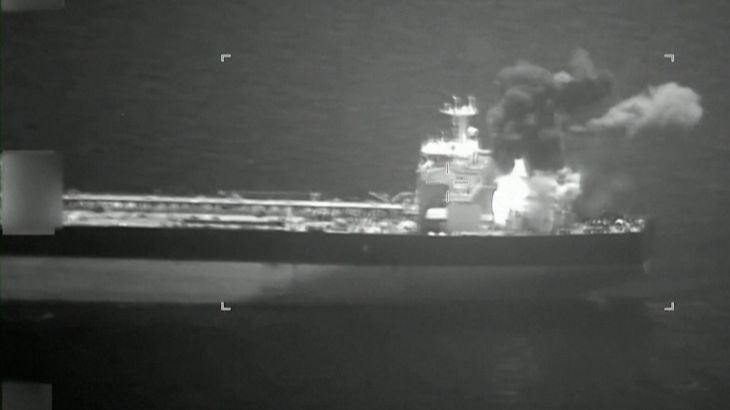 Pentagon footage of US strikes on
Iranian oil tankers in the Strait of Hormuz.
Pentagon footage of US strikes on
Iranian oil tankers in the Strait of Hormuz.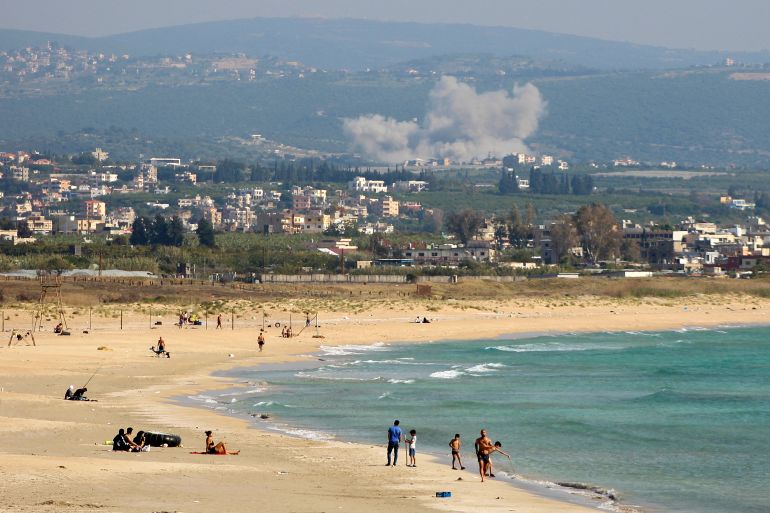 Smoke rising from an Israeli
airstrike on El Qlaile, seen from Tyre in southern Lebanon.
Smoke rising from an Israeli
airstrike on El Qlaile, seen from Tyre in southern Lebanon.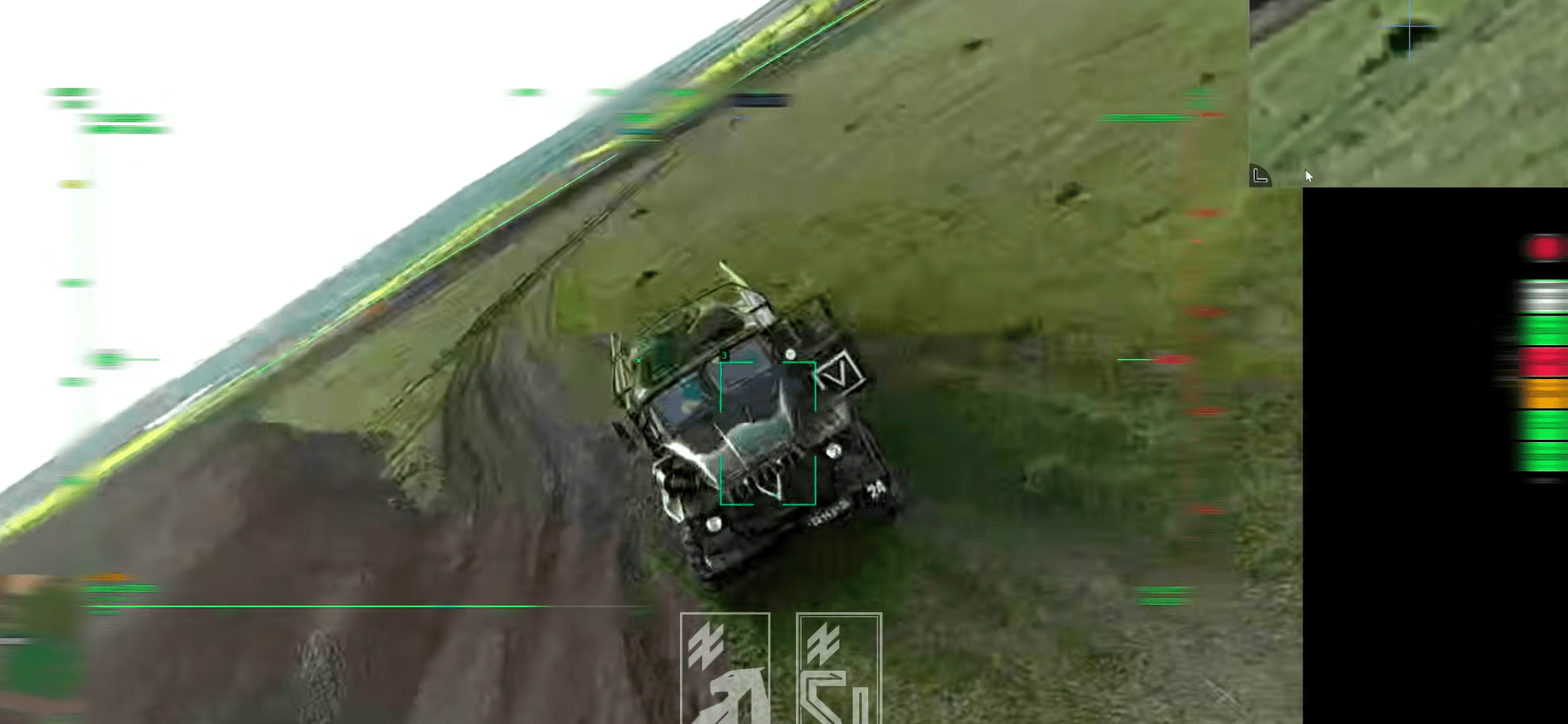 Russian logistics truck moments
before Ukrainian drone strike on the T-0509 highway near Mariupol — Azov
operators now reach 160 km from their positions.
Russian logistics truck moments
before Ukrainian drone strike on the T-0509 highway near Mariupol — Azov
operators now reach 160 km from their positions.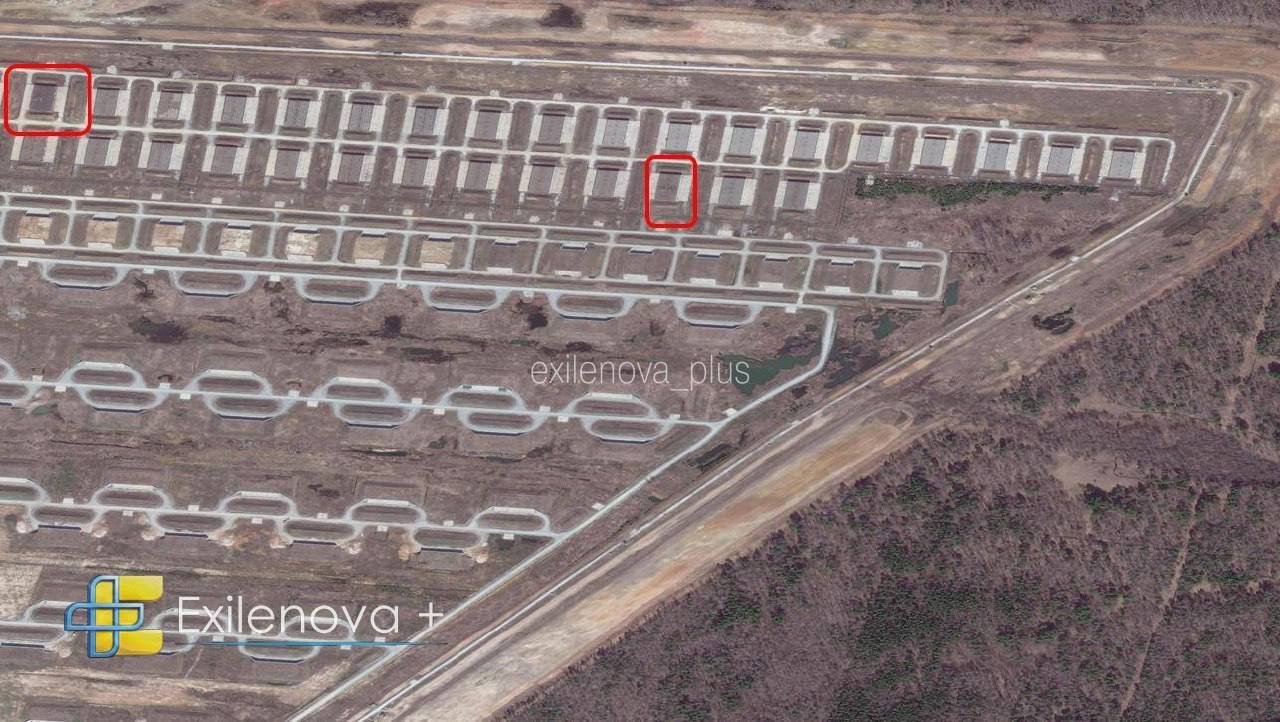 Satellite imagery of struck bunkers
at the Kedrovka GRAU arsenal, Sverdlovsk region.
Satellite imagery of struck bunkers
at the Kedrovka GRAU arsenal, Sverdlovsk region.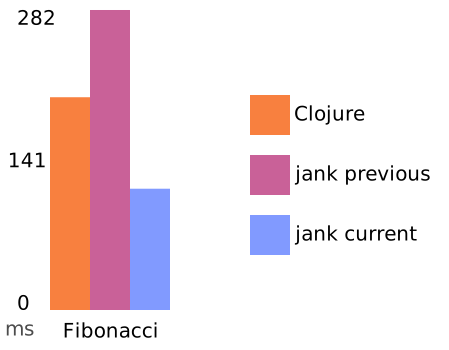 jank’s fibonacci(35) after all optimisations: 114 ms — down from a 5,522
ms baseline, now outpacing JVM Clojure’s 200 ms.
jank’s fibonacci(35) after all optimisations: 114 ms — down from a 5,522
ms baseline, now outpacing JVM Clojure’s 200 ms.