Josse-posten

The US launches and pauses a naval operation in the same breath; Russia breaks Ukraine’s ceasefire within minutes; and the arms race shifts from drones to cheap autonomous missiles.

Project Freedom: 24 Hours From Launch to Pause

The US military began escorting commercial vessels through the Strait of Hormuz under “Project Freedom” — then Trump paused the operation the next day, citing “great progress” toward an Iran deal. Rubio declared objectives achieved; Iran’s foreign minister flew to Beijing for emergency talks, one week before Trump’s own China visit. Oil spiked, then eased. The ceasefire technically holds, but Iran struck UAE oil infrastructure and Hormuz vessels on May 4, with the US classifying the attacks as “below the threshold” of restarting combat. The pattern: escalation, retreat, escalation — with no stable endpoint in sight.

BBC · Al Jazeera · CNBC · Guardian · SBS

Ukraine’s Ceasefire Lasts Minutes

Zelenskyy declared a unilateral ceasefire at midnight May 5–6. Russia broke it immediately — two Iskander-M ballistic missiles, one Kh-31, and 108 drones in the first hours. In the preceding 24 hours, some of the deadliest strikes in weeks: 12 killed in Zaporizhzhia, 5 in Kramatorsk by glide bombs on the city centre, double-tap missiles on first responders in Poltava. Moscow’s own ceasefire covers only May 8–9 for Victory Day. Meanwhile, Ukrainian Flamingo cruise missiles struck a GLONASS navigation plant 1,500 km deep in Chuvashia, and one of Russia’s three largest refineries halted operations after drone hits.

Ukrainska Pravda · BBC · Militarnyi

The Arms Race Moves Past Drones

Russia has upgraded Shaheds with turbojet engines — 460 mph versus 90 mph for propeller drones. Ukraine’s interceptors top out at 280 mph. A War on the Rocks analysis argues the next-generation air defence weapon isn’t another drone but affordable autonomous interceptor missiles costing thousands, not hundreds of thousands, of dollars. All the components exist; no one has built it at scale.

War on the Rocks

Markets

Value Δ
S&P 500 +0.80%
Oil −2.33%
Gold +0.86%
EUR/USD 1.0843
USD/NOK 10.82
VIX 17.28
BTC $81,443 +0.42%

Oil −2.3% net — Hormuz spike reversed by Trump’s pause. Equities lifted by deal optimism despite Gulf tensions.

Vessels in the Strait of Hormuz near Bandar Abbas, Iran, May 4. (Reuters)

World

Trump attacks Pope Leo over Iran stance as Rubio heads to the Vatican

Trump accused Pope Leo XIV of “endangering a lot of Catholics” and claimed the Pope “thinks it’s fine for Iran to have nuclear weapons” — after the Pope condemned US military action. The Pope responded that his “mission is to preach peace.” The feud erupted just before Rubio’s scheduled Vatican visit.

BBC · Guardian · Al Jazeera

Iran war read differently in Washington and Beijing — both to validate existing assumptions

Chinese analysts cite American overextension; US analysts counter that the operation demonstrated AI-integrated military capabilities. China proved more insulated from the Hormuz closure due to decades of electrification and supply diversification. Both powers drawing lessons that reinforce what they already believed.

War on the Rocks

Iran’s homeland threat: degraded capability, elevated risk

Three days into the war, the IRGC’s Qods Force announced intent to strike the American homeland — but hasn’t. Targeted strikes killed key personnel including Unit 4000 head Rahman Moqadam, disrupting external operations globally. Immediate threat diminished; risk of low-scale attacks persists.

War on the Rocks

Israeli strikes continue in Lebanon; displacement zones breeding extremism

BBC traced the April 8 bombardment as one of Lebanon’s deadliest recent episodes — families describing how 10 minutes of bombing shattered communities. A separate War on the Rocks analysis warns conditions for mass extremist recruitment are forming: Palestinian and Syrian refugee populations now overlap in institutional vacuums, UNRWA faces a $220M shortfall, and Hezbollah’s informal monitoring has degraded. A stateless second generation is coming of age with no legal employment.

BBC · Al Jazeera · War on the Rocks

India’s political earthquake: film star Vijay sweeps Tamil Nadu

Tamil actor Vijay’s new party came close to sweeping Tamil Nadu, shattering established regional dominance. Simultaneously, Mamata Banerjee lost West Bengal and the CPI lost Kerala — meaning India now has no state government controlled by the left for the first time in five decades.

BBC (Tamil Nadu) · BBC (West Bengal) · NDTV

Romania’s pro-EU government collapses

PM Ilie Bolojan lost a no-confidence vote after the Social Democrats — the largest party in his own coalition — defected to vote with the far-right opposition. Romania is without a functioning government at a moment of acute regional instability.

BBC · Politico

Hantavirus cruise ship: human-to-human transmission suspected

The WHO is investigating suspected human-to-human transmission aboard the MV Hondius — extremely rare for a virus that normally spreads only through rodent contact. Three dead since April, WHO tracing 80+ flight contacts. Spain agreed to dock the ship in the Canary Islands.

NPR · BBC · Al Jazeera

Also today

  • Sudan recalls Ethiopia ambassador after strikes on Khartoum airport — Al Jazeera
  • Australian women with IS ties face arrest on return from Syria — BBC · Guardian
  • Iran secretly buries executed Swedish-Iranian citizen at mass grave site — Iran International
  • US military kills three in Pacific boat strike, labels victims “narco-terrorists” — Guardian
  • EU Parliament votes to ban conversion therapy — EU Parliament
  • Fitch upgrades Argentina to B- on Milei reforms — Reuters
  • CO2 hits new atmospheric record high — Scientific American
  • Trump wins Ohio/Indiana primaries; Ramaswamy takes GOP governor nod — BBC · NPR
  • Alberta separatists push independence referendum amid 2.9M voter data breach — Guardian
  • Leipzig car attack kills 2 — BBC
  • China fireworks explosion kills 26 — Guardian
  • Venice Biennale opens under protest; Russian pavilion shuttered again — Guardian

Shatila refugee camp, Lebanon — where institutional vacuums and overlapping displaced populations are forming conditions for mass radicalization.

Iranian FM Araghchi meets China’s Wang Yi in Beijing, May 6. (Reuters)
Ukraine

Ceasefire violated within minutes; 22+ killed in pre-ceasefire barrage

Russia launched Iskander-Ms, a Kh-31, and 108 drones the moment Ukraine’s ceasefire began. The preceding day’s toll: Zaporizhzhia (12 killed, 43 injured), Kramatorsk (5 killed by glide bombs on city centre), Dnipro (4 killed), Poltava (4 killed including two first responders in a deliberate double-tap on a gas facility). Moscow’s own two-day ceasefire proposal covers only the Victory Day parade. Germany urged Russia to accept Ukraine’s offer instead.

Ukrainska Pravda · BBC · NPR

Ukraine hits GLONASS plant at 1,500 km and shuts down one of Russia’s three largest refineries

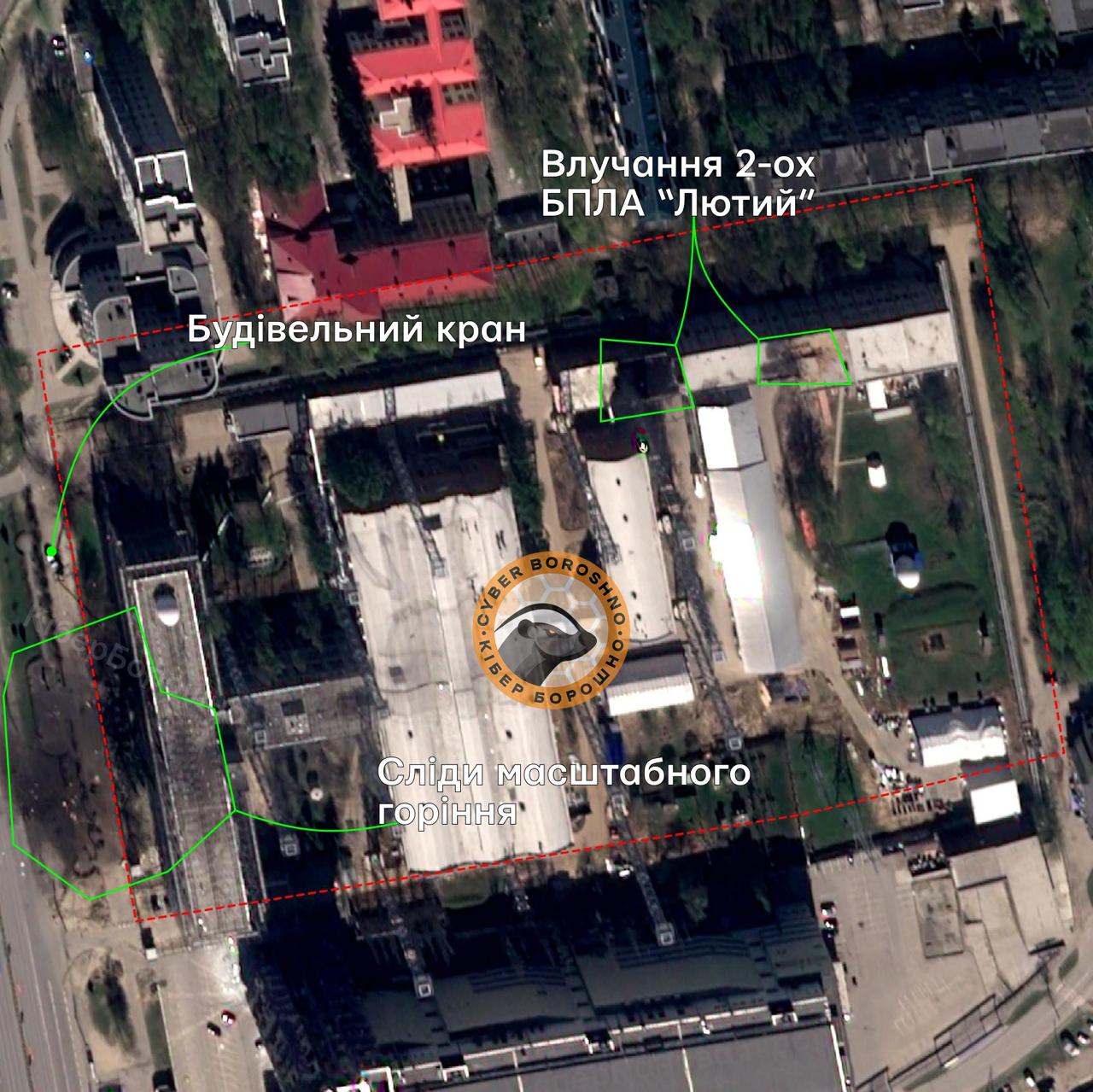
The 19th Brigade used Flamingo FP-5 cruise missiles at over 1,500 km range to strike the VNIIR-Progress plant in Cheboksary — producing GPS, GLONASS, and Galileo receivers and EW-resistant components for Russian drones and missiles. Simultaneously, the Kirishi refinery in Leningrad Oblast (20–21M tons/year capacity) halted after drones damaged three of four crude distillation units. Tuapse damage confirmed at $300M+ with 28 fuel tanks destroyed. GUR also confirmed an April Crimea strike destroyed a Be-12 anti-submarine aircraft and three assault boats.

Ukrainska Pravda · Militarnyi

Russia locks down for Victory Day; Ukraine demonstrates 2,000+ km strike capability

Russia cut mobile internet in Moscow and St. Petersburg, closed airports in 15 cities, and reportedly excluded military equipment from the May 9 parade for the first time since 2007 — milbloggers say open-air staging areas are now too vulnerable to drone attack. An air alert was declared for Khanty-Mansi, over 2,000 km from Ukraine. Russian ultranationalist milbloggers are openly criticising the Kremlin, accusing the MoD of “vanity” for prioritising parade optics over strategic air defence.

Moscow Times · ISW

Russia doubles attacks at Pokrovsk; record glide bomb usage

186 combat engagements on the Pokrovsk front on May 6 — double the previous rate — with infiltrations continuing west and northwest. Russia’s April plan to capture Kostiantynivka failed. KAB glide bomb usage hit wartime records: nearly 8,000 in March, ~7,000 in April. Ukrainian interceptor drones are increasingly neutralising Shaheds, forcing Russia to redirect them to frontline targets and degrading the strategic strike campaign.

Ukrainska Pravda · ISW

Economic despair mounts: “We can’t even take one region”

An unnamed Russian official told the Washington Post: “The overall mood is that’s enough already — we can’t even take one region.” GDP contracted in early 2026, Putin’s approval dropped from 77.8% to 65.6%, nonpayments hit $109 billion in January, with banking collapse warnings for summer. The war has now outlasted WWII without Russia controlling even Donetsk.

Fortune

EU joins aggression tribunal; US approves $373M JDAM-ER sale

EU ministers voted to formally join the Special Tribunal to prosecute Russian leadership for the crime of aggression, with first verdicts expected by 2028. The US approved a $373.6M sale of JDAM-ER extended-range precision munition kits to Ukraine. Austria expelled three Russian embassy staff after a surveillance antenna array was discovered at the embassy.

Kyiv Independent · Ukrainska Pravda · Guardian

Also today

  • Egypt continues buying stolen Ukrainian grain from Russia — Ukrainska Pravda
  • Russian warship positioned 30 miles off UK coast, shadowing critical infrastructure — iNews
  • Ukraine moves to edge China out of drone supply chain; Taiwan emerging as partner — Guardian

VNIIR-Progress plant in Cheboksary, Chuvashia — struck by Ukrainian Flamingo missiles at 1,500 km range. (Kiber Boroshno)
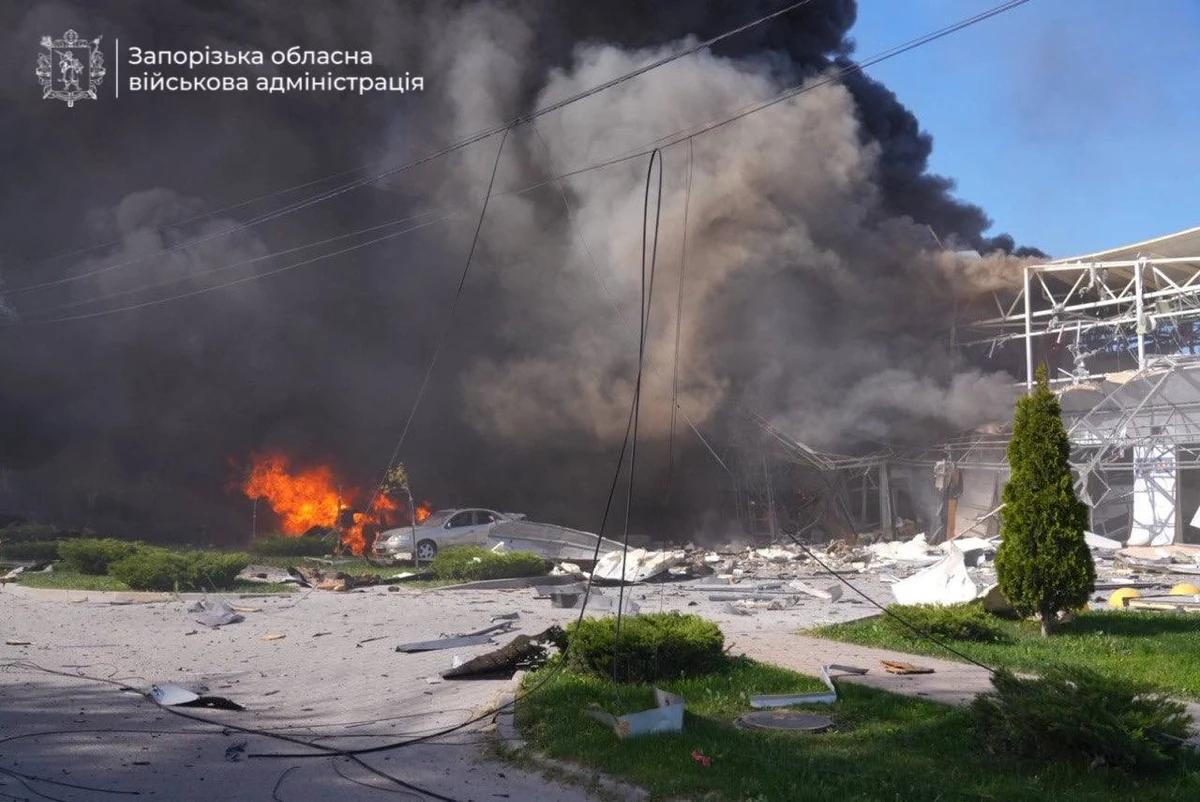
Aftermath of the Russian missile strike on Zaporizhzhia, May 5. (Ukrainska Pravda)

Defense & Security

Europe’s missile gap: can the continent replace US Tomahawks?

The Iran war exposed European dependence on US cruise missiles. The Navy’s FY2027 Tomahawk request jumped from 55 to 785 in a single budget cycle — a 1,200% increase that exposes a decade of acquisition decisions never stress-tested against realistic warfighting scenarios. European powers are accelerating indigenous long-range strike development, but the industrial base gap is measured in years.

Financial Times · War on the Rocks

Europe without America: NATO’s structural exposure under Trump

Trump announced plans to reduce US forces in Germany beyond the 5,000 already withdrawn — military leadership reportedly blindsided. The Atlantic examines what “Europe Without America” means in practice: a NATO alliance that nominally persists but lacks credible US commitment, with European capitals scrambling for strategic autonomy they are structurally unprepared to exercise. US car tariffs on the EU hiked to 25% add economic friction to the strained relationship.

The Atlantic · Fortune · Al Jazeera

Japan rapidly building out defense industrial base

Foreign Affairs examines Tokyo’s accelerating buildup: unprecedented political will being converted into industrial capacity at pace, driven by growing US-China rivalry and uncertainty about the American Indo-Pacific commitment. Japan sees a narrow window before the regional balance shifts further.

Foreign Affairs

Pentagon fired Stars and Stripes ombudsman for resisting editorial interference

The Pentagon rescinded federal regulations protecting Stars and Stripes’ editorial independence without required public comment, then fired ombudsman Jacqueline Smith after she published criticism of Defense Secretary Hegseth’s editorial goals. The Deputy Secretary issued an interim policy allowing DOD to modify the paper’s operations without legal constraint.

Stars and Stripes · HN

The shift in air superiority doctrine: affordable autonomous interceptor missiles, not propeller drones, are the coming weapon. (DVIDS)

Tech

AI code generation removes the human regulator from a cybernetic system

Charles Leifer applies Ashby’s Law of Requisite Variety to AI coding: programmers serve as the regulator that matches and manages code complexity, and replacing them with automated generation breaks the control mechanism. The essay distinguishes analysis (AI extends human capacity) from generation (AI removes the human mediator), and warns of an “event horizon” where complexity compounds faster than it can be addressed — creating economically self-reinforcing feedback loops of token expenditure on AI-created problems.

Charles Leifer · Lobsters

Claude Code accelerates output but doesn’t improve products

The bottleneck in software quality is design taste and product vision, not code generation speed. The falsification test: if Claude Code provided genuine velocity advantages, Anthropic should dominate competitors — but Codex and Cursor remain competitive. AI helps early-stage products reach MVP faster and makes commodity software cheaper, but doesn’t help already-excellent companies improve.

Substack · Lobsters

Agents can now provision Cloudflare accounts, buy domains, and deploy autonomously

Cloudflare and Stripe integrated so AI agents can go from zero to deployed app without human interaction beyond initial permission — account creation, API token, domain purchase, and deployment. OAuth-derived authorization treats agents as first-class principals with a $100/month default spending cap. This standardizes what was previously one-off per SaaS.

Cloudflare · HN

Computer use agents are 45x more expensive than structured API calls

Reflex benchmarked vision agents (browser automation via screenshots) against API-calling agents: 551k tokens over 17 minutes vs. 12k tokens in 20 seconds — a 45x cost difference. The vision agent also required step-by-step instructions to succeed at all. For internal tools where you control the codebase, generating API endpoints eliminates the gap entirely.

Reflex · HN

Exploitable integer overflow in Lix NAR parser (CVE-2026-44028)

An integer overflow in Lix’s NAR parser allows out-of-bounds memory writes: a member length of 2^64−8 causes a buffer resize to overflow to zero. CVSS 6.3 — requires local daemon access and ASLR evasion (~1 hour in dynamic builds, instant in static). Fixed in Lix ≥ 2.93.4, ≥ 2.94.2, ≥ 2.95.2.

Lix Blog · Lobsters

.de TLD went offline after botched DNSSEC key rotation

DENIC published a malformed signature during a DNSSEC key rotation, causing all validating resolvers to return SERVFAIL for .de domains. Cloudflare had to temporarily disable DNSSEC validation for .de to restore service. A single configuration error at one registry node took an entire country’s namespace offline.

DNSSEC Analyzer · HN

Zuckerberg personally authorized Meta training on pirated books

A court filing claims Zuckerberg personally authorized and encouraged using pirated books from LibGen to train Meta’s AI, overriding legal staff concerns. This pins direct liability on Zuckerberg as the decision-maker. Separately, Ireland’s regulator flagged Meta for potential maximum fines of €20 billion over algorithmic dark patterns.

Variety · HN · Irish Independent

Also today

  • Caddy TLS cert expired silently because systemd-resolved selectively dropped DNS queries — mvh.dev · Lobsters
  • Microsoft releases Behavior-Oriented Concurrency for Python: lock-less and deadlock-free — bocpy · Lobsters
  • A bidirectional typechecking puzzle — Haskell for all · Lobsters
  • Mikan: new proof assistant for cubical type theory, forked from Agda — types.pl · Lobsters
  • krabby: a from-scratch Rust compiler built for speed — bal-e.org · Lobsters
  • SLAM: minimalist NixOS alternative using s6/Synit instead of systemd — SLAM · Lobsters

Agent provisioning workflow: account creation, domain purchase, and deployment via Cloudflare/Stripe integration.

cd ~/repos/ratatosk && claude --resume ea99634a-3273-4dff-8e30-4a94f149264c