Josse-posten

The old order keeps cracking — the UAE walks out of OPEC after sixty years, Russia hides its tanks from its own parade, and Brussels warns the Iran war could damage Europe for years.

UAE quits OPEC after nearly 60 years

The United Arab Emirates has announced its departure from OPEC — a founding member walking away from the cartel it helped build. Analysts say the move is less about oil markets than a widening rift with Saudi Arabia and a fundamental realignment of Gulf alliances. It leaves OPEC weakened at a moment of maximum energy disruption, with the Iran war and Ukraine’s pipeline strikes compounding supply uncertainty. — BBC · Al Jazeera

Russia strips Victory Day parade of tanks for the first time since 2007

No armored vehicles or missile systems will roll through Red Square on May 9th — a first in nearly two decades. The reason: fear of Ukrainian drone strikes targeting the high-profile military display. The decision is both a concession to Ukraine’s expanding deep-strike reach and a striking visual signal of how thoroughly the war has eroded Russian military confidence. (Also covered in Ukraine)The Guardian · Bloomberg

Comey indicted again — this time over an Instagram post of seashells

A US grand jury has brought two new felony charges against former FBI Director James Comey over an Instagram post depicting seashells that prosecutors claim constituted a veiled threat against Donald Trump. Critics have widely condemned the charges as a continuation of the administration’s weaponization of the justice system against perceived political enemies. — The Guardian · NPR

Markets

Indicator Value Change
S&P 500 −0.49%
Gold −1.86%
Oil +3.62%
EUR/USD 1.0843
USD/NOK 10.82
VIX 17.96
BTC $77,020 +1.0%
ETH/BTC 0.0300
  • Oil +3.62% — converging pressures: Iran war disruption, Ukraine’s Druzhba pipeline strike, UAE’s OPEC exit
  • BTC +1% — Iran’s crypto ecosystem hit $7.78bn as sanctions evasion surges; US enforcement playing catch-up

World

EU warns Iran war may damage Europe for years

European Commission president Ursula von der Leyen warned the consequences “may echo for months or years to come” as Brussels loosened state aid rules to subsidize up to 70% of extra fuel and fertilizer costs for farmers, fishing businesses, and hauliers — up to €50,000 each. The UK is described as “particularly badly exposed” given its energy import profile. Von der Leyen separately called for a diplomatic resolution, saying the conflict was showing no sign of ending. — The Guardian (subsidies) · Al Jazeera (UK exposure) · Bloomberg

The war has strengthened — not weakened — the Iranian regime

Foreign Affairs argues the conflict has paradoxically consolidated the Islamic Republic. The existential confrontation has closed ranks among IRGC and Basij leadership, suppressed internal dissent, and rallied regime supporters in a pattern mirroring 1979. The war has also drawn Washington into direct high-level engagement with Tehran on sanctions relief — something US officials previously refused — which could materially improve Iran’s economic outlook. The post-Khamenei regime is expected to be more IRGC-dominated and militarily aggressive, not weaker. — Foreign Affairs

Separately, Reuters reports the IRGC has effectively taken control of wartime strategic decision-making, blunting the Supreme Leader’s role in directing the conflict — a significant and potentially irreversible realignment within Iran’s complex governmental structure. — Reuters

Mali in freefall: France urges evacuation as Russia’s Africa Corps struggles

France and the UK have urged citizens to leave Mali immediately after rebel forces launched a sweeping offensive that has severely exposed the military junta — the same leadership that seized power promising to restore security. Footage confirms Russia’s Africa Corps conducted airstrikes in support of Malian government forces even as the group withdrew from a key northern base. The junta’s survival is now openly in question. — BBC (evacuation) · BBC (airstrikes) · BBC (analysis)

Russia’s global retreat goes beyond Mali. iNews reports Moscow has quietly shelved ambitions including a Sudan naval base and broader Latin American influence. Cuba and Venezuela face pressure from a more assertive US; Venezuela’s new leadership is already more accommodating to Washington. Russia can still sell cheap oil and exploit anti-Western sentiment, but the dream of competing as a true global power is being abandoned under the weight of the Ukraine war. — iNews

King Charles addresses US Congress; Trump drags him into Iran nuclear politics

King Charles III addressed a joint session of Congress — only the second British monarch to do so — drawing some lines Democrats welcomed. The visit included a state dinner with jokes about the Revolutionary War (“If it wasn’t for us, you’d be speaking French”) and concluded with a wreath at the 9/11 memorial in New York.

The diplomatic goodwill was tested when Trump told reporters Charles shares his position that Iran must never develop nuclear weapons — remarks that caused consternation among palace aides, given the monarch’s strict political neutrality. Trump repeated the claim on Truth Social. — BBC (Congress) · The Guardian (Iran claim)

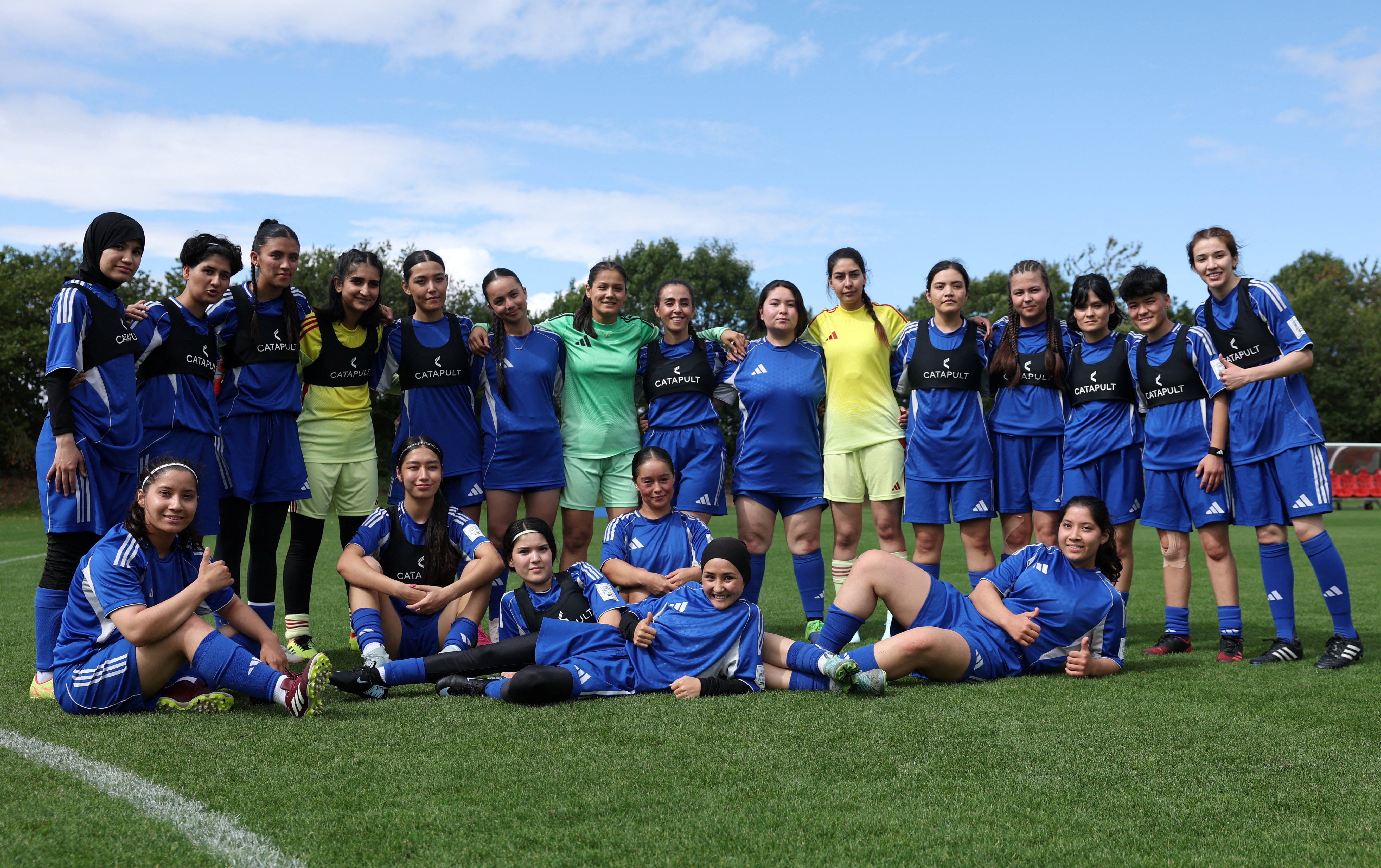
FIFA restores Afghanistan women’s football team

FIFA has approved the return of the Afghanistan women’s football team to international competition under the name “Afghanistan Women United” — composed of players who fled after the Taliban banned women from sports in 2021. The team will be eligible for FIFA tournaments including 2028 LA Olympics qualifying. Former captain Khalida Popal: “A symbol of resilience.” — BBC · Al Jazeera

Musk v. Altman: OpenAI trial begins

The courtroom phase of Elon Musk’s lawsuit against Sam Altman and OpenAI has begun, with Musk accusing Altman of “stealing a charity” as OpenAI transitions from its founding nonprofit structure toward a for-profit model. The case turns on what commitments OpenAI made at its founding and whether the shift undermines them — with potentially major implications for how AI companies are governed. — BBC

South Korea’s ousted President Yoon sentenced to 7 years

A South Korean appeals court sentenced former President Yoon Suk Yeol to seven years in prison for resisting arrest and bypassing a required Cabinet meeting before his brief, failed declaration of martial law in December 2024. The sentencing closes a major chapter in the country’s constitutional crisis. — NPR
Also today

  • Iran’s crypto ecosystem exceeded $7.78bn last year as sanctions evasion surges; US enforcement agencies acknowledge playing catch-up — Al Jazeera
  • Over 50 nations gather in Colombia to plan concrete fossil fuel phase-out — major producer nations absent — NPR
  • Global military spending at record levels, crowding out healthcare and education — Al Jazeera
  • India’s strategic Chabahar port ambitions in Iran described as “sinking” as war disrupts operations — Al Jazeera
  • Farage referred to parliament’s standards watchdog over undisclosed £5m crypto billionaire donation — The Guardian
  • Meta found in breach of EU Digital Services Act for failing to keep under-13s off Facebook and Instagram — The Guardian
  • US Supreme Court hears case on revoking TPS for Haitians and Syrians — could trigger mass deportations — The Guardian · NPR
  • Majority of Swiss back initiative to cap national population at 10 million — Yahoo News
  • Indonesia puts four soldiers on trial for acid attack on environmental activist — Al Jazeera
  • War on the Rocks: US and Canada must align defense industries now, not retrofit cooperation later — War on the Rocks

Afghan Women United players at a selection camp at St. George’s Park, Britain — the team is now recognised as Afghanistan’s national women’s side. Al Jazeera / Reuters
Ukraine

Ukraine strikes Druzhba — the last Russian oil route into the EU

Ukraine hit the Druzhba pipeline, the sole remaining route for Russian oil into the EU via Hungary and Slovakia, aiming to sever Moscow’s last energy revenue stream and political leverage inside the bloc. Zelenskyy confirmed Kyiv will keep extending strike range into Russia. Separately, the New Yorker reports growing Ukrainian alarm that US military support may be quietly shifting toward the Iran theatre. — Al Jazeera · Reuters · New Yorker

Third Tuapse strike forces unprecedented Kremlin acknowledgment

Ukraine struck the Tuapse Oil Refinery overnight for the third time in April, hitting the northern section that survived previous attacks — damaging at least four more oil storage tanks and triggering an oil spill. Krasnodar Krai declared a state of emergency. Putin personally dispatched the emergencies minister. Kremlin spokesman Peskov publicly acknowledged the strike and blamed Ukraine for destabilizing energy markets — an unusually explicit response the Kremlin almost never makes to infrastructure hits. The refinery’s sole processing unit (12M ton/year capacity) was already offline; Ukraine’s April campaign has now damaged at least 28 tanks at Tuapse. — ISW · Kyiv Independent

Deep strikes extend to Perm and Orsk

Following Tuapse, Ukrainian drones hit Russian oil facilities in Perm and Orsk — pushing the petroleum infrastructure campaign significantly further into Russia’s interior. Russia’s Defense Ministry claimed to have intercepted 98 drones. The expansion suggests Ukraine is broadening its target set to maximize pressure across multiple refining centers simultaneously. — Kyiv Independent

Iskander storage and VKS radar struck in Crimea

Ukrainian Special Operations Forces struck an Iskander-M ballistic missile storage site near Ovrazhky, Crimea; a separate strike hit a VKS radar station near Okhotnyche belonging to the 3rd Radio Engineering Regiment. NASA heat anomaly data confirmed fires at the Iskander site. A Russian milblogger publicly questioned whether Russian forces can intercept Ukrainian drones approaching Crimea over the sea and raised doubts about SAM magazine depth — an unusually candid admission of air defense strain as Ukraine’s Crimea strike cadence accelerates. — ISW

Russia deploys mesh-networked drones that bypass GPS jamming

Ukrainian EW expert Serhiy “Flash” Beskrestnov reports Russia is fielding long-range drones with mesh modems that network drones together, allowing pilots to navigate manually and rendering standard GPS jamming ineffective. Effective strike range extends to 220 km, putting Kyiv, Poltava, Dnipro, Odesa, and Mykolaiv within reach. About 40 specialist pilots from the Alabuga Special Economic Zone are operating the system — a meaningful qualitative shift in Russia’s deep-strike drone capability. — ISW

Frontline: Ukrainian gains in Kharkiv and Orikhiv; Pokrovsk infantry thrown in without protection

ISW confirmed Ukrainian advances in the Vovchansk area (Kharkiv) and near Novodanylivka in the Orikhiv direction (Zaporizhia). Russia claims seizure of Zemlyanky northeast of Kharkiv City and Illinivka southwest of Kostyantynivka — the latter assessed as infiltration rather than conventional assault. Near Pokrovsk, Ukrainian commanders report Russian infantry attacking in small groups without anti-thermal cloaks or counter-drone gear, making them easy drone targets — a sign of manpower pressure overriding tactical caution. — ISW

Also today

  • Kim Jong-un publicly commended North Korean soldiers who detonated grenades to kill themselves rather than be captured in Kursk — the first time Kim has directly acknowledged what North Korean troops are doing in Russia — The Guardian
  • Germany arrests Kazakh citizen on espionage charges, alleging “continuous contact” with Russian intelligence — Al Jazeera
  • Russia’s shadow fleet continues transiting UK waters unchallenged despite boarding rhetoric — Jerusalem Post
  • Ukraine formally asks Israel to seize vessel Panormitis carrying Russian-stolen grain — Ukrainska Pravda

Investigations

Brazil leverages Antarctic science as geopolitical tool

Brazil’s PROANTAR program — rebuilt after the 2012 Comandante Ferraz Station fire — functions as science diplomacy rather than pure research. The piece argues Brazil is deliberately converting scientific presence into diplomatic capital within the Antarctic Treaty System, linking climate research to national agricultural interests in rainfall patterns. — Seoul Institute

Global rainforest loss slows after record year

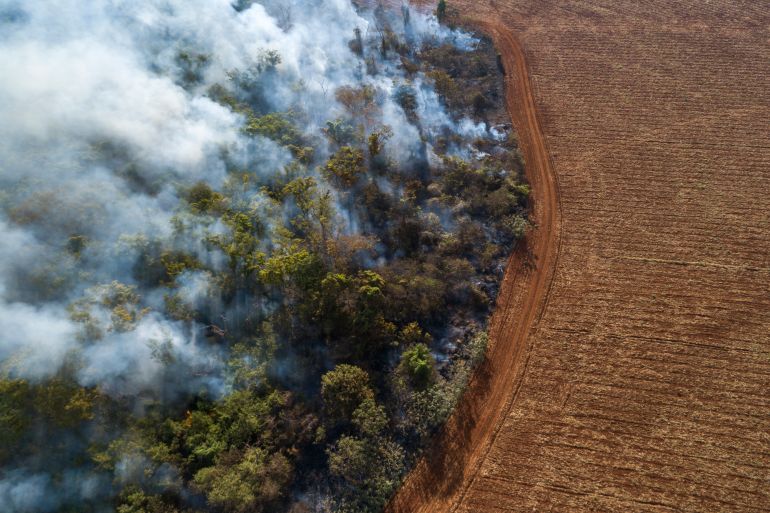
Tropical rainforest destruction slowed measurably in 2025, with researchers crediting Brazilian President Lula’s deforestation enforcement as a primary driver. Scientists warn underlying pressures — agriculture, logging, climate feedback — remain severe. — Al Jazeera

Captured Hezbollah cameras document children armed as fighters

Israeli units operating in southern Lebanon’s Mays al-Jabal recovered Hezbollah cameras containing documentation of children dressed as fighters, weapons caches inside civilian homes, tunnel networks, and surveillance imagery of Israeli communities. The findings are being presented as ground-truth evidence of Hezbollah’s integration of civilian infrastructure into its military posture. — Ynet News

Forest fire in the Amazon, Rondônia — deforestation for soy. André Dib / WWF Brazil

Tech

Ghostty leaves GitHub after documenting daily outages

After 18 years on the platform, HashiCorp co-founder and Ghostty creator Mitchell Hashimoto is migrating his terminal emulator away from GitHub, citing near-daily disruptions documented over a month of logs. During the announcement itself, GitHub Actions went down for two hours. “GitHub is no longer a place for serious work if it just blocks you out for hours per day, every day.” He’s exploring alternatives while keeping a read-only mirror. HN discussion tied this to Microsoft’s post-acquisition pattern of degrading acquired products. — The Register · HN

Separately, a hobbyist developer who contributed adblocker filters and Home Assistant integrations was banned from GitHub without explanation. Support was unresponsive for nearly a month — the account was only reinstated after a blog post went viral. — hellbeast.eu.org · Lobsters

One in every 2,000 public IPv4 addresses hit a single site in AI scraper flood

On April 24, a single site logged 5 million requests from 2.04 million unique IPv4 addresses spanning 202 of 256 /8 blocks. Major cloud ASes (Microsoft, Google, Alibaba, Huawei) were prominently represented. The author visualized the entire IPv4 space on a Z-order curve as a pixel map and released the tool as open source, producing a striking timelapse showing the escalation across April 11–28. — vulpinecitrus.info · Lobsters

RIPE NCC RPKI exploit chain: from XSS to route hijack

Researcher Sasha Romijn disclosed a vulnerability cascade targeting RIPE NCC’s routing infrastructure. Attackers could exploit XSS in RIPE Atlas (injecting via malicious DNS or TLS certificate fields) to compromise the shared SSO, then use missing CSRF protections to invalidate or hijack Route Origin Authorizations — potentially knocking operators across Europe, the Middle East, and Central Asia offline within minutes. The RPKI CSRF was patched quickly; the RIPE Database CSRF took 13 months. As an xkcd-style diagram in the post puts it: “RPKI security in the RIPE region” balanced on “one website, auth by one cookie.” — mxsasha.eu · Lobsters

Stable specialization in Rust via documented iterator semantics

A developer achieved observable trait specialization on stable Rust — without the unstable specialization feature — by exploiting Iterator::fuse(), which the docs guarantee is a no-op for types already implementing FusedIterator. This makes specialization externally observable through guaranteed language semantics rather than implementation accidents. The author warns against production use, but it’s a sharp demonstration of how far stable Rust’s type system can be pushed. — goldstein.lol · Lobsters

Also today

  • Why Scheme over Haskell — a meditation on interactivity, incrementalism, and the feel of building a language to fit your problem — jointhefreeworld.org · Lobsters

IPv4 space timelapse April 11–28 — the AI scraper attack escalating across the address space. Each pixel is a /24 block; red/yellow marks attacking IPs.
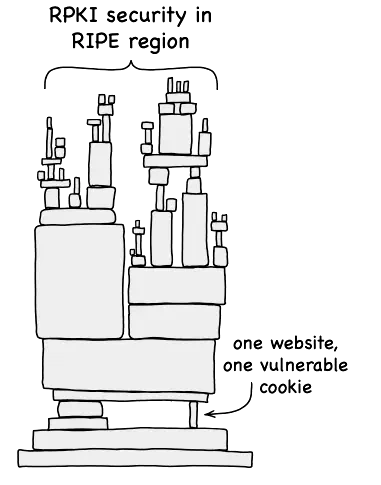
“RPKI security in the RIPE region” — balanced on one website, auth by one cookie. mxsasha.eu

AI & Automation

Anthropic releases official Blender MCP connector

Anthropic launched a Blender MCP connector that lets Claude directly control Blender via the Python API — modifying scenes, debugging node setups, batch-applying changes, and adding custom tools to Blender’s interface. The release comes alongside connectors for Adobe, Splice, and SketchUp, and Anthropic has become an official Blender Development Fund patron. This positions Claude as a copilot inside creative tools rather than a replacement. — r/ClaudeAI · Demo video · r/ClaudeAI

“Be brief” matches Caveman at 34% token reduction

A 24-prompt benchmark across six categories compared baseline Claude, the prompt “Be brief.”, and Caveman at three intensity levels. All five approaches scored within 1.5% on quality. The plain two-word prompt reduced output tokens 34% — matching Caveman lite and full modes — while Caveman ultra was actually longer due to its Auto-Clarity feature expanding output for destructive operations. For raw brevity, two words suffice; Caveman’s real advantage is consistent structure and session-persistent formatting. — maxtaylor.me · r/ClaudeAI

Also today

  • n8n + local Deepseek eliminates 80% of manual work at a real estate firm in a weekend — lead extraction, routing, WhatsApp notifications replacing copy-paste workflows — r/automation
  • Claude Code + Remotion: AI-generated launch animations reach ~80% completion before needing manual polish — r/ClaudeAI

Claude Blender MCP connector demo — scene generation and modification via natural language.

cd ~/repos/ratatosk && claude --resume 7fd5a824-4abe-49a3-9f5e-5716dd050e62