Josse-posten

Iran’s FM flies to Putin as Hormuz talks collapse again; half of Tuapse is ash; Mali’s defense minister is killed in a coordinated assault; and a Bergen pilot study offers a new target for ME/CFS.

Hormuz impasse — Araghchi flies to Putin

Iran proposed reopening the Strait of Hormuz in exchange for delaying nuclear talks. Washington rejected the offer. No second round materialized in Pakistan; Iran’s Foreign Minister flew instead to St. Petersburg to meet Putin. Brent crude rose over 2% on Monday futures. The blockade is tightening — the US Navy intercepted a shadow-fleet tanker in the Arabian Sea — but the Financial Times reports Iranian tankers are finding routes around it, and Kharg Island is approaching storage capacity. (See World.)

Tuapse half-destroyed

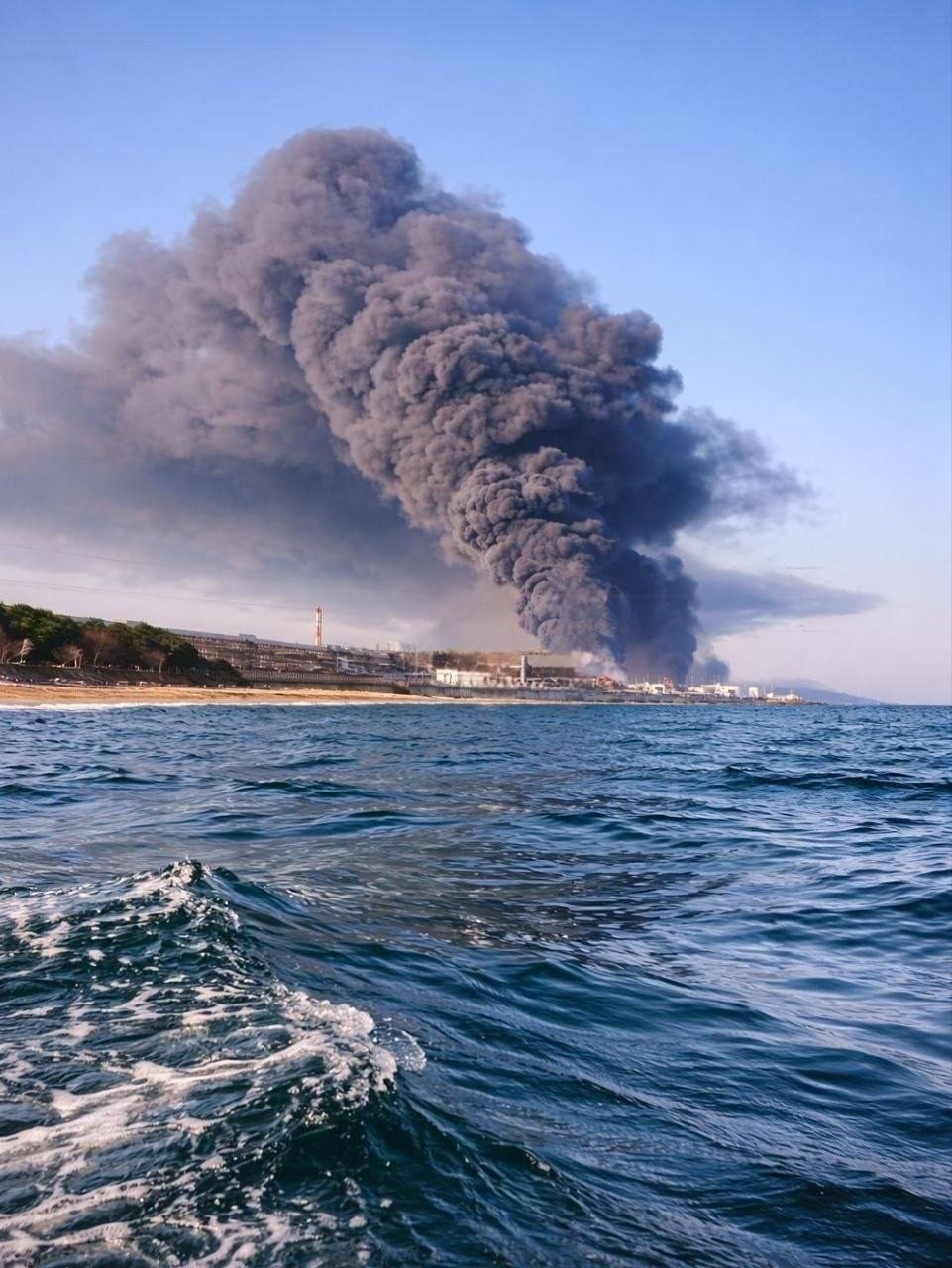
Satellite imagery confirms over 50% of the Tuapse refinery’s fuel storage was destroyed in Ukraine’s drone strike — one of the most damaging single attacks on Russian oil infrastructure. Separately, drones hit a chemical plant in Cherepovets 800 km inside Russia, bursting a high-pressure pipeline and causing acid burns. Russia answered with 94 drones overnight, striking Odesa’s ports and knocking the Zaporizhzhia nuclear plant off external power again. (See Ukraine.)

Mali’s defense minister killed

Defense Minister Sadio Camara was assassinated in a car bomb as JNIM and Tuareg rebels seized towns and bases across Mali in the largest coordinated assault yet. Wagner-successor Africa Corps is negotiating withdrawal from Kidal. The junta’s grip is visibly failing. (See World.)

Markets (Friday close)

Indicator Value Change
S&P 500 +0.77%
Gold +0.51%
Oil −1.72%
EUR/USD 1.0843
USD/NOK 10.82
BTC $77,679 −0.4%
ETH/BTC 0.02987

Oil closed −1.72% Friday but weekend developments — collapsed Hormuz talks, Iran’s rejected offer — point to a gap-up at Monday open. Gold quiet at +0.51% despite a week of simultaneous crises.

Also on the front page

  • Daratumumab pilot: 6/10 ME/CFS patients with sustained improvement — first drug targeting long-lived plasma cells — Frontiers in Medicine (see Health)
  • ASML’s monopoly explained: how modular collaboration and tacit knowledge built an untouchable chokepoint — Works in Progress
  • Claude 4.7 identifies a journalist from 125 words of unpublished text — The Argument

World

Iran impasse deepens — Araghchi to Putin, blockade leaks, EV demand surges

A second round of US-Iran talks failed to materialize in Pakistan after Washington rejected Tehran’s offer to reopen the Strait of Hormuz in exchange for postponing nuclear negotiations. Trump said Iran could “call” if it wants to talk; Araghchi flew instead to Moscow to meet Putin in St. Petersburg, consolidating the Iran-Russia diplomatic axis. Brent crude rose over 2%.

The blockade is tightening but not airtight: the US Navy intercepted a shadow-fleet tanker in the Arabian Sea and Hegseth declared the blockade “going global” with 37 vessels redirected. But the Financial Times reports Iranian tankers are finding routes around, while Kharg Island — Iran’s primary export terminal — is approaching storage capacity, suggesting real economic pressure even as some crude leaks through to Chinese buyers. Meanwhile, rising fuel costs from the conflict are accelerating EV adoption across developing markets from Australia to Vietnam.

Sources: Axios · Reuters — talks collapse · Reuters — tanker interception · Al Jazeera — live blog · Guardian · FT — blockade leaks · Daily Sun — Kharg Island · NPR — China response · Al Jazeera — EVs · Iran International — Araghchi

Mali’s defense minister killed as junta loses control

Defense Minister Sadio Camara was assassinated in a car bomb as JNIM (al-Qaeda’s West African affiliate) and Tuareg separatist rebels launched coordinated assaults on Bamako, its airport, and cities across the country — the largest such attack in Mali’s recent history. Wagner-backed forces reportedly withdrew from at least one northern city; Tuareg rebels separately announced a deal for the Russian Africa Corps to leave Kidal, a significant reversal for Moscow’s Sahel project. The junta and its Russian backers are visibly failing to stabilize the country.

Sources: Guardian · BBC · Al Jazeera — Inside Story · AP · PBS · France 24 — Kidal withdrawal

Correspondents’ Dinner shooter identified — anti-Trump manifesto alleged

Cole Allen, a 31-year-old California teacher, opened fire at a security screening area outside the White House Correspondents’ Dinner on Saturday, targeting Trump administration officials. His alleged manifesto placed administration officials at the top of a hit list; acting AG Todd Blanche confirmed investigators are examining anti-Trump sentiment as the motive. Trump told CBS’s 60 Minutes he “wasn’t worried,” calling Allen “a sick guy.” The incident has reignited debate over political violence and White House security.

Sources: NPR — suspect profile · NPR — eyewitness accounts · Guardian — motive · Guardian — 60 Minutes · Al Jazeera · BBC

Lebanon ceasefire collapses — deadliest strikes since truce began

Hezbollah launched projectiles into Israeli territory in violation of the ceasefire; Netanyahu ordered the IDF to respond. Israeli strikes killed 14 people on Sunday — the deadliest day since the truce took effect. Israel issued forced evacuation orders for villages in southern Lebanon, accusing Hezbollah of undermining the agreement. Satellite imagery documents the massive destruction wrought on South Lebanon towns during the broader conflict.

Sources: Guardian · Al Jazeera — evacuation orders · Al Jazeera — satellite images · Jerusalem Post · SCMP

Israel escalates in Gaza — water workers killed, US-backed authority sidelined

Al Jazeera documented over 2,400 ceasefire violations. Israeli forces killed a water engineer and two water-transport drivers in mid-April, deepening a critical shortage spreading preventable disease. Analysts say Israel is expanding territorial control across the strip and sidelining the new US-backed technocratic administration — a return to what observers call a “state of war.”

Sources: Guardian — water crisis · Al Jazeera — violations · Al Jazeera — analysis

Orbán oligarchs rush billions out of Hungary

Fidesz-connected figures are rapidly moving wealth abroad following Orbán’s electoral defeat, with incoming PM Péter Magyar publicly accusing them of shielding assets from accountability. Separately, Orbán — who vacated his parliamentary seat last week — now faces a party in opposition for the first time in over a decade.

Sources: Guardian · Kyiv Post

Syria opens first trial of Assad-era officials

Ex-security chief Atef Najib — Assad’s cousin, whose crackdown in Daraa in 2011 helped ignite the civil war — appeared before a Damascus court in Syria’s first public trial of former regime figures.

Sources: Al Jazeera · France 24

King Charles visits Trump’s Washington

The king is undertaking a four-day state visit described as potentially the most consequential of his reign — navigating an erratic president, the Epstein shadow, the Harry-and-Meghan dynamic, and Britain’s strategic need to preserve the special relationship.

Sources: Guardian

The site of the highway bombing in Cajibio, Cauca, Colombia — 19 killed ahead of next month’s presidential election. AFP via Al Jazeera.
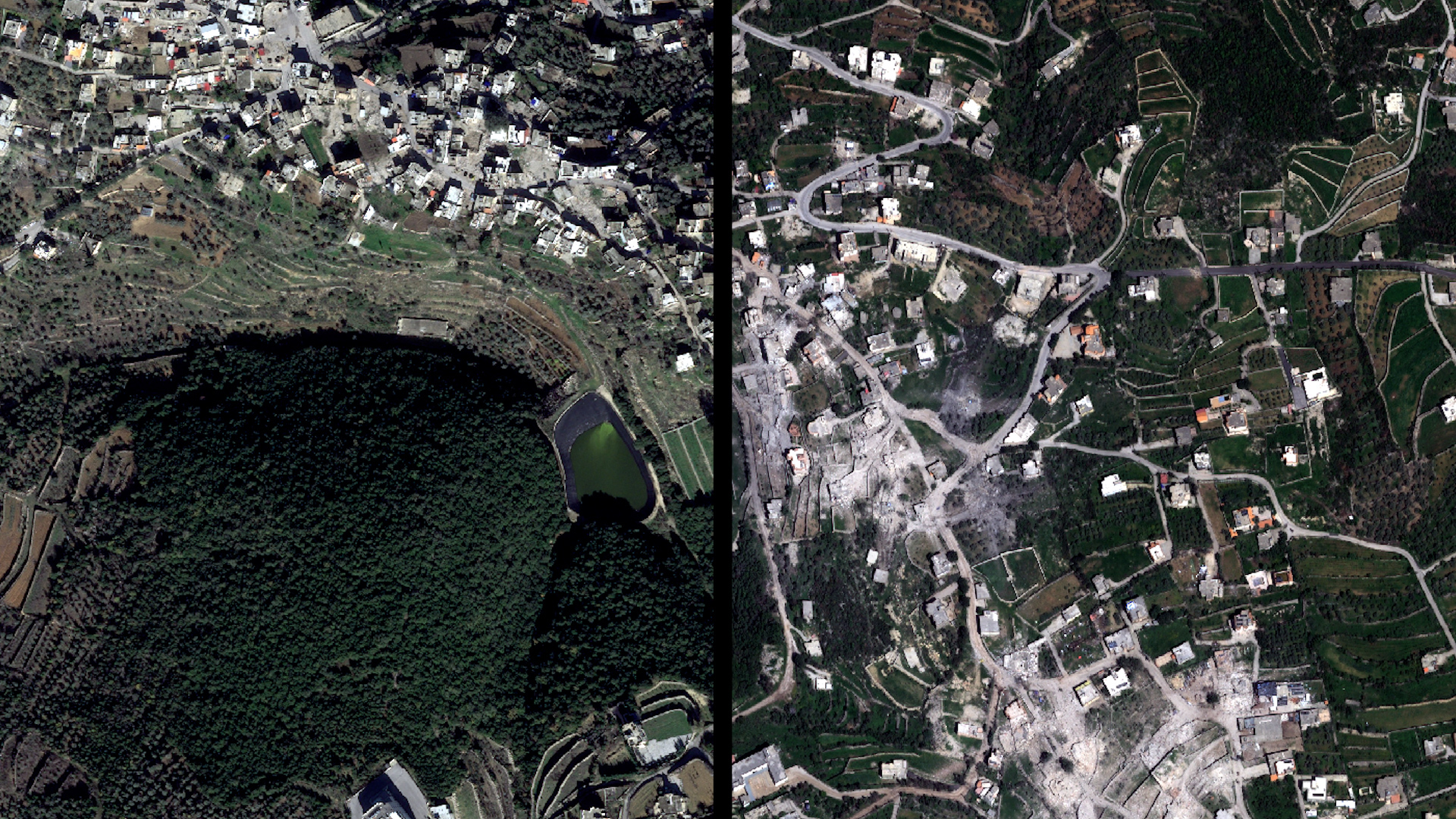
Satellite image showing the destruction of al-Qozah and Beit Lif in south Lebanon. Al Jazeera.
Also today

  • Colombia highway bomb kills 19 ahead of May election — dashcam footage captured the blast — Al Jazeera
  • Two Americans killed among communist rebels in Philippine military clash — CNN
  • Car bomb outside Northern Ireland police station — no fatalities — AP
  • Abbas loyalists sweep Palestinian local elections — Al Jazeera · NPR
  • Bennett and Lapid forge alliance to challenge Netanyahu — Al Jazeera
  • AIDS resurges in Zambia a year after US guts PEPFAR — NYT
  • Somalia piracy threat level raised after wave of vessel seizures — BBC

Ukraine

Tuapse half-destroyed; deep-strike campaign widens to 1,800 km

Satellite imagery confirms over 50% of the Tuapse tank farm’s fuel storage was destroyed — one of the most damaging single attacks on Russian oil infrastructure. Separately, Ukraine confirmed 1,800 km-range drone operations, hitting the Yaroslavl refinery, a Cherepovets chemical plant pipeline (causing acid burns to 5–10 workers), military trains, air defense assets, three ships and a fighter jet in occupied Crimea, and an ammunition depot using MiG-29s with GBU-62 guided bombs. The deep-strike campaign is now reaching into Russia’s industrial heartland on a weekly basis.

Sources: United24 Media — Tuapse satellite · Defence Express — 1,800 km · Ukrinform · Kyiv Independent

Russia’s overnight barrage hits Odesa ports and Chernihiv; ZNPP loses power again

Russia launched 94 drones overnight (74 downed), striking Odesa port infrastructure — damaging an energy facility and a merchant vessel in the maritime corridor — and Chernihiv Oblast’s Koriukivka, cutting power to 4,500 consumers. The Zaporizhzhia Nuclear Power Plant suffered yet another external power blackout, reverting to diesel backup. Reporting tallies 155 Russian attacks on nuclear plant substations since the full-scale invasion.

Sources: Ukrainska Pravda — overview · Ukrainska Pravda — Odesa port · Ukrainska Pravda — Odesa casualties · Ukrainska Pravda — Chernihiv · Ukrainska Pravda — ZNPP

Chornobyl at 40: breach worse than acknowledged, €30M repair deal signed

Investigative reporting on the 40th anniversary reveals the Russian drone strike on the New Safe Confinement left damage worse than publicly acknowledged — the structure is rusting and patched, not properly repaired. Ukraine signed a €30M EBRD agreement for restoration works. Zelenskyy and the IAEA director visited the Chornobyl Museum and called on the world to counter Russia’s nuclear blackmail.

Sources: Frontliner — investigation · Ukrainska Pravda — EBRD · Ukrinform — nuclear blackmail

241 clashes; Pokrovsk and Huliaipole hottest

Ukraine’s General Staff recorded 241 engagements — Pokrovsk front (55 clashes) and Huliaipole (37) remain the most intense sectors. Russia lost 810 soldiers and 26 artillery systems. The commander of the 54th Mechanized Brigade described how the situation near Siversk “became uncontrollable,” offering a rare candid assessment of coordination failures.

Sources: Ukrainska Pravda · r/UkrainianConflict

Black smoke over the Tuapse refinery on the Black Sea coast after the Ukrainian drone strike. United24 Media.
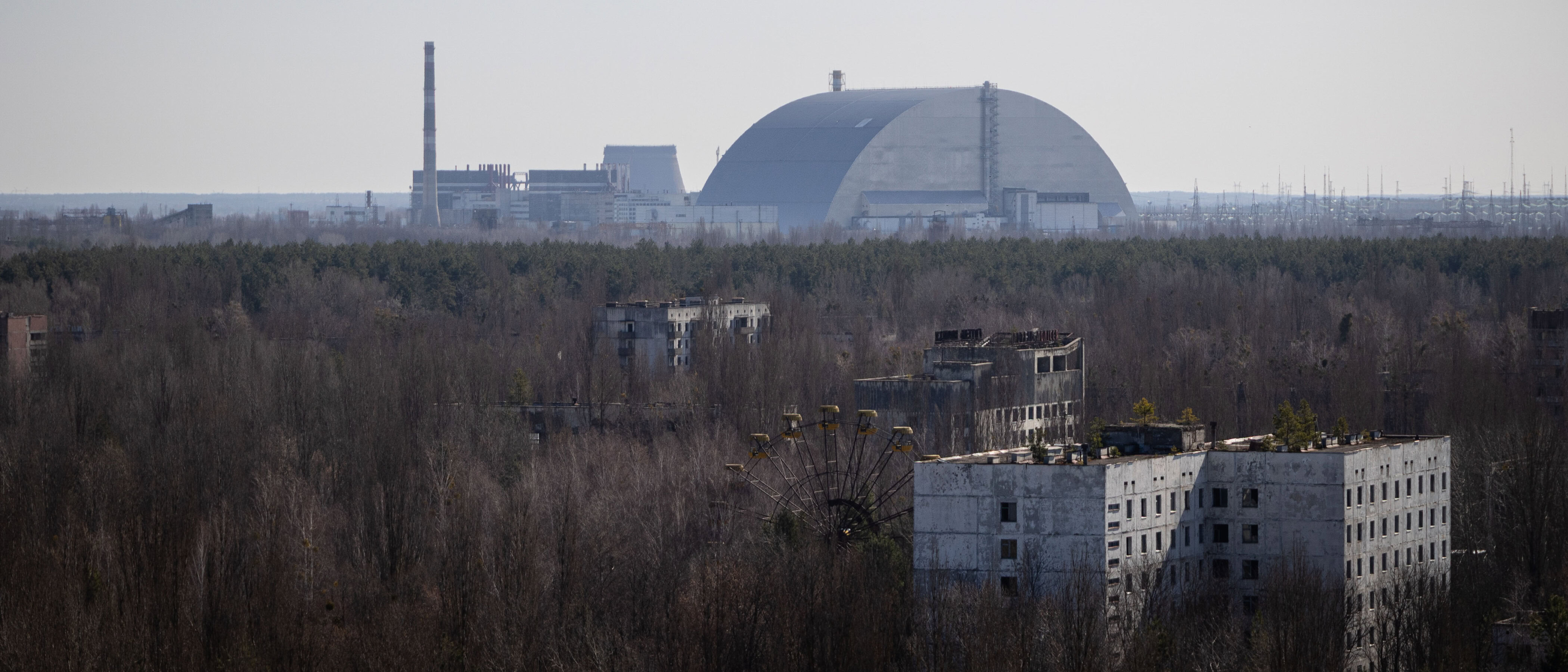
Unit 4 of Chornobyl seen from Prypiat, March 2026. Forty years on, the new confinement is patched, not repaired. Danylo Dubchak/Frontliner.

Also today

  • Iran caused more extensive damage to US bases than publicly acknowledged — NBC News
  • Bellingcat maps 80+ Iranian law enforcement sites destroyed, raises IHL questions about targeting police — Bellingcat
  • Washington Post documents bleakening Russian public mood as war drags on — WaPo
  • Russia smuggling sanctioned defense components via civilian aviation — Militarnyi

Investigations

Israel secretly deployed Iron Dome and troops to UAE during the Iran war

Axios reports Israel quietly sent an Iron Dome battery and military personnel to the UAE during the active conflict — unreported at the time. The deployment suggests the UAE, while publicly neutral, was integrated into Israel’s defensive perimeter against Iranian retaliation, with significant implications for Gulf security alignment in the post-Abraham Accords architecture.

Sources: Axios · Times of Israel

Hegseth tells Estonia its HIMARS missiles are delayed — NATO allies reconsider US procurement

Defense Secretary Hegseth informed Estonia that delivery of contracted Precision Strike Missiles would be delayed because the US expended an estimated 40–70 of its 90 pre-war stockpile during the Iran campaign, with replenishment taking nearly four years. Estonia’s minister warned the delay “will not help our deterrence very much.” The incident has accelerated discussions among British, Canadian, French, and German defense officials about buying weapons from each other rather than relying on the US.

Sources: Slate

SIPRI 2025: global military spending hits $2.887 trillion

Europe posted its sharpest rise since the Cold War’s end (+14% to $864B), led by Germany (+24%) and Spain (+50%). Asia-Oceania grew 8.1%. The US fell 7.5% to $954B, largely due to no new Ukraine military aid approvals. The global burden hit 2.5% of GDP — the highest since 2009.

Sources: SIPRI

US Mint gold traced to Colombian criminal networks

A New York Times investigation found gold sourced for the US Mint passed through supply chains connected to criminal networks in Colombia, implicating US government procurement in illegal mining operations and related violence.

Sources: NYT via Mining.com

The “Ulm Five” — facing trial in Germany for raiding an Elbit Systems facility. Al Jazeera.
Also today

  • Five activists face trial in Germany for raiding Israeli arms maker Elbit — Guardian · Al Jazeera
  • Italy to extradite suspected Chinese hacker to US — Reuters
  • Taiwan court jails ex-Tokyo Electron employee 10 years for TSMC trade secret theft — Al Jazeera
  • Europe regulated itself into American vassalage — The Economist analysis — The Economist
  • Vietnam pivoting toward China driven by US unreliability — Carnegie analysis — Carnegie
  • China expands economic pressure toolkit ahead of Trump-Xi summit — Economic Times
  • Pentagon should adopt commercial-first spectrum model — War on the Rocks

Tech

How ASML built an untouchable monopoly

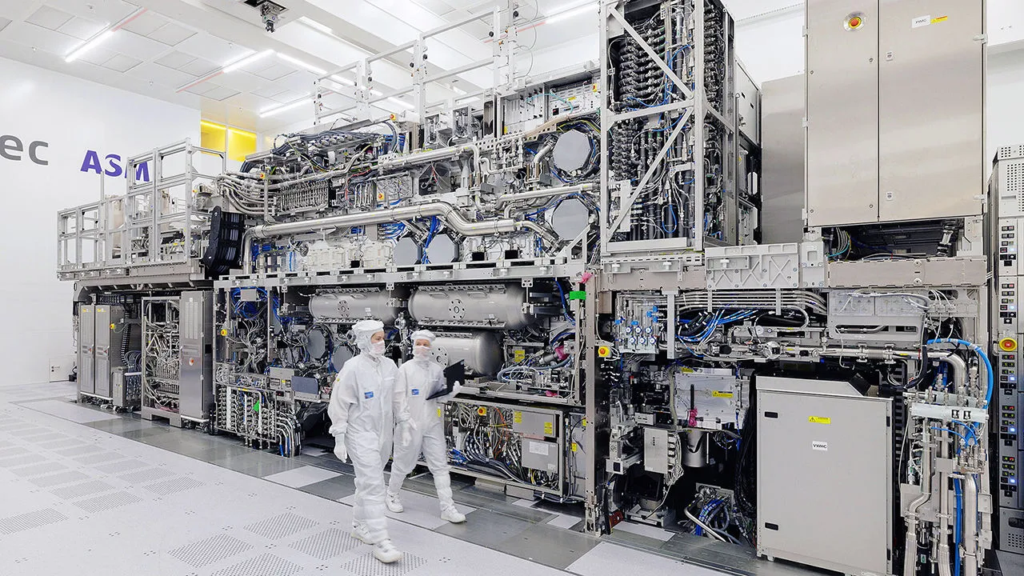
Works in Progress traces how ASML went from struggling startup to the sole manufacturer of EUV lithography machines. Four factors: modular open collaboration (vs. competitors’ vertical integration), public-private partnership with the US Department of Energy, tacit knowledge embedded in machines that can’t be reverse-engineered even with blueprints, and deep customer lock-in via TSMC partnerships. A case study in how infrastructure monopolies form in deep tech — and why ASML is geopolitically irreplaceable.

Sources: Works in Progress · Lobsters

Interaction nets as a hardware architecture

Tendrils is developing a computing model based on interaction nets — a graph-rewriting formalism where computation occurs when two nodes’ principal ports meet, transforming locally with no global state. The hardware insight: this eliminates cache coherency protocols entirely, enables GC-free memory management, and extracts all available parallelism without runtime analysis. They’re building Vine, a Rust-like language targeting the model, with an eye toward bespoke silicon.

Sources: Tendrils · Lobsters

WebAssembly is not actually a stack machine

Despite common framing, Wasm lacks the stack manipulation instructions (dup, swap, rot) that define a true stack machine. The correct model: a register machine with expressions in Reverse Polish notation. Values sit on a virtual stack but can’t be directly manipulated. This explains why Wasm requires explicit local variables for non-trivial operations and why JVM/CPython experience doesn’t transfer cleanly.

Sources: purplesyringa.moe · Lobsters

FAST16: state-sponsored software sabotage five years before Stuxnet

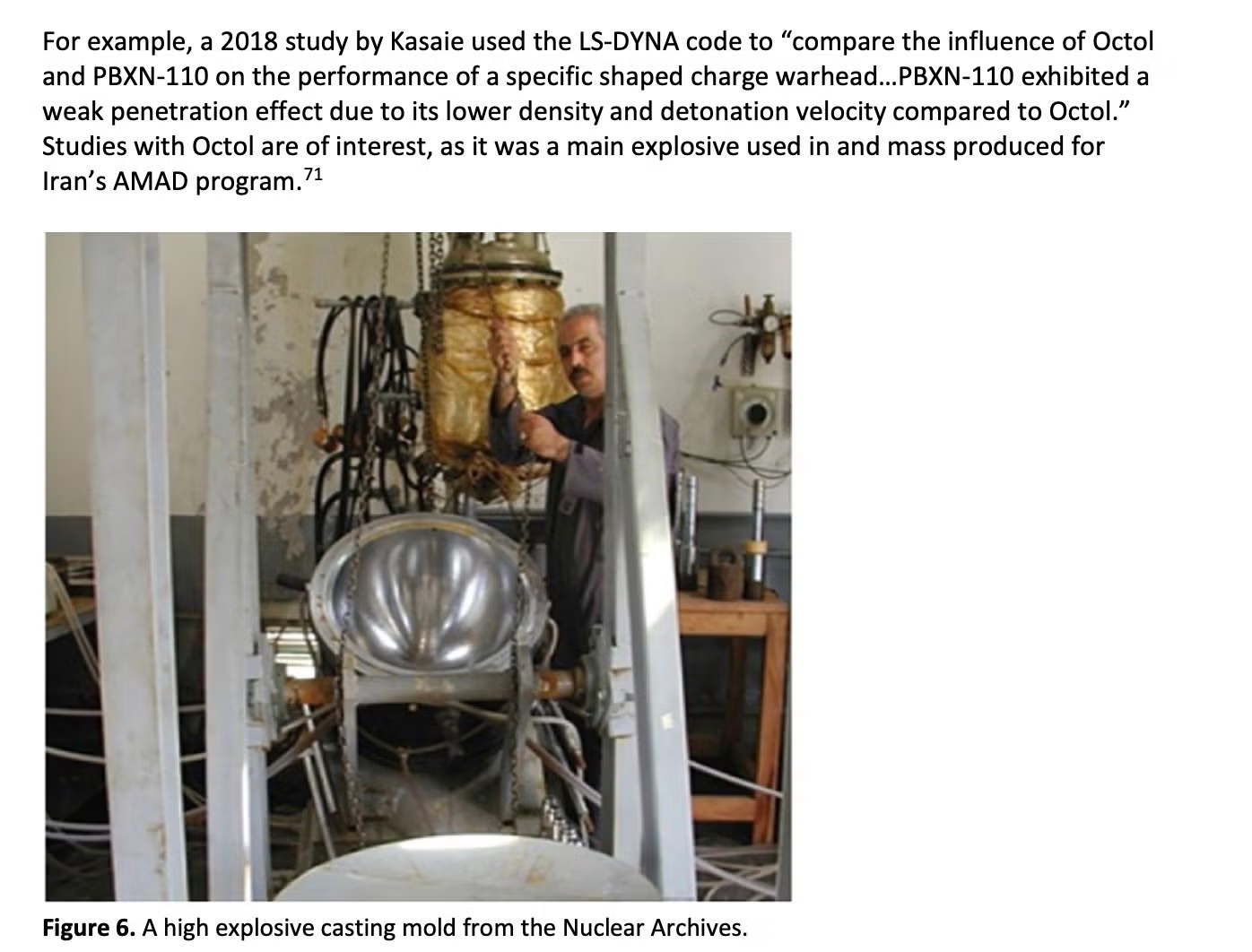
SentinelOne Labs documents a 2005 framework that corrupted high-precision calculations in engineering software — LS-DYNA (weapons research), PKPM (civil engineering), MOHID (hydrodynamics) — by manipulating floating-point arithmetic at the kernel level. The framework used a carrier module, kernel driver, and DLL with an embedded Lua VM. A reference appeared in the 2017 ShadowBrokers leak under the NSA’s “Territorial Dispute” catalog, strongly suggesting US government involvement. One image shows the tool targeting LS-DYNA code used to model explosive payloads for Iran’s AMAD nuclear weapons program.

Sources: SentinelOne Labs · Hacker News

SWE-bench Verified abandoned

OpenAI stopped evaluating against SWE-bench Verified, citing two fundamental problems: 59.4% of test cases reject functionally correct solutions, and frontier models have likely seen the problems during training. Anthropic had claimed 93.9% pass rates on the same benchmark OpenAI now considers broken.

Sources: OpenAI · Hacker News

Claude 4.7 deanonymizes writers from 125 words

Journalist Kelsey Piper discovered that Claude Opus 4.7 can identify her from 125 words of unpublished text — across wildly different registers: a political column, education reports, movie reviews, a fantasy novel excerpt, and a 15-year-old college essay. Tests via incognito mode, the API, and a friend’s laptop ruled out account personalization. ChatGPT and Gemini fail to replicate the capability. The implications: anyone with a substantial public writing corpus can likely be deanonymized within a few exchanges.

Sources: The Argument · Reddit

ASML’s TWINSCAN EXE:5000 — the most advanced EUV lithography scanner. ASML via Works in Progress.
FAST16 targeting LS-DYNA code modeling explosive payloads for Iran’s AMAD nuclear weapons program. SentinelOne Labs.

Also today

  • Chrome ships on-device AI via Prompt API with Gemini Nano — Chrome Developers · HN
  • Post-quantum crypto: use seeds, not raw ML-KEM keys — Filippo Valsorda — words.filippo.io
  • Cloudflare ships enterprise MCP governance: auth, sandboxed workers, two-tool API collapse — Reddit
  • Asahi Linux progress: Linux 7.0 brings True Tone, ProMotion, 20% idle power reduction on Apple Silicon — Asahi Linux
  • Fastest Linux timestamps: vDSO, clock deep-dive, RDTSC benchmarks — hmpcabral.com
  • SSH honeypot: what 54 days of exposed port 22 looks like — Hashnode
  • LLM coding non-determinism — same prompt, different code, different bugs — vrypan.net
  • AI agent deletes production database, provides detailed confession — HN
  • Opus 4.7 deferral regressions and vocabulary drift in Claude Code — Reddit · Reddit
  • Managing context drift in long Claude sessions — Reddit
  • Running parallel Claude Code agents: port conflict solutions — Reddit

AI & Research

A scientific theory of deep learning is emerging

A 14-author ArXiv perspective paper argues that five converging research strands constitute an emerging theory of deep learning: solvable idealized settings, tractable limits, simple mathematical laws for macroscopic observables, theories of hyperparameters, and universal behaviors across systems. The authors propose calling this framework “learning mechanics” — analogous to physics rather than statistics — emphasizing falsifiable quantitative predictions over descriptive accounts.

Sources: ArXiv (2604.21691) · Reddit

Visual-Language-Action models: how robots see, think, and act

A technical breakdown of how modern VLA models (OpenVLA, π0/π0.5, GR00T N1, Helix 02) map vision and language inputs to robot actions. The pipeline: vision encoder (ViT/SigLIP) → multimodal LLM backbone → action head. Three competing action head strategies: action tokenization (discretize into 256 bins), diffusion-based (iterative denoising), and flow matching (velocity fields). Models are pretrained on 1M+ trajectories across embodiments, then fine-tuned per robot.

Sources: Towards Data Science · Reddit

Also today

  • Open-source coding-agent RAG benchmark: +72% document extraction, +80% PDF extraction — GitHub
  • Educational speculative decoding repo: EAGLE-3, Medusa, PARD, N-gram behind one interface — GitHub

Health

Daratumumab pilot: 6/10 ME/CFS patients improve — plasma cell depletion reaches where rituximab cannot

Fluge et al at Haukeland University Hospital (Bergen — the rituximab group) published an open-label pilot in Frontiers in Medicine. Daratumumab, which depletes CD38+ plasma cells — the long-lived antibody factories that produce persistent autoantibodies — showed 6/10 ME/CFS patients responding, 5 with major sustained improvement (SF-36 Physical Function 32→78 in responders, ~88 at end of follow-up). IgG reduced 54% in responders vs. 40% in non-responders. No serious adverse events.

The mechanism directly targets the source of autoantibody production in a way rituximab (B cell depletion) cannot, since long-lived plasma cells don’t express CD20. The critical caveat: low baseline NK cell count was the sole biomarker predictor of non-response. A randomized placebo-controlled trial launched June 2025 at the same center; results are 1–2 years away.

Sources: Frontiers in Medicine · PMC12283730 · Health Rising

Tracking

  • IA-PACS-CFS (Charité, sham-controlled IA) — peer-reviewed results still pending
  • IAMPOCO (Mainz, sham-controlled IA crossover) — analysis ongoing
  • TURN-Long COVID (Amsterdam UMC, AAb-stratified IA) — recruiting
  • REVERSE-LC (baricitinib Phase 3) — cognition data expected Nov 2026
  • ADDRESS-LC (bezisterim) — H1 2026 readout expected, not yet released
  • ANKTIVA INTERRUPT_LC — results expected Jul–Oct 2026
  • Rovunaptabin BLOC Phase IIb — failed primary endpoint; peer-reviewed data pending
  • Stellate ganglion block (UHN Toronto, Phase 4) — launched, not yet recruiting
cd ~/repos/ratatosk && claude --resume ea0d2468-db63-4b04-99b9-73c70fe8fc74