Josse-posten

A leaked Pentagon memo and a French president saying the quiet part loud — Europe is no longer pretending the alliance is intact.

“Medusa-like” — Pentagon options paper threatens Spain’s NATO seat and the Falklands

An internal Pentagon email circulated retaliatory options against allies who declined to join the Iran war: suspending Spain from NATO, reconsidering US support for British sovereignty over the Falklands. NATO replied that no member can be expelled or suspended; Downing Street said the Falklands’ status is non-negotiable. The BBC’s Europe editor called it the resurfacing of a head that was supposed to have been cut off in 2025.

Macron: the US, China and Russia are all “dead against” Europe

EU officials will draw up operational plans for the bloc’s mutual-assistance clause — the most concrete step yet toward European strategic autonomy. Macron told leaders to stop pretending: all three great powers want Europe weak. Poland’s PM noted dryly it was the first EU summit “with no Russians in the room.” France pledged to back Greece against Turkey if it came to it. (See World.)

Russia’s full-year deficit, used up in three months

Ukraine’s foreign intelligence service says Russia’s Q1 deficit hit ₽4.6 trillion — already past the planned ₽3.8 trillion for all of 2026. The Central Bank cut rates a third time, to 14.5%, even as it admits core inflation is rising. Putin’s approval fell for a seventh straight week to 65.6% — pre-war low — and the Kremlin’s political bloc has told state media to suppress the polling. (See Ukraine.)

Day 57 — Witkoff and Kushner fly to Islamabad

Iran’s foreign minister landed in Pakistan on Friday; Trump’s envoys arrive Saturday. Tehran insists there will be no direct talks, only Pakistani mediation. The EU foreign chief warned a deal that excludes nuclear experts will produce “a more dangerous Iran.” Meanwhile the IEA chief says the war has changed the fossil fuel industry “for ever,” and 34 Iranian tankers reportedly slipped past the US blockade carrying $900M of oil.

Epstein, London, and the documents Britain cannot get

The BBC has confirmed Jeffrey Epstein housed abuse victims in London flats — sharpening the question of why UK police repeatedly declined to investigate 2015 trafficking claims. The US has now told British police it will not provide unredacted Epstein records without a long formal request, hampering inquiries into Prince Andrew and Peter Mandelson. The EU’s anti-fraud office has separately opened a formal investigation into Mandelson, currently the UK’s ambassador to Washington.

Sources: BBC: London flats · Guardian: US blocks records · BBC: Mandelson probe

Markets

Indicator Value Change
S&P 500 +0.77%
Gold +0.51%
Oil −1.72%
EUR/USD 1.0843
USD/NOK 10.82
VIX 18.65
BTC $77,534 −0.12%
ETH/BTC 0.02987

Oil down despite Hormuz: 34 Iranian tankers reportedly past the blockade eased the spot fear, even as the IEA calls the disruption permanent.

DOJ closed its probe into Fed Chair Powell — markets read it as reduced political risk and a clear runway for the Warsh nomination.

Before/after satellite imagery of the Atlant-Aero drone factory in Taganrog — confirmed destroyed by Ukrainian Neptune missiles. Exilenova+ via Militarnyi.

Also on the front page - France quietly dropped climate from the G7 agenda to avoid a fight with the US — Reuters - Norway moves to ban under-16s from social media — Reuters - UK passes generational cigarette ban — AP - Netanyahu treated for early-stage prostate cancer — BBC - Google plans $40B into Anthropic — Bloomberg

World

Pentagon options paper: suspend Spain, rethink the Falklands

A leaked internal Pentagon email circulated retaliatory options against allies who declined to join the Iran war — including suspending Spain from NATO and reconsidering US support for British sovereignty over the Falkland Islands. NATO publicly stated it has no provision to expel or suspend members; Downing Street said the Falklands’ status is non-negotiable. European allies pushed back sharply, with the BBC’s Europe editor describing it as the “Medusa-like” resurfacing of transatlantic tensions everyone wanted to believe were past.

Sources: BBC: Spain/NATO · BBC: Europe editor · Guardian: Falklands

EU activates mutual-defence planning; Macron says the quiet part loud

EU officials will draw up operational plans for the bloc’s little-known mutual-assistance clause in the event of a foreign attack — the most concrete step yet toward European strategic autonomy. Macron told European leaders they must recognise that the US, China and Russia are all “dead against” European interests and unity. Poland’s prime minister pointedly noted this was the first EU summit with “no Russians in the room.” Macron separately pledged France will back Greece in any conflict with Turkey.

Sources: Guardian · Politico · Pravda Ukraine · Greek City Times

Iran war, day 57: Witkoff and Kushner head to Islamabad

US envoys Steve Witkoff and Jared Kushner are travelling to Pakistan to meet Iranian Foreign Minister Abbas Araghchi, who arrived in Islamabad on Friday. Iran insists there will be no direct negotiations — only indirect talks mediated through Pakistan. The EU’s foreign chief warned that any deal must include nuclear experts or risk producing “a more dangerous Iran.”

Sources: Guardian · Al Jazeera (day 57) · NPR · The Hill

Hormuz: tankers slip the net, India sends warships

The rival US and Iranian blockades have become a “test of wills.” Indian outlets report 34 Iranian tankers slipped past the US blockade carrying over $900M in oil. The International Chamber of Shipping condemned both sides as violating international law and demanded immediate release of captured vessels and crews. India deployed seven naval ships to escort Indian-flagged vessels out of the Persian Gulf. The US warned Europe and Asia that the “free ride is over” on energy security.

Sources: BBC · Al Jazeera: shipping body · NDTV · Marine Insight

Lebanon ceasefire extended three weeks — and immediately violated

Israel and Lebanon agreed a three-week ceasefire extension; Israeli forces simultaneously killed six Hezbollah fighters near Bint Jbeil. The UN warned Israeli strikes may violate international humanitarian law, while also noting Hezbollah rocket fire breached the laws of war. Analysts read both ceasefires — Iran and Lebanon — as effectively imposed by Washington, not negotiated by Israel.

Sources: Al Jazeera: attacks continue · Al Jazeera: UN warning · NPR Up First

Gaza: 12 Palestinians killed under the “ceasefire”

Israeli air strikes and tank shelling across Gaza killed at least 12 Palestinians, including six police officers. Hamas called the attacks proof the international community has failed to enforce the truce. The strikes came as US envoys prepared for Iran talks in Islamabad — underscoring how Gaza’s ceasefire remains externally imposed and fragile.

Sources: Al Jazeera · Al Jazeera (live)

Iran is hanging dissidents under the cover of war

Testimony from inside Rajai Shahr prison describes accelerated executions of political prisoners since the war began. Babak Alipour — three years on death row, taken to the gallows in March — left letters describing colleagues led to execution. Human rights observers say the war has provided cover for a surge in capital punishment against dissidents.

Sources: Guardian

A “silent war” against scientists

Reports document a pattern of researchers dying or going missing across both the US and China, raising the question whether scientists are being deliberately targeted as the technological and military rivalry between the two powers intensifies.

Sources: Firstpost

Trump expands the federal death penalty; appeals court strikes down asylum ban

A DOJ memo authorised firing squads, electric chairs and gas chambers for federal executions — framed as deterrence. A US appeals court ruled Trump’s blanket asylum ban at the border illegal, finding it overrode federal statutes guaranteeing asylum rights; the administration is expected to appeal. The White House also moved again to end the legal status of people who entered via the Biden-era CBP One app, after a judge had previously blocked the move.

Sources: BBC · NPR: firing squads · Al Jazeera: asylum ban · NPR: ban illegal

Syria arrests the suspected leader of the Tadamon massacre

Amjad Youssef — one of Syria’s most-wanted fugitives and the suspected organiser of the 2013 Tadamon massacre, in which an estimated 288 blindfolded civilians were killed in a Damascus suburb — has been arrested by Syrian authorities. The massacre, first revealed by the Guardian, became a symbol of Assad-era atrocity. Separately, a Kosovo court sentenced three Serbian separatists to life and 30 years for the 2023 Banjska monastery attack.

Sources: Guardian · BBC · Al Jazeera: Banjska sentencing

IEA: the oil shock has changed the industry “for ever”

IEA chief Fatih Birol said the disruption from the Iran war has permanently transformed the global fossil fuel industry — supply chains, pricing, transition pace. The shock is rippling through the Global South: Cairo cafés ordered shut at 9pm, Vietnamese rice farming hit by fuel costs, jobs evaporating across developing economies. In parallel, a “coalition of the willing” led by Colombia and the Netherlands launched the world’s first Transitioning Away from Fossil Fuels conference in Santa Marta — explicitly designed to bypass petrostate blocking at COP summits.

Sources: Guardian: IEA chief · NPR: Global South · Guardian: Colombia conference

DOJ drops Powell probe; Peru police raid election authorities

The Justice Department closed its inquiry into Jerome Powell over alleged improper cost overruns at the Federal Reserve building — charges Trump had used to pressure the central bank chief. The move clears the political path for the Senate to confirm Kevin Warsh, Trump’s chosen successor. In Peru, anticorruption police raided the homes of former electoral office head Piero Corvetto and other officials after public outrage over an unusually slow presidential vote count.

Sources: BBC: Powell · NPR: Powell inquiry dropped · Al Jazeera: Peru raid

Iranian Foreign Minister Abbas Araghchi with Pakistan’s FM Mohammad Ishaq Dar and Field Marshal Asim Munir in Islamabad, ahead of indirect US talks. Reuters.

Also today - France dropped climate from the G7 agenda to avoid clashing with Washington — Reuters - Norway plans to ban social media for under-16s — Reuters - UK passes a generational cigarette ban — AP - Netanyahu treated for early-stage prostate cancer — BBC - Trump offers Canadian steel and aluminium firms tariff exemptions to relocate to the US — CBC - Somalia piracy resurgence: oil tanker seized with 17 crew off the Somali coast — BBC

Women mourn during the funeral of Palestinians killed in an Israeli strike in Gaza City, April 23. Dawoud Abu Alkas/Reuters.

Ukraine

Russia’s Q1 deficit already past the full-year target

Russia’s federal deficit reached ₽4.6 trillion in Q1 2026 — already above the ₽3.8 trillion planned for the entire year, per Ukraine’s foreign intelligence service. The Central Bank cut its key rate a third time in 2026, to 14.5%, while acknowledging core inflation is rising and risks have “significantly” increased. Putin’s approval rating fell for the seventh consecutive week to 65.6% — its lowest since before the full-scale invasion — with nearly a quarter of Russians now saying they distrust him. The Kremlin’s political bloc has reportedly told state media to suppress or redirect to friendlier polling.

Sources: Reuters · ISW April 24

US ends Russian-oil sanctions exemptions; Zelenskyy in Cyprus and Jeddah

Treasury Secretary Bessent said the US will not renew sanctions exemptions that had allowed at-sea purchases of Russian and Iranian oil — tightening the energy embargo. Zelenskyy wrapped meetings in Cyprus and Jeddah, securing new allied contributions to Ukraine’s PURL arms-purchase programme and discussing energy cooperation with Crown Prince Mohammed bin Salman. The EU confirmed Ukraine will receive the first €6 billion military tranche of its €90 billion loan by June, paid out across three tranches in 2026.

Sources: Pravda: sanctions exemptions · Pravda: Saudi Arabia · Pravda: Cyprus PURL · Pravda: military tranche · DW

Hungary changed position, allowing the EU to finalise a $106 billion loan package for Ukraine. Simultaneously the EU forged ahead with formal membership accession talks for both Ukraine and Moldova after Viktor Orbán walked out of the summit. The twin moves significantly weaken Hungary’s blocking leverage inside the bloc.

Sources: Global News · Politico

Neptune missiles destroyed the Atlant-Aero drone factory in Taganrog

Ukraine’s April 19 Neptune cruise missile strike on the Atlant-Aero defence enterprise in Taganrog destroyed at least two production halls and damaged four more — confirmed by satellite imagery. Ukrainian SOF also struck a Russian S-300V launcher in Belgorod Oblast and continued mid-range drone strikes against rear logistics, ammunition depots and repair bases across occupied Donetsk and Zaporizhzhia. Commander-in-Chief Syrskyi said cumulative Ukrainian strikes have inflicted $25.5B in losses on Russia’s war machine.

Sources: Militarnyi: workshop destroyed · Kyiv Post · Gwaramedia: S-300V · Euromaidan: $25.5B · Kyiv Independent

666 aerial assets overnight; Dnipro the worst hit

Russia struck Dnipropetrovsk, Kharkiv, Sumy, Odesa and other oblasts with 666 missiles and drones overnight — among the largest single-night attacks in months. Ukrainian air defence intercepted 610. Dnipro suffered worst: at least two killed, 21 injured, residential buildings collapsed with people still trapped under rubble. A combined strike on Kharkiv damaged a residential block and a gas pipeline.

Sources: Pravda: 666 assets · Pravda: Dnipro · Pravda: Kharkiv

Russia restarts Sumy offensive; Kostyantynivka likened to Pokrovsk

Russian forces have relaunched ground assaults south-east of Sumy City toward Novodmytrivka and Taratutyne after a roughly two-month operational pause, with milbloggers claiming initial advances into Taratutyne. In Donetsk, Russian milbloggers now compare Kostyantynivka to Pokrovsk — dense urban combat, glide-bomb softening, then infantry assaults — while Ukrainian forces counteradvanced east of Kostyantynivka and in western Rodynske north of Pokrovsk. Ukraine’s General Staff dismissed a brigade commander and demoted the 10th Army Corps commander over logistics failures around Kupyansk, where Russian strikes on Oskil River crossings are causing supply shortages.

Sources: ISW April 24 · Pravda: Russian losses

Chornobyl, 40 years on, still at risk

A Guardian investigation marks the 40th anniversary of the Chornobyl disaster by documenting continued vulnerability: in February 2025 a cheap Russian drone tore through the site’s confinement shelter, and workers warn monitoring systems are degraded and safety cannot be guaranteed while the war continues. The site remains one of the most radioactively contaminated places on Earth — and a live strategic risk.

Sources: Guardian

Damaged residential building in Dnipro after the overnight Russian attack. Prosecutor General’s Office.

Commander-in-Chief Oleksandr Syrskyi, April 24. Syrskyi/Telegram.
“Putin’s approval rating fell for the seventh consecutive week — its lowest since before the full-scale invasion.”

Reuters, citing state pollster VTsIOM

Tech & AI

OpenAI failed to alert police before a fatal Canadian shooting

Sam Altman issued a public apology after it emerged OpenAI had suspended the ChatGPT account of a man who later carried out a mass shooting in Canada — but concluded at the time his behaviour didn’t meet the threshold for a law-enforcement referral. The case raises sharp questions about AI companies’ obligations to proactively report credible threats to authorities, and about what their internal escalation processes actually look like.

Sources: Guardian · Al Jazeera

Google plans $40B into Anthropic

Google is reportedly planning to invest up to $40 billion in Anthropic — dwarfing earlier rounds and solidifying Google’s position as a dominant Anthropic backer alongside Amazon, which expanded its own commitment to $25B earlier this week. This would be one of the largest single AI investments ever made, and further concentrates the frontier AI landscape around a handful of hyperscaler-backed labs.

Sources: Bloomberg · Hacker News

Toward a scientific theory of deep learning

An arxiv preprint argues that a proper scientific theory of deep learning — explaining why neural networks generalise, not just that they do — is achievable, and outlines what it would require. The paper distinguishes engineering intuitions from scientific understanding and proposes the phenomena any adequate theory must account for.

Sources: arxiv · HN

“Quantum” crypto-break replicated with /dev/urandom

A GitHub project demonstrates that a recent paper claiming to break elliptic-curve cryptography using quantum computing can be fully reproduced using classical random number generation from /dev/urandom — no quantum hardware required. The finding suggests the original paper’s results were an artifact of how classical verification of random guesses was interpreted, not a genuine quantum advantage. A sharp deflation of a widely circulated quantum security claim.

Sources: GitHub: quantumslop · HN

Cloudflare Email Service: a deliverability bet dressed as agents

An analysis argues Cloudflare’s new email service is primarily a strategic move to build IP reputation and deliverability infrastructure at scale, framed as an AI-agents feature for marketing appeal. The real bet is that Cloudflare can become a trusted email sender by aggregating volume across thousands of customers — the agents angle is the wrapper.

Sources: lord.technology · Lobsters

Sloppy copies: AI tools enable drive-by cloning of web apps

A developer documents how his web application was cloned multiple times within days of a viral Hacker News post, with AI tools reducing the effort to near-zero. The piece explores how this collapses barriers to competitive copying, and what it means for indie developers and the economics of novel web products.

Sources: markround.com · Lobsters

Overthinking and scope creep as subtle project sabotage

Kevin Lynagh on how overthinking, scope creep and excessive structural analysis are subtle ways developers sabotage their own projects — the tendency to keep refining rather than shipping, or to diff architectures rather than build one. A useful diagnosis of a common failure mode in solo and small-team software work.

Sources: Kevin Lynagh’s newsletter · HN

Plasma 6.6 gets adaptive automatic brightness on Wayland

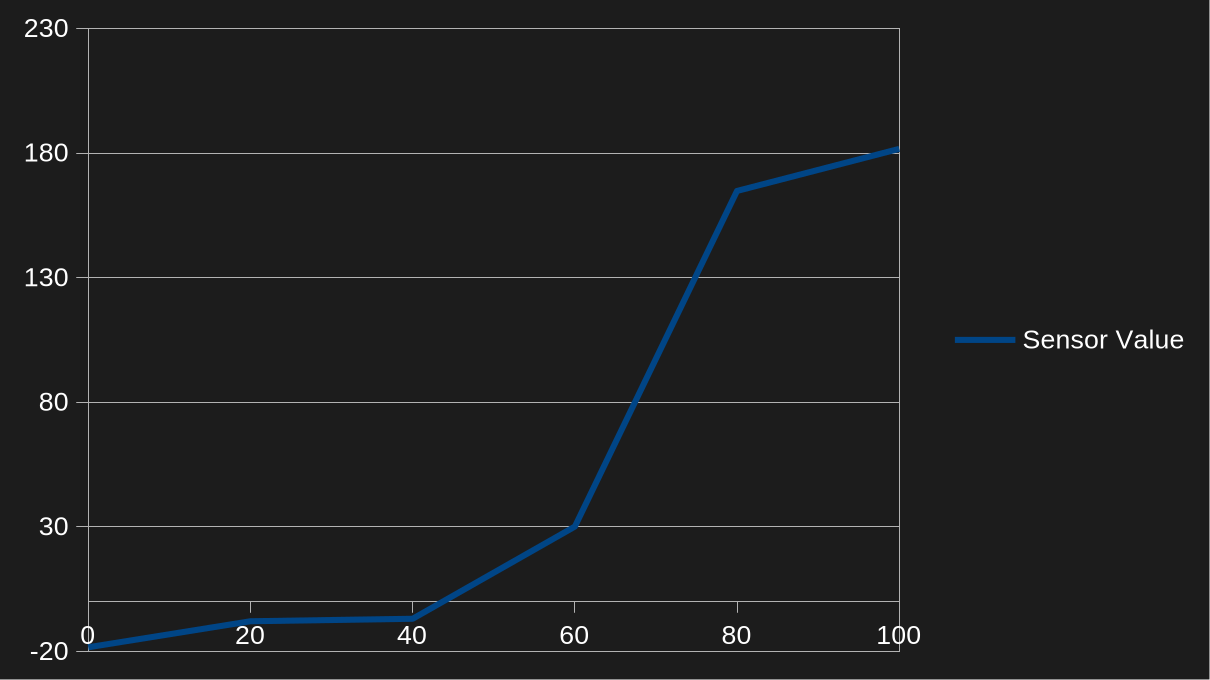
KDE Plasma 6.6 introduces automatic brightness control on Wayland using a curve-based learning system that stores brightness preferences per ambient light level and adapts to user adjustments over time. The implementation uses hysteresis and a short delay to prevent flickering. Currently only practically usable on devices with ambient light sensors — mainly the Framework Laptop 13 — but the infrastructure is in place for broader hardware support.

Sources: zamundaaa’s blog · Lobsters

Firefox ships Brave’s adblock engine

Firefox has integrated a content-blocking engine originally developed by Brave — compatible with uBlock Origin filter lists — significantly improving its built-in ad blocking performance. This brings Firefox’s native blocking capabilities much closer to what dedicated extensions offer.

Sources: It’s FOSS · HN

Turbo Vision 2.0: Borland’s classic TUI framework, modernised

A modern C++ port of Borland’s Turbo Vision text-UI framework adds Unicode, 256-color support, and cross-platform compatibility (Linux, macOS, Windows). The original was the gold standard for DOS-era terminal UIs; this port makes it a viable option for building rich terminal applications today.

Sources: GitHub: tvision · HN

Gleam 1.16.0 adds JavaScript source maps

Gleam, the statically-typed functional language targeting Erlang and JavaScript runtimes, releases 1.16.0 with JavaScript source map support. Debugging Gleam code in browser devtools and Node.js now shows Gleam source rather than generated JS — a significant DX improvement for JS-target users.

Sources: Gleam blog · Lobsters

Mine: an IDE for Coalton and Common Lisp

The Coalton project — a statically-typed functional language with Haskell-style type inference and ADTs that compiles to Common Lisp — announces Mine, a dedicated IDE. Coalton brings ML-style type systems to the Lisp ecosystem; Mine aims to provide the tooling (LSP, structural editing, REPL integration) to make that practical.

Sources: Coalton blog · Lobsters

The interpolation curve Plasma 6.6 builds from user adjustments per ambient-light reading. zamundaaa.
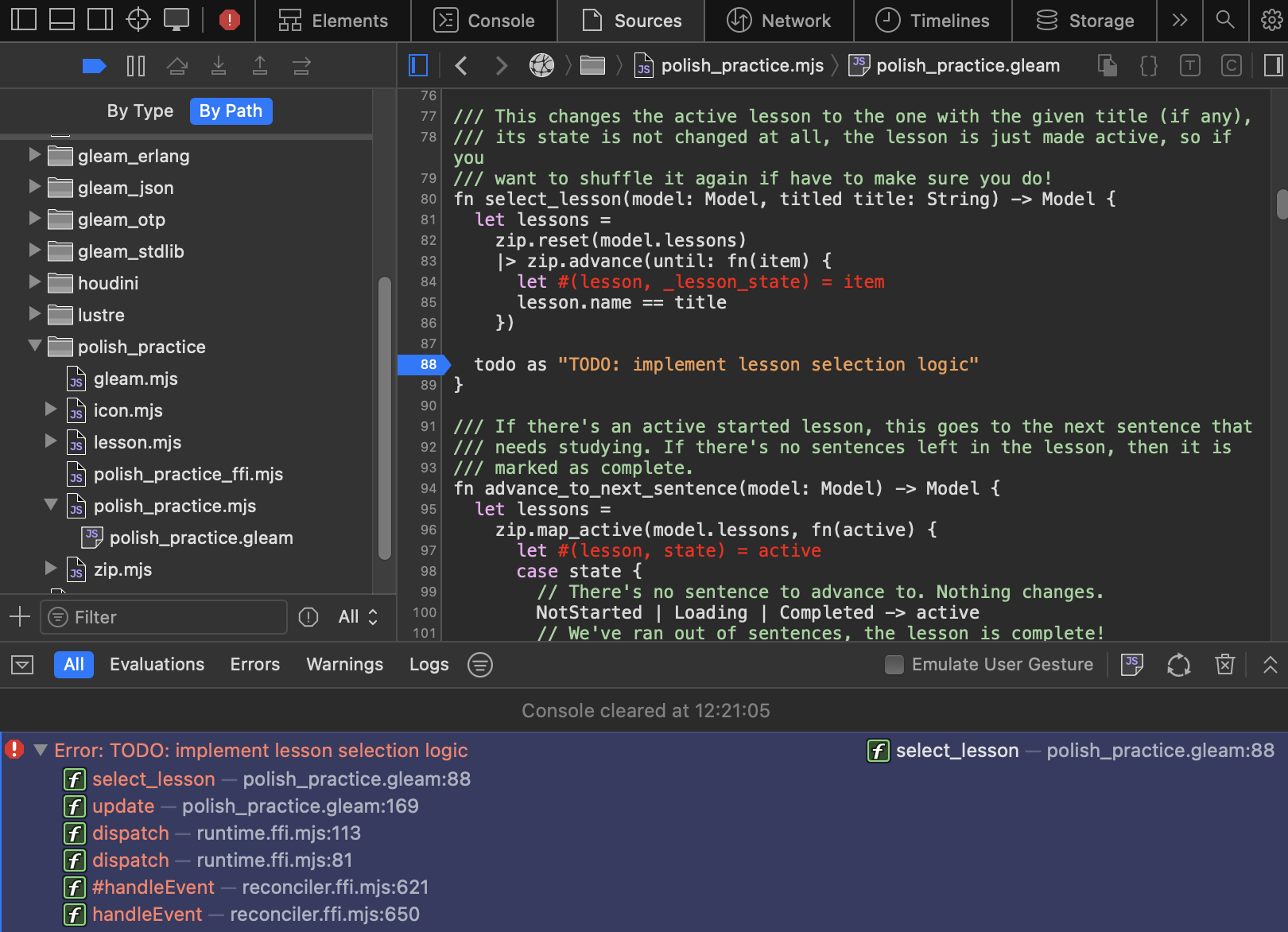
Gleam source visible in Safari devtools — what JavaScript source maps unlock. gleam.run.

Hardware corner - The RODE RODECaster Duo audio interface ships with SSH enabled by default — surprising attack surface on a prosumer audio device. hhh.hn · HN - A new generation of 10 GbE USB adapters: smaller, cooler, cheaper — useful when a PCIe slot isn’t available. Jeff Geerling · HN

“The disruption from the Iran war has changed the fossil fuel industry for ever.”

Fatih Birol, IEA

cd ~/repos/ratatosk && claude --resume e09c2ba0-b49b-4b98-8113-59fc288c2834