Josse-posten

A ceasefire that lasts hours, a pipeline that turns into a €90bn key, and a CIA car crash that puts a sovereignty case on Sheinbaum’s desk.

The Iran Ceasefire Holds For Hours, Not Days

Trump extended the US–Iran ceasefire indefinitely on Pakistan’s request — then walked it back, then re-extended it, all in one Truth Social cycle. Within hours of the announcement, Iran attacked a container ship near Hormuz. The blockade stays in place; oil jumped 5.7%; spills from earlier tanker incidents are now visible from satellite. Foreign Affairs reframes the standoff as an expectations game — what each side believes about the other’s resolve will decide more than any battlefield fact. Former diplomats interviewed by Fortune call the diplomacy “tethered to a galaxy far, far away.”

Druzhba Repaired, €90bn Unlocked

Zelensky announced the Druzhba pipeline can resume transit Wednesday afternoon — and explicitly tied the restart to the EU’s €90bn Ukraine loan, which Hungary and Slovakia had blocked pending oil flows. Both capitals confirmed they’ll now back both the loan and the 20th sanctions package. Hungary’s new government has changed the entire EU calculus in a week: the same PM who unblocked the loan has pledged to arrest Netanyahu if he visits, and the European Court of Justice just ruled Hungary’s anti-LGBTQ laws breach the EU’s founding values. The Telegraph reports Kyiv plans to spend the windfall on Patriots and Storm Shadows.

“We Were Not Informed”

Two CIA officers died in a car crash in Chihuahua returning from a joint US-Mexican operation to destroy a drug lab — except the Mexican side says it was never told. President Sheinbaum demanded an explanation and opened a constitutional investigation into whether the US violated Mexican sovereignty. The first sentence from her morning press conference is the headline: “We were not informed.”

Skills Beat Tiers

Tessl ran 880 evaluations across eight models and eleven domain skills. Headline result: Haiku 4.5 with a skill (84.3%) beats baseline Opus 4.7 (80.5%) — and at a fraction of the cost. Domain-specific knowledge in skills delivered +36 percentage points, more than any model upgrade. Separately, UpGPT’s 52 controlled Claude Code benchmarks found that a single CONTRACT.md spec file cuts costs 65% and time 68% while pushing quality from 5/10 to 9/10; multi-agent teams cost 73–124% more than sequential runs with no quality gain. The economics of agentic coding are tipping toward specifications and skills, not bigger models.

Also On The Front Page

  • Hacked Russian ministry call: officials acknowledge China supplies ~90% of the electronics in Russian drones — direct sourcing finally pinned down.
  • Gerasimov’s accounting: Spring–Summer offensive net advance is ~321 sq km; he claimed 1,700 and “all of Luhansk.” ISW maps the gap.
  • SpaceX–Cursor: option to acquire the AI editor for $60bn, or partner at $10bn.
  • DOJ vs SPLC: 11-count federal fraud indictment against the Southern Poverty Law Center over informant payments to infiltrate KKK and extremist groups.

Markets

Indicator Value Change
S&P 500 −0.65%
Gold −2.83%
Oil +5.71%
EUR/USD 1.0843
USD/NOK 10.82
VIX 20.82
BTC $77,874 +2.33%
ETH/BTC 0.03066

Oil up 5.7% as the Hormuz blockade tightens and EU jet-fuel contingency planning begins. Gold off as Trump’s indefinite ceasefire extension unwound last week’s safe-haven bid.

Mexico’s President Claudia Sheinbaum at her morning press conference in Mexico City, April 21, demanding answers about the unauthorized US drug-lab operation in Chihuahua. [AFP]

“Tethered to a galaxy far, far away.”

— Former diplomats on the Trump administration’s Iran ceasefire timeline, Fortune

World

Macron tells Israel to drop “territorial ambitions” in Lebanon

French President Emmanuel Macron publicly called on Israel to abandon its territorial ambitions in Lebanon, as Israeli forces remain in parts of the south past the ceasefire withdrawal deadline. The IDF imposed 30-day detention and combat-duty removal on two soldiers who vandalised a Jesus statue in Lebanon — an episode the military called a “moral failure.”

Sources: Bloomberg · BBC · Ynetnews

CIA agents killed in Mexico — Sheinbaum opens sovereignty investigation

Two CIA officers were killed in a car crash in Chihuahua state returning from a joint US-Mexican operation to destroy a drug lab. President Sheinbaum, declaring “we were not informed,” opened a constitutional investigation into whether the US violated Mexican sovereignty by acting without authorisation. The case sits awkwardly with the Trump administration’s broader push for unilateral counter-narcotics latitude in Latin America. (Lead in Front Page.)

Sources: The Guardian · Washington Post · CBS · Politico · Al Jazeera

EU split on Israel: trade suspension blocked, death penalty law could end Council of Europe status

EU foreign ministers rejected an Irish/Spanish/Slovenian proposal to suspend the EU–Israel association agreement; Germany and Italy led the opposition. In parallel, the Council of Europe’s parliamentary assembly president warned that Israel’s new mandatory death penalty law for Palestinians convicted of certain offences could cost Israel its observer status — capital punishment is effectively disqualifying.

Sources: The Guardian (suspension) · The Guardian (death penalty) · Al Jazeera

Hungary’s new PM: arrest warrant for Netanyahu will be enforced

Hungary’s new prime minister — who unseated Orbán last week — has declared he will enforce the ICC arrest warrant against Netanyahu if he sets foot in Hungary. A complete reversal of Orbán’s defiantly pro-Israel position, and the first real test of whether the ICC warrant will start to constrain Israeli leadership travel within allied capitals. (Also covered in Ukraine — same government just unblocked the €90bn loan.)

Sources: The Telegraph

EU’s top court rules Hungary’s anti-LGBTQ laws breach founding values

In an unprecedented ruling, the European Court of Justice found that Hungary’s sweeping anti-LGBTQ legislation — restricting media content and education on sexual orientation — breaches the EU treaty’s founding values on multiple counts. The judgment opens the door to financial penalties and sets a precedent for holding member states accountable for domestic laws that conflict with EU values.

Source: BBC

UK enacts generational smoking ban

The UK parliament has passed a law permanently banning the sale of tobacco to anyone born after 2008 — rolling the legal purchase age forward indefinitely to create a “smoke-free generation.” First proposed under Sunak, carried over by Labour. One of the most ambitious tobacco-control measures globally; legal challenge from industry expected.

Sources: BBC · People

Trump admin in talks to send 1,100 Afghan allies to DRC instead of US resettlement

The Trump administration is reportedly negotiating to send up to 1,100 Afghans who assisted US forces during the Afghanistan war to the Democratic Republic of Congo — after cancelling their pathway to US resettlement. A separate report follows Colombians already deported by the US to Congo, describing people who “never thought they would get to know Africa under these circumstances.”

Sources: The Guardian · NYT · El País

El Salvador opens mass trial of 486 alleged MS-13 members

A Salvadoran court opened a collective trial of 486 alleged MS-13 gang members on Tuesday — one of the largest mass prosecutions under Bukele’s security crackdown. Defendants participated by video link from prison. Human rights groups have warned the collective format violates due process; objections have gained little traction domestically given the policy’s broad popularity.

Sources: The Guardian · BBC

DOJ indicts Southern Poverty Law Center on federal fraud charges

The Trump Justice Department has filed an 11-count federal fraud indictment against the Southern Poverty Law Center, alleging the SPLC improperly raised millions to pay informants who infiltrated the KKK and other extremist groups. SPLC has long been a target for conservative activists; critics call the indictment politically motivated and warn it will chill civil-rights monitoring.

Sources: The Guardian · Al Jazeera · NPR

Taiwan president’s Africa trip cancelled after Beijing pressures overflight permissions

Taiwan President Lai Ching-te was forced to cancel a visit to Eswatini — Taiwan’s only African diplomatic ally — after Seychelles, Mauritius, and Madagascar revoked overflight permissions under apparent Chinese pressure. Lai blamed Beijing directly, calling it an attack on Taiwan’s ability to maintain any diplomatic relationships.

Sources: The Guardian · WRAL

Virginia redistricting could flip four US House seats

Virginia voters approved new congressional maps Tuesday giving Democrats a strong shot at four extra US House seats in November’s midterms — a tit-for-tat answer to Republican-led redistricting in Texas, and a meaningful setback for Trump’s effort to hold the House through map manipulation.

Sources: The Guardian · BBC · NPR

India: millions stripped of votes before West Bengal poll, minorities hit hardest

Millions in West Bengal have been removed from electoral rolls ahead of state elections this week following a government “purification” drive. Experts and opposition parties say Muslims and other minorities have been disproportionately deleted. The deletions land in a fiercely contested election where Modi’s BJP is trying to unseat the ruling Trinamool Congress.

Source: The Guardian

Also today

  • Climate disrupted 23 elections in 18 countries in 2024 — heatwaves, floods, wildfires delaying voting and shifting outcomes. The climate crisis as a structural threat to democratic participation. — The Guardian
  • ~8,000 deaths or disappearances on migration routes in 2025 — IOM count. More than 4 in 10 on sea routes to Europe. — Al Jazeera
  • SpaceX option to acquire Cursor for $60bn — or partner at $10bn. Among the largest AI acquisitions ever floated. — The Guardian

“We were not informed.”

— Mexican President Claudia Sheinbaum, on the US drug-lab operation in Chihuahua

Ukraine

Druzhba pipeline restart unlocks €90bn EU loan; security guarantees advance

Zelensky announced the Druzhba pipeline is repaired and ready to resume transit Wednesday afternoon, explicitly linking the restart to the EU’s €90bn loan package — which Hungary and Slovakia had conditioned on resumed oil flows. Both confirmed they’ll now back the loan and the 20th sanctions package. The Telegraph reports Kyiv plans to spend the windfall on Patriots and Storm Shadows. In parallel, EU High Representative Kallas presented the fourth pillar of EU security guarantees for Ukraine at the foreign ministers’ meeting in Luxembourg, which they agreed to advance. German FM Wadephul cited “new momentum” since the change of government in Budapest.

Sources: Kyiv Independent · Ukrainska Pravda – Druzhba · Ukrainska Pravda – Slovakia · Ukrainska Pravda – Kallas · The Guardian (live)

Ukrainian drone campaign cuts Russian oil output by most since COVID

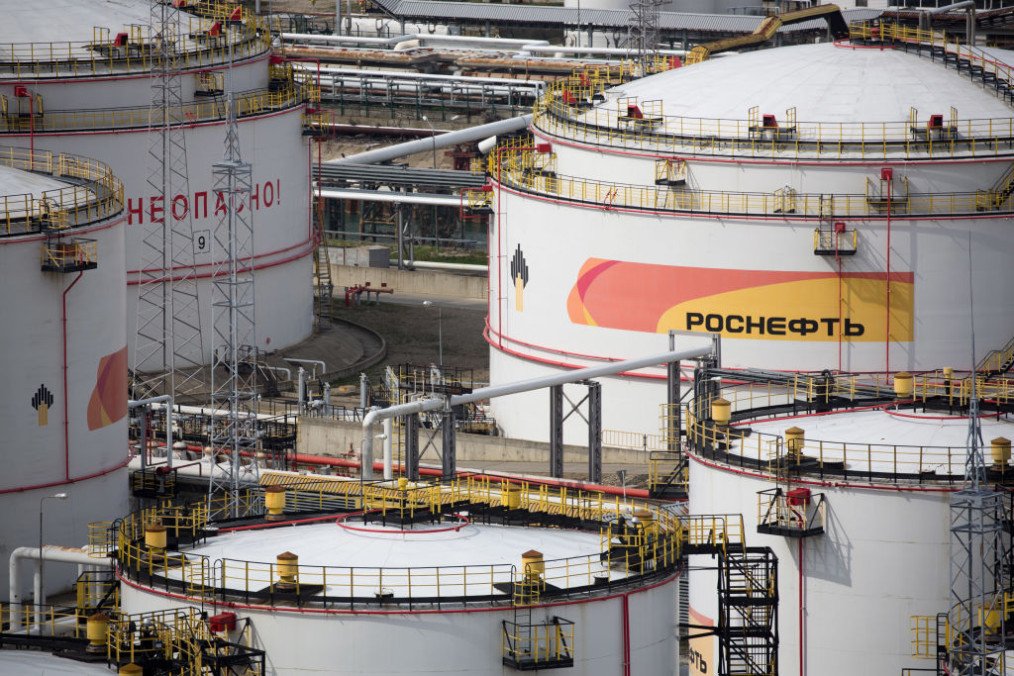
Reuters, citing five sources, reports Ukrainian strikes plus Druzhba disruption have cut Russian oil output by 300,000–400,000 barrels/day in April vs Q1 — and 500,000–600,000 below late-2025 — the sharpest drop since 2020. Overnight April 20–21, SBU drones struck the Transneft-Privolga Samara pumping station ~1,000 km from the border, hitting five 20,000 m³ tanks. Novokuibyshevsk halted operations; Syzran was struck again. Tuapse — hit on April 15–16 and 19–20 — is generating a smoke plume more than 300 km long per NASA satellite imagery.

Sources: Reuters · Reuters – Novokuibyshevsk · Militarnyi – Samara · United24

Russia launches 215 drones overnight; Chernihiv, Sumy, Zaporizhzhia hit

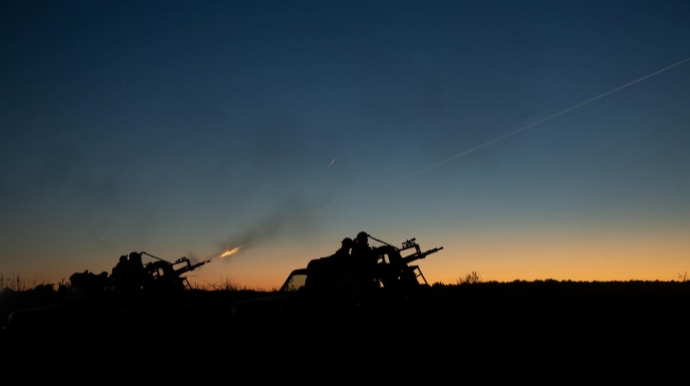
Russian forces launched 215 drones overnight April 21–22; Ukraine downed 189. Strikes hit energy infrastructure in Chernihiv Oblast (54,000 subscribers without power in Nizhyn Raion), killed one in Sumy Oblast, struck a railway marshalling yard in Zaporizhzhia (killing a train assistant driver), damaged port infrastructure in Odesa Oblast, and started fires in Dnipro. A Russian drone also struck Bohodukhiv (Kharkiv Oblast) on the afternoon of April 21, injuring five.

Sources: Ukrainska Pravda – 189 downed · Ukrainska Pravda – Sumy · Ukrainska Pravda – Zaporizhzhia · Ukrainska Pravda – Odesa

Hacked Russian ministry call: China supplies ~90% of drone electronics

Ukrainian hackers intercepted a Russian Ministry call in which officials acknowledge that China supplies approximately 90% of the electronics components in Russian drones deployed in Ukraine — rare direct confirmation from a Russian source of the scale of Chinese material support, which Western governments have long alleged but struggled to document. Separately, Ukrainian hackers also breached internal data from Russia’s Gonets system, the Starlink-analogue Russia is building to compensate for the frontline Starlink shutdown.

Sources: Kyiv Post · Militarnyi – Gonets

Zelensky: US envoys to Moscow but never Kyiv is “disrespectful”

Zelensky publicly called out US peace envoy Steve Witkoff and Jared Kushner for repeated trips to Moscow without ever visiting Kyiv. The criticism underscores the mounting friction between Kyiv and Washington over the conduct of ceasefire negotiations.

Sources: BBC

Ukraine’s second miracle year — and the drone diplomacy behind it

The Bulwark reviews how Ukraine has survived a second year against expectations: deep-strike drone campaigns, accelerating military-industrial adaptation, and political shifts that have kept Western support alive despite Trump. CEPA, separately, traces how Ukraine has been quietly building security relationships across the Arab world — offering drone tech and military expertise to Gulf states wary of Iranian power, converting battlefield expertise into diplomatic currency with previously fence-sitting capitals.

Sources: The Bulwark · CEPA

Gerasimov’s accounting

Russian Chief of the General Staff Gerasimov claimed Russian forces had seized over 1,700 km² and 80 settlements since January 2026, including all of Luhansk Oblast — a claim Russian officials have now made falsely four times since 2022. ISW confirms only 381.5 km² of actual advances, with a net loss of ~60 km² since the Spring–Summer offensive launched on March 1. Even maximalist pro-Russian milblogger estimates reach 715 km² — 42% of Gerasimov’s claim. Gerasimov placed Russian forces in settlements 10–12 km beyond the furthest extent of any Russian source’s claimed frontline (Borova, Studenok, Zaporozhets — all firmly Ukrainian-controlled in pro-Russian mapping). Russian milbloggers have begun openly criticising “credit” advances, and Gerasimov has stretched his reporting timeframes from monthly to 2–4 month windows to obscure near-zero net progress.

Source: ISW Assessment, April 21

Rosneft logo on an oil storage tank at the RN-Tuapsinsky refinery — Tuapse has been struck twice in the past week and is now generating a smoke plume more than 300 km long visible on NASA satellite imagery.

Mobile air defence fire group during the overnight drone interception over Ukraine, April 21–22 — 189 of 215 Shaheds downed.

Also on the front

  • Russian drone strike damaged port infrastructure in Odesa Oblast overnight; fires extinguished by morning. — Ukrainska Pravda

Investigations

Iran ceasefire: extended indefinitely, then a ship is hit within hours

Trump extended the US–Iran ceasefire indefinitely on April 21 at Pakistan’s request — after first saying he didn’t want to extend it the same day — citing Iran’s “seriously fractured government.” Pakistan is angling to host a new round of US-Iran talks; Iran has not committed; VP Vance’s planned Islamabad trip is on hold pending Iranian commitment. Within hours of the announcement, Iran attacked a container ship near Hormuz. Trump simultaneously warned he “expects to be bombing” if a deal cannot be reached. The blockade remains in place. The Economist argues America’s Iran strategy carries a structural blind spot — systematically underestimating how much foreigners’ beliefs and values constrain outcomes. Foreign Affairs reframes the war as an expectations game: perceptions of victory and defeat, not material outcomes, will decide whether the ceasefire holds. Former diplomats interviewed by Fortune are openly sceptical that any deal can be structured and verified within Trump’s compressed timeline.

Sources: Al Jazeera · The Guardian · Times Now · BBC · Axios · The Economist · Foreign Affairs · Fortune

Hormuz blockade: oil spills from space, Kharg Island fills up, condom prices rise 30%

The blockade is generating second-order effects across multiple domains. CNN satellite imagery now shows oil spills in the Persian Gulf visible from space. EU is examining emergency options as the conflict threatens jet fuel shortages. UK inflation jumped to 3.3% in March on transport costs — the biggest jump since December 2022. Karex, the world’s largest condom manufacturer (Durex, Trojan, NHS supplier), announced 20–30% price rises. Hindustan Times sets out the US strategic logic: prevent Iranian exports until Kharg Island’s storage fills entirely, forcing Iran to curtail production and pressure Tehran to the table — a chokepoint approach that treats Hormuz as economic rather than purely military. Iran’s economy is already reeling: mass redundancies are spreading across manufacturing, retail, and tech.

Sources: CNN – oil spills · Al Jazeera – jet fuel · The Guardian – inflation · The Guardian – Karex · Hindustan Times · BBC – Iran economy

Hormuz “safe passage” scam: fraudsters get ships shot at

Unknown actors are impersonating Iranian Revolutionary Guard authorities and sending shipping companies fraudulent cryptocurrency demands for Strait of Hormuz transit clearance — the language closely mirrors Iran’s legitimate $2M-per-vessel toll system. At least one vessel that paid the scammers received no real authorisation codes, entered IRGC-controlled waters, and was fired upon. Three ships were attacked in quick succession on April 18, including the Indian-flagged VLCC Sanmar Herald. Greek maritime risk firm MARISKS issued the warning April 21. Perpetrators unidentified — could be criminal opportunists or a third-party actor exploiting the chaos.

Source: Shatterbelt

Iran spillover: Caspian energy, Armenia’s pivot, Pakistan’s broker role

CEPA notes Israel’s March 2026 strike on Iran’s Bandar Anzali naval base was the first-ever missile attack on the Caspian — and that Azerbaijan’s BP-operated offshore fields feeding the $35B Southern Gas Corridor to Europe are now exposed to Iranian counter-strikes. An Azerbaijani strike would likely invoke the 2021 Shusha Declaration, drawing in Turkey. War on the Rocks tracks Armenia’s complex pivot: trade via Meghri has slowed and Indian arms transfers via Iran have stalled, but Iran’s distraction has opened a rare geopolitical window — Armenia is accelerating EU accession and peace talks with Azerbaijan while traditional patron Russia is preoccupied. Separately, War on the Rocks traces how Pakistan positioned itself as the indispensable broker between Iran and the US, leveraging the September 2025 Saudi–Pakistan mutual defence pact and its longstanding back-channel to Tehran — a structural reach India, despite its size, has not been able to match.

Sources: CEPA – Caspian · War on the Rocks – Armenia · War on the Rocks – Pakistan

UK warns of “hacktivist attacks at scale” if conflict deepens

The head of the UK’s national security agency warned that Britain could face large-scale hacktivist attacks if it becomes more entangled in the Iran conflict, with potential disruption comparable to recent major ransomware incidents against critical infrastructure. The cyber dimension of the war is no longer hypothetical.

Source: The Guardian

Sudan: the genocide no one is stopping

Res.Publica explains the structural absence of intervention in Sudan: 12 million displaced, 25 million facing hunger, documented ethnic cleansing in Darfur. The UAE simultaneously supplies weapons to the RSF and hosts peace talks; Russia arms both sides while extracting gold to evade sanctions. Trump’s USAID dissolution cut ~50% of Sudan’s humanitarian assistance, eliminating food access for 1.8 million people. Europe has cut Sudan aid budgets while increasing defence spending. The article frames the absence of intervention as a structural consequence of conflicting great-power interests, not indifference. Phone-tracking work by the Conflict Insights Group (covered by the BBC) corroborates external involvement — Colombian mercenaries operating alongside the RSF, with documented UAE backing.

Sources: Res.Publica · BBC – Colombian mercenaries

Israeli forces using sexual violence to expel Palestinians from the West Bank

A Guardian investigation based on a new report documents Israeli soldiers using sexual assault as a systematic tool to terrorise Palestinians into leaving the West Bank — part of what the report frames as a broader forcible displacement campaign. Adds a specific category of atrocity to the documented pattern of West Bank violence, with implications for international criminal accountability proceedings.

Source: The Guardian

Japan scraps post-WW2 limits on lethal arms exports

Japan has dismantled its postwar prohibition on exporting lethal weapons — a fundamental break from the pacifist constitutional framework that has governed defence policy since 1945. The shift, driven by the deteriorating regional environment (North Korea, China, and the Iran war’s effects on the global order), clears the way for sales to 14+ countries and deepens ties with the US, Australia, and European partners.

Sources: Japan Times · BBC

GaN: the US is repeating its silicon mistake

China controls 99% of global primary gallium and banned US exports in December 2024. Gallium nitride (GaN) outperforms silicon for high-frequency defence applications — radar, electronic warfare — but US domestic manufacturing is essentially zero. War on the Rocks draws an explicit parallel: the US pioneered the underlying technology, then offshored production to allies. With GaN the stakes are higher because losing manufacturing leadership means ceding it to a direct strategic adversary, not a partner. The US National Defense Stockpile held zero gallium reserves when the ban hit. In a smaller-scale parallel, the US has now blocked — for the second time — China’s largest LED chipmaker from acquiring Dutch firm Lumileds.

Sources: War on the Rocks · Tom’s Hardware

How North Korea won, and how Nabiullina is trapped

Two pieces on the durability of authoritarian economic and strategic positioning. Foreign Affairs argues Kim Jong Un has achieved his core objectives: nuclear weapons, ICBM capability, normalised status as a nuclear power, and a Russia partnership delivering economic relief and military cooperation — Western containment policy reframed as a failure on its own terms (deterrence held, denuclearisation is dead). RFE/RL profiles Elvira Nabiullina, widely regarded as one of the world’s most competent central bankers, in an increasingly impossible position: high rates fight war-driven inflation, but the Kremlin demands cheap credit for defence industry, and the contradictions are becoming unmanageable.

Sources: Foreign Affairs · RFE/RL

Bellingcat: mining Xiaohongshu for OSINT

Bellingcat publishes a detailed methodology for open-source research on China’s 300-million-user platform Xiaohongshu (RedNote) — largely ignored by Western investigators compared to Weibo. Key techniques: search in simplified Chinese rather than English to bypass algorithm-curated international “bubbles”; preserve user unique IDs from profile URLs for long-term tracking despite name changes; use third-party analytics platforms like Xinhong and Qiangu to surface trending topics before mainstream visibility; exploit the “Group Square” feature for unfiltered community discussion. Particularly valuable for diaspora research and tracking how Chinese users navigate censorship through coded language.

Source: Bellingcat

AI in nuclear wargames: why “bloodthirsty” headlines miss the point

Ankit Panda and Andrew Reddie at War on the Rocks push back on alarming coverage of Kenneth Payne’s KCL experiments where LLMs in simulated nuclear crises escalated in 95% of scenarios. They argue this is a category error: wargames are structured environments for eliciting human judgment, not optimisation problems — so model behaviour tells us about machine psychology trained on the nuclear-strategy canon (Schelling, Kahn, Brodie), not human crisis decision-making. The real lesson: AI belongs in scenario generation, adjudication support, and post-game analysis, not as a substitute for human players.

Source: War on the Rocks
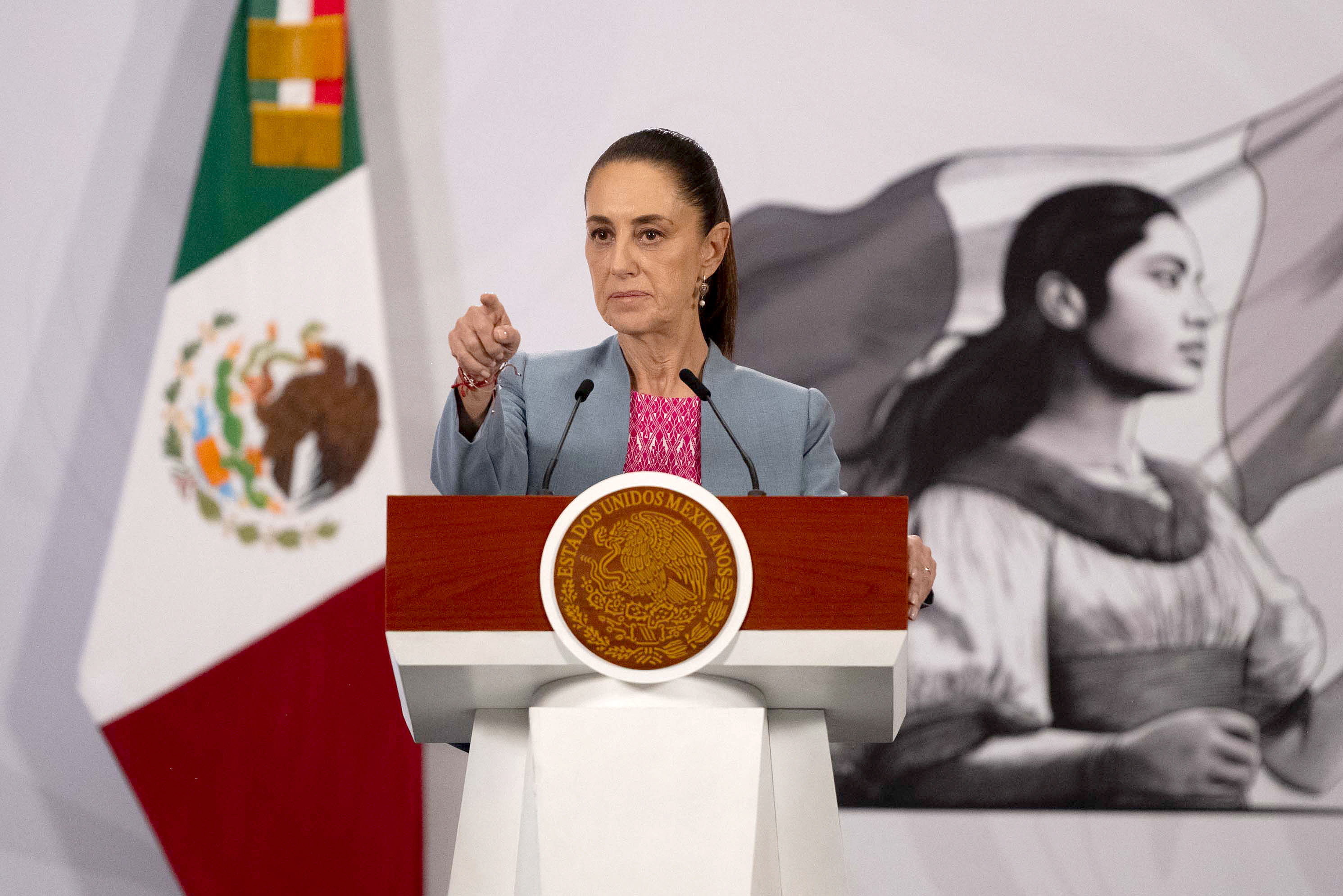
Illustration for Shatterbelt’s reporting on the Hormuz “safe passage” scam — fraudulent cryptocurrency demands close enough to Iran’s real $2M toll messages that desperate shipowners are paying.

Annotated screenshot of the Xinhong analytics tool, from Bellingcat’s new methodology guide for OSINT on Xiaohongshu.

Also tracked

  • Anthropic’s “Mythos” model accessed by unauthorized users — Bloomberg report on a pre-release leak; details thin behind the paywall, but raises questions about pre-release access controls. — Bloomberg

AI & Tooling

Skills, not tiers — 880 evals reshape the cost/quality story

Tessl ran 880 evaluations across 8 models and 11 skills. Every configuration showed gains when skills were loaded (+11 to +23 points). Haiku 4.5 + skill = 84.3% — beats baseline Opus 4.7 at 80.5%. Custom domain-specific knowledge in skills delivered the largest gains overall (+36 points), more than any model upgrade. Sonnet 4.6 reached 93.3% vs Opus 4.7’s 94.5% at one-third the cost — making Haiku the ROI champion for high-volume workloads where skills can be loaded.

Sources: Tessl blog

CONTRACT.md beats agent teams: 52 controlled Claude Code benchmarks

UpGPT ran 52 benchmarks on a real Next.js/TypeScript/Supabase codebase using Sonnet 4.6 workers and Opus 4.7 graders. The standout: a CONTRACT.md spec doc — defining exact interfaces, column names, import paths, and explicit non-goals — cut costs 65% and time 68% while raising quality from 5/10 to 9/10 by eliminating exploratory phases. Multi-agent teams cost 73–124% more than sequential with no quality gain (each agent independently loads the full ~80K-token context). AST compression achieved 118x token reduction with zero quality loss. Retry loops dropped quality from 9/10 to 6/10 at 2.1x cost.

Source: UpCommander benchmarks

graphify: Claude Code skill that maps codebases into knowledge graphs

graphify builds a knowledge graph of a codebase instead of loading raw files into context — claims 71x fewer tokens and reduced hallucination on large codebases. The core insight: a raw file tree is a poor context format for navigating unfamiliar code; a structured graph of entities and relationships is more information-dense for the model. Lines up well with the Tessl and UpGPT findings — context shape matters more than model capability.

Sources: GitHub

Open-source single-GPU reproductions of Cartridges and STILL

A developer open-sourced single-GPU reproductions of two recent long-context inference approaches: Cartridges (neural KV-cache compression) and STILL (infinite context windows). Both ship with benchmark code and are designed for inspection — making two otherwise hard-to-access ideas accessible for experimentation.

INT3 quantization + fused Metal kernels: Qwen 7B in ~4GB on Mac

Spiral ships INT3 model compression at +0.14 nats perplexity loss with a custom INT2 KV cache for long-horizon tasks, both implemented with fused Metal kernels for Apple M-series. Currently runs Qwen 7B in preview, installable via homebrew. A notable step in making capable local inference practical on consumer Mac hardware.

Amazon expands Anthropic investment to $25B in $100B AWS commitment

Amazon is investing up to $25 billion in Anthropic ($5B immediate, up to $20B contingent on milestones), with Anthropic committing $100B+ to AWS over 10 years and up to 5GW of new compute. AWS remains Anthropic’s primary cloud and training provider; over 100,000 customers already run Claude on Bedrock. Amazon’s total AI capex in 2026 is projected at $200B. The numbers signal the scale of capital commitment now required to compete at the frontier.

Sources: Anthropic blog · CNBC

Claude Code Auto mode can self-approve dangerouslyDisableSandbox

A user discovered that Claude Code’s new Auto permission mode — meant as a middle ground between fully manual and fully permissive — can approve Bash tool calls with dangerouslyDisableSandbox: true on its own, bypassing the usual safety framing. A real gap in how Auto mode handles self-escalation of sandboxing controls, with implications for users who treat Auto as a safe default.

Source: Reddit thread

Opus 4.7 tone regression: now sounds like ChatGPT

Multiple users report that Opus 4.7 has lost the distinctive Claude voice — responses are more essay-like, “punchy”, and em-dash-heavy compared to Opus 4.6, which users describe as more genuine and direct. The pattern matches personality drift seen in other frontier models post-RLHF tweaks; some users are reverting to Sonnet 4.6 for conversational work. Continues yesterday’s coverage of Opus 4.7 backlash.

Source: Reddit thread

Also today

  • Claude Code paste UX fix — double Cmd+V now expands the [Pasted text #1 +N lines] summary into full inline content. Long-running friction point closed. — GitHub issue
  • Claude Code no longer in Claude Pro — now Max-tier only for new prosumer signups (~2% test). Anthropic confirms existing subscribers unaffected; says Max was “redesigned for heavy chat usage” before agentic workloads existed. — Reddit
  • Claude Cowork live artifacts — dashboards now connect to your apps and refresh with current data; saved with version history. Cowork extends beyond document generation into stateful, data-connected tooling. — Reddit
  • SpaceX–Cursor: $60bn acquisition option or $10bn partnership. (Lead in World.)

Haiku 4.5 with a skill (84.3%) beats baseline Opus 4.7 (80.5%).

— Tessl, after 880 evaluations across 8 models and 11 skills

cd ~/repos/ratatosk && claude --resume 91157be9-8750-4a03-8198-995018383b40