Investigations
Israel
supplies 97.5% of South Korea’s chip-critical bromine — within Iranian
missile range
A largely unnoticed chokepoint: South Korea sources
97.5% of its bromine from ICL Group’s Dead Sea facility
in Israel’s Negev — within documented Iranian missile range. Bromine
derivatives etch transistor structures in DRAM and NAND flash at 100:1
selectivity vs polysilicon oxide; chlorine alternatives manage only
~30:1, unviable for advanced nodes. No alternative conversion capacity
exists outside Israel. A sustained disruption would cascade into memory
shortages affecting AI infrastructure, military systems, and consumer
electronics globally.
Sources: War
on the Rocks · Hacker News
China
is building open real-time military OSINT — and has already let Iran use
it
The China AI Brief documents how Chinese commercial firms are
collectively constructing an OSINT infrastructure capable of tracking US
military assets in near real-time — overlapping satellite
constellations, AI image analysis, data fusion. Key players:
Earth Eye (0.5m resolution),
MizarVision (AI vision across thousands of images
simultaneously), Emposat (global ground stations),
Jing’an Technology’s Jinqi unified operational picture.
Iran reportedly used a Chinese satellite with ground control services to
target US bases in 2024. The strategic shift: the bottleneck has moved
from collection to interpretation, and AI is closing that gap fast.
Concealment from an adversary running overlapping commercial
constellations with AI processing may no longer be a reliable
assumption.
Sources: The China AI
Brief · r/geopolitics
Pax
Silica: 4,000-acre US-Philippines industrial zone announced
The US and Philippines announced a 4,000-acre Economic Security Zone
in the Luzon Economic Corridor — the first “AI-native industrial
acceleration hub” under the Pax Silica initiative (now
13 signatories: Australia, India, Japan, South Korea, UAE, UK, etc.).
Targets: critical minerals, semiconductors, electronics supply chains.
Explicitly framed as a China-alternative. Manila’s South China Sea
geography makes this as much a security signal as an economic one.
Sources: State
Department release · r/geopolitics
“Scambodia”:
cybercrime industry now half of Cambodian GDP
The WSJ documents Cambodia as the global hub of industrialised online
fraud — $12.5–$19B/year, more than half of Cambodian
GDP. An estimated 100,000–150,000 people, mostly trafficked
from China and Southeast Asia, work in scam compounds under coercion.
Cambodia passed its first dedicated anti-scam-centre law in April 2026
after international pressure and the January arrest of compound operator
Chen Zhi. Analysts skeptical: the industry’s pattern is to relocate
compounds, not dismantle them.
Sources: WSJ
· r/geopolitics
India-to-West
Africa synthetic opioid pipeline: 320M pills, $130M
Bellingcat and Newslaundry document 60+ Indian
companies shipping over 320 million tapentadol
pills to West Africa between 2023–2025, in doses unapproved
even in India. Ghana and Sierra Leone served as redistribution hubs;
consignments were concealed in falsely declared cargo. After India’s
2018 tramadol crackdown, tapentadol (street name “Red”) filled the void
— value grew nearly 5× in two years to $130M. Ghana’s FDA confirmed it
had never issued any permit for tapentadol import at any strength.
Sources: Bellingcat
Russian
shadow-fleet ship docks in Haifa; Israel releases over Ukrainian
objections
Ukraine formally demanded answers from Israel after the
ABINSK — linked to Russia’s shadow fleet, suspected of carrying
stolen Ukrainian grain — docked at Haifa and was released earlier than
expected on April 15. Ukrainian officials had tracked the ship since the
Black Sea and submitted intelligence to prosecutors in March. The
Foreign Ministry asked for seizure of the grain; the vessel was released
regardless. Roughly 40% of the estimated 2 million tons of stolen
Ukrainian grain shipped in 2025 passed through Egypt.
Sources: United24
· r/geopolitics
Diplomatic
cables: Iran war is fracturing US standing across multiple fronts
Politico obtained internal State Department cables from US embassies
in Bahrain, Azerbaijan, and Indonesia documenting how the Iran conflict
is corroding American diplomatic relationships. Bahrain — home to the
Fifth Fleet — faces public doubt about US reliability as a security
partner. Azerbaijan’s improving US relationship has plateaued and is
sliding. Indonesia faces domestic pressure to reduce security
cooperation. Common theme across cables: pro-Iran narratives gaining
ground in digital information ecosystems faster than US messaging can
counter them.
Sources: Politico
· r/geopolitics
Venezuela:
Delcy Rodríguez purges Maduro’s circle
After Nicolás Maduro’s January 2026 US detention, former VP
Delcy Rodríguez has dismantled his inner circle —
replacing 17 ministers in three months, overhauling the full military
command, deploying Venezuelan intelligence against Maduro allies, and
positioning herself as Washington’s interlocutor. Padrino López demoted
to agriculture; Raúl Gorrín reportedly detained. Diosdado Cabello
remains despite US drug-trafficking charges. Opposition figures: this is
consolidation, not transition.
Sources: NYT
 Honor humanoid running alongside
human competitors at the Beijing E-Town Half Marathon, April 19.
Honor humanoid running alongside
human competitors at the Beijing E-Town Half Marathon, April 19. “Open” declarations followed within hours by IRGC gunfire — Iran News
Wire on a fractured Iranian command at Hormuz.
“Open” declarations followed within hours by IRGC gunfire — Iran News
Wire on a fractured Iranian command at Hormuz.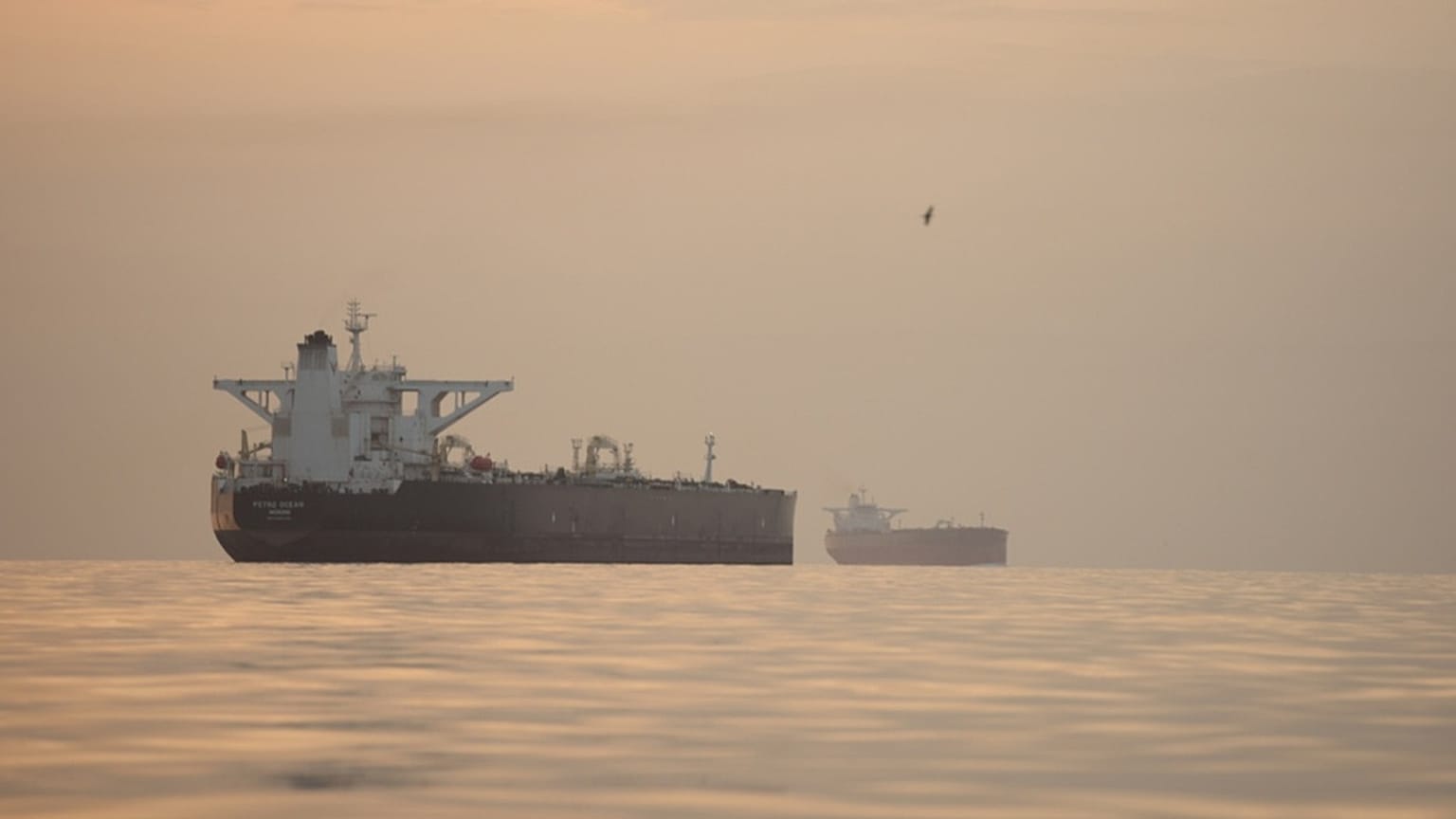 Tankers anchored in the Strait of
Hormuz off Qeshm Island, Iran, April 18.
Tankers anchored in the Strait of
Hormuz off Qeshm Island, Iran, April 18.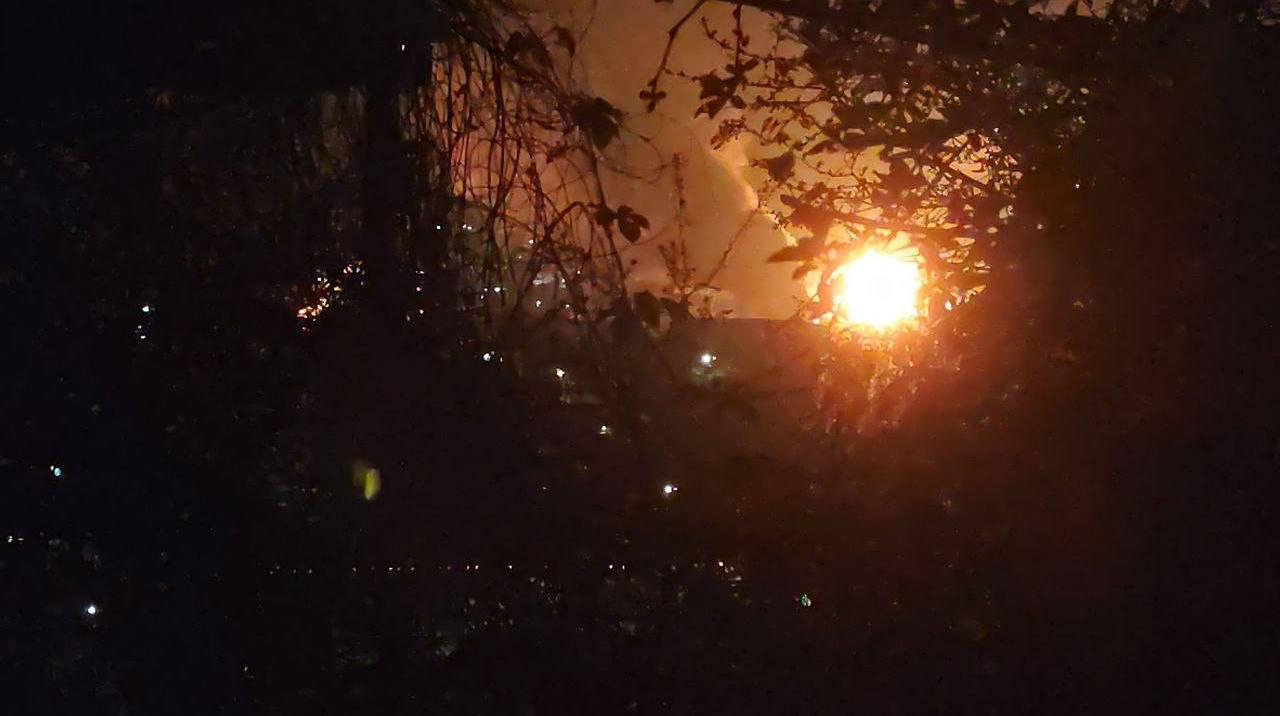 Tuapse oil refinery and seaport
burning after Ukrainian drone strikes, April 20.
Tuapse oil refinery and seaport
burning after Ukrainian drone strikes, April 20.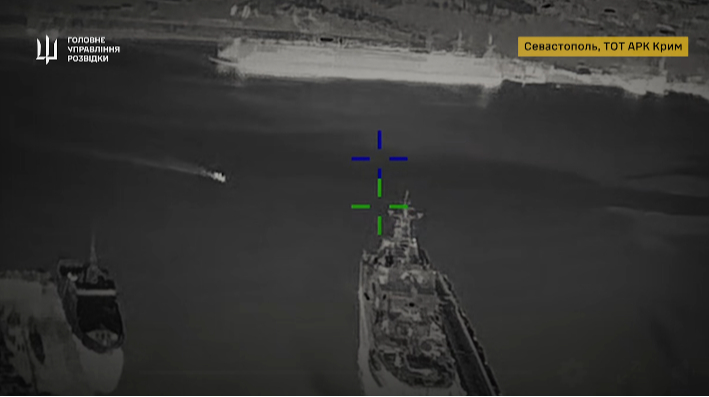 Ukrainian intelligence footage of a
Russian landing ship under drone attack in Crimea.
Ukrainian intelligence footage of a
Russian landing ship under drone attack in Crimea.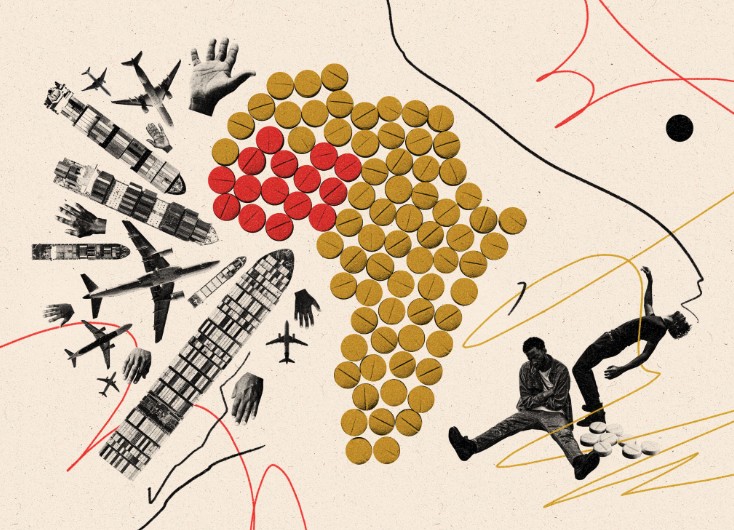 Bellingcat’s investigation into the
India-to-West-Africa tapentadol pipeline. (Illustration: Klawe
Rzeczy)
Bellingcat’s investigation into the
India-to-West-Africa tapentadol pipeline. (Illustration: Klawe
Rzeczy)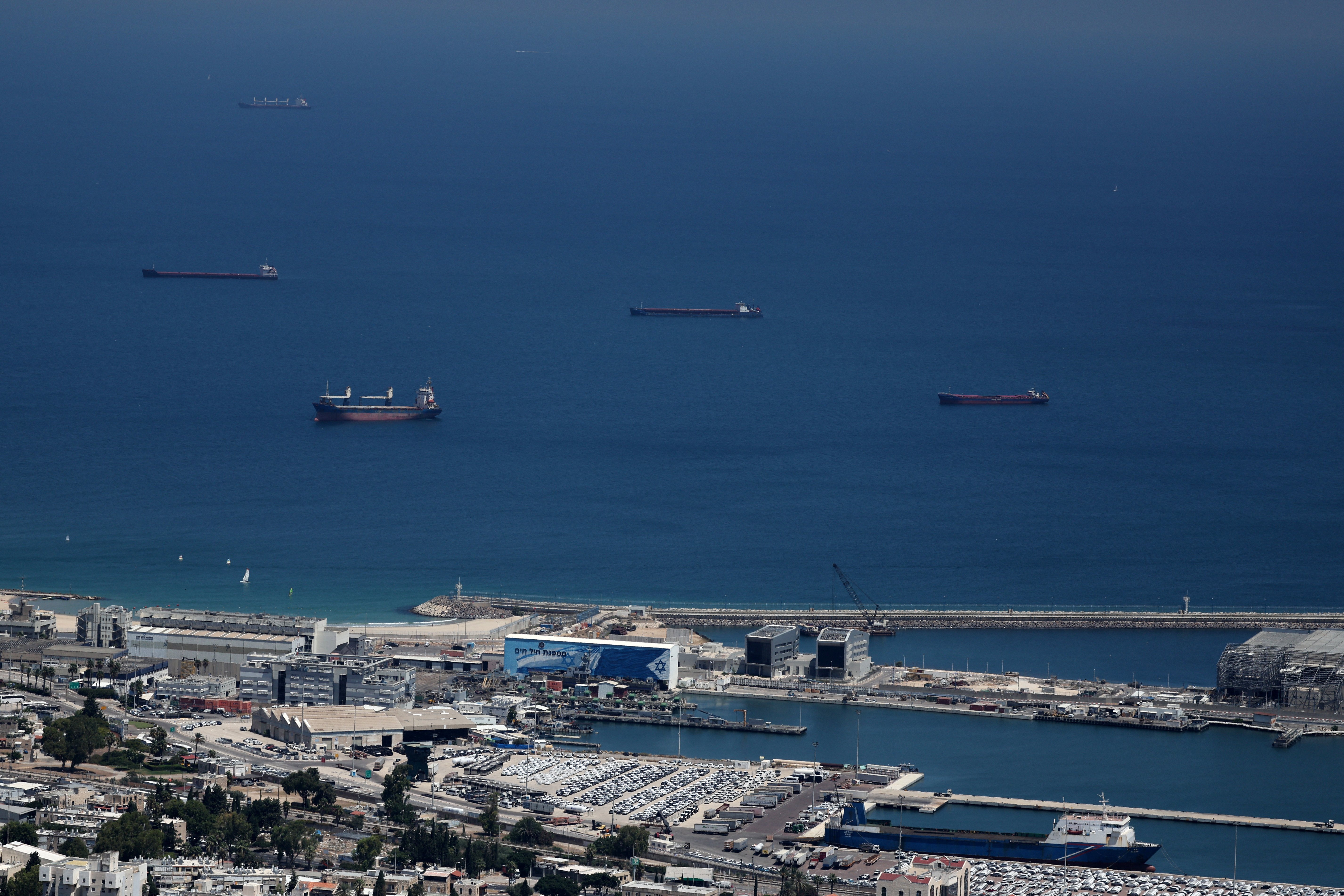 Port of Haifa, where the Russian
shadow-fleet ABINSK docked and was released over Ukrainian
objections.
Port of Haifa, where the Russian
shadow-fleet ABINSK docked and was released over Ukrainian
objections.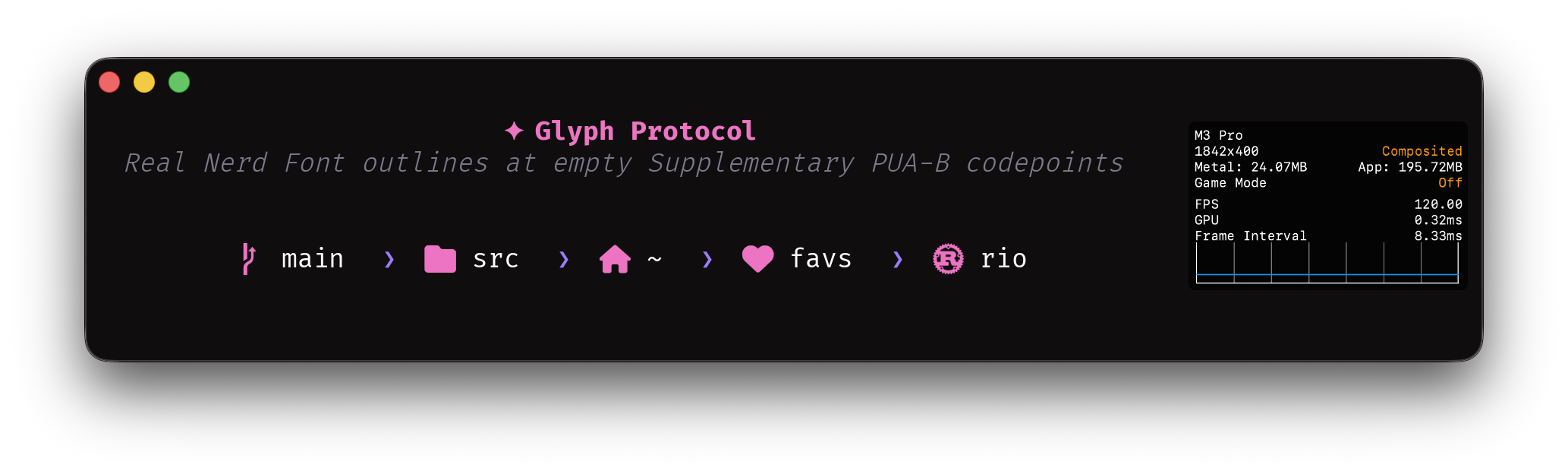 Terminal rendering custom icons via
Glyph Protocol — no patched font installed.
Terminal rendering custom icons via
Glyph Protocol — no patched font installed.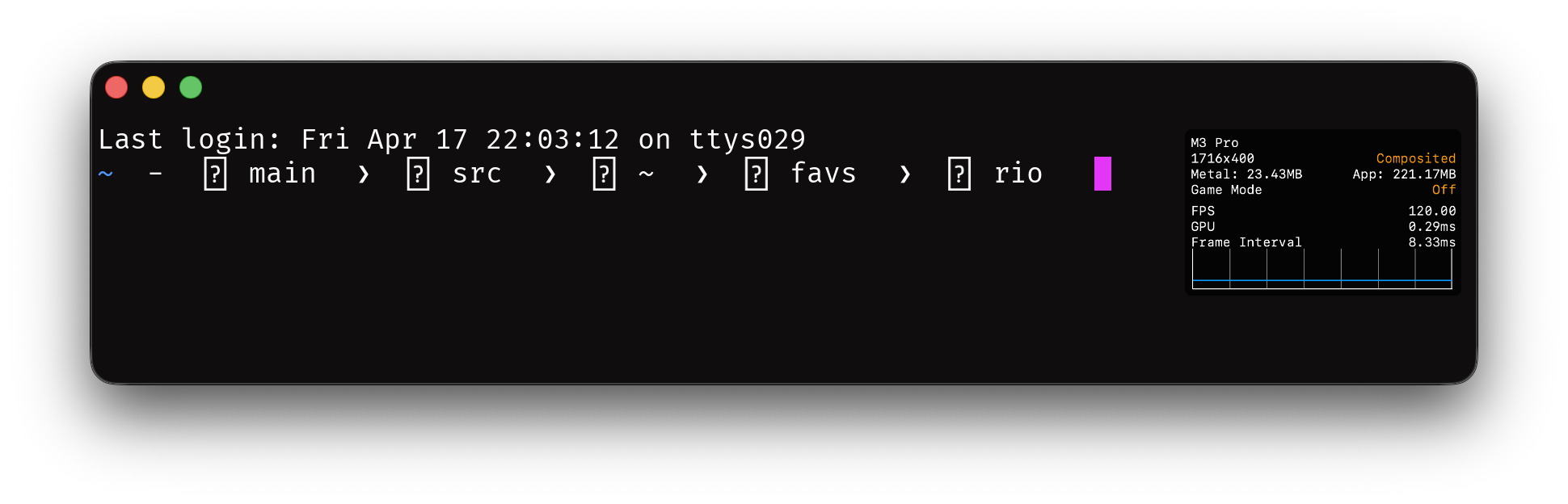 The “tofu” placeholders that show up
today without Nerd Fonts or Glyph Protocol support.
The “tofu” placeholders that show up
today without Nerd Fonts or Glyph Protocol support.