The Strait of Hormuz closes, Hungary opens — and between the two, the shape of a world rearranging itself.
Hormuz Blockade Begins as 21-Hour Iran Talks End in Failure
Trump announced a US Navy blockade of the Strait of Hormuz after marathon negotiations in Islamabad collapsed without agreement. CENTCOM confirmed the blockade began Monday at 14:00 GMT — vessels can still transit to non-Iranian ports, but Iranian maritime traffic is now blocked. JD Vance blamed Iran’s refusal to abandon its nuclear program; Iran said Washington failed to gain their trust. Oil surged past $103/barrel as Asian markets fell. Iran warned the move breached the existing ceasefire, while Qatar reported the US Navy was beginning mine-clearing operations.
The closure removes roughly 10% of global oil supply — an energy shock analysts describe as more severe than 1973, 1979, and 2022 combined. The UN warned the fallout could push 32 million people into poverty globally, with developing countries bearing the heaviest burden.
CNBC · The Guardian · Al Jazeera · BBC · The Guardian — poverty
Orbán Ousted After 16 Years: Magyar Wins Hungarian Landslide
Péter Magyar’s Tisza party won a decisive landslide in Hungary’s parliamentary elections, securing a two-thirds supermajority — enough to amend the constitution — with the highest voter turnout since the fall of communism. Viktor Orbán formally conceded defeat. EU leaders celebrated across the continent, hailing a reversal of Hungary’s illiberal drift toward Moscow. Zelenskyy congratulated Magyar and Ukraine withdrew its travel advisory against Hungary, removing the EU’s most consistent Ukraine-policy obstructionist.
The Atlantic, publishing just before the result, argued that illiberalism is not historically inevitable — that electorates can reverse autocratic consolidation. Magyar’s victory now validates that thesis in the most direct way possible: a government that had rigged electoral laws, captured state media, and redrawn constituency maps was voted out. (Also covered in Ukraine)
The Guardian · AP · BBC · The Atlantic · Politico
Britain and Allies Refuse Blockade, Build Alternative Coalition
The UK confirmed it will not join the Hormuz blockade, with a government spokesperson stating the Strait “must not be subject to tolling.” Britain is “urgently working with France and other partners to put together a wide coalition to protect freedom of navigation,” with mine hunters already deployed. Australia similarly declined. Trump responded by comparing Starmer to Neville Chamberlain. The open rupture marks a significant deterioration in the US-UK special relationship.
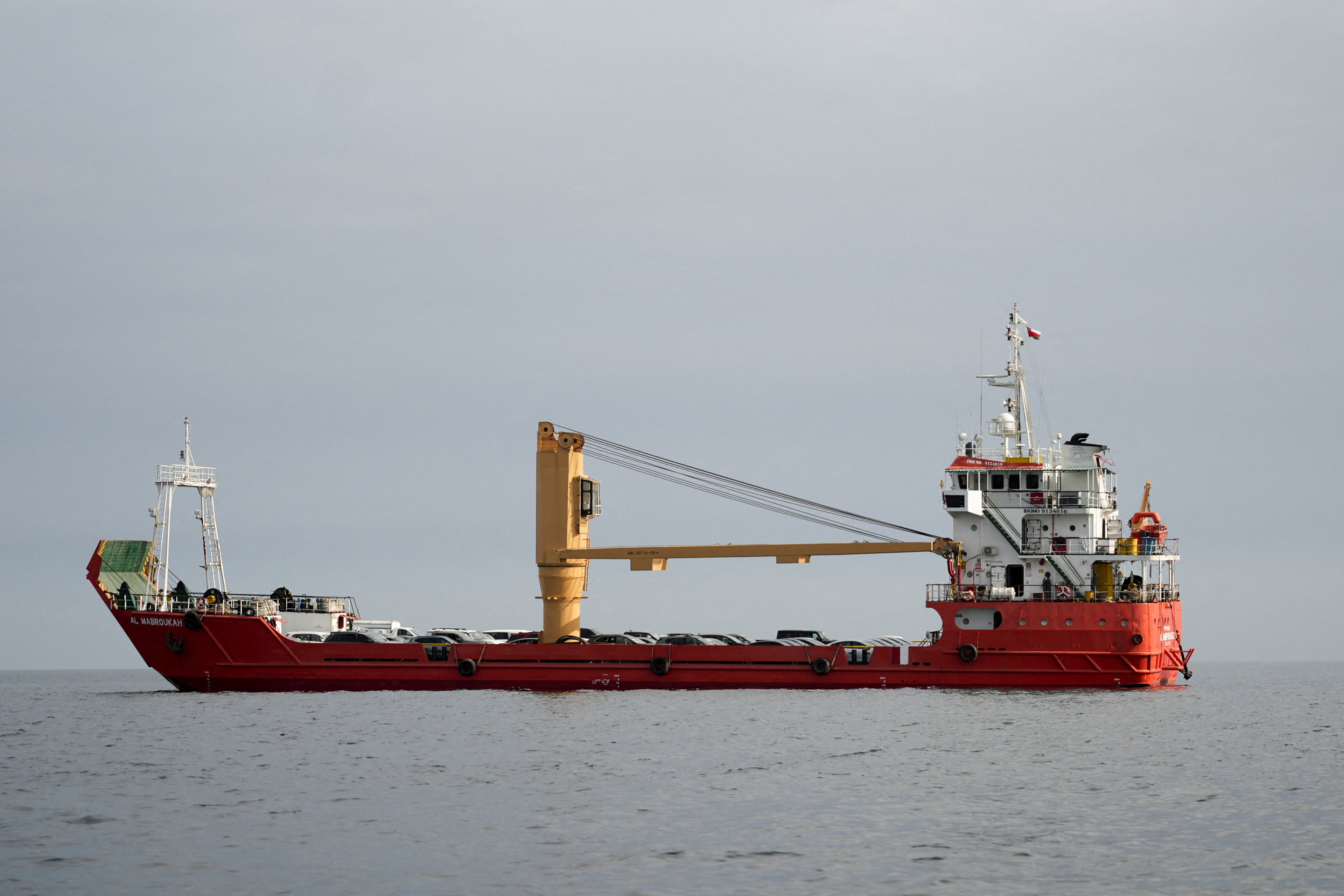 A vessel at the Strait of Hormuz
near Oman’s Musandam province — the strategic waterway now subject to a
US naval blockade.
A vessel at the Strait of Hormuz
near Oman’s Musandam province — the strategic waterway now subject to a
US naval blockade.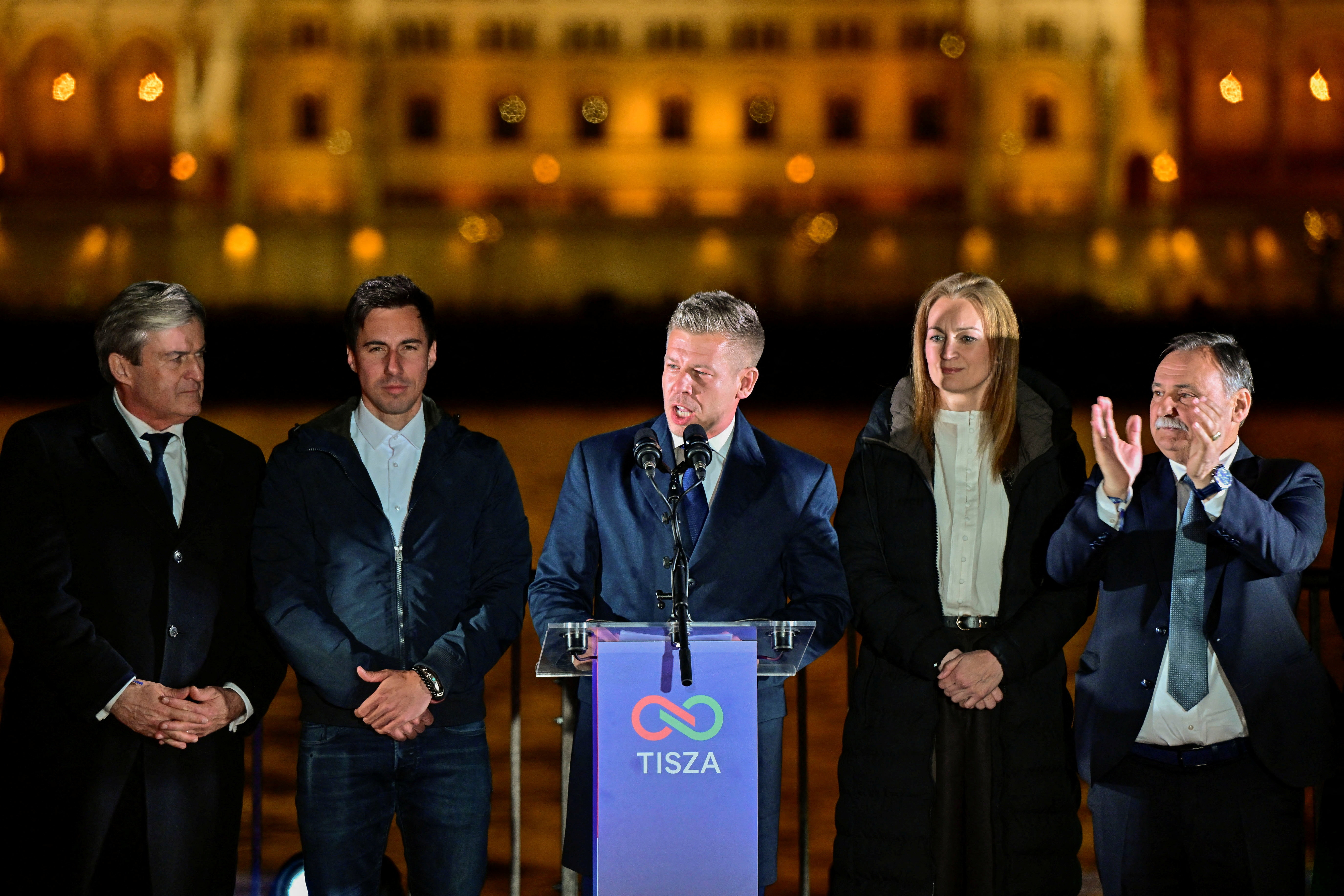 Péter Magyar addresses supporters
during election night celebrations in Budapest, April 12, 2026.
Péter Magyar addresses supporters
during election night celebrations in Budapest, April 12, 2026.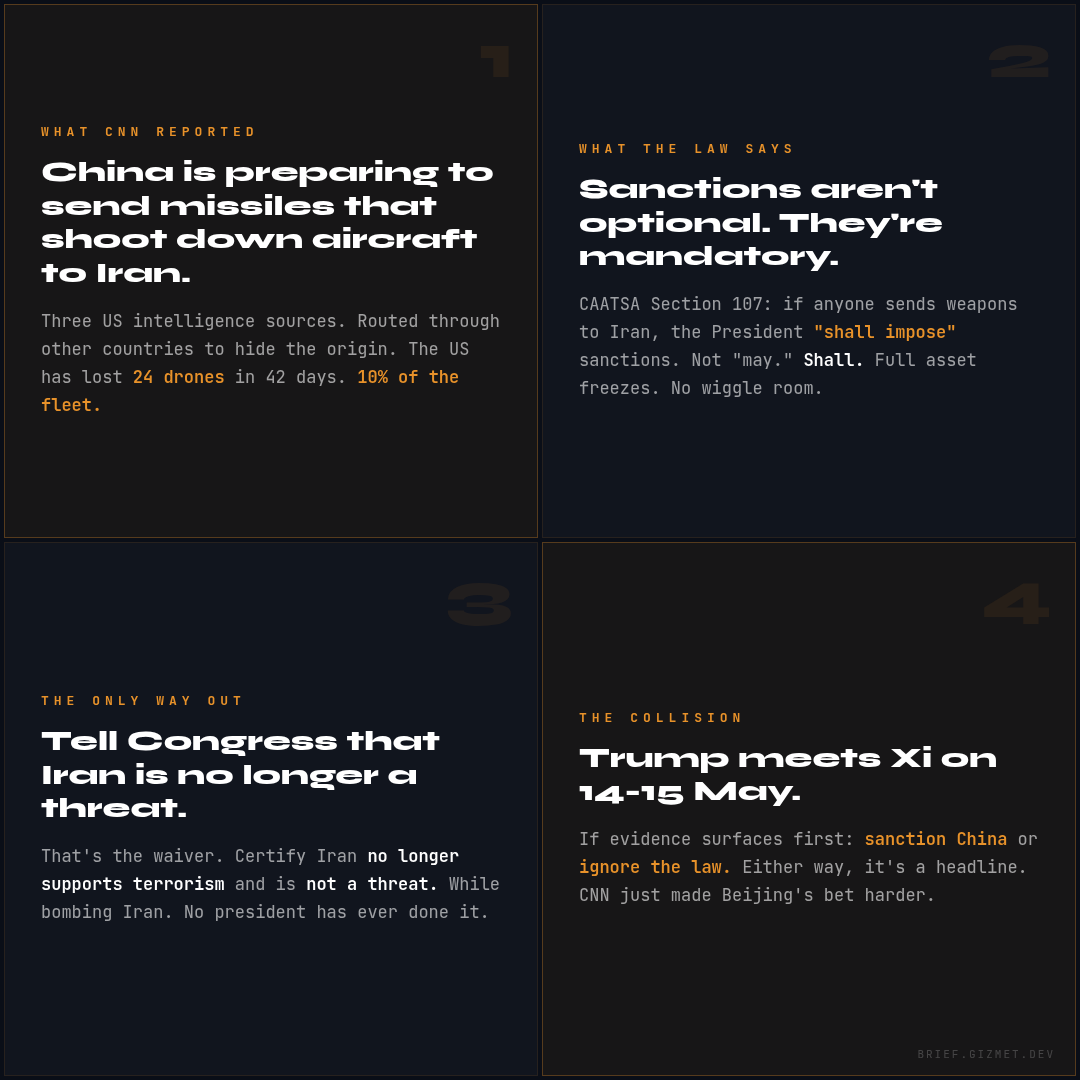 The statutory sanctions chain
triggered by confirmed Chinese weapons transfers to Iran under CAATSA
Section 107.
The statutory sanctions chain
triggered by confirmed Chinese weapons transfers to Iran under CAATSA
Section 107.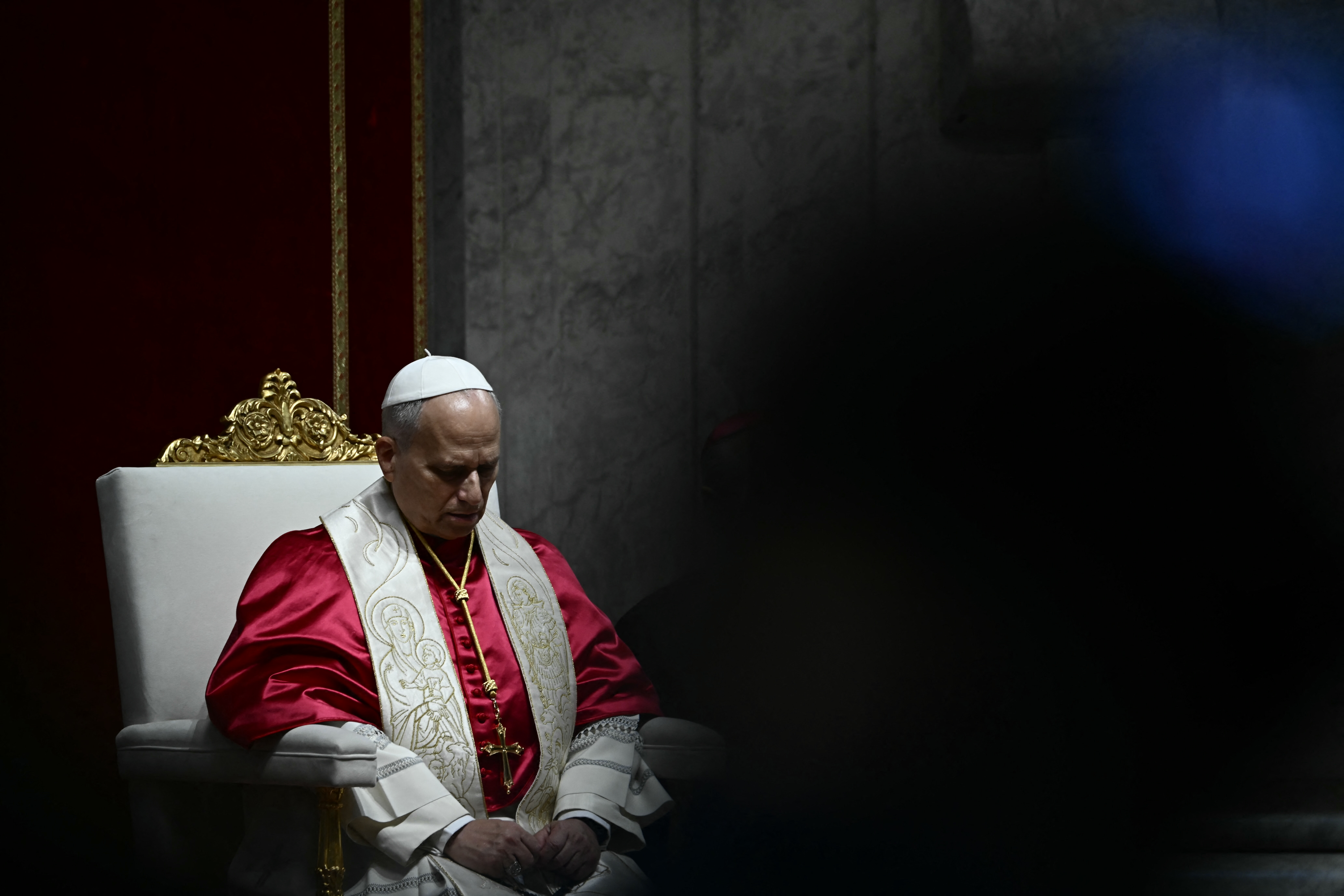 Pope Leo XIV presides over a prayer
vigil for peace at St Peter’s Basilica, April 11, 2026.
Pope Leo XIV presides over a prayer
vigil for peace at St Peter’s Basilica, April 11, 2026.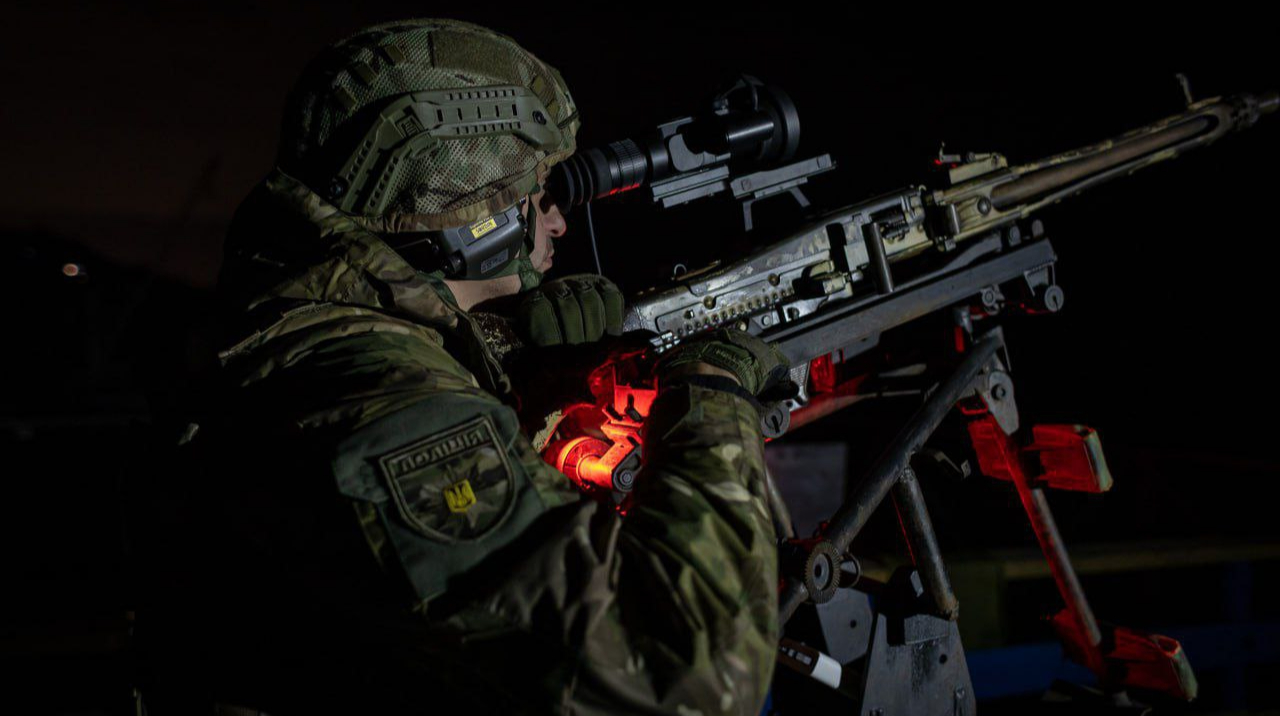 Mobile fire group, Ukrainian
National Police anti-drone unit.
Mobile fire group, Ukrainian
National Police anti-drone unit.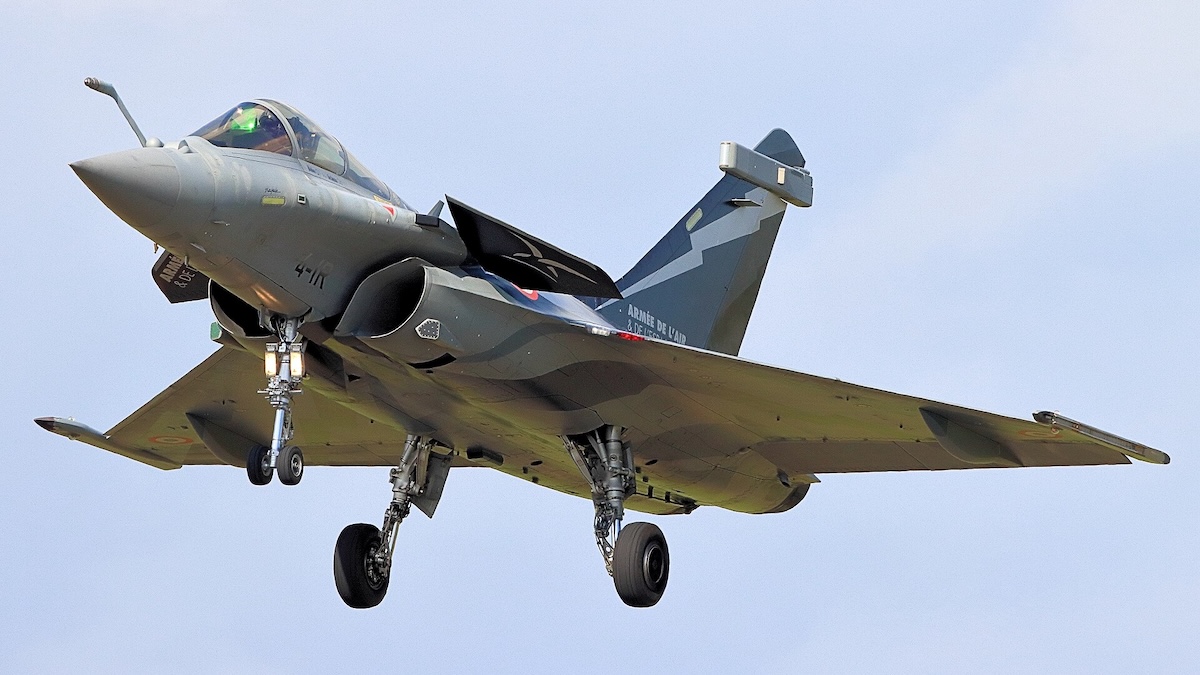 French Rafale fighter jet — the
nuclear-capable aircraft at the center of Macron’s forward deterrence
doctrine.
French Rafale fighter jet — the
nuclear-capable aircraft at the center of Macron’s forward deterrence
doctrine.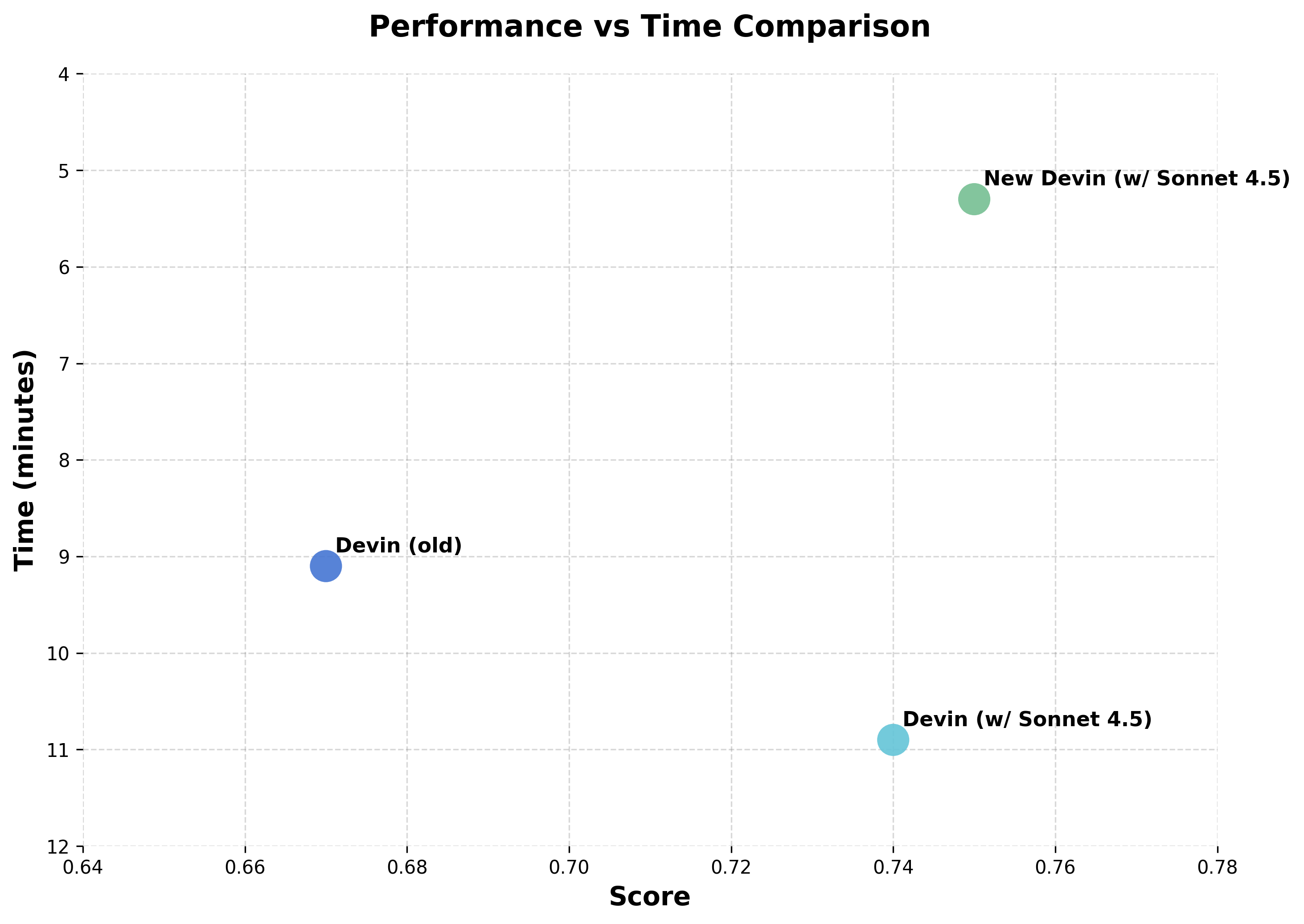 Devin’s performance before and after
rebuilding on Claude Sonnet 4.5.
Devin’s performance before and after
rebuilding on Claude Sonnet 4.5.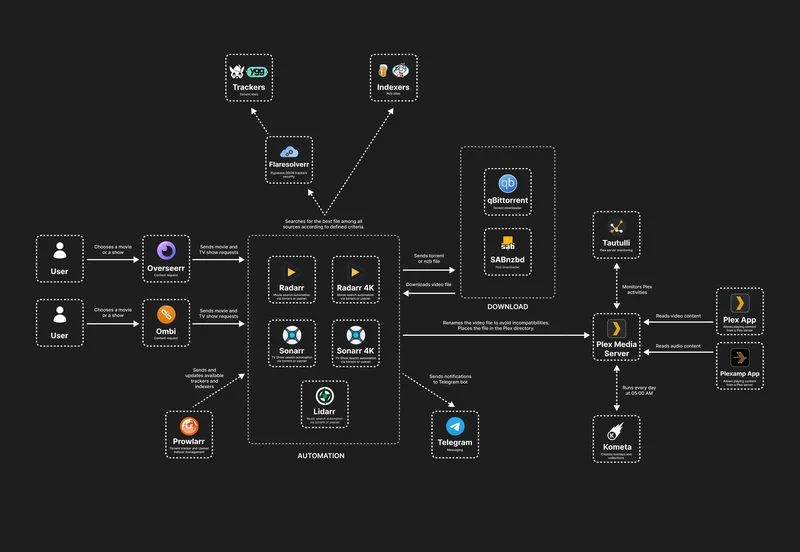 The *arr stack media automation
workflow.
The *arr stack media automation
workflow.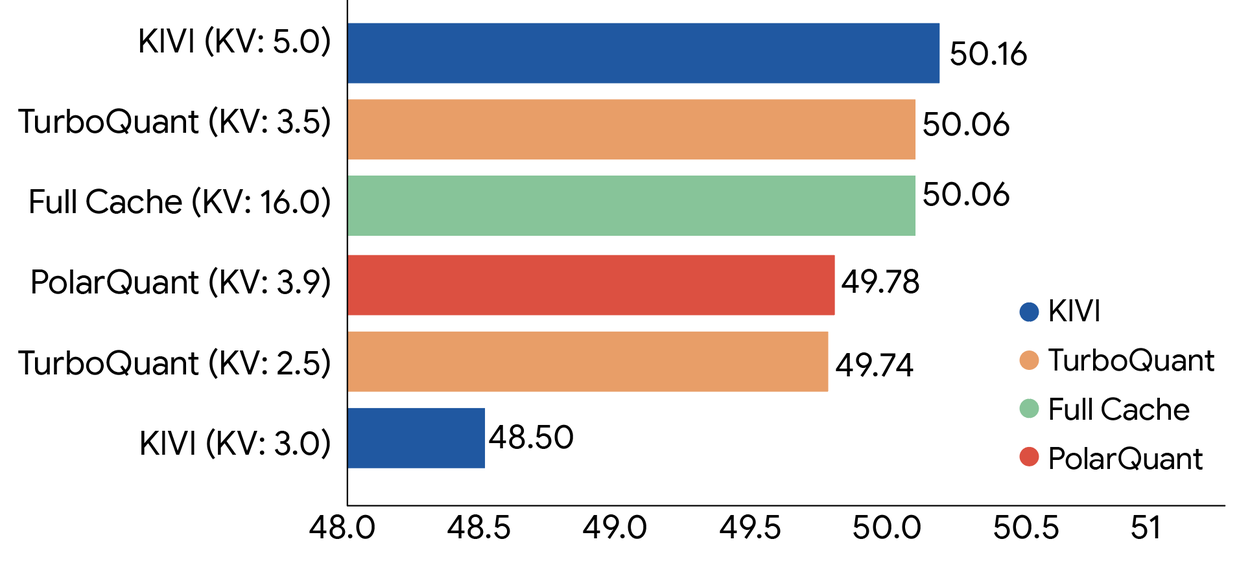 TurboQuant KV cache compression
performance on LongBench (Llama-3.1-8B-Instruct).
TurboQuant KV cache compression
performance on LongBench (Llama-3.1-8B-Instruct).