Josse-posten

Trump’s 48-hour ultimatum to Iran starts a clock nobody expects Tehran to obey, universities burn as the infrastructure campaign widens, and Planet Labs blacks out the war at Washington’s request.

Hell on a Timer

Trump gave Iran 48 hours to reopen the Strait of Hormuz, warning that “hell will rain down” if it refuses. Tehran’s answer came not in words but in drones — striking a Kuwait oil complex, power infrastructure, and government sites. The rescued F-15 crew member ended a two-day drama, but the war’s trajectory is only steepening: Israel is preparing strikes on Iranian energy sites pending US approval, the US has deployed the bulk of its stealth missile inventory, and Russia is arming Iran with missiles through 2027. Australia is running out of petrol. Senegal has grounded its ministers. The six-week war is becoming everyone’s problem.

Al Jazeera · NPR · Reuters · BBC

The War You Can’t See

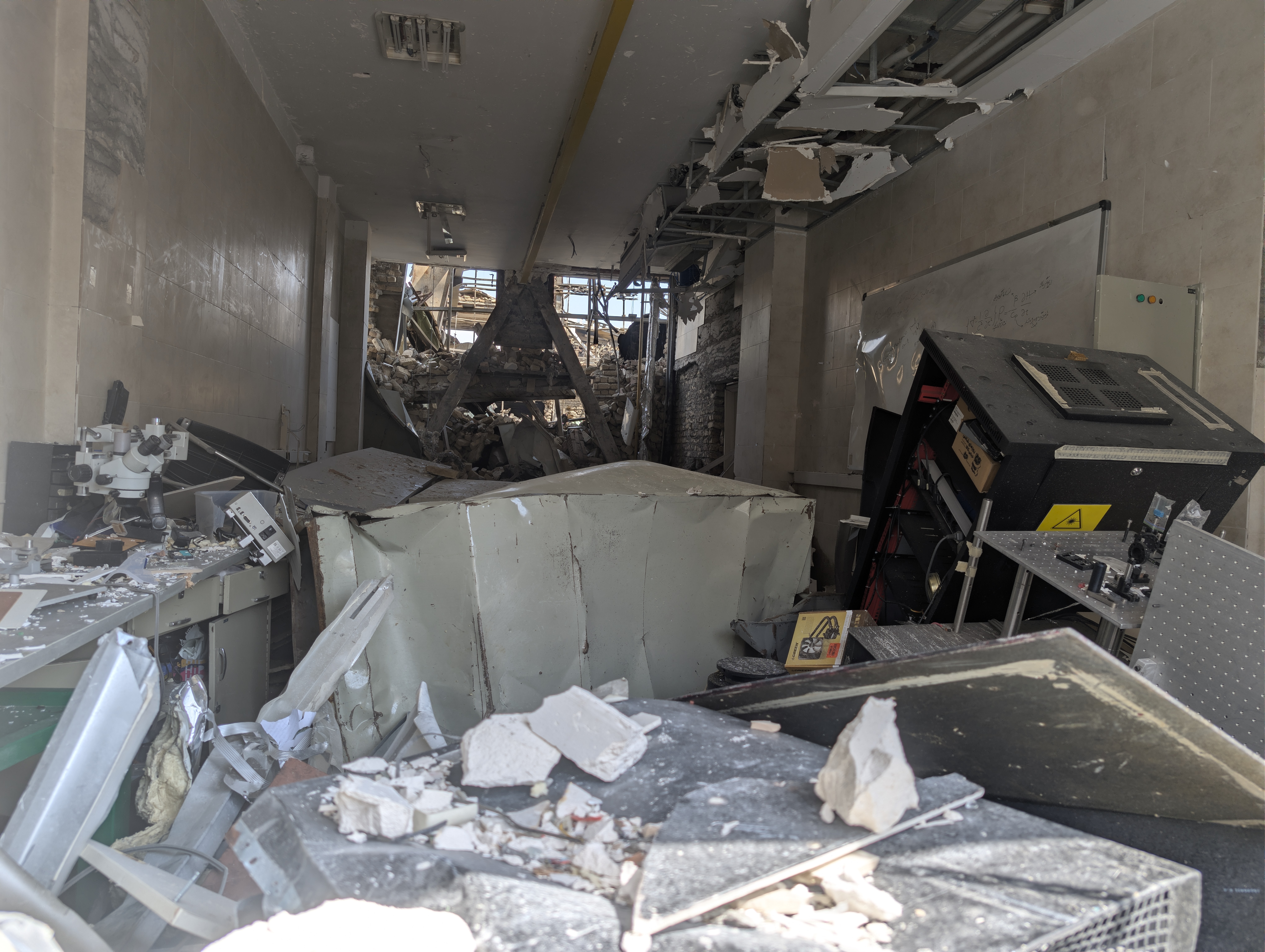
Planet Labs announced it will withhold satellite imagery of the Iran war zone at the US government’s request. The blackout shuts down one of the last independent verification channels — commercial satellite data that journalists, researchers, and OSINT analysts have relied on to document strikes and assess damage. Meanwhile, universities, hospitals, and nuclear facilities keep burning. At least 30 Iranian universities have been hit. A Tehran psychiatric hospital is no longer functioning. Bushehr nuclear plant was attacked again, prompting the IAEA to warn of radiological risks and Russia to evacuate another 198 staff.

Al Jazeera · Al Jazeera · BBC

Ukraine’s Deep-Strike Machine Keeps Running

Ukrainian drones hit chemical plants in Tolyatti (~1,000 km from the front), a Lukoil refinery in Novgorod, and refineries in Nizhny Novgorod. Russia’s Baltic oil terminals remain paralyzed for a second week — shipments collapsed from 40–50 departures per week to one. Moscow lost over $1 billion in seaborne export revenue in the last week of March alone. On the home front, the Kremlin’s Telegram crackdown crashed Sberbank, VTB, and T-Bank, and Putin’s trust rating posted its steepest weekly drop since 2019. (More in Ukraine)
ISW · Reuters · Kyiv Independent

Markets

Indicator Value Change
S&P 500 +0.1%
Gold −1.9%
Oil +11.1%
EUR/USD 1.0843
USD/NOK 10.82
BTC $66,884
  • Oil +11.1% — Trump’s Hormuz ultimatum, Iranian strikes on Kuwait, Australian fuel shortages
  • Defense: LMT +0.8%, RTX +0.8% — US deploys bulk of stealth missile inventory

Destroyed classroom at the Laser and Plasma Research Institute of Shahid Beheshti University in Tehran.
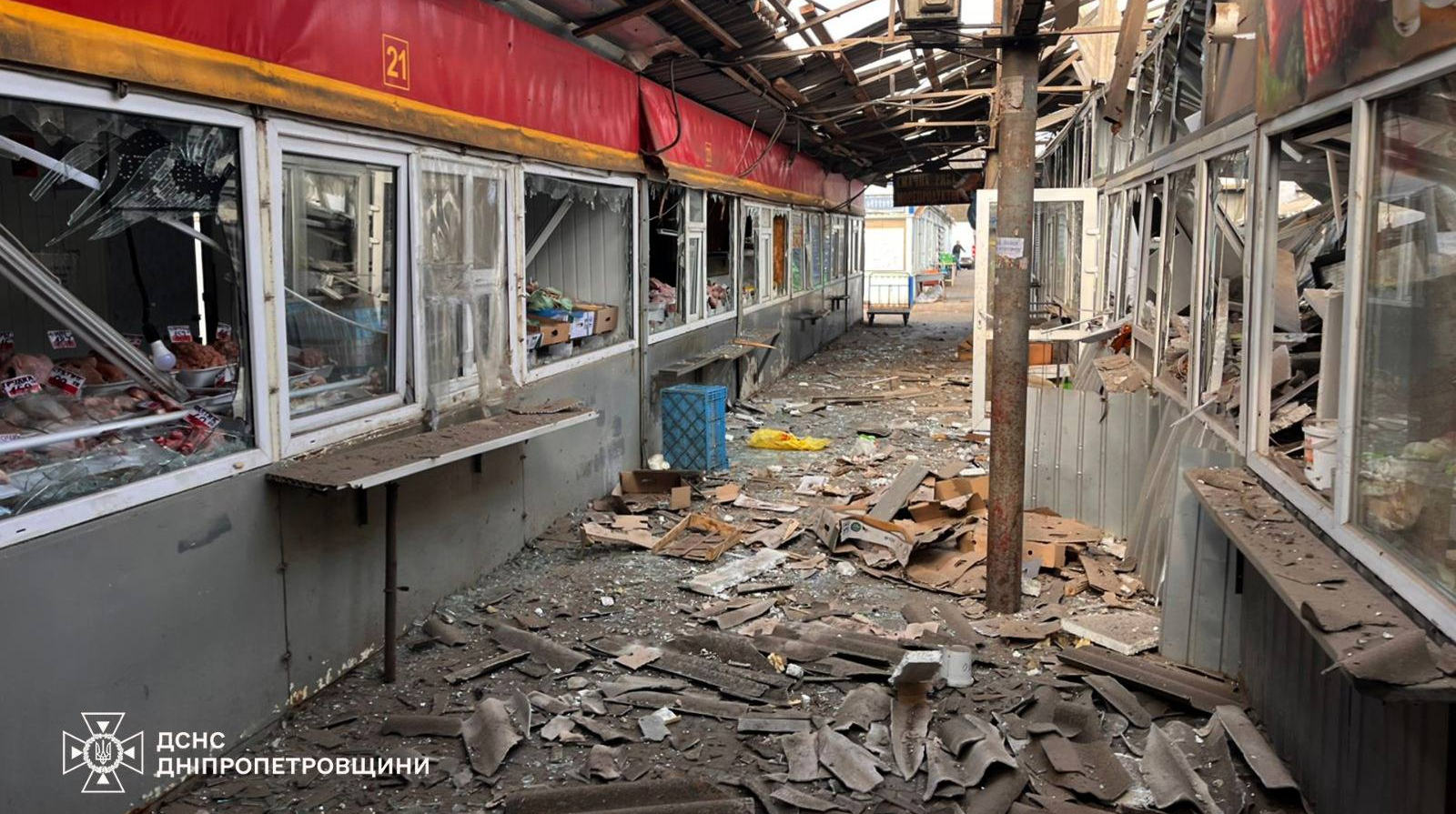
Aftermath of the Russian drone strike on a market in Nikopol — five killed, 27 wounded.

World

Anti-war protests erupt across Israel despite wartime restrictions

Israeli police clashed with demonstrators and arrested protesters in Tel Aviv as anti-war rallies defied wartime limits on public gatherings. A new poll shows the Iran war is the most unpopular US war at its outset in recent history — most Americans oppose it.

Jerusalem Post · Al Jazeera · Al Jazeera

Lebanon: forced reburials as Israel expands invasion

Displaced Lebanese are burying their dead in temporary graves, robbed of traditional funeral rites, as Israel’s southern Lebanon invasion expands. Indonesia received the bodies of its peacekeepers killed there and is demanding a UN investigation.

The Guardian · Al Jazeera

Hungary heads to the polls — Orban faces strongest challenge in 16 years

Hungary votes next week in its most contested election since 2010. Young voters are energized behind opposition leader Peter Magyar, whose Tisza party pledges constitutional term limits that would bar Orban from returning. Both Washington (via a JD Vance visit) and Moscow are backing Orban — a rare alignment that underscores his strategic position.

The Guardian · The Guardian · TVP World

Germany considers military approval for young men’s stays abroad

Germany is weighing a law requiring males under 45 to obtain military approval for extended stays abroad, part of broader defence reforms. Approvals would generally be granted, but the proposal signals how seriously Berlin is rethinking conscription-era obligations.

BBC

Giuffre family urges King Charles to meet Epstein survivors

The family of the late Virginia Giuffre called on King Charles to meet Epstein survivors during his upcoming US visit. A recently released DOJ photo shows Andrew Mountbatten-Windsor and former British Ambassador Peter Mandelson in bathrobes alongside Epstein.

Al Jazeera

Also today

  • Amnesty International declares Iran’s recruitment of child soldiers a war crime — Amnesty
  • US arrests Soleimani relatives; Rubio strips niece’s residency — BBC · Al Jazeera
  • Argentina expels Iran’s top diplomat — Times of Israel
  • Italy’s Meloni visits Qatar to discuss energy — first EU/NATO leader in the Gulf since war began — Al Jazeera
  • Moldova’s parliament votes to leave Russia-led CIS — Yahoo News
  • Italian council buys Mussolini’s holiday villa to block fascist nostalgics — The Guardian
  • Cameroon’s 93-year-old president to appoint a deputy for first time in 43 years — BBC
  • Legal sports betting linked to rising financial distress — NPR
  • Judge halts Trump order requiring colleges to prove race-neutral admissions — NPR

King Charles after attending the Royal Maundy service at St. Asaph Cathedral.
Ukraine

Easter escalation: hundreds of drones and missiles hit Ukraine

Russia launched a mass drone and missile barrage over Easter, killing six civilians and injuring 40. A drone struck a market in Nikopol at 09:50 on April 4, killing five and wounding 27 — including a 14-year-old girl in serious condition. Naftogaz gas facilities in Poltava Oblast were hit for the 40th+ time this year. Overnight April 4–5, Russia launched 93 drones; Ukraine downed 76, but strikes landed across 10 locations including Odesa and Kherson. Zelensky called it an “Easter escalation.”

BBC · Ukrainska Pravda · Ukrainska Pravda

Deep strikes paralyze Russian energy and industry

Ukrainian drones struck the KuibyshevAzot chemical plant and Tolyattikauchuk synthetic rubber plant in Samara Oblast (~1,000 km from the front), plus Lukoil and Kstovo refineries. The earlier Bashneft-Novoil strike in Ufa shut down a distillation unit handling 28% of plant capacity. Russia’s Baltic terminals at Ust-Luga and Koivisto remain unable to process cargo — shipments collapsed from 40–50 per week to one vessel. Over $1 billion in seaborne export revenue lost in the last week of March.

ISW · Reuters · Kyiv Independent · RBC Ukraine

Systematic degradation of Russian military assets

The Unmanned Systems Forces conducted broad strikes April 3–4: Shahed drone hubs at Khalino (Kursk) and Navlya (Bryansk); command posts of the 3rd Combined Arms Army in Luhansk; the Alchevsk Metallurgical Plant (halted again — it supplies Uralvagonzavod for T-90M tanks); railway fuel trains near Stanytsya Luhanska; a Tor-M2 air defense system near Zachativka; logistics hubs in Zaporizhia Oblast; and an S-400 radar near Feodosia, Crimea. SBU drones also destroyed four Orion drones inside a Crimean hangar.

ISW · Kyiv Post · Ukrainska Pravda

Frontline static — Ukrainian local advances in Vovchansk, Kupyansk, Boikove

Russian forces attacked across all major axes without confirmed advances on any front. Ukraine made verified local gains in southwestern Vovchansk, northern Kupyansk, northwestern Boikove, and along the T-0504 highway near Berestok. Russian infiltration attempts into Kostyantynivka were repelled. The pattern continues: Russia expends forces across a wide front with diminishing returns while Ukraine leverages drone dominance to hold and selectively counter.

ISW · Al Jazeera

Kremlin censorship backfires: trust drops, banks crash

Putin’s trust rating fell 5 points to 71% — the steepest weekly drop since 2019. Pro-war milbloggers are openly criticizing the Telegram crackdown. On April 3, Kremlin IP-blocking triggered massive outages across Sberbank, VTB, and T-Bank, knocking out payments. Roskomnadzor then forced media to delete reports linking the failures to the blockade. Telegram founder Pavel Durov noted 65 million Russians still use VPNs daily to access the platform.

ISW · Kyiv Independent

Turkey to host next round of peace talks

Meeting in Istanbul, Zelenskyy and Erdogan agreed Turkey will host the next peace negotiations. They signed new security cooperation agreements focused on Ukrainian defense technologies. A US delegation led by Kushner, Witkoff, and Graham may visit Kyiv after Orthodox Easter (April 12).

Ukrainska Pravda · Ukrainska Pravda

Also today

  • Belarus supplying components for Russian 152mm shells and Grad rockets — opposition group lists 120 organizations — ISW · Militarnyi
  • Cuba allows sanctioned Russian oil tanker to dock — may signal secret US-Cuba talks — The Guardian

Fire at Naftogaz gas production facility in Poltava Oblast after Russian drone strike.
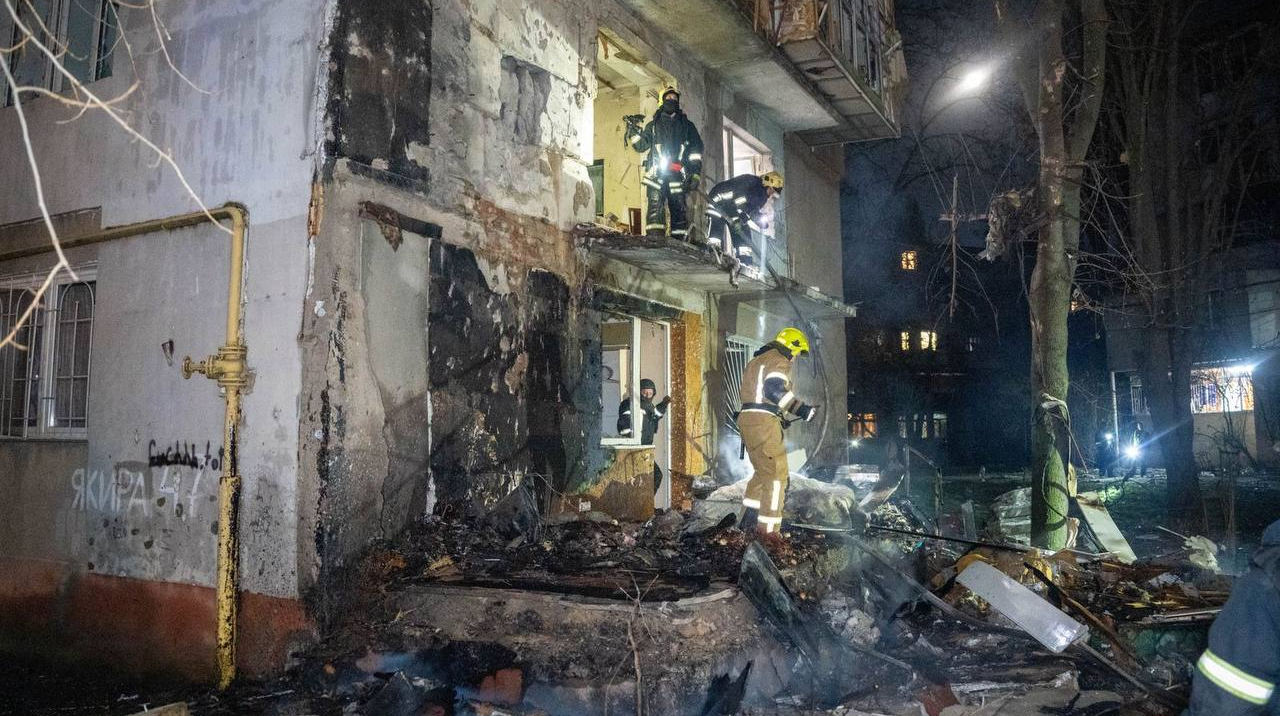
Five-story apartment building in Odesa damaged by overnight Russian drone attack.

Tech

The Winchester Mystery House — a third model of software development

Drew Breunig argues AI code generation has created a third model alongside Raymond’s Cathedral and Bazaar: the Winchester Mystery House — sprawling, personalized tools built by individuals because generating code is now nearly free. The Bazaar is struggling because maintainers can’t handle machine-speed contribution volume. The core insight: the bottleneck has shifted from code production to attention and curation. The real opportunity is making evaluation cheap, not generation.

Article · Lobsters

Components of a Coding Agent — Raschka’s architectural breakdown

Sebastian Raschka identifies six core components: live repo context gathering, prompt shape and cache reuse, structured tool access, active context reduction, dual-layer session memory, and bounded subagents. The sharpest observation: “much of apparent model quality is really context quality” — the harness surrounding the LLM often matters more than the base model.

Article · HN

Karpathy’s LLM Wiki — continuous AI-maintained knowledge bases

Andrej Karpathy describes a three-layer architecture: raw sources, a wiki of LLM-generated markdown, and a schema guiding what to maintain. The key flip from traditional RAG: instead of humans maintaining the knowledge base and AI querying it, the AI does cross-referencing, filing, and synthesis as a continuous background task while the human curates inputs. New sources compound as cross-references build up.

Gist · HN

Simple self-distillation yields large code generation gains

Sampling code solutions from a model and fine-tuning on its own outputs — no verifier, teacher, or RL — yields substantial gains. Qwen3-30B jumps from 42.4% to 55.3% pass@1 on LiveCodeBench v6, with gains concentrated on harder problems. The mechanism: reshaping token distributions to suppress unhelpful variation where accuracy matters while preserving diversity where exploration helps.

Paper · Lobsters

nvim-treesitter archived — Neovim 0.12 brings breaking overhaul

The widely-used nvim-treesitter plugin (13K+ stars) has been archived. The master branch no longer works with Neovim 0.12+. A complete rewrite on main has a fundamentally different architecture: local parser compilation, tree-sitter CLI dependency, stripped-down core. All existing configuration is incompatible. Users upgrading to 0.12 must migrate and rewrite their treesitter configs. The project remains “experimental” with no formal releases.

GitHub · HN · Lobsters

Linux 7.0 preemption changes halve PostgreSQL performance on Graviton4

Linux 7.0’s restricted preemption modes cause PostgreSQL to spend far more time spinning in user-space spinlocks, cutting throughput roughly in half on AWS Graviton4. Kernel developer Peter Zijlstra says the fix isn’t in the kernel — PostgreSQL would need to adopt Restartable Sequences (RSEQ). Significant perf regressions until the database adapts.

Phoronix · HN

German eIDAS wallet will depend on Apple/Google device attestation

Germany’s EU digital identity wallet uses Apple App Attestation and Google Play Integrity for device verification — requiring American tech company accounts for national digital identity. A European system designed to reduce Big Tech reliance ends up depending on it. If either service has an outage or changes policies, it could break national identity infrastructure.

Documentation · HN

Absurd in Production — Ronacher’s Postgres durable execution holds up

After five months, Armin Ronacher’s minimalist durable execution system built entirely on Postgres has proven itself without needing redesign. SDKs are 1,400–1,900 lines (vs. Temporal’s 170,000). Originally for agent workflows, it now handles distributed crons and background processing.

Article · Lobsters

Also today

  • Value numbering deep dive — CSE, local/global algorithms, e-graphs — Article · Lobsters
  • Contrapunk — real-time counterpoint harmony from guitar input, in Rust — Project · HN
  • Writing Lisp is AI-resistant — less training data, wrong interaction model — Article · HN
  • Why Lean — de Moura makes the case for the proof assistant — Article · Lobsters
  • Apple approves Nvidia eGPU driver for ARM Macs — The Verge · HN

The Winchester Mystery House — Drew Breunig’s metaphor for AI-era software development.

cd ~/repos/ratatosk && claude --resume 6633f744-ad9b-4879-bf78-222928479241